



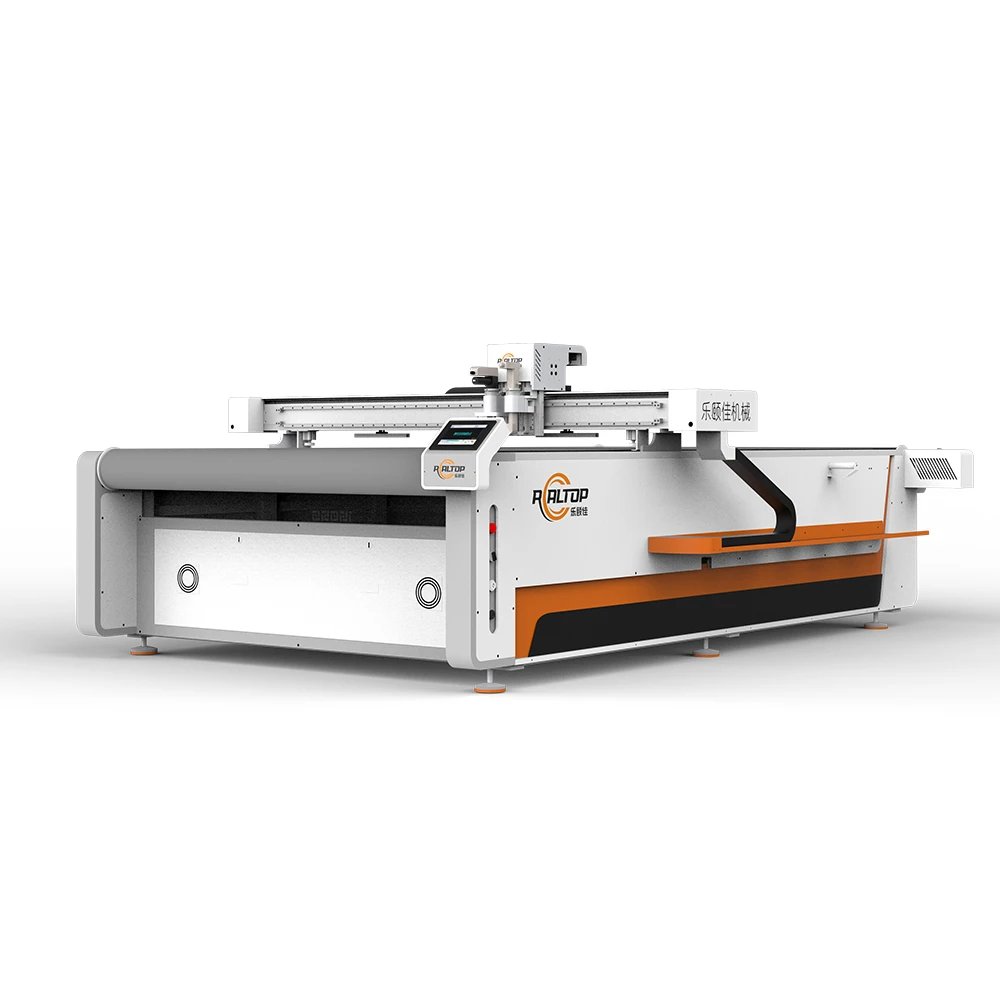


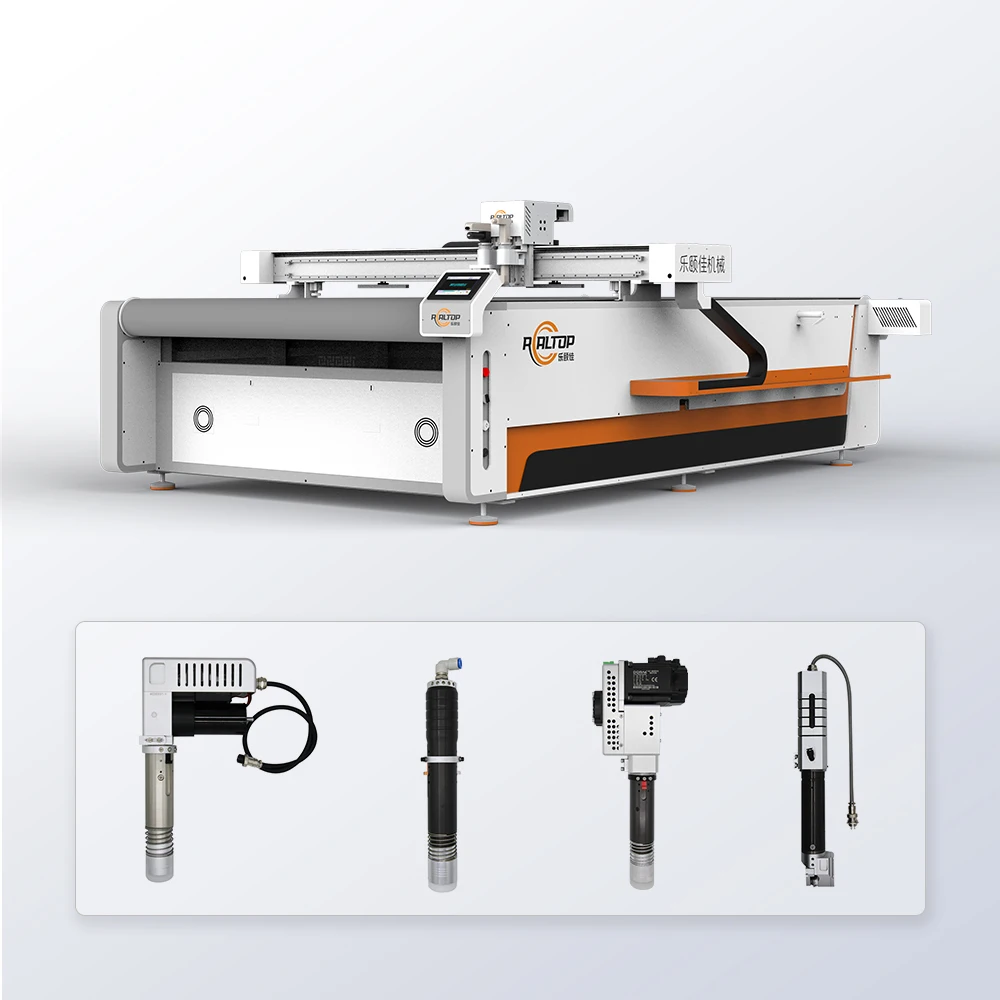
Material-Matched Tooling — Every 1625 cutting table ships with tool head and vacuum zoning confirmed on the buyer’s actual fabric before the order is finalized.
Technical Specifications
| Parameter | Value |
|---|---|
| Model | 1625 |
| Product Type | CNC Oscillating Knife Cutting Machine |
| Working Area | 1600×2500 mm |
| Cutting Speed | 0–2000 mm/s (achievable speed depends on fabric type and layer count) |
| Cutting Thickness | ≤30 mm (basis not stated in source — confirm material type / density / layer count) |
| Positioning Accuracy | ±0.1 mm |
| Tool Head Options | Oscillating knife, Driven rotary knife, Creasing wheel, Kiss cutting tool, Pneumatic knife, Milling tool, V groove knife |
| Vacuum Table | Aluminum bellows vacuum table |
| Vacuum Pump | 9 kW |
| Voltage Options | 110V / 220V / 380V (frequency to be confirmed by market) |
| Control System | PLC control panel |
| Software File Formats | PLT, DXF, AI, PDF |
| Servo Motor Options | Panasonic, Delta, Dorna (source value — verify against manufacturer catalog) |
| Display Languages | English, Russian, Italian, Chinese; custom languages available |
| Safety Device | Infrared sensor and emergency stop |
| Overall Dimensions | 3300×2100×1350 mm |
| Certification | CE |
Application Suitability
| Application | Material or Output |
|---|---|
| Apparel manufacturing | Suits, knitwear, lace, complex woven and knitted fabrics |
| Automotive interiors | Seat fabrics, carpets, PVC mats requiring burr-free edges |
| Home textiles | Sofa fabrics, curtains, rugs in multi-layer cutting runs |
| Composite material processing | Carbon fiber prepreg, aramid, specialty materials |
| Signage and packaging | Cardboard, carton sample making, PVC and EVA sheets |
| Footwear and leather goods | Leather, synthetic leather, foam insoles, gaskets |
Why Cutting Thickness Claims Fail on Real Fabric Batches
A rated thickness number means nothing until the machine cuts your exact material stack under production conditions.
I worked on an order last year where a buyer specified a CNC oscillating knife cutting machine for fabric and textile production based on working area alone. The leather they tested was 2 mm thinner than what their supplier actually delivered. When the thicker composite leather hit the table, the knife could not penetrate cleanly and every edge came out frayed. The entire first batch was scrapped. That is why I now refuse to quote any cloth cutting line until the buyer sends real production material for a sample cut [NEED_CITE: fabric thickness tolerance across textile supply chains]. Thickness ratings on a spec sheet are starting points, not guarantees.
Tool Head Selection Determines Edge Quality on Fabric
A fabric producer cutting woven suits needs a different blade action than someone running multi-layer sofa textiles. The 1625 offers oscillating knife, driven rotary knife, and pneumatic knife options on a single carriage, so the cutting action can be matched to the fiber structure. Woven materials respond well to high-frequency oscillation, while knits and stretch fabrics often need a driven rotary blade to prevent pulling. Choosing wrong here creates ragged edges that require secondary trimming downstream.
Vacuum Zoning and Multi-Layer Hold-Down Stability
When cutting stacked fabric layers for home textiles or automotive seat covers, the vacuum table must hold every layer flat across the full 1600×2500 mm working area. The aluminum bellows design provides distributed suction, but the real question is how the zones are configured. Small pattern pieces near the table edges can lift if the zoning does not match the nesting layout [NEED_CITE: vacuum hold-down requirements for multi-layer textile cutting]. We review the buyer’s nesting files and typical piece sizes before setting zone boundaries, rather than relying on a default grid that works for large panels but fails on small gussets or collar pieces.
Reading the Specs That Actually Affect Production
The ±0.1 mm positioning accuracy matters when pattern pieces must align with printed grain lines or woven stripes — any drift shows up as visible mismatch on the finished garment. The 9 kW vacuum pump generates the suction needed for dense multi-layer stacks, but its effectiveness depends on table seal integrity and zone configuration. The PLC control panel accepts PLT, DXF, AI, and PDF files, which covers most nesting software outputs in garment and automotive workflows, though format conversion should be tested before the machine ships. Voltage options span 110V, 220V, and 380V, but frequency must match the destination country’s grid standard to avoid servo motor overheating [NEED_CITE: voltage and frequency standards by export market].
The Hidden Cost of Skipping Configuration Verification
Buyers who order based on a brochure spec sheet often discover after delivery that the standard tool head cannot handle their specific material density. A pneumatic knife meant for foam will crush thin knit fabric, while an oscillating blade set for leather will stall on carbon fiber prepreg. The cost is not just the replacement tooling — it is the weeks of production delay while the correct head is sourced and shipped, plus the material waste from trial runs with the wrong setup. I have watched factories run two months of substandard output before asking for help [NEED_CITE: cost of incorrect tooling selection in textile manufacturing].
Why Source This CNC Oscillating Knife Cutting Machine for Fabric and Textile Production Here
The 1625 is designed and built in a facility that covers both knife and laser cutting technologies, so the cutting method is matched to the material rather than forced into one approach. Every order includes a sample cutting report on the buyer’s own fabric, documenting edge quality, achievable layer count, and cutting speed under real conditions. Tool head and table configuration are specified per material and daily volume, not pulled from a default list. Software compatibility with the buyer’s existing PLT, DXF, AI, or PDF nesting workflow is confirmed in writing before production begins. Voltage, plug type, and control panel language are locked down in the order documents, so there are no surprises when the crate arrives at the factory floor.
Documentation & Verification
- Factory test record cutting the buyer’s own fabric thickness and layer count
- Sample cutting report documenting edge quality and achievable speed on buyer material
- Tool head and vacuum zone configuration list matched to the buyer’s production files
- Electrical schematic confirming voltage, frequency, and plug type for destination market
- Software license and file format compatibility note for PLT, DXF, AI, PDF workflows
- Spare parts list covering blades, vacuum seals, and servo-specific consumables
Installation, Commissioning & Support
- Foundation must support 3300×2100×1350 mm footprint with level tolerance for the aluminum bellows table
- Dedicated circuit sized for 9 kW vacuum pump plus servo load at confirmed voltage and frequency
- Machine ships with table and gantry separated; reassembly requires overhead clearance for the 1600×2500 mm frame
- First-run parameter setting includes vacuum zone mapping to the buyer’s typical nesting layout
- Operator training covers PLC panel language setup and tool head changeover procedures
- Blade and vacuum seal replacement schedule provided based on buyer’s material abrasiveness
What to Prepare Before Requesting a Quote
Send us the exact fabric type, weight per square meter, and typical layer count you run in production, along with a sample of your nesting files in DXF, PLT, AI, or PDF format. Confirm your facility’s voltage and frequency, and let us know which control panel language your operators need. If your production involves printed contour cutting, share a sample of the printed material so we can verify registration accuracy.
Frequently Asked Questions
Q: How is cutting thickness verified for my specific fabric type and layer count?
A: We run a sample cut on your actual production material, testing the exact layer count and fabric weight you use daily. The cutting result — edge quality, blade penetration, and any fraying — is documented in a sample report before you commit to the order. This replaces guesswork based on generic thickness ratings.
Q: Which tool head is correct for my material — oscillating, rotary, or pneumatic knife?
A: It depends on fiber structure and layer configuration. Woven fabrics typically suit oscillating knives, knits and stretch materials often need driven rotary blades, and foam or gasket materials use pneumatic tools. We test your material with multiple heads and recommend based on actual edge results, not catalog descriptions.
Q: How do I confirm voltage, plug and control panel language before shipment?
A: These details are locked in writing during the order confirmation stage. We specify your local voltage and frequency, the correct plug type, and your chosen panel language from the available options including English, Russian, Italian, Chinese, or a custom language. Nothing ships until this document is signed.
Q: Can the software import my existing DXF/AI nesting files without conversion?
A: The PLC system accepts PLT, DXF, AI, and PDF formats. Before production, we run your actual nesting files through the software and confirm that pattern geometry, kerf compensation, and tool paths transfer correctly. A compatibility note is included in your documentation package.
Q: What does sample cutting on my material look like before I commit to the order?
A: You send us a representative sample of your production fabric at the thickness and layer count you actually run. We cut it on the 1625, document edge quality and achievable cutting speed, and send you the physical cut pieces along with a written report so you can evaluate results before placing the machine order.



商品评价
Clear filtersThere are no reviews yet.