


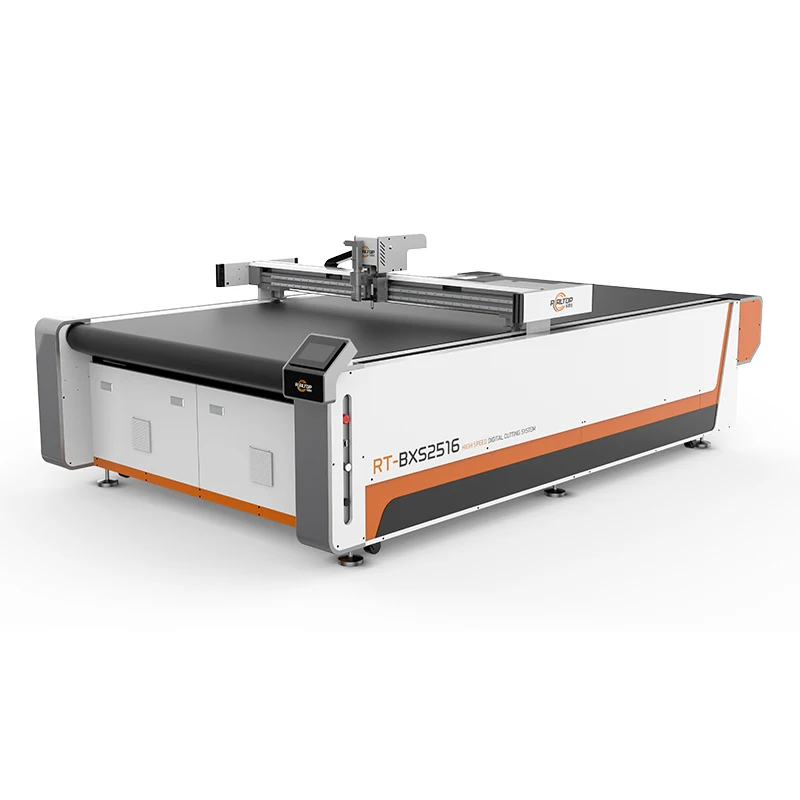
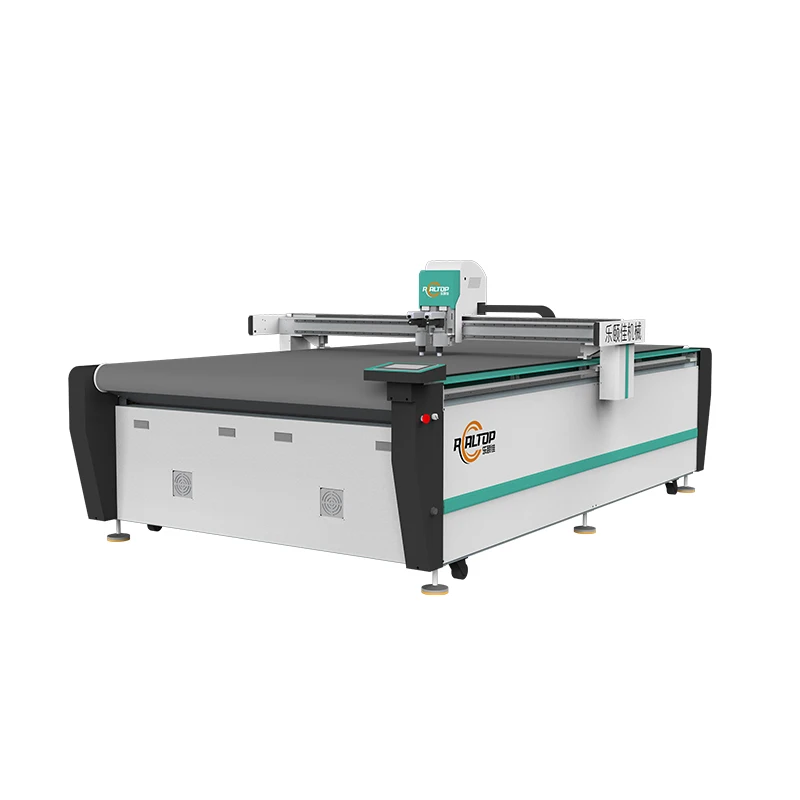
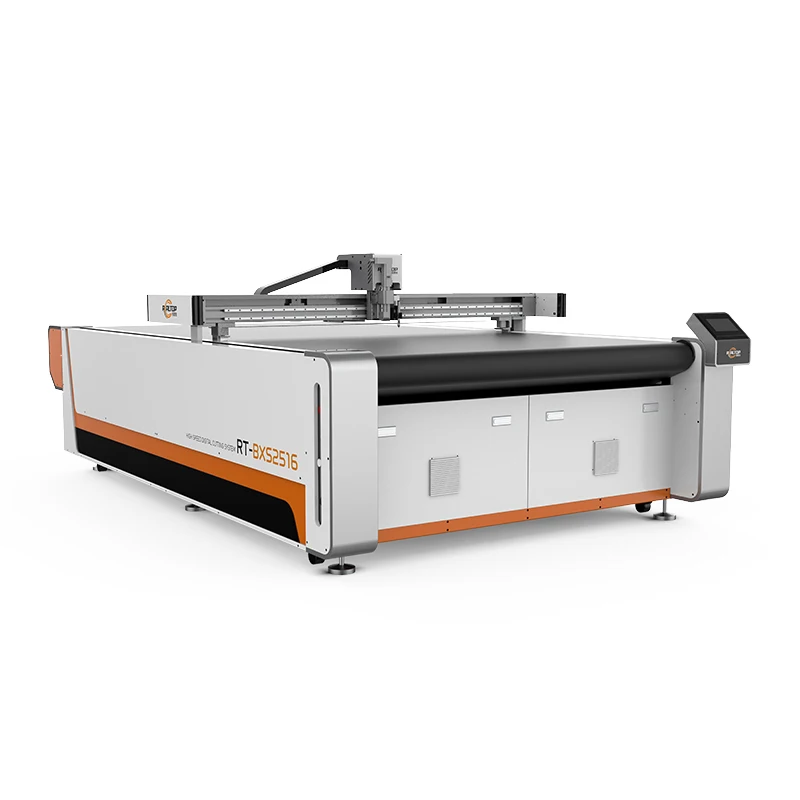
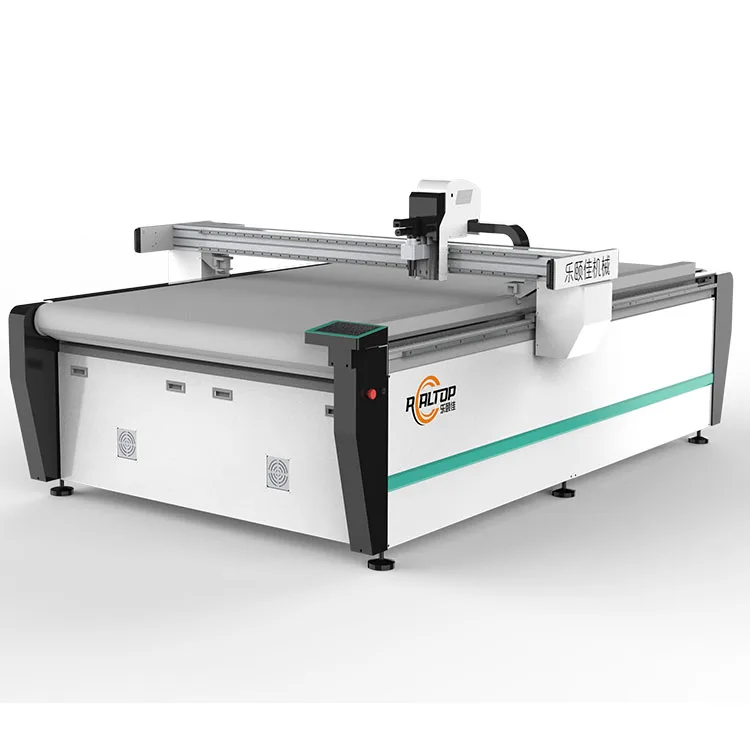
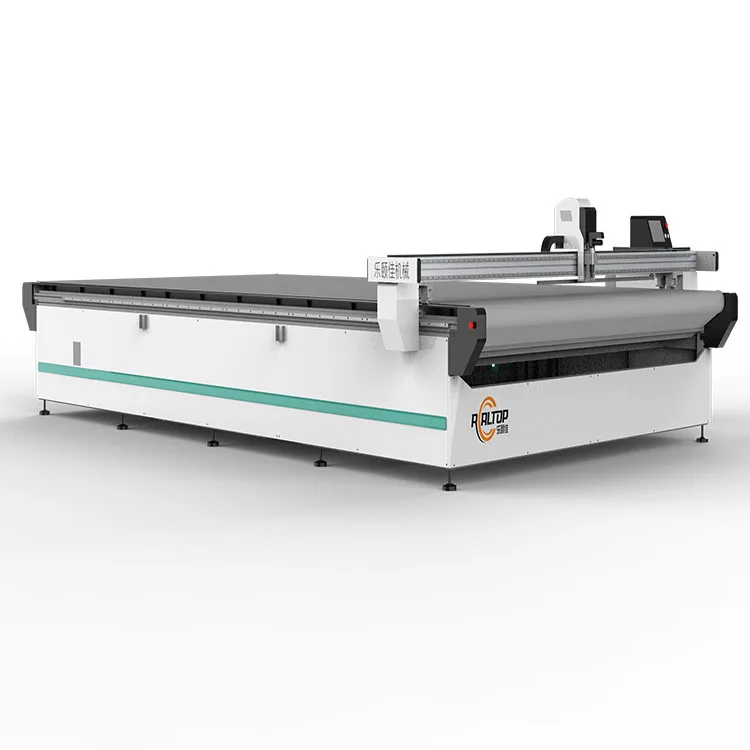
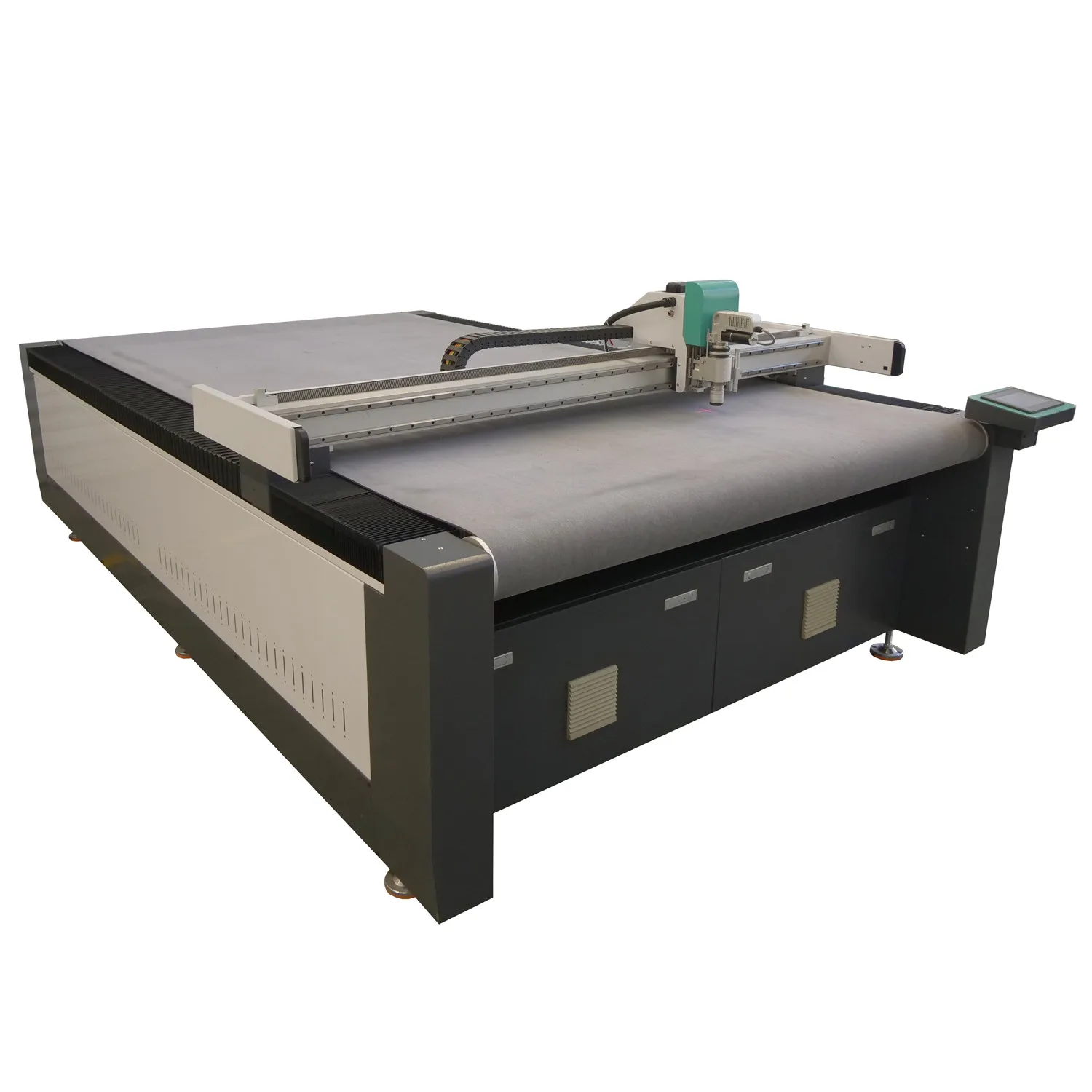

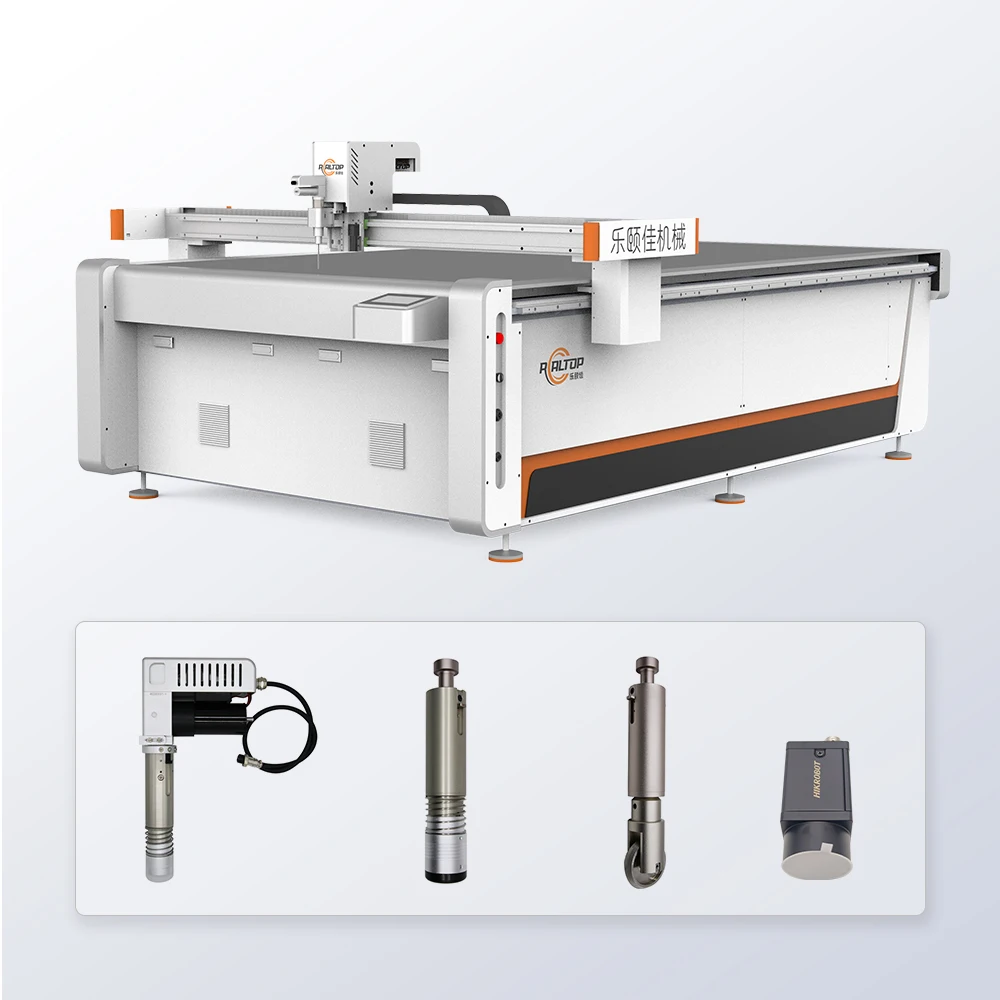
Tool head matched to textile weight — Swiss oscillating knife selection validated on buyer’s own fabric, ply count and edge finish requirement before shipment.
Technical Specifications
| Parameter | Value |
|---|---|
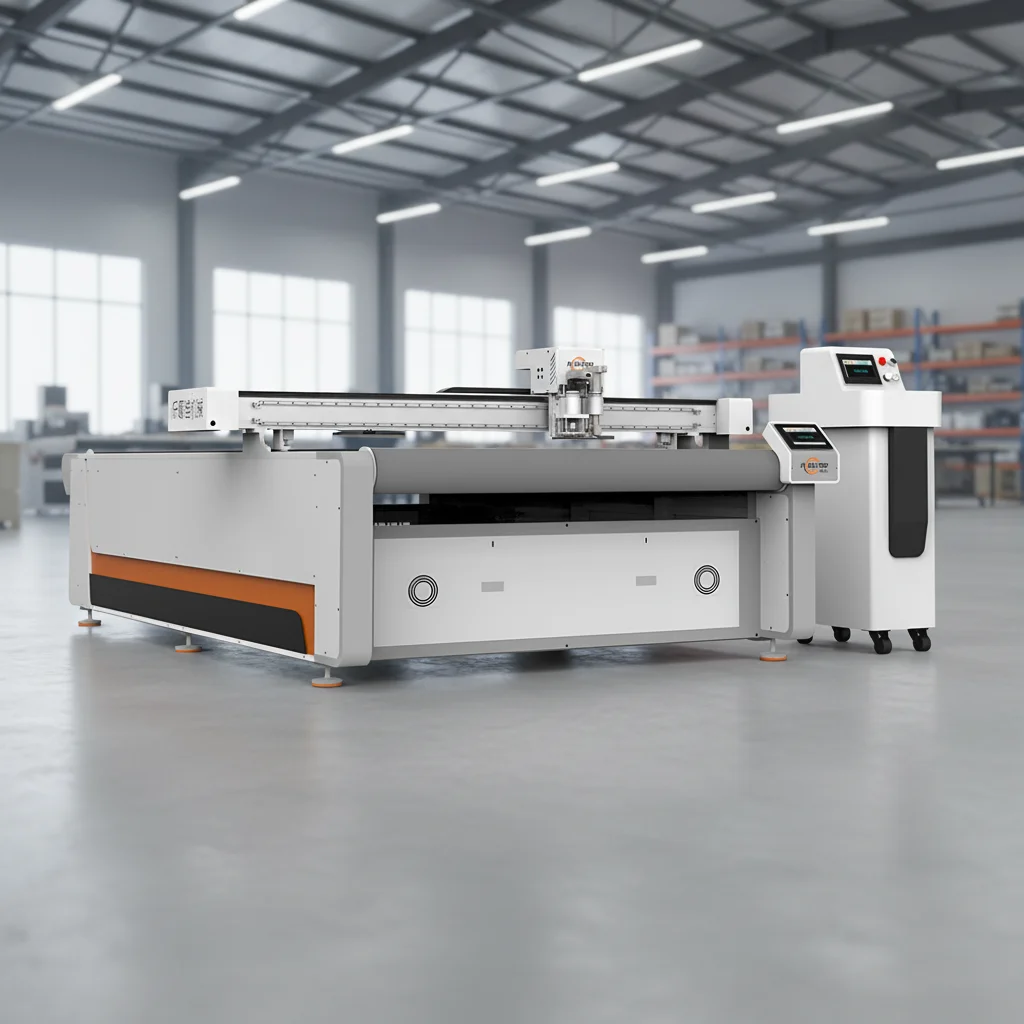
| Product Type | CNC Digital Textile Cutting Machine with Projector |
| Working Area | 1600×2500 mm |
| Machine Dimensions (L×W×H) | 3450×2300×1250 mm |
| Rated Power | 9 kW |
| Voltage & Frequency | 380V±10% |
| Table Type | Flat working table or auto-feeding table |
| Tool Head | Swiss imported oscillating knife with full cutting, half cutting and cursor location |
| Translational Velocity | 800–2000 mm/s |
| Cutting Speed | 200–800 mm/s (basis to be confirmed with specific fabric and ply count) |
| Cutting Thickness | ≤100 mm (varies with material density and composition) |
| Repeatability | ≤0.1 mm |
| Transmission System | Digital servo motor, linear guide, synchronous belt, ball screw |
| Vacuum Pump | 7.5 kW |
| Vacuum Platform | Aluminum air box, integrated or split configuration |
| Safety Devices | Infrared sensors, anti-collision beam stops, emergency stop |
| Servo Motor Options | Delta (China) or Panasonic (Japan) |
| Positioning Options | Small CCD mark point, panoramic camera recognition, projection positioning |
| Compatible File Formats | PLT, DXF, AI |
| Control Interface | Touch screen with multi-language support |
| Key Features | Auto typesetting software, HP-GL compatible instruction system, configurable control language |
Application Suitability
| Application | Material or Output |
|---|---|
| Garment pattern cutting | Single-layer woven and knit fabrics, multi-layer lays for apparel and footwear uppers |
| Automotive interior trim | Seat cover fabrics, synthetic leather, headliner textiles, floor mat composites |
| Soft home furnishings | Sofa upholstery fabrics, curtain textiles, cushion foam composites |
| Luggage and bag production | Heavy-duty nylon, canvas, PU leather, reinforcement composites |
| Carpet and floor mats | Non-woven textiles, tufted carpet, rubber-backed floor covering |
| Packaging sample making | Corrugated cardboard, foam board, corrugated plastic for prototype cartons |
| Sports and outdoor gear | Technical fabrics, neoprene, laminated waterproof textiles |
Why Cutting Speed Claims Collapse on the Factory Floor
A cloth CNC cutting machine for industry application only delivers rated throughput when the tool head, vacuum zoning and feed rate are matched to your specific fabric weight and ply count.
I have watched production managers sign off on a machine after watching it slice through a demo fabric, then discover their actual high-stretch swimwear material curls at the edges and shifts under the knife [NEED_CITE: textile cutting edge distortion on elastane blends]. The quoted cutting speed range becomes meaningless if the vacuum table cannot hold small pattern pieces flat, or if the oscillating frequency is wrong for the ply stack. Real daily output depends on how the configuration handles your material, not on a number pulled from a generic brochure.
Matching Oscillating Knife Frequency to Fabric Behavior
The cloth CNC cutting machine for industry application uses a Swiss imported oscillating knife head that adjusts between full cutting and half cutting modes. Lightweight single-layer knit fabrics need a different oscillation frequency than dense multi-layer stacks of automotive upholstery. The wrong setting causes fraying on loose-weave textiles or incomplete cuts through heavy composite lays. Production teams must confirm the knife configuration against the actual material range before the machine ships.
Vacuum Zoning That Actually Holds Small Pattern Pieces
The 7.5 kW vacuum pump feeds an aluminum air box platform available in integrated or split configuration. Small garment pieces like collar panels or shoe components tend to lift at the edges if the vacuum zone is too broad and undifferentiated [NEED_CITE: vacuum hold-down effectiveness on small textile parts]. Zoned suction directs airflow only to the area being cut, keeping each piece stable without wasting pump capacity on empty table surface. This matters when cutting nested layouts with mixed piece sizes across the 1600×2500 mm working area.
Reading the Specs That Determine Real Cutting Quality
The ≤0.1 mm repeatability figure depends on the linear guide and ball screw transmission working together under load. When the machine cuts through a 50 mm stack of dense automotive fabric, lateral forces push against the knife — the rigidity of the motion system determines whether nested pieces stay within tolerance across the entire bed. The digital servo motor options from Delta or Panasonic differ in torque response at low speed, which affects how cleanly the knife enters and exits each cut. Translational velocity reaches 800–2000 mm/s for positioning moves, but actual cutting speed of 200–800 mm/s applies only to configurations confirmed on a given material. The HP-GL compatible instruction system and auto typesetting software must accept the PLT, DXF and AI files your design team already produces.
The Cost of Skipping Material-Specific Configuration
When a buyer specifies only working area and skips tool head matching, the machine arrives configured for generic cardboard instead of the buyer’s actual technical textile. The oscillating knife then drags through coated fabrics, leaving burnt edges on synthetics or delaminating composite layers [NEED_CITE: cutting defects from mismatched knife configuration]. Reworking thousands of miscut pattern pieces costs more than the time spent on pre-shipment sample testing. Voltage mismatch is another silent problem — a 380V machine shipped to a facility running different frequency can run but produce inconsistent servo response and premature motor wear.
Why Sourcing This Equipment Here Makes Sense
The design team covers both knife and laser cutting technologies under one roof, so buyers select the method that fits their material rather than forcing one approach. Every cloth CNC cutting machine for industry application leaves the factory with a sample cutting report produced on the buyer’s own fabric, confirming edge quality and ply count before commitment. Tool head selection, vacuum zone layout and feeding method are documented in a configuration list tied to the buyer’s material spec. Software compatibility is verified against the buyer’s existing PLT, DXF or AI workflow. Voltage, control language and electrical schematics are confirmed before production begins.
Documentation & Verification
- Sample cutting report on your specific fabric, leather or composite confirming edge finish and ply count
- Tool head and vacuum zone configuration list matched to your material and production volume
- Electrical schematic and voltage confirmation document matching your facility power supply
- Software licence and file format compatibility note for PLT, DXF, AI integration
- Factory test record with actual cutting runs on buyer-supplied material before crating
- Operation and maintenance manual in confirmed control language with spare parts list
Installation, Commissioning & Support
- 3450×2300 mm footprint requires level concrete floor with clearance for auto-feeding table if selected
- 380V±10% supply with dedicated circuit for combined 9 kW machine and 7.5 kW vacuum pump load
- Split vacuum box option enables standard container transport with on-site reassembly
- First-run commissioning includes knife frequency calibration on your fabric and nesting test
- Touch screen control training in confirmed language covering typesetting and file import workflow
- Spare knife blades, vacuum seals and wear parts list provided at delivery
Preparing Your Inquiry for Production Fit
Share your primary fabric types with weight, typical ply count and maximum sheet or roll width so the tool head and feeding method can be specified correctly. Confirm your facility voltage and frequency along with the preferred control panel language. If you run an existing CAD or nesting system, provide a sample file so format compatibility is verified before the order.
Frequently Asked Questions
Q: How is the tool head and cutting speed matched to my fabric type, weight and ply count?
A: The Swiss oscillating knife head is configured after sample cutting on your actual material. We test different oscillation frequencies and feed rates against your fabric weight and stack height, then document the confirmed settings. The 200–800 mm/s range applies only after this material-specific validation.
Q: Can the machine handle my roll-fed textile workflow, and what daily throughput is realistic?
A: The auto-feeding table option supports continuous roll-fed operation across the 1600×2500 mm bed. Realistic daily throughput depends on pattern complexity, nesting density and the fabric weight confirmed during sample testing. We provide throughput data from your sample run rather than generic estimates.
Q: Which positioning method fits my printed fabric job?
A: Projection positioning works well for aligning cut paths on large single-layer pieces. CCD mark point positioning suits jobs with printed registration marks. Panoramic camera recognition handles high-volume contour cutting on printed textiles. The right choice depends on your print accuracy and production speed requirements.
Q: How is software and file format compatibility confirmed before shipment?
A: We request sample files in your native PLT, DXF or AI format and run them through the auto typesetting software during factory testing. The compatibility note documents which formats import correctly and any nesting parameter adjustments needed for your specific pattern system.



商品评价
Clear filtersThere are no reviews yet.