





Cold-Cutting Versatility — oscillating knife tool heads matched to carbon fiber, aramid honeycomb and fiberglass without thermal damage to the resin matrix.
Technical Specifications
| Parameter | Value |
|---|---|
| Model | 1625 |
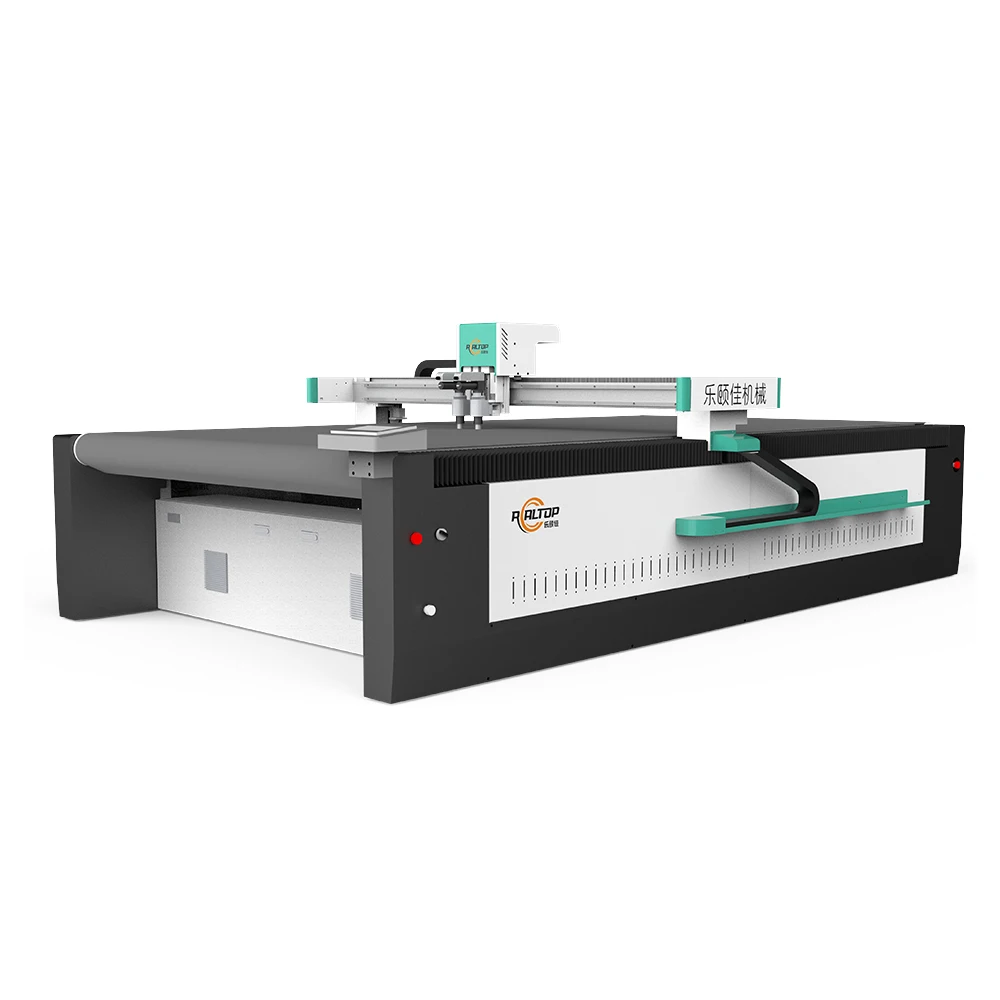
| Product Type | CNC Oscillating Knife Cutting Machine |
| Working Area | 1600×2500 mm |
| Tool Head Options | Oscillating knife, Driven rotary knife, Creasing wheel, Kiss cutting tool, Pneumatic knife, Milling tool, V groove knife |
| Cutting Speed | 0–2000 mm/s |
| Cutting Thickness | ≤ 30 mm (basis not stated in source — confirm material type, density and blade configuration) |
| Cutting Accuracy | ±0.1 mm |
| Vacuum Pump | 9 kW |
| Vacuum Table | Aluminum bellows vacuum table |
| Voltage Options | 110V / 220V / 380V (frequency to be confirmed per market) |
| Servo Motor Options | Panasonic, Delta, Dorna (source value — verify against current catalog) |
| File Formats | PLT, DXF, AI, PDF |
| Safety Devices | Infrared sensor, Emergency stop |
| Control Panel | PLC with multi-language interface |
| Overall Dimensions | 3300×2100×1350 mm |
| Language Options | English, Russian, Italian, Chinese, custom languages available |
| Certification | CE |
Application Suitability
| Application | Material or Output |
|---|---|
| Aerospace interior and structural trim | Carbon fiber prepreg, aramid honeycomb, ceramic fiber, thermal and acoustic insulation foam |
| Automotive lightweight body and cabin components | FRP panels, acoustic felt, damping pads, carpets, sealing strips, battery insulation sheets |
| Wind turbine blade manufacturing | Fiberglass and carbon fiber cloth, vacuum infusion mesh, PET and PVC foam core |
| Sporting goods and leisure equipment | Carbon fiber sheets, Kevlar fabric, high-performance foam, composite fabrics for bicycle frames, helmets and kayaks |
When the Cutting Edge Fails Before the First Shift
A CNC oscillating knife cutting machine for composites must be configured around the specific material stack, not just the working area.
I have seen buyers select a machine based on table size alone, then discover that the standard oscillating knife cannot penetrate a high-density fiberglass laminate or that the vacuum zoning leaves small aerospace gaskets lifting mid-cut [NEED_CITE: common composite cutting failures due to tool head mismatch]. The result is delaminated edges on carbon fiber prepreg, crushed foam core, and production throughput dropping well below expectations. In composite fabrication, the wrong tool head or insufficient vacuum hold-down does not just slow you down — it damages material that may cost more per square meter than the machine hour itself. That is why the first step in any composite cutting project should always be a sample cut on the buyer’s actual material, not a generic demo on PVC foam.
Material Integrity Through Cold Cutting
Unlike laser or plasma processes, an oscillating knife cuts composite materials without generating heat. This matters because the resin matrix in carbon fiber prepreg and aramid honeycomb is sensitive to thermal stress — even localized heat can alter cure state or leave micro-charring along the cut edge that compromises bonding in downstream layup. The CNC oscillating knife cutting machine for composites preserves the structural properties of each ply, leaving a clean mechanical cut ready for autoclave or vacuum bagging without secondary edge treatment. For acoustic insulation foam and damping pads used in automotive cabins, cold cutting also eliminates the fumes and particulates that thermal processes produce, removing the need for extraction ductwork on the shop floor.
Tool Head Selection Across the Composite Spectrum
Composite materials range from flexible woven fabrics to rigid laminated boards, and no single blade handles them all. The 1625 platform supports interchangeable tool heads including oscillating knife, driven rotary knife, pneumatic knife, V groove knife and milling tool [NEED_CITE: tool head selection guidelines for composite materials]. Woven fiberglass cloth and vacuum infusion mesh cut cleanly under a high-frequency oscillating knife, while rigid carbon fiber boards up to the stated thickness capacity require a pneumatic knife or milling tool to maintain edge straightness. Aramid honeycomb — notoriously difficult because of its tendency to fray — responds better to a driven rotary knife that shears rather than tears the cell walls. Matching tool head to material is not optional; it determines whether the cut edge holds tolerance or requires manual trimming that adds time and waste to every shift.
Reading the Spec Sheet Against Your Material
The ±0.1 mm cutting accuracy figure matters most when cutting aerospace gaskets and structural inserts where assembly tolerances leave no room for edge deviation. On a 1600×2500 mm working area, that accuracy must hold across the full travel of the gantry, which depends on servo motor performance and gantry rigidity rather than the controller alone. The 9 kW vacuum pump paired with the aluminum bellows table generates sufficient hold-down for flexible materials like infusion mesh and prepreg rolls, but vacuum zoning determines whether small parts stay flat or lift at the edges during the final cuts of a nested sheet. The PLC control with multi-language interface and PLT/DXF/AI/PDF file compatibility means the machine integrates into existing nesting workflows without requiring a separate CAM station — provided the buyer’s file format is confirmed before the order is finalized.
The Cost of Skipping the Sample Cut
When a buyer specifies a machine without testing their actual composite material, the failures appear within the first week of production. Ragged edges on Kevlar fabric that should have been clean-cut. Crushed PET foam core where the oscillating frequency was too low for the density. Small carbon fiber inserts shifting on the table because the vacuum zone was sized for full-sheet cutting, not nested small parts [NEED_CITE: vacuum zoning impact on small part cutting accuracy]. Each of these problems has a configuration solution — the right blade, the right frequency, the right zone layout — but discovering them after installation means production delays, material waste, and sometimes a return visit from the service engineer that could have been avoided with a sample cutting report before shipment.
Why Source This Machine Here
In-house design and production cover both knife and tool head engineering, so the cutting method is matched to the composite material rather than forcing one method across every application. Tool head and table configuration is specified per material type and production volume, not selected from a default list. The aluminum bellows vacuum table with zoning options addresses the specific hold-down challenge of flexible prepreg and rigid board alike. Software compatibility is confirmed against the buyer’s existing nesting files before the order enters production. Voltage, plug type and control language are verified for the target market, so the machine arrives ready to run rather than waiting for a transformer or a language pack [NEED_CITE: voltage and frequency standards by export market]. Every unit is factory-tested before shipment with a test record that documents performance on the buyer’s specified material range.
Documentation & Verification
- Machine specification sheet listing confirmed tool head and table configuration for your composite material
- Electrical schematic with voltage and frequency matched to your facility supply
- Sample cutting report on your carbon fiber, fiberglass or foam material showing edge quality and tolerance
- Factory test record documenting cutting accuracy and vacuum hold-down before dispatch
- Software license and file format compatibility note confirming PLT, DXF, AI and PDF workflow integration
- Operation and maintenance manual in your selected control language with spare parts list
Installation, Commissioning & Support
- Foundation must support 3300×2100 mm footprint and dynamic loads from 2000 mm/s gantry travel
- Dedicated electrical circuit matching confirmed voltage (110V / 220V / 380V) with proper grounding for 9 kW vacuum pump
- Machine ships factory-assembled and tested; on-site leveling and vacuum table calibration required
- First-run commissioning includes tool head tuning for your specific composite material and thickness
- Operator training covers PLC interface navigation, tool change procedure and nesting file import
- Spare blade inventory and wear part schedule provided for oscillating knife and pneumatic knife consumables
What to Share With Your Inquiry
To move from general interest to a firm configuration, send the specific composite materials you cut, including fiber type, resin system, thickness range and whether the material arrives as sheet, roll or preform. Include your typical nesting layout and daily volume so the vacuum zoning and tool head selection can be matched to your throughput. Confirm your facility voltage, frequency and preferred control language so the electrical and software package is built for your market from the start.
Frequently Asked Questions
Q: How do I match the tool head to my composite material?
A: The correct tool head depends on fiber type, resin system and material form. Woven fiberglass cloth and infusion mesh typically run on a high-frequency oscillating knife, while rigid carbon fiber boards require a pneumatic knife or milling tool. Aramid honeycomb needs a driven rotary knife to prevent cell wall fraying. A sample cut on your actual material confirms the selection before order.
Q: Does vacuum table zoning matter for small composite parts?
A: Yes. Full-sheet vacuum zoning works well for large prepreg panels but may not hold small nested gaskets or inserts near the cut boundary. Zoned vacuum areas matched to your nesting pattern keep small parts flat during the final cuts, preventing edge lift that causes dimensional drift and blade deflection.
Q: Will my existing nesting files work with this machine?
A: The control software accepts PLT, DXF, AI and PDF formats. Before the order is finalized, your file format and nesting workflow are confirmed against the software to avoid import errors or geometry loss. If your current CAM system outputs a different format, compatibility is verified during the pre-order technical review.
Q: What voltage and language options are available before shipment?
A: The machine is configurable for 110V, 220V or 380V supply, with frequency confirmed for your market. Control panel language options include English, Russian, Italian and Chinese, with custom languages available. Voltage, plug type and language are locked in before production so the machine arrives ready for immediate installation.
Q: How does the sample cutting process work?
A: You send a representative sample of your composite material — including the specific fiber, resin and thickness you run in production. The sample is cut using the proposed tool head and vacuum configuration, and a report documents edge quality, dimensional accuracy and achievable cutting thickness. This report accompanies the quotation so you evaluate the machine on your own material, not a generic demo.



商品评价
Clear filtersThere are no reviews yet.