


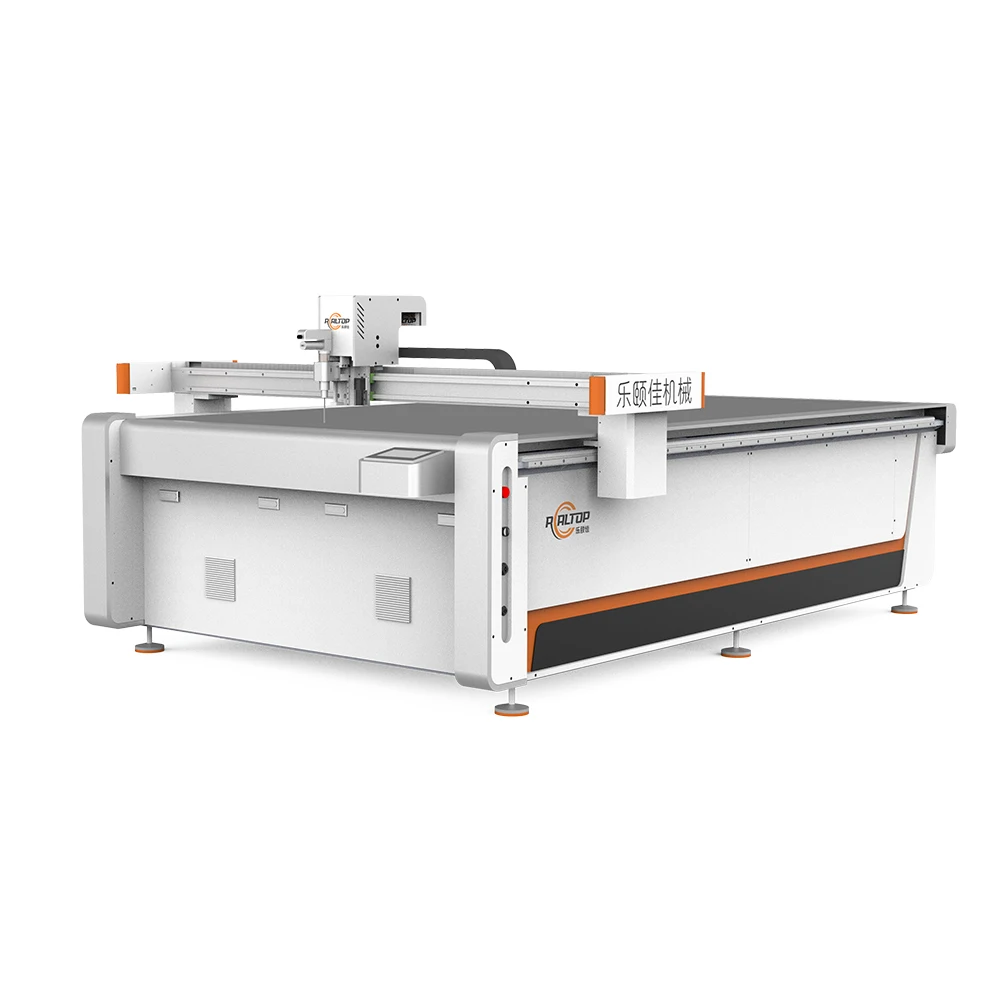


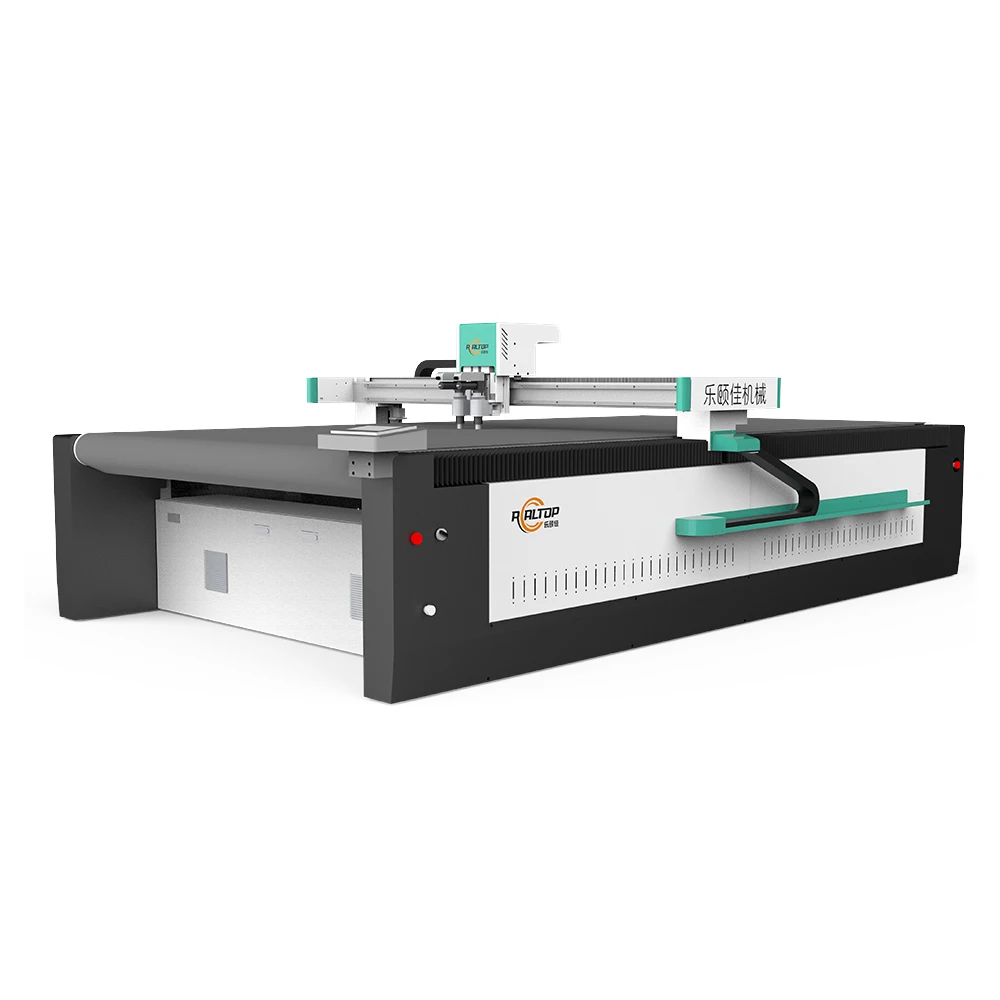


Material-Specific Tool Configuration — Blade type and cutting depth matched to composite layer construction before shipment, verified on buyer’s own material sample.
Technical Specifications
| Parameter | Value |
|---|---|
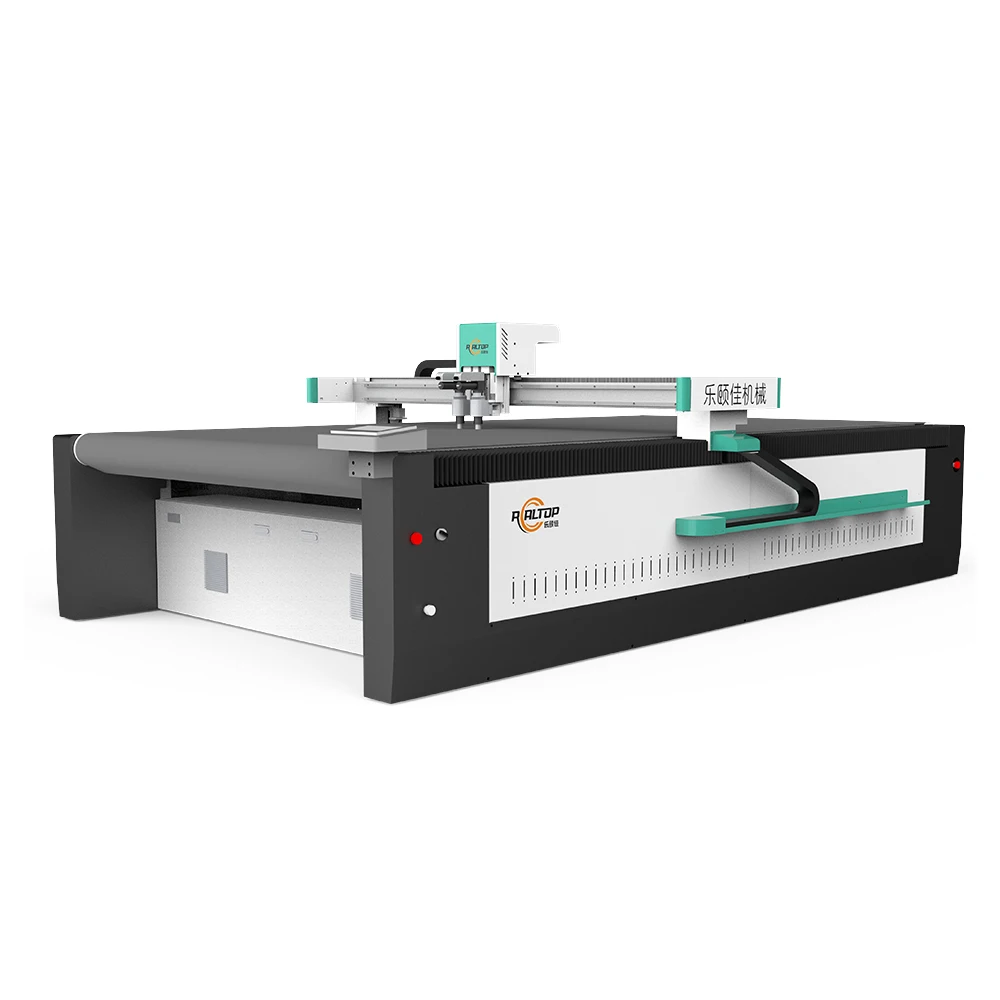
| Product Type | CNC Oscillating Knife Cutting Machine for composites production |
| Working Area | 1600*2500mm |
| Tool Head Options | Oscillating knife, Driven rotary knife, Creasing wheel, Kiss cutting tool, Pneumatic knife, Milling tool, V groove knife |
| Cutting Thickness | ≤ 30mm (basis not stated in source — confirm material type and density) |
| Cutting Speed | 0-2000 mm/s |
| Positioning Accuracy | ±0.1 mm |
| Vacuum Pump Power | 9 kW |
| Vacuum Table | Aluminum bellows vacuum table |
| Machine Frame | Heavy-duty frame with precision-ground surface |
| Voltage Options | 110V, 220V, 380V |
| Servo Drive Options | Panasonic, Delta, Dorna |
| Control System | PLC control panel with optional display languages |
| File Format Compatibility | PLT, DXF, AI, PDF |
| Safety Device | Infrared sensor device and emergency stop device |
| Machine Dimensions (L×W×H) | 330021001350 mm |
| Software | Dedicated packaging box structure design software included |
| Standards | CE |
Application Suitability
| Application | Material or Output |
|---|---|
| Aerospace component fabrication | Carbon fiber prepreg, aramid honeycomb (Nomex), fiberglass cloth, ceramic fiber blankets, thermal and acoustic insulation foam |
| Automotive and rail interior production | Carbon fiber covers, FRP panels, acoustic felt, damping pads, carpets, sealing strips, lightweight body panels, battery insulation pads |
| Wind turbine blade manufacturing | Fiberglass cloth, carbon fiber cloth, vacuum infusion mesh, PET and PVC foam core materials, insulating sheets |
| Sporting goods fabrication | Carbon fiber sheets and fabric, fiberglass, Kevlar, high-performance foam, composite fabrics for bicycle frames, helmet liners, surfboards |
Why Material Density Decides Your Actual Cutting Thickness
A 30mm rating means nothing without knowing what resin system and fiber weave you are actually cutting.
I have watched composite shops order a machine based on a thickness number pulled from a carbon fiber prepreg datasheet, then run into trouble when their actual stock is a glass-fiber-reinforced mix with a different binder. The blade chews through the top layers but drags on the core, leaving delaminated edges across an entire batch. A CNC Oscillating Knife Cutting Machine for composites production handles diverse layups, but only when the cutting depth is validated against your specific material stack — not a generic catalog value [NEED_CITE: composite material density and resin variation effects on cutting tool wear].
Cold Cutting Eliminates Thermal Damage in Resin Systems
Composite matrices degrade under heat. Laser or hot-wire methods alter resin chemistry at the cut edge, weakening the bond between fiber and matrix precisely where structural integrity matters most. The oscillating knife process removes material mechanically at high frequency without generating thermal stress, preserving the engineered properties of carbon fiber prepreg and aramid honeycomb cores. This cold-cutting approach is non-negotiable for aerospace gaskets and structural automotive panels where edge certification is required.
Vacuum Hold-Down for Flexible Layups and Core Materials
Composite fabrics and infusion meshes shift under blade pressure if the table cannot grip them uniformly. The aluminum bellows vacuum table on this system provides full-surface adsorption across the 1600*2500mm working area, locking flexible fiberglass cloth and PET foam cores in place during high-speed contour cuts. For small aerospace seal profiles, zoning the vacuum into sections prevents lift without requiring mechanical clamps that could mark the material surface [NEED_CITE: vacuum hold-down requirements for flexible composite materials].
Matching Tool Heads to Composite Layer Construction
The interchangeable tool head system allows blade selection per material rather than forcing one knife through every layup. A drag knife works for single-ply fiberglass cloth, while a pneumatic oscillating knife handles thicker carbon fiber boards where blade rigidity must match fiber density. For Nomex honeycomb cores used in aerospace interiors, a driven rotary knife slices cell walls cleanly without crushing the structure. The V groove knife option enables bevel cuts on sandwich panels where edge angle affects downstream bonding.
What the Specs Mean for Your Production Floor
The ±0.1mm positioning accuracy matters when cutting aerospace gaskets that must seat against machined metal flanges — any deviation forces manual trimming that compromises the fiber edge. Servo drive selection across Panasonic, Delta, and Dorna lets buyers match motion control to their existing maintenance ecosystem rather than introducing a new brand. The 9kW vacuum pump provides sufficient suction for the full table area, though shops cutting primarily small parts should confirm zoning configuration before order to avoid air bleed on unoccupied zones. File format compatibility with PLT, DXF, AI, and PDF means existing nesting workflows transfer without re-drawing toolpaths.
The Cost of Skipping Material Trials
Buyers who specify based on working area alone and skip the cutting trial often discover edge quality problems only after the machine arrives. A blade that performs well on standard carbon fiber plate may delaminate a glass-fiber hybrid with a different resin content. Vacuum zones configured for large panels leave small gasket blanks lifting mid-cut. Software that imports DXF files may not support the nesting algorithm your production planner already uses. These mismatches do not appear in a brochure — they surface on the first production day [NEED_CITE: common CNC cutting machine specification mismatches in composite fabrication].
Why Source This System From REALTOP
In-house design covers both knife and laser cutting technologies, so composite buyers select the process that fits their material rather than adapting to a single-method supplier. Tool head and table configuration is specified per material stack and production volume before the order is locked. CCD camera positioning is available for printed contour work on composite skins where registration marks guide trim paths. Software compatibility with buyer file formats is confirmed before shipment. Voltage, plug type, and control language are customized to the destination market. Sample cutting on the buyer’s own composite material is performed before commitment, with edge quality and cutting speed documented.
Documentation & Verification
- Machine specification sheet listing configured tool heads and vacuum zoning for your composite materials
- Electrical schematic with voltage and frequency confirmed for your facility supply
- Sample cutting report on your specific composite layup with edge photographs and speed data
- Tool head configuration list matching blade type to each material in your production mix
- Software license and file format compatibility confirmation for your nesting workflow
- Factory test record documenting cut accuracy across your specified material thickness range
Installation, Commissioning & Support
- Floor space planning around 330021001350mm machine dimensions with access clearance for material loading
- Dedicated circuit for 9kW vacuum pump plus servo and control power at confirmed voltage
- Machine arrives assembled on heavy-duty frame requiring utility connection only, no structural build
- PLC control panel commissioned with operator display language set to your shop floor standard
- Training covers tool head changeover, vacuum zone selection, and nesting software workflow
- Spare parts list includes oscillating blades, vacuum seals, and servo-specific wear components
What We Need To Configure Your System
Provide the composite materials you cut — fiber type, resin system, layer count, and total thickness — along with your typical sheet dimensions and daily volume. Confirm your facility voltage, frequency, and preferred operator language. If you have an existing nesting workflow or preferred file format, share a sample file so we can verify import and toolpath generation before building your configuration.
Frequently Asked Questions
Q: How do I confirm the machine can cut my specific composite thickness?
A: Send a sample of your actual material — including fiber type, resin system, and layer construction — for a trial cut. We document edge quality, cutting speed, and blade wear on your material before you commit. The published 30mm maximum is a starting point; real capacity depends on your composite density and structure.
Q: Which tool head should I use for carbon fiber versus fiberglass?
A: Carbon fiber boards typically require a pneumatic oscillating knife for rigidity through dense fiber layers, while single-ply fiberglass cloth cuts cleanly with a standard drag knife. Honeycomb cores need a driven rotary knife to avoid crushing cells. We specify the tool head per material in your production mix before order confirmation.
Q: How should vacuum zones be set up for small composite parts?
A: Small gaskets and seal profiles require localized vacuum zoning to prevent material lift without bleeding suction across unoccupied table areas. We configure the aluminum bellows vacuum table zones based on your typical part size range and confirm hold-down performance during the sample cutting trial.
Q: Will my existing nesting software files work with this machine?
A: The system accepts PLT, DXF, AI, and PDF formats. Before shipment, we test your actual production files through the nesting workflow to confirm import, toolpath generation, and cut sequencing. If your existing software uses a proprietary format, we verify compatibility or identify the conversion step needed.





商品评价
Clear filtersThere are no reviews yet.