


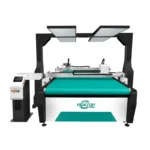
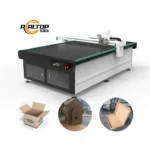
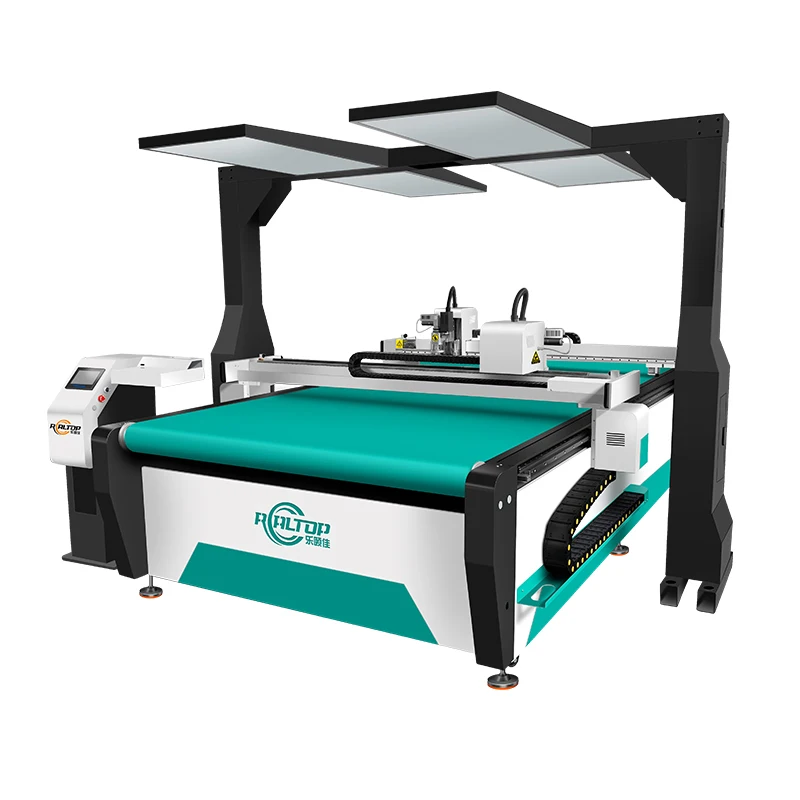
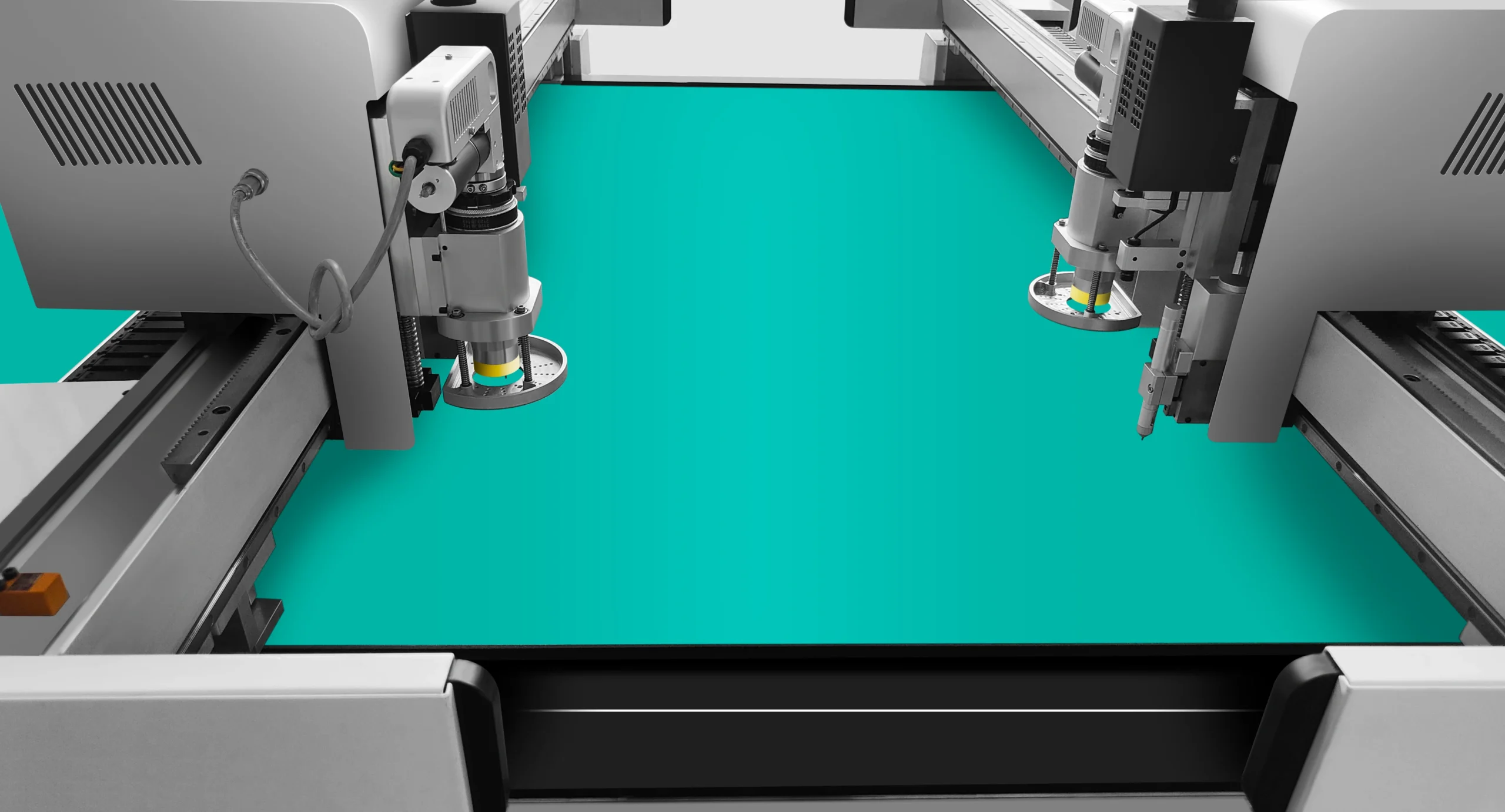

Leather Cutting Configuration — Tool head, vacuum zoning and nesting workflow are matched to your specific hide type, ply count and daily volume before the machine is built, not after it arrives.
Technical Specifications
| Parameter | Value |
|---|---|
| Product Type | CNC Oscillating Knife Cutting Machine |
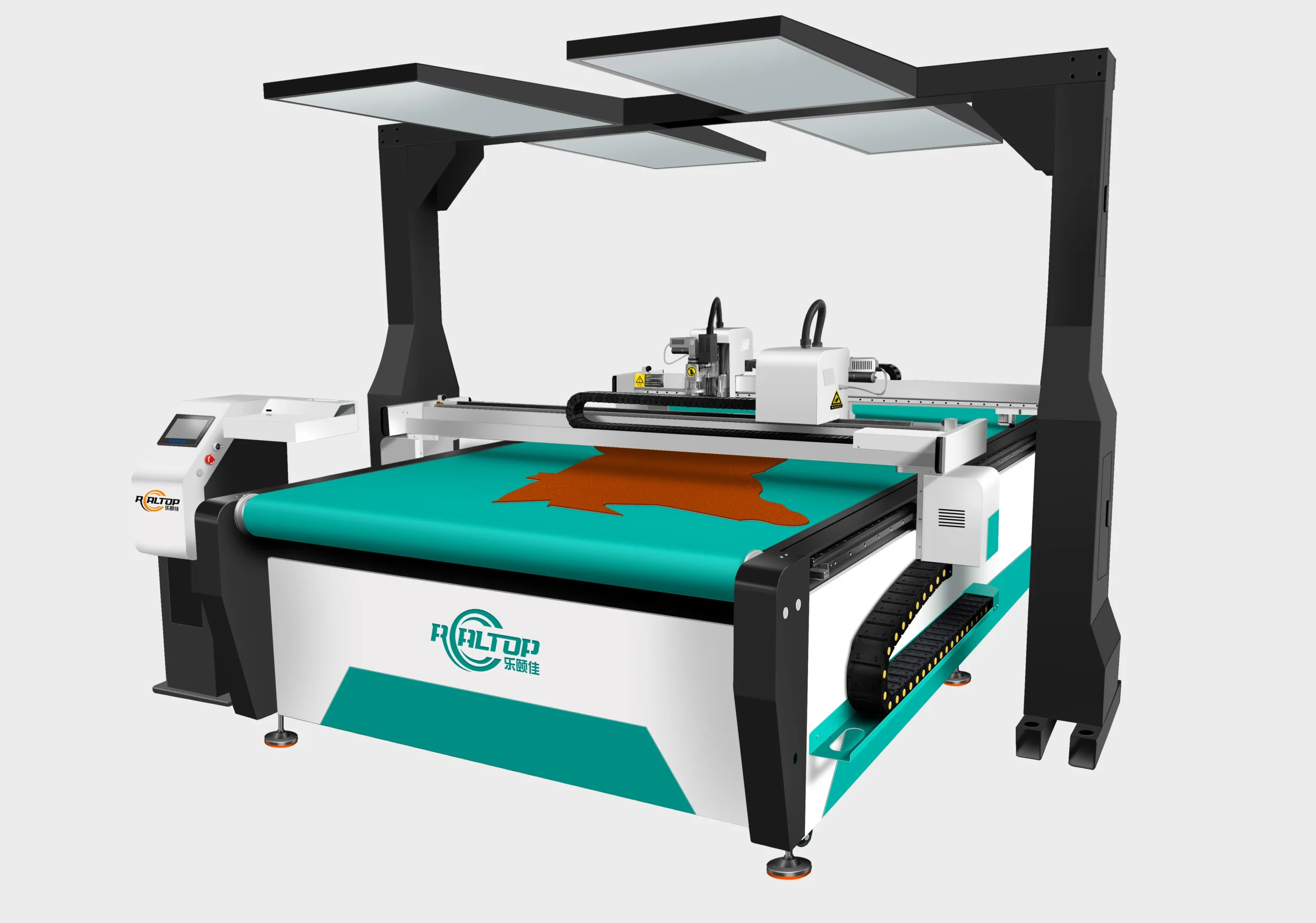
| Working Area | 1600×2500 mm |
| Machine Size (L×W×H) | 3450×2300×1250 mm |
| Rated Power | 9 kW |
| Voltage | 380V ±10% |
| Control System | CNC with HP-GL compatible instruction format |
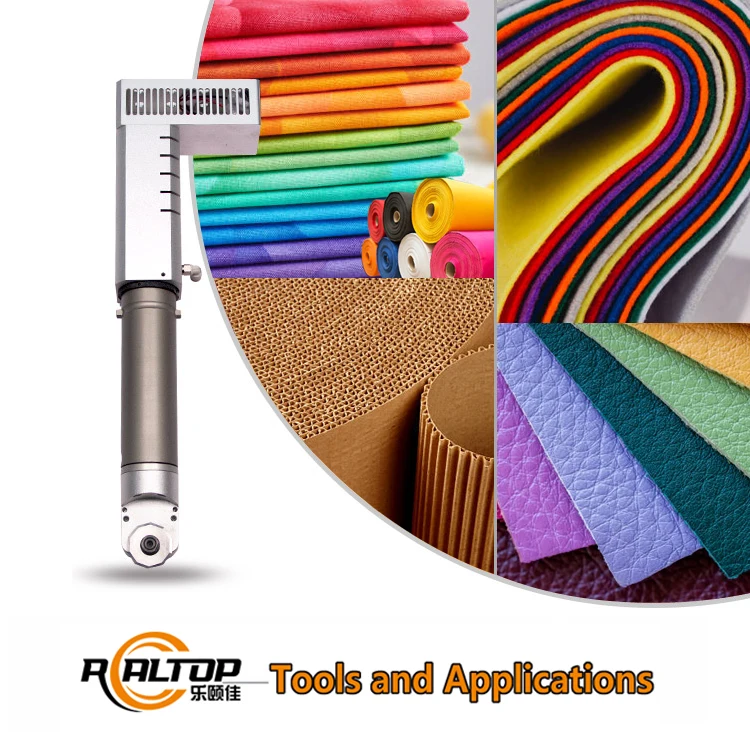
| Tool Head Options | Multifunctional head (Swiss imported knife, vibration full/half cutting, cursor location); optional pneumatic knife, high-power vibrating knife, circular knife, V cutting knife, drag knife, creasing wheel, dotted line knife, punching, brush |
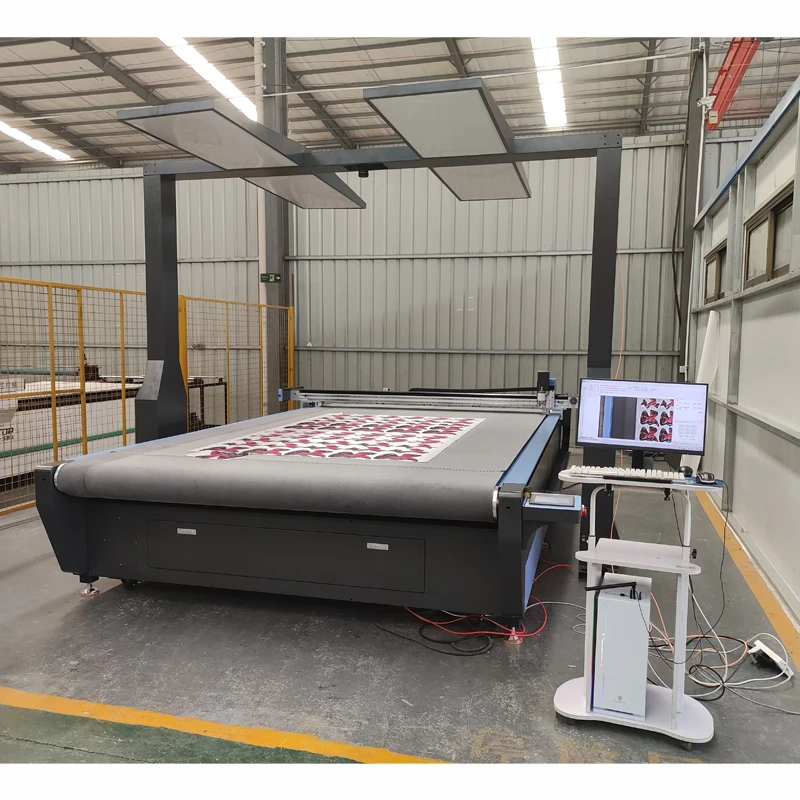
| Visual Positioning | Small CCD camera mark point positioning; panoramic camera recognition; projection positioning |
| Cutting Thickness | 20–80 mm (basis not stated in source) |
| Repeatability | ≤0.1 mm |
| Transmission System | Digital servo motor, linear guide, synchronous belt, ball screw |
| Translational Velocity | 800–1200 mm/s |
| Vacuum Table | Aluminum alloy vacuum adsorption with 7.5 kW vacuum pump |
| Feeding System | Automatic pulling and receiving; Germany imported conveyor belt |
| Safety Device | Infrared sensors |
| Cutting Materials | Leather, sponge composite leather, PVC, soft glass, silicon, rubber, clothing flexible material |
| Software | Realtop self-developed nesting and pattern cutting software; automatic irregular contour extraction and flaw identification |
| Language Options | English, Russian, Italian, Chinese; special languages customizable |
| Assembly State | Fully assembled |
| Frame | Hard steel frame structure |
| Patents | 5 patents technology certification (domestic and international) |
Application Suitability
| Application | Material or Output |
|---|---|
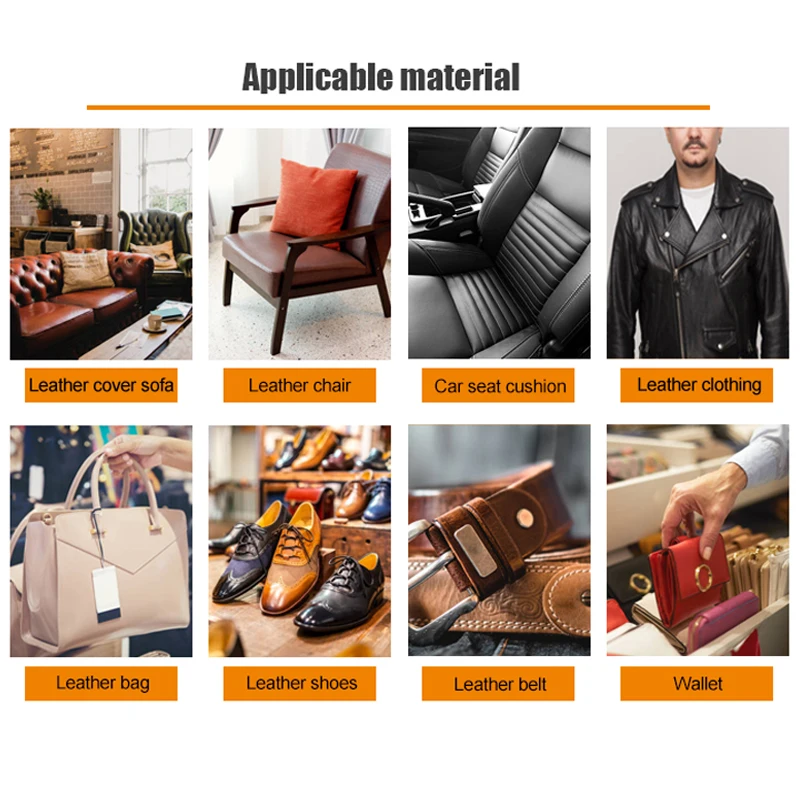
| Footwear and leather goods production | Genuine leather, synthetic leather, composite hides for uppers, linings and bag panels |
| Automotive interior trimming | Leather and sponge composite leather for seat covers, door panels and headliners |
| Luggage and bag manufacturing | Multi-ply synthetic leather and PVC with irregular contour nesting |
| Gasket and sealing fabrication | Rubber, PTFE and ETFE sheets for industrial sealing applications |
| Flexible packaging and signage | Corrugated cardboard, plastic box material, sticker film with CCD contour tracking |
| Soft furnishing and carpet cutting | Foam board, EVA, XPE, PU for home textile and floor mat production |
Why Leather Thickness Alone Does Not Define the Cutting Setup
A machine specified on working area alone, then found unable to handle the material thickness — this is the most common failure I see when buyers move from sample approval to full production on a CNC knife cutting machine production line. The cutting configuration must be validated against your actual leather type, ply structure and thickest composite layer before any purchase commitment.
Early in my career at an automotive interior plant, we ran a trial on a 1625 oscillating knife cutter using standard PU leather. The sample cut was clean. When we switched to the real production material — a leather face bonded to a foam backing — the blade could not penetrate the lower layer. Hundreds of sheets were scrapped before we traced the problem to an underspecified knife stroke and incorrect vacuum zoning. The machine was not wrong for the job; the configuration simply had not been matched to the material stack [NEED_CITE: material stack validation in leather cutting procurement].
Matching Tool Head to Leather Structure
Leather is not a uniform sheet. A split hide behaves differently from a bonded composite, and a foam-backed automotive seat panel cuts nothing like a flat shoe upper. The multifunctional head on this CNC knife cutting machine production line accepts interchangeable tooling — oscillating knife for full-depth cuts, drag knife for thin synthetics, creasing wheel for fold lines, and punching for eyelets or ventilation holes. Selecting the right combination means one workstation handles cutting, creasing and marking in a single pass, eliminating the secondary operations that slow down a leather goods line.
Vision Systems That Hold Up at Production Speed
Printed contours on genuine leather are irregular by nature. A small CCD camera locates mark points for die-shape alignment, while the panoramic camera option scans an entire hide to extract contours and identify surface flaws before nesting begins. This matters because a flaw missed by the vision system becomes a rejected part downstream [NEED_CITE: CCD contour recognition accuracy on natural leather at production speed]. For synthetic rolls with repeating prints, the projection positioning option overlays the cut path on the material surface so operators can verify alignment before the knife engages.
Reading the Specs That Actually Matter on the Floor
The 7.5 kW vacuum pump paired with the aluminum alloy table is sized to hold flexible materials flat across the full 1600×2500 mm work area. But vacuum is not just about total suction — zoning determines whether a small pattern piece stays put when the oscillating knife lifts at the end of a stroke. Without adequate zoning, lightweight leather offcuts shift and the next pass miscuts. The digital servo motor and linear guide combination delivers ≤0.1 mm repeatability, which directly affects how tightly nested patterns can be placed without risking overlap on expensive hides. Translational velocity of 800–1200 mm/s is the travel speed of the head between cuts; actual cutting speed depends on material density and knife stroke frequency [NEED_CITE: relationship between translational velocity and effective cutting speed on leather composites]. The 9 kW rated power covers the spindle, vacuum pump, conveyor and control cabinet together, so your electrical planning must account for the full draw rather than just the cutting motor.
The Hidden Cost of Skipping Material Trials
When a buyer approves a machine based on a generic sample — say, a standard PU swatch — and then runs a foam-backed automotive leather in production, the bottom layer tears instead of cutting. The result is not just scrap material; it is downtime while the tool head is reconfigured, vacuum zones are re-mapped and the nesting software is adjusted for the new material kerf [NEED_CITE: cost of post-delivery reconfiguration on CNC knife cutting systems]. I have watched entire shifts lost to this exact sequence. The fix is simple: send your actual production material to the factory for a documented sample cutting before the order is finalized.
Why Source This Machine From the Builder, Not a Broker
In-house design covers both the knife cutting head and the vacuum table, so configuration changes are engineered into the frame rather than bolted on afterward. The cutting method is matched to your material — oscillating knife for thick composites, drag knife for thin films — based on test results, not catalog defaults. Software compatibility with your existing nesting files (DXF, PLT, HP-GL) is confirmed before production begins, avoiding the format-conversion delays that stall installation. Voltage, plug type and control language are documented and locked in the electrical schematic before the machine leaves Jinan. Sample cutting on your own material generates a report you can review before committing capital.
Documentation & Verification
- Machine specification sheet covering all tool head and vacuum zone options selected for your material
- Electrical schematic with voltage and frequency confirmation for your installation site
- Factory test record documenting cutting results on your actual leather sample before dispatch
- Software license and file format compatibility note matching your nesting workflow
- Tool head and table configuration list detailing every interchangeable tool included in your order
Installation, Commissioning & Support
- Fully assembled 3450×2300×1250 mm frame requires floor space planning with clearance for the conveyor feed and material receiving end
- Dedicated 380V ±10% circuit rated for the 9 kW total draw, with voltage confirmation documented before shipment
- 7.5 kW vacuum pump commissioning includes zoning calibration matched to your smallest pattern piece size
- Control system language set and nesting software file import verified during on-site operator training
- Spare parts list covers Swiss imported knife blades, conveyor belt sections and infrared sensor units
What to Include in Your Inquiry
To get a configuration that actually fits your line, share the leather type and thickness range you run, your daily sheet volume, and the smallest part dimension in your nesting patterns. If your shop runs on a voltage standard different from 380V, state that upfront so the transformer and motor specifications are adjusted before build. Mention the file format your design team currently uses so we confirm software compatibility before the machine ships.
Frequently Asked Questions
Q: How is the cutting configuration matched to my specific leather type and daily volume?
A: We start with your material sample — the exact leather, ply count and backing you run in production. A test cut is performed using different tool head and vacuum zone combinations, and the results are documented in a sample cutting report. Only after you approve the edge quality and cutting depth do we finalize the configuration and build the machine.
Q: Can the vision system reliably track irregular contours on genuine leather?
A: The panoramic camera scans the full hide to extract natural contours and surface flaws before nesting begins. For synthetic materials with printed marks, the CCD camera locates reference points at production speed. Both systems are tested on your actual material during the pre-order sample trial, so reliability is verified before commitment.
Q: Will small leather parts lift off the table during high-speed cutting?
A: The aluminum alloy vacuum table is divided into zones controlled by the 7.5 kW pump. Zone layout is configured based on the smallest part in your nesting pattern. During commissioning, each zone is calibrated to hold your specific material thickness and weight, and the result is recorded in the factory test documentation.
Q: How does the nesting software work with my existing design files?
A: The Realtop nesting software accepts DXF, PLT and HP-GL formats and includes automatic irregular contour extraction with flaw identification. Before your order is confirmed, we test import and nesting of your actual production files to verify compatibility and material yield, avoiding format issues during installation.
Q: What documentation arrives with the machine?
A: You receive a specification sheet, electrical schematic with voltage confirmation, tool head configuration list, sample cutting report on your material, factory test record, operation manual, software license with file format compatibility note, spare parts list and packing photographs. All documents reference your specific machine configuration.


商品评价
Clear filtersThere are no reviews yet.