



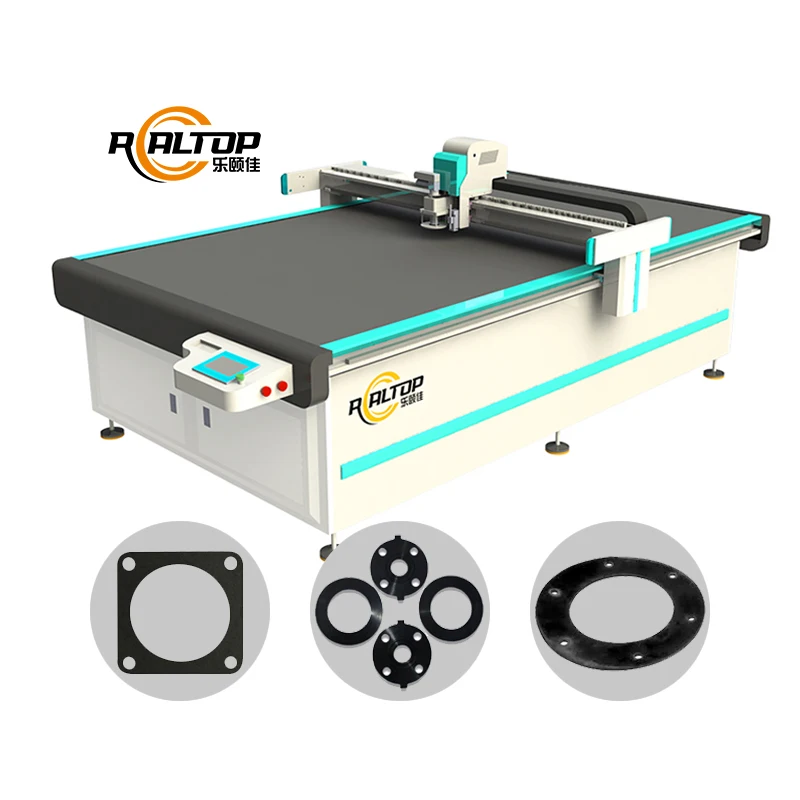

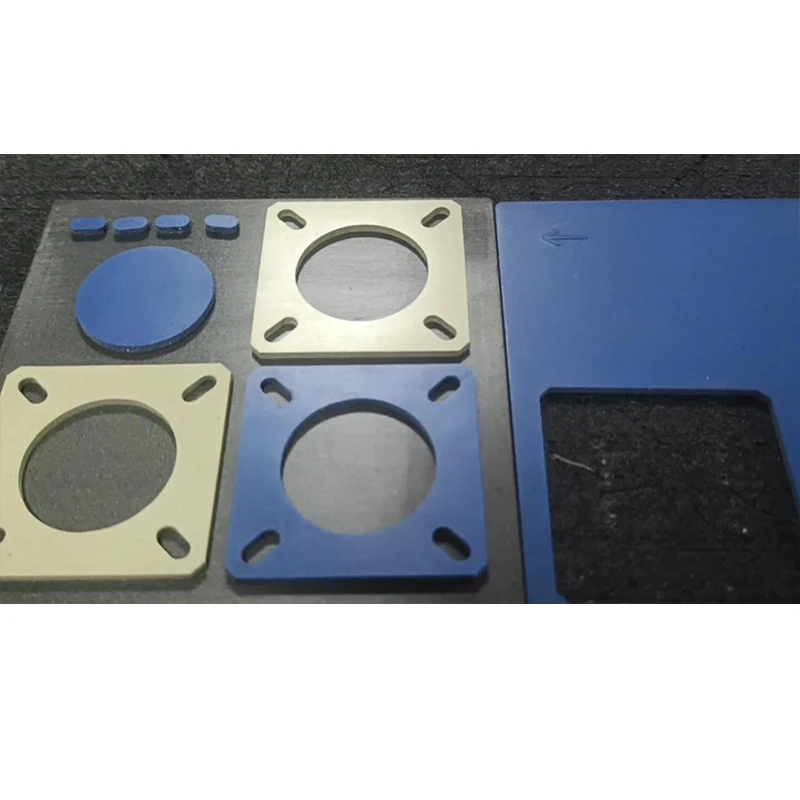


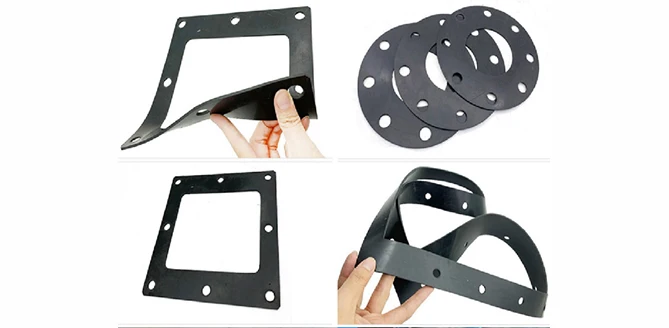

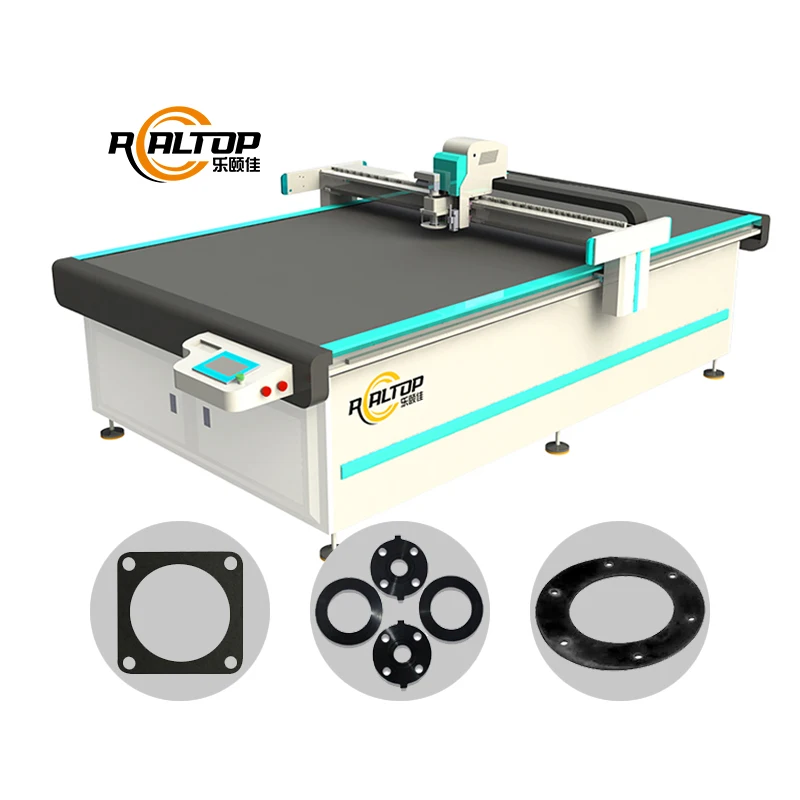
Tool head specified per gasket material stack — oscillating, pneumatic and drag knife options configured on a single multifunctional cutting head so rubber, PTFE and composite sealing sheets each receive the correct cutting action rather than a compromise blade angle.
Technical Specifications
| Parameter | Value |
|---|---|
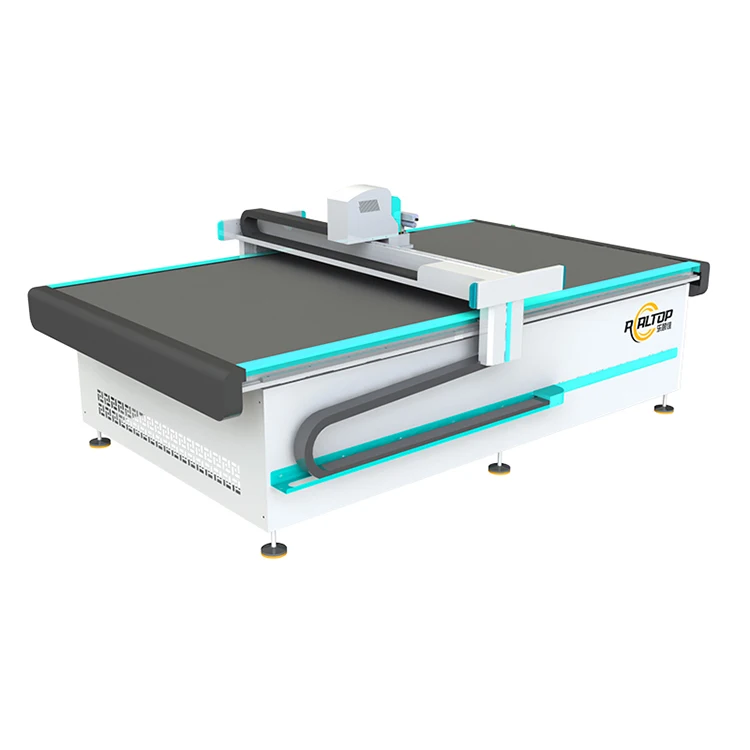
| Product Type | CNC Oscillating Knife Cutting Machine for Gasket and Sealing Materials |
| Working Area | 1600×2500 mm |
| Machine Size | 3450×2300×1250 mm |
| Rated Power | 9 kW |
| Voltage | 380V±10% |
| Servo Motor | Delta (Panasonic optional); IP67 waterproof rating |
| Linear Guide | Taiwan Hiwin rail |
| Translational Velocity | 800–1200 mm/s |
| Cutting Thickness | 20–80 mm (basis not stated in source — confirm material type and format) |
| Repeated Accuracy | ≤0.1 mm |
| Worktable | Magnesium-aluminum alloy vacuum adsorption table, fluorocarbon PVDF powder sprayed, anodized and hard oxidized |
| Vacuum Pump | 7.5 kW, aviation aluminum shell with built-in silencer sponge |
| Multifunctional Tool Head | Swiss imported knife with vibration full cutting, vibration half cutting, cursor location |
| Tool Head Options | Oscillating knife, pneumatic knife, high-power vibrating knife, circular knife, V-cutting knife, drag knife, creasing wheel, dotted line knife, punching, brush |
| Visual Positioning Options | Small CCD camera mark point positioning, panoramic camera recognition, projection positioning |
| Safety Device | Infrared induction blocking, anti-collision beam sensors, emergency stop |
| Control System | CNC with HP-GL compatible instruction format |
| Feeding System | Germany imported conveyor belt, auto feeding |
| Language Options | English, Russian, Italian, Chinese; special languages customizable |
| Warranty | One year free warranty; lifetime technical support and parts service |
Application Suitability
| Application | Material or Output |
|---|---|
| Automotive gasket and sealing pad production | Rubber, silicone and composite fiber sheets cut to flange profiles |
| Industrial sealing fabrication | PTFE, ETFE and soft glass materials processed in medium-to-high volume runs |
| HVAC and plumbing gasket manufacturing | Corrugated board, composite fiber and compressed non-asbestos sheets nested for material yield |
| Electrical insulation gasket cutting | Aramid fiber, pressboard and silicone-coated glass cloth |
| General industrial sealing pads | NBR, EPDM, fluoroelastomer and neoprene sheets |
Why Material Hardness Decides More Than Working Area on a CNC Gasket Cutting Machine Production Line Workflow
A machine chosen on bed size alone will underperform the moment the gasket material exceeds the tool head’s cutting capacity.
I once shipped a vibrating knife plotter to a Middle East customer who sent standard nitrile rubber samples for testing — clean edges, fast cycle, everything checked out on the factory floor. When the machine arrived, his actual stock was high-durometer fluoroelastomer. The blade could not hold an edge, and every gasket came off the table with ragged burrs that failed his QC inspection. It took a half-month of re-parameter tuning and tooling swaps before the line was accepted. That gap between sample material and production stock is the single most common cause of commissioning disputes on CNC gasket cutting machine production line workflow projects [NEED_CITE: common causes of CNC cutting machine commissioning delays]. The cutting thickness range listed in a brochure means little without confirming the density, Shore hardness and reinforcement layers of your actual gasket sheet.
Matching Tool Head to Sealing Material Density
The multifunctional head on this platform accepts oscillating knife, pneumatic knife, high-power vibrating knife, circular knife, V-cutting knife and drag knife inserts. Soft elastomer sheets such as EPDM and silicone respond well to a high-frequency oscillating blade, which prevents material drag and keeps edge surfaces clean. Denser or fiber-reinforced stock — compressed non-asbestos, aramid composites, PTFE-filled laminates — needs the downward force and stroke length of a pneumatic knife to penetrate without blade deflection. The CNC gasket cutting machine production line workflow only holds its target throughput when the correct tool head is locked in before the first nesting file is sent.
Vacuum Zoning and Small Gasket Hold-Down
Gasket profiles are often intricate — bolt-hole cutouts, narrow flange lips, internal passages — and the leftover skeleton is removed while small finished parts remain on the table. The magnesium-aluminum alloy vacuum table with PVDF fluorocarbon coating provides zoned suction across the 1600×2500 mm work surface. Zoning matters because a single undivided vacuum region loses suction the moment the skeleton is peeled away, and small gaskets lift into the blade path. Properly configured zones maintain negative pressure only under the parts still being cut, preventing lift-related edge damage and misregistration [NEED_CITE: vacuum table zoning principles for CNC flatbed cutting].
Reading the Specification Sheet Against Your Gasket Stack
The 9 kW rated power drives both the 7.5 kW vacuum pump and the cutting head simultaneously, leaving adequate reserve for continuous operation. The Taiwan Hiwin linear guides and Delta servo motors — with Panasonic as an optional upgrade — deliver ≤0.1 mm repeated accuracy, which is the tolerance band most industrial gasket specifications demand for bolt-pattern registration. Translational velocity of 800–1200 mm/s is the travel speed, not cutting speed; actual cutting feed rate depends on material thickness and tool head selection. The HP-GL compatible control system accepts nesting output from common gasket design software, but file format compatibility should still be confirmed before order placement so that DXF, PLT or AI exports arrive without translation errors.
The Cost of Choosing Configuration After the Price Is Agreed
When a gasket cutting line is ordered on price alone and configuration is settled later, the consequences surface at commissioning. Insufficient vacuum zoning lets small flange gaskets drift during cutting, producing scrap that the nesting software never predicted. A vibrating knife specified for soft rubber cannot cut 6 mm PTFE without excessive blade wear, driving consumable cost and unplanned downtime upward. CCD contour recognition promised for kiss-cut registration on printed gasket sheets may fail to track marks at full production speed if camera resolution and processing speed are not matched to the mark format [NEED_CITE: CCD positioning accuracy on printed contour cutting applications]. These are not warranty claims — they are configuration mismatches that the buyer absorbs.
Why Source This Platform from the Jinan Production Facility
In-house design covers both knife and laser cutting technologies, so the cutting method is matched to the gasket material rather than forced onto one method. Tool head and table configuration are specified per material density and daily volume before the order is locked. CCD camera positioning — small mark-point or panoramic — is available for printed contour registration and tested against the buyer’s mark format. Software compatibility is confirmed with sample files before production begins. Voltage, plug type, control language and safety labeling are customized to the destination market, and sample cutting on the buyer’s own gasket material runs before the machine leaves the factory [NEED_CITE: CE machinery directive requirements for industrial equipment].
Documentation & Verification
- Factory test record cut on your gasket material thickness and hardness before dispatch
- Tool head and vacuum table zoning configuration list matched to your part profile
- Electrical schematic with voltage, frequency and plug type confirmed for destination
- Software licence key and file format compatibility note for your nesting workflow
- Sample cutting report with edge quality photographs and measured tolerances on your stock
Installation, Commissioning & Support
- 3450×2300 mm footprint requires level concrete floor with clearance for auto-feeding conveyor
- 380V±10% dedicated circuit with rated 9 kW capacity and correct phase sequence verified before power-on
- Machine ships fully assembled; vacuum pump and conveyor belt connected on-site
- First-run parameter tuning covers blade stroke, oscillation frequency and vacuum zone mapping for your gasket stock
- Operator training covers tool head changeover, nesting import and CCD mark-point calibration
- Spare blade inventory and consumable wear-part list provided with one-year warranty coverage
What to Include with Your Inquiry
Send the gasket material data sheet — polymer type, Shore hardness, reinforcement layers and sheet thickness — along with a DXF or PLT file of your most complex flange profile. Specify your daily production volume and the nesting format your design team currently uses. Confirm the destination voltage, frequency and preferred control language so that the CNC gasket cutting machine production line workflow is matched to your shop floor from the first day of operation.
Frequently Asked Questions
Q: How is cutting thickness verified for my specific gasket material before the order is placed?
A: We request a sample of your actual gasket stock — including thickness, Shore hardness and any reinforcement layers — and run cutting tests across the relevant tool heads. A sample cutting report documents edge quality, dimensional tolerance and achievable feed rate. Only after you approve the report do we lock the configuration and proceed to production.
Q: Which tool head is right for rubber versus PTFE versus fiber-reinforced composite gasket stock?
A: Soft elastomers like NBR and EPDM typically run on a high-frequency oscillating knife for clean edges without material drag. PTFE and dense composites need the downward force of a pneumatic knife to prevent blade deflection. We test your material on multiple heads and recommend the option that holds edge quality over a full production shift.
Q: How does vacuum table zoning affect small gasket part hold-down and edge quality?
A: Zoned suction maintains negative pressure only under parts still being cut, so removing the surrounding skeleton does not pull air from under small flange gaskets. Without proper zoning, those parts lift into the blade path, causing ragged edges and dimensional drift. We configure the 1600×2500 mm table zones to match your typical part size distribution.
Q: What software file formats and nesting workflows are compatible with the control system?
A: The CNC control accepts HP-GL compatible instructions and imports DXF and PLT files. We verify compatibility with your existing nesting software before order confirmation, running a sample file through the full workflow to confirm that kerf compensation, tool-path sequence and contour recognition behave as expected.
Q: How does CCD positioning perform on printed contour marks at full production throughput?
A: Small CCD mark-point and panoramic camera options are available. We test recognition against your printed mark format — size, color and contrast — at target cutting speed. If the camera cannot track marks reliably at production pace, we adjust lighting, camera resolution or mark specification before the machine ships.




商品评价
Clear filtersThere are no reviews yet.