



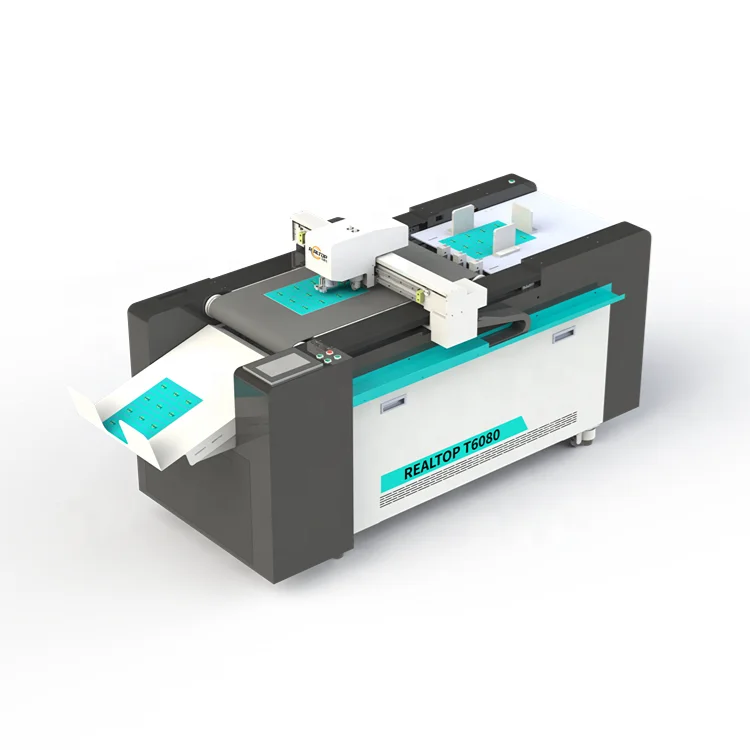
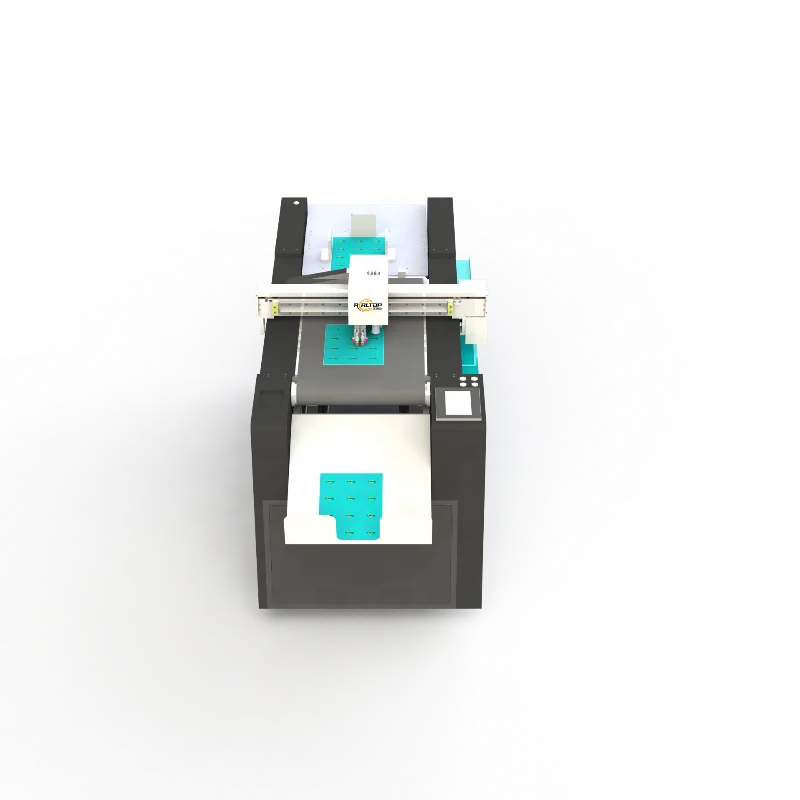
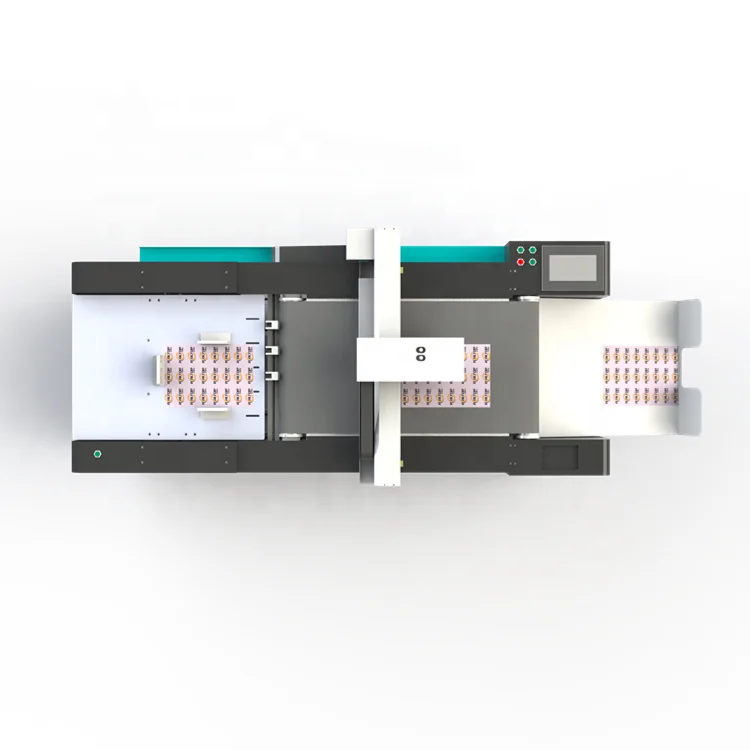
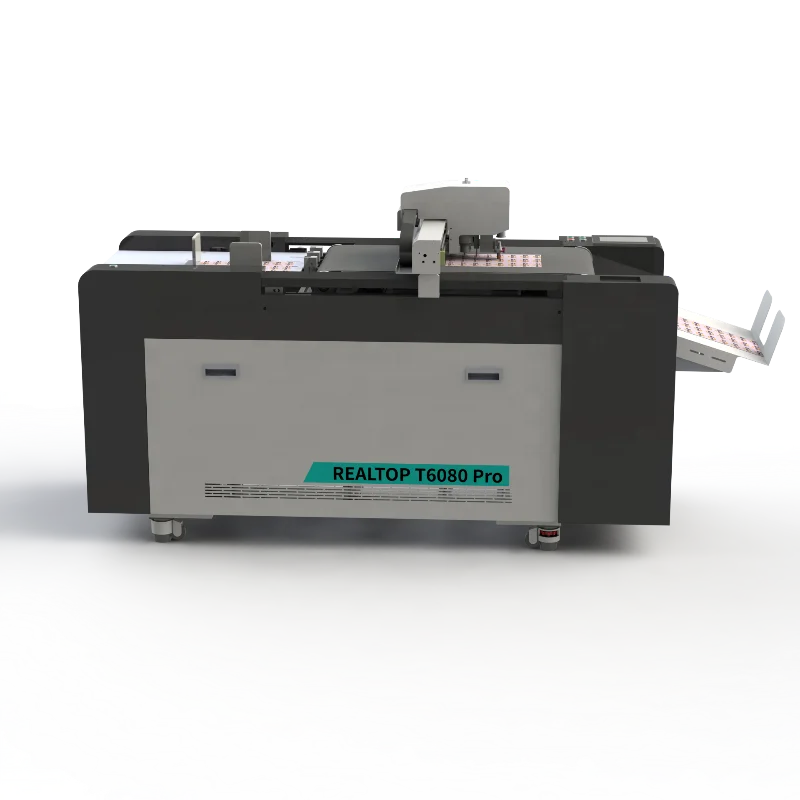
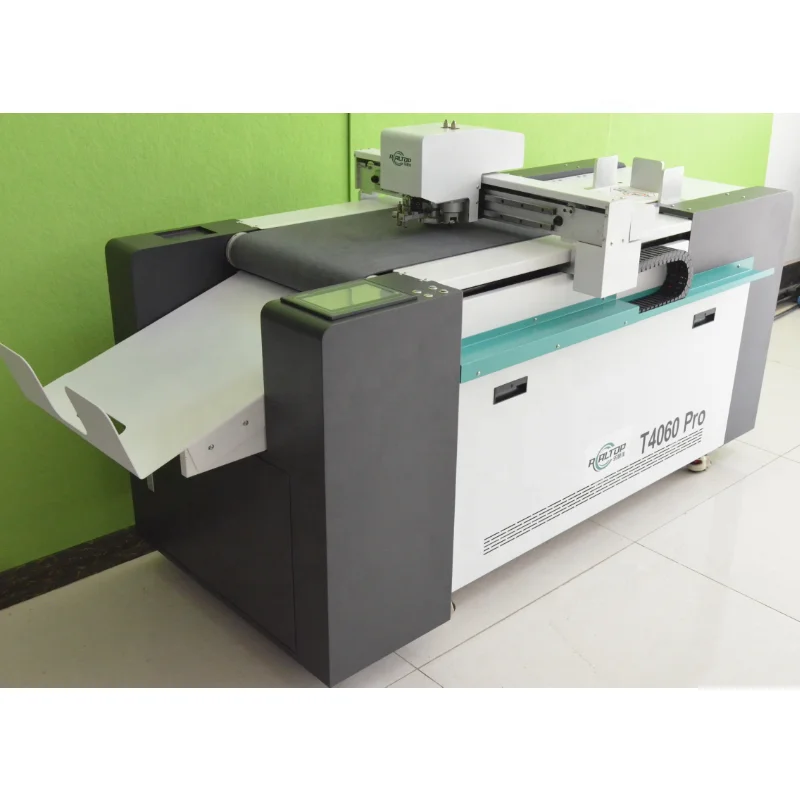

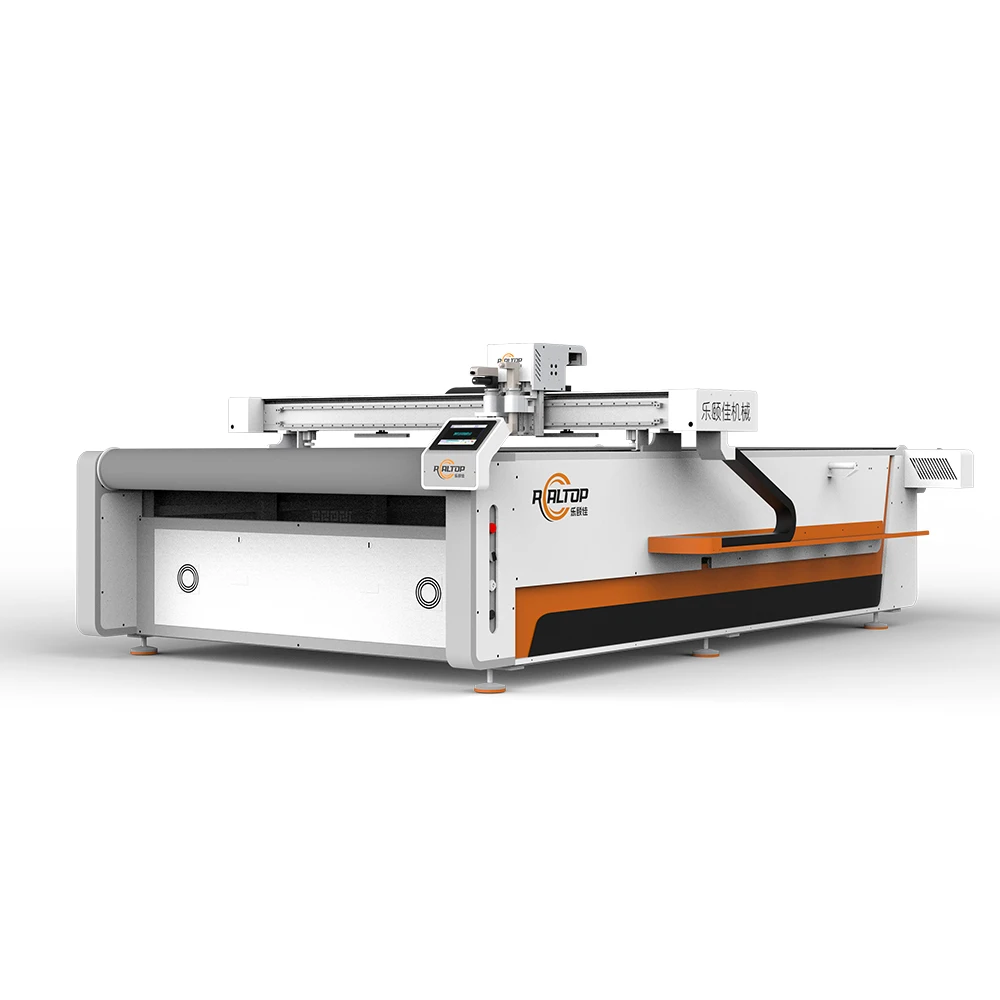
Precision Tool Configuration — RTT6080 series cutting and creasing heads selected per card stock weight and coating, verified on buyer material before order.
Technical Specifications
| Parameter | Value |
|---|---|
| Model | RTT6080 / RTT6080 Pro |
| Product Type | CNC Digital Card Cutting Machine |
| Max Working Area | 600mm × 800mm |
| Tool Group | Cutting tool, kiss cutting tool, creasing tool, CCD camera; high speed oscillating knife (Pro model) |
| Max Cutting Speed | 1500mm/s (basis not stated in source — confirm material type and thickness) |
| Cutting Thickness (RTT6080) | ≤2mm |
| Cutting Thickness (RTT6080 Pro) | ≤5mm |
| Positioning Accuracy | 0.05mm |
| Compatible File Formats | DXF, PLT, PDF, AI |
| Data Transfer | Ethernet port |
| Rated Power | 3.2kW |
| Voltage & Frequency | 220V / 380V, 50Hz |
| Warranty | One year for whole machine |
Application Suitability
| Application | Material or Output |
|---|---|
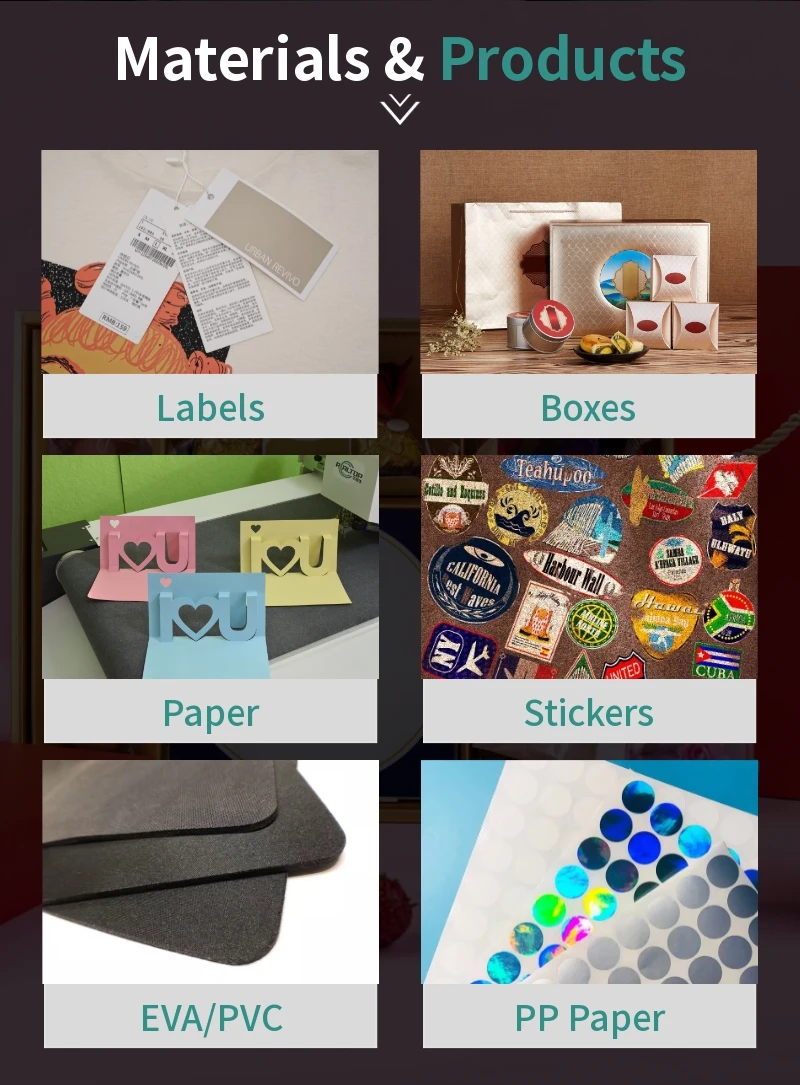
| Playing card and trading card production | Coated card stock, full cutting and kiss cutting on 300–400 gsm board |
| Greeting card and business card finishing | Pre-printed card stock with CCD-traced contour cutting |
| Packaging sample and prototype making | Paperboard, cardstock, and thin corrugated from DXF or AI files |
| Small-format digital die-cutting | Laminated card, magnetic sheet, and composite card stock up to 5mm on Pro model |
Why Specified Cutting Thickness Decides the Entire Card Run
The difference between a clean die-cut edge and a crushed, delaminated card often comes down to whether the machine was rated for the stock you actually feed it.
I have watched a card shop run 350 gsm coated stock on a cutter rated for 1mm paper. The blade dragged, the coating cracked along the crease, and two thousand sheets went straight to recycling. The RTT6080 handles card stock up to 2mm, while the RTT6080 Pro extends capacity to 5mm with a high speed oscillating knife — a necessary shift when moving from standard business cards into rigid packaging inserts or layered board prototypes [NEED_CITE: cutting force requirements for coated card stock above 300 gsm]. Choosing the correct model tier before the order avoids that scrap pile entirely. A CNC digital card cutting machine production line only delivers when its depth rating matches your heaviest scheduled job, not your lightest.
CCD Camera Alignment for Printed Card Artwork
When cards come pre-printed with offset or digital artwork, every sheet carries slight registration drift from the press. The integrated CCD camera on the RTT6080 reads printed marks and adjusts the cut path in real time, keeping contour cuts aligned to the graphic across the full 600 × 800mm bed. This matters for greeting cards with full-bleed illustrations and trading cards where a 0.5mm misregistration shows as a visible white border on the finished product.
Multi-Tool Workflow on a Single Table
A complete card finishing pass requires more than a through-cut. The RTT6080 tool group covers full cutting, kiss cutting for peel-off sections, and creasing for fold lines — all mounted on the same gantry. A greeting card producer can score the spine hinge and cut the outer contour in one pass without re-fixturing the sheet, which preserves the CCD registration established at the start of the job.
What the Specs Mean at the Cutting Table
The 0.05mm positioning accuracy governs how tightly the kiss-cut blade can trace a printed border without breaking through the backing layer — critical for peel-off promotional cards and multi-up business card layouts. The 3.2kW rated power drives the vacuum hold-down and the oscillating knife motor simultaneously; undersized power on a small-format table often causes vacuum dropout when the oscillator engages, lifting lightweight card stock mid-cut. File format support across DXF, PLT, PDF, and AI means the nesting software can ingest artwork directly from Adobe Illustrator or a packaging CAD package without an intermediate conversion step that might distort curve geometry [NEED_CITE: vector file conversion accuracy in digital die-cutting workflows]. Ethernet transfer keeps the machine on the shop network rather than relying on USB drives moving between design and production.
The Cost of Skipping a Sample Cut
Every card stock behaves differently under a blade. A clay-coated 350 gsm sheet fractures along the crease if the creasing wheel pressure is too high, while an uncoated cotton stock compresses cleanly at the same setting. Without a sample cutting report run on the buyer’s own material, the tool pressure, blade angle, and vacuum zoning remain assumptions. I have seen a greeting card producer accept a machine based on a generic demo, only to find their soft-touch laminate peeled at every crease line during the first production run [NEED_CITE: laminate delamination causes during mechanical creasing]. The fix required a different creasing wheel profile and a revised vacuum zone map — changes that should have been confirmed weeks before shipping.
Why This Build Approach Matters for Card Stock
In-house design across both knife and laser cutting means the cutting method is matched to the material rather than forced into one technology — card stock with metallic foil layers may need a different approach than plain coated board. Tool head and table configuration are specified per material type and production volume, so a high-mix card shop gets a different setup than a single-SKU playing card line. CCD camera positioning is confirmed against the buyer’s actual print mark style and placement before the machine leaves the factory. Software compatibility is checked against the buyer’s existing DXF or AI workflow at the quotation stage, not at commissioning. Sample cutting on the buyer’s own card stock provides a physical benchmark before commitment.
Documentation & Verification
- Factory test record on buyer’s card stock weight and coating before dispatch
- Tool head and creasing wheel configuration list matching the selected RTT6080 variant
- Sample cutting report showing edge and crease quality on buyer-supplied material
- Electrical schematic confirming voltage and plug type for destination market
- Software licence with confirmed DXF, PLT, PDF, and AI file compatibility
- Spare parts list covering blades, creasing wheels, and vacuum seals
Installation, Commissioning & Support
- 3.2kW rated power requires a dedicated 16A circuit with correct voltage at 220V or 380V
- Vacuum table zones verified and mapped during commissioning for card stock sheet sizes
- CCD camera calibration performed on buyer’s printed card artwork at installation
- Ethernet port configured to shop network for direct file transfer from design station
- Oscillating knife blade replacement procedure trained with stocked spare blades on site
- One-year warranty covering full machine from commissioning date
Before You Request a Quote
Share the card stock types, weights, and coatings in your current production schedule, along with your typical sheet dimensions and daily volume. Confirm your facility voltage and frequency, the control language your operators need, and whether your artwork originates in Illustrator, a packaging CAD system, or another source. If you are running kiss-cut or peel-off sections, send a printed sample so the CCD tracking can be validated before the order is finalized.
Frequently Asked Questions
Q: How is cutting thickness verified for my specific card stock?
A: The RTT6080 cuts up to 2mm and the Pro model up to 5mm, but coated, laminated, and textured stocks behave differently at the same weight. We run a sample cutting test on your actual material before order confirmation, documenting edge quality, crease integrity, and required tool pressure so the correct model and tooling are locked in before production.
Q: How does CCD contour recognition work with pre-printed card sheets?
A: The camera reads registration marks printed on each sheet and adjusts the cut path in real time. File preparation requires placing mark positions in the design file; during production the system tracks those marks across the 600 × 800mm working area. We verify mark style and placement against your print process before shipment.
Q: Can voltage and frequency be configured for my market?
A: The baseline specification is 220V or 380V at 50Hz. For markets running 60Hz or different single-phase and three-phase standards, voltage and plug type must be confirmed at the quotation stage so the correct transformer, motor rating, and plug are installed before the machine ships.
Q: How does the software handle my existing design files?
A: The system accepts DXF, PLT, PDF, and AI formats directly. Before order, we confirm file import and nesting compatibility with your current design workflow. If your artwork uses specific curve types or layer naming conventions, a test import is run during the sample cutting phase to catch conversion issues early.
Q: What is the sample cutting process before I commit?
A: Send us a selection of your card stock materials with the weights and coatings you run most often. We cut and crease them on the proposed RTT6080 configuration, then ship the finished samples along with a report covering edge quality, crease accuracy, and recommended tooling so you can evaluate physical results before placing the order.





商品评价
Clear filtersThere are no reviews yet.