




Production-matched configuration — We configure tool head, vacuum zoning and feeding method based on your actual nonwoven density and daily cut volume rather than quoting a standard working area.
Technical Specifications
| Parameter | Value |
|---|---|
| Product Type | CNC Oscillating Knife Cutting Machine |
| Model | RT-D2516/RT-S2516 |
| Working Area | 1600×2500 mm |
| Machine Size | 3450×2300×1250 mm |
| Rated Power | 9 kW |
| Vacuum Pump | 7.5 kW |
| Table Type | Flat working table or auto-feeding conveyor |
| Translational Velocity | 800–2000 mm/s |
| Cutting Speed | 200–800 mm/s (varies by material and thickness) |
| Cutting Thickness | ≤100 mm (basis not stated in source — confirm block format, material and thickness) |
| Repeatability | ≤0.1 mm |
| Voltage | 380V ±10% |
| Transmission System | Digital servo motor, linear guide, synchronous belt, ball screw |
| Linear Rail | Taiwan Hiwin |
| Servo Motor Options | Delta or Panasonic (IP67 waterproof) |
| Vacuum Table Surface | Magnesium-aluminum alloy with PVDF powder spraying |
| Conveyor Belt | Germany imported |
| Visual Positioning Options | Small CCD camera, panoramic camera, or projection positioning |
| Software Formats | PLT, DXF, AI; auto typesetting and nesting |
| Control Panel | Touch screen, multi-language (English, Russian, Italian, Chinese; others customizable) |
| Frame | Thick-walled seamless steel, high-temperature tempering, CNC machined |
| Safety Devices | Infrared sensors, anti-collision, emergency stop |
Application Suitability
| Application | Material or Output |
|---|---|
| Garment and footwear production | Multi-layer woven fabric, lining, nonwoven interlining, shoe material |
| Automotive interior manufacturing | Headliner fabric, seat cover textiles, carpet, floor mat material |
| Soft home furnishing workshops | Nonwoven panels, felt, composite upholstery layers |
| Packaging and bag production | Corrugated cardboard, sticker film, plastic box sheet, PP/PE nonwoven |
| Sealing and gasket fabrication | Rubber, PTFE, ETFE, fiberglass, composite gasket stock |
What Happens When Material Thickness Exceeds the Cutting Depth Spec
Matching the tool head and oscillation frequency to your actual nonwoven density prevents unplanned downtime on the production floor.
A common scenario we encounter in the field: a buyer specifies a CNC oscillating knife cutting machine based on working area alone, assuming any fabric within the bed size will cut cleanly. When the material turns out to be high-density laminated nonwoven or multi-layer composite, the standard oscillating knife wears through blades far faster than anticipated, edge quality degrades, and the vacuum hold-down proves insufficient for smaller nested parts [NEED_CITE: tool wear rates across nonwoven densities]. This page walks through how to align the nonwoven fabric cutting production line configuration with your real daily workflow so the machine performs as expected from day one.
Matching the Knife Head to Your Nonwoven Grade
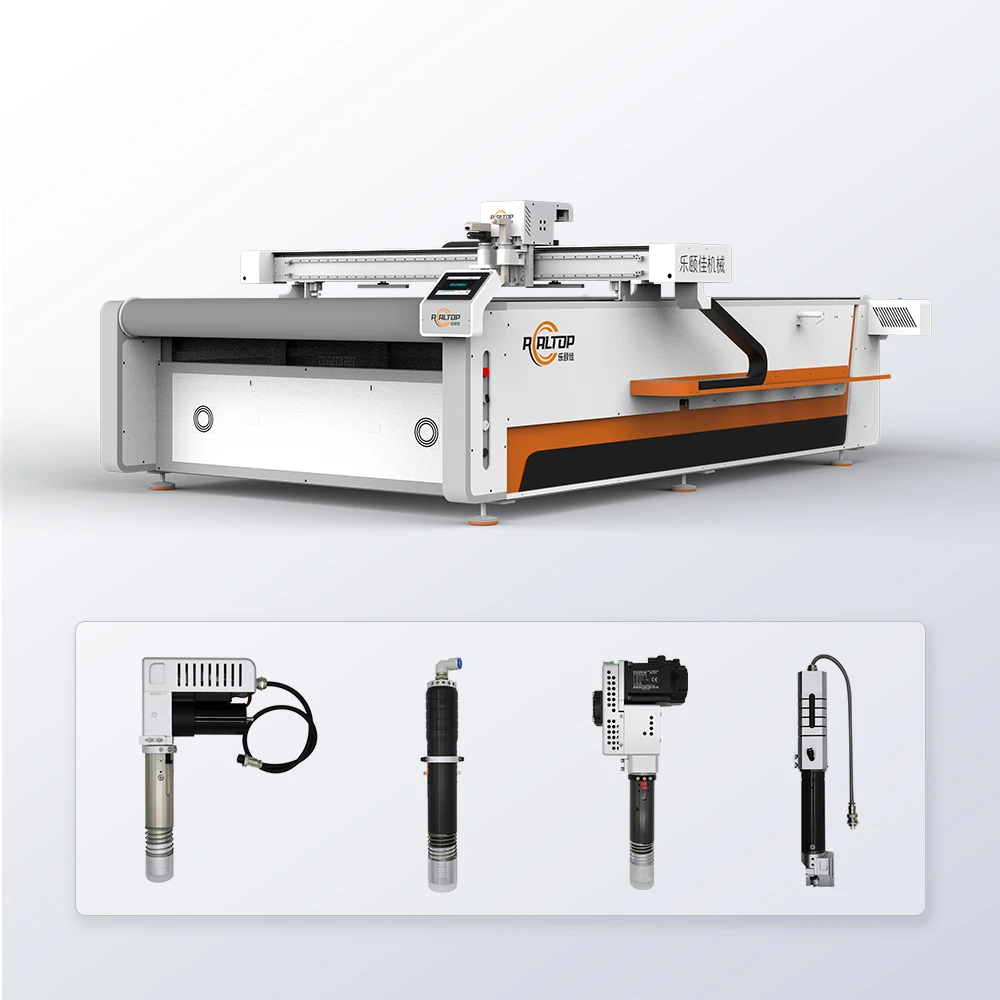
The multifunctional head on this machine supports Swiss-imported oscillating knives for full and half cutting, alongside drag knife, circular knife, creasing wheel and punching tools. For standard spunbond nonwoven used in bag and packaging work, the oscillating knife delivers clean edges at high traverse speeds. For denser needle-punched or meltblown grades common in automotive and filtration applications, the high-power vibrating knife option provides the stroke force needed to push through without crushing the fiber structure. Selecting the right tool head before the order is placed avoids the situation where an operator is forced to slow cutting speed down to compensate for a mismatch.
Vacuum Zoning for Small-Part Stability in High-Speed Cutting
The magnesium-aluminum alloy vacuum table with PVDF coating and integrated aviation-aluminum vacuum pump delivers consistent hold-down across the 1600×2500 mm bed. For lightweight nonwoven or thin felt, the zoned adsorption capability matters most when nesting small pattern pieces — the vacuum concentrates on active zones so material does not lift at the cut boundary even at translational speeds approaching the upper range [NEED_CITE: vacuum hold-down effectiveness on lightweight textile substrates]. The built-in silencer sponge in the pump housing reduces operational noise noticeably, which matters in enclosed garment workshops running multiple shifts.
Reading the Specifications That Actually Affect Your Output
The 9 kW rated power covers the cutting head, servo drives and control system; the separate 7.5 kW vacuum pump runs on its own circuit. Buyers planning the electrical layout should account for both loads plus start-up surge when sizing the workshop breaker panel. The Delta or Panasonic IP67 servo motors include real-time automatic gain adjustment and vibration suppression, which keeps positional repeatability at ≤0.1 mm even when the machine runs continuous roll-fed cuts through thick carpet or multi-ply foam. Taiwan Hiwin linear rails paired with ball screws handle the sustained lateral loads of wide-format cutting without the backlash that accumulates on belt-only drives over time. The touch-screen control panel supports multiple languages including Russian and Italian, and special languages can be configured before shipment so operators in different markets are not navigating menus in an unfamiliar script.
The Hidden Cost of Skipping Material-Specific Configuration
When a machine arrives configured for general-purpose fabric but the buyer’s actual production involves high-density laminated nonwoven, the first week often reveals blade consumption running well above estimates. Without a pre-shipping stock of replacement blades on site, production halts while waiting for international express delivery. Similarly, if CCD contour recognition was discussed during inquiry but the print mark contrast on the buyer’s material falls below what the camera can track at production speed, the positioning system fails silently — producing miscut parts that only get caught during assembly downstream [NEED_CITE: CCD tracking reliability on low-contrast printed marks]. These are not machine defects; they are configuration gaps that a sample cutting test on the buyer’s own material would have surfaced before the order was finalized.
Why Source This Machine Through Our Production Workflow
In-house design covers both knife and laser cutting technology, so the cutting method is matched to your material rather than forcing one method to fit every job. Tool head and table configuration are specified per material type and daily volume, not left as a standard package. CCD camera positioning and panoramic vision options are tested against the buyer’s actual printed marks to confirm tracking reliability at the intended cutting speed. Software compatibility with existing PLT, DXF or AI nesting files is verified before the order, not discovered after installation. Voltage, plug type, control panel language and safety configuration are confirmed for the destination market so the machine connects and runs on arrival. Sample cutting on the buyer’s own material — at production thickness and speed — is offered before commitment, producing a written report the buyer can review.
Documentation & Verification
- Factory test record running your specific nonwoven grade at target thickness and speed
- Electrical schematic confirming 380V wiring and breaker sizing for both machine and vacuum pump circuits
- Tool head configuration list matched to your material type before production begins
- Software license and file format compatibility note covering PLT, DXF and AI imports
- Sample cutting report on your own fabric with edge quality and blade wear observations
- Packing photographs showing machine secured and accessories inventoried before crate closure
Installation, Commissioning & Support
- Floor space of at least 4000×3000 mm required to accommodate the 3450×2300 mm footprint plus operator access on three sides
- Dedicated 380V circuit rated for combined 16.5 kW load covering both machine and 7.5 kW vacuum pump
- Machine ships with frame and table separated; reassembly on site takes a trained technician approximately one day
- First-run commissioning includes servo gain tuning, vacuum zone calibration and CCD mark recognition test on your material
- Operator training covers touch-screen navigation, nesting file import and tool head changeover procedures
- Spare blade kit sized to your daily consumption rate ships with the machine to prevent early production stops
Before You Request a Quote
To size the configuration correctly, share your primary material type (nonwoven grade, woven fabric, composite or foam), the maximum thickness and sheet or roll width you run, and your target daily cut volume. Let us know your workshop voltage and frequency, preferred control language, and whether your existing workflow uses PLT, DXF or AI nesting files. If you can send a sample of your material, we will run a cutting test and return a written report covering edge quality, blade wear rate and achievable cutting speed before you commit to an order.
Frequently Asked Questions
Q: How do I choose between an oscillating knife, drag knife and circular knife for nonwoven versus woven fabric?
A: Oscillating knives handle most nonwoven and multi-layer fabric with clean edge results at production speed. Drag knives suit thinner single-ply woven cloth and vinyl where a static blade produces sufficient cut quality. Circular knives work for long straight cuts on roll-fed material. We recommend sending your material for a sample test so the tool head selection is confirmed against your actual fabric before the machine is built.
Q: What daily throughput can I expect when cutting multi-layer fabric?
A: Throughput depends on material density, ply count and the geometry of the nested parts — a simple rectangular pattern on thin spunbond will cut considerably faster than complex contours on dense needle-punched composite. Cutting speed ranges from 200 to 800 mm/s depending on the material. Share your specific layup and pattern files so we can provide a realistic estimate tied to your production scenario.
Q: How does vacuum table zoning affect cutting small parts from lightweight nonwoven?
A: Lightweight nonwoven can lift at the cut boundary if the vacuum is spread evenly across a large bed with only a small active cutting zone. The zoned adsorption system concentrates suction where material is actually present, holding small nested pieces flat during high-speed oscillating cuts. The configuration of active zones should match your typical nesting layout for best results.
Q: What print mark quality does the CCD camera need for reliable contour recognition?
A: The camera requires sufficient contrast between the printed mark and the background material to register reliably at production speed. Low-contrast marks, marks printed on textured surfaces, or marks smaller than the camera’s recognition threshold can cause tracking failures. We test CCD positioning against your actual printed material during sample cutting to confirm compatibility before the order is finalized.
Q: Can the software integrate with our existing nesting workflow and file formats?
A: The system supports PLT, DXF and AI file import along with built-in auto typesetting and nesting. If your current workflow uses a proprietary nesting software or a specific export format, share a sample file during the inquiry stage. We verify compatibility and document the import process so your operators are not troubleshooting file conversion after installation.



商品评价
Clear filtersThere are no reviews yet.