




Production-Proven Configuration — Each cloth CNC cutting machine is matched to your actual fabric type and nesting layout, validated by sample cutting on your material before shipment.
Technical Specifications
| Parameter | Value |
|---|---|
| Product Type | CNC Oscillating Knife Cutting Table |
| Model | RT-D2516/RT-S2516 |
| Working Area | 1600 × 2500 mm |
| Overall Dimensions (L×W×H) | 3450 × 2300 × 1250 mm |
| Rated Power | 9 kW |
| Translational Velocity | 800–1200 mm/s |
| Cutting Speed | 200–800 mm/s (basis to be confirmed) |
| Repeated Accuracy | ≤0.1 mm |
| Transmission System | Digital servo motor, linear guide, synchronous belt, ball screw |
| Servo Motor | Japanese Yaskawa |
| Linear Rail | Taiwan Hiwin |
| Vacuum Pump | 7.5 kW |
| Conveyor Belt | Germany imported |
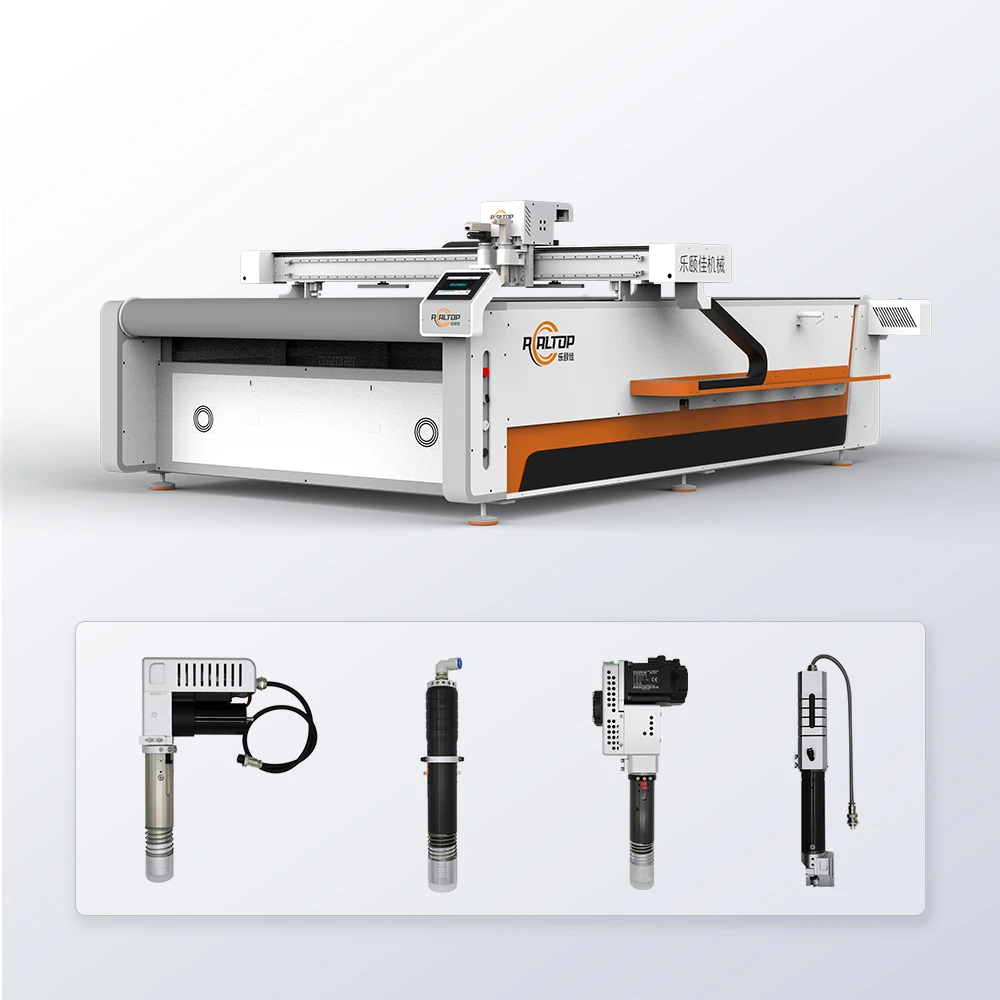
| Multifunctional Head | Swiss imported knife: vibration full cutting, vibration half cutting, cursor location |
| Safety Device | Infrared sensors |
| Instruction System | HP-GL compatible format |
| Voltage | 380V ±10% |
| Table Type | Flat working table with auto feeding |
| Certification | ISO |
Application Suitability
| Application | Material or Output |
|---|---|
| Garment & apparel cutting | Woven cotton, denim, knit, stretch fabric, multi-ply lay-ups for rompers, kids’ jeans, baby clothes |
| Leather goods production | Natural leather, synthetic leather, sponge composite leather |
| Flexible industrial materials | PVC, soft glass, silicon, rubber sheets |
| Footwear component cutting | Leather uppers, textile linings, foam insoles |
| Automotive textile interiors | Seat cover fabrics, headliner materials, door panel composites |
Why "Working Area" Is the Wrong Starting Point for Garment Cutting
A Cloth CNC Cutting Machine for garment production specified only by bed size often fails when the vacuum hold-down cannot secure small pattern pieces at full travel speed. The real specification boundary is vacuum zoning matched to your smallest nested piece and your ply count.
I have watched fabric producers invest in a machine that matched their sheet dimensions perfectly, only to discover that the vacuum table lacked the zoning granularity to hold narrow sleeve panels or collar pieces flat during high-speed cutting. The fabric shifts, the blade drags, and the edge quality degrades across the entire lay [NEED_CITE:]. In garment rooms running stretch knits or slippery synthetics, this problem compounds quickly because those materials offer less natural friction against the table surface. The 7.5 kW vacuum pump on this system is paired with a table sized for full garment lay-ups, but confirming the zoning layout against your actual nest pattern is the step that prevents waste.
Oscillating Knife Behavior Across Fabric Types
The Swiss imported oscillating knife head supports both full-cut and half-cut modes, which matters when a single garment nest includes woven outer panels alongside knit lining pieces. Full cutting drives the blade through multi-ply stacks with a vertical vibration that separates layers cleanly without fusing edges. Half cutting scores or kiss-cuts single plies for marking or perforation tasks. Cursor location function aligns the head to printed registration marks when working with pre-printed textiles.
Selecting the right oscillation frequency for your cloth CNC cutting machine depends on the fabric density and ply height. A dense denim stack requires a different stroke profile than a single ply of lightweight ripstop nylon.
Conveyor Feeding and Continuous Roll-to-Cut Workflow
The auto-feeding system uses a German-imported conveyor belt paired with the flat vacuum table to move roll goods into the cutting zone without manual repositioning. This continuous feed eliminates the stop-start cycle that introduces registration drift on long garment lays. The Yaskawa digital servo motor controls belt advancement with the same drive system that manages the cutting head, so feed distance and cut path stay synchronized [NEED_CITE:].
For producers running multiple fabric rolls per shift, the conveyor reduces the loading time between jobs. The belt tension and tracking must be checked during initial commissioning to match the weight and surface texture of your primary materials.
Reading the Specs That Actually Affect Cut Quality
The ≤0.1 mm repeated accuracy is achieved through the combination of Yaskawa servo drives and Taiwan Hiwin linear rails on the gantry axes. In garment cutting, this tolerance matters most at seam intersection points where a pattern piece must align precisely with its mating piece during assembly. A drift beyond this range accumulates across a multi-ply lay and produces mismatched panels downstream.
The 800–1200 mm/s translational velocity defines how fast the head moves between cut points, not through the material. Actual cutting speed through fabric depends on ply count, material density, and blade condition. The 9 kW rated power covers the combined load of the servo drives, vacuum pump, and oscillation motor running simultaneously, which means the system does not require a dedicated circuit beyond what a standard 380V ±10% three-phase supply provides. HP-GL compatibility allows the controller to accept patterns from existing CAD and nesting software without format conversion, reducing the gap between design and cutting floor [NEED_CITE:].
The Cost of Skipping the Sample Cut
When a fabric producer commits to a cloth CNC cutting machine without testing their actual material, the first week of production often reveals edge quality problems that were not visible during the demo. Stretch knits require specific oscillation settings to prevent curling at the cut edge. Sponge-backed composites can crush rather than cut if the knife pressure and stroke are set for standard woven fabric. I have seen garment factories accumulate significant scrap volume before the correct tool head configuration was identified for their specific material mix [NEED_CITE:]. The rework cost is not just the wasted fabric — it includes the press time, the thread and trim consumed on defective panels, and the delayed shipments to downstream assembly.
Why Source This Configuration Here
In-house design covers both knife and laser cutting methods, so the cutting technology is matched to the material rather than forced into a single approach. Tool head and table configuration are specified per material type and production volume, not quoted as a default package. CCD camera positioning is available for printed contour work when garment pieces carry sublimation or screen-printed registration marks. Software compatibility with your existing nesting workflow is confirmed before the order is finalized. Voltage, control panel language, and plug type are verified against the destination market standard before the machine leaves the factory. Sample cutting on your own fabric, at your ply count and nest layout, is completed and reported before you commit to shipment.
Documentation & Verification
- Machine specification sheet listing your confirmed working area and tool head configuration
- Electrical schematic showing 380V ±10% wiring and circuit protection for your market
- Tool head and table configuration list matched to your fabric type and ply count
- Sample cutting report produced on your actual garment material before dispatch
- Factory test record documenting repeatability and edge quality across a full lay
- Software license and HP-GL file format compatibility note for your nesting system
Installation, Commissioning & Support
- Floor space requirement of 3450 × 2300 mm with clearance for roll loading on the infeed side
- Dedicated 380V ±10% three-phase circuit rated for the 9 kW total system load
- Machine ships partially assembled; gantry and conveyor belt require on-site alignment
- First-run commissioning includes vacuum zoning adjustment for your smallest pattern piece
- Operator training covers oscillation frequency and blade pressure settings per fabric type
- Spare parts list includes Swiss knife blades and Hiwin rail carriages for your maintenance schedule
Preparing Your Inquiry
Send your primary fabric types with ply count, the largest and smallest pattern piece dimensions in your typical nest, and your daily cutting volume target. Include your local voltage standard, frequency, and preferred control panel language. If you have an existing CAD or nesting system, share a sample output file so we can confirm HP-GL compatibility before quotation. We can arrange sample cutting on your material to validate edge quality and hold-down performance before you make a commitment.
Frequently Asked Questions
Q: How does cutting speed vary across different fabric types and ply counts?
A: Translational velocity of 800–1200 mm/s describes head movement between cuts. Actual cutting speed through material depends on fabric density, ply height, and blade condition. Woven cotton at moderate ply counts cuts faster than sponge composite leather at the same thickness. We establish the practical cutting speed during sample testing on your specific material stack.
Q: Is vacuum hold-down sufficient for small pattern pieces at production speed?
A: The 7.5 kW vacuum pump provides strong hold-down across the 1600 × 2500 mm table, but small pieces like collar stays or belt loops require adequate zoning to prevent lift at high travel speed. We review your nest layout before build to confirm that vacuum zones align with your smallest pattern pieces and that the table surface material matches your fabric friction requirements.
Q: Will this machine accept files from my existing pattern and nesting software?
A: The controller supports HP-GL compatible format, which covers most garment CAD and nesting systems. Before quotation, we request a sample file from your software to verify that line types, cut order, and mark points transfer correctly. If your system outputs DXF or PLT variants, we confirm compatibility during the pre-order file test.
Q: How are voltage and control language confirmed before shipment?
A: We confirm your local voltage standard, plug type, and frequency during the specification stage. The control panel language is set to your operator’s preference before factory testing. The electrical schematic in the documentation package reflects these confirmed values, so your local electrician can prepare the connection before the machine arrives.
Q: How is sample cutting on my own material arranged?
A: You send a roll or cut piece of your production fabric along with your typical nest file. We run the sample on the configured machine, document edge quality, hold-down performance, and cutting speed, then share the report with photographs and cut samples. This confirms the tool head and vacuum setup before you authorize shipment.


商品评价
Clear filtersThere are no reviews yet.