




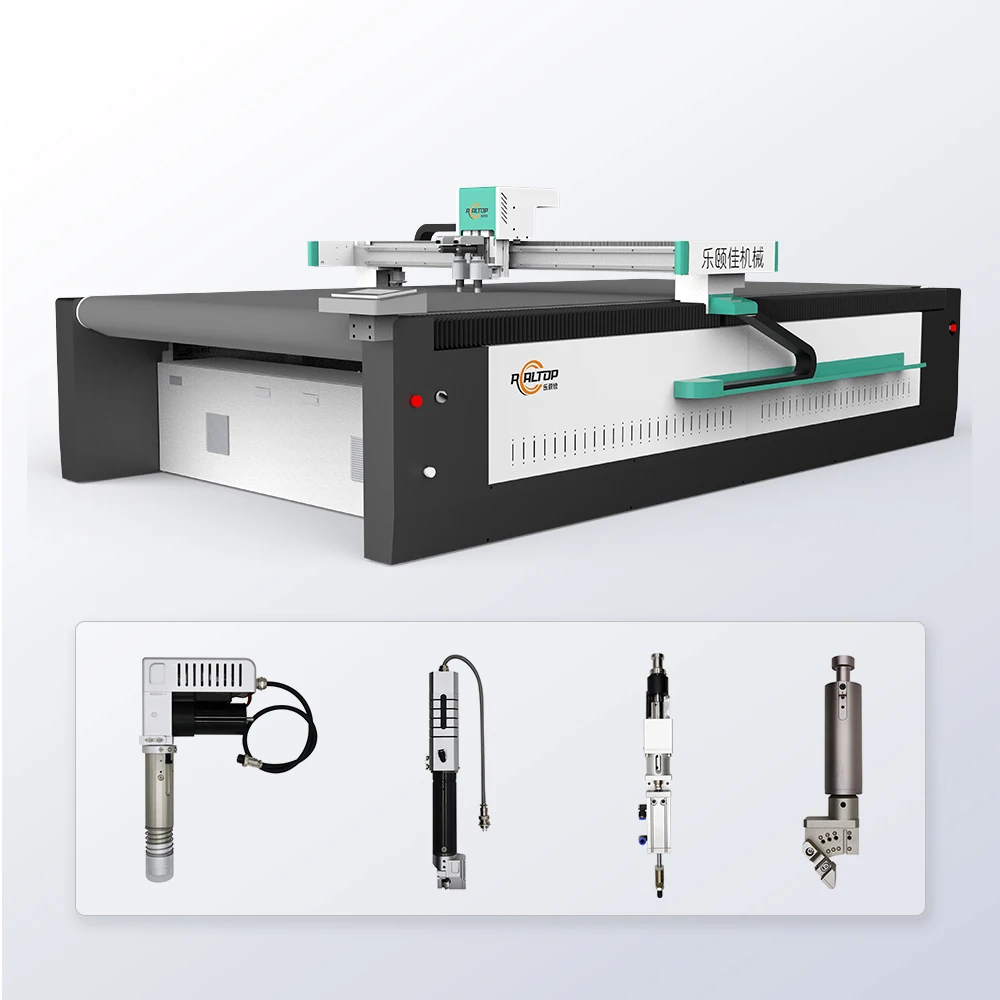
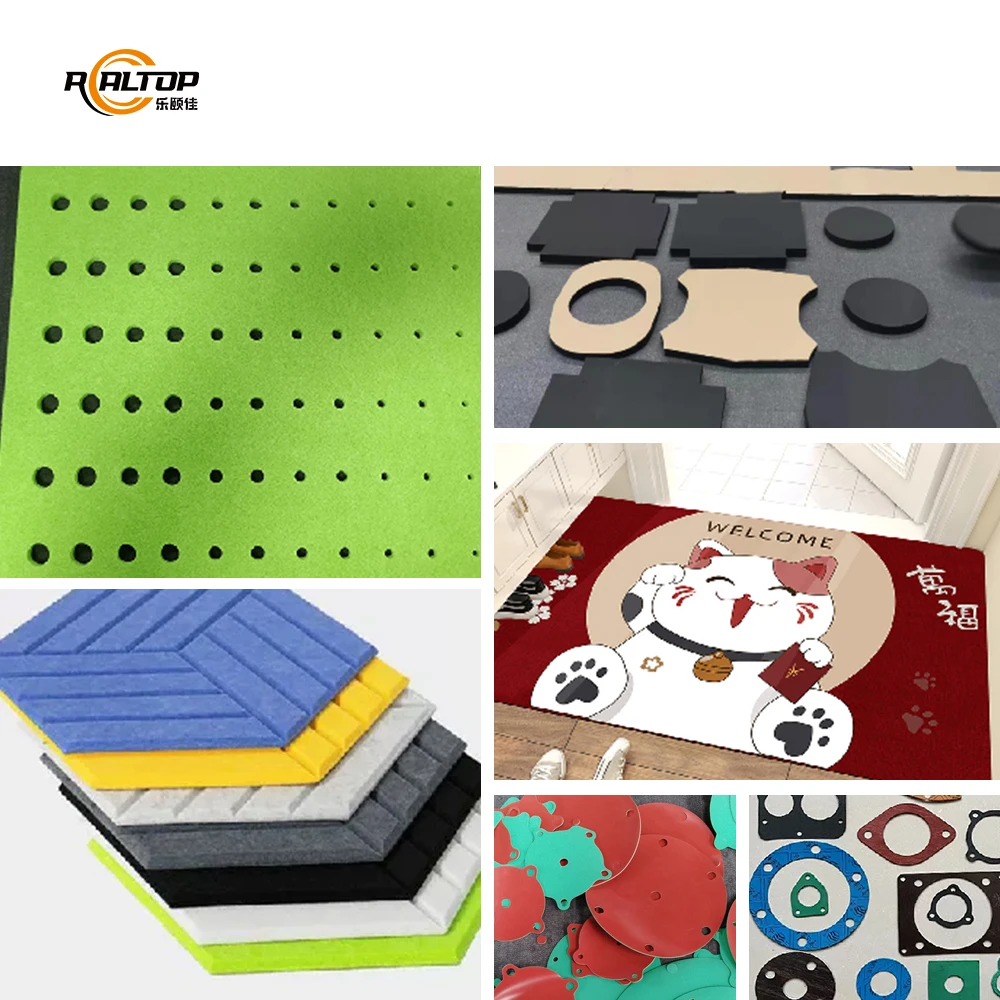

Precision cutting on real material — Every CNC oscillating knife cutting machine for composites we ship runs a full cutting test on the buyer’s specific layup, thickness, and reinforcement type before final acceptance, eliminating the guesswork between brochure specs and shop-floor reality.
Technical Specifications
| Parameter | Value |
|---|---|
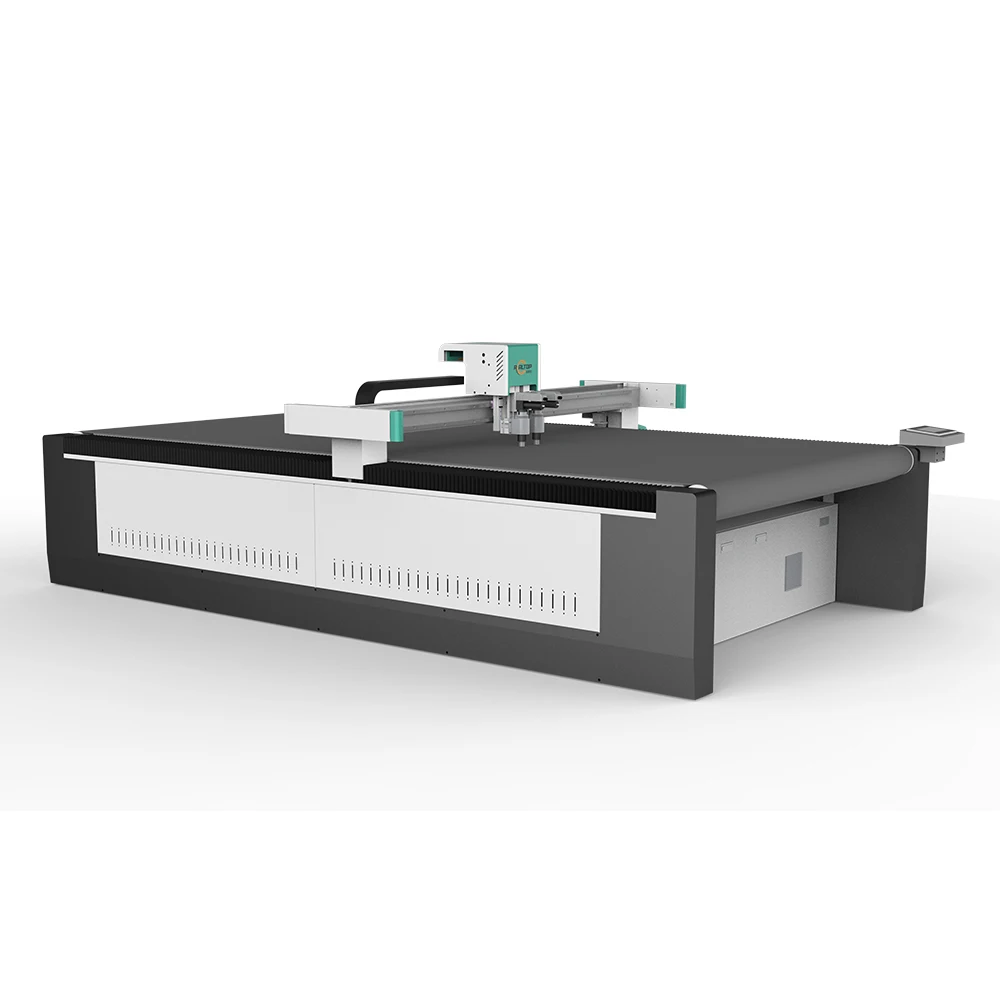
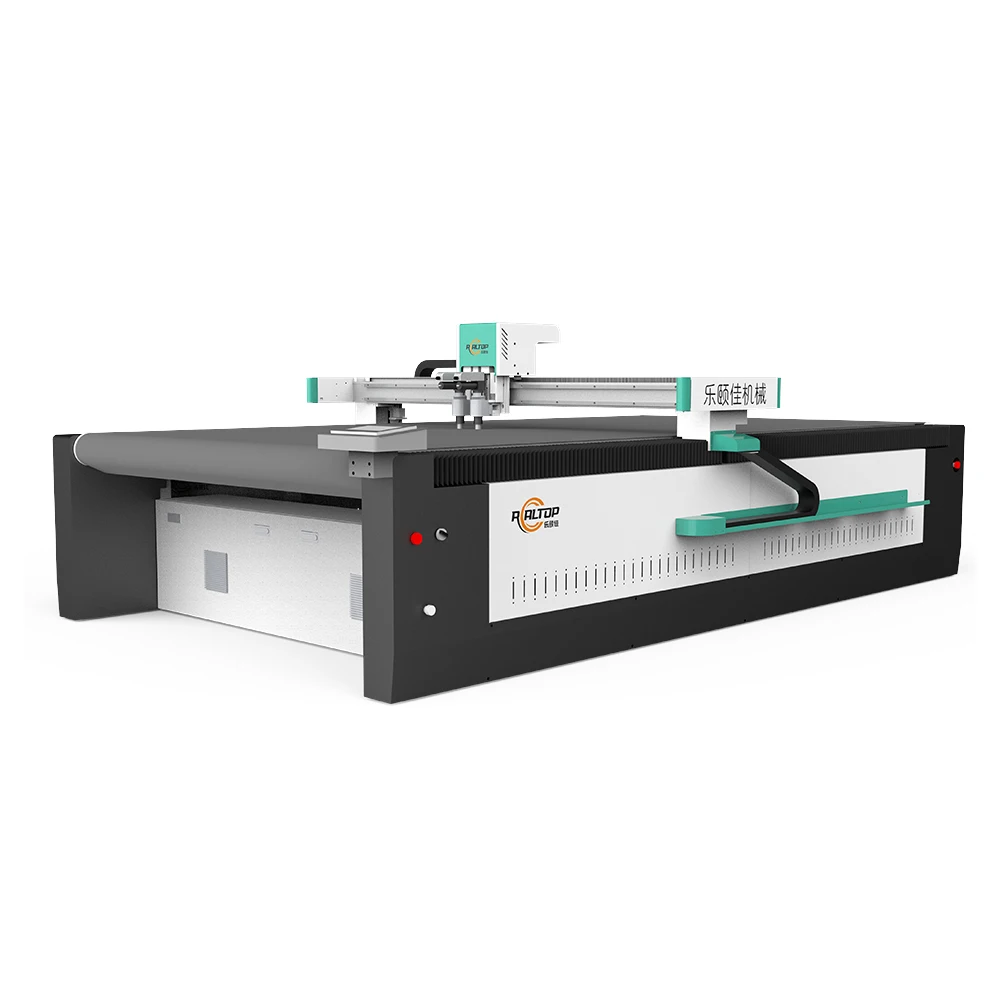
| Product Type | CNC Oscillating Knife Cutting Machine for Composites |
| Working Area | 1600×2500 mm |
| Available Tool Heads | Oscillating knife, Driven rotary knife, Creasing wheel, Kiss cutting tool, Pneumatic knife, Milling tool, V-groove knife |
| Applicable Materials | Carbon fiber, fiberglass, aramid honeycomb, G10 epoxy, PTFE, rubber, foam, PVC, EVA, leather, acrylic, fabric, cardboard |
| Cutting Speed | 0–2000 mm/s |
| Cutting Thickness | ≤ 30mm (basis not stated in source — confirm block format / material / thickness) |
| Cutting Accuracy | ±0.1 mm |
| Vacuum Pump | 9 kW |
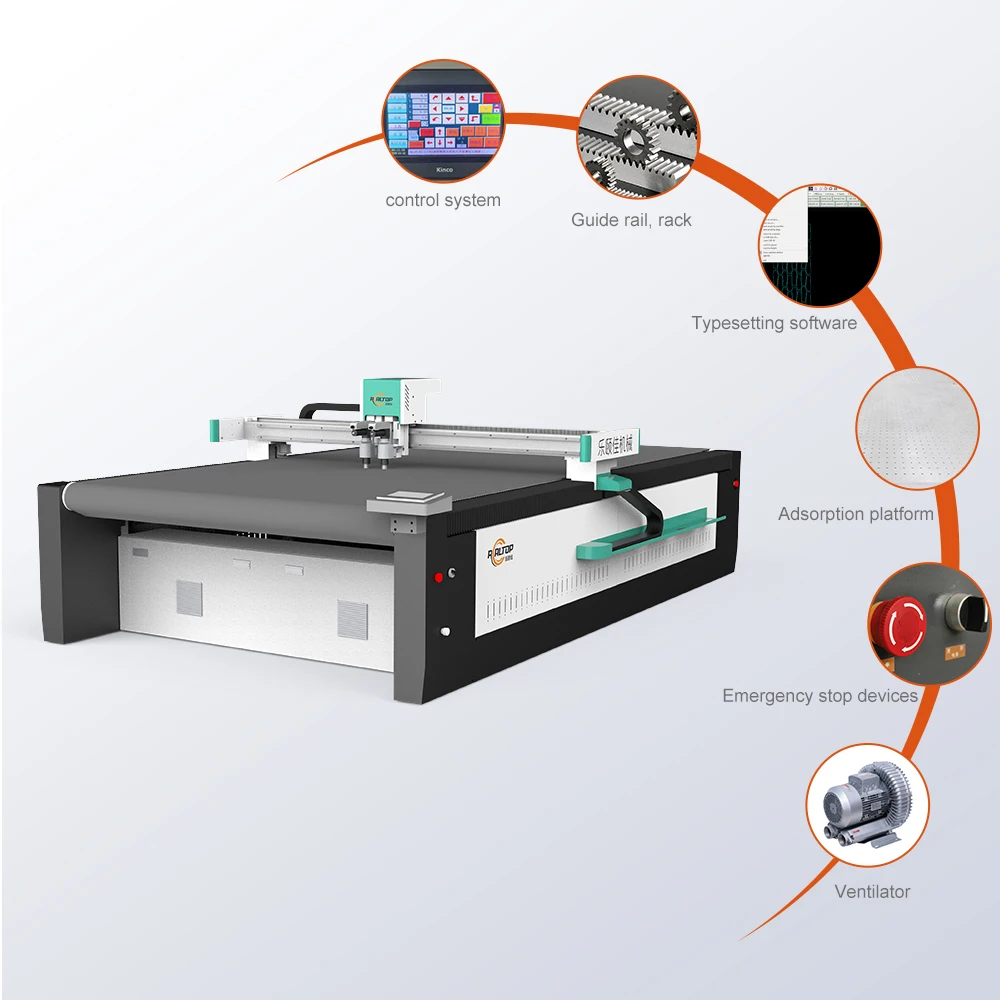
| Vacuum Table | Aluminum bellows vacuum platform |
| Voltage Options | 110V, 220V, 380V (configurable per market) |
| Servo Motor Options | Panasonic, Delta, Dorna (availability subject to market) |
| Control System | PLC control panel |
| Supported File Formats | PLT, DXF, AI, PDF |
| Safety Devices | Infrared sensor, Emergency stop |
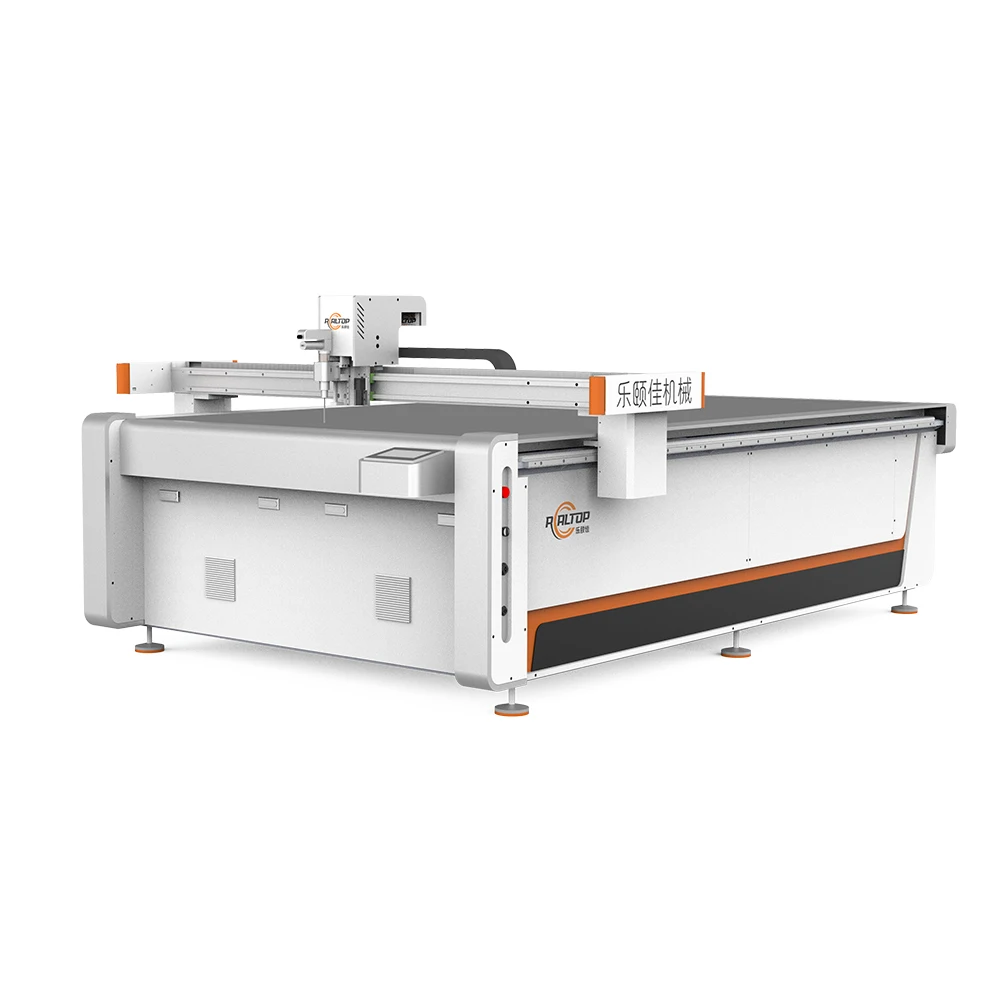
| Machine Dimensions | 3300×2100×1350 mm |
| Language Options | English, Russian, Italian, Chinese (custom languages available) |
Application Suitability
| Application | Material or Output |
|---|---|
| Aerospace gasket and insulation cutting | Carbon fiber prepreg, aramid honeycomb, thermal and acoustic insulation foam |
| Automotive and rail interior components | Carbon fiber covers, FRP panels, acoustic felt, damping pads, seat foam, carpets |
| Wind turbine blade preform preparation | Fiberglass cloth, carbon fiber cloth, vacuum infusion mesh, foam core materials |
| Sporting goods fabrication | Carbon fiber sheets, Kevlar fabric, high-performance foam for surfboards, skis, helmets |
Why "Standard Sample" Cuts Fail on Real Composite Layups
A Composites CNC Cutting Machine production workflow demands tooling and vacuum settings tuned to the actual layup, not a generic test piece.
I spent years on the assembly floor in Jinan, and the most frustrating call I got was from a buyer who tested a machine on standard rubber sheet, signed off, then tried cutting fiberglass-reinforced EPDM for automotive seals — the oscillating knife chipped immediately, and we spent two days on-site re-tuning amplitude, feed rate, and vacuum zoning. Composite materials are unforgiving; a prepreg with a different resin viscosity or a honeycomb core with slightly thicker cell walls behaves entirely differently under the blade. That is why sample cutting must happen on the exact material the buyer intends to run, including the reinforcement layer, resin system, and release film if present [NEED_CITE: material-specific cutting validation for composite manufacturing].
Matching Tool Head Geometry to Composite Architecture
The interchangeable multi-tool head on this machine exists because no single blade geometry cuts across all composite types cleanly. An oscillating knife handles solid prepreg and rubber-gasket stock, while a driven rotary knife tracks through multi-layer fiberglass cloth without fraying the weft. V-groove and milling tools score and mill foam core sections for blade preform assemblies. Selecting the wrong head produces delamination on honeycomb or fuzzed edges on aramid — both scrap the part.
Vacuum Zoning and Sheet Stability on Large-Format Beds
The 1600×2500 mm aluminum bellows vacuum platform paired with a 9 kW pump provides hold-down across large aerospace and wind-energy sheets. However, when a nesting program places small gaskets in one zone and leaves the rest of the table open, air bleeds through unoccupied areas and lifting occurs mid-cut. Configurable vacuum zoning isolates suction to active cutting regions, a detail that only matters once production nesting runs start and small composite parts begin shifting. Production teams cutting automotive acoustic pads in high volumes see this issue within the first shift [NEED_CITE: vacuum table zoning requirements for small-part nesting on composite sheets].
Reading the Specification Sheet Against Your Material
Cutting accuracy of ±0.1 mm matters most when aerospace gaskets must seat into machined aluminum channels with minimal clearance; a looser tolerance forces manual trimming downstream. Cutting speed reaches up to 2000 mm/s on softer foams and insulation materials, but dense G10 epoxy or thick carbon fiber plates require lower feed rates to prevent blade deflection. The PLC control panel stores material-specific parameter sets, so operators recall proven profiles rather than re-entering amplitude and speed every shift. Servo motor selection from Panasonic, Delta, or Dorna allows buyers to match local service availability and spare parts logistics in their region. File format support for PLT, DXF, AI, and PDF means the nesting software integrates with most upstream CAD workflows without requiring a secondary conversion step.
The Hidden Cost of Wrong Tool Head Selection
A buyer cutting aramid honeycomb with a standard oscillating knife instead of a configured rotary or crush-cut tool will see cell wall collapse and edge burr on every panel. That scrap rate compounds quickly when raw honeycomb stock runs at significant cost per square meter. Ragged edges also demand secondary finishing, adding labor hours that erase any throughput advantage the Composites CNC Cutting Machine production workflow was supposed to deliver [NEED_CITE: secondary finishing costs from incorrect tooling on composite honeycomb].
Why Procurement Here Differs
In-house design covers both knife and laser platforms, so a buyer processing both carbon fiber sheet and acrylic signage can source from one factory without forcing a single method onto incompatible materials. Tool head and table configuration is specified per composite type and production volume, not sold as a default package. CCD camera positioning is available for printed contour work on decorated composite panels. Software compatibility with the buyer’s existing nesting files is confirmed before the order is finalized. Voltage, control language, and plug type are documented and locked before production begins, not assumed. Sample cutting runs on the buyer’s actual material — including reinforcement and resin — happen before commitment, with a written report delivered.
Documentation & Verification
- Machine specification sheet listing selected tool heads, vacuum zone map, and servo brand
- Electrical schematic with confirmed voltage, frequency, and plug type for destination market
- Sample cutting report on buyer’s composite layup with edge quality photographs
- Tool head and table configuration list matched to stated material and nesting pattern
- Software license document with verified PLT, DXF, AI, PDF file format compatibility note
- Factory test record showing dimensional accuracy check against buyer-supplied drawing
Installation, Commissioning & Support
- Floor must support machine dimensions of 3300×2100×1350 mm plus operator clearance on three sides
- Dedicated circuit required matching confirmed 110V, 220V, or 380V supply with correct frequency
- Vacuum pump at 9 kW requires independent breaker; confirm local amperage before energizing
- PLC control panel language set to operator preference during commissioning and verified with test cut
- First production run supervised to validate nesting yield and cutting parameters on actual composite stock
- Spare oscillating and rotary knife blades plus vacuum seals included; replenishment schedule discussed at handover
What to Prepare Before Requesting a Quote
Provide the exact composite material designation, layup sequence, total thickness, and reinforcement type — generic terms like "carbon fiber" are insufficient for tool head selection. Share your daily or weekly part volume, nesting software currently in use, and the file formats your design team exports. Confirm the voltage and frequency at your facility, the preferred control language, and whether you can ship a roll or sheet of your actual production material for pre-delivery sample cutting.
Frequently Asked Questions
Q: How do I verify the cutting thickness capacity against my specific composite layup?
A: Rated thickness values assume a specific block format and material density. Carbon fiber prepreg, aramid honeycomb, and G10 epoxy each present different cutting resistance at the same nominal thickness. Request a sample cutting test on your actual material at full production thickness, and review the edge quality and dimensional accuracy in the written report before confirming the order.
Q: How should vacuum table zoning be configured for small gaskets versus large-format sheets?
A: The aluminum bellows platform can be divided into active zones. When nesting small automotive or aerospace gaskets, only the zones under active cutting are energized, preventing air bleed and part lift. Large-format wind-energy sheets use full-table vacuum. Confirm your typical nesting pattern so the zone map matches your production mix.
Q: Which tool head works best for carbon fiber versus honeycomb versus foam core?
A: Oscillating knives suit solid prepreg and dense foam. Driven rotary knives track through woven fiberglass and aramid without fraying. Honeycomb requires a crush-cut or dedicated rotary configuration to prevent cell wall collapse. V-groove and milling tools handle foam core shaping for blade preforms. Tool selection is locked after sample cutting on your material.
Q: What throughput can I expect from a nested production run?
A: Throughput depends on material thickness, part geometry complexity, and nesting density rather than a fixed cycle time. Thicker composites require slower feed rates to maintain edge quality. Your daily volume target, combined with sample cutting results on your material, determines realistic output expectations for shift planning.
Q: How does the machine integrate with our existing layup and assembly line cycle times?
A: The PLC control panel stores material-specific cutting profiles so operators recall parameters without manual entry. File format compatibility with PLT, DXF, AI, and PDF allows direct import from your nesting software. Cutting speed and part handling time are validated during the sample cutting phase so downstream assembly can plan accordingly.





商品评价
Clear filtersThere are no reviews yet.