




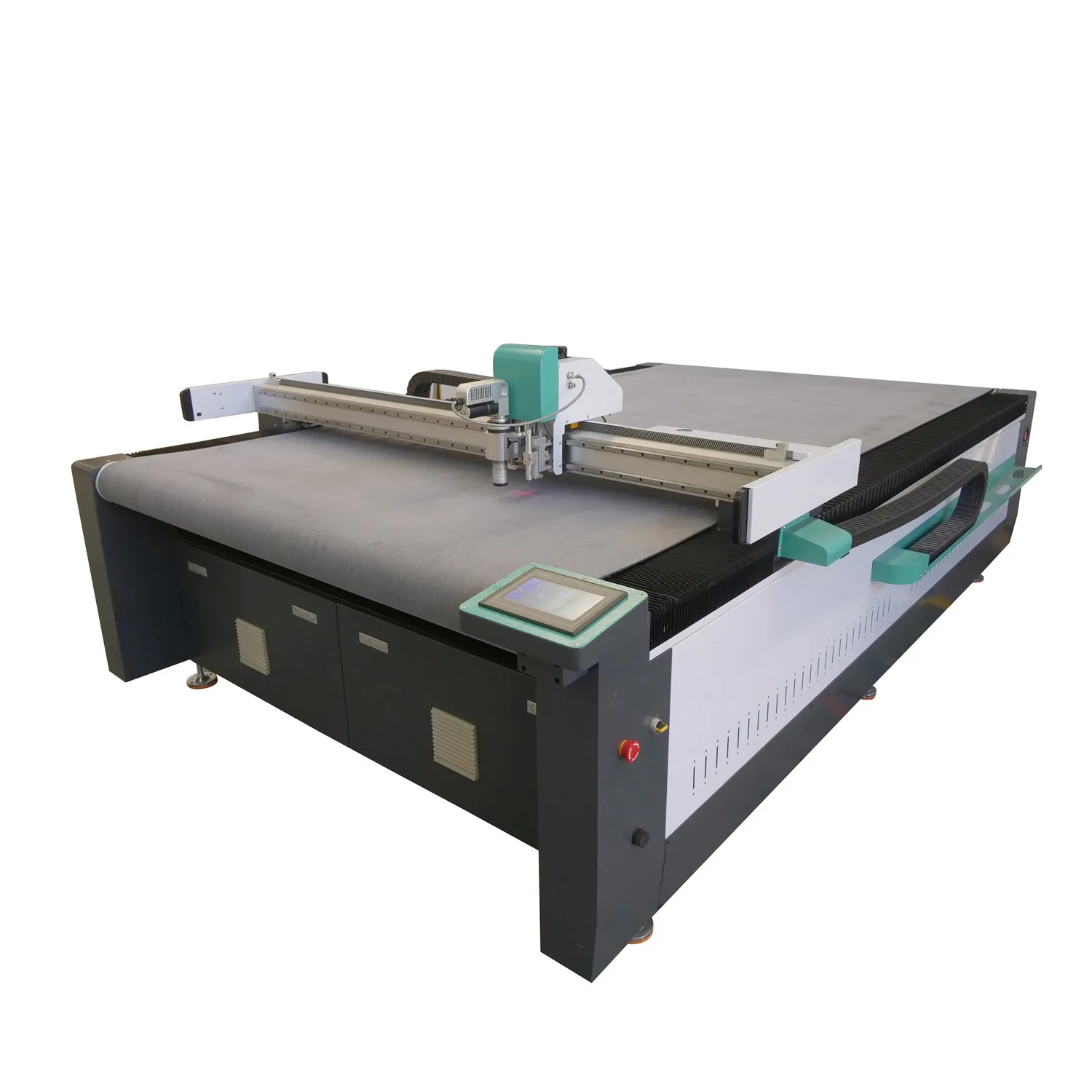

Material-matched configuration — Tool head, vacuum zoning, and cutting method are specified after testing your actual fabric stack, not guessed from a generic catalog page.
Technical Specifications
| Parameter | Value |
|---|---|
| Model | RT-D2516 / RT-S2516 |
| Product Type | CNC Oscillating Knife Cutting Machine |
| Working Area | 1600 × 2500 mm |
| Overall Dimensions | 3450 × 2300 × 1250 mm |
| Rated Power | 9 kW |
| Voltage | 380V ±10% |
| Translational Velocity | 800–2000 mm/s |
| Cutting Speed | 200–800 mm/s (varies with material) |
| Cutting Thickness | ≤100 mm (varies with material) |
| Repeated Accuracy | ≤0.1 mm |
| Transmission System | Digital servo motor, linear guide, synchronous belt, ball screw |
| Servo Motor Options | Delta or Panasonic (IP67) |
| Vacuum Table | Magnesium-aluminum alloy, PVDF powder sprayed, anodic oxidation |
| Vacuum Pump | 7.5 kW, integrated aviation aluminum shell |
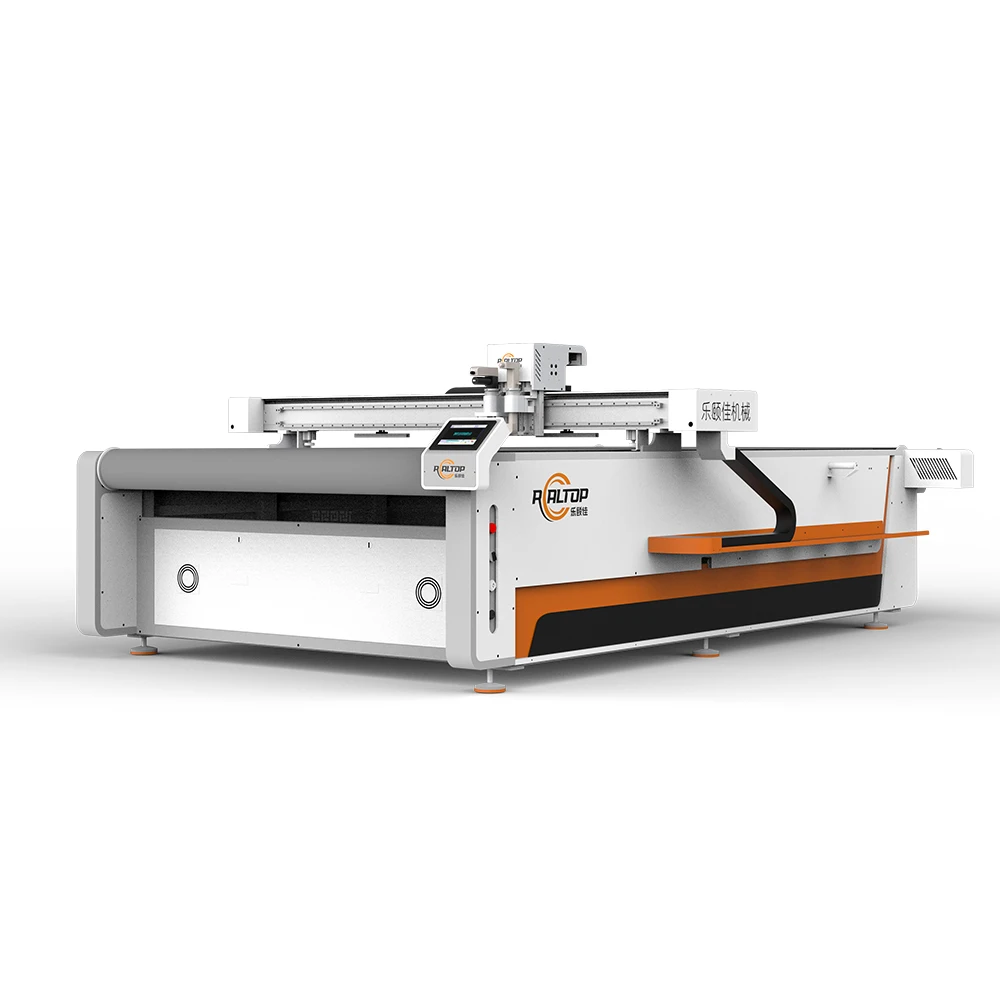
| Table Type Options | Flat working table / Auto feeding table (conveyor) |
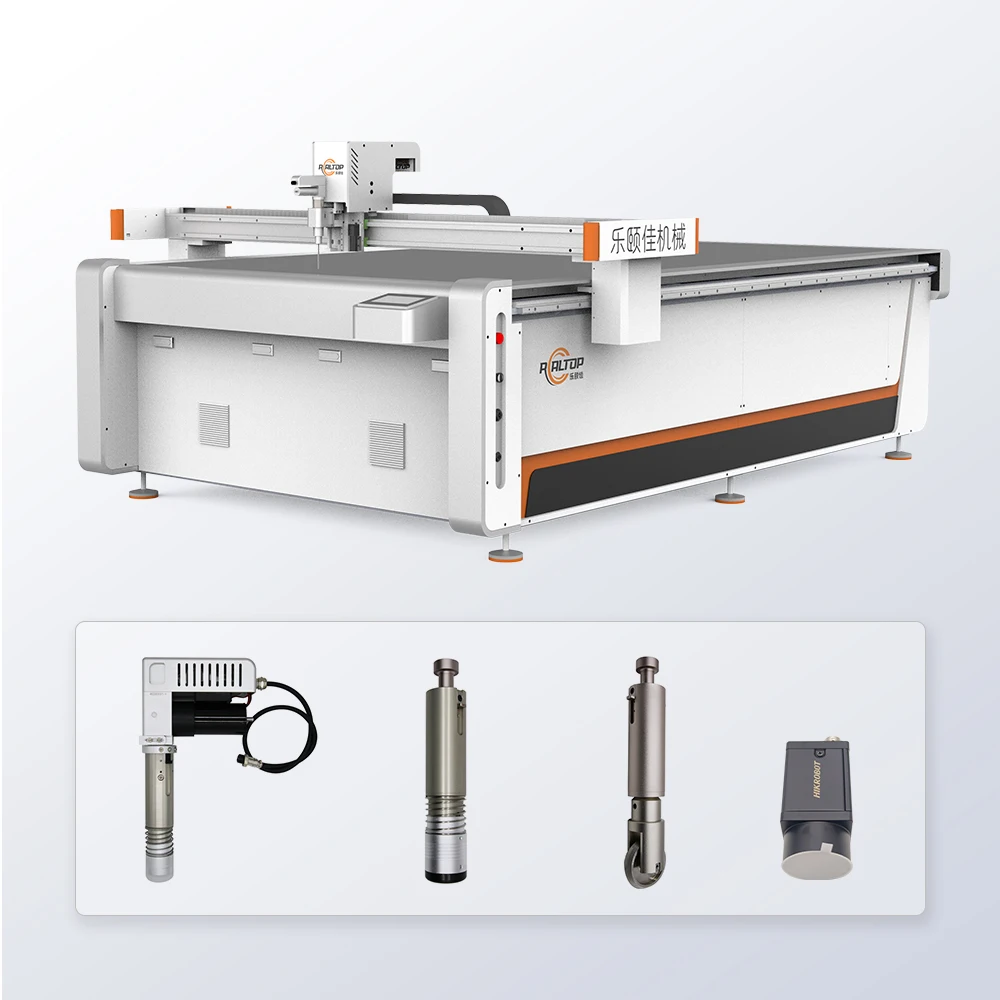
| Tool Head Options | Swiss oscillating knife, pneumatic knife, high-power vibrating knife, circular knife, V cutting knife, drag knife, creasing wheel, dotted line knife, punching tool, brush |
| Visual Positioning Options | Small CCD camera, panoramic camera, projection positioning |
| Control System | CNC with touch screen |
| Language Options | English, Russian, Italian, Chinese; custom languages available |
| File Compatibility | HP-GL compatible; supports PLT, DXF, AI |
| Safety Devices | Infrared induction blocking, beam anti-collision sensors, emergency stop |
| Standard | CE |
Application Suitability
| Application | Material or Output |
|---|---|
| Garment and footwear production | Multi-layer fabric, leather, shoe uppers, lining textiles |
| Automotive interior trim | Foam, PU, EVA, XPE, composite panels, gasket sheets |
| Luggage and bag manufacturing | Leather, non-woven fabric, PVC, PU panels |
| Packaging and sample making | Corrugated cardboard, sticker film, foam board |
| Carpet and floor mat cutting | Carpet rolls, sponge, soft glass, rubber mats |
| Composite material fabrication | Carbon fiber prepreg, fiberglass, PTFE, ETFE layers |
Why Material Thickness Changes Everything About Your Cutting Speed
A cutting speed figure means nothing without the material stack it was measured on.
I once watched a buyer specify a machine purely by its 1600 × 2500 mm working area, then discover on the first production day that their multi-layer coated textile required a completely different oscillation frequency and blade angle than the sample fabric they tested. The cutting speed dropped from the upper range to well below it, and edge quality on the bottom plies was unacceptable. The vendor had quoted translational velocity, not real throughput on the buyer’s actual composite stack. That mismatch between sample conditions and daily production reality is the single most common reason a CNC oscillating knife cutting machine production line underperforms after installation [NEED_CITE: fabric cutting speed variables in multi-ply layups].
How the RT-D2516/RT-S2516 Addresses Production Reality
When a fabric or leather workshop runs mixed materials through the day — garment textiles in the morning, shoe uppers after lunch, foam gaskets before close — the CNC oscillating knife cutting machine production line needs to switch tool heads and cutting parameters without losing registration accuracy. This system offers Swiss imported oscillating knives alongside drag knives, circular knives, creasing wheels, and punching tools, allowing full cutting, half cutting, and marking operations within a single setup. The operator changes the tool head, loads the matching parameter set, and continues.
Vacuum Table Zoning for Real Part Geometries
Small裁片 cut from garment fabric or automotive leather tend to lift off the table surface when the vacuum zones are too large for the part footprint. The magnesium-aluminum alloy table on this unit uses PVDF powder spraying and hard anodic oxidation to maintain flatness across the full 1600 × 2500 mm area while delivering uniform suction through zoning channels. When cutting narrow strips or small pattern pieces, the zones beneath the active cutting area hold the material firmly, preventing shift that would compromise the ≤0.1 mm repeated accuracy [NEED_CITE: vacuum zoning requirements for small part cutting].
Reading the Specifications Against Your Workflow
The 9 kW rated power covers the servo drives, vacuum pump, and cutting head simultaneously — a figure that matters when sizing your workshop electrical supply, not when comparing cutting force. The 380V ±10% voltage requirement means buyers in regions with 400V or 415V nominal supply should confirm transformer compatibility before shipment. Servo motor selection between Delta and Panasonic units, both rated IP67, affects long-term serviceability depending on which brand your local technicians can source parts for. The 200–800 mm/s cutting speed range reflects the difference between slicing a single layer of thin lining fabric and working through a dense foam stack approaching the ≤100 mm thickness limit. Translational velocity of 800–2000 mm/s describes head movement between cuts, not cutting speed itself — a distinction that directly impacts nesting throughput on dense pattern layouts.
What Happens When the Wrong Tool Head Meets Your Material
Selecting a drag knife for a material that requires oscillation produces crushed edges on foam and ragged cuts on woven fabric. Choosing a circular knife for intricate pattern contours leaves radius limitations on inside corners. And specifying a machine without confirming CCD camera contour recognition against the buyer’s printed mark density and production speed results in registration failures that waste material at volume. These are not theoretical concerns — they are the specific misconfigurations that cause production downtime in the first week after installation [NEED_CITE: tool head selection criteria for composite materials].
Why Procurement Verification Matters Here
In-house design covers both the knife cutting system and the feeding mechanism, so the auto-feeding conveyor option and the flat table option are engineered as integrated configurations rather than bolted-on accessories. Sample cutting on the buyer’s own material is conducted before order confirmation, producing a report that documents edge quality, cutting depth, and achievable speed on that specific fabric or composite stack. Software compatibility — PLT, DXF, AI, and HP-GL formats — is confirmed against the buyer’s existing nesting workflow before the control system is finalized. Voltage, plug type, and control panel language are locked in before production begins, not discovered at the dock. The factory test record captures performance on the buyer’s material under repeatable conditions.
Documentation & Verification
- Factory test record documenting cut quality on your specific fabric type and ply count
- Electrical schematic with voltage and plug confirmation for your facility supply
- Tool head configuration list matched to each material in your production mix
- Software license and file format compatibility note for PLT, DXF, AI, HP-GL workflows
- Sample cutting report on your own material showing edge quality and throughput data
Installation, Commissioning & Support
- 3450 × 2300 mm footprint requires level concrete floor with clearance for material feed and offload
- 380V ±10% dedicated circuit required; confirm local supply matches before dispatch
- Machine ships fully assembled; rigging plan needed for 9 kW unit placement
- First-run parameter tuning performed on your material stack during commissioning
- Tool head changeover training covers oscillating knife, drag knife, and creasing wheel
- Spare parts list provided with recommended consumables for your cutting application
Before You Request a Quote
Send your material type, maximum thickness, and typical ply count or stack height along with your daily cutting volume. Include your facility voltage and frequency, and specify the control language your operators need. If you run printed materials requiring contour recognition, provide a sample print file so CCD tracking can be validated. State whether you need flat table operation or continuous roll-fed cutting with the auto-feeding conveyor.
Frequently Asked Questions
Q: How do I confirm the cutting speed will hold on my specific multi-layer fabric stack?
A: Speed depends on material density, ply count, and blade condition — not just the machine’s rated range. Request a sample cutting test using your actual production material. The resulting report documents achievable speed, edge quality, and blade wear rate under conditions that mirror your daily workflow, giving you a realistic throughput baseline rather than a generic specification figure.
Q: Which tool head should I specify for cutting both woven fabric and foam gaskets?
A: Woven fabric typically requires a high-frequency oscillating knife for clean edges, while foam may need a different oscillation amplitude or a circular knife for straight runs. The system supports multiple tool heads on a single table, so you can configure both and switch between them. The correct choice depends on your specific foam density and fabric weight, confirmed during sample testing.
Q: Will the CCD camera track printed marks reliably at full production speed on my material?
A: Contour recognition depends on mark contrast, print resolution, and camera type — small CCD for discrete marks or panoramic for full-field recognition. Provide a sample of your printed material so the positioning system can be tested at your target cutting speed. The verification confirms whether the small CCD, panoramic camera, or projection positioning option best matches your print layout and registration tolerance.
Q: How does vacuum zoning prevent small pattern pieces from shifting during high-speed cutting?
A: The magnesium-aluminum alloy table uses zoned suction channels sized to hold small parts securely without requiring full-table vacuum activation. When cutting narrow strips or small garment pieces, only the zones under the active cutting area engage, maintaining hold-down force while reducing pump load. The zoning layout is confirmed during your material test to ensure it matches your typical part geometry.
Q: What file formats and nesting software does the system support for my existing workflow?
A: The control system accepts HP-GL compatible format along with PLT, DXF, and AI files. Before order confirmation, your nesting software output is tested against the machine’s instruction system to verify that tool paths, layer assignments, and contour data transfer correctly. This compatibility check prevents workflow interruptions when the CNC oscillating knife cutting machine production line enters production.





商品评价
Clear filtersThere are no reviews yet.