




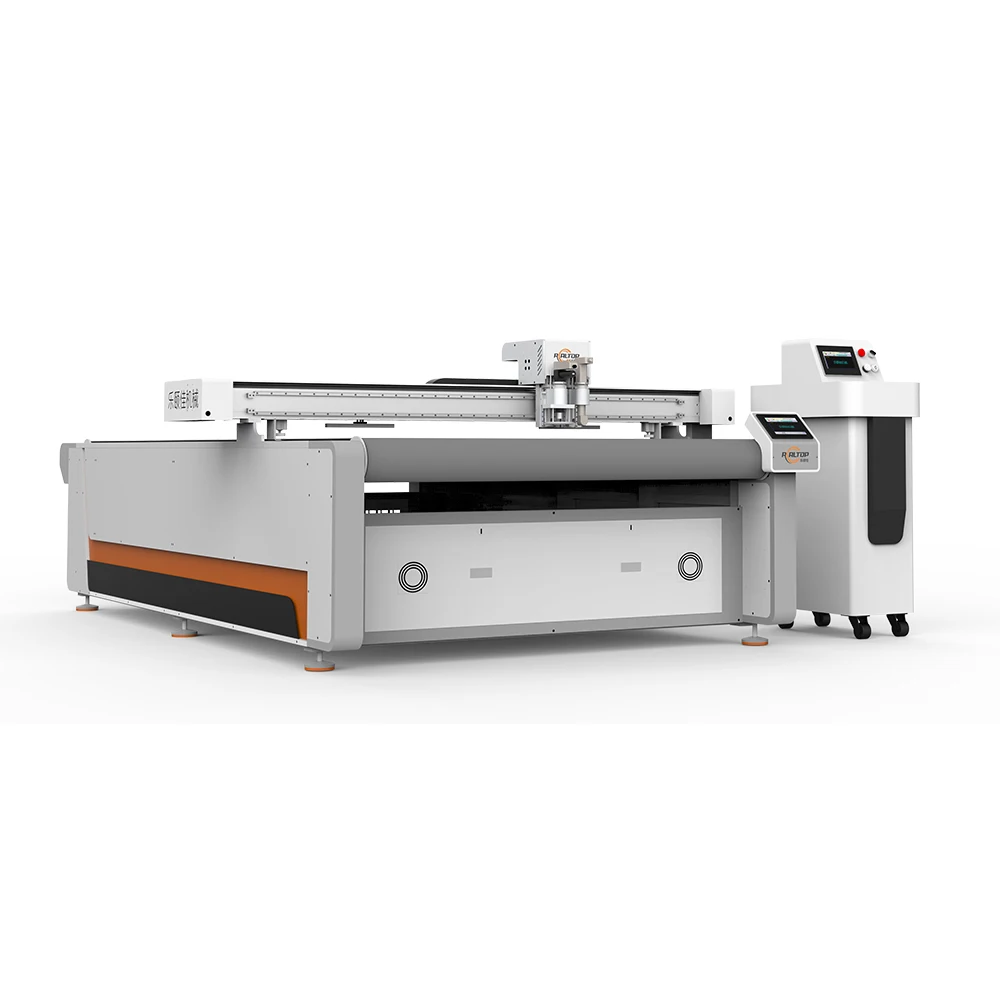
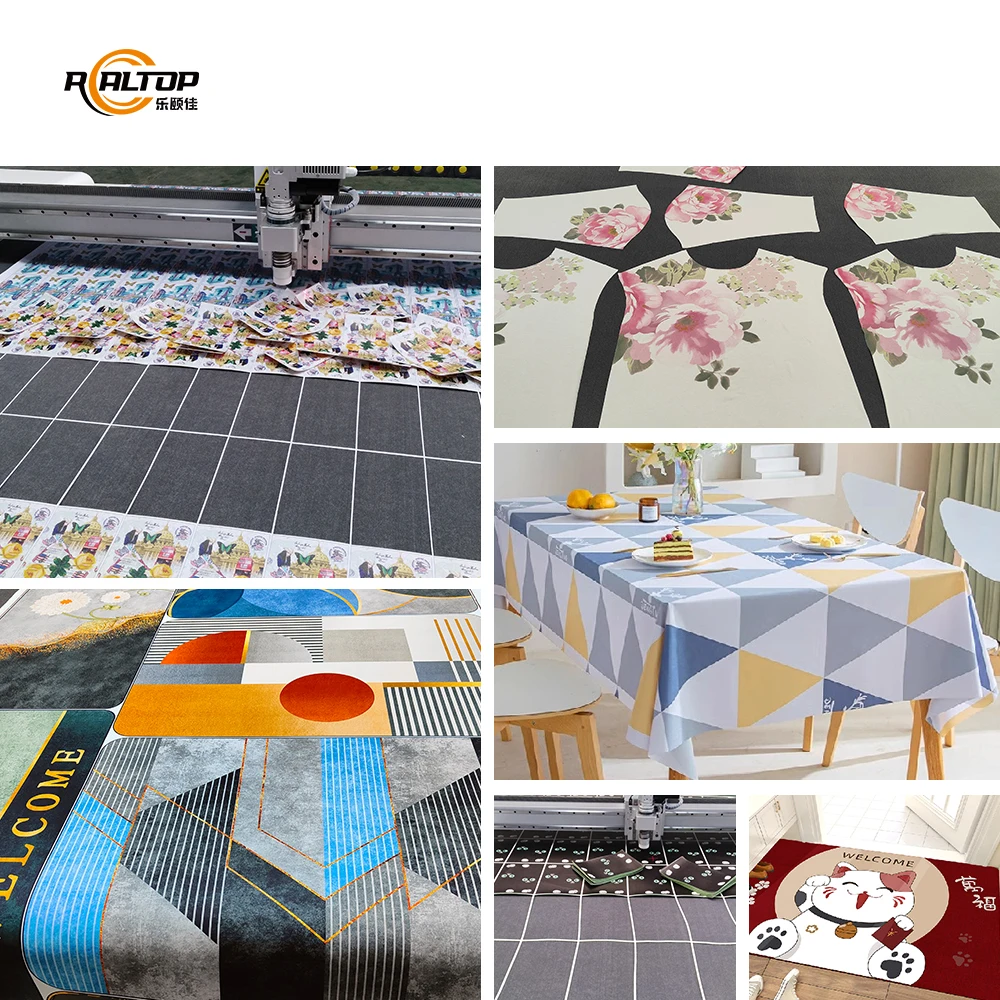

Material-Matched Configuration — We build around your textile thickness and daily volume, not just table dimensions, so a roller blind producer cutting coated fiberglass gets different tooling and vacuum zoning than an apparel factory slicing knit jersey.
Technical Specifications
| Parameter | Value |
|---|---|
| Product Type | CNC Oscillating Knife Cutting Machine |
| Working Area | 1600 × 2500 mm |
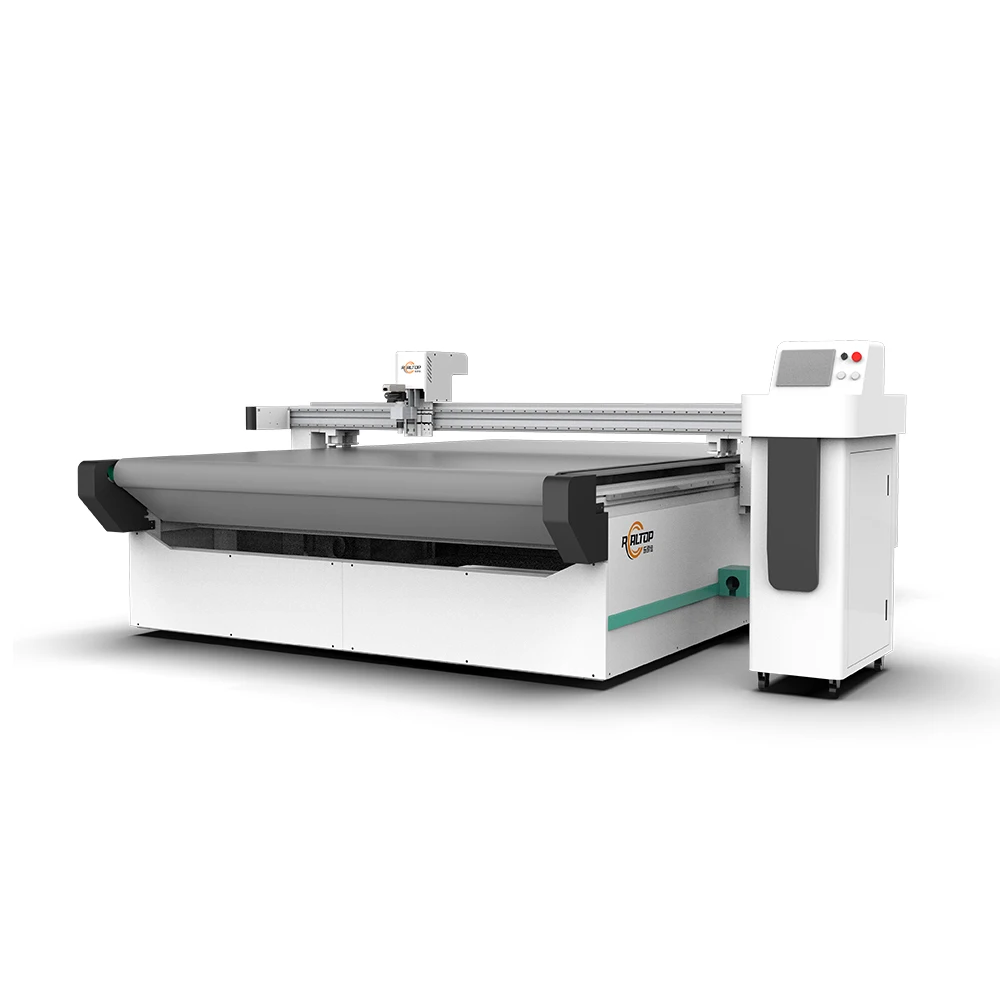
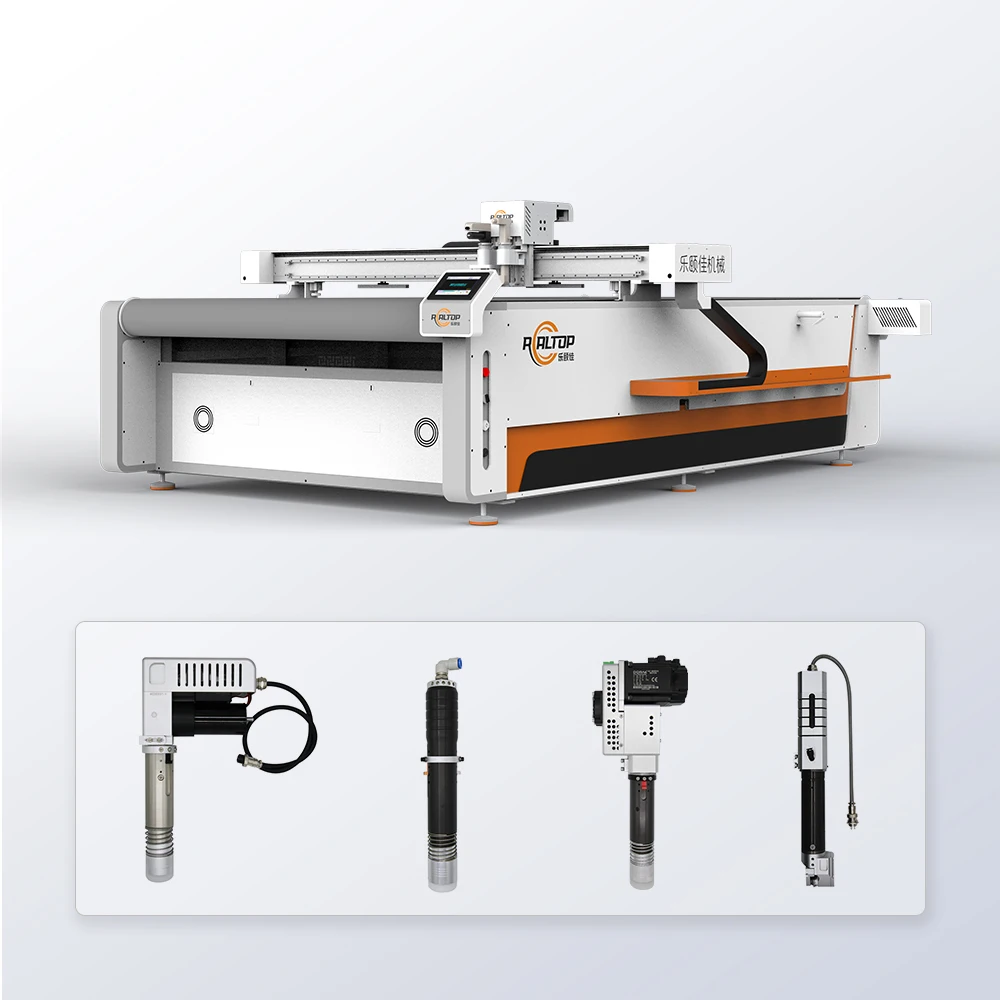
| Tool Head Options | Oscillating knife, Driven rotary knife, Creasing wheel, Kiss cutting tool, Pneumatic knife, Milling tool, V-groove knife |
| Cutting Speed | 0–2000 mm/s |
| Maximum Cutting Thickness | ≤ 30 mm |
| Cutting Accuracy | ±0.1 mm |
| Vacuum Pump | 9 kW |
| Voltage Options | 110V, 220V, 380V (configurable) |
| Supported File Formats | PLT, DXF, AI, PDF |
| Control System | PLC control panel |
| Safety Devices | Infrared sensor, emergency stop |
| Software Language | English, Russian, Italian, Chinese, customizable |
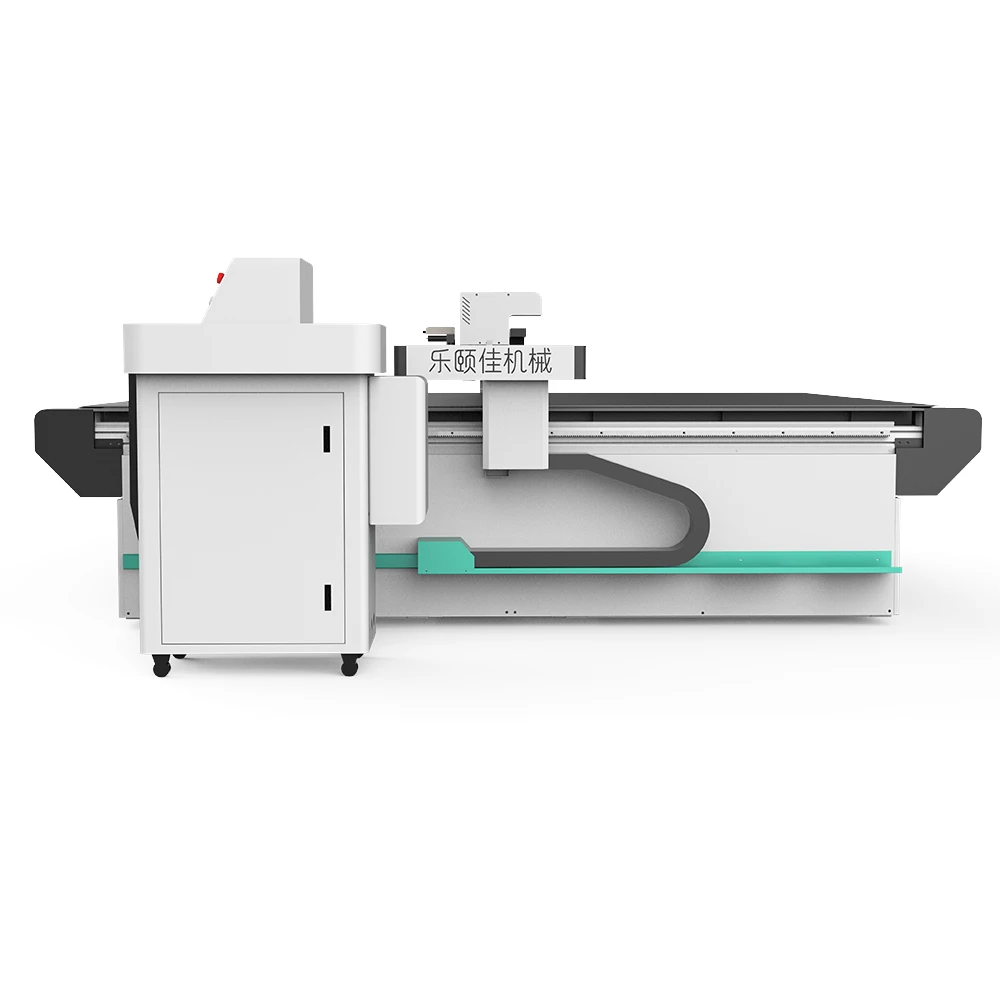
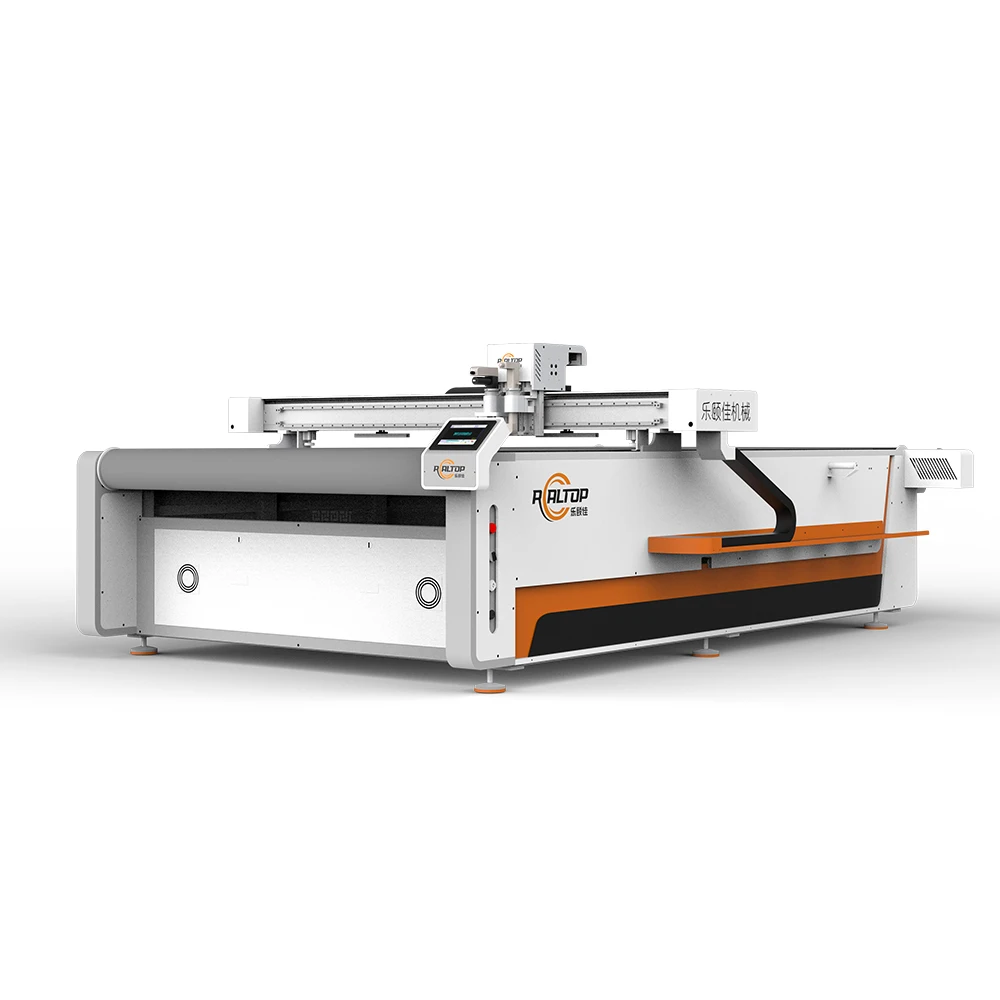
| Machine Dimensions | 3300 × 2100 × 1350 mm |
Application Suitability
| Application | Material or Output |
|---|---|
| Shoe upper and bag production | Natural leather, PU leather, suede, and technical textile layers |
| Apparel and patterned garment cutting | Printed woven fabric, knits, and multi-layer roll stock with CCD contour tracking |
| Automotive seat cover trimming | Heavy woven fabric, synthetic leather, and multi-layer composite sheets |
| Home furnishing and roller blinds | Coated fiberglass fabric, blackout textiles, foam-backed drapery material |
| Gasket and sealing fabrication | PTFE sheets, rubber, EVA foam, and compressed fiber composites |
| Packaging and carton sample making | Corrugated board, folding carton, PVC sheets, and adhesive films |
Why Material Thickness Changes the CNC Oscillating Knife Cutting Machine Configuration
A working area figure alone tells you nothing about whether the machine will handle your specific textile.
I once stood on a production floor in the Middle East watching a fabricator struggle with a flatbed cutter that had been quoted purely on bed size. The material was a heavy PVC-coated fiberglass for roller blinds, and the standard oscillating knife setup left frayed, fuzzy edges along every contour. The vacuum zones could not hold the stiff roll flat, and the knife frequency was too low to shear the glass fibers cleanly. That production line spent weeks re-engineering pressure feet, zoning the vacuum bed, and pushing the oscillation frequency higher before it ran properly. Specifying a CNC oscillating knife cutting machine production line starts with fabric weight, weave density, and coating chemistry — the bed size comes later [NEED_CITE: textile cutting parameters and tool frequency selection].
Tool Head Selection Against Textile Behavior
A woven aramid and a knit cotton jersey demand entirely different cutting actions. The oscillating knife shears through dense woven structures and coated materials, while the driven rotary knife pulls through long runs of single-ply knit without dragging. For multi-layer layups common in automotive seat covers, a pneumatic knife*ack cleanly. The available tool head options — oscillating, rotary, pneumatic, kiss cutting, milling, creasing wheel, and V-groove — let you assign one head per material family rather than forcing one tool to do every job.
Vacuum Zoning and Fabric Registration
Holding fabric flat across a 1600 × 2500 mm bed is not a single-zone problem. Small nested parts — collar pieces, gussets, gaskets — lose vacuum at the edges and lift during the final passes, producing dimensional drift beyond the ±0.1 mm tolerance. An aluminum bellows vacuum table with independent zoning keeps suction concentrated directly under the active cutting area, so small parts stay pinned while large panels remain fully supported. Combined with CCD camera contour recognition, printed registration marks on patterned rolls are tracked automatically, eliminating the manual alignment step that slows production on short-run garment and home furnishing orders [NEED_CITE: vacuum zoning strategies for CNC flatbed cutting tables].
Reading the Spec Sheet Against Your Real Workflow
The 0–2000 mm/s cutting speed figure is a travel maximum; actual throughput depends on fabric density, ply count, and the complexity of the nesting pattern. A single-ply vinyl film cuts at speeds near the upper range, while a 20 mm EVA foam stack forces the head to slow for clean penetration. The ±0.1 mm accuracy applies to the motion system under controlled conditions — in production, thermal expansion across a long shift and material tension in rolled textiles can shift real-world tolerance. The 9 kW vacuum pump must be matched against the total open area of the table and the permeability of the material; a loose-weave mesh bleeds far more air than a coated canvas, and the pump must have reserve capacity for the worst-case material in your mix. Voltage flexibility across 110V, 220V, and 380V allows configuration to the destination market before the machine leaves the factory, avoiding transformer add-ons on site.
The Hidden Cost of a Misconfigured Flatbed
When the vacuum zoning does not match the nesting layout, small parts drift during the final cut passes and entire sheets must be scrapped. When the tool head is wrong for the material — an oscillating knife on a loose knit, or a rotary blade on a dense foam — the edge quality drops and secondary trimming adds labor that was never in the cost model. Voltage mismatch after shipment means transformers, rewiring, or control board replacement before the machine ever runs a production file. These are not theoretical failures; they are the standard field complaints from buyers who specified on price and bed size without testing their actual material [NEED_CITE: common field failures in CNC cutting equipment deployment].
Why Sourcing Through the Manufacturer Matters
In-house design covers both knife and laser processes, so a textile that frays under a blade can be moved to a CO2 laser for sealed edges rather than forced through a knife. Every tool head and vacuum zone is specified against your actual fabric samples, not a generic catalog recommendation. CCD contour recognition is confirmed on your printed marks at production speed before the machine ships. Software compatibility — DXF, PLT, AI, PDF — is verified against your nesting workflow so the first file import works without reformatting. Sample cutting on your own material confirms edge quality and achievable thickness before any commitment is made.
Documentation & Verification
- Sample cutting report produced on your textile and coating type before order confirmation
- Tool head and vacuum zone configuration list specifying knife type, frequency, and table layout per material
- Electrical schematic and voltage confirmation matched to destination market supply standards
- Software license with file format compatibility note for your nesting workflow
- Factory test record showing cut accuracy and edge quality on buyer-supplied material
Installation, Commissioning & Support
- Dedicated power circuit sized for 9 kW vacuum pump plus spindle and control draw
- Level floor surface required across 3300 × 2100 mm machine footprint for bed flatness
- Vacuum zone mapping and tool head calibration performed on-site using your production fabric
- PLC panel language set to operator preference before first production run
- Spare knife blades, pressure feet, and vacuum seals supplied for initial running period
What to Prepare Before Requesting a Quote
Send your heaviest and lightest material samples, the typical sheet or roll width, and the daily volume your line must sustain. Confirm the local voltage and frequency at the installation site, and the control language your operators need. If you already run nesting software, share a sample export file so format compatibility is checked before the CNC oscillating knife cutting machine turnkey configuration is finalized.
Frequently Asked Questions
Q: How is the correct tool head selected for my fabric type, thickness, and edge quality requirement?
A: Selection starts with your material sample. Dense woven and coated fabrics typically take the oscillating knife, while single-ply knits run better with a driven rotary knife. Multi-layer layups may require the pneumatic knife for penetration force. We test on your actual textile and document the tool head, frequency, and downforce in the configuration report before building.
Q: Can the CCD camera track printed contour marks at full production speed on patterned textile rolls?
A: The camera system reads printed registration marks and adjusts the cut path in real time. We verify tracking accuracy on your specific print contrast and mark size during the sample cutting stage. If your print density or ink type causes recognition issues, mark specifications are adjusted before the machine is finalized.
Q: What voltage, plug type, and control language are confirmed before shipment to my market?
A: Voltage is configurable across 110V, 220V, and 380V, and the exact supply specification at your facility is confirmed before production. Plug type matches the destination country standard. The PLC control panel language — English, Russian, Italian, Chinese, or a custom language — is set and verified during the factory test.
Q: How does the vacuum table zoning handle small cut parts in high-volume fabric nesting?
A: The aluminum bellows table divides into independently controlled zones so vacuum concentrates under the active cutting area. Small nested pieces stay pinned while surrounding zones release, reducing lift and dimensional drift. Zone layout is configured around your typical nesting patterns during the specification phase.
Q: Can the software import my existing DXF, PLT, AI files and integrate with my nesting workflow?
A: The system supports PLT, DXF, AI, and PDF import. Before order confirmation, we test your actual CAD exports through the full nesting and cut-path workflow to confirm compatibility. If reformatting is needed, the specific export settings are documented so your design team can adjust without interrupting production.





商品评价
Clear filtersThere are no reviews yet.