


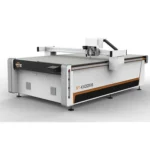
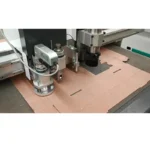
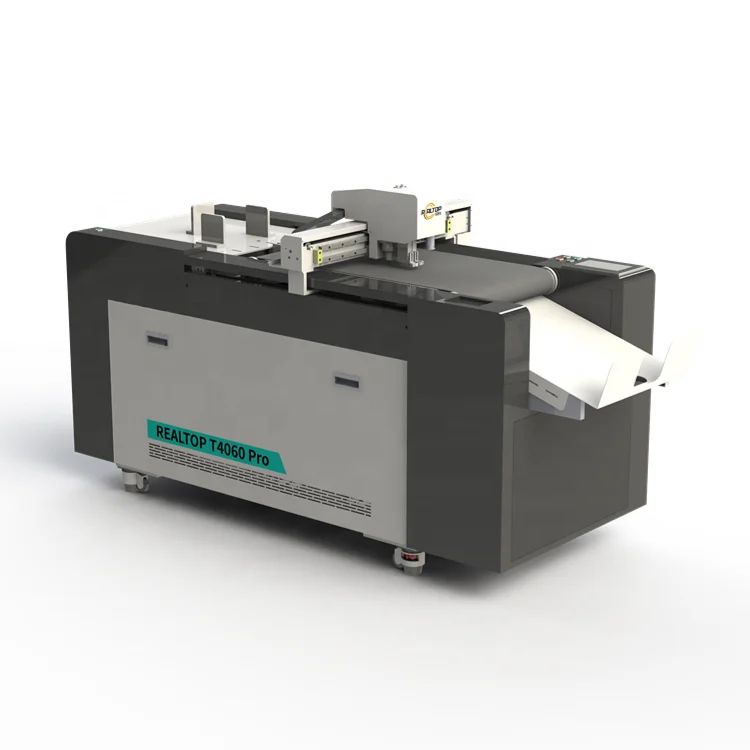
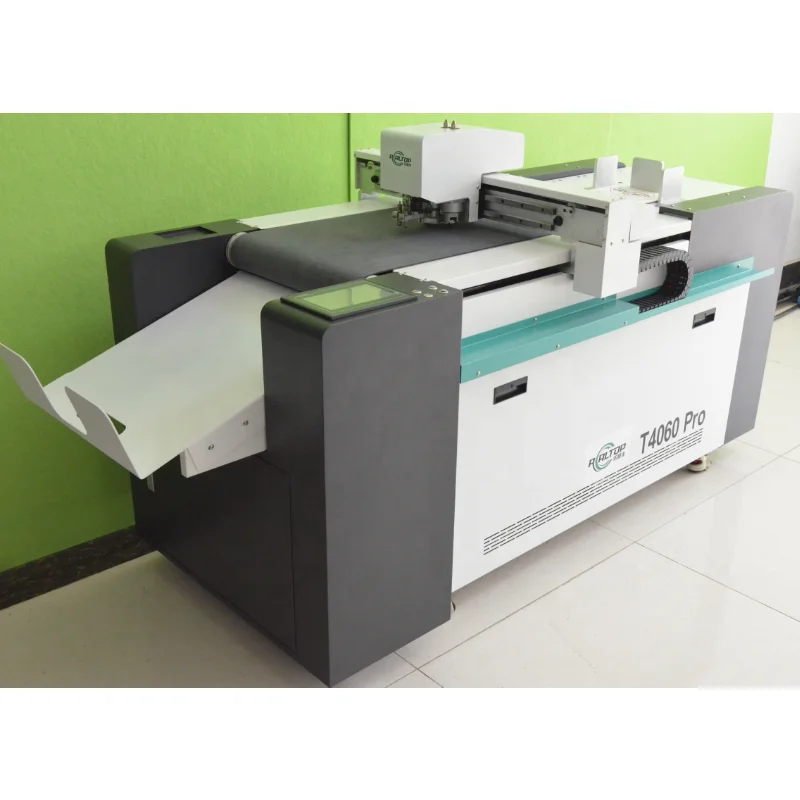
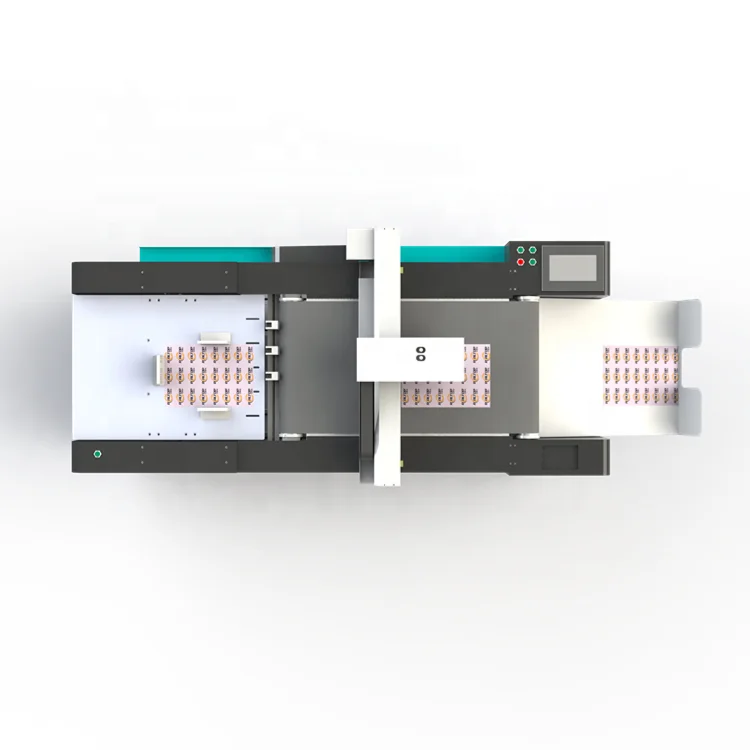
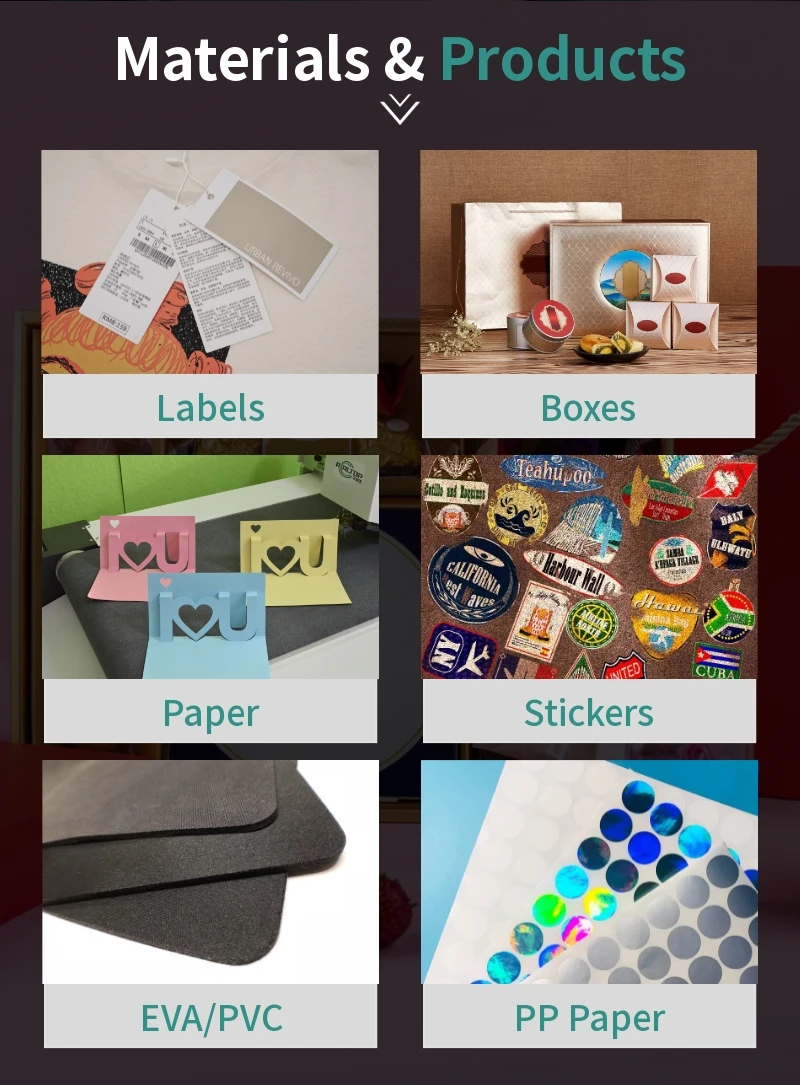
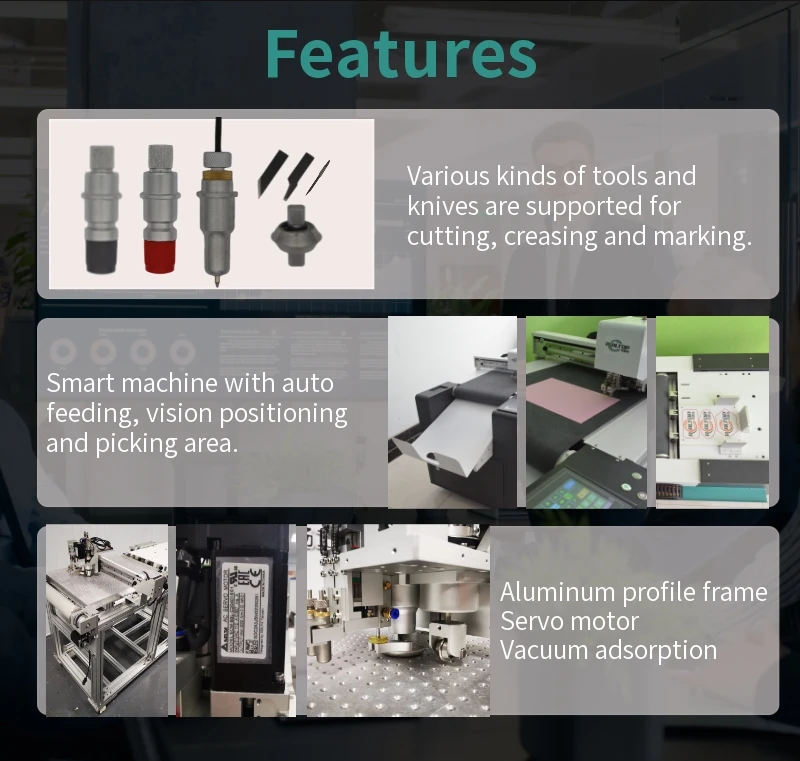
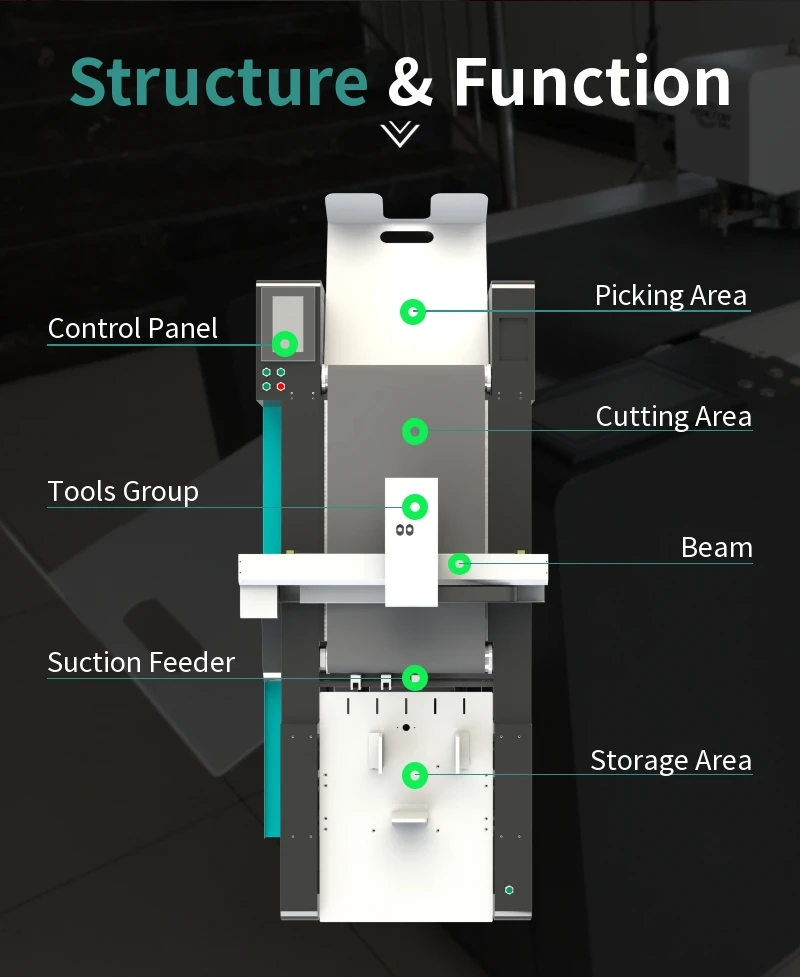

Tool head per material — A3 carton sample runs demand an oscillating knife for thick board, a creasing wheel for fold lines, and a drag knife for thin stock, so we specify the head stack only after seeing your actual flute profile and paper weight.
Technical Specifications
| Parameter | Value |
|---|---|
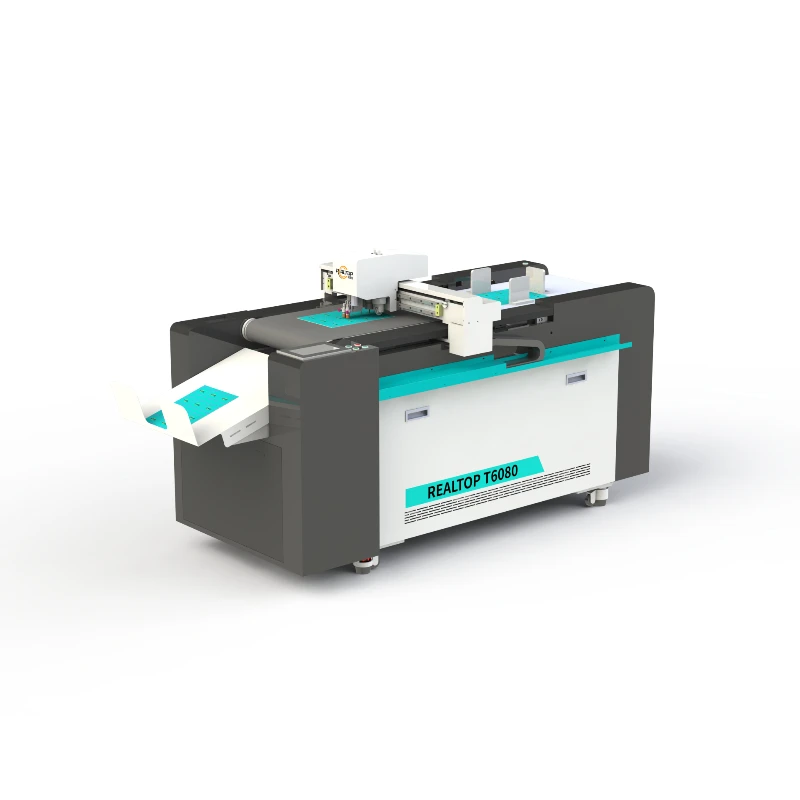
| Product Type | CNC Oscillating Knife Cutting Machine |
| Working Area | A3 format (exact dimensions in mm basis to be confirmed) |
| Tool Head Type | Electric cutter / plotter (configuration basis to be confirmed) |
| Cutting Thickness by Material | (basis to be confirmed) |
| Positioning Accuracy | (basis to be confirmed) |
| Repeatability | (basis to be confirmed) |
| CCD Camera | (basis to be confirmed) |
| Vacuum Zones | (basis to be confirmed) |
| Software & File Formats | (basis to be confirmed) |
| Rated Power (kW) | (basis to be confirmed) |
| Voltage & Frequency | (basis to be confirmed) |
| Control System | (basis to be confirmed) |
| Overall Dimensions (L×W×H) | (basis to be confirmed) |
| Net Weight | (basis to be confirmed) |
| Feed Speed | (basis to be confirmed) |
| Certification | (basis to be confirmed) |
| Warranty | (basis to be confirmed) |
Application Suitability
| Application | Material or Output |
|---|---|
| Carton sample making | Single-face and double-wall corrugated board, greyboard, folding box board |
| Packaging prototype production | A3-format paperboard, kraft liner, coated and uncoated stock |
| Die-line validation and short-run mock-ups | E-flute, B-flute, F-flute corrugated and solid fibre substrates |
| In-house packaging design iteration | Artboard, ivory board, and recycled paperboard up to working thickness limit |
Why the Vacuum Table Question Beats the Working Area Question
A board liftoff mid-cut wastes the entire sample sheet and risks blade damage, so vacuum zoning must match your smallest nested carton blank, not just the full A3 bed.
I once saw a packaging sample shop lose a full batch of A3 carton prototypes because their cutting table ran a single vacuum zone across the entire bed. Small nested blanks near the edges lifted as soon as the oscillating knife started its return stroke, and the blade caught the raised corner, tearing through three layers of E-flute. The operator had no way to isolate suction to just the active cutting area. That is why a CNC oscillating knife cutting machine for packaging sample making must have addressable vacuum zones, especially when nesting multiple small carton samples on one sheet. Without zoning confirmation on your typical blank layout, the hold-down specification on paper means very little in actual production [NEED_CITE:].
Matching the Tool Head to Your Board Weight
An oscillating knife handles thicker corrugated flute profiles cleanly, while a creasing wheel must be matched to the exact board caliper so the fold line compresses without cracking the liner. When a packaging prototype requires both cut and crease on the same sheet, the tool head stack needs both tools mounted and software-switchable without manual changeover. The drag knife suits thin card stock where an oscillating blade would be excessive. Confirming which board weights and flute types you run most often determines whether the CNC oscillating knife cutting machine for packaging sample making ships with a two-head or three-head configuration.
Vacuum Zoning and Small Blank Hold-Down
The vacuum table on an A3-format cutting bed needs enough independently controlled zones to hold small nested carton blanks flat while adjacent areas are still being cut. When the oscillating knife releases pressure at the end of a cut path, any residual suction gap can let a lightweight folding carton blank lift off the table surface. We map the vacuum zone layout to the buyer’s typical nesting pattern and smallest blank size, not to the full sheet area. This step prevents the edge-lift and fly-cut failures that destroy sample accuracy on short-run packaging work [NEED_CITE:].
Reading the Specification Sheet Against Your Actual Stock
Positioning accuracy and repeatability values only matter if they are measured under cutting load on your actual board stock, not on a bare table. Feed speed ratings must be read alongside the material thickness they were achieved on, because an oscillating knife slows noticeably when moving from 200 gsm artboard into triple-wall corrugated. The rated power of the spindle motor determines whether the machine can maintain stroke frequency through dense greyboard without stalling. Voltage and frequency must match the buyer’s facility supply — a 220V single-phase unit will not run correctly on a 380V three-phase line without transformer work, and the control system language needs to be set before the machine leaves the factory.
What Happens When the Tool Head Is Wrong for the Stock
Selecting a drag knife for double-wall corrugated produces ragged edges and crushed flute cores that make the sample look amateur-grade in front of the client. Running an oscillating knife on thin coated stock at the wrong stroke frequency can delaminate the surface layer and leave a fuzzy edge that will not glue cleanly during folding. A creasing wheel set to the wrong pressure cracks the top liner on kraft board, and the fold line shows white stress marks. These failures do not show up in the specification sheet — they appear only after the first sample run, which is why we test on the buyer’s own material before finalising the tool head list [NEED_CITE:].
Why Buyers Source the Configuration Here
In-house design and production covering knife cutting means we adjust the head configuration to the exact board stock, not to a generic package. CCD camera positioning is available for buyers who print artwork on carton blanks and need contour alignment before cutting. Software compatibility is confirmed against the buyer’s existing packaging design files before the order is placed, so DXF, PLT, or AI imports do not fail at first boot. Voltage, plug type, and control language are locked in during the specification stage, not discovered at uncrating. Sample cutting on the buyer’s own carton stock produces a physical report showing cut and crease quality at the target thickness.
Documentation & Verification
- Machine specification sheet listing all confirmed tool heads and vacuum zone count
- Electrical schematic with voltage and frequency matched to your facility supply
- Tool head and table configuration list per your board weight and flute type
- Sample cutting report on your actual carton stock before shipment release
- Software licence and file format compatibility note for your design workflow
- Packing photographs showing bed protection and tool head securing for transit
Installation, Commissioning & Support
- Confirm A3-format bed clearance and floor load capacity before delivery date
- Dedicated circuit matching rated power and voltage specification must be in place
- Machine arrives assembled; bed levelling and vacuum pump connection on site
- First-run parameter setting on your carton stock during commissioning visit
- Operator training covers tool head changeover and vacuum zone activation
- Spare oscillating knife blades and creasing wheels included in initial kit
What We Need to Quote Correctly
Send the exact board types, flute profiles, and caliper range you cut most often, along with your typical nesting layout and smallest blank dimensions. Confirm the voltage, frequency, and plug type at your facility, and tell us which packaging design software you currently use so we can verify file import compatibility. If you have printed carton artwork requiring contour recognition, share a sample print so we can test CCD alignment before the machine ships.
Frequently Asked Questions
Q: How do I confirm cutting and creasing capability for my specific board thickness and flute type?
A: We run a sample cutting test on your actual carton stock before finalising the order. The test uses the proposed oscillating knife blade and creasing wheel settings on your exact board weight and flute profile, and a physical report documenting cut edge quality, crease depth, and fold integrity is sent for your approval before the machine enters production.
Q: Which tool heads are required for cut-only versus cut-and-crease carton sample workflows?
A: Cut-only workflows need only the oscillating knife matched to your board thickness. Cut-and-crease workflows add a creasing wheel sized to your board caliper so fold lines compress without cracking the liner. If you also cut thin card stock inserts, a drag knife is added to the head stack. We confirm the full tool head list based on your material range.
Q: How does vacuum table zoning affect small carton sample hold-down during cutting?
A: Independently controlled vacuum zones allow suction to be concentrated under the active cutting area, keeping small nested blanks flat even after adjacent cuts release hold-down pressure. We map the zone layout to your typical nesting pattern and smallest blank size to prevent edge lift and blade catch during oscillating knife return strokes.
Q: How is software and file format compatibility verified before order against my existing packaging design files?
A: You send us sample design files from your current packaging software, and we test import, nesting, and toolpath generation on the machine’s control system before confirming the order. A written compatibility note listing supported formats and any required export settings is included with the machine documentation so your design team can prepare files without trial and error.



商品评价
Clear filtersThere are no reviews yet.