




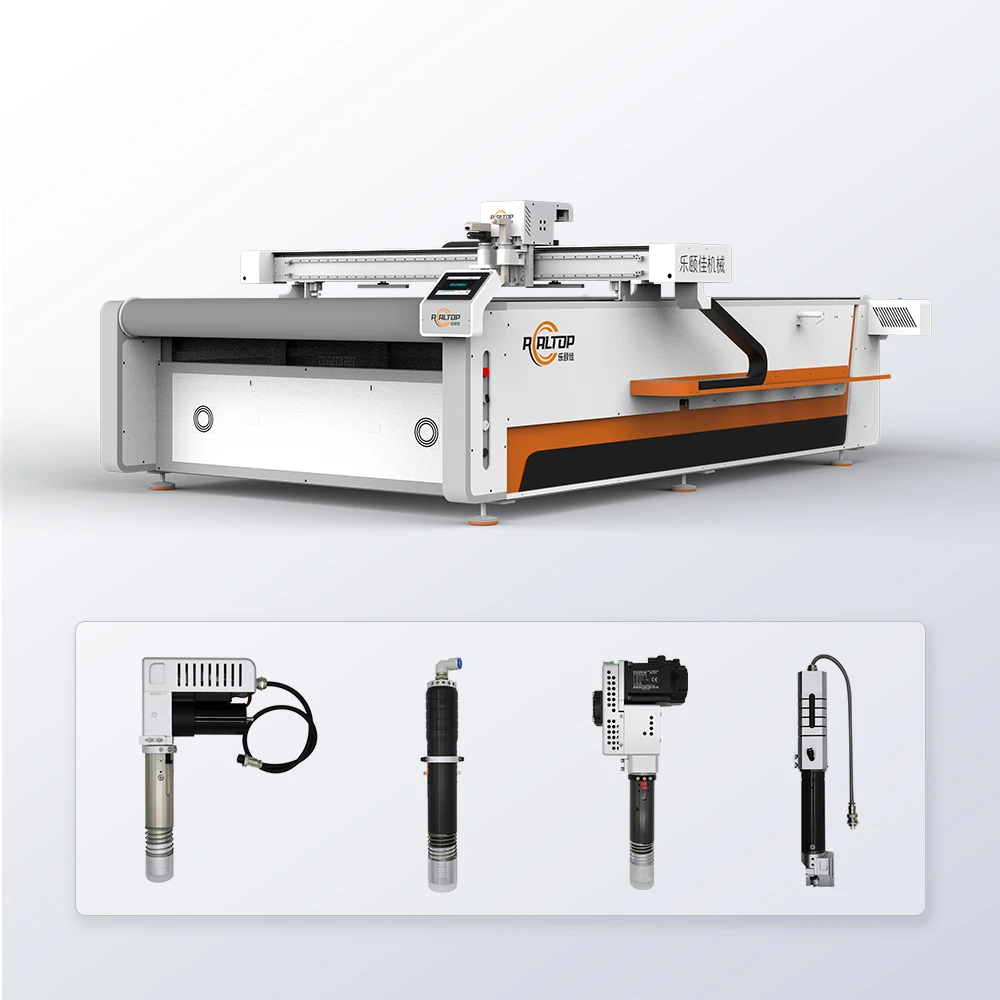
Tool head and table configuration specified per material and production volume — the aluminum bellows vacuum table with zoned control and oscillating knife options are matched to your fabric ply height and part geometry before the order is finalized.
Technical Specifications
| Parameter | Value |
|---|---|
| Product Type | CNC Multi-Layer Fabric Cutting Machine |
| Working Area | 1600 × 2500 mm |
| Cutting Thickness | ≤ 30 mm |
| Cutting Speed | 0–2000 mm/s |
| Cutting Accuracy | ±0.1 mm |
| Available Tool Heads | Oscillating knife, Driven rotary knife, Creasing wheel, Kiss cutting tool, Pneumatic knife, Milling tool, V groove knife |
| Vacuum Pump Power | 9 kW |
| Vacuum Table Type | Aluminum bellows vacuum table |
| Control System | PLC control panel |
| Servo Motors | Panasonic, Delta, Dorna options |
| Voltage Options | 110V, 220V, 380V (configurable) |
| Accepted File Formats | PLT, DXF, AI, PDF |
| Safety Devices | Infrared sensor device, emergency stop |
| Machine Dimensions | 3300 × 2100 × 1350 mm |
| Language Options | English, Russian, Italian, Chinese, custom |
| Certification | CE |
Application Suitability
| Application | Material or Output |
|---|---|
| Apparel manufacturing | Suits, knitwear, lace, complex woven and patterned fabrics in multi-layer stacks |
| Automotive interiors | Seat fabrics, carpets, PVC floor mats cut to contour with burr-free edges |
| Home textiles | Sofa upholstery fabrics, heavy curtains, area rugs in batch production |
| Composite material processing | Carbon fiber prepreg, aramid, and specialty technical fabrics |
Why Multi-Layer Fabric Cutting Fails When the Vacuum Layout Is Wrong
A high-volume CNC fabric cutting machine production line only holds tolerances when the vacuum table zoning matches the actual part geometry on the bed.
I have seen fabric plies shift mid-cut because the vacuum zones were too large for the pattern pieces being nested. The pump was pulling full suction across the entire table, but small sleeve panels and collar pieces sat over zones with no seal, lifting and drifting as the oscillating knife passed through [NEED_CITE: vacuum hold-down requirements for multi-layer textile cutting]. When hundreds of layers are stacked, even a slight shift compounds into mismatched plies and unusable garment panels. The aluminum bellows table on this system allows zoning adjustments so suction concentrates under the nested layout, keeping small and large pieces locked in place simultaneously.
Tool Head Selection Across Fabric Weights and Ply Counts
The cutting method must match the material behavior. An oscillating knife handles woven and knit fabrics in multi-layer stacks up to 30 mm, vibrating at high frequency to shear fibers cleanly without dragging or fraying the edges. For single-ply or lighter technical fabrics, a driven rotary knife rolls through the material with less lateral force, reducing distortion on stretch knits and lace. Pneumatic knife tooling is available when the production run involves dense composite materials like carbon fiber prepreg or aramid, where blade pressure must be regulated to prevent delamination between layers. Configuring the correct head for your fabric weight and ply count is a decision that happens before the CNC fabric cutting machine production line is finalized, not after installation.
Nesting and Contour Recognition for Real Production Speeds
Material yield determines profitability in garment and home textile manufacturing. The intelligent nesting system processes DXF, PLT, AI, and PDF files to arrange pattern pieces across the fabric width, accounting for grain direction, pattern matching on printed textiles, and defect avoidance where fabric flaws are flagged and routed around [NEED_CITE: nesting optimization standards in textile cutting]. When the production job involves printed contour work, the system supports contour recognition to track registration marks and align cuts to the printed design at production cutting speeds. This is where many cutting tables fall short — recognition that works at sample speed but loses the mark once the feed rate reaches full output. Confirming contour tracking performance on your specific printed fabric before shipment eliminates this risk.
Reading the Specs That Actually Affect Daily Output
The working area of 1600 × 2500 mm determines how much fabric can be spread in a single lay, directly influencing how many marker layouts fit per cutting cycle. A 9 kW vacuum pump generates the suction required to hold dense multi-layer stacks flat against the aluminum bellows surface, and this power level is sized for the table area to maintain consistent pressure across zones. Cutting speed ranges from 0 to 2000 mm/s, but the practical speed for your operation depends on fabric type and ply height — a heavy denim stack at full 30 mm thickness cuts at a different rate than a single layer of lightweight knitwear [NEED_CITE: cutting speed variables for oscillating knife systems on textile stacks]. The PLC control panel with servo motors from Panasonic, Delta, or Dorna governs motion precision, maintaining ±0.1 mm accuracy whether the head is tracing a tight curve on a collar piece or running a long straight cut across a sofa fabric panel. Voltage configurability across 110V, 220V, and 380V ensures the machine matches the local power supply at the installation site without requiring external transformers that introduce failure points.
The Cost of Skipping Material Validation Before the Order
When a buyer specifies a CNC fabric cutting machine production line based on working area alone and skips the sample cutting step, problems surface during commissioning. The knife head chosen for a medium-weight woven may crush foam backing on a composite upholstery fabric, producing ragged edges that require secondary trimming. A vacuum table configured for large garment panels may fail to hold small automotive carpet pieces, causing lift and rejected parts. Software that cannot import the buyer’s existing nesting files or recognize file formats forces a complete workflow rebuild after the machine arrives [NEED_CITE: file format compatibility issues in CNC textile cutting procurement]. These are not defects — they are configuration mismatches that could have been caught with a sample cutting report on the actual production material at the specified ply height.
Why Buyers Source This Configuration Here
Tool head and vacuum table combinations are specified against the buyer’s fabric type, ply height, and daily volume rather than offered as a fixed package. In-house design covers both knife cutting and supporting technologies, so the cutting method matches the material instead of forcing the material into one method. CCD camera positioning is available and verified on printed contour work at the buyer’s production speed, not just at demonstration pace. Software compatibility is confirmed before the order — file formats, nesting workflows, and control language are checked against the buyer’s existing system. Sample cutting on the buyer’s own material at the intended stack height is completed and documented before commitment, with a full report provided.
Documentation & Verification
- Factory test record on your fabric at specified ply height before dispatch
- Tool head and vacuum table configuration list matched to your material and volume
- Software licence with DXF, PLT, AI, PDF file format compatibility confirmed in writing
- Electrical schematic with voltage, plug type, and frequency matched to your site
- Machine specification sheet detailing all servo, pump, and control components
Installation, Commissioning & Support
- Foundation must support 3300 × 2100 × 1350 mm footprint with level tolerance for vacuum seal integrity
- Dedicated circuit required matching confirmed voltage at 9 kW pump load plus servo draw
- Machine ships with PLC panel configured in selected language, verified at factory power-on
- First-run commissioning includes vacuum zone mapping against your initial nesting layout
- Operator training covers tool head changeover procedures across all configured knife types
- Spare parts list includes oscillating blades, rotary knife consumables, and vacuum seal components
What to Include in Your Inquiry
To configure a CNC fabric cutting machine production line that performs on your shop floor, start with the material specifications: fabric type, weight per square meter, maximum ply height, and whether printed contour recognition is required. Include your daily cutting volume and the file formats your design team currently uses. Confirm the local voltage and frequency, preferred control language, and whether existing nesting software will connect or a standalone system is needed.
Frequently Asked Questions
Q: How do I determine which tool head is right for my fabric stack?
A: The choice depends on fabric weight, weave structure, and ply count. Oscillating knives suit most woven and knit multi-layer stacks up to 30 mm. Driven rotary knives work better on lightweight single-ply materials. Pneumatic knife heads handle dense composites like prepreg. A sample cutting test on your actual material at production ply height confirms the selection before order placement.
Q: What vacuum table zoning do I need for mixed-size pattern pieces?
A: Small garment components like collars and cuffs require tighter vacuum zones than large body panels. The aluminum bellows table allows zone adjustment so suction concentrates under each nested piece. Your nesting layout is reviewed during configuration to ensure zone boundaries align with your typical marker arrangements and prevent lift on the smallest parts.
Q: Can the system track printed marks at full production cutting speed?
A: Contour recognition is available for printed textiles, but performance varies with mark contrast, fabric stretch, and cutting speed. Verification on your specific printed material at your target feed rate is completed before shipment to confirm the system maintains registration throughout a full production run without losing marks.
Q: Will my existing nesting files work with this cutting system?
A: The system accepts PLT, DXF, AI, and PDF formats. Compatibility is confirmed before the order by processing your actual production files through the nesting software and verifying marker output, grain direction rules, and defect avoidance routines function correctly with your existing design workflow.
Q: What stack height and ply thickness can this configuration handle?
A: The cutting capacity is rated up to 30 mm total stack thickness. The practical ply count depends on individual fabric weight and compressibility. Sample cutting at your intended stack height validates that the vacuum hold-down maintains position accuracy and the selected knife head produces clean edges through the full depth of the lay.


商品评价
Clear filtersThere are no reviews yet.