



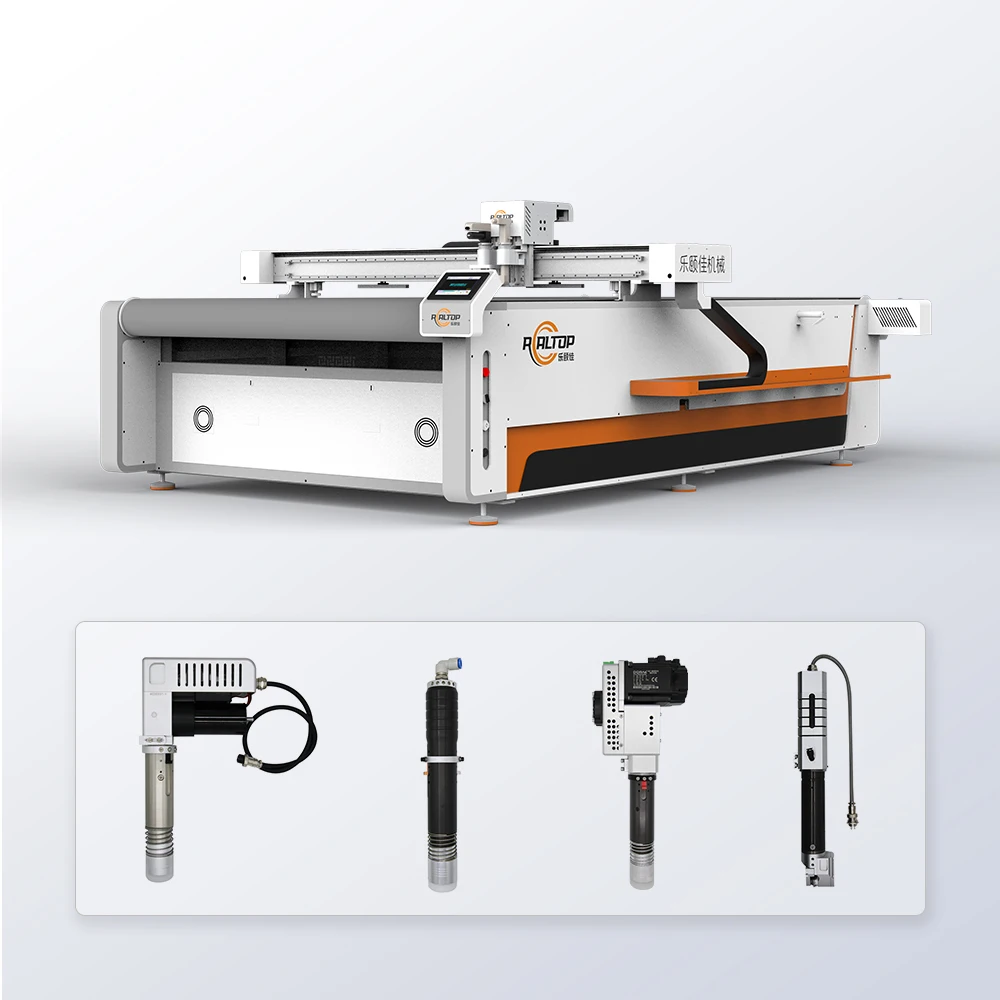
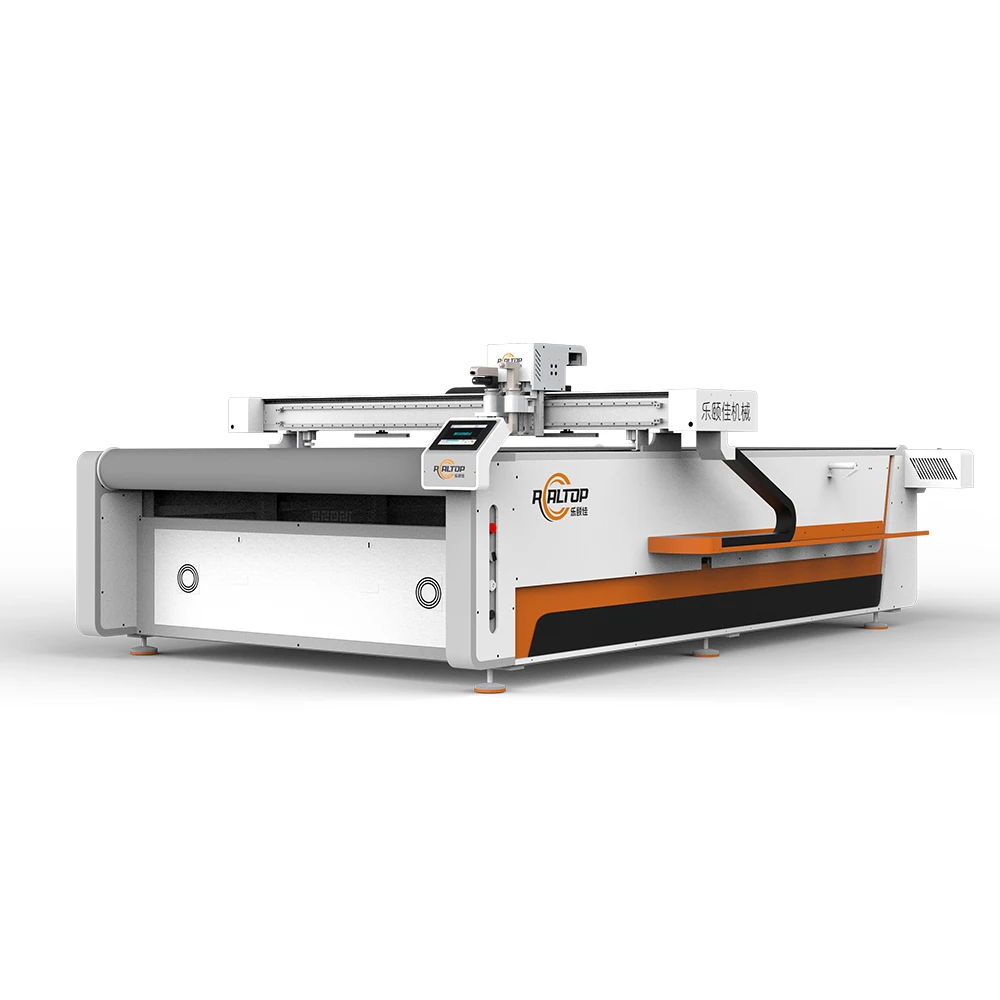
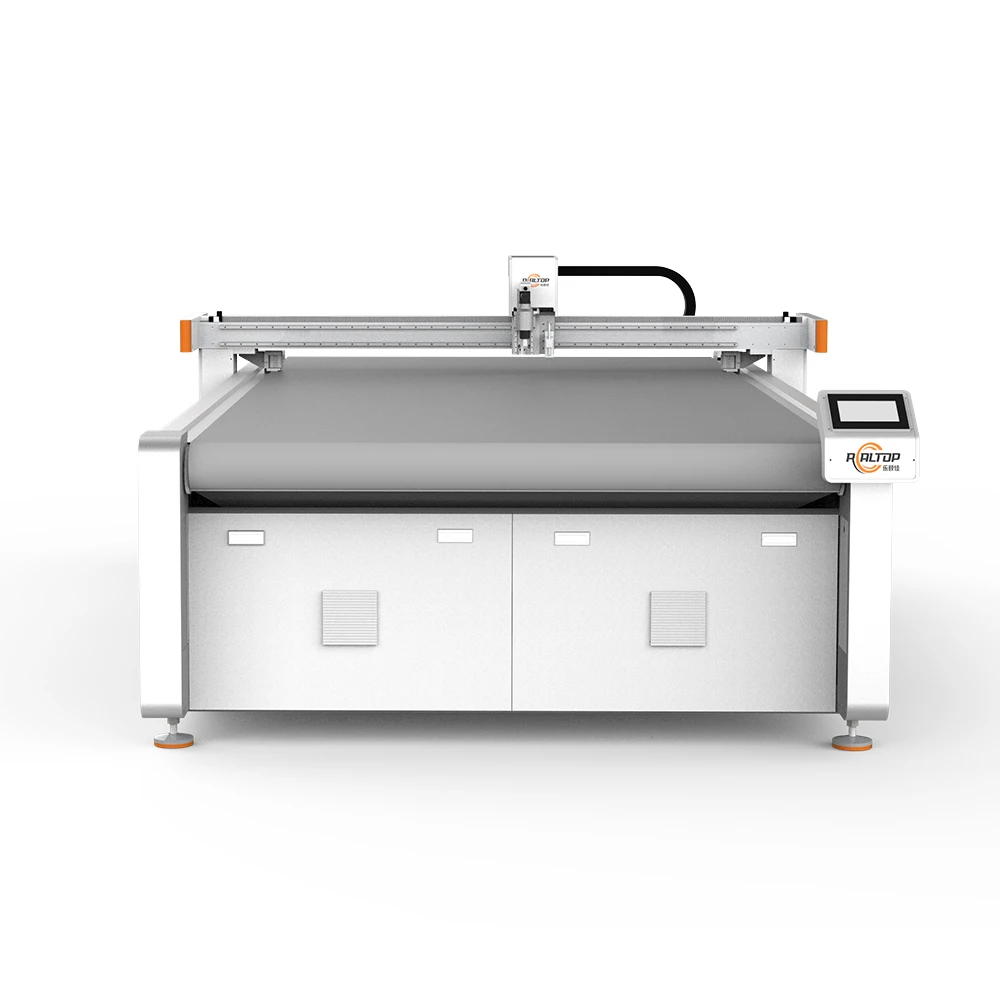
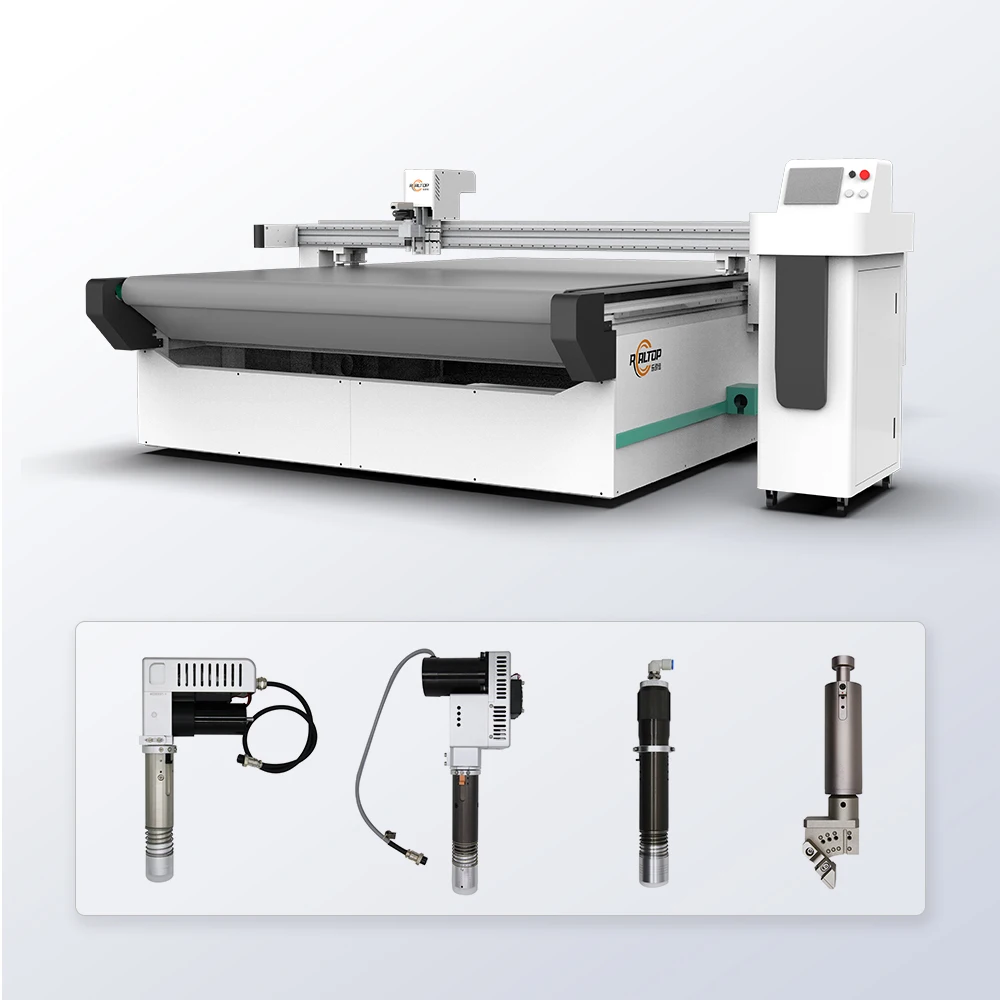
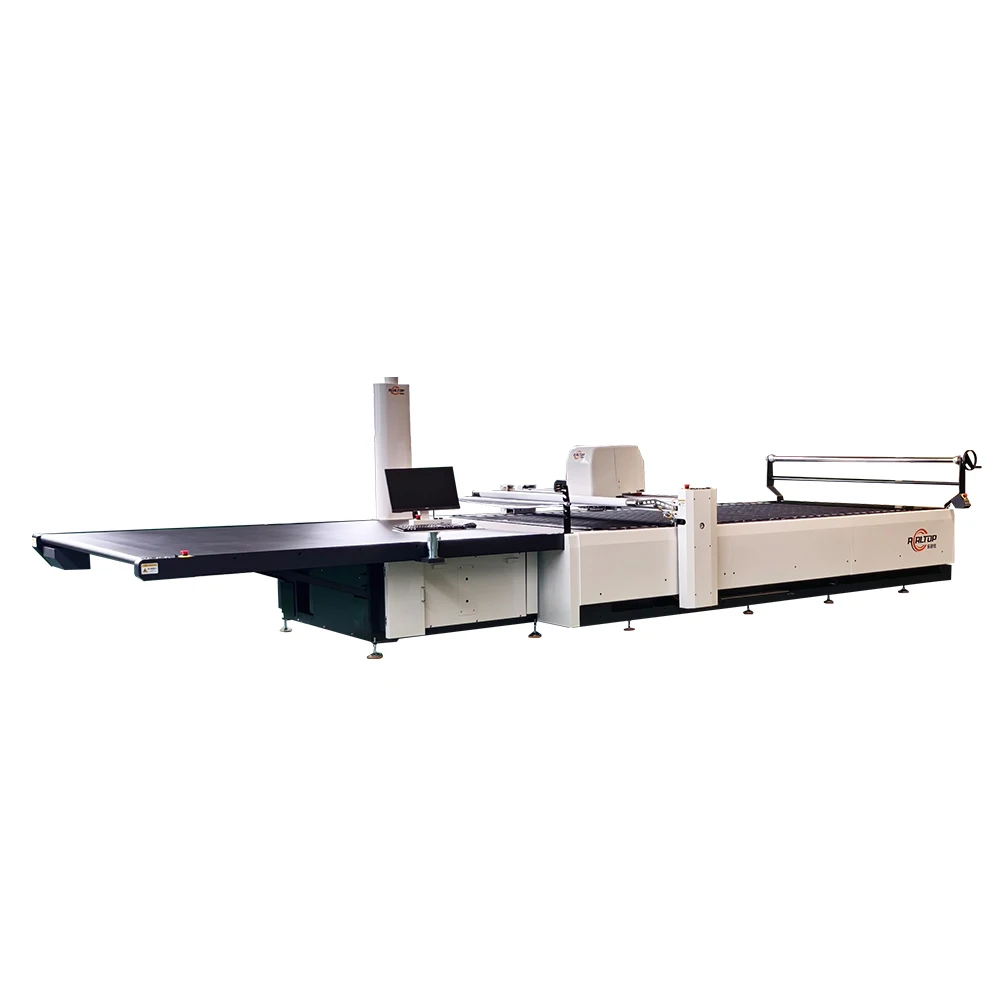

Tool head and table configuration specified per material and production volume — the cutting configuration is locked to the buyer’s fabric type, ply height and pattern mix before the machine enters production, eliminating the mismatch between quoted capability and actual workshop output.
Technical Specifications
| Parameter | Value |
|---|---|
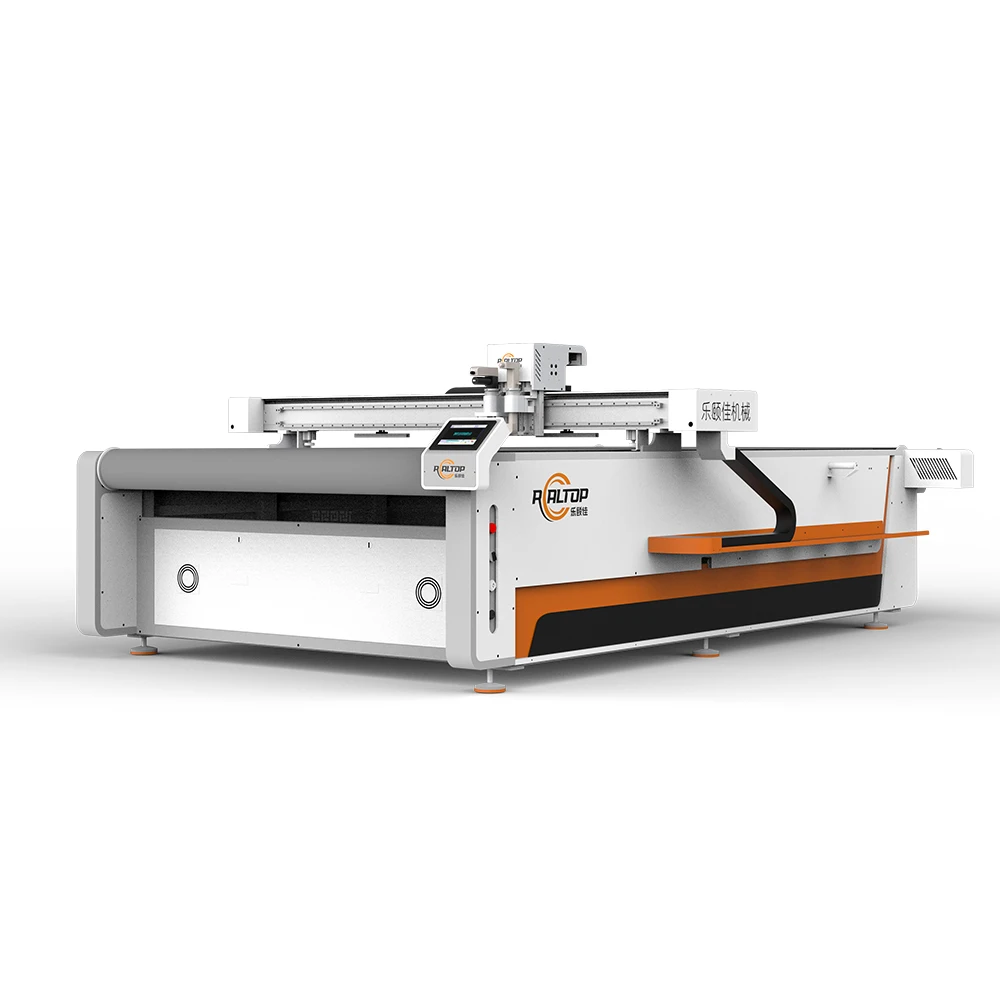
| Product Type | CNC Auto Feed Flatbed Cutting Machine |
| Cutting Area | 1600 × 2500 mm |
| Cutting Speed | 0–2000 mm/s |
| Cutting Thickness | ≤ 30 mm (basis to be confirmed on fabric type and ply count) |
| Cutting Accuracy | ±0.1 mm |
| Tools Available | Oscillating knife, Driven rotary knife, Creasing wheel, Kiss cutting tool, Pneumatic knife, Milling tool, V groove knife |
| Vacuum Pump Power | 9 kW |
| Vacuum Table | Aluminum bellows vacuum platform |
| Drive System | Servo motors (Panasonic, Delta, Dorna options) |
| Control System | PLC control panel with optional display languages |
| Profile Formats | PLT, DXF, AI, PDF |
| Voltage Options | 110V, 220V, 380V |
| Safety Device | Infrared sensor device and emergency stop device |
| Machine Dimensions | 3300 × 2100 × 1350 mm |
Application Suitability
| Application | Material or Output |
|---|---|
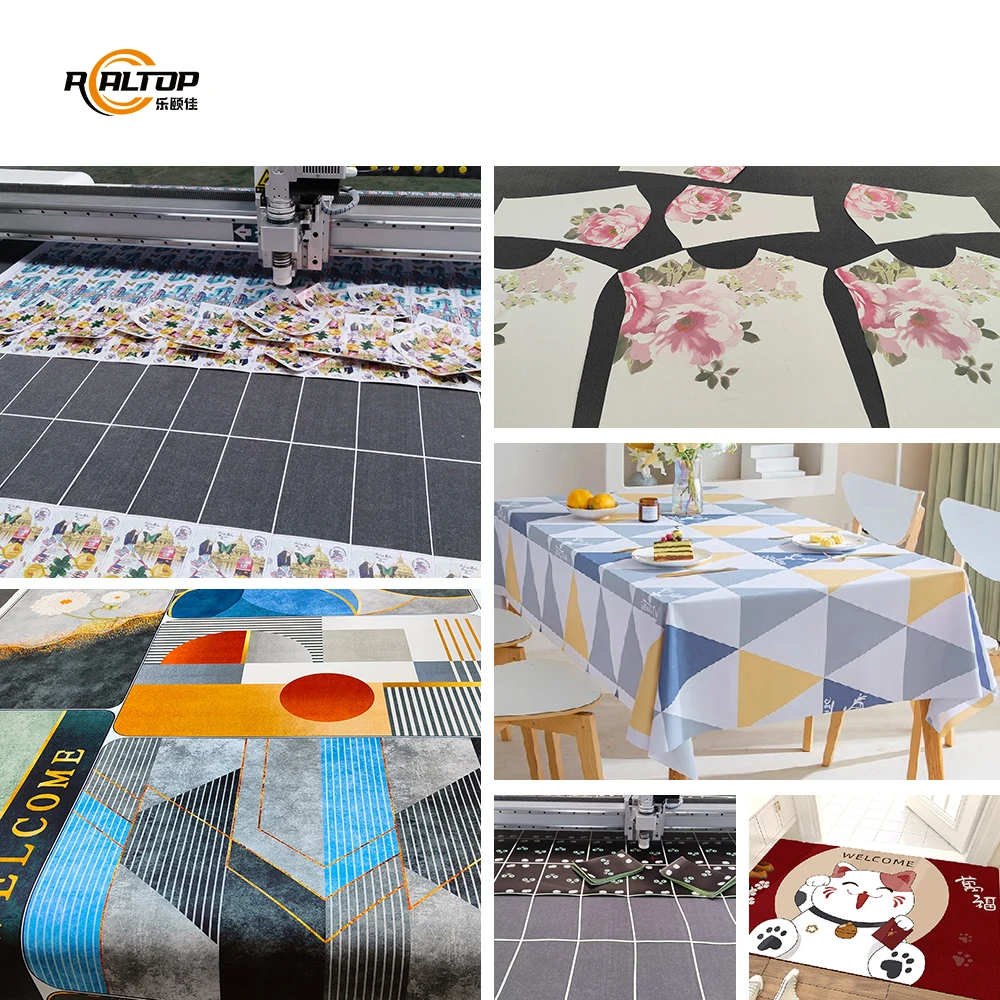
| Apparel manufacturing | Suits, knitwear, lace and complex woven fabrics in multi-layer marker cutting |
| Automotive interiors | Seat fabrics, carpets and PVC mats requiring burr-free edge finishing |
| Home textiles | Sofa upholstery, curtain panels and rugs with vacuum-assisted hold-down |
| Composite material processing | Carbon fiber prepreg, aramid and specialty technical textiles |
Why Vacuum Zoning Decides Your Daily Yield on Small Pattern Pieces
A flatbed without zoned vacuum adsorption turns high-speed cutting into a material-handling problem.
When a garment factory cuts dozens of small pattern pieces from a multi-layer lay, the vacuum must hold each piece independently once it is freed from the surrounding fabric. Without zoning, the suction bleeds across the entire table surface, and the smallest pieces — collar stands, pocket flaps, sleeve cuffs — lift at the trailing edge the moment the oscillating knife exits the cut path. The result is not a catastrophic failure but a steady accumulation of misaligned pieces that operators must stop to reposition [NEED_CITE: vacuum hold-down principles for multi-layer textile cutting]. I have walked into workshops where the cutting cycle itself was fast, but the operator spent more time chasing lifted fabric than the machine spent cutting, and the cloth CNC cutting machine production line never reached its expected throughput because the table configuration was wrong for the pattern mix.
Servo Drive Precision Across the 1600 × 2500 mm Working Envelope
The servo-driven cutting head maintains ±0.1 mm repeatability across the full travel of the aluminum bellows platform, which matters most when nested patterns share long common cut lines. Any deviation at the far end of the 2500 mm stroke compounds into pattern mismatch during sewing assembly. Panasonic, Delta and Dorna servo options allow the drive specification to align with the buyer’s existing maintenance ecosystem and local service availability.
Conveyor Integration for Continuous Lay-to-Cut Workflow
The auto-feed conveyor synchronizes with the cutting cycle so that once a full marker is cut and cleared, the next fabric ply advances without manual repositioning. This continuous material flow is what separates a cloth CNC cutting machine production line from a standalone flatbed table. The PLC control panel manages the feed-to-cut timing, and the nesting software accepts DXF, AI, PDF and PLT files to prepare the next marker while the current one is still being cut.
Reading the Specification Sheet Against Your Actual Fabric
Cutting thickness is listed at ≤ 30 mm, but that figure only becomes meaningful when tied to a specific fabric construction and ply count [NEED_CITE: fabric compressibility and cutting depth relationship]. A 30 mm lay of tightly woven canvas behaves differently under the knife than 30 mm of open-weave knit or three-layer composite automotive upholstery. The oscillating knife handles dense woven materials at medium ply heights, while the driven rotary knife suits continuous long cuts on lighter knits. The 9 kW vacuum pump must generate sufficient suction through the aluminum bellows table to compress the lay and prevent inter-ply shift — and the required vacuum zone map depends entirely on the smallest piece in your marker [NEED_CITE: vacuum table zoning standards for CNC textile cutting].
The Hidden Cost of Underspecified Table and Tool Configuration
When a buyer specifies a cutting table on working area alone and skips the vacuum zoning conversation, the first symptom is not machine failure but chronic small-piece drift. Operators slow the cutting speed to compensate, which masks the problem but erodes the throughput the cloth CNC cutting machine production line was purchased to deliver. Wrong tool head selection produces frayed edges on wovens or stretched distortion on knits, and the downstream sewing floor rejects the cut bundles. I have seen automotive interior suppliers shut down a line for days waiting for a replacement tool head that should have been specified correctly at the order stage [NEED_CITE: tool head selection criteria for technical textiles].
Why This Configuration Approach Matters
Tool head selection is matched to fabric weight and construction before the order is confirmed, not substituted from a default kit. Vacuum zone configuration is mapped to the buyer’s actual pattern mix — small garment pieces demand dense zoning, while large home textile panels use broader zones for maximum hold. Sample cutting on the buyer’s own fabric at the target ply height and speed produces a verifiable report before commitment. Software license and file format compatibility are confirmed against the buyer’s existing CAD and marker-making workflow. Voltage, plug type and control language options are locked in before production begins, so the PLC panel arrives configured for the workshop floor.
Documentation & Verification
- Machine specification sheet listing every tool head and vacuum zone configuration
- Sample cutting report on buyer’s own fabric at target ply height and speed
- Electrical schematic with confirmed voltage, plug type and circuit requirements
- Software license note with verified DXF, AI, PDF and PLT file format compatibility
- Operation and maintenance manual in confirmed display language
- Factory test record documenting cutting accuracy and vacuum performance before dispatch
Installation, Commissioning & Support
- Floor leveling within tolerance across the 3300 × 2100 mm machine footprint
- Dedicated circuit matching confirmed 110V, 220V or 380V supply with the 9 kW vacuum pump load
- Conveyor belt tensioning and synchronization calibration with the PLC cutting cycle
- Vacuum zone mapping verified against the buyer’s first production marker
- Tool head changeover training on all specified knives and the creasing wheel
- Spare parts list covering oscillating knife blades, rotary knife discs and vacuum seals
What to Include in Your Inquiry
Send the fabric type, weight per square meter and intended ply height for your production runs. Specify the smallest pattern piece in your typical marker and your daily cutting volume target. Confirm your workshop voltage and frequency, the control panel language preference, and whether your existing CAD system exports DXF, AI or PDF files for nesting integration.
Frequently Asked Questions
Q: How do cutting speed and ply thickness combine to affect daily output?
A: The 0–2000 mm/s speed range applies to single-ply or thin-layer cutting on stable materials. As ply height increases, the knife must penetrate deeper, and cutting speed decreases to maintain edge quality and ±0.1 mm accuracy. Daily output depends on the combination of lay height, marker complexity and the number of tool changes required per marker, not the maximum speed figure alone.
Q: How should the vacuum table be zoned for small garment pieces versus large home textile panels?
A: Small pattern pieces like collars and cuffs need dense, independent vacuum zones so each piece holds firm after surrounding material is cut away. Large sofa or curtain panels require fewer, broader zones for full-surface adsorption. The aluminum bellows vacuum platform is configured with the zone layout that matches your actual pattern mix before the machine ships.
Q: Which tool head works best for woven versus knit versus coated fabrics?
A: Oscillating knives suit dense woven fabrics at medium ply heights. Driven rotary knives handle continuous long cuts on lighter knits without stretching the material. Pneumatic knives and kiss cutting tools address coated and laminated fabrics where blade pressure must be precisely controlled to cut the face layer without damaging the substrate.
Q: How does the nesting software integrate with existing CAD and marker-making systems?
A: The system accepts PLT, DXF, AI and PDF profile formats. Before order confirmation, we verify compatibility with your existing CAD output and nesting workflow to ensure files import correctly without manual re-drawing. Software license terms and any required file conversion steps are documented in the delivery package.
Q: How does auto-feed conveyor synchronization work with the cutting cycle?
A: The PLC control panel coordinates the conveyor advance with the completion of each marker cut. Once cut pieces are cleared, the next fabric section feeds into position automatically. This continuous cycle is calibrated during commissioning to match your specific fabric weight and lay preparation method.





商品评价
Clear filtersThere are no reviews yet.