




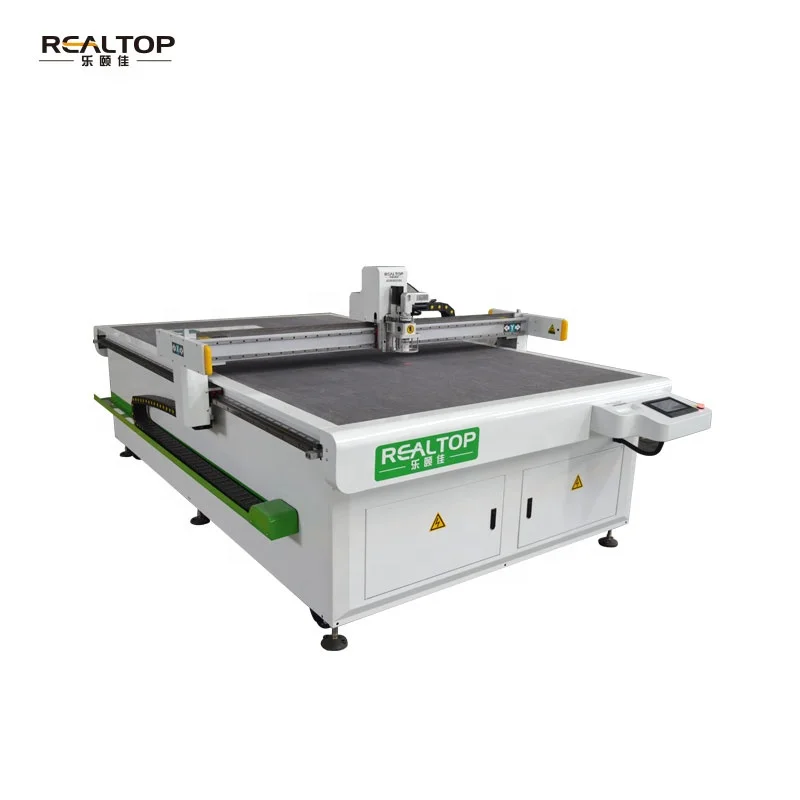
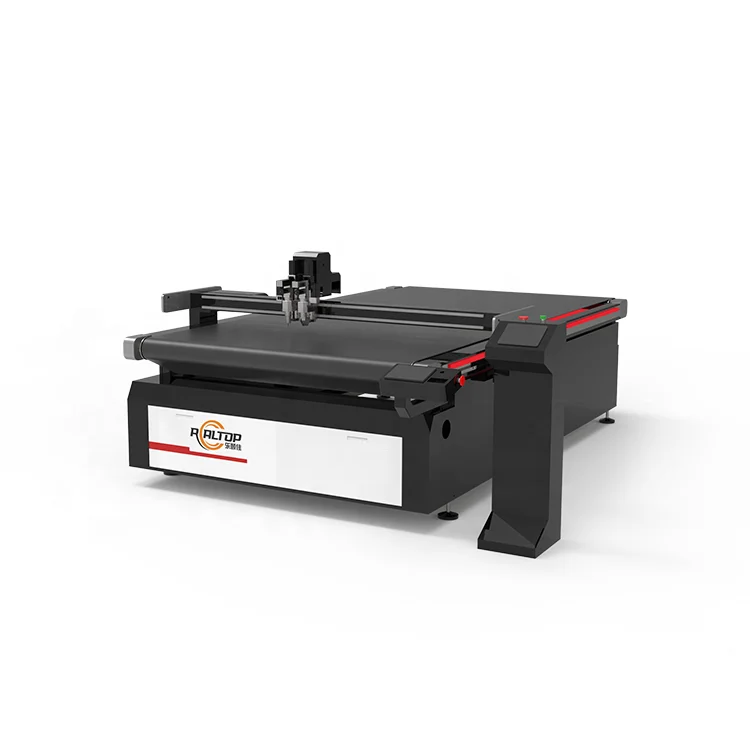

Tool Head Matched to Material — We test your actual footwear canvas, composite leather, or carton stock before recommending a knife or table configuration, so the cut edge matches production requirements rather than brochure promises.
Technical Specifications
| Parameter | Value |
|---|---|
| Model | RT-D2516/RT-S2516 |
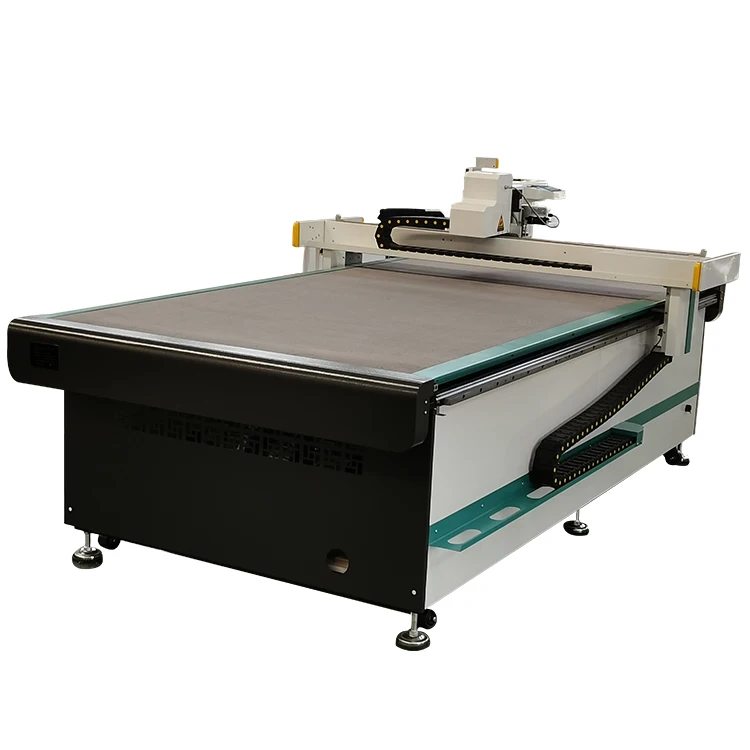
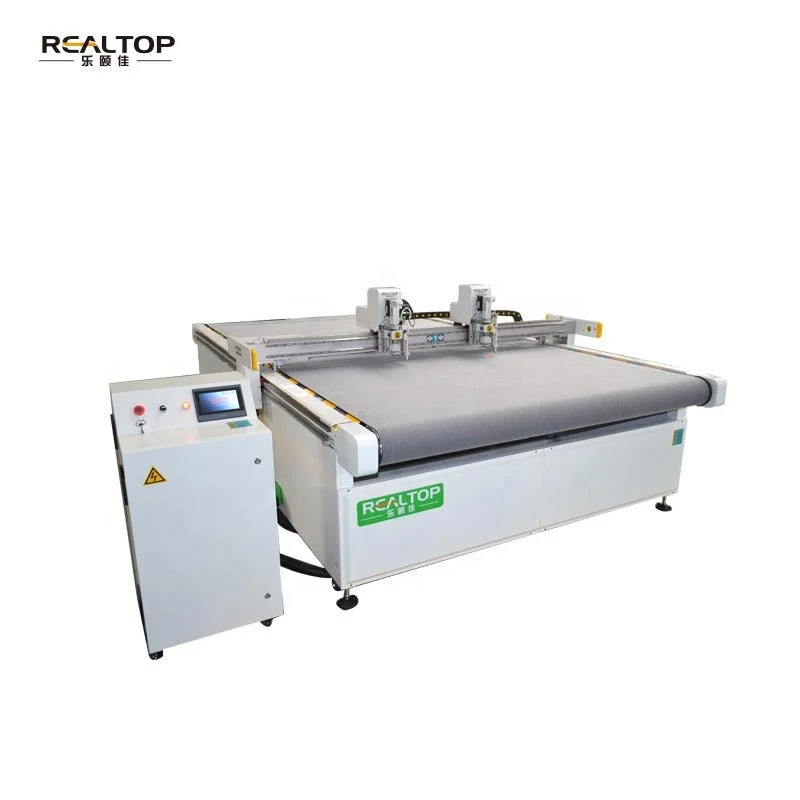
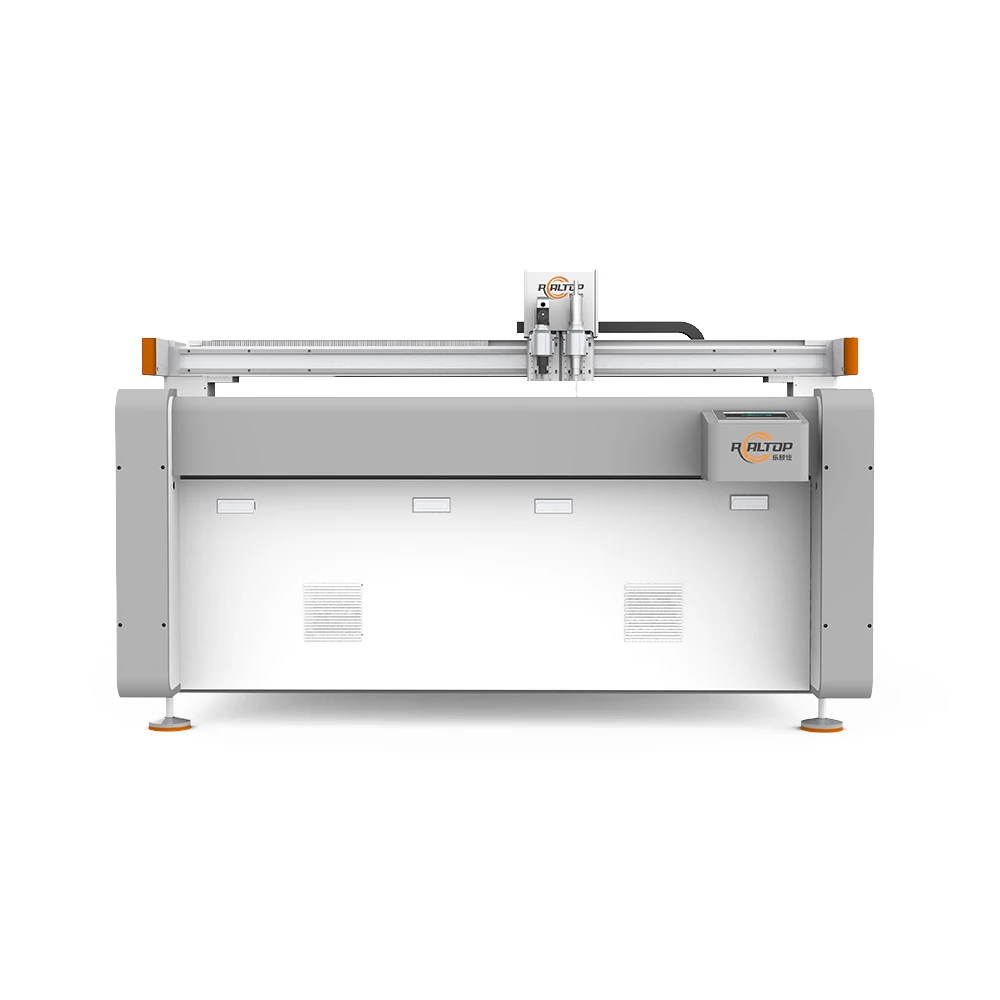
| Product Type | CNC Oscillating Knife Digital Cutting Machine |
| Working Area | 1600 × 2500 mm |
| Machine Size | 3450 × 2300 × 1250 mm |
| Rated Power | 9 kW |
| Vacuum Pump | 7.5 kW |
| Table Type | Flat working table with auto-feeding conveyor |
| Multifunctional Head | Swiss imported knife with vibration full cutting, half cutting, and cursor location |
| Cutting Speed | 200–800 mm/s depending on material type and thickness |
| Translational Velocity | 800–1200 mm/s |
| Max Cutting Thickness | Up to 70 mm with pneumatic tool (basis not stated in source — confirm material and density) |
| Repeated Accuracy | ≤0.1 mm |
| Transmission System | Digital servo motor, linear guide, synchronous belt, imported ball screw |
| Servo Motor | Japanese Yaskawa |
| Rail | Taiwan Hiwin |
| Conveyor Belt | Germany imported |
| Instruction System | HP-GL compatible format |
| Voltage | 380V ± 10% |
| Safety Device | Infrared sensors |
| Functions | Cutting, creasing, marking |
Application Suitability
| Application | Material or Output |
|---|---|
| Footwear upper and canvas shoe component cutting | Leather, composite leather, canvas, and multi-layer fabric without edge delamination |
| Packaging and carton sample making | Corrugated board, folding carton stock, and grey board with integrated creasing |
| Garment and flexible fabric cutting | Apparel textiles, sponge composite leather, and lining materials |
| PVC and soft material processing | Soft glass, silicone, rubber, and flexible PVC sheets |
| Automotive interior and mat production | Carpet, car floor mat material, and interior trim composites |
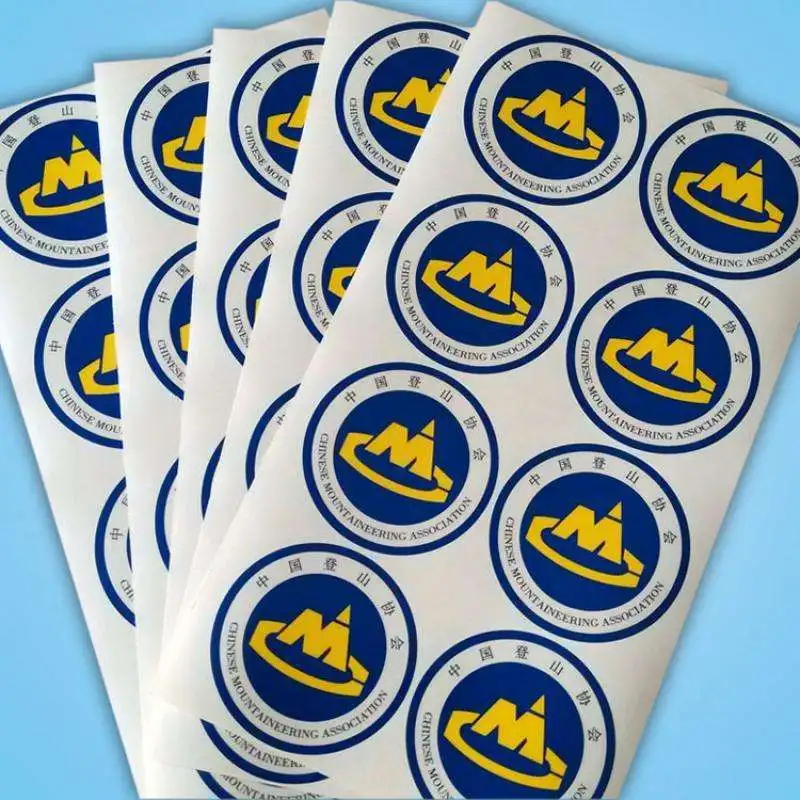
| Sticker and label cutting | Self-adhesive vinyl and label stock with half-cut capability |
Why Specified Cutting Area Alone Fails on Real Footwear Stock
A flatbed sized only by sheet dimensions will struggle the first time it meets multi-layer canvas or dense composite leather at production speed.
The working area tells you what fits on the table. It tells you nothing about how the knife handles the actual ply count, density, and adhesive layers in your material. I once watched a footwear buyer unpack sample pieces that looked clean on the top ply but were half-torn underneath — the supplier had tested on single-layer cardboard, never on the bonded canvas the buyer actually ran. The CNC digital cutting machine for industry application only earns its specification when the tool pressure, oscillation frequency, and vacuum hold-down are all set for the real stock, not a showroom demo sheet [NEED_CITE: cutting force requirements for multi-layer footwear textiles].
Knife Selection That Follows the Material, Not the Brochure
The multifunctional head on this platform carries a Swiss imported oscillating knife that supports full cutting, half cutting, and cursor positioning within a single setup. For footwear uppers, full-cut oscillation slices through bonded canvas and composite leather without the crushed edges that drag knives leave on foam-backed materials. Half cutting handles sticker and label stock where the backing paper must stay intact, while the cursor function locates reference points when sheet placement varies between feeds. A CNC digital cutting machine for industry application earns its keep in footwear and packaging environments precisely because the tool head changes function without a full tooling swap.
Vacuum Zoning and Conveyor Flow for Continuous Runs
The 7.5 kW vacuum pump paired with a flat working table holds flexible materials flat during high-speed cuts, but hold-down effectiveness depends on how the table zones are configured for your part size. Small footwear components and intricate pattern pieces need concentrated vacuum in specific zones rather than a blanket pull across the full 1600 × 2500 mm area. The Germany-imported conveyor belt feeds stock continuously, so the operator loads while the machine cuts — throughput depends on how quickly the cut pieces clear and the next sheet registers [NEED_CITE: vacuum table zoning standards for small-part digital cutting].
Reading the Specs Against Your Production Reality
The Japanese Yaskawa servo motors and Taiwan Hiwin linear rails keep repeated accuracy at ≤0.1 mm across the entire working envelope, which matters when nesting software packs dozens of shoe upper patterns into a single sheet and every millimeter of drift wastes material. Cutting speed ranges from 200 to 800 mm/s, but the actual rate depends entirely on material density and ply count — running at the top of that range on thick sponge composite leather will produce ragged edges, while thin garment fabric can run at the upper limit cleanly. The HP-GL compatible instruction system integrates with common nesting and design software, though file format compatibility must be confirmed against your existing workflow before the order is placed. The 9 kW total rated power and 380V ± 10% electrical supply require a dedicated circuit; voltage drop on shared lines causes servo faults that look like machine defects but are actually facility problems.
What Happens When the Wrong Configuration Ships
When a machine arrives with a drag knife instead of an oscillating head, footwear foam and composite layers tear rather than slice, and the buyer spends weeks trying to adjust parameters that were never correct for the material. Insufficient vacuum zoning on small pattern pieces lets thin leather lift mid-cut, producing scrap instead of components. If the control panel language and electrical plug were not confirmed before dispatch, the machine sits idle while adapters and translations are sourced locally [NEED_CITE: common configuration mismatches in exported CNC cutting equipment].
Why Buyers Source This Platform Here
In-house design and production cover both knife and laser cutting technologies, so the cutting method is matched to the material rather than forced into one approach. Tool head and table configuration are specified per material type and daily volume, not sold as a fixed package. Sample cutting on your own footwear canvas, packaging board, or composite leather runs before you commit, generating a report that documents edge quality, cutting speed, and tool wear on your actual stock. Software compatibility — file formats, nesting workflows, and license terms — is confirmed before the order enters production. Voltage, plug type, and control language are verified against your facility standards so the machine powers on correctly the day it arrives.
Documentation & Verification
- Machine specification sheet listing the exact tool head, vacuum configuration, and conveyor setup for your order
- Electrical schematic with voltage, frequency, and plug type confirmed against your facility supply
- Sample cutting report on your footwear or packaging material documenting edge quality and achieved cutting speed
- Software license and HP-GL file format compatibility note issued before shipment
- Factory test record showing repeated accuracy verification across the 1600 × 2500 mm working area
- Operation and maintenance manual with tool change procedures and vacuum pump service intervals
Installation, Commissioning & Support
- Floor space requirement of at least 4000 × 3000 mm to accommodate the 3450 × 2300 × 1250 mm machine frame and material staging
- Dedicated 380V ± 10% circuit with capacity for the combined 9 kW machine and 7.5 kW vacuum pump draw
- Machine ships partially assembled; rail alignment and conveyor tension are verified on-site during commissioning
- First-run parameter setting includes oscillation frequency, cutting depth, and vacuum zone mapping for your specific material
- Operator training covers tool head changes between full cut, half cut, and cursor functions on the multifunctional head
- Spare parts list includes oscillating knife blades, conveyor belt segments, and vacuum table seals with recommended replacement intervals
Before You Request a Quote
Tell us the material type, maximum ply count, and sheet dimensions you run daily, along with your facility voltage and frequency. If you have existing DXF or HP-GL nesting files, send a sample so we can confirm software compatibility before quotation. We will cut your actual material and return the samples with a full report before you make any commitment.
Frequently Asked Questions
Q: How is cutting thickness verified for my specific material and ply count?
A: We run a sample cutting test on your actual material — whether it is multi-layer canvas, bonded leather, or corrugated board — and document the clean cutting depth, edge quality, and tool wear observed. The 70 mm maximum with the pneumatic tool is a reference value; real capacity depends on your material density and layer adhesion, which the test confirms before you order.
Q: Can the machine import my existing DXF/HP-GL files and nesting workflow?
A: The HP-GL compatible instruction system handles standard vector formats, but we verify your specific file export settings and nesting software output before the order enters production. A sample file exchange and test cut confirm that line weights, cut order, and crease marks translate correctly to the machine controller without manual rework.
Q: What vacuum table zoning is provided for small parts to prevent lift during cutting?
A: The 7.5 kW vacuum system is configured with zone controls matched to your typical part size. Small footwear components and intricate pattern pieces need concentrated hold-down in specific table areas. We map the zones during commissioning based on your production layout so thin leather and fabric stay flat through the entire cutting cycle.
Q: How is voltage, plug type, and control panel language confirmed before shipment?
A: Your facility electrical standards and operator language preference are documented in the order specification sheet. The electrical schematic is issued for your approval before production begins, and the control panel is configured in your requested language. This prevents the machine from sitting idle while adapters and translations are arranged locally after delivery.
Q: What does the sample cutting test cover, and can I send my own material?
A: Send us your actual production stock — footwear canvas, packaging board, composite leather, or whatever you run daily. We test cutting speed, edge quality, vacuum hold-down, and tool wear, then return the cut samples with a written report. This confirms the configuration before you commit to the order rather than discovering mismatches after delivery.




商品评价
Clear filtersThere are no reviews yet.