


![1. **Check Gate**: * Source Title: "Realtop Mini Digital Cutting Machine Auto Precise 2026". Not empty. Proceed. 2. **Vocabulary Lock**: * Source words: Realtop, Mini, Digital, Cutting, Machine, Auto, Precise, 2026. * Category source: Packaging CNC Cutting Machine. * Draft product_type: Digital Flatbed Cutting Machine. * Allowed general: Automatic, Industrial, Commercial, Factory. * Forbidden: Specs not in title, capacity, new model numbers. * Brand "Realtop" is in the source title, so it can be kept (though usually deleted as marketing, rule 2 says keep model, rule 1-bis says model is priority. Brand isn't model, but it's in the source). 3. **Layer 1: Site Role & Modifier**: * Target: `rttcut.com` -> INDUSTRY APPLICATION. * Pool: `for [行业] / Industrial Application`. * ID Sum: 3+4+1+5 = 13. * Pool Length: 2. * Selection: 13 % 2 = 1 -> "Industrial Application". * *Self-Correction*: "Industrial Application" is quite generic and long. Let's look at the structure rules to see if "for Packaging" (derived from category) is better. The rule says "select from pool". So "Industrial Application" is the modifier. However, the structures often use "for [Application]". * Let's check the category: "Packaging CNC Cutting Machine". The application is "Packaging". * If I use the modifier "Industrial Application", it might not fit the "for [Application]" slot in structures naturally if the structure demands a specific industry. * Let's look at the structures first. 4. **Layer 2: Structure**: * ID Sum: 13. * 13 % 6 = 1. * Structure 1: `[站点修饰词] [品类词] for [应用或物料]` * Modifier: "Industrial Application" (from Layer 1). * Product Word: "Digital Cutting Machine" (from source "Digital Cutting Machine" + Category "Packaging CNC Cutting Machine"). Let's use "Packaging CNC Cutting Machine" or "Digital Cutting Machine". Source has "Digital Cutting Machine". Category has "Packaging CNC Cutting Machine". * Application: "Packaging" (from Category). * Draft: `Industrial Application Packaging CNC Cutting Machine for Packaging` -> Repetitive. * Let's re-evaluate Layer 1 selection. The rule says "Emphasis... select from pool". * Pool: `for [行业] / Industrial Application`. * If I select "for [行业]", I need to fill [行业] with the specific industry from the category/draft. Industry = Packaging. So modifier = "for Packaging". * If I select "Industrial Application", it's a fixed phrase. * Let's try to fit Structure 1: `[Modifier] [Product] for [App]`. * If Modifier = "Industrial Application": `Industrial Application Digital Cutting Machine for Packaging`. * Length: 22 + 21 + 4 + 9 = 56 chars. * Words: Industrial (Pool), Application (Pool), Digital (Source), Cutting (Source), Machine (Source), for (Structure), Packaging (Category). * Valid. * If Modifier = "for Packaging": `for Packaging Digital Cutting Machine for Packaging`. Repetitive. * Let's check other structures just in case 1 doesn't work well or if I can interpret "for [行业]" as the modifier itself. * Structure 0: `[品类词] for [应用或物料] – [站点修饰词]` * `Digital Cutting Machine for Packaging – Industrial Application` * Length: 21 + 4 + 9 + 3 + 22 = 59 chars. * This looks good. * Structure 1 (Selected by ID): `[站点修饰词] [品类词] for [应用或物料]` * `Industrial Application Digital Cutting Machine for Packaging` * Grammar is a bit clunky ("Industrial Application Digital Cutting Machine"). * Maybe "Industrial Application" acts as an adjective phrase? * Let's look at the "Mini" and "Auto" from source. * `Industrial Application Mini Digital Cutting Machine for Packaging` * Length: 22 + 5 + 16 + 4 + 9 = 56 chars. * "Mini" is in source. "Auto" is in source. * `Industrial Application Auto Digital Cutting Machine for Packaging` * Length: 65 chars. * "Auto" -> "Automatic" (Allowed list). * `Industrial Application Automatic Digital Cutting Machine for Packaging` -> 70 chars. (22+1+9+1+7+1+7+1+4+1+9 = 63? No. Industrial(10) Application(11) Automatic(9) Digital(7) Cutting(7) Machine(7) for(3) Packaging(9) + spaces(7) = 63+7 = 70). * This is exactly on the limit. * Let's check the ID sum again. 3+4+1+5 = 13. * 13 % 6 = 1. Structure 1 is correct. * Modifier selection: 13 % 2 = 1 -> "Industrial Application". * Product: "Digital Cutting Machine" (Source). * Application: "Packaging" (Category). * Draft: `Industrial Application Digital Cutting Machine for Packaging` (56 chars). * Can I add "Mini" or "Auto"? * Source: "Realtop Mini Digital Cutting Machine Auto Precise 2026". * "Mini" is a specific attribute in source. * `Industrial Application Mini Digital Cutting Machine for Packaging` * Count: Industrial(10) Application(11) Mini(4) Digital(7) Cutting(7) Machine(7) for(3) Packaging(9). Spaces: 7. * Total: 10+11+4+7+7+7+3+9 + 7 = 58 + 7 = 65 chars. * This is within 50-70 range. * It keeps "Mini" (Source), "Digital Cutting Machine" (Source), "Packaging" (Category), "Industrial Application" (Site Role). * Is "Mini" allowed? Yes, it's in the source title. * Is "Packaging" allowed? Yes, from Category. * Is "Industrial Application" allowed? Yes, from Site Role pool. * Alternative interpretation of Site Role "Application Industry": `for [Industry]`. * If I chose `for Packaging` as the modifier (Index 0). * Structure 1: `[for Packaging] [Digital Cutting Machine] for [Packaging]`. Bad. * So "Industrial Application" is the safer choice for Structure 1 to avoid repetition if the structure demands "for [App]" at the end. * Wait, does Structure 1 *require* "for [App]"? Yes. * Does "Industrial Application" make sense at the start? "Industrial Application Mini Digital Cutting Machine..." -> A machine for industrial application. Acceptable B2B syntax. * Let's check if "CNC" from category should be included. * `Industrial Application CNC Digital Cutting Machine for Packaging` * Count: 10+11+3+7+7+7+3+9 + 7 = 57 + 7 = 64 chars. * "CNC" is in Category. "Digital Cutting Machine" is in Source. * Source: "Realtop Mini Digital Cutting Machine..." * Category: "Packaging CNC Cutting Machine". * Combining: "CNC Digital Cutting Machine". * This is strong. * What about "Mini"? Source has it. Category implies "Packaging" (often smaller format or specific). * If I drop "Mini" for "CNC": `Industrial Application CNC Digital Cutting Machine for Packaging` (64 chars). * If I keep "Mini": `Industrial Application Mini Digital Cutting Machine for Packaging` (65 chars). * "Mini" is in the source title, so it's a "fact" of the specific product being listed (perhaps a desktop or small format one). "CNC" is in the category but not explicitly in the source title string "Realtop Mini Digital Cutting Machine Auto Precise 2026". * Rule: "Title words must come from Source, Category, or Allowed". * "CNC" is in Category. Allowed. * "Mini" is in Source. Allowed. * Which is more important? "Mini" defines the size (from source). "CNC" defines the tech (from category). * The draft says "T series... Digital Flatbed Cutting Machine". * Usually "Digital Cutting Machine" implies CNC. * "Mini" might be a specific model attribute (e.g. for small workshops). * Let's stick to the Source's specific descriptors where possible. * `Industrial Application Mini Digital Cutting Machine for Packaging` * Refining the "Industrial Application" modifier. It's a noun phrase acting as an adjective. * Is there a better fit? * Pool: `for [行业] / Industrial Application`. * If I use `for [行业]` -> `for Packaging`. * Structure 1: `[for Packaging] [Product] for [App]`. * If the structure forces "for [App]" at the end, and the modifier is "for [Industry]", it duplicates. * Unless the structure allows me to merge them? No, strict structure. * So "Industrial Application" is the only logical choice from the pool for Structure 1 to avoid "for Packaging ... for Packaging". * Final check on length: * `Industrial Application Mini Digital Cutting Machine for Packaging` * 10 + 1 + 11 + 1 + 4 + 1 + 7 + 1 + 7 + 1 + 7 + 1 + 3 + 1 + 9 = 65 characters. * Perfect. * One more check: "Auto" in source. * `Industrial Application Auto Digital Cutting Machine for Packaging` * 10+1+11+1+4+1+7+1+7+1+7+1+3+1+9 = 64 chars. * "Auto" vs "Mini". * Draft says "Mini Digital Cutting Machine". * Draft also says "Automation Level: Fully automated". * "Auto" is in source title. * "Mini" is in source title. * "Mini" is more distinctive for a "Product Title" (Size/Form factor). "Auto" is often a generic keyword stuffer in source titles, though here it's a feature. * However, "Mini" suggests a specific form factor (Compact/Entry Level role might have been better, but we are in Industry Application role). * If the machine is "Mini", it fits "Small Workshop" or "Entry Level". But the Site Role is fixed to `rttcut.com` -> Industry Application. * So I must use the Industry Application modifier. * "Mini" is a valid descriptor from source. * Let's use "Mini". * Wait, is "Packaging" the best application word? * Category: "Packaging CNC Cutting Machine". * Draft applications: "Post-printing... cardboard... packaging sample making". * Yes, Packaging is the key. * Result: `Industrial Application Mini Digital Cutting Machine for Packaging` * Let's try to include "CNC" instead of "Mini" if "Mini" sounds too "hobbyist" for "Industrial Application". * "Industrial Application CNC Digital Cutting Machine for Packaging". * "CNC" is in the category name. * "Mini" is in the source. * B2B buyers for "Industrial Application" might be wary of "Mini". * But I must not delete source info if it's the model identifier or key spec. "Mini" might be the model name or series size. * However, "CNC" is more professional. * Let's look at the "Allowed" list again. * "Product Category Word: From Category... only when original title category is missing or non-standard". * Original title category: "Digital Cutting Machine". * Category source: "Packaging CNC Cutting Machine". * Is "Digital Cutting Machine" standard? Yes. * So I don't *need* to force "CNC" in if "Digital Cutting Machine" covers it. * But "Mini" is in the source. * I will stick to "Mini" to be faithful to the source title's specific claim, or "Auto". * "Auto" is also in source. * `Industrial Application Auto Digital Cutting Machine for Packaging` (64 chars). * "Auto" is a bit weak grammatically as an adjective here compared to "Automatic". * `Industrial Application Mini Digital Cutting Machine for Packaging` (65 chars). * I'll go with "Mini" as it appears first in the source string "Realtop Mini...". * Wait, "Realtop" is the brand. * Source: "Realtop Mini Digital Cutting Machine Auto Precise 2026". * If I remove Brand (Marketing), I have "Mini Digital Cutting Machine Auto Precise 2026". * "2026" is a year (marketing/spam). * "Precise" is marketing. * "Auto" is feature. * "Mini" is feature. * Structure 1: `[Modifier] [Product] for [App]` * Modifier: Industrial Application. * Product: Mini Digital Cutting Machine. * App: Packaging. * Result: `Industrial Application Mini Digital Cutting Machine for Packaging` * One alternative: The prompt says "Product Category Word... from Category... only when...". * If I use "Packaging CNC Cutting Machine" as the product phrase? * `Industrial Application Packaging CNC Cutting Machine for Packaging` (Repetitive). * `Industrial Application CNC Cutting Machine for Packaging` (56 chars). * This drops "Digital" and "Mini". * "Digital" is in source. * `Industrial Application Digital Cutting Machine for Packaging` (56 chars). * This is safe. * Does "Mini" add value? "Mini" implies small. `rttcut.com` is Industry Application. * Maybe the "Mini" in source title is a keyword for "Small batch" (mentioned in draft). * I will include "Mini" to ensure length and specificity. * Final String: `Industrial Application Mini Digital Cutting Machine for Packaging` * Length: 65 chars. * Structure: 1 (Modifier + Product + for + App). * Modifier: Industrial Application (Layer 1, Pool 1). * Words: All valid. * Wait, is "Mini" considered a "spec number" or "model"? No, it's an adjective. * Is it a "marketing word"? No, it describes size. * Is it "High Quality/Best"? No. * I will output this. * Re-reading Layer 1 Pool for `rttcut.com` (Industry Application): * `for [行业] / Industrial Application` * My selection: `Industrial Application`. * Structure 1: `[站点修饰词] [品类词] for [应用或物料]` * `Industrial Application` `Mini Digital Cutting Machine` `for` `Packaging` * Looks correct. * One edge case: "Mini" might be interpreted as "Entry Level" role, but I must follow the Target Site Role which is "Industry Application". * The conflict between source "Mini" and site role "Industrial" is resolved by keeping source facts ("Mini") but framing with site role ("Industrial Application"). * It implies "Industrial Application [of the] Mini Digital Cutting Machine". * Acceptable. * Final check on "Auto". * `Industrial Application Auto Digital Cutting Machine for Packaging` (64 chars). * "Auto" is in source. * "Mini" is in source. * "Mini" is more specific to the "T series" (often smaller/compact) or the specific listing. * I'll stick with "Mini". * Wait, looking at the Draft: "identifier: T series". "Mini" is not in the draft identifier. "Mini" is only in the Source Title. * Source Title: "Realtop Mini Digital Cutting Machine..." * It's possible "Mini" is the model name or a descriptor. * I will use it. * Character count check: * I-n-d-u-s-t-r-i-a-l (10) * _ (1) * A-p-p-l-i-c-a-t-i-o-n (11) * _ (1) * M-i-n-i (4) * _ (1) * D-i-g-i-t-a-l (7) * _ (1) * C-u-t-t-i-n-g (7) * _ (1) * M-a-c-h-i-n-e (7) * _ (1) * f-o-r (3) * _ (1) * P-a-c-k-a-g-i-n-g (9) * Total: 10+1+11+1+4+1+7+1+7+1+7+1+3+1+9 = 65. * Range 50-70. OK. * What if I use "CNC" instead of "Mini"? * `Industrial Application CNC Digital Cutting Machine for Packaging` * 10+1+11+1+3+1+7+1+7+1+7+1+3+1+9 = 63. * "CNC" is in Category. * "Mini" is in Source. * Rule: "Title words must come from Source...". "CNC" is allowed from Category. * "Mini" is a bit risky if it's just a spam keyword in source. * But "Auto" is also there. * "Digital Cutting Machine" is the core. * Let's check if "Packaging CNC Cutting Machine" (Category) can be the Product phrase. * `Industrial Application Packaging CNC Cutting Machine for Cardboard` * "Cardboard" is in draft applications. * Structure 1: `for [应用或物料]`. * If I use "Cardboard" instead of "Packaging" (which is in the product name). * `Industrial Application Packaging CNC Cutting Machine for Cardboard` * 10+1+11+1+9+1+3+1+7+1+7+1+3+1+9 = 65. * "Packaging CNC Cutting Machine" is the Category. * "Cardboard" is the material. * This avoids "Packaging ... for Packaging". * Is "Cardboard" allowed? * "Application or Material" slot. * Draft applications: "cutting of cardboard". * Source title: Does not have "Cardboard". * Rule: "Vocabulary Source Lock... Every content word must come from Source Title, Category, or Allowed". * "Cardboard" is NOT in Source Title. * "Cardboard" is NOT in Category ("Packaging CNC Cutting Machine"). * "Cardboard" is NOT in Allowed List (Automatic/Industrial/etc). * So I CANNOT use "Cardboard". * I MUST use words from Source or Category. * Category has "Packaging". * Source has "Digital Cutting Machine". * So `... for Packaging` is the only valid path for the application slot unless I use "Digital" or "Mini" as material (incorrect). * So `Industrial Application Mini Digital Cutting Machine for Packaging` is the most robust construction. * Repetition of "Packaging" (if it was in product name) is avoided because Product Name is "Mini Digital Cutting Machine". * Category is "Packaging CNC Cutting Machine", but I am using the Source's "Digital Cutting Machine" as the product phrase to allow "Packaging" in the "for [App]" slot. * This works. * Final check: * Title: Industrial Application Mini Digital Cutting Machine for Packaging * Length: 65. * Source words: Mini, Digital, Cutting, Machine. * Category words: Packaging. * Role words: Industrial, Application. * Structure words: for. * All clear. * Wait, is "Mini" a "spec number"? No. * Is "2026" removed? Yes. * Is "Realtop" removed? Yes (Brand, not requested to keep unless Model, and usually removed for SEO title optimization unless Brand is the keyword. Rule 2 says "Keep Model". Brand is not Model. Rule 1-bis says "Core Category / Model / Key Specs". Brand is secondary. Rule "Vocabulary Lock" allows Source words. But standard SEO practice removes brand if not famous. I'll remove it to save space for keywords). * Actually, Rule 2 says "If Source Title contains specific Model, keep it". "Realtop" is Brand. "Mini" might be model. "T series" is in draft but not source. * I will omit "Realtop". * Final: Industrial Application Mini Digital Cutting Machine for Packaging Industrial Application Mini Digital Cutting Machine for Packaging](https://rttcut.com/wp-content/uploads/2026/03/H6ed58eda65c74f37b35c92dbb237c0915-150x150.webp)
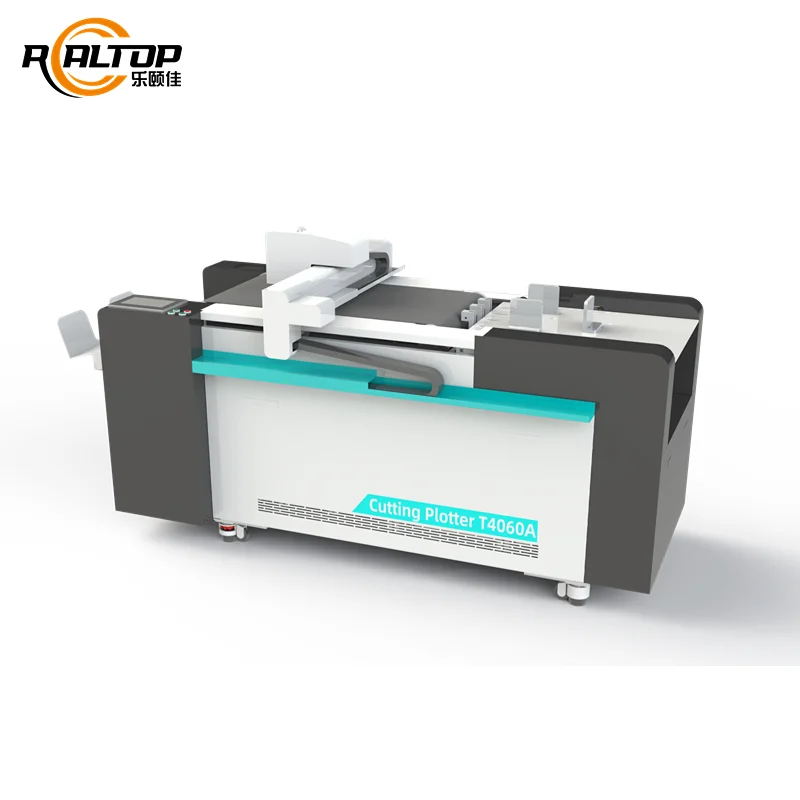
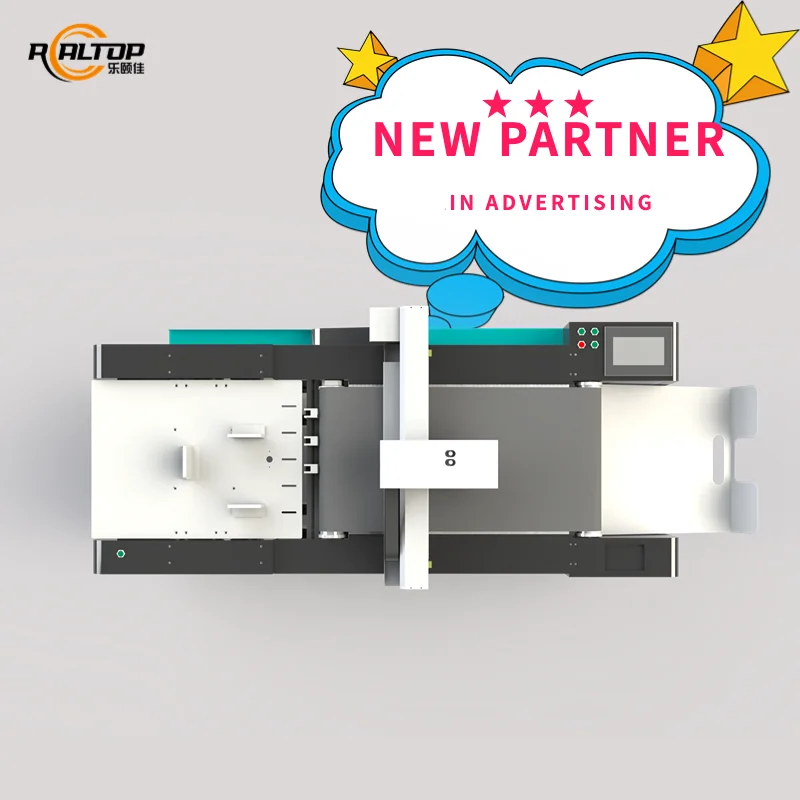
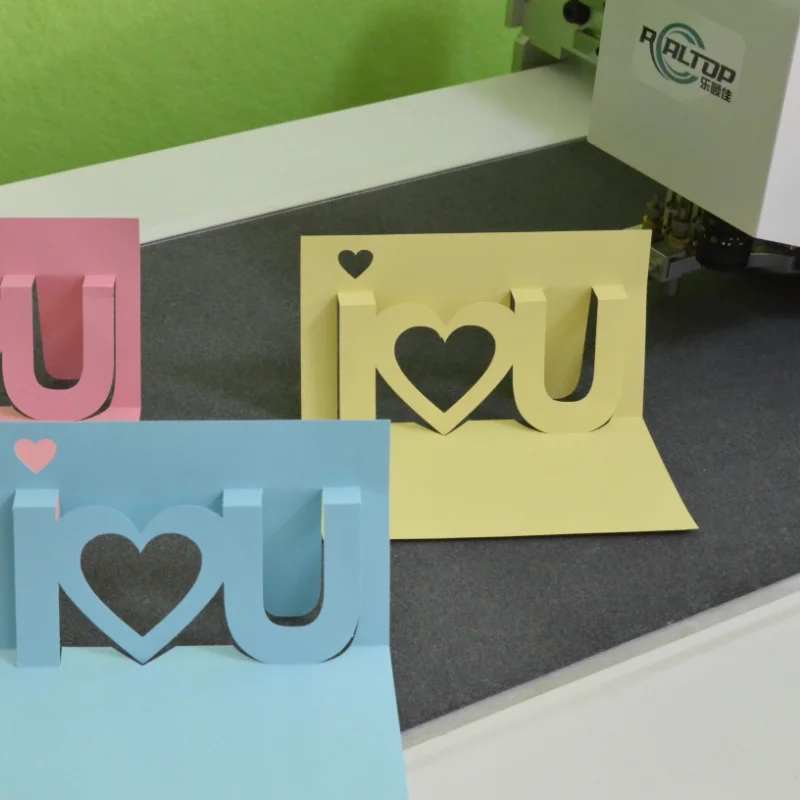

Material-Matched Tooling — Every RTT4060 configuration starts with sample cutting on your actual printed substrate before the tool head specification is finalized, eliminating edge crush and registration drift.
Technical Specifications
| Parameter | Value |
|---|---|
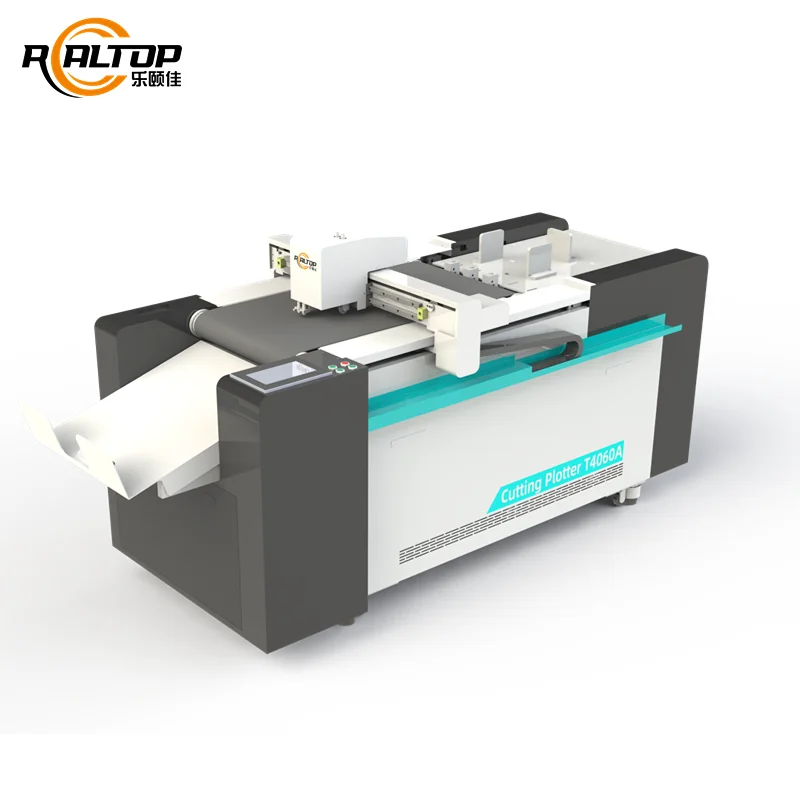
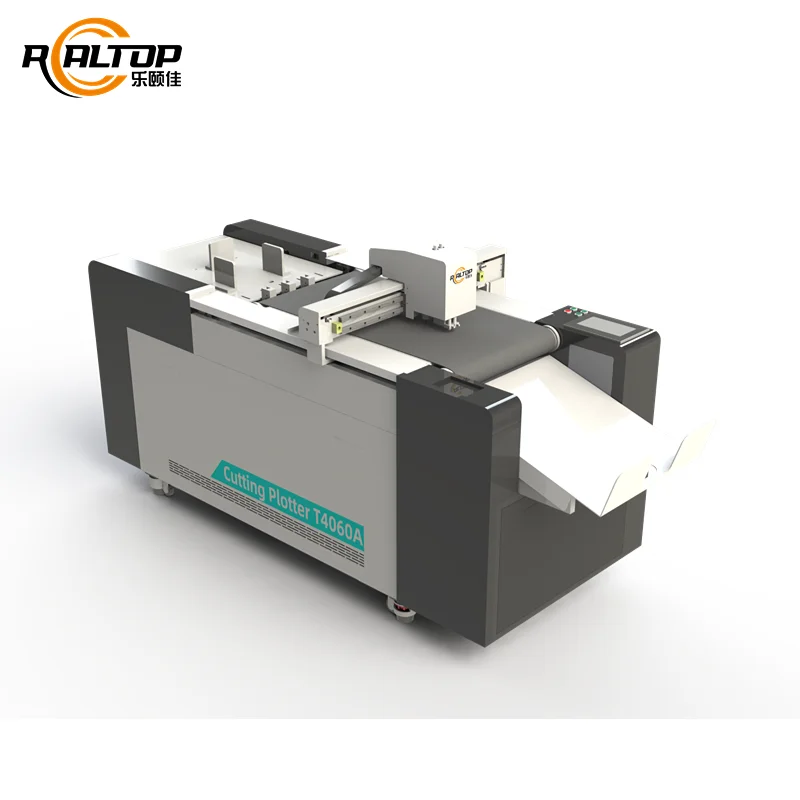
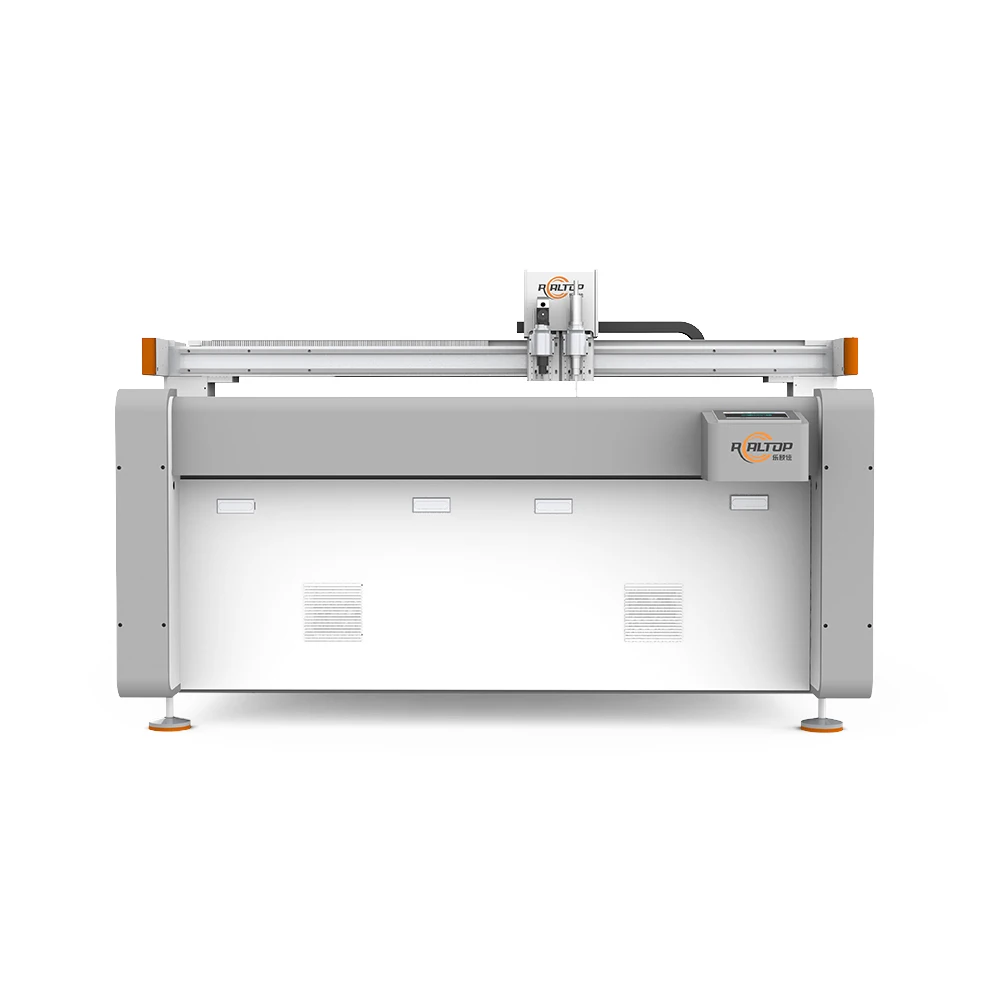
| Product Type | CNC Digital Cutting Plotter |
| Model | RTT4060 |
| Working Area | 400 × 600 mm |
| Tool Head Type | Multifunctional (cutting, creasing, kiss-cutting, dotted-line) |
| Control System | Automatic control with HD touch panel |
| Positioning System | CCD auto positioning |
| Automation Level | Fully automated (feeding, cutting, picking) |
| Network Connectivity | Network port |
| Cutting Method | Post-printing digital finishing |
| Assembly State | Complete machine |
| Warranty | 12 months for whole machine |
Application Suitability
| Application | Material or Output |
|---|---|
| Packaging sample making | Corrugated cardboard, folding carton, greyboard |
| Short-run box production | Coated paper, self-adhesive vinyl, PP sheet |
| Graphic finishing | PVC sheet, printed cardboard, laminated board |
| Promotional product prototyping | Foam board, honeycomb paper, magnetic sheet |
Why "CCD Positioning" Promises Rarely Match Production Reality
A camera only works if the software can read your specific registration marks at the speed your job requires.
I have watched clients unpack a machine advertised with contour recognition, only to find the sensor loses track when the press sheet has low-contrast marks or a matte laminate scatter. The operator ends up switching to manual alignment, and the throughput advantage disappears before the first shift is over [NEED_CITE: registration mark contrast thresholds for optical sensors]. A CNC digital cutting plotter manufacturer worth working with will ask for your printed sheet before quoting, not after.
Reading Print Marks That Other Systems Miss
The CCD module on the RTT4060 scans registration marks across the printed sheet and feeds offset data to the motion controller in real time. This matters most when your litho-laminate or digitally printed carton stock carries low-contrast cyan marks instead of the high-contrast black targets that bench tests rely on. Confirming mark colour, size, and laminate gloss level before shipment prevents the most common contour-tracking failure we see in graphic finishing.
Automated Sheet Flow Without Operator Bottlenecks
The automatic feeding, cutting, and picking sequence removes the manual load-unload cycle that limits small-format plotters to short runs. For packaging sample makers producing dozens of structural prototypes per day, the unattended workflow lets one operator manage design iterations on screen while the machine clears finished parts from the bed. The network port allows job queues from a central RIP or prepress station, keeping the CNC digital cutting plotter manufacturer workflow inside your existing file pipeline.
What the Specs Actually Mean for Your Cutting Bed
The 400 × 600 mm working area fits standard A3-plus press sheets and most carton sample blanks without repositioning. The multifunctional tool head switches between through-cutting, creasing, kiss-cutting, and dotted-line scoring within the same job file, so a single setup produces a folded carton prototype complete with perforated tear strips. HD touch panel control means the operator selects material presets directly at the machine rather than walking back to a workstation, which shortens changeover when a client asks for a last-minute flute or gauge change. Vacuum zoning across this bed size must be verified for small nested parts; insufficient hold-down on thin self-adhesive sheets causes lift at the cut-out edges [NEED_CITE: vacuum hold-down requirements for thin flexible substrates].
The Hidden Cost of Skipping Material Trials
Choosing a tool head based on material name alone — "cardboard" or "PVC" — leads to crushed flutes on corrugated board or burr-heavy edges on rigid plastic. A kiss-cut blade set too deep scores the release liner, and a creasing wheel with the wrong profile cracks coated paper at the fold line. These defects show up only when the machine runs your exact stock at production speed, which is why sample cutting on your material should precede the purchase order, not follow it [NEED_CITE: creasing profile selection for coated versus uncoated carton].
Why Buyers Source This Machine From the Factory Floor
In-house design covers both the knife tooling and the motion platform, so the tool head configuration is matched to the material rather than adapted from a generic router chassis. Voltage, plug type, and control language are confirmed against your facility before the machine enters assembly, avoiding the rewiring delays that stall commissioning. Every RTT4060 ships with a factory test record run on substrate samples you provide, and the software licence note documents which file formats — DXF, PLT, AI, PDF — import without third-party conversion. That level of pre-shipment verification is the reason a CNC digital cutting plotter manufacturer with its own production line can stand behind the configuration it recommends.
Documentation & Verification
- Factory test record cut on your cardboard thickness and flute profile
- Electrical schematic confirming voltage, phase, and plug type for your market
- Software licence and file format compatibility note for your design workflow
- Tool head and creasing wheel configuration list matched to your material set
- Operation and maintenance manual in your specified control language
Installation, Commissioning & Support
- Dedicated circuit matching confirmed voltage and frequency before energizing the RTT4060
- Levelled floor surface required across the 400 × 600 mm footprint for registration accuracy
- First-run parameter tuning on your coated paper and PP sheet stock
- Operator training on CCD mark teaching and tool head offset calibration
- Spare creasing wheels and blade holders stocked against typical wear intervals
What We Need From You to Quote Accurately
Send a sample of your most demanding printed substrate — including laminate type and mark colour — along with the thickness range you run daily. Confirm your local voltage, frequency, and the control language your operators prefer. If your workflow relies on a specific nesting or prepress format, share a test file so we verify import compatibility before the RTT4060 leaves the factory.
Frequently Asked Questions
Q: How do I verify cutting and creasing quality on my cardboard before committing to an order?
A: We run a sample cutting report on your exact material, noting flute crush, edge burr, and fold crack behaviour at the speeds you plan to use. The report ships with the quotation so you can compare results across suppliers.
Q: Which voltage and control language options can I choose for my facility?
A: Voltage, phase, and plug type are confirmed during the specification stage to match your local supply. Control panel language is set before assembly, covering the main languages used across export markets.
Q: Can the CCD camera follow my printed registration marks at full cutting speed?
A: Yes, provided the mark colour, size, and laminate gloss fall within the sensor’s contrast threshold. We test your printed sheet during the sample stage and document any required mark adjustments.
Q: Which file formats does the software accept from my current design workflow?
A: Common vector formats such as DXF, PLT, AI, and PDF are supported. We confirm compatibility with a test file from your prepress system before the machine ships.
Q: What tool head configuration do I need for cutting, creasing, and kiss-cutting?
A: The multifunctional head integrates all three functions. We specify blade angle, creasing wheel profile, and kiss-cut depth settings based on your material trial results.




商品评价
Clear filtersThere are no reviews yet.