




Precision-matched tooling — every RTT-4060 Pro ships with a sample cutting report on your specific foam density and cardboard ply, so the blade angle and vacuum zone layout are confirmed before the crate leaves the factory.
Technical Specifications
| Parameter | Value |
|---|---|
| Model | RTT-4060 Pro |
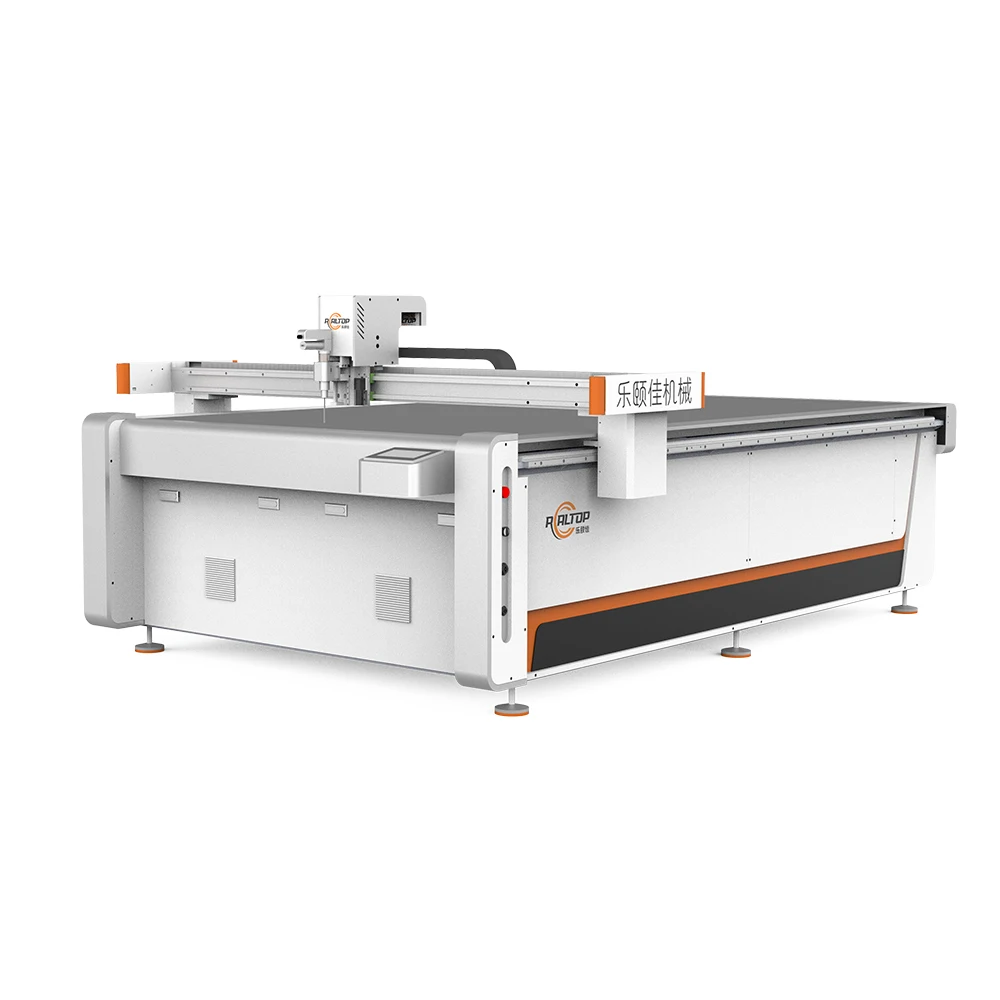
| Product Type | CNC Foam and Cardboard Cutting Machine |
| Working Area | 400 × 600 mm |
| Tool Head Type | Oscillating knife / Drag knife (configuration to be confirmed per material) |
| Cutting Thickness by Material | Basis to be confirmed on buyer’s stock |
| Software & File Formats | CD software included (DXF / PLT / AI compatibility to be confirmed) |
| Assembly State | Complete machine |
| Warranty | One year for whole machine |
| Training | Free factory training; overseas engineer training available at buyer’s expense |
Application Suitability
| Application | Material or Output |
|---|---|
| Automotive interior trim prototyping | Foam inserts, headliner blanks, door panel substrate samples |
| Packaging and carton sample making | Corrugated board, folding carton stock, greyboard |
| Gasket and seal prototyping | Non-metallic sheet, rubber-fibre composite, cork |
| R&D and short-run production | Mixed foam and paper-based substrates in sample rooms |
Why a "Compact CNC Cutter" Can Still Ruin Your First Batch
Matching the blade to the foam density matters more than the footprint on your floor plan.
I once watched a sample room in Thailand scrap an entire run of automotive headliner blanks because the oscillating knife was set for standard EVA foam while the actual stock was a high-density polyurethane composite. The blade chattered through the top layer and left ragged delamination on every piece. A CNC foam and cardboard cutting machine production line is only as reliable as the material test that preceded the purchase [NEED_CITE: material density variation in automotive interior supply chains]. When the tool head is chosen by catalogue page rather than by sample report, the first week of operation usually pays the price in wasted stock and lost confidence from the design team reviewing your prototypes.
Tool Head Selection for Mixed Foam and Board Stocks
Oscillating knives cut through low- to medium-density foam with a rapid up-and-down stroke that prevents the material from compressing ahead of the blade. Drag knives work better on dense cardboard and gasket sheet where a steady downward drag produces a clean edge without fraying. On this compact-format table, the tool head choice directly governs whether a foam insert for a door panel prototype holds its profile or collapses at the corner radii. Confirming the right configuration against your actual stock is the step that separates a usable sample from a bin full of reject pieces.
Vacuum Zoning on a Small-Format Table
A 400 × 600 mm work surface sounds modest until you try to hold a 50 mm wide cardboard template flat while the knife traverses at full speed. Undivided vacuum tables bleed suction across the whole area, so small lightweight parts lift at the edges and shift mid-cut. A CNC foam and cardboard cutting machine production line needs sectional vacuum zones that can be isolated to the active cutting region, concentrating hold-down force exactly where the blade is working. Without that zoning, operators resort to double-sided tape, which leaves residue on finished samples and slows the workflow between jobs [NEED_CITE: vacuum hold-down requirements for small-format digital cutting tables].
Reading the Specifications That Actually Matter
Working area defines the maximum blank size the table accepts, but cutting depth is governed by blade stroke length and Z-axis travel, neither of which follows automatically from table dimensions. The tool head type — oscillating versus drag knife — determines which materials produce an acceptable edge. Voltage and frequency must match your sample room supply; a machine wired for 380 V three-phase will not run on a 220 V single-phase outlet common in Southeast Asian light-industrial parks. Software compatibility decides whether your existing DXF nesting files load directly or require a manual redraw before every job. These are the parameters that shape daily operation long after the machine is bolted to the floor.
The Hidden Cost of Skipping the Material Test
Specifying a cutting table on working area alone is the most common mistake I see in automotive sample rooms. The buyer confirms the footprint fits, signs the order, and discovers on arrival that the knife cannot penetrate 15 mm high-density foam at production speed. Worse, the vacuum zones were designed for large carton blanks and cannot grip the small foam inserts the team actually cuts most days. The machine is then returned to the supplier or relegated to a corner while a second, correctly specified unit is ordered — doubling the capital outlay and delaying the prototype schedule by weeks [NEED_CITE: procurement rework cost in industrial equipment acquisition].
Why Source This Table from a Builder That Cuts Both Ways
Realtop Machinery (Jinan) Co., Ltd manufactures both knife and laser cutting systems in-house, meaning the cutting method is matched to your material rather than forced into one technology. Sample cutting on your own foam and cardboard stock is completed before the order is finalized, with edge quality and thickness capability documented in a report you review. The tool head, vacuum zone layout and blade specification ship as a confirmed configuration list rather than a generic default. Electrical schematics and voltage confirmation are checked against your facility supply, and the software licence note specifies which file formats the included CD software supports, eliminating format surprises on day one.
Documentation & Verification
- Factory test record run on your foam density and cardboard ply before dispatch
- Tool head and vacuum zone configuration list matching your material mix
- Electrical schematic and voltage confirmation matched to your facility supply
- Software licence and file format compatibility note for your existing CAD workflow
- Operation and maintenance manual covering blade changes and vacuum pump service
Installation, Commissioning & Support
- Compact footprint fits standard sample room bays; confirm floor load and clearance for the 400 × 600 mm table
- Dedicated circuit required; verify voltage and frequency match the machine’s confirmed electrical specification
- Arrives as a complete machine; leveling and vacuum hose connection on site
- First-run parameter tuning performed with your actual foam and cardboard stock
- Operator training covers blade selection, vacuum zone activation and software file import
- Spare blade inventory and vacuum pump maintenance schedule reviewed before handover
Before You Request a Quote
Tell us the foam type, density and maximum thickness you cut most often, along with the cardboard ply and sheet dimensions your sample room handles daily. Confirm the voltage and phase available in your facility and the language your operators need on the control interface. If you already run nesting software upstream, share a sample DXF or PLT file so we can verify the full workflow before the machine is configured.
Frequently Asked Questions
Q: How do I verify the cutting thickness this table actually handles on my foam and cardboard?
A: Send representative samples of your foam and cardboard stock to the factory before order. A cutting test is run using the proposed tool head and blade angle, and a sample report documenting edge quality, achievable thickness and cutting speed is shared for your approval prior to shipment.
Q: What vacuum zone layout is needed to hold small parts without lift?
A: The 400 × 600 mm table can be configured with multiple independent vacuum zones. For small foam inserts and narrow cardboard templates, activating only the zone beneath the active cut area concentrates suction and prevents edge lift during high-speed traverses.
Q: Which tool head suits my material mix of foam and cardboard?
A: Oscillating knives handle low- to medium-density foam cleanly by preventing material compression ahead of the blade. Drag knives produce better edges on dense cardboard and gasket sheet. If your sample room runs both, a dual-head configuration allows switching without manual tool changes.
Q: Can the control software import my existing nesting files?
A: The included CD software is supplied with the machine, and file format compatibility must be confirmed against your DXF, PLT or AI outputs before order. Share a sample file during the inquiry stage so the software workflow can be validated in advance.




商品评价
Clear filtersThere are no reviews yet.