


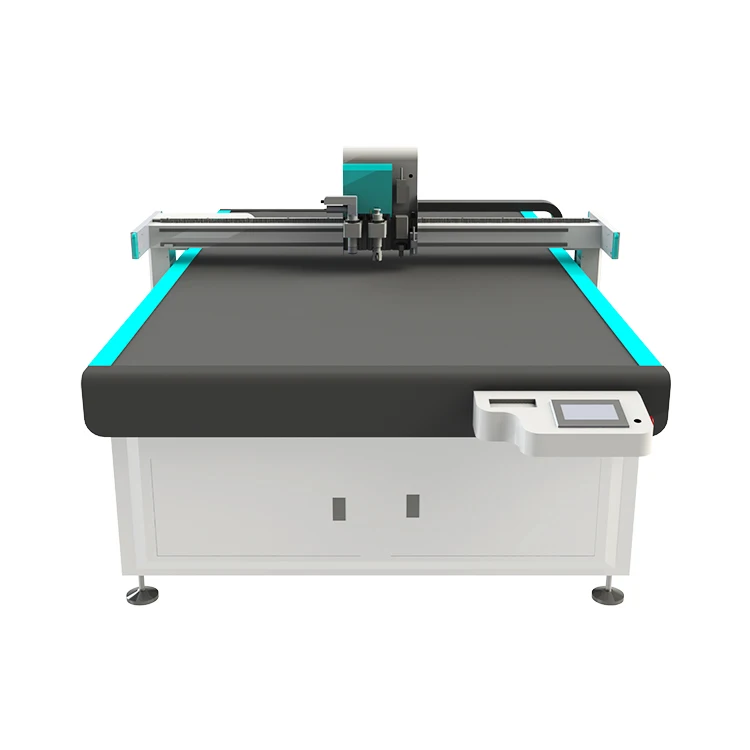
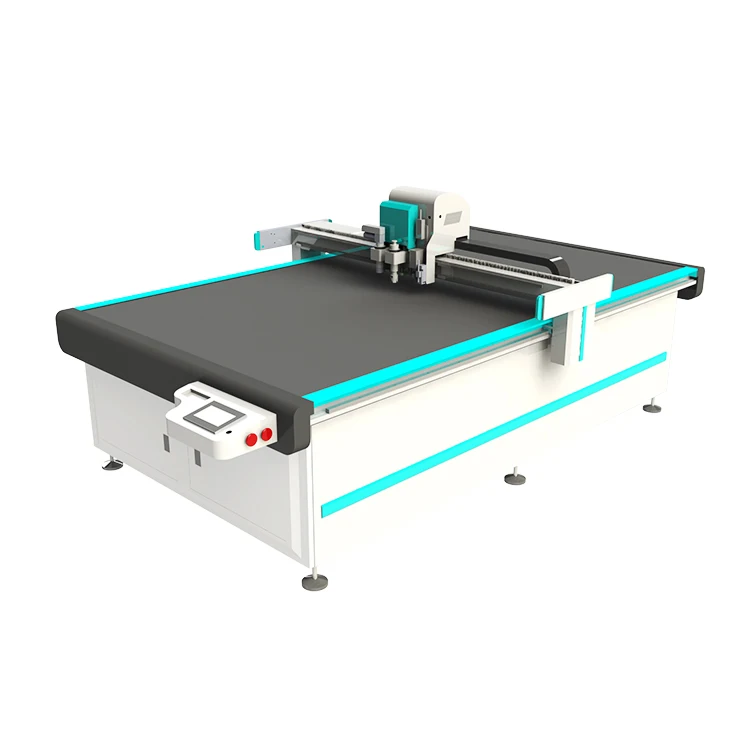
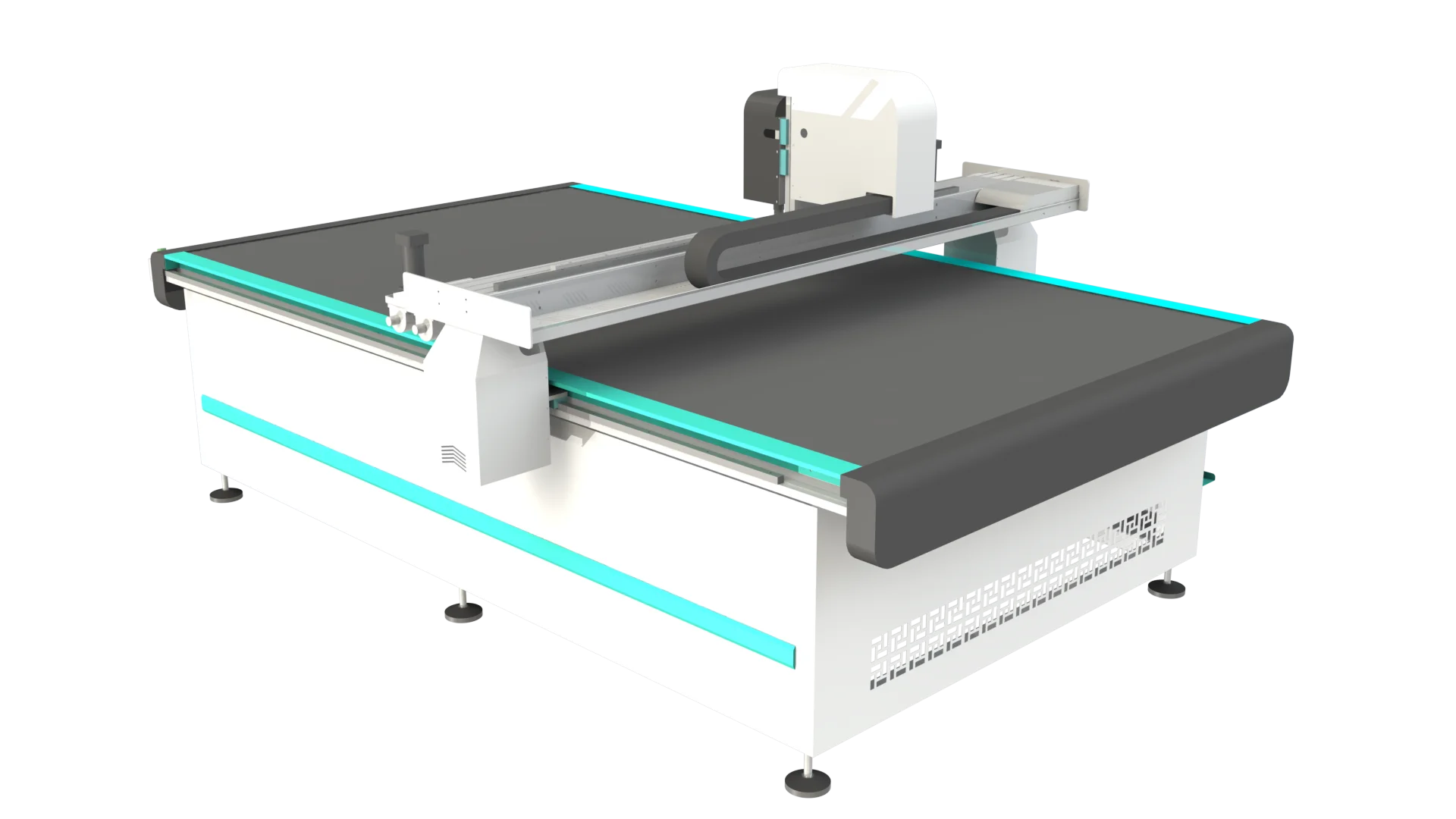
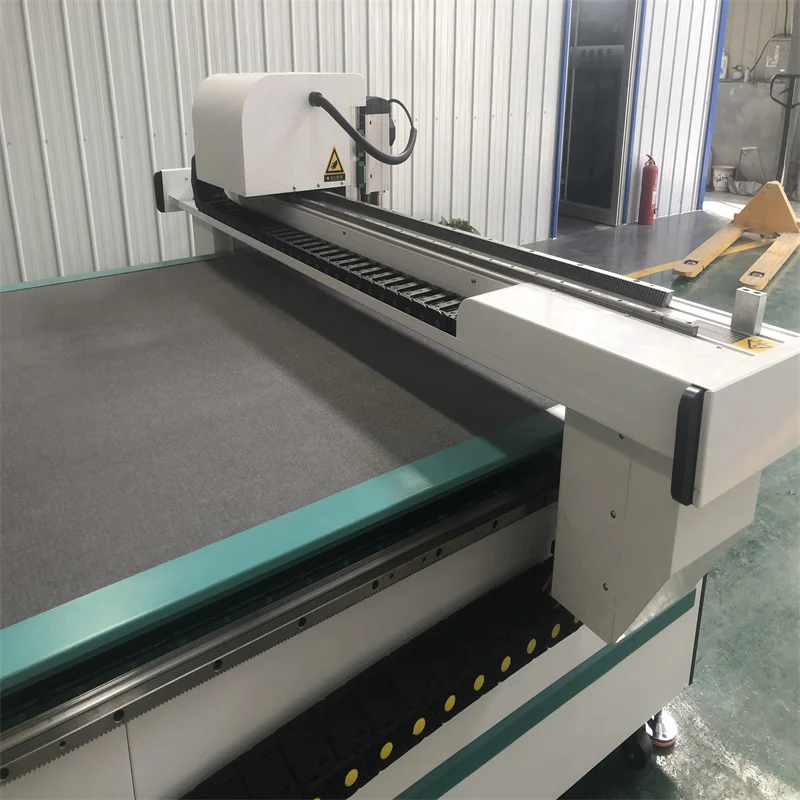
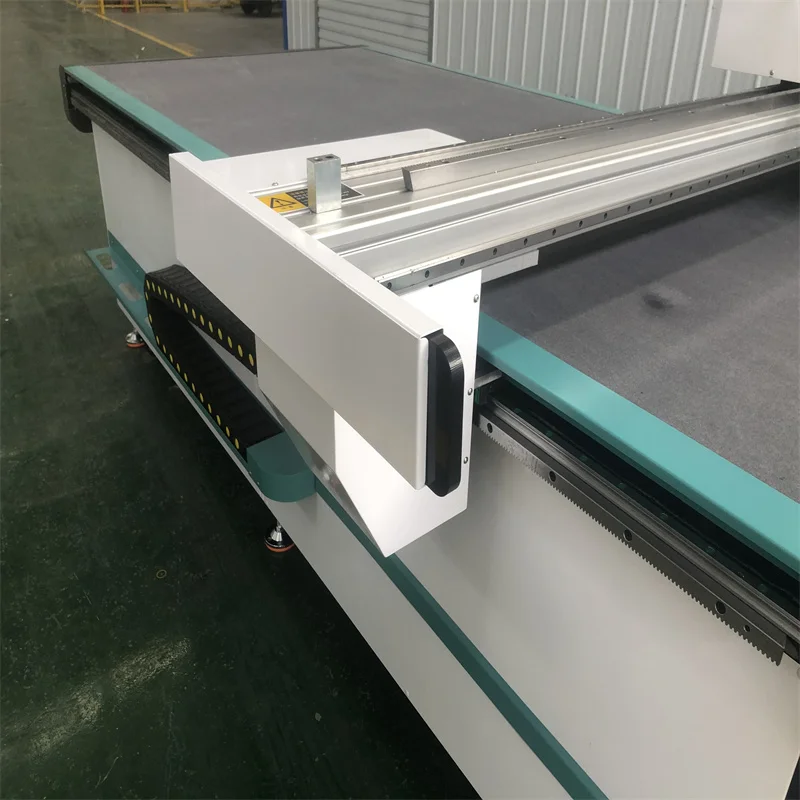
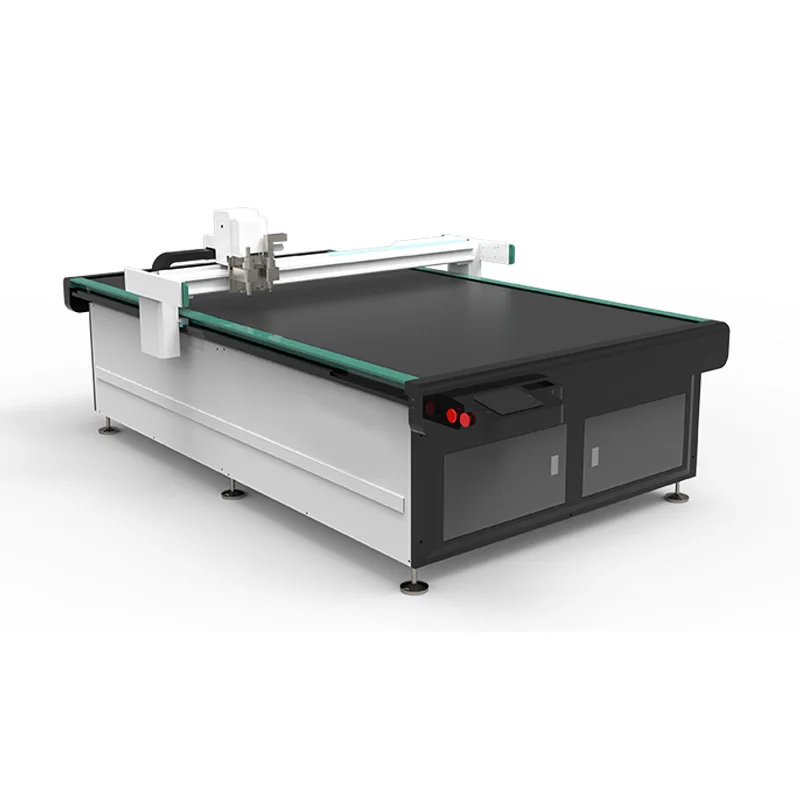

Precision-matched cutting configuration — Every RT-D2516/RT-S2516 leaves the factory with a vacuum zoning plan and tool head selection verified against the buyer’s actual board grade and flute profile.
Technical Specifications
| Parameter | Value |
|---|---|
| Model | RT-D2516/RT-S2516 |
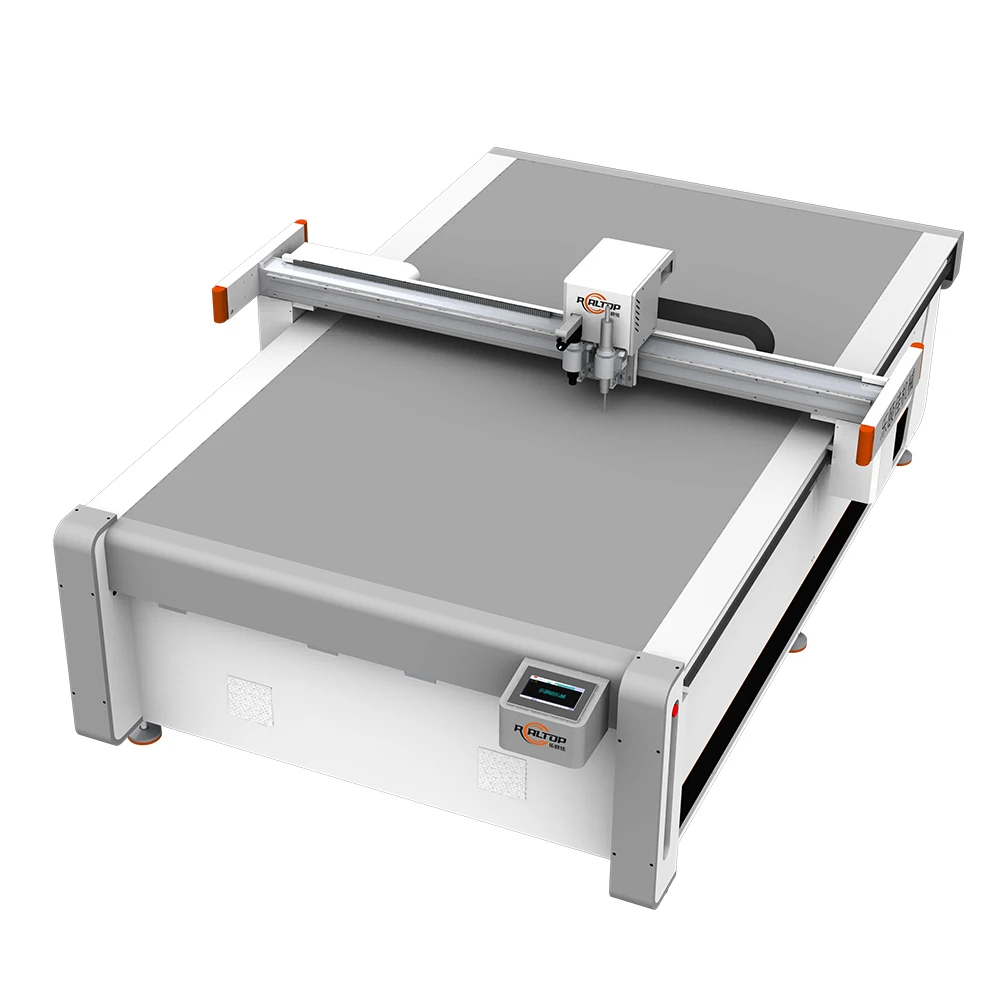
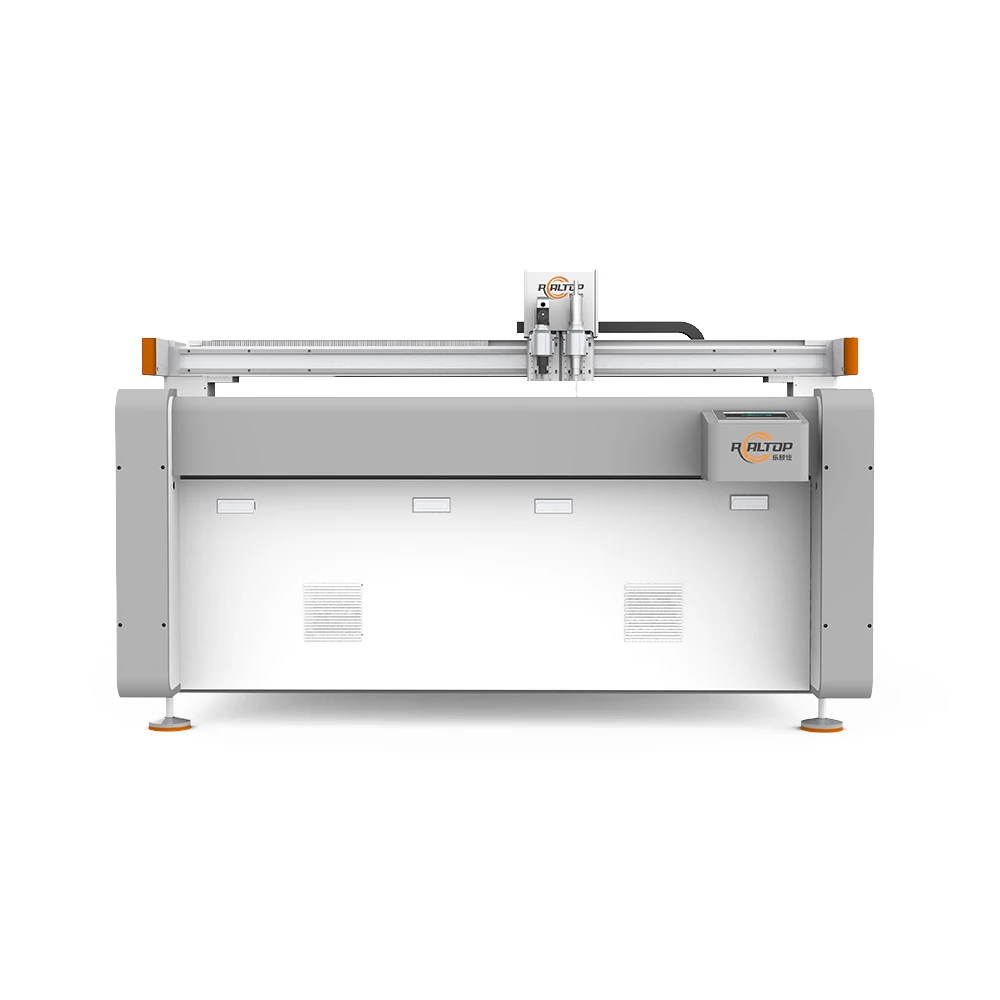
| Product Type | CNC Oscillating Knife Cutting Machine |
| Working Area | 1600 × 2500 mm |
| Overall Dimensions (L × W × H) | 3450 × 2300 × 1250 mm |
| Rated Power | 11 kW |
| Voltage | 380 V ±10 % |
| Working Table | Flatbed vacuum table with auto-feeding conveyor |
| Tool Head | Multifunctional head — oscillating full cutting, half cutting, cursor location |
| Blade Origin | Swiss imported knife |
| Translational Speed | 800–1200 mm/s |
| Cutting Speed | 200–800 mm/s (basis not stated in source — confirm by material and thickness) |
| Repeatability | ≤ 0.1 mm |
| Transmission System | Digital servo motor, linear guide, synchronous belt, ball screw (imported) |
| Servo Motor | Japanese Yaskawa |
| Linear Guide | Taiwan Hiwin rail |
| Vacuum Pump | 7.5 kW |
| Conveyor Belt | Germany imported |
| Safety Device | Infrared sensors |
| Instruction Format | HP-GL compatible |
| Key Features | Auto feeding, multifunctional tool head, vacuum hold-down |
Application Suitability
| Application | Material or Output |
|---|---|
| Packaging sample making | Single, double and triple-wall corrugated board, solid bleached sulphate, folding carton stock |
| Carton prototype and short-run production | Greyboard, kraft liner, flute profiles from E to BC |
| Display and POS packaging | Mixed board grades, foam board, corrugated plastic, flexible laminates |
| Gasket and industrial die-board sampling | Rubber, silicon, soft PVC, sponge composite leather |
| Leather and flexible garment cutting | Natural and synthetic leather, garment textiles, soft glass |
Why "Cutting Speed up to 800 mm/s" Means Nothing Without Board Context
Real cutting throughput depends on flute profile, board density and the number of crease lines per sheet.
When a specification sheet lists a top speed without naming the material and thickness it was measured on, buyers end up comparing machines that were never tested under the same conditions. A three-layer B-flute corrugated sheet cuts cleanly at the upper end of the range, while a seven-layer BC-flute board demands slower travel, higher oscillation frequency and a deeper blade stroke. I once watched a packaging sample shop run a machine rated at similar speeds, only to find the crushed flute on double-wall stock forced them to drop speed so far that the quoted figure became irrelevant. The CNC knife cutting machine for packaging sample making must therefore be evaluated on your own board stock, not on a brochure number [NEED_CITE: cutting speed variation by corrugated board grade and flute type].
Oscillating Knife Selection Across Flute Profiles
The multifunctional head on the RT-D2516/RT-S2516 pairs a Swiss imported blade with oscillating full-cut and half-cut modes, covering the two most common operations in packaging sample work. Full cutting separates the finished sample from the sheet, while half cutting scores crease lines without penetrating the bottom liner. Switching between the two on a single setup removes the need to move the board to a separate creasing station, which matters when short-run prototypes change geometry every few sheets. The CNC knife cutting machine for packaging sample making handles flute profiles from thin E-flute carton stock through thicker BC-flute corrugated board, provided the oscillation amplitude and blade length are matched to the material before the run starts.
Vacuum Hold-Down on Porous and Warped Board
Corrugated board leaks air through its flutes, so a flatbed vacuum table must move enough volume to generate hold-down force across the entire sheet. The 7.5 kW vacuum pump fitted to this machine addresses that porosity, but pump capacity alone is not the whole story. Table zoning determines whether small packaging parts — think insert dividers or corner protectors — stay flat or lift at the edges once the surrounding waste is removed. Without confirmed zoning, a buyer producing intricate die-line samples may see parts shift mid-cut, producing scrap. Requesting a vacuum map matched to your smallest typical part is a step worth taking before the order is placed [NEED_CITE: vacuum table zoning requirements for small corrugated packaging parts].
Reading the Specifications That Matter Most
The 1600 × 2500 mm working area accommodates full-size corrugated sheets in a single lay-down, eliminating the repositioning that introduces registration errors on large packaging formats. Yaskawa servo motors driving Hiwin linear guides deliver ≤ 0.1 mm repeatability, which keeps crease lines aligned with cut contours across repeated samples — a tolerance that packaging designers notice when folded prototypes do not close squarely. HP-GL compatible instruction format lets the machine accept tool paths directly from standard packaging CAD systems, so designers can export a die-line and send it to the table without intermediate file conversion. Translational speed reaches 800–1200 mm/s between cuts, while actual cutting speed ranges from 200–800 mm/s depending on board grade and thickness; both values should be verified on the buyer’s own stock before throughput expectations are set.
The Hidden Cost of Specifying on Working Area Alone
Choosing a CNC knife cutting machine for packaging sample making on table size without confirming tool head configuration, vacuum zoning and blade stroke leads to problems that surface only after installation. A blade too short for double-wall board leaves the bottom liner uncut, forcing operators to snap samples apart by hand and crushing the flute edge. Insufficient vacuum on porous corrugated stock allows* producing ragged edges that fail client approval. Software that cannot import the buyer’s native CAD file format adds a manual nesting step that was never budgeted. Every one of these issues can be caught with a sample cutting report on the buyer’s own board before the machine is built [NEED_CITE: packaging sample cutting defects caused by incorrect tool head and vacuum configuration].
What Sets This Configuration Apart
In-house design covering both knife and laser cutting means the buyer is guided toward the method that suits the material, rather than being sold the only technology a single-technology vendor offers. The RT-D2516/RT-S2516 is specified with tool head and table configuration matched to the buyer’s stated board grade and daily sample volume, not shipped as a default package. Sample cutting on the buyer’s own corrugated stock is completed and documented before the order is confirmed, so edge quality, crease depth and hold-down behaviour are known quantities. Voltage, plug type and control language are locked in during the specification review, preventing the mismatches that delay commissioning in export markets. Documentation covers the electrical schematic, tool head list, vacuum zoning plan and software compatibility note, giving the buyer a complete paper trail for internal approval [NEED_CITE: pre-shipment documentation standards for CNC cutting equipment exports].
Documentation & Verification
- Factory test record cutting your exact corrugated board grade and flute profile before dispatch
- Electrical schematic confirming voltage, frequency and plug type for your facility
- Tool head and blade specification list matched to your packaging material range
- Vacuum table zoning diagram validated against your smallest typical part geometry
- Software compatibility note covering your existing packaging CAD file formats
- Operation and maintenance manual in your chosen control language
Installation, Commissioning & Support
- Floor space planning based on 3450 × 2300 mm overall dimensions plus conveyor infeed clearance
- Dedicated 380 V ±10 % circuit with capacity for the combined 11 kW machine and 7.5 kW vacuum pump load
- Machine shipped partially assembled with table frame and gantry requiring on-site alignment
- First-run parameter tuning on your corrugated stock, adjusting oscillation frequency and vacuum zone mapping
- Operator training covering HP-GL file import, tool path nesting and blade change procedures
- Spare blade and belt inventory list based on your projected monthly sample volume
Before You Request a Quote
Send the specific corrugated board grades, flute profiles and sheet sizes you cut most often, along with your typical daily sample count. Include the packaging CAD software you currently use so file format compatibility can be confirmed before the specification is finalised. State your plant voltage and frequency, preferred control language, and whether your facility requires a specific plug standard. If your samples include very small inserts or unusual laminate constructions, ship a few physical sheets so the tool head and vacuum configuration can be tested on your actual material before commitment.
Frequently Asked Questions
Q: How do I match the oscillating knife configuration to my corrugated board grade?
A: Blade length, oscillation frequency and stroke amplitude must align with your flute profile. E-flute carton stock uses a shorter blade at higher frequency, while BC-flute double-wall board needs a longer blade with deeper stroke. Requesting a sample cut on your own board confirms the setup before the machine is built.
Q: Will small packaging parts stay flat during cutting?
A: Hold-down depends on vacuum zoning, not just pump capacity. The 7.5 kW pump on the RT-D2516/RT-S2516 moves sufficient air for porous corrugated stock, but the table zones must be mapped to your smallest part. A zoning diagram validated against your die-lines prevents edge lift and scrap.
Q: Can I import files directly from my existing packaging CAD software?
A: The machine accepts HP-GL compatible instruction formats, which covers most mainstream packaging CAD systems. Before ordering, share a sample file from your software so the conversion path and nesting workflow can be tested and documented in the compatibility note supplied with the machine.
Q: What electrical and language details should I confirm before shipment?
A: Provide your plant voltage, frequency and plug standard so the electrical schematic matches your supply. Specify the control language your operators need. These items are locked during the specification review to avoid commissioning delays common in cross-border equipment delivery.
Q: What should I evaluate on a sample cutting report before committing?
A: Check edge cleanliness across each flute profile you sent, crease depth consistency on half-cut lines, and whether small parts remained flat without post-cut sanding or snapping. The report should document blade type, oscillation settings and vacuum zone map used, giving you a repeatable baseline for production.




商品评价
Clear filtersThere are no reviews yet.