




Material-Specific Tooling Configuration — the oscillating knife head and vacuum table zoning are matched to your fabric, leather or composite stock before the CNC oscillating knife cutting machine production line ships, not left to default settings.
Technical Specifications
| Parameter | Value |
|---|---|
| Model | RT-D2516/RT-S2516 |
| Product Type | CNC Oscillating Knife Cutting Machine |
| Working Area | 1600 × 2500 mm |
| Machine Dimensions | 3450 × 2300 × 1250 mm |
| Rated Power | 9 kW |
| Cutting Speed | 200–800 mm/s (varies with material density and thickness) |
| Translational Velocity | 800–2000 mm/s |
| Maximum Cutting Thickness | Up to 100 mm (material dependent) |
| Repeated Positioning Accuracy | ≤ 0.1 mm |
| Transmission System | Digital servo motor, linear guide, synchronous belt, imported ball screw |
| Vacuum Pump | 7.5 kW |
| Vacuum Table Material | Magnesium-aluminum alloy with PVDF coating, anodic and hard oxidation |
| Conveyor Belt | Germany imported |
| Linear Guide | Taiwan Hiwin rail |
| Servo Motor Options | Delta (China) or Panasonic (Japan) |
| Visual Positioning Options | Small CCD mark point, panoramic camera recognition, projection positioning |
| Control Panel | Touch screen, multi-language (English, Russian, Italian, Chinese; custom languages available) |
| File Format Support | PLT, DXF, AI via auto typesetting software |
| Voltage | 380V ± 10% |
| Safety Devices | Infrared sensors, anti-collision, emergency stop |
| Frame Construction | Thick-walled seamless steel, high-temperature tempering, CNC machined |
Application Suitability
| Application | Material or Output |
|---|---|
| Garment and Footwear Cutting | Single or multi-layer fabric, leather, shoe material, luggage material, non-woven textile |
| Automotive Interior Production | Composite materials, PU, EVA, XPE, sponge, carpet, soft trim components |
| Packaging and Sample Making | Corrugated cardboard, sticker, film, plastic box, with creasing and contour cutting |
| Sealing and Gasket Fabrication | Rubber, PTFE, ETFE, silicone, fiberglass, composite gasket sheet |
| Soft Furnishings and Carpets | Cloth, carpet, sponge, PU foam, layered textile for upholstery and floor mats |
Why Specified Working Area Alone Fails at Production Speed
Cutting depth capacity and edge quality depend on the tool head and vacuum hold-down, not just table size.
I spent years on assembly floors in Shandong and later moved into field service. One job stands out: an automotive interior supplier bought a flatbed cutter spec’d only on working area, then found their multi-layer composite leather lifting mid-cut because the vacuum zoning was never configured for small nested parts. The batch was scrapped. That pattern repeats across workshops where buyers treat a cutting table as a commodity dimension rather than a material-handling system [NEED_CITE: vacuum adsorption principles in CNC flatbed cutting]. When the CNC oscillating knife cutting machine production line is sized correctly, the hold-down force and tool oscillation frequency work together so the blade never drags the material off the bed.
Matching the Knife to the Stock
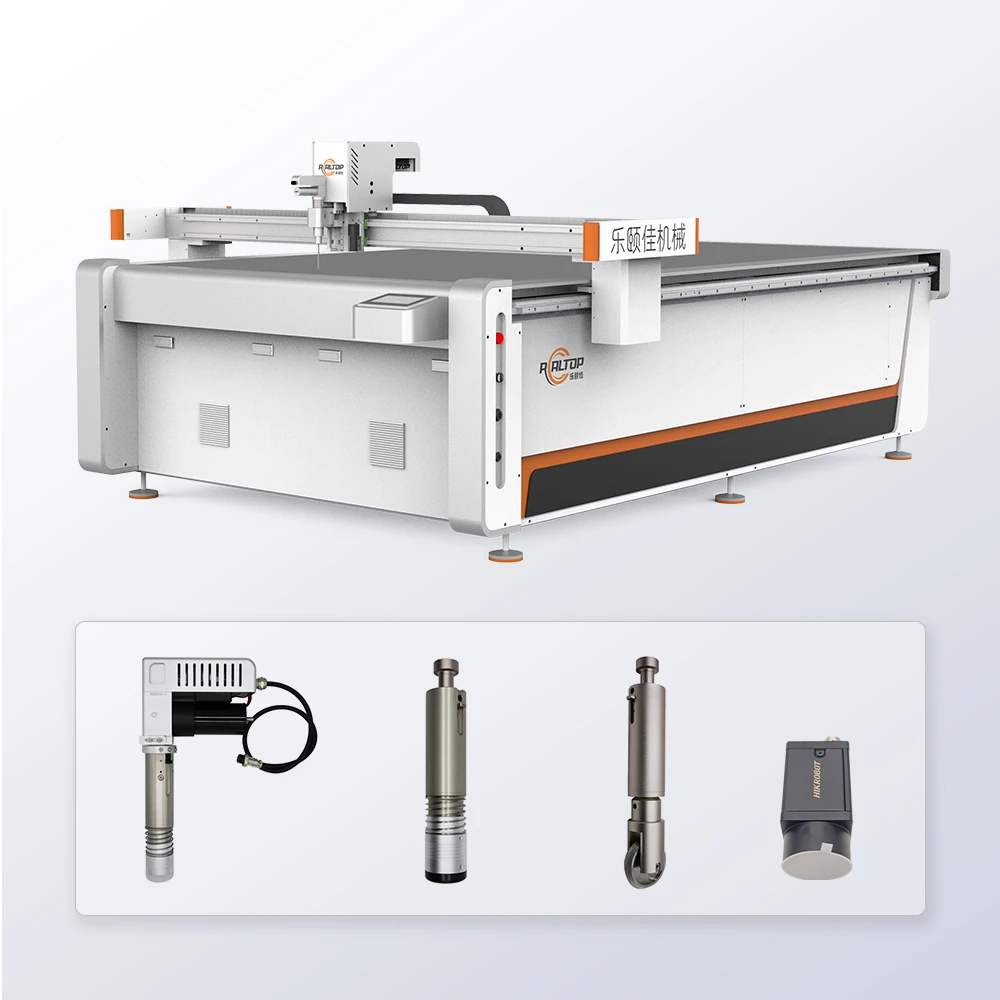
A Swiss-imported oscillating knife handles full-cut and half-cut tasks on woven fabric and technical textiles, while a pneumatic knife or high-power vibrating knife suits denser composite boards and thick foam. Selecting the wrong tool head for a given material produces ragged edges on leather or crushed cell structure in EVA foam. The multifunctional head on this system accepts drag knife, creasing wheel, circular knife, V-cutting knife, punching tools and pen attachments, allowing a single CNC oscillating knife cutting machine production line to cover both contour cutting and creasing in one pass.
Vacuum Zoning That Actually Holds Small Parts
The magnesium-aluminum alloy table with PVDF coating is divided into adsorption zones. During a nesting job with hundreds of small gasket or garment pattern pieces, only the zones directly beneath the cutting path remain fully active, concentrating suction where the blade is working. On large single sheets, all zones open to distribute hold-down evenly. This zoning logic prevents the small-part lift that causes scrap and blade damage, a frequent failure mode when workshops run mixed nesting layouts without adjusting pump allocation [NEED_CITE: zoned vacuum table configuration for CNC cutting].
Reading the Spec Sheet Against the Actual Production Job
The 200–800 mm/s cutting speed range reflects the difference between slicing a single layer of non-woven fabric and working through a multi-layer stack of PU composite. The Taiwan Hiwin linear guide and imported ball screw maintain the ≤ 0.1 mm repeated accuracy across the full 1600 × 2500 mm travel, which matters when nesting tight garment patterns where a drift of even half a millimeter ruins the piece. The 7.5 kW vacuum pump provides sufficient negative pressure for porous materials like carpet and sponge, but buyers processing dense rubber gaskets should confirm pump capacity relative to their sheet porosity before order. The servo motor choice between Delta and Panasonic affects acceleration response; Panasonic units offer finer tuning on high-speed contour work where direction changes are rapid.
The Cost of Skipping the Material Test
When a buyer commits without a sample cut on their own stock, the first production run becomes the test. Wrong oscillation frequency on layered foam leaves delamination between plies. Insufficient vacuum on small cardboard packaging samples means the creasing wheel pushes the sheet instead of scoring it. Software that cannot import the buyer’s nesting files forces a manual re-draw, adding hours to what should be a file-import workflow [NEED_CITE: CNC file format compatibility in production cutting]. These problems surface only after the machine is installed and the production schedule is already counting on it.
Why Buyers Specify Here Rather Than Accept a Catalog Default
The design team in Jinan configures tool head and table layout per the buyer’s material stack and daily volume, not from a standard bill of materials. Both knife cutting and laser cutting technologies are built in-house, so a buyer processing both fabric and acrylic can match the cutting method to each material without forcing one platform to do both jobs. CCD camera positioning and panoramic visual recognition are specified only when the buyer’s workflow involves printed contour tracking, avoiding unnecessary cost on blank-stock jobs. Voltage, plug type and control language are confirmed against the target market before production begins. A sample cutting report on the buyer’s actual material is issued before the order advances, documenting edge quality, cutting depth achieved and speed parameters under real conditions.
Documentation & Verification
- Machine specification sheet listing every configured tool head and vacuum zone map
- Electrical schematic with voltage and frequency confirmed for the destination market
- Sample cutting report produced on the buyer’s own material before order confirmation
- Software licence with file format compatibility note for PLT, DXF and AI import
- Factory test record documenting repeated accuracy and cutting speed on specified stock
- Operation and maintenance manual in the confirmed control language
Installation, Commissioning & Support
- Foundation must support the 3450 × 2300 × 1250 mm footprint with level tolerance across the vacuum table surface
- Dedicated 380V ± 10% circuit required to handle the 9 kW rated load plus 7.5 kW vacuum pump startup surge
- Machine ships as a single assembly; conveyor belt and tool head carriage require on-site alignment
- First-run commissioning includes vacuum zone mapping against the buyer’s nesting layout and material
- Operator training covers tool head changeover, CCD calibration and auto typesetting software use
- Spare parts list includes oscillating knife blades, vacuum seals and conveyor belt segments
What to Include in Your Inquiry
Provide your material type, maximum thickness, sheet dimensions and daily volume so the tool head and vacuum configuration can be specified from the start. Confirm your local voltage, frequency and the control language your operators need. If your workflow relies on existing nesting files, share a sample so software compatibility is verified before the quotation stage.
Frequently Asked Questions
Q: How is the tool head selected for my specific material and thickness?
A: The selection is based on a sample cutting test on your actual stock. Oscillation frequency, blade geometry and downward force are adjusted until edge quality and cutting depth meet requirement. The tool head configuration list is then locked into your order specification, so the machine arrives already set for your material rather than relying on generic factory defaults.
Q: Can the CCD camera track printed marks at my production speed?
A: The panoramic camera recognition option is designed for contour tracking on printed fabric and packaging stock at working speeds. Whether it suits your line depends on print contrast, mark size and the speed you intend to run. A visual positioning test on your printed material is conducted before order confirmation to verify reliable mark detection.
Q: What file formats does the software import, and does it fit my existing nesting workflow?
A: The auto typesetting software natively imports PLT, DXF and AI files. If your current nesting workflow uses a different format or a third-party nesting engine, compatibility is checked during the inquiry stage using a sample file you provide. This avoids discovering import issues after the machine is installed on your floor.
Q: How is vacuum table zoning configured for small parts versus large sheets?
A: The magnesium-aluminum alloy table is divided into independent adsorption zones. For small nested parts, only zones beneath the active cutting path draw full vacuum, concentrating hold-down force. For large single sheets, all zones open for even distribution. The zone map is configured based on your typical nesting layout and confirmed during commissioning.
Q: What voltage, plug and control language options are confirmed before shipment?
A: The standard system runs on 380V ± 10%, but voltage and plug type are confirmed against your local supply before production. The touch screen control panel supports English, Russian, Italian and Chinese as standard, with additional languages configurable. All three parameters are documented in the electrical schematic before the machine leaves the factory.





商品评价
Clear filtersThere are no reviews yet.