




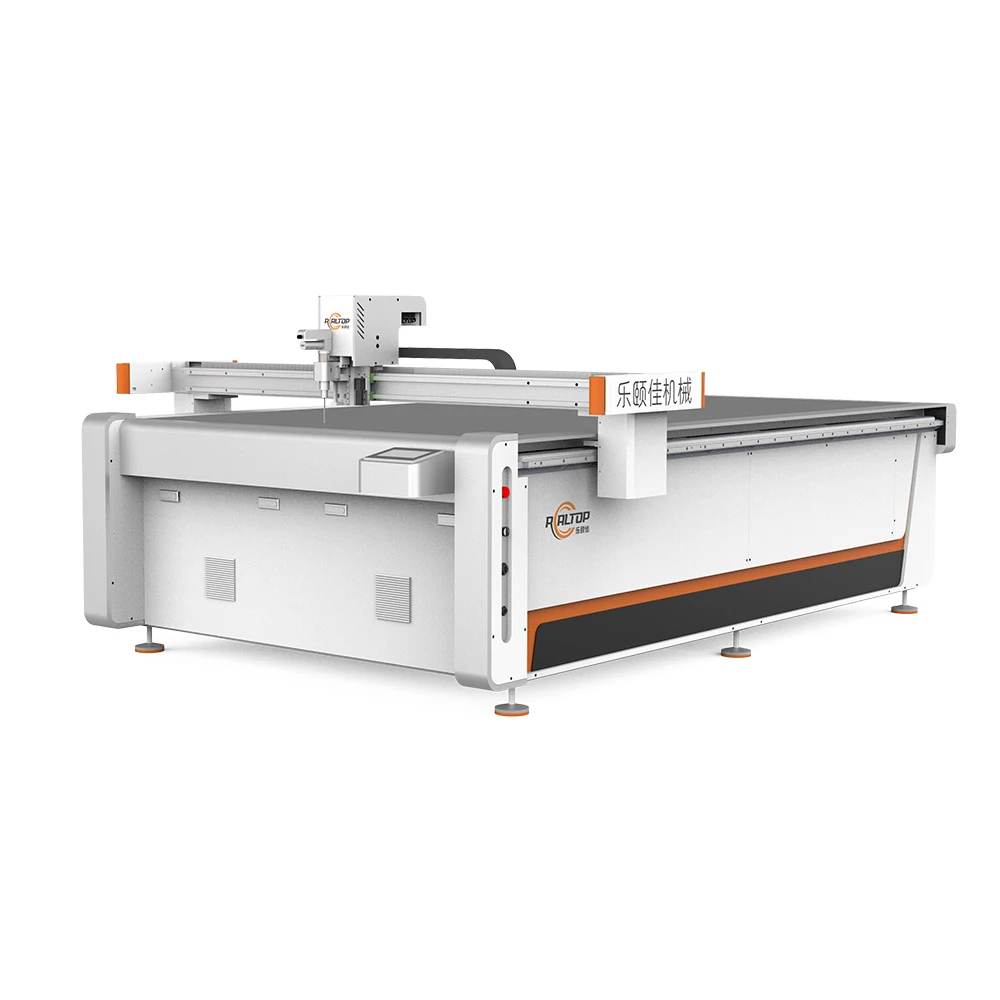



Material-first configuration — cutting method and tooling are specified around the composite matrix and reinforcement type, not just sheet dimensions, preventing thermal degradation or delamination during production runs.
Technical Specifications
| Parameter | Value |
|---|---|
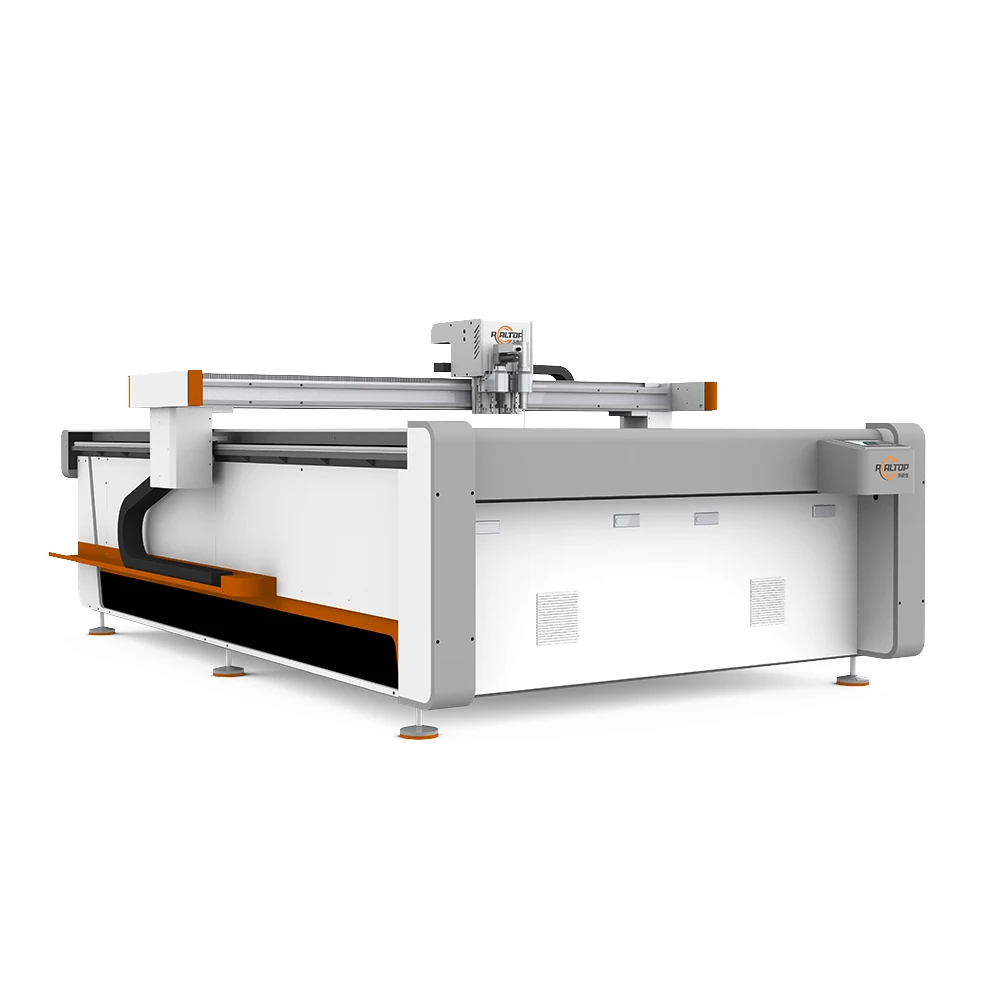
| Product Type | CNC Oscillating Knife Cutting Machine |
| Model | 1625 |
| Working Area | 1600×2500 mm |
| Cutting Thickness | ≤ 30 mm |
| Cutting Accuracy | ±0.1 mm |
| Cutting Speed | 0–2000 mm/s |
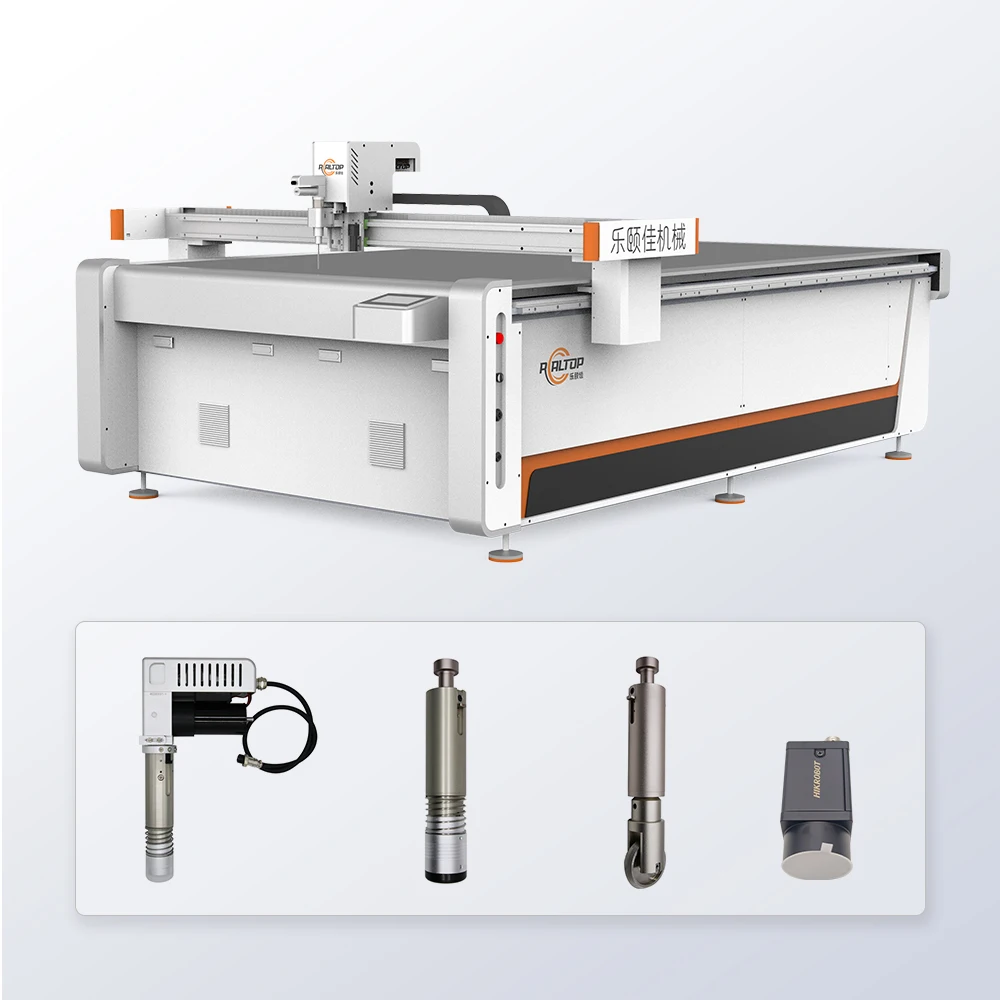
| Tool Head Options | Oscillating knife, Driven rotary knife, Creasing wheel, Kiss cutting tool, Pneumatic knife, Milling tool, V groove knife |
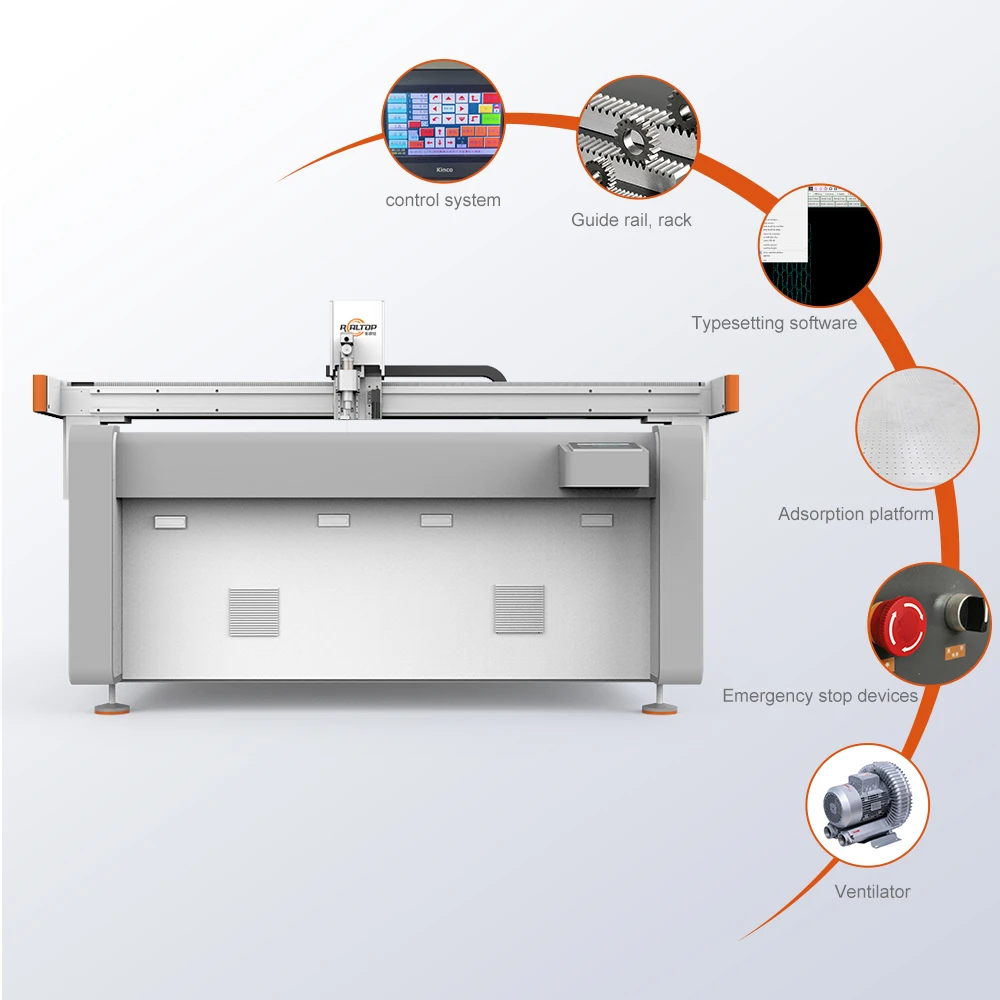
| Vacuum Table | Aluminum bellows vacuum table |
| Vacuum Pump Power | 9 kW |
| Control System | PLC control panel |
| Voltage Options | 110V, 220V, 380V |
| File Format Compatibility | PLT, DXF, AI, PDF |
| Software Language | English, Russian, Italian, Chinese (additional languages customizable) |
| Safety Devices | Infrared sensor, emergency stop |
| Machine Size | 3300×2100×1350 mm |
| Servo Motor Options | Panasonic, Delta, Dorna (source value — verify against manufacturer catalog) |
| Certification | CE |
Application Suitability
| Application | Material or Output |
|---|---|
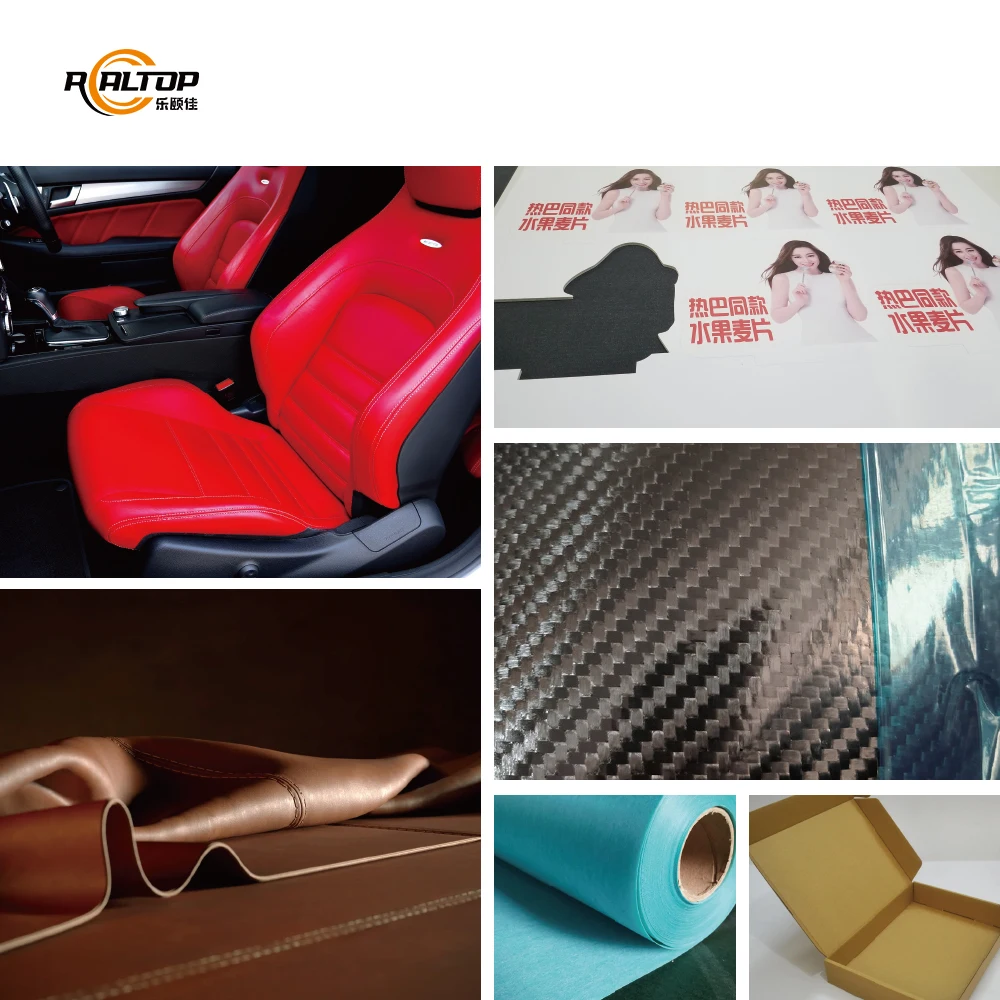
| Aerospace gasket and insulation fabrication | Aramid honeycomb cores, thermal and acoustic insulation foam, composite panels |
| Automotive interior and lightweight body panels | Carbon fiber covers, acoustic felt, headliners, floor carpets, sealing strips |
| Wind turbine blade material preparation | Fiberglass cloth, carbon fiber cloth, vacuum infusion mesh, foam core materials |
| Sporting goods manufacturing | Carbon fiber sheets, Kevlar fabric, high-performance foam for bicycle frames and helmets |
| Acoustic panel production | Polyester fiber boards, acoustic foam, mineral wool composite boards |
What a "30 mm Cutting Depth" Specification Actually Means on Carbon Fiber Prepreg
Cutting depth ratings are measured on the softest material in the range — composite producers need verification on their own layup before committing to a purchase order.
When a CNC oscillating knife cutting machine for composites production line quotes a maximum thickness, that figure typically comes from testing on uniform foam or soft rubber. Carbon fiber prepreg, aramid honeycomb, and fiberglass-reinforced laminates present a completely different resistance profile. The resin matrix, fiber orientation, and curing state all affect how the blade engages the material. I have watched lines stall because the oscillating stroke was set for general-purpose foam, and the blade simply skated across a prepreg stack without penetrating the bottom plies. [NEED_CITE: composite material cutting resistance varies by resin system and fiber architecture]
Cold-Cutting Preserves Resin Integrity Where Thermal Methods Cannot
Laser and router-based systems introduce heat at the cut zone. On thermoplastic composites and prepreg materials, that heat softens or melts the resin matrix, leaving a glazed edge that compromises downstream bonding and lamination. The CNC oscillating knife cutting machine for composites production line avoids this entirely. High-frequency blade oscillation shears the fibers mechanically, leaving a clean edge with no thermal affected zone. For aerospace insulation pads and automotive acoustic components where edge sealing quality affects certification, this distinction matters on every shift.
Vacuum Zoning Decides Whether Small Composite Parts Stay Flat
The 9 kW vacuum pump paired with the aluminum bellows table is designed for large-format material hold-down. However, aerospace gaskets and automotive damping pads often involve small, intricate geometries cut from a larger sheet. Once the cut path isolates a small part from the surrounding material, vacuum suction drops off sharply at the edges. Without zone-specific vacuum control matched to part size, thin aramid honeycomb and fiberglass cloth can lift mid-cut, producing dimensional drift or catching the blade. [NEED_CITE: vacuum hold-down requirements for nested composite part cutting]
Matching Tool Head to Composite Layup
The seven available tool heads on the 1625 are not interchangeable across all composite types. The oscillating knife handles soft foam cores and acoustic felt cleanly. For fiberglass cloth and woven carbon fiber, the driven rotary knife provides a continuous shearing action that prevents fraying at the cut edge. The V groove knife scores rigid composite panels for folding without penetrating the bottom face. The milling tool addresses cured composite boards that exceed what a blade can shear. Selecting the wrong head for the material produces ragged edges on fabrics or crushed cell structure on honeycomb cores — defects that only show up after the part reaches assembly.
The Cost of Skipping Material-Specific Trial Runs
Buyers often specify a machine based on working area and assume the tool head configuration will sort itself out at commissioning. I saw an acoustic panel line in Southeast Asia where the buyer sent samples from their original supplier for the trial cut. Everything ran clean. When production started with a new local board supplier, the higher-density panels wore through blades at twice the expected rate and the daily output dropped significantly. The vacuum pressure that held the original boards flat could not prevent the denser material from shifting during aggressive cuts. That line sat idle for days while we reconfigured blade type, oscillation frequency, and vacuum zoning. [NEED_CITE: material density variation effects on CNC knife cutting consumable life and throughput]
Why Composite Producers Source This Configuration Here
The design team covers both knife and laser cutting technologies in-house, which means the cutting method is chosen based on the composite material rather than forcing everything through one process. Tool head and vacuum table configuration is specified per material type and daily volume before the order is confirmed. The 1625 accepts standard file formats including PLT, DXF, AI, and PDF, and software compatibility with existing nesting workflows is verified before shipment. Sample cutting runs on the buyer’s own production material generate a cutting report that documents blade type, speed, and edge quality before commitment. Voltage, plug configuration, and control panel language are confirmed to match the destination facility.
Documentation & Verification
- Machine specification sheet with confirmed tool head and table configuration for your composite material
- Electrical schematic showing voltage, amperage, and circuit requirements for your facility
- Sample cutting report on your specific composite layup with edge quality photographs
- Software licence with confirmed file format and nesting workflow compatibility
- Factory test record showing cutting accuracy across your material thickness range
- Spare parts list with blade specifications matched to your production materials
Installation, Commissioning & Support
- Floor space allocation for the 3300×2100 mm footprint plus material loading clearance on all sides
- Dedicated circuit matching confirmed voltage (110V/220V/380V) with amperage for the 9 kW vacuum pump and servo system
- Machine arrives assembled; vacuum table leveling and belt tension checked on-site during commissioning
- First-run parameter setting includes oscillation frequency, cutting speed, and vacuum zone mapping for your material
- Operator training covers tool head changeover procedure and blade replacement intervals for your composite type
- Daily maintenance schedule covers vacuum table surface cleaning and blade wear inspection per shift
What to Prepare Before Requesting a Quotation
Share the specific composite materials you cut — fiber type, resin system, reinforcement architecture, and sheet thickness range. Include your typical part geometry size and daily volume target so the vacuum zoning and tool head configuration can be sized accordingly. Confirm your facility voltage and frequency, control panel language preference, and whether your nesting software exports in PLT, DXF, AI, or PDF format. If you are running a new material from a different supplier, sending a production-grade sample for trial cutting eliminates most commissioning surprises.
Frequently Asked Questions
Q: How is cutting thickness verified for my specific composite material and what tool head is recommended?
A: Thickness capacity depends on the composite type, not just the millimeter rating. We run your actual material with the appropriate tool head — oscillating knife for foam cores, driven rotary for woven fabrics, milling for cured rigid boards — and document blade type, speed settings, and edge quality in a sample cutting report before you commit.
Q: What voltage configurations are available and how is electrical compatibility confirmed for my country?
A: The 1625 supports 110V, 220V, and 380V configurations. Before shipment, we confirm your facility voltage, frequency, and plug type, then provide an electrical schematic showing circuit requirements including the dedicated line needed for the 9 kW vacuum pump.
Q: Can I send my own material for sample cutting before placing an order?
A: Yes. Send production-grade material from your actual supplier, not a catalog sample. We cut it with the configured tool head and provide a report covering edge quality, cutting speed, blade wear rate, and any vacuum hold-down adjustments needed for your material density.
Q: What software file formats does the machine accept and is my nesting workflow compatible?
A: The control system accepts PLT, DXF, AI, and PDF files. Before order confirmation, we verify compatibility with your existing nesting software and workflow. If your nesting platform uses a proprietary format, we test import and cutting accuracy before shipment.
Q: How is the vacuum table zoned for small composite parts to prevent material lift during cutting?
A: The aluminum bellows table with 9 kW vacuum is designed for large-format hold-down. For small aerospace gaskets or automotive damping pads, zone configuration is adjusted during commissioning to maintain suction on isolated parts. This is verified during the sample cutting phase using your actual part geometry.



商品评价
Clear filtersThere are no reviews yet.