




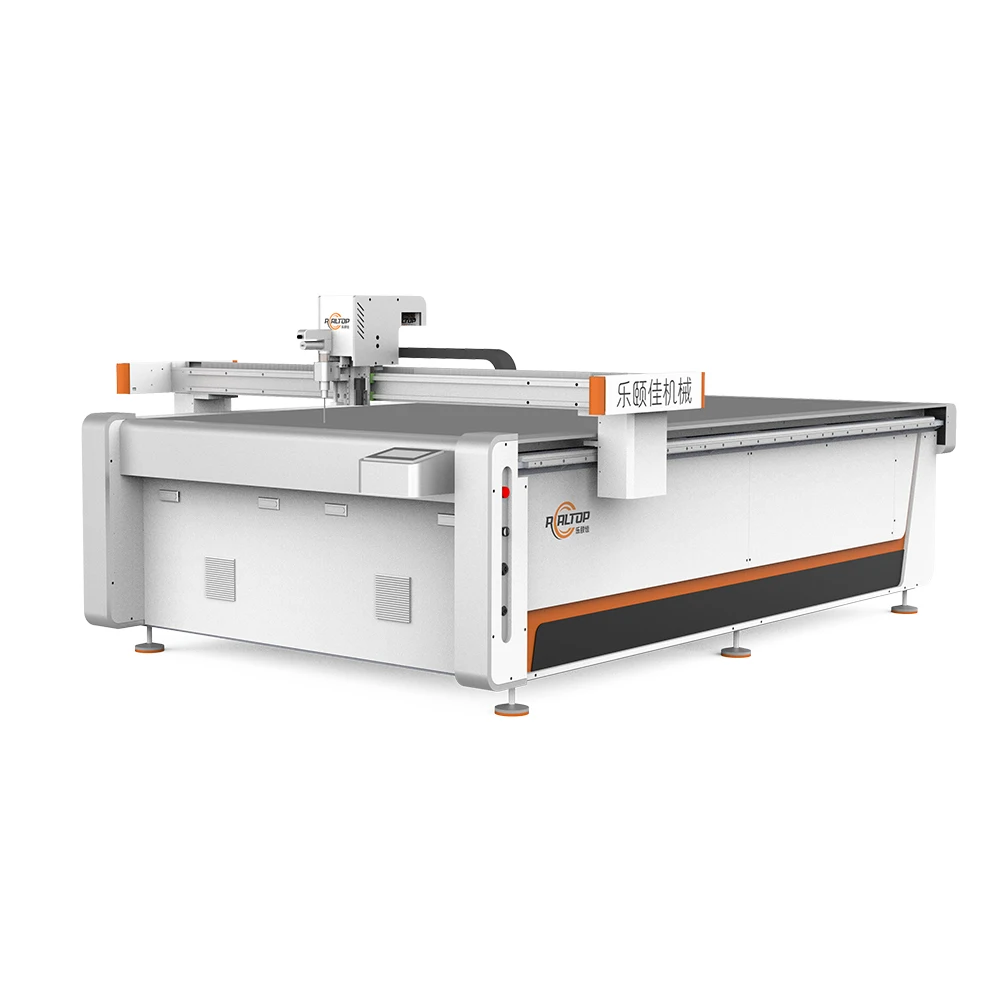
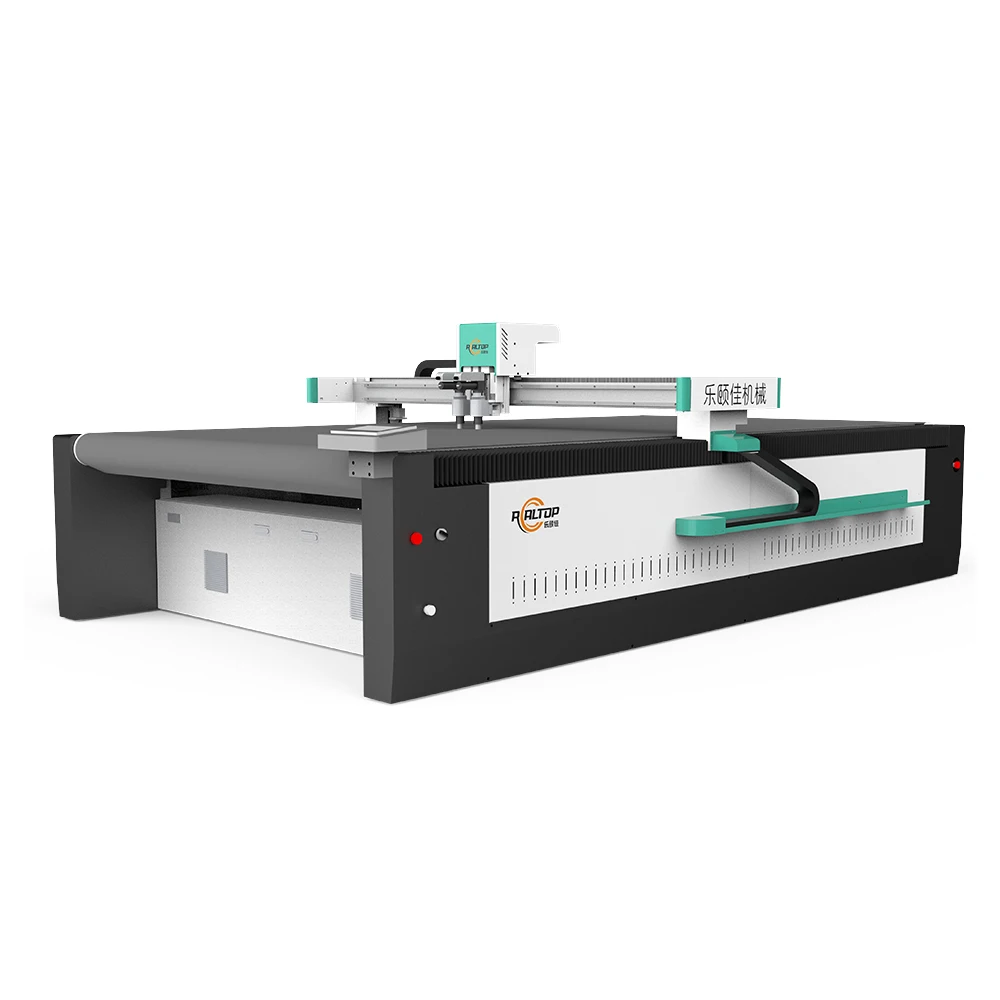
Cold-Cutting Precision for Layered Composites — Every tool head and vacuum zone on this oscillating knife cutting machine is configured only after reviewing the buyer’s actual composite material, eliminating the mismatch between quoted capability and real production conditions.
Technical Specifications
| Parameter | Value |
|---|---|
| Product Type | CNC Oscillating Knife Cutting Machine |
| Working Area | 1600 × 2500 mm |
| Available Tools | Oscillating knife, Driven rotary knife, Creasing wheel, Kiss cutting tool, Pneumatic knife, Milling tool, V groove knife |
| Cutting Speed Range | 0–2000 mm/s |
| Cutting Thickness Capacity | Up to 30 mm (basis not stated in source — confirm material density, layer count, and block format) |
| Positioning Accuracy | ±0.1 mm |
| Vacuum Pump Power | 9 kW |
| Vacuum Table Construction | Aluminum bellows vacuum table |
| Control System | PLC control panel |
| Servo Motor Options | Panasonic, Delta, Dorna |
| Voltage Options | 110V, 220V, 380V |
| Accepted File Formats | PLT, DXF, AI, PDF |
| Interface Language Options | English, Russian, Italian, Chinese, customizable |
| Safety Devices | Infrared sensor device, emergency stop |
| Machine Dimensions | 3300 × 2100 × 1350 mm |
Application Suitability
| Application | Material or Output |
|---|---|
| Aerospace wing skins and fairings | Carbon fiber prepreg, aramid honeycomb, fiberglass cloth |
| Aircraft interior trim and seals | Thermal and acoustic insulation foam, composite panels |
| Automotive body and structural panels | Carbon fiber sheets, FRP, battery insulation pads |
| Vehicle interior acoustic management | Acoustic felt, damping pads, carpets, headliners |
| Wind turbine blade lay-up | Fiberglass cloth, carbon fiber cloth, PET and PVC foam core, vacuum infusion mesh |
| Sporting goods structural components | Carbon fiber and Kevlar fabric, high-performance foam for frames, helmets, surfboards |
Why "30 mm Cutting Depth" Means Nothing Without the Material Name
A 30 mm cutting claim on a Composites CNC Cutting Machine production line is only valid once the specific composite density, resin content, and lay-up schedule are confirmed.
I once shipped an oscillating knife system rated for thick foam to a Middle East gasket manufacturer. The material they actually ran was a high-density composite foam with nearly double the density of the samples we tested. The blade could not penetrate the full depth in a single pass, and their output dropped well below expectations. That situation could have been avoided with a material-specific cutting test before the configuration was locked in [NEED_CITE:]. When buyers see a thickness number without a material qualifier, they assume it applies universally across carbon fiber prepreg, aramid honeycomb, and PET foam core — and each of those materials behaves entirely differently under an oscillating blade.
Cold-Cutting Mechanics for Heat-Sensitive Composites
Laser cutting of composites introduces thermal stress, resin melting, and edge carbonization that compromise the structural integrity of carbon fiber and aramid materials. A Composites CNC Cutting Machine production line based on high-frequency oscillating knife technology avoids this problem entirely by using physical blade movement rather than heat. The cold-cutting process preserves the mechanical properties of the composite lay-up and prevents delamination at the cut edge, which is critical when aerospace or automotive components must meet structural certification standards.
Multi-Tool Flexibility Across Composite Density Ranges
Composite production environments rarely deal with a single material type. One shift may run soft acoustic felt for automotive interiors, and the next may cut rigid G10 epoxy boards for electrical insulation. The available tool range — oscillating knife for flexible laminates, driven rotary knife for woven fabric, milling tool for rigid boards, and V groove knife for fold lines — allows a single machine platform to cover the full material spectrum. Switching between tools is managed through the PLC control panel without requiring mechanical recalibration of the gantry, reducing changeover interruption during mixed-material production schedules [NEED_CITE:].
How Vacuum, Servo, and Accuracy Specs Translate to Production Reality
The 9 kW vacuum pump paired with an aluminum bellows vacuum table provides the holding force needed to keep flexible materials like fiberglass cloth and vacuum infusion mesh flat during high-speed cutting. Without sufficient vacuum, thin composite fabrics lift at the edges as the oscillating knife passes, producing dimensional errors and frayed edges. The ±0.1 mm positioning accuracy, driven by servo motors from options such as Panasonic or Delta, ensures that nested patterns on large sheets maintain tight tolerances across the entire 1600 × 2500 mm working area. For aerospace seal components where edge geometry affects sealing performance, this level of repeatability prevents batch rejection. The PLC control system manages file import from PLT, DXF, AI, and PDF formats, which matters when the buyer’s nesting software generates output that must transfer directly to the machine without manual redrawing.
The Cost of Skipping a Material Trial Before Order Confirmation
When a buyer commits to a tool head configuration based solely on a working area and thickness number, the consequences emerge after installation. A pneumatic knife selected for what was described as "foam" may stall on closed-cell composite foam, leaving incomplete cuts that require manual trimming. Insufficient vacuum zoning can allow small aerospace seal components to shift mid-cut, producing scrap from material that costs significantly more per square meter than standard textiles. These failures are not machine defects — they are specification gaps that a pre-shipment sample cutting report on the buyer’s actual composite material would have identified [NEED_CITE:].
Why This Equipment Source Supports Composite Production Lines
In-house design and production covering both knife and laser cutting technologies means the cutting method is matched to the composite material rather than forced into a single approach. Tool head and table configuration are specified per material type and production volume after reviewing the buyer’s lay-up schedule. CCD camera positioning is available for printed contour work when composite components require alignment to pre-printed trim lines. Software compatibility is confirmed before order to ensure the buyer’s existing nesting workflow integrates with the PLC control system. Voltage, language, and interface specification are locked before shipment, preventing the situation where a 380V machine arrives at a workshop wired for 220V. Sample cutting on the buyer’s own composite material is completed before commitment, providing physical evidence of edge quality and cutting speed on the actual production stock.
Documentation & Verification
- Machine specification sheet listing confirmed tool head and vacuum zone configuration
- Electrical schematic with voltage and frequency matched to destination workshop
- Sample cutting report on buyer’s own composite material with edge quality photographs
- Tool head and table configuration list detailing selected knife type per material
- Software license and file format compatibility note for nesting workflow integration
- Factory test record captured before dispatch with production-speed run data
Installation, Commissioning & Support
- Foundation must support 3300 × 2100 × 1350 mm machine footprint with level tolerance
- Dedicated electrical circuit matching confirmed voltage option (110V, 220V, or 380V)
- Machine ships in assembled sections requiring gantry and table alignment on site
- First-run parameter setting includes vacuum zone calibration for buyer’s composite material
- Operator training covers tool changeover procedure across all configured knife types
- Spare parts list includes oscillating knife blades, vacuum seals, and drive belts
What to Include in Your Inquiry
To configure a Composites CNC Cutting Machine production line accurately, share the specific composite material types, thicknesses, and lay-up structures you intend to process, along with your daily production volume targets. Confirm your workshop voltage and frequency, preferred control interface language, and any existing nesting or CAD software that must integrate with the PLC system. If possible, send a physical sample of your heaviest and lightest composite stock so that tool selection and vacuum zoning can be validated before quotation.
Frequently Asked Questions
Q: How should cutting thickness capacity be verified for composite materials?
A: The stated up to 30 mm capacity must be validated against your specific composite type, density, and number of layers. Carbon fiber prepreg behaves differently from PET foam core under an oscillating knife. Request a sample cutting test on your actual material to confirm whether single-pass cutting is achievable or whether multi-pass strategies are required for full penetration.
Q: How do you choose the right tool for different composite materials?
A: Oscillating knives handle flexible laminates like fiberglass cloth, driven rotary knives suit woven aramid fabric, and milling tools address rigid boards such as G10 epoxy. The selection depends on material rigidity, thickness, and required edge finish. A tool configuration list should be confirmed based on sample cutting results before the order is finalized.
Q: Can the vacuum table zoning be adjusted for small composite parts?
A: Standard vacuum zoning may not hold small aerospace seals or gasket components firmly enough during cutting, allowing material lift and dimensional drift. Zoning configuration should be specified based on your smallest part dimensions. This is confirmed during the pre-shipment material trial, not after installation.
Q: What OEM customization is available for composite production lines?
A: Working area dimensions, multi-head tool configurations, voltage ratings, and control interface languages are all configurable to match your production environment. Customization decisions should follow the material trial results to ensure the configured machine meets actual cutting requirements rather than assumed specifications.
Q: How does production speed match upstream and downstream equipment?
A: Cutting speed ranges from 0 to 2000 mm/s, but actual throughput depends on material type, cutting path complexity, and tool configuration. Integration with automatic loading and stacking systems should be evaluated based on your specific composite lay-up schedule and target cycle time rather than maximum speed figures alone.



商品评价
Clear filtersThere are no reviews yet.