


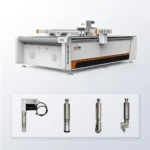

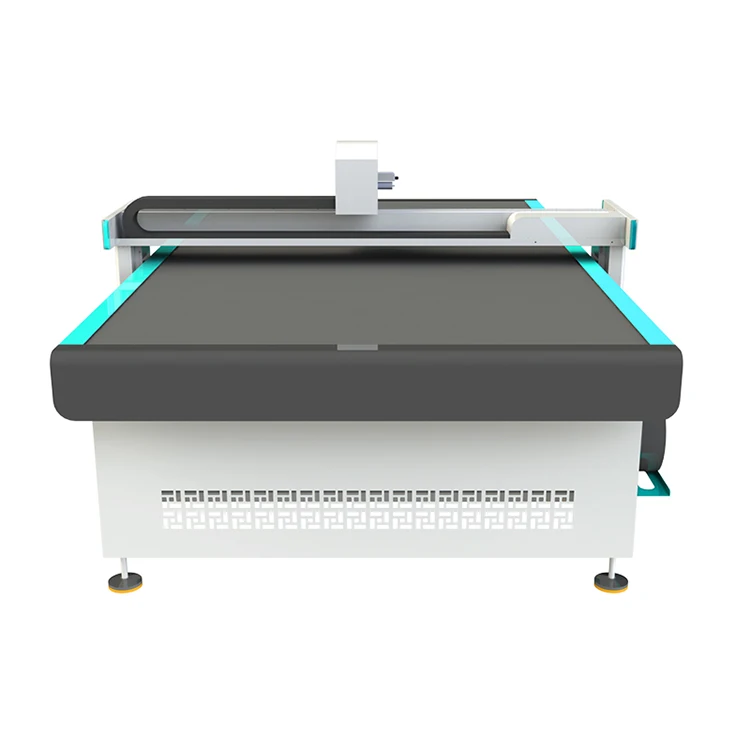
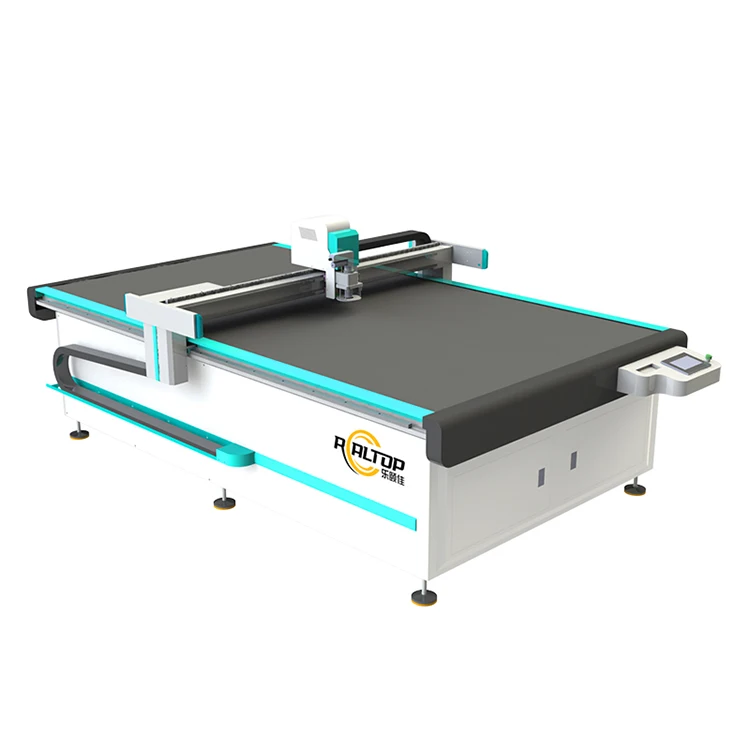
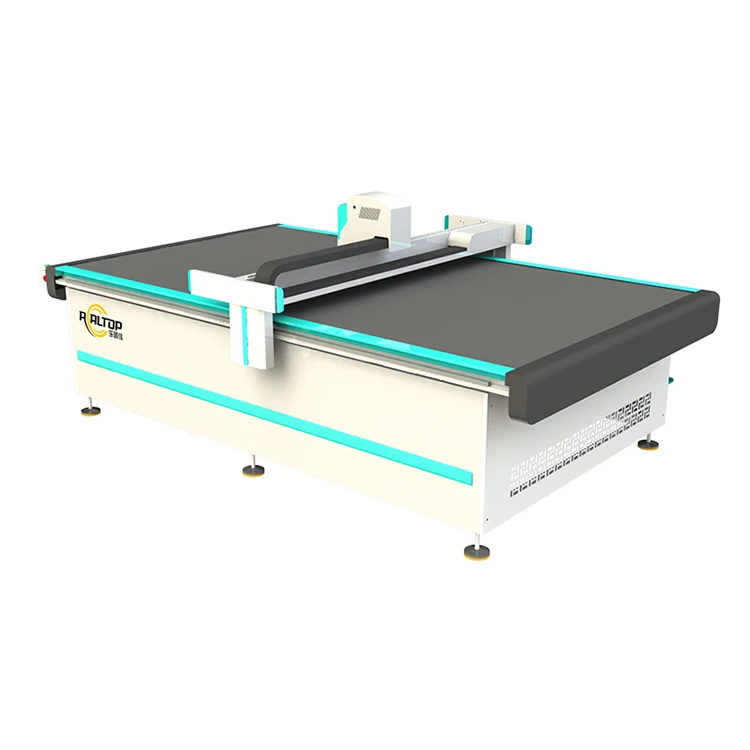
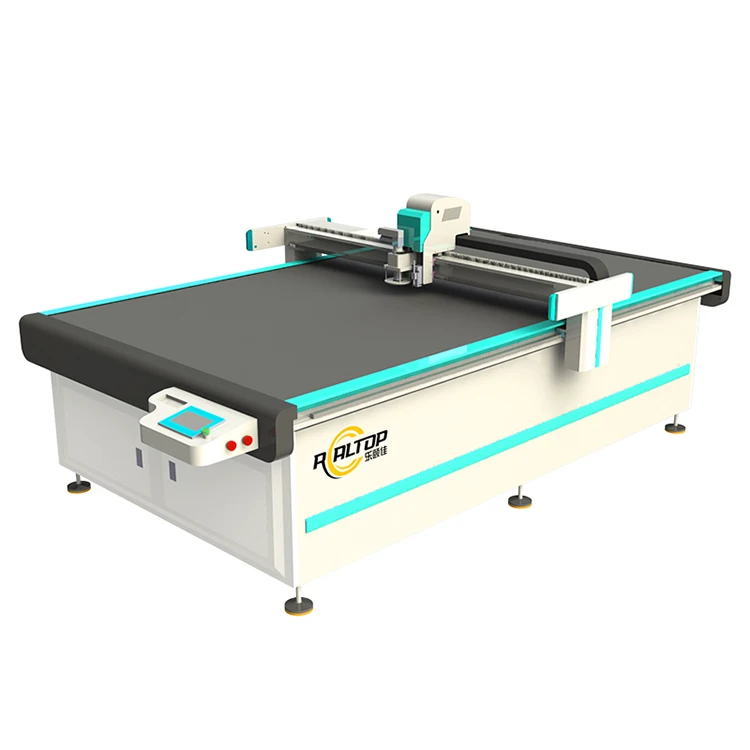
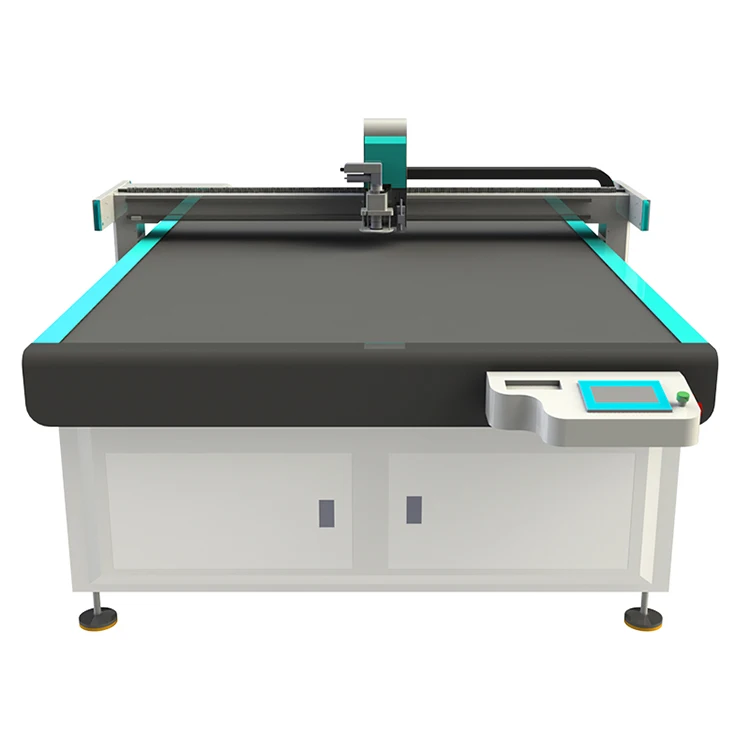
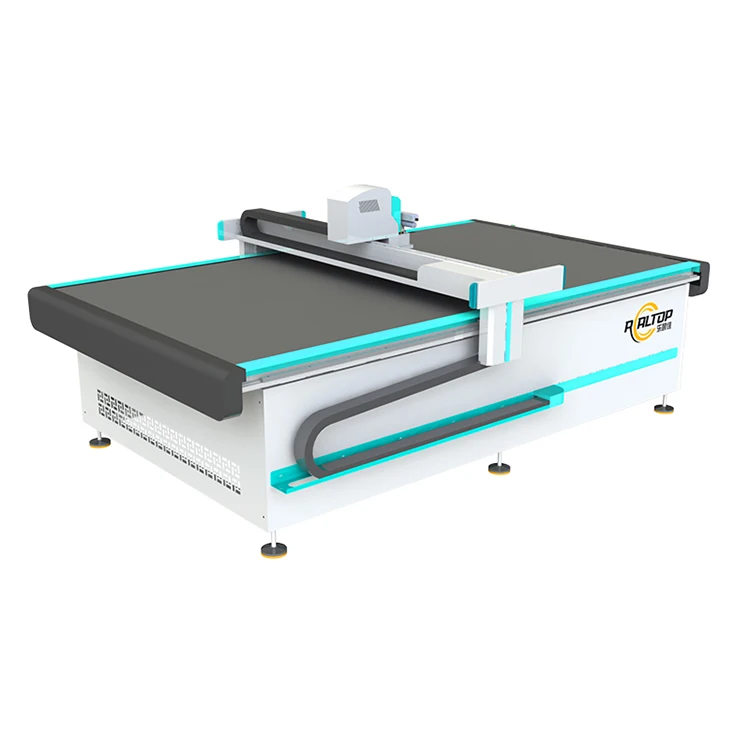

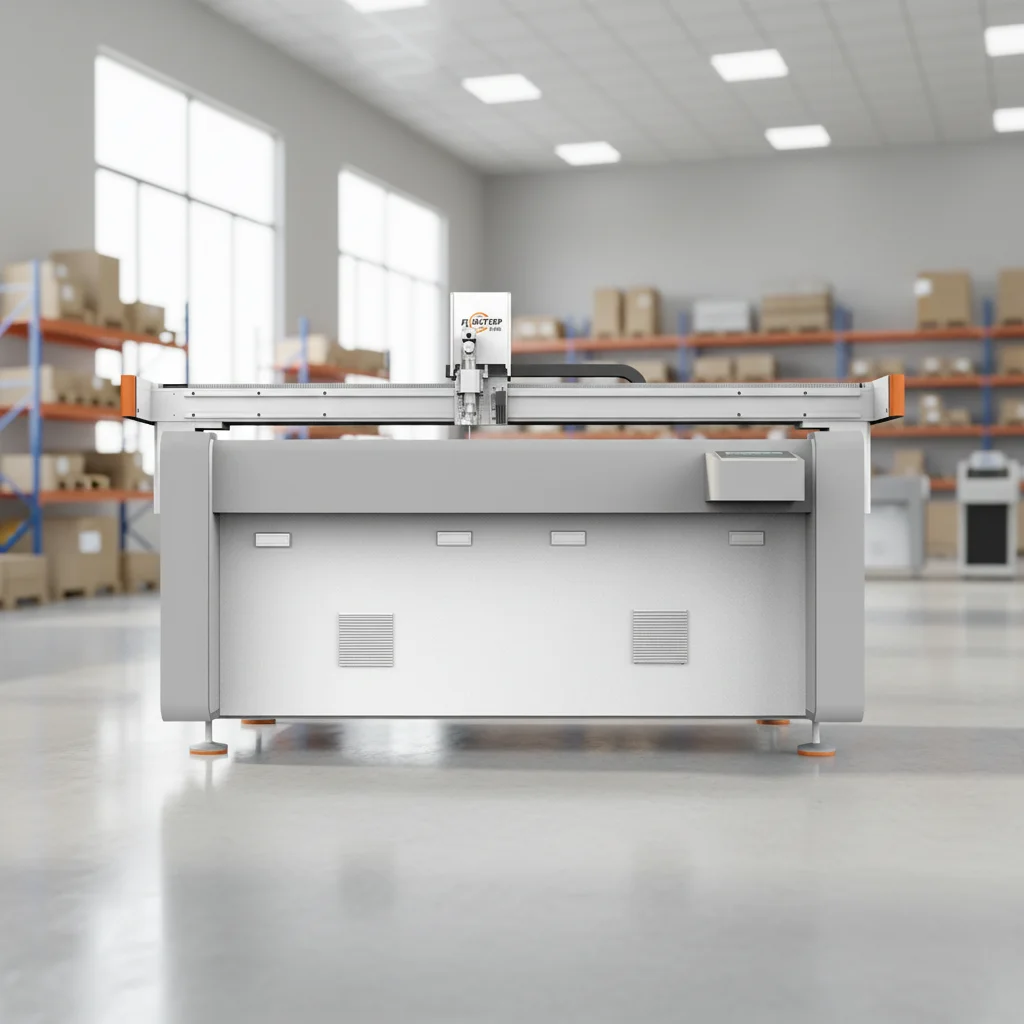
Workflow-Matched Configuration — tool head, table zoning and feed system specified against your sticker stock and carton format rather than working area alone.
Technical Specifications
| Parameter | Value |
|---|---|
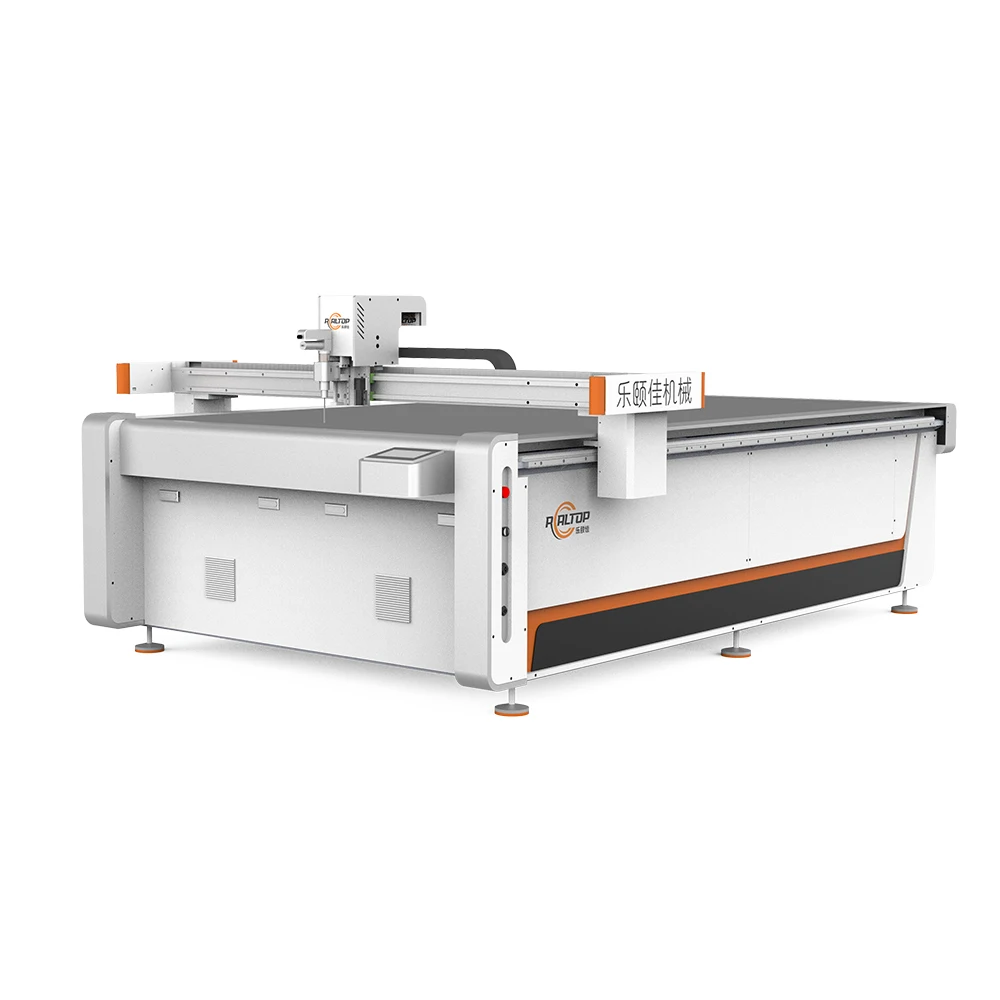
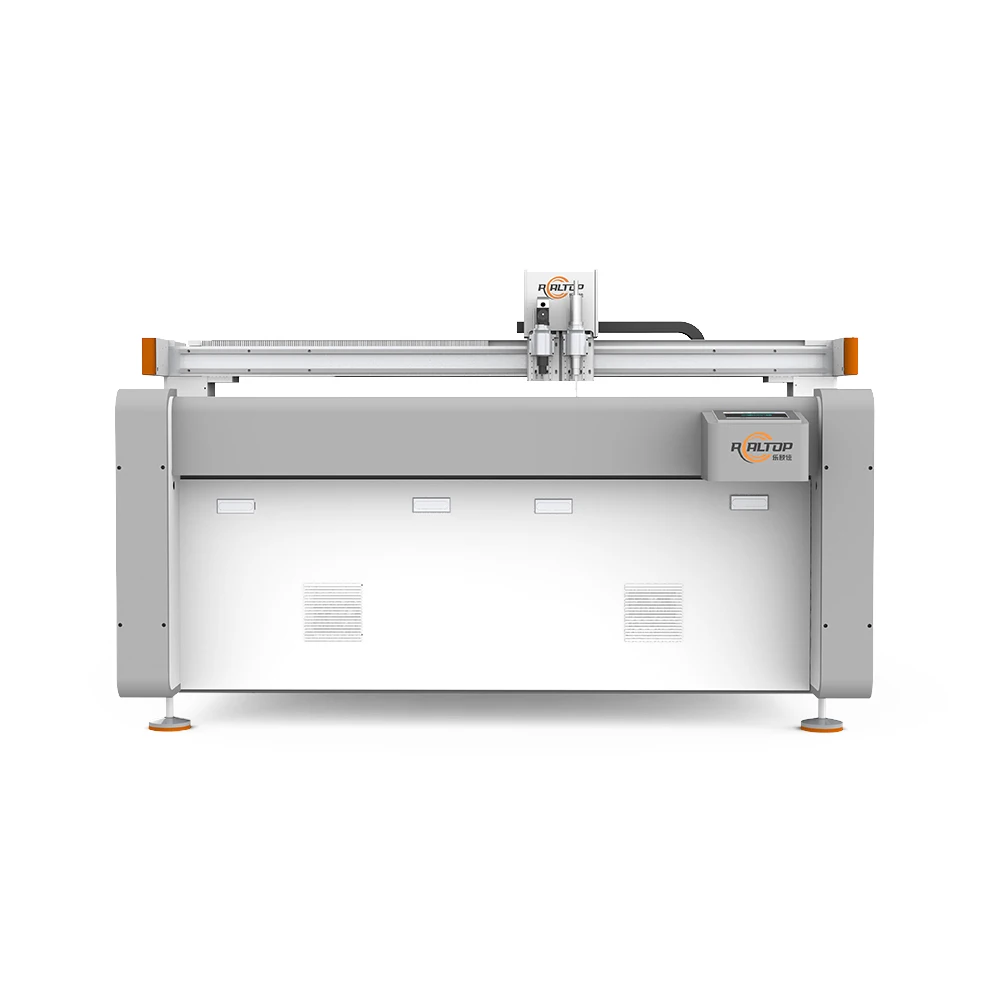
| Product Type | CNC Oscillating Knife Cutting Machine |
| Model | RT-D2516 / RT-S2516 |
| Working Area | 1600 × 2500 mm |
| Overall Dimensions (L×W×H) | 3450 × 2300 × 1250 mm |
| Rated Power | 9 kW |
| Vacuum Pump | 7.5 kW |
| Table Type | Flat vacuum working table with conveyor and auto-feeding |
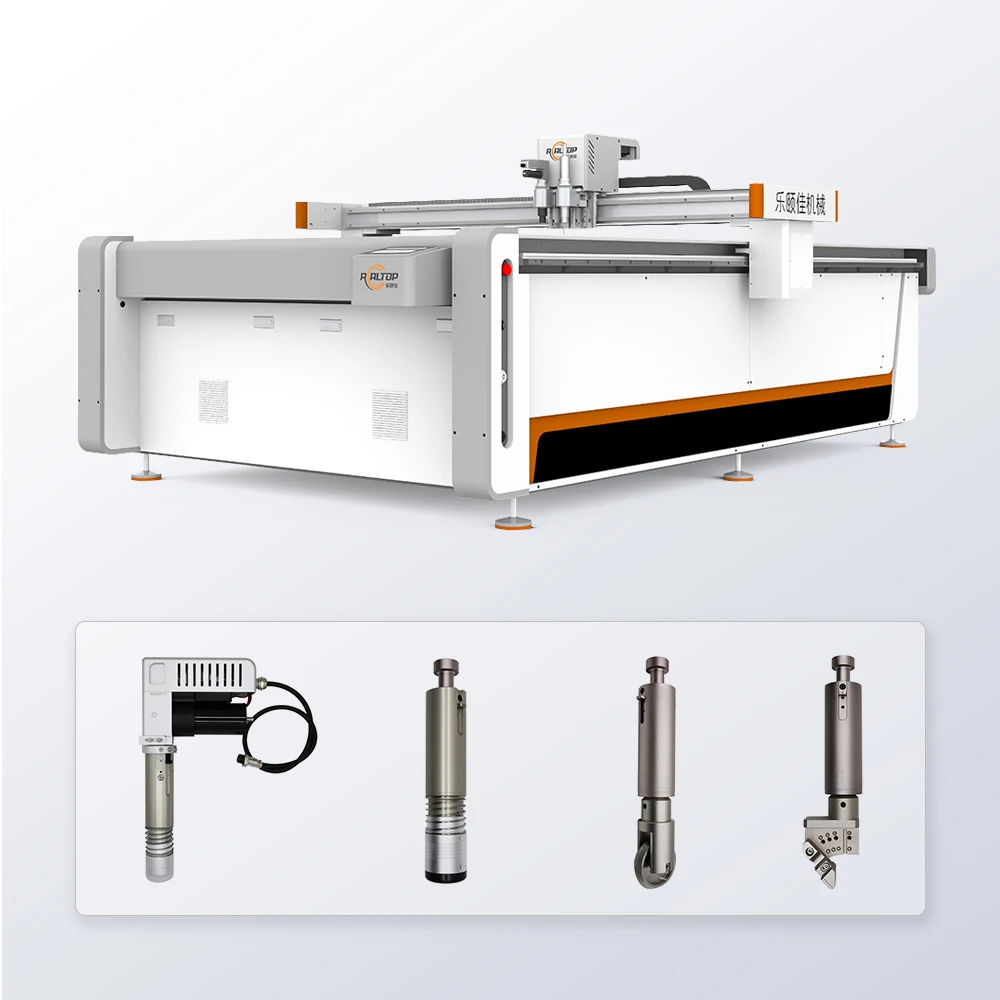
| Tool Head | Multifunctional head — Swiss imported oscillating knife (vibration full-cut, half-cut, cursor location) |
| Translational Velocity | 800–1200 mm/s |
| Cutting Speed | 200–800 mm/s (basis not stated in source — confirm material and thickness) |
| Repeatability | ≤ 0.1 mm |
| Transmission System | Digital servo motor, Hiwin linear guide, synchronous belt, ball screw |
| Conveyor Belt | Germany imported |
| Instruction Format | HP-GL compatible |
| Voltage | 380 V ± 10 % |
| Safety Device | Infrared sensors |
| Standards | CE (certificate scope to be verified) |
Application Suitability
| Application | Material or Output |
|---|---|
| Packaging sample making | Corrugated board, greyboard, folding carton stock, short-run prototyping formats |
| Sticker and signage contour cutting | Self-adhesive vinyl, printed film, PVC sheets, reflective materials |
| Garment and footwear cutting | Woven fabric, composite leather, sponge-backed textile, layered flexible materials |
| Gasket and industrial flexible parts | Silicone sheet, rubber, soft glass, foam composite |
What "800 mm/s Cutting Speed" Leaves Out When Your Material Is High-Tack Vinyl
The number on the spec sheet only holds if the knife, vacuum zoning and feed rate are matched to the adhesive load of your actual roll.
I have watched sticker converters pull a machine off the showroom floor because the demo ran cleanly on low-tack advertising film, then spend months fighting ragged edges and lifted waste matrix on the high-tack vehicle wrap they actually produce. The oscillating frequency that slices through standard vinyl cleanly turns into a drag on adhesive-heavy stock, loading the blade and pulling the edge up before the vacuum can hold it flat [NEED_CITE: oscillating knife behavior on high-tack adhesive materials]. A CNC oscillating knife cutting machine for packaging and signage production only delivers its rated throughput when the test cut uses the buyer’s own roll, at the thickness and tack level the line will run every day.
Matching the Knife Stroke to Adhesive Load and Liner Thickness
The Swiss-imported oscillating knife on this unit runs full-cut and half-cut modes from the same multifunctional head. Full-cut handles layered sticker stacks where the blade must penetrate face film, adhesive and liner in one pass, while half-cut scores the face without cutting through the backing for kiss-cut applications. The stroke length and frequency need adjustment when moving between a thin cast vinyl and a thick reflective film, because the adhesive column the blade passes through changes the lateral load on every cycle. Getting this wrong shows up as micro-tears at tight radii rather than a complete failure, so the defect often goes unnoticed until the waste matrix strips unevenly at the rewinder.
Vacuum Zoning Decides Whether Small Sticker Parts Stay Flat
The 7.5 kW vacuum pump feeds a zoned flat table with conveyor and auto-feeding. For large-format carton samples the full table area pulls evenly, but sticker nests with dozens of small parts need the vacuum concentrated under the cut zone while surrounding zones stay sealed. If the zoning is too broad, air bleeds in around the sheet edge and the smallest decals lift during the final pass, shifting position by a fraction of a millimeter — enough to fail a contour registration check [NEED_CITE: vacuum hold-down requirements for small-format die-cut parts]. Confirming the zone layout against your typical nest pattern before the machine ships avoids a re-plumb on the production floor.
Reading the Specs That Actually Govern Edge Quality
Repeatability of ≤ 0.1 mm comes from the combination of Hiwin linear guides, digital servo drive and ball-screw transmission. On sticker contour work this figure matters most at the point where the blade re-enters a cut after traversing a long straight section — any accumulated positional drift shows as a visible mismatch at the close-out point. The 1600 × 2500 mm working area accommodates standard roll widths used in vehicle-wrap and wide-format print finishing, so the operator can gang multiple nests across the table without re-sheeting. Cutting speed of 200–800 mm/s is a range rather than a fixed output, because the achievable figure depends on material thickness, adhesive type and the complexity of the contour path; a simple rectangular sticker runs at the upper end, while a tight-radius badge with interior cutouts sits at the lower.
The Cost of Skipping the Material Test Before Commitment
Buyers who approve a configuration based on working area and nominal speed often discover the real constraint only after installation. A vacuum zone layout that holds A3 carton blanks perfectly may leave 40 mm sticker tabs floating, forcing the operator to add double-sided tape to the spoil board and cut throughput noticeably. An oscillating knife selected for clean paper cutting loads up within the first hour on high-tack PVC, requiring blade changes so frequent that the daily output falls well below the planned volume [NEED_CITE: blade wear rates on adhesive-loaded flexible materials]. These issues are solvable, but fixing them after the machine is bolted down costs more in downtime and re-commissioning than a sample-cutting session on the buyer’s own stock would have taken before the order.
Why Sourcing This Configuration Here Makes Sense for Production Floors
The design team specifies the tool head and table layout against the buyer’s material sample rather than quoting a standard package, so the multifunctional head and conveyor feed arrive configured for the actual job. Voltage at 380 V ± 10 % is confirmed against the buyer’s local supply and plug type before production begins, preventing rewiring after arrival. HP-GL compatibility is verified alongside the buyer’s existing nesting software so files transfer without an intermediate conversion step. Factory testing includes a cutting run on the buyer’s own sticker or carton stock, documented in a sample report that travels with the machine. CE documentation scope is clarified for the destination market so the declaration matches the configuration shipped, not a generic certificate covering a different tool head.
Documentation & Verification
- Machine specification sheet listing confirmed tool head, vacuum zone map and feed configuration for your material.
- Electrical schematic with voltage, plug type and frequency matched to your facility before build.
- Sample cutting report on your sticker or carton stock, recording achieved speed and edge condition.
- Software licence and HP-GL file-format compatibility note tied to your nesting workflow.
- CE declaration scope letter confirming the shipped configuration, not a generic machine family.
- Spare parts list covering oscillating knife blades, conveyor belt segments and vacuum seals.
Installation, Commissioning & Support
- Floor space of 3450 × 2300 mm plus operator clearance, on a level slab able to carry the unit and vacuum pump load.
- Dedicated 380 V circuit rated for the 9 kW machine draw plus the 7.5 kW vacuum pump on a separate breaker.
- Conveyor belt tensioning and vacuum zone seal check performed at first power-up before any production cutting begins.
- Oscillating knife stroke and frequency calibrated to your material during on-site commissioning with your stock present.
- Operator training covers half-cut depth setting, nest file import and daily blade inspection routine.
- Spare blade stock, conveyor belt splice kit and vacuum seal strip supplied with the initial shipment.
What We Need from You to Finalize the Configuration
Send the actual sticker roll or carton sheet you intend to run, including the liner and adhesive type for sticker work, along with the thickness and sheet or roll width. Share your typical daily volume, the nesting software you already use, and the voltage and frequency at your facility so the electrical package and control language are set before build. If contour cutting on printed graphics is part of the workflow, confirm whether printed registration marks are present and their typical spacing.
Frequently Asked Questions
Q: How do you verify cutting speed on my specific sticker or carton material?
A: We run a sample cut on your actual roll or sheet, recording the achievable speed, edge condition and blade wear over a sustained run. The results are documented in a sample cutting report that accompanies the quotation, so the speed figure you plan around reflects your material rather than a generic benchmark.
Q: Is CCD camera contour recognition available, and can it keep up with my printed marks?
A: CCD camera positioning is not listed in the standard specification for this model and must be confirmed before order. If your workflow requires contour tracking on printed sticker sheets, we verify the camera’s mark-recognition speed against your line throughput and include the result in the configuration sheet prior to build.
Q: Will my existing HP-GL nesting files run without conversion?
A: The control system accepts HP-GL compatible format. Before the order we test your typical nest file from your current software, confirm import fidelity including layer mapping for cut and crease lines, and document any required export settings in a compatibility note shipped with the machine.
Q: How does the vacuum table handle small sticker parts that tend to lift?
A: The flat vacuum table is zoned, and the zone layout is configured based on your typical nest pattern. For nests dominated by small parts we concentrate suction under the active cut area and seal peripheral zones, then verify hold-down on your smallest decal size during the factory sample test before dispatch.



商品评价
Clear filtersThere are no reviews yet.