


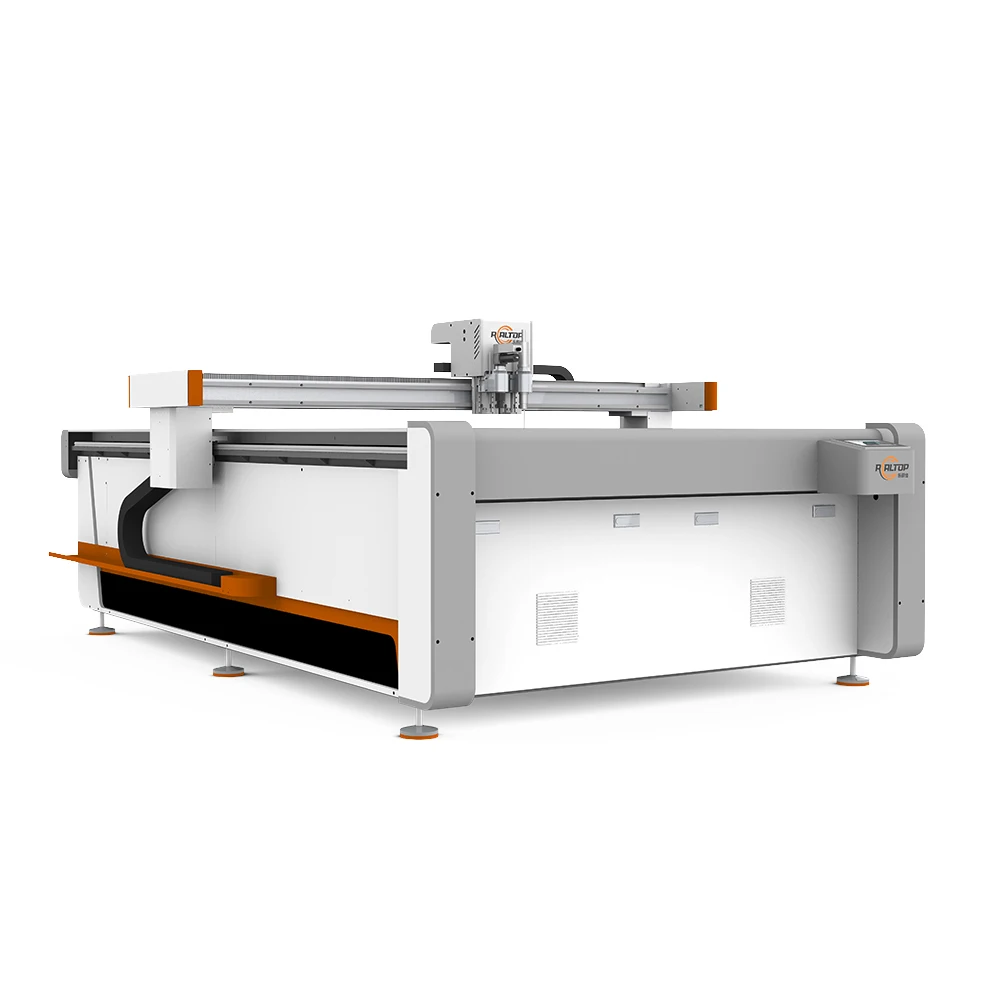
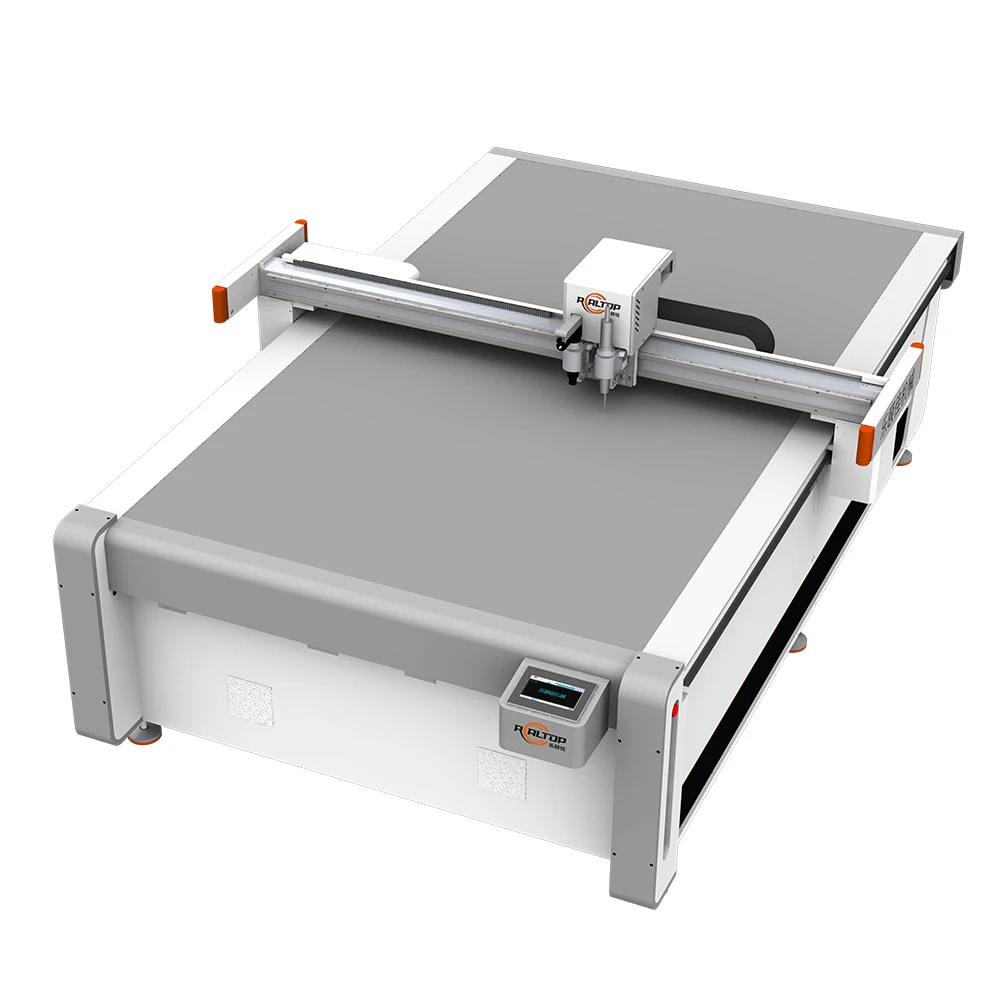
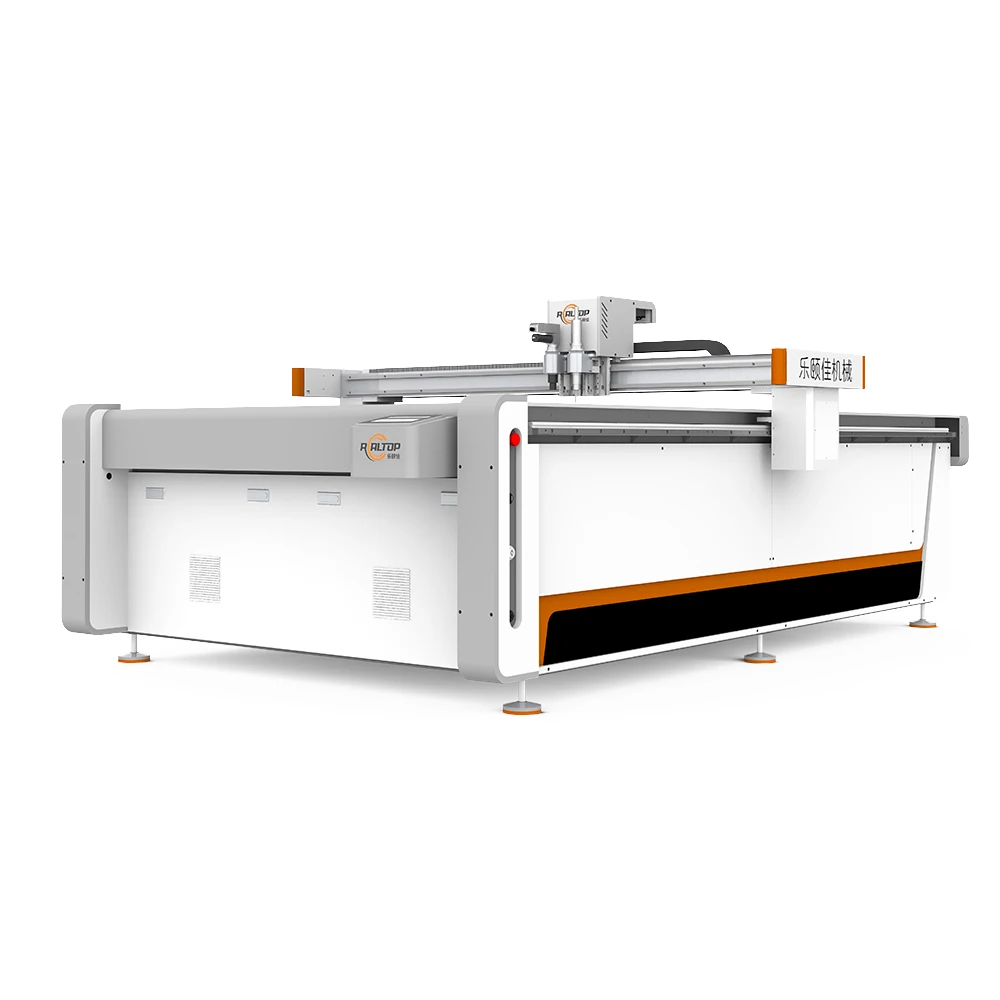
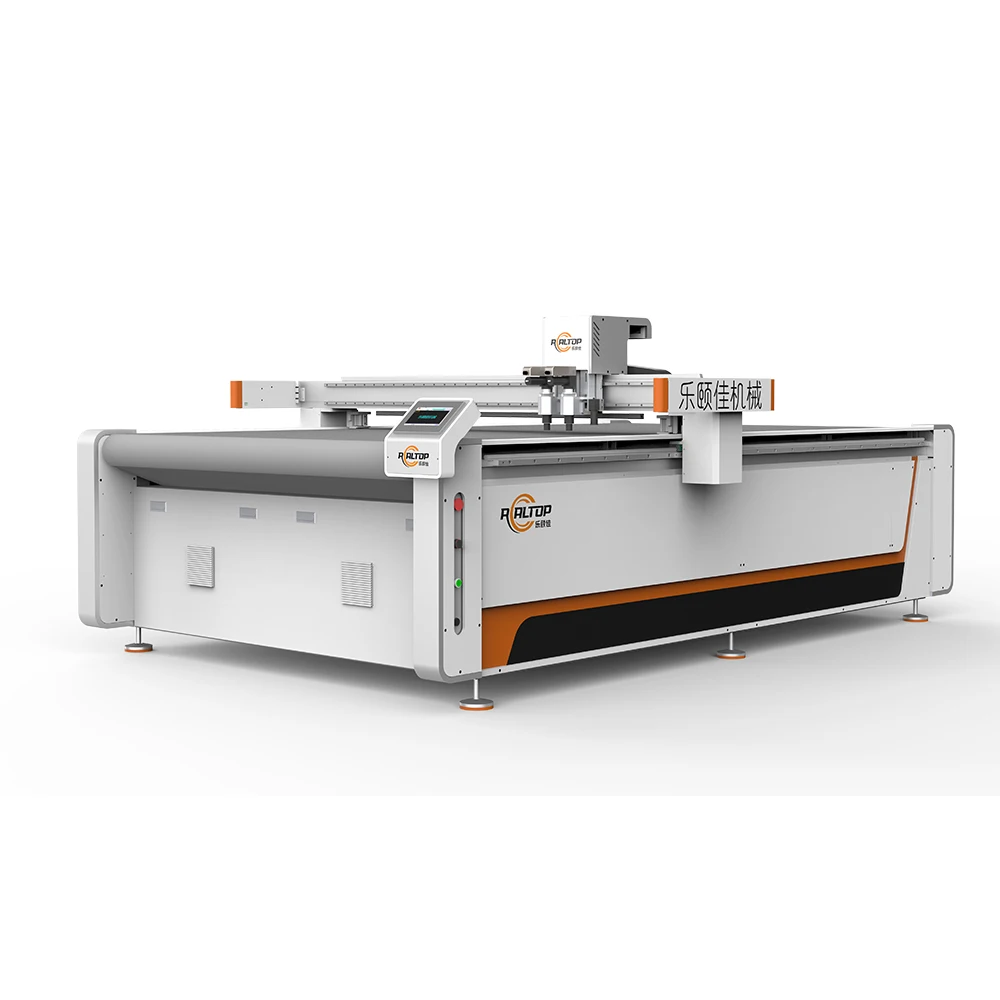

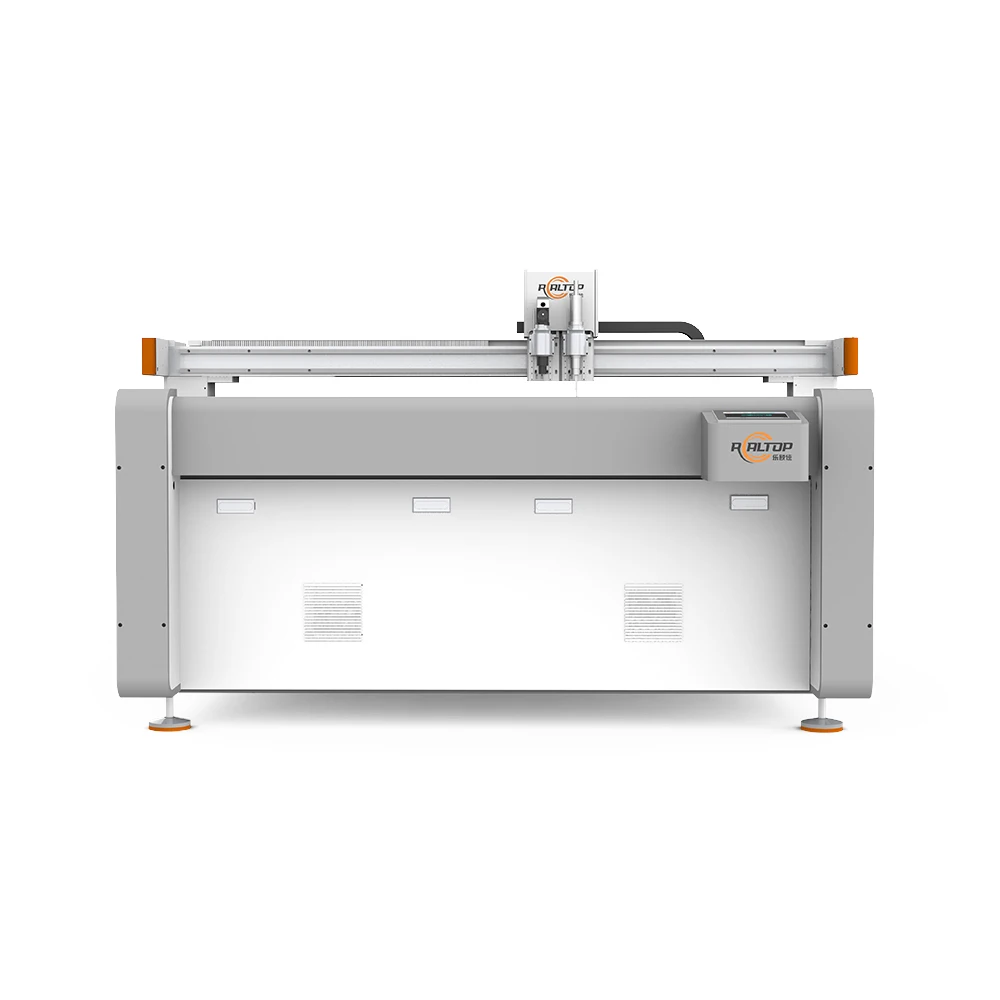
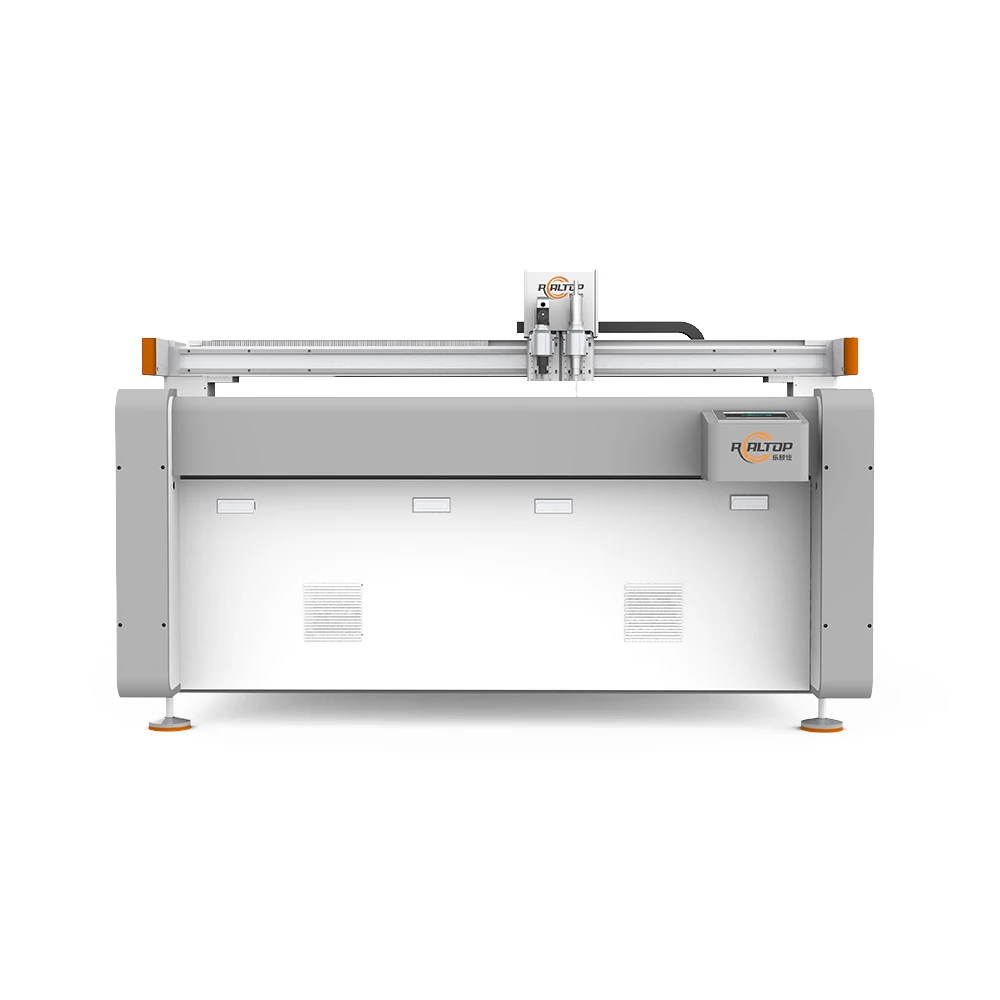
Production Workflow Fit — The 1625 CNC Oscillating Knife Cutting Machine production line is configured per your flute profile, board weight, and daily volume before it leaves the factory, eliminating on-site guessing with tooling and vacuum zoning matched to your actual packaging substrate.
Technical Specifications
| Parameter | Value |
|---|---|
| Model | 1625 |
| Product Type | CNC Oscillating Knife Cutting Machine |
| Working Area | 1600×2500 mm |
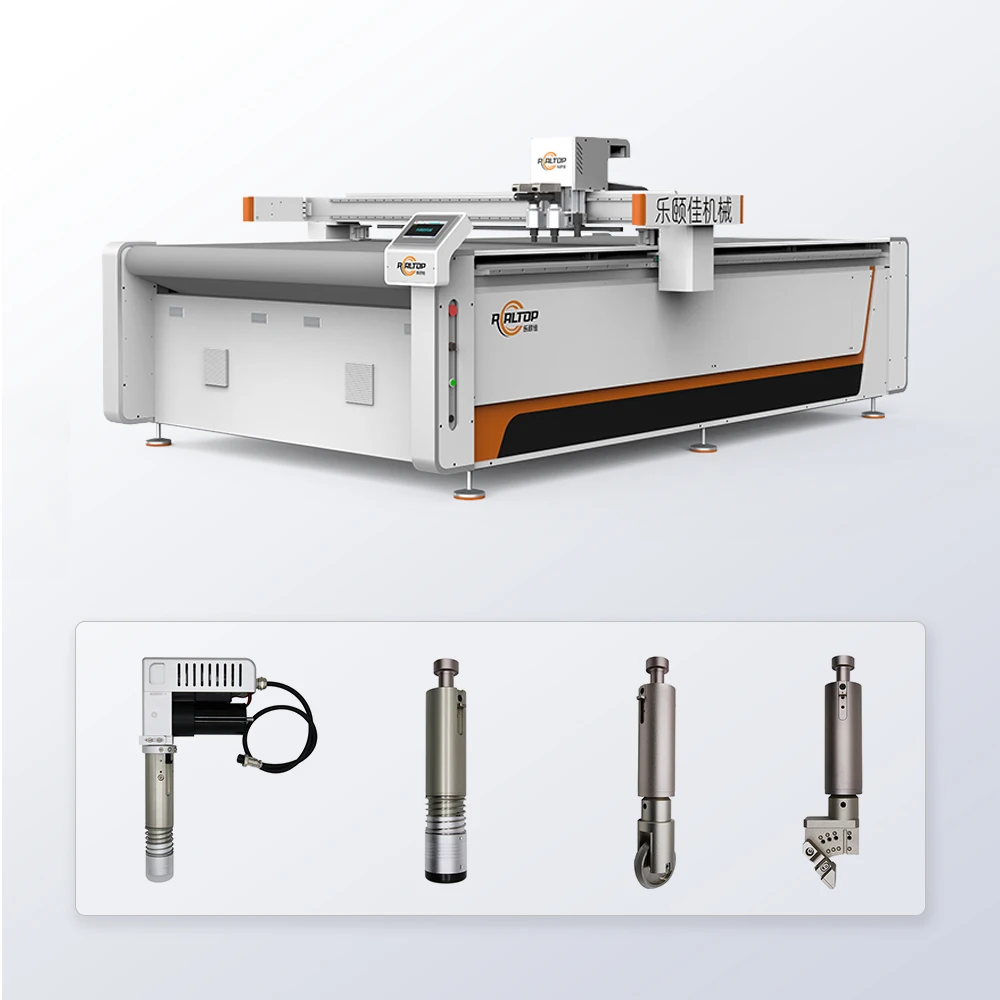
| Tool Head Type | Oscillating knife, Driven rotary knife, Creasing wheel, Kiss cutting tool, Pneumatic knife, Milling tool, V groove knife |
| Cutting Speed | 0-1500 mm/s |
| Cutting Thickness | ≤ 40mm (basis not stated in source) |
| Positioning Accuracy | ±0.1 mm |
| Vacuum Pump | 9 kW |
| Voltage Options | 110V, 220V, 380V |
| Control System | PLC control panel |
| File Formats | PLT, DXF, AI, PDF |
| Safety Device | Infrared sensor device and emergency stop device |
| Overall Dimensions (L×W×H) | 3300×2100×1350 mm |
| Servo Motors | Panasonic, Delta, Dorna options |
| Language Options | English, Russian, Italian, Chinese (custom languages available) |
| Assembly State | Fully assembled |
| Certification | CE |
Application Suitability
| Application | Material or Output |
|---|---|
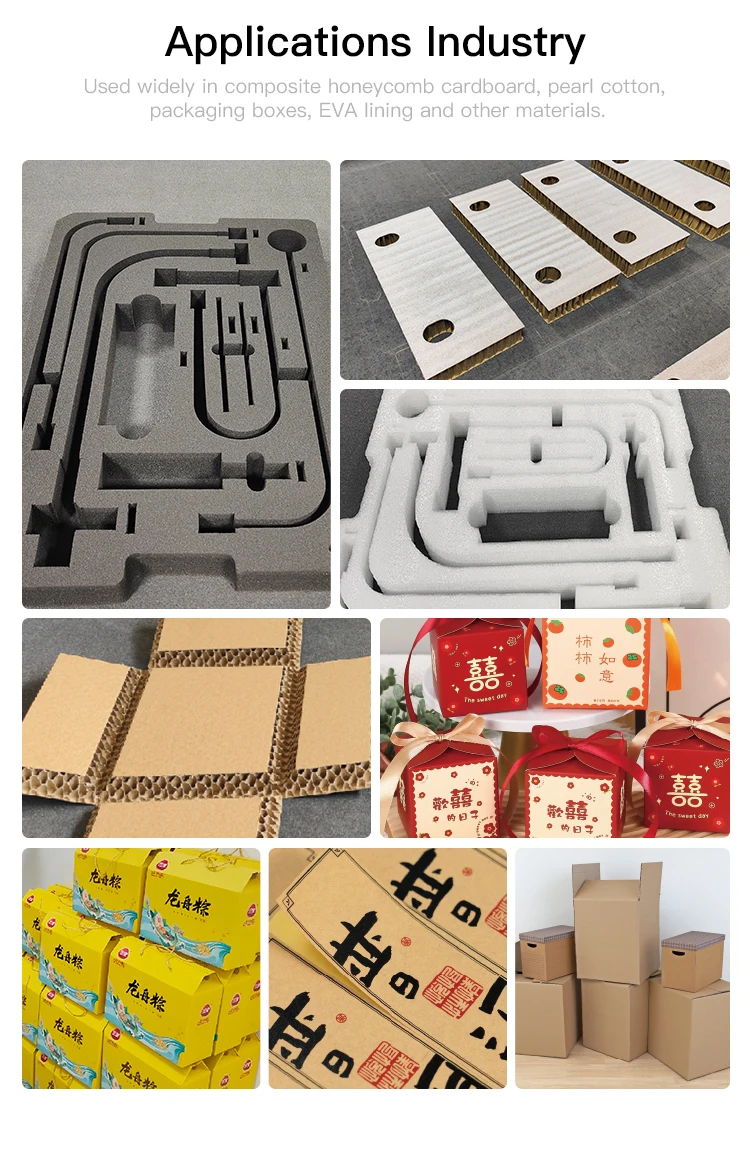
| Packaging sample making and carton box prototyping | Corrugated cardboard (E-flute, B-flute, BC-flute), greyboard, cardstock, art paper |
| Short-run customized packaging production | EVA foam, EPE foam, PU foam inserts and protective packaging components |
| Luxury packaging and specialty box structures | Velvet/fleece fabric, non-woven fabric, leather, synthetic leather |
| Gasket and composite protective packaging | Rubber mats, composite materials, adhesive-backed materials |
| Signage and thin plastic component cutting | Thin plastic sheets (PVC, PET) |
Why Working Area Alone Fails Packaging Converters
Specifying a flatbed cutter on table size alone and discovering it cannot hold down small carton parts or cut through BC-flute corrugated board is a preventable failure. The 1625 CNC Oscillating Knife Cutting Machine production line must be configured around your heaviest board weight and smallest part geometry, not just your largest sheet dimension. [NEED_CITE:]
I have seen packaging sample makers receive a machine that cut E-flute prototypes cleanly, only to stall when the production order called for double-wall BC-flute shipping boxes. The vacuum table zoning was too broad, the knife oscillation frequency too low for the material density, and the creasing wheel could not score a clean fold line. Small die-cut carton inserts lifted off the table during high-speed cuts, ruining registration and forcing operators to manually hold workpieces. These are configuration failures, not machine failures, and they are caught only when the supplier tests your specific board stock before shipment. [NEED_CITE:]
Tool Head Selection Across Flute Profiles and Board Weights
Corrugated board behaves differently across E-flute, B-flute, and BC-flute profiles, and greyboard presents entirely different cutting resistance than art paper or cardstock. The 1625 platform offers oscillating knife, driven rotary knife, creasing wheel, V groove knife, and pneumatic knife tool heads, allowing a single CNC Oscillating Knife Cutting Machine production line to handle structural cutting, fold scoring, and contour work without secondary finishing equipment. Selecting the wrong tool head for a specific flute profile produces ragged edges on corrugated cuts or crushed cores on foam inserts, and this selection must be validated on your actual material before the machine ships.
Vacuum Table Zoning for Small Packaging Components
Packaging production runs often include small carton inserts, corner braces, and die-cut windows that cover only a fraction of the 1600×2500 mm working area. A vacuum table with insufficient zoning allows these small parts to lift during oscillating knife passes, breaking registration and producing scrap. The 9 kW vacuum pump on this system must be paired with a table divided into independently controlled zones so that suction concentrates only where material is present. [NEED_CITE:] Without proper zoning verification on your typical nesting layout, the machine may perform well on full-sheet carton blanks and fail completely on the small parts that your production volume actually depends on.
Reading the Specifications Against Your Production Reality
The 0-1500 mm/s cutting speed is a maximum travel rate, not a throughput guarantee; actual cutting speed through BC-flute corrugated board or dense greyboard will be substantially lower to maintain the ±0.1 mm positioning accuracy required for clean fold lines and registration on printed stock. The PLC control panel accepts PLT, DXF, AI, and PDF file formats, but compatibility with your existing packaging design software and nesting workflow must be confirmed before order placement to avoid file conversion bottlenecks. Servo motor options from Panasonic, Delta, and Dorna offer different torque and response characteristics that affect acceleration on complex carton patterns with frequent direction changes. The ≤ 40mm cutting thickness rating requires validation against your specific board composition, as a 40mm honeycomb panel behaves very differently under an oscillating knife than 40mm of stacked E-flute corrugated sheets.
The Cost of Skipping Material Validation Before Shipment
When a packaging converter receives a machine that was specified without testing their actual board stock, the consequences extend beyond the initial setup delay. Operators spend days adjusting knife pressure, oscillation frequency, and vacuum zoning through trial and error, consuming production material and missing delivery deadlines for sample approvals. Creasing wheels set for one board weight will crush lighter stock or fail to score heavier grades, producing cartons that crack on folding or fail structural testing. These problems compound when the machine is already in a foreign country with limited local technical support, turning a configuration oversight into a multi-week production stoppage. [NEED_CITE:]
Why This Configuration Approach Works for Packaging Buyers
In-house design covering both oscillating knife and laser cutting technologies means a buyer can match the cutting method to their specific packaging material rather than forcing one method across incompatible substrates. Tool head and table configuration are specified per material and production volume, with sample cutting performed on the buyer’s own board stock before commitment. CCD camera positioning is available for printed contour work on pre-printed carton faces, and software compatibility is confirmed against the buyer’s existing file format and nesting workflow before the order is finalized. Voltage, plug type, and control panel language are confirmed before shipment to match the destination workshop’s electrical infrastructure and operator requirements, preventing commissioning delays that have nothing to do with the machine itself.
Documentation & Verification
- Machine specification sheet listing confirmed tool heads, vacuum zoning layout, and servo motor selection
- Electrical schematic and voltage confirmation matching destination workshop supply and frequency
- Sample cutting report on your specific flute profile, board weight, and carton pattern
- Factory test record documenting cutting speed, accuracy, and edge quality on your material
- Software licence and file format compatibility note for your existing packaging design workflow
- Spare parts list identifying consumable blades, creasing wheels, and wear items by part number
Installation, Commissioning & Support
- Overall dimensions 3300×2100×1350 mm require floor space verification including operator access and material staging areas
- 9 kW vacuum pump and servo motors require dedicated circuit capacity verification at your local voltage (110V, 220V, or 380V)
- Machine ships fully assembled; placement requires forklift access and level floor preparation
- First-day commissioning includes vacuum zoning calibration and tool head pressure setup on your board stock
- Operator training covers PLC control panel navigation in your confirmed language (English, Russian, Italian, Chinese, or custom)
- Consumable blade and creasing wheel inventory recommended based on your daily cutting volume and material abrasiveness
Preparing Your Inquiry for Accurate Configuration
To specify this system correctly for your packaging operation, provide the specific board types and flute profiles you process, the thickness range of your heaviest and lightest materials, and a representative nesting layout showing your smallest and largest carton parts. Confirm your workshop voltage and frequency, the control panel language your operators require, and the packaging design software and file formats currently in use. If you produce printed carton faces requiring contour recognition, include a sample printed sheet so that camera tracking performance can be validated before the machine is built.
Frequently Asked Questions
Q: How do I verify the cutting thickness capacity for my specific corrugated flute profile and board weight?
A: Cutting thickness ratings vary significantly by material density and structure. Send samples of your heaviest board stock, including BC-flute corrugated and any greyboard grades, so that sample cutting can confirm knife pressure, oscillation frequency, and edge quality on your actual production materials before the machine configuration is finalized.
Q: Which tool heads do I need for creasing and cutting on corrugated board and greyboard?
A: Corrugated board typically requires an oscillating knife for cutting and a creasing wheel for fold lines, while greyboard may need a V groove knife for structural folds. Your tool head configuration is determined by your specific box structures and validated during sample cutting on your materials before shipment.
Q: How should the vacuum table be zoned for small carton parts that lift during cutting?
A: The 1600×2500 mm working area must be divided into independently controlled vacuum zones so suction concentrates where material is present. Provide your typical nesting layout showing small inserts and corner braces so that zoning adequacy is confirmed before the table is built.
Q: Will my existing packaging design files work with this system without conversion?
A: The PLC control panel accepts PLT, DXF, AI, and PDF formats, but compatibility with your specific design software and nesting workflow must be tested. Send representative production files so that import, nesting, and toolpath generation are verified before the order is placed.
Q: What production throughput can I expect on my typical carton patterns?
A: Throughput depends on pattern complexity, material thickness, and sheet size rather than maximum travel speed alone. Sample cutting on your actual board stock and nesting layout provides realistic cycle times for your specific production mix and daily volume requirements.




商品评价
Clear filtersThere are no reviews yet.