


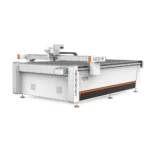
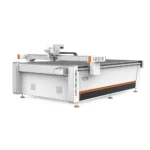
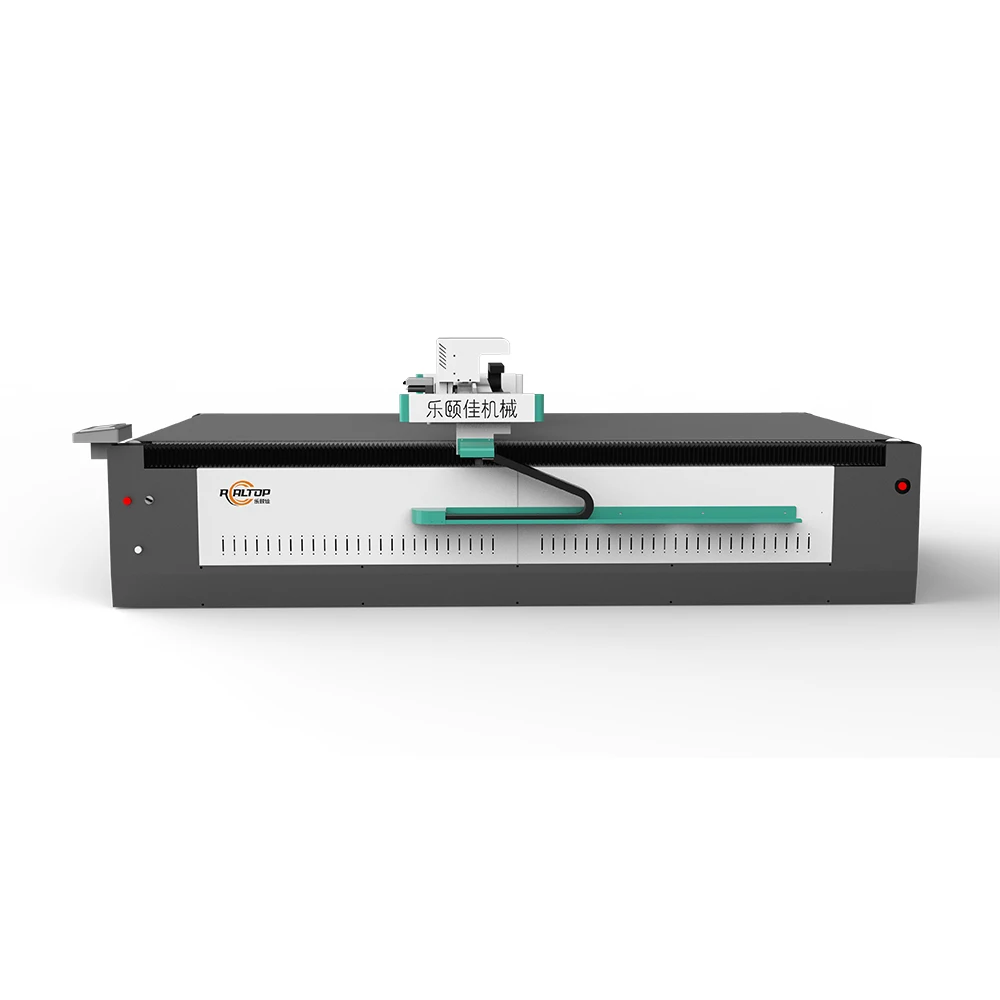
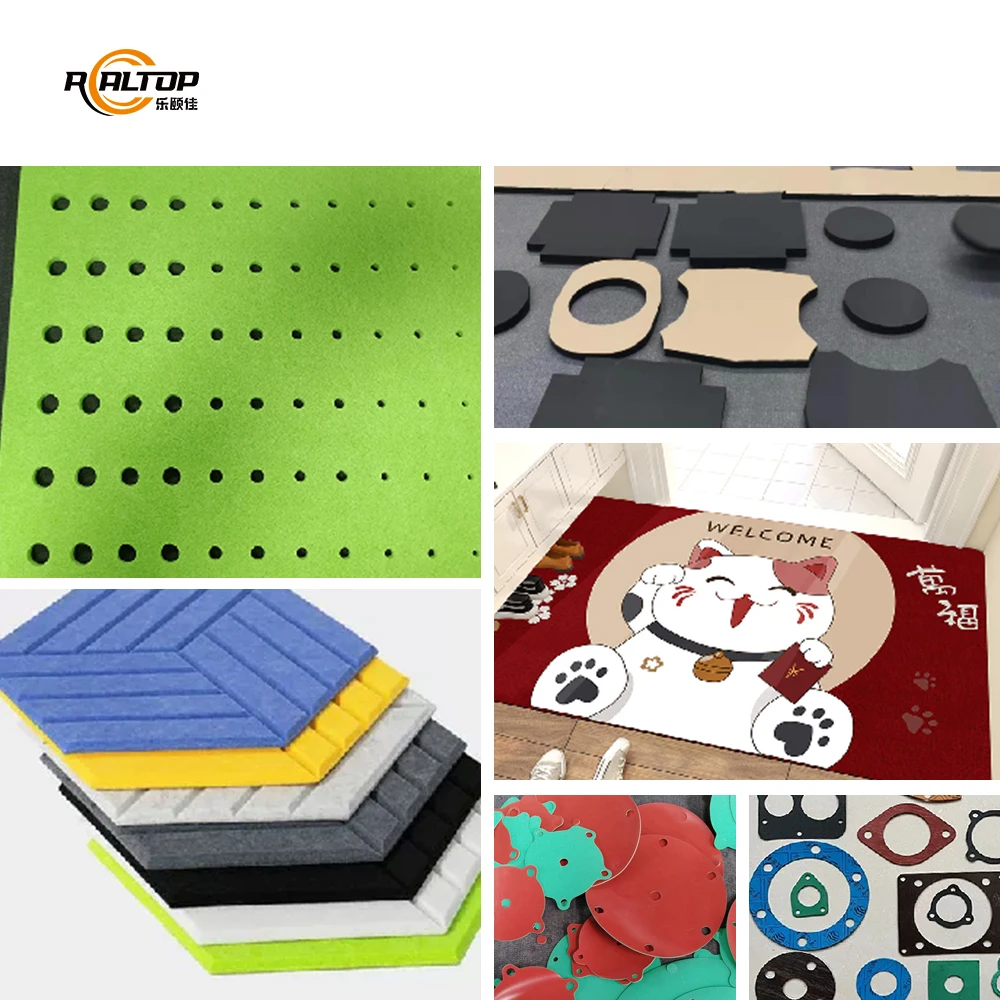
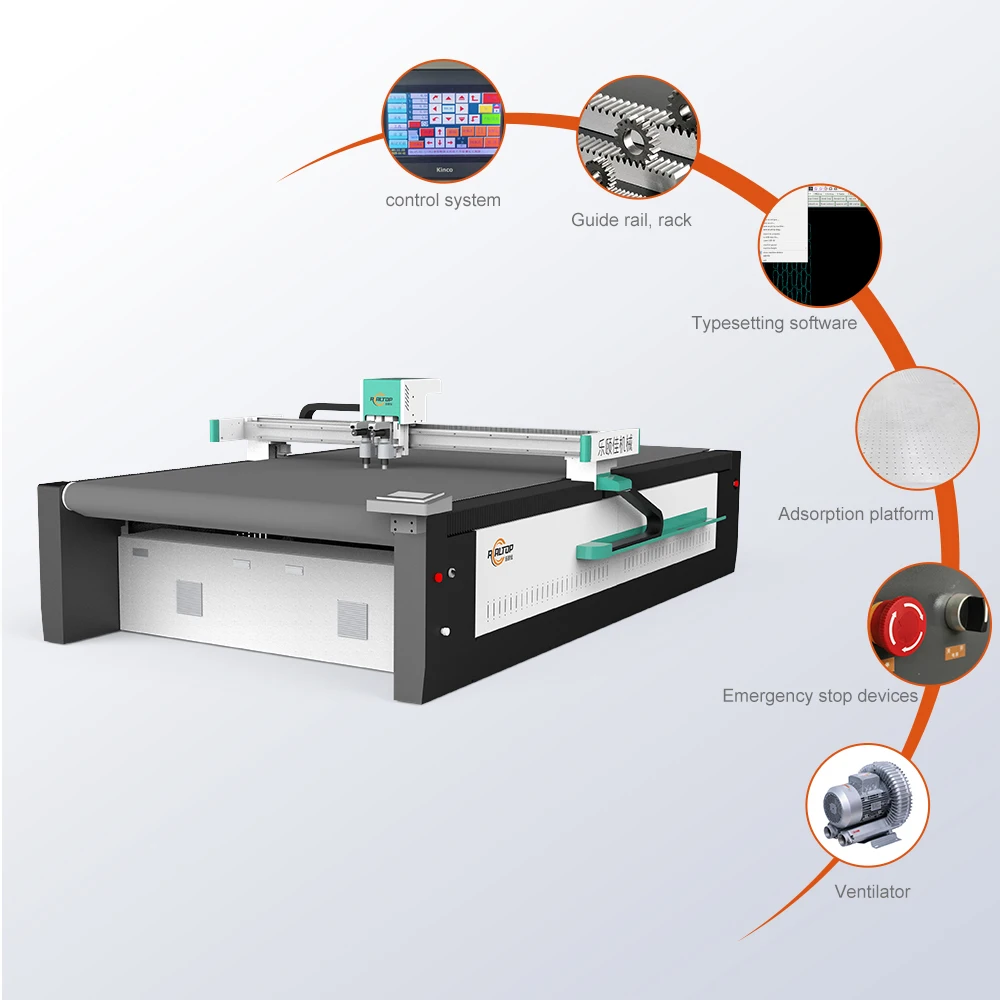
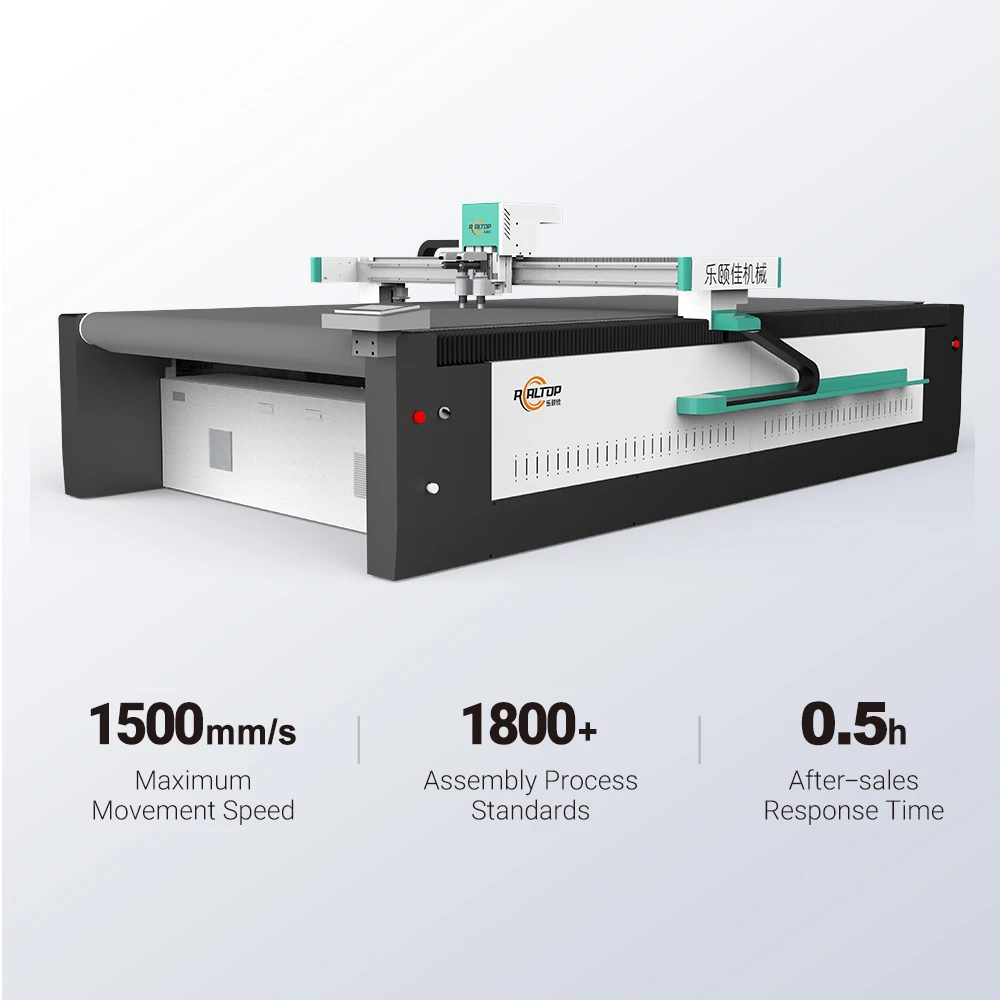
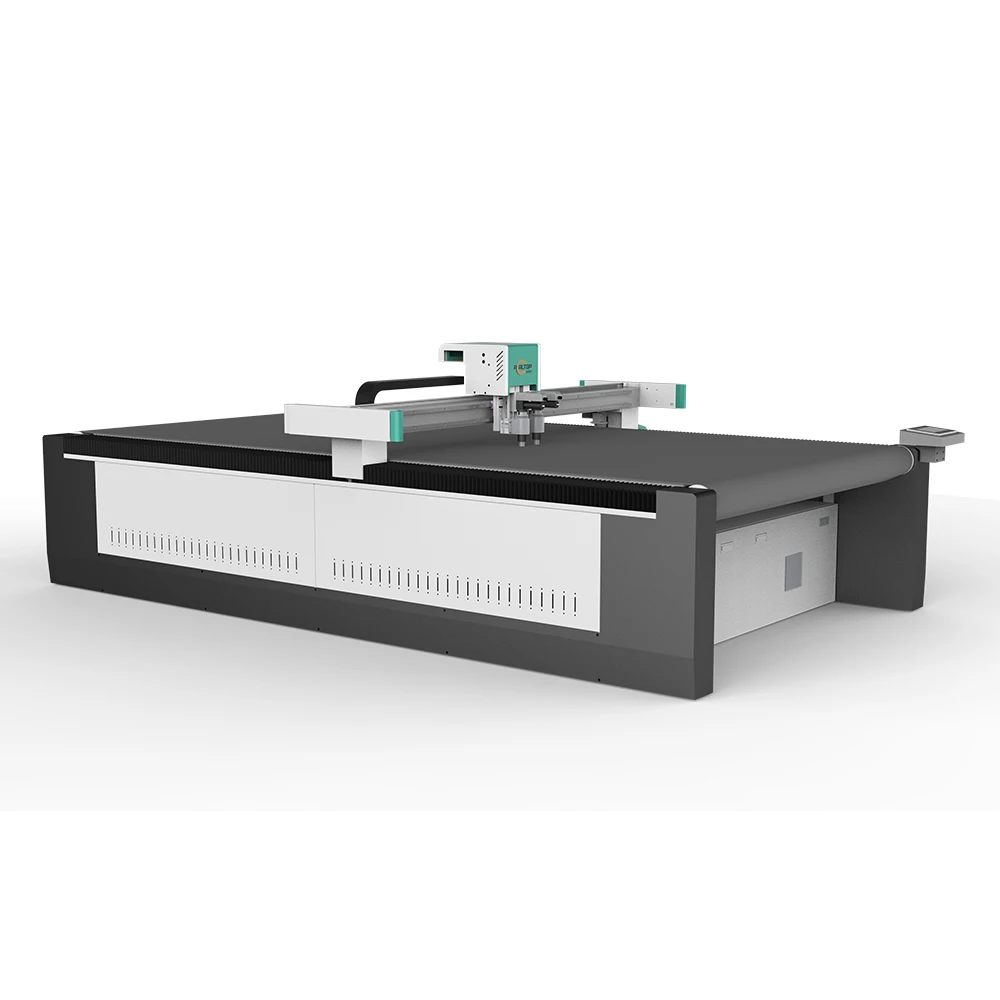
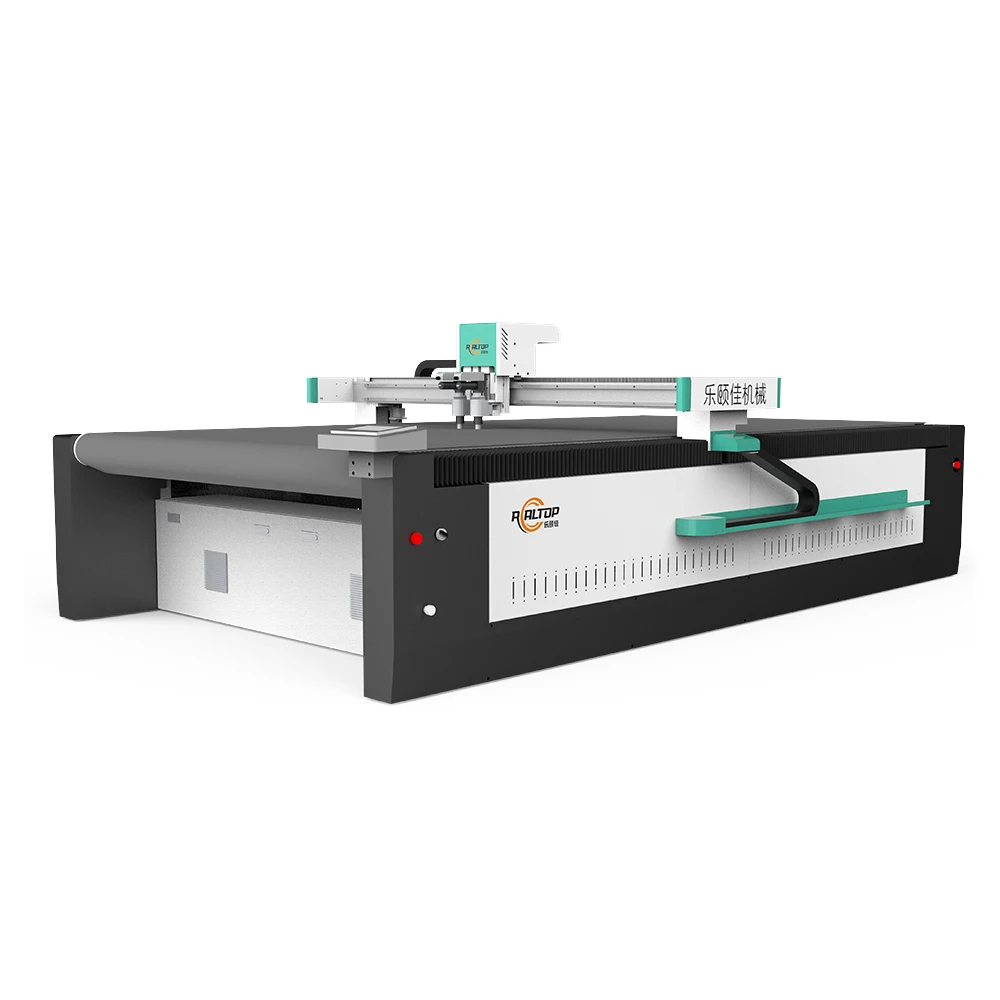

Tool head matched to material density — We cut your actual graphite-filled PTFE on our floor before the machine ships, not a generic PTFE sample that hides the real cutting force required.
Technical Specifications
| Parameter | Value |
|---|---|
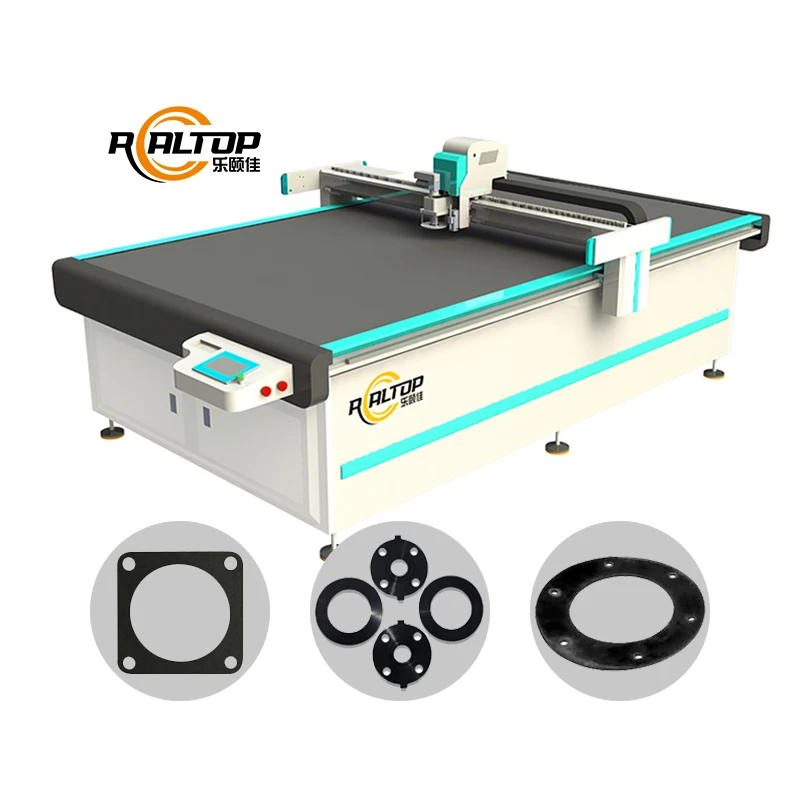
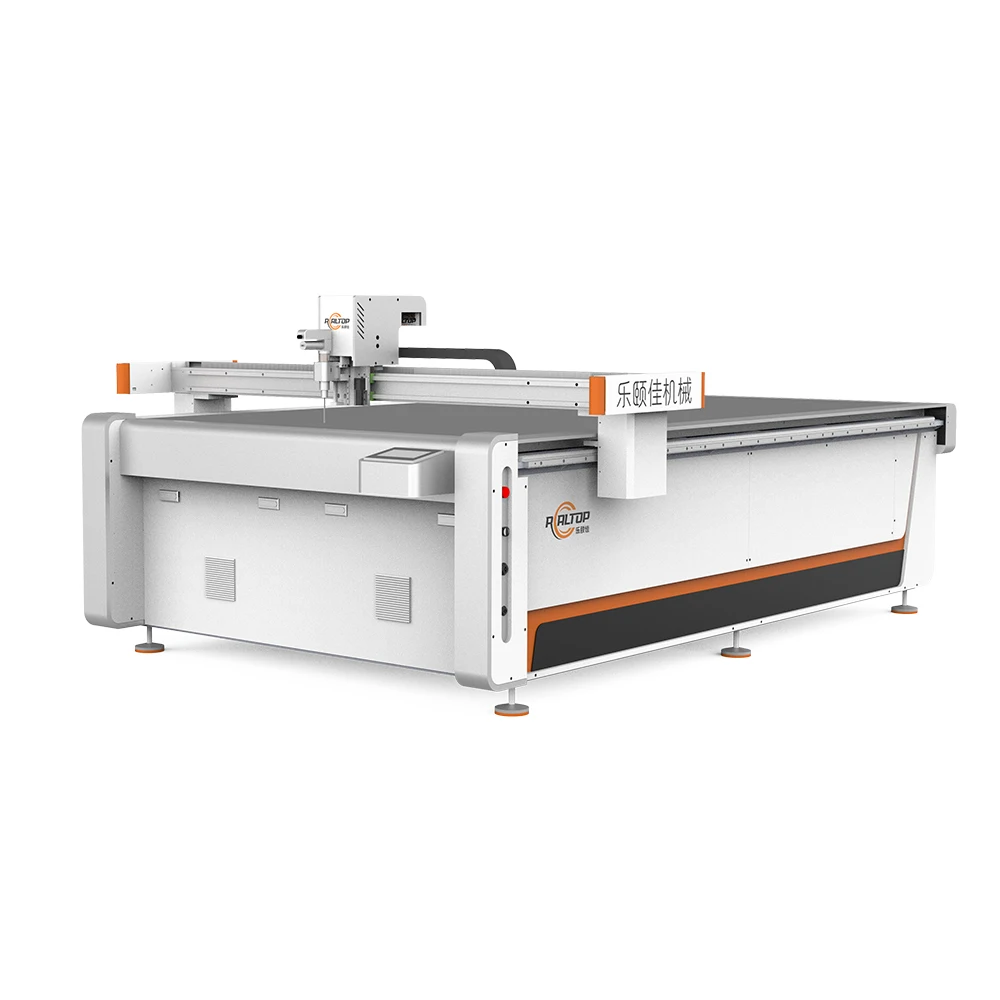
| Product Type | CNC Oscillating Knife Gasket Cutting Machine |
| Working Area | 1600 × 2500 mm |
| Cutting Speed | 0 – 2000 mm/s |
| Maximum Cutting Thickness | ≤ 30 mm |
| Cutting Accuracy | ±0.1 mm |
| Tool Head Options | Oscillating knife, driven rotary knife, creasing wheel, kiss cutting tool, pneumatic knife, milling tool, V groove knife |
| Vacuum Pump Power | 9 kW |
| Vacuum Table | Aluminum bellows vacuum table |
| Control System | PLC control panel with intuitive interface |
| Servo Motor Options | Panasonic, Delta, Dorna (source value — verify against manufacturer catalog) |
| File Formats Supported | PLT, DXF, AI, PDF |
| Voltage Options | 110 V / 220 V / 380 V |
| Safety Devices | Infrared sensor and emergency stop |
| Machine Dimensions | 3300 × 2100 × 1350 mm |
| Language Options | English, Russian, Italian, Chinese (customizable) |
| Certification | CE |
Application Suitability
| Application | Material or Output |
|---|---|
| Automotive sealing components | PTFE, graphite-filled PTFE, rubber, cork composites |
| Aerospace gasket fabrication | Carbon fiber prepreg, aramid honeycomb, thermal insulation foam |
| Industrial flange and valve seals | Non-asbestos fiber sheets, compressed fiber, PTFE envelopes |
| Rail and heavy machinery sealing | Damping pads, acoustic felt, rubber sealing strips |
| Wind power and energy insulation | Fiberglass cloth, battery insulation sheets, foam core materials |
Why Tool Pressure Matters More Than the Brochure Speed Claim
A gasket that is half-cut is a gasket that leaks — and the failure always shows up at the customer’s assembly line, not yours.
I used to buy gasket cutting lines for an automotive plant before switching to the supplier side. Spent years running machines at trade shows from Düsseldorf to Chicago. Once a customer tested pure PTFE samples perfectly, but their real production material was graphite-filled PTFE — way denser. The oscillating knife could not cut through, ruined an entire batch before we figured out the tooling pressure needed doubling. When evaluating a CNC Gasket Cutting Machine production line, the cutting speed figure on the spec sheet is irrelevant if the tool head cannot penetrate your specific material stack at that speed [NEED_CITE: oscillating knife force requirements for filled PTFE versus virgin PTFE]. Most gasket producers discover this gap only after the machine is on their floor and the first production run shows compression marks where the knife failed to travel through the full thickness.
Material Density Dictates the Entire Cutting Strategy
The CNC Gasket Cutting Machine production line you configure for virgin PTFE will fail on graphite-filled or carbon-filled variants because the filler increases material density and abrasive wear on the blade edge simultaneously. An oscillating knife that slices cleanly through 2 mm pure PTFE at full travel speed may need reduced speed, increased oscillation frequency, and a carbide-tipped blade to achieve the same edge quality on a filled compound. This is not a software adjustment — it changes the physical tool head selection and the vacuum hold-down pressure required to keep the sheet flat during the cut.
Vacuum Zoning and Small Gasket Geometry
Gasket production frequently involves small O-rings, narrow flange seals, and intricate bolt-hole patterns that leave large portions of the material sheet unsupported once the first cuts release internal tension. The aluminum bellows vacuum table on this system provides continuous adsorption across the working surface, but the zoning configuration must match your typical part nesting layout. A production run of 40 mm diameter flange gaskets behaves very differently from a run of full-face gaskets spanning 500 mm, and the vacuum zones need to hold the skeleton in place even after the finished parts are removed [NEED_CITE: vacuum hold-down requirements for nested gasket cutting on composite materials].
Reading the Spec Sheet Against Your Actual Production Reality
The ±0.1 mm cutting accuracy figure is measured under controlled conditions on standard reference materials. In your production environment, the achievable tolerance depends on material compressibility, blade condition, and how aggressively the vacuum table holds the sheet. A 3 mm compressed fiber gasket sheet will hold tolerance differently than a 10 mm foam insulation panel. The 9 kW vacuum pump delivers sufficient suction for most gasket materials in the ≤ 30 mm thickness range, but high-density filled PTFE and thick rubber compounds demand the full pump capacity and leave less margin for air leakage at the table seals. Servo motor selection — available with Panasonic, Delta, or Dorna units — affects long-term positioning repeatability as the machine accumulates operating hours in a production environment. The PLC control panel supports PLT, DXF, AI, and PDF file imports, which covers most gasket design workflows, but confirming file compatibility with your existing nesting software before the order prevents costly workflow interruptions after delivery.
The Hidden Cost of Skipping the Material Sample Test
I have watched buyers specify a machine based on working area alone, then discover their material thickness sits right at the upper limit where the knife deflection becomes visible on the cut edge. Ragged edges on a gasket mean the part fails its pressure test. Crushed foam insulation means the thermal rating drops. The wrong tool head chosen for your material produces these defects consistently, and the fix is not a parameter tweak — it is a physical tool head swap that delays production while the replacement ships. Voltage and plug configuration discovered after the machine arrives is another avoidable disruption; a 380 V machine wired for a 220 V facility sits idle until a transformer is sourced and installed [NEED_CITE: industrial voltage mismatch consequences in export equipment installations]. These are not theoretical risks — they are the most common reasons a gasket cutting line fails to reach planned throughput in its first month on the floor.
What We Build Into the Process Before Your Machine Ships
In-house design covering both knife and laser cutting means we match the cutting method to your gasket material rather than forcing your production into one technology. Tool head and table configuration are specified per your material type, thickness, and daily volume — not pulled from a default catalog page. CCD camera positioning is available for printed contour work if your gaskets require alignment to pre-printed registration marks. Software compatibility is confirmed with your file formats before the order is finalized, so your nesting workflow runs from day one. Voltage, control language, and plug type are documented and verified against your facility specification before the machine leaves our floor. Sample cutting on your actual gasket material — including the graphite-filled PTFE, not just the easy pure PTFE — is completed and the cutting report is sent to you before commitment.
Documentation & Verification
- Machine specification sheet listing confirmed tool heads for your gasket material range
- Electrical schematic with voltage and frequency matched to your facility supply
- Sample cutting report generated on your actual graphite-filled PTFE and rubber compounds
- Tool head and vacuum table configuration list tied to your material thickness and part geometry
- Software license and file format compatibility note for your nesting workflow
- Factory test record showing cutting accuracy measured on your material before crating
Installation, Commissioning & Support
- Machine footprint of 3300 × 2100 mm requires level concrete floor with clearance for material loading on the 1600 × 2500 mm table
- 9 kW vacuum pump plus servo drives require dedicated electrical circuit at confirmed 110 V, 220 V, or 380 V supply
- PLC control panel configured in English, Russian, Italian, or Chinese before dispatch to match operator language
- First-run commissioning includes tool pressure calibration on your specific gasket material stock
- Oscillating knife blades and vacuum table seals covered in the spare parts list for routine maintenance intervals
What to Include in Your Inquiry
Send us your gasket material data sheets — including the filled compounds, not just the base polymers — along with typical sheet thickness and the smallest part dimension in your current production mix. We also need your facility voltage and frequency, preferred control language, and whether your design team works in DXF, PLT, or another format so we can verify the nesting software workflow before quoting the line.
Frequently Asked Questions
Q: How do I verify the machine will cut my graphite-filled PTFE cleanly at production speed?
A: We run a sample cutting test using your actual material — not a generic PTFE sheet — and document the tool head type, oscillation frequency, cutting speed, and edge quality achieved. The sample cutting report is sent to you before you commit to the order, so you see the real result on your real material.
Q: Which tool head works best for a mix of rubber, cork, and compressed fiber gaskets?
A: Oscillating knife handles most rubber and cork compounds, while compressed fiber often benefits from a pneumatic knife or driven rotary knife depending on thickness. We specify the tool head configuration based on your material data sheets and confirm the selection during the sample cutting phase.
Q: Will small O-ring gaskets lift off the table during cutting?
A: The aluminum bellows vacuum table provides full-surface adsorption, but small parts in a nested layout require correct zone configuration. We review your typical nesting pattern during the specification phase and configure vacuum zoning to hold the skeleton and finished parts securely through the entire cutting cycle.
Q: My facility runs 220 V at 60 Hz — can the machine be configured for that?
A: The system is available in 110 V, 220 V, and 380 V configurations. We confirm your exact voltage, frequency, and plug type before production and document the electrical specification in the schematic so your electrician can prepare the dedicated circuit before the machine arrives.
Q: Can I import gasket designs directly from my existing CAD nesting software?
A: The control system supports PLT, DXF, AI, and PDF file formats. We verify compatibility with your specific nesting software during the specification phase and include a file format compatibility note in the documentation package so your workflow is uninterrupted from the first production day.




商品评价
Clear filtersThere are no reviews yet.