


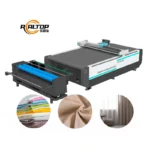
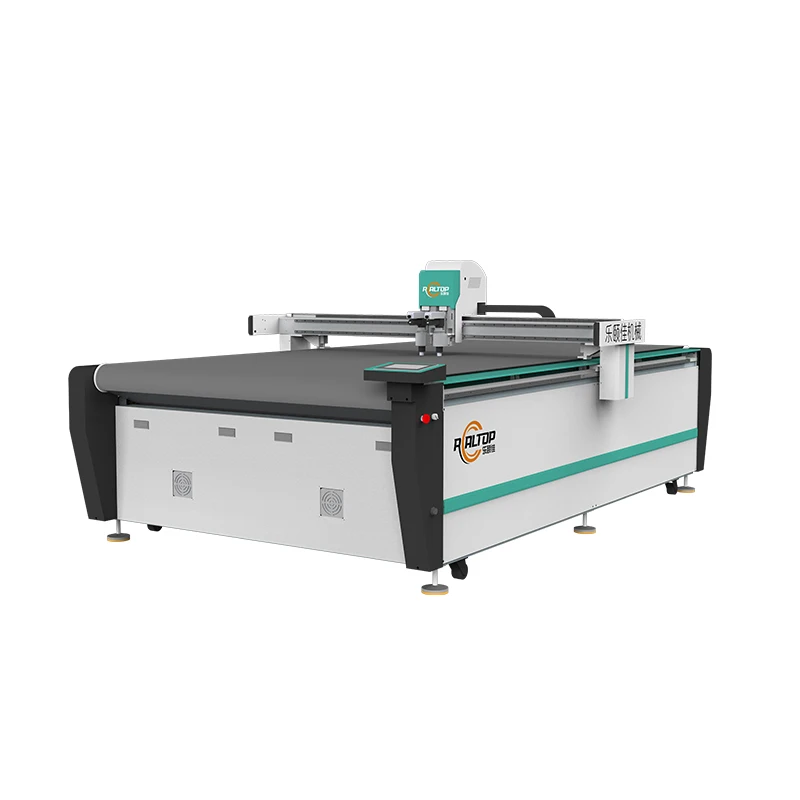
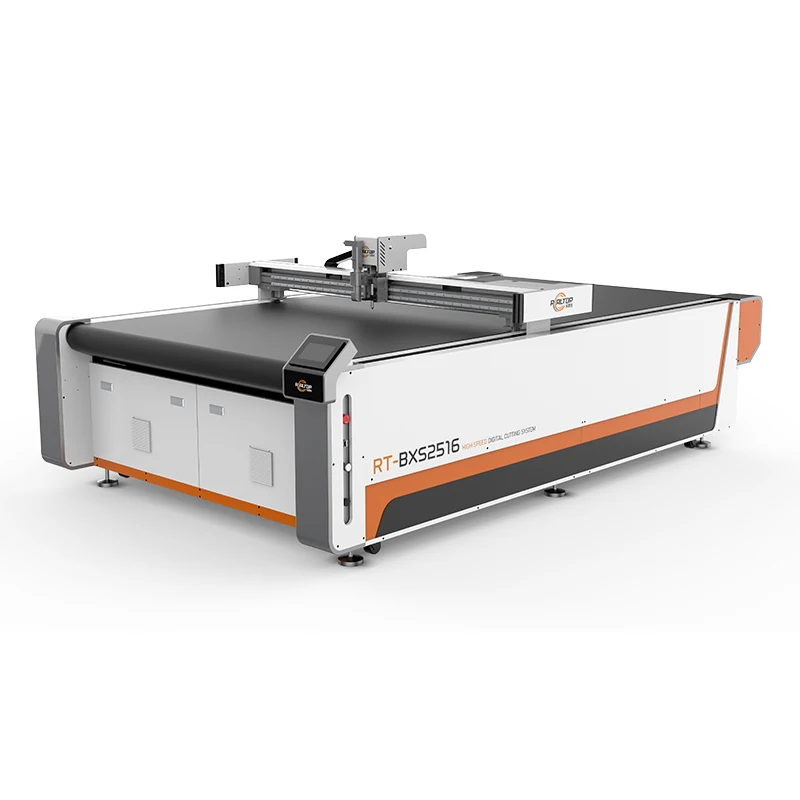
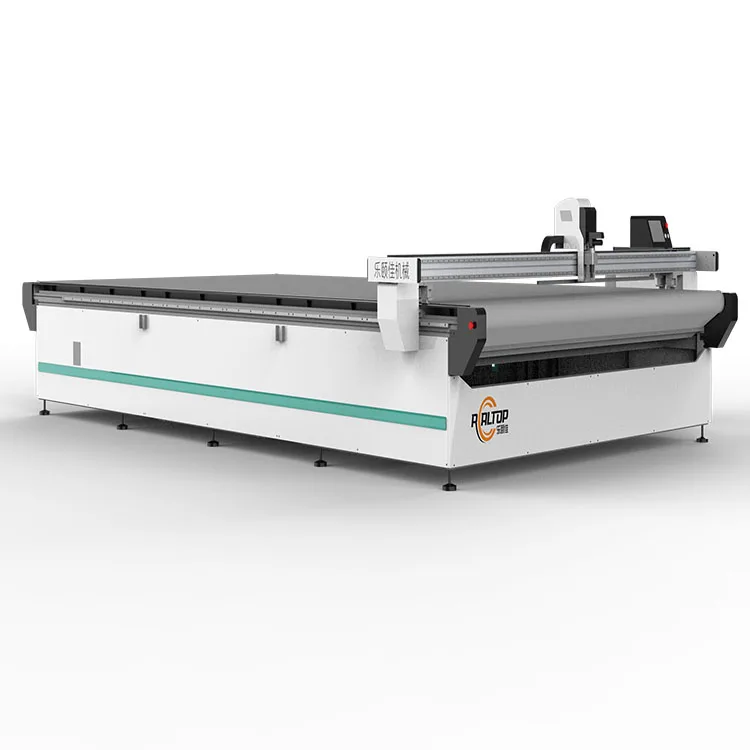
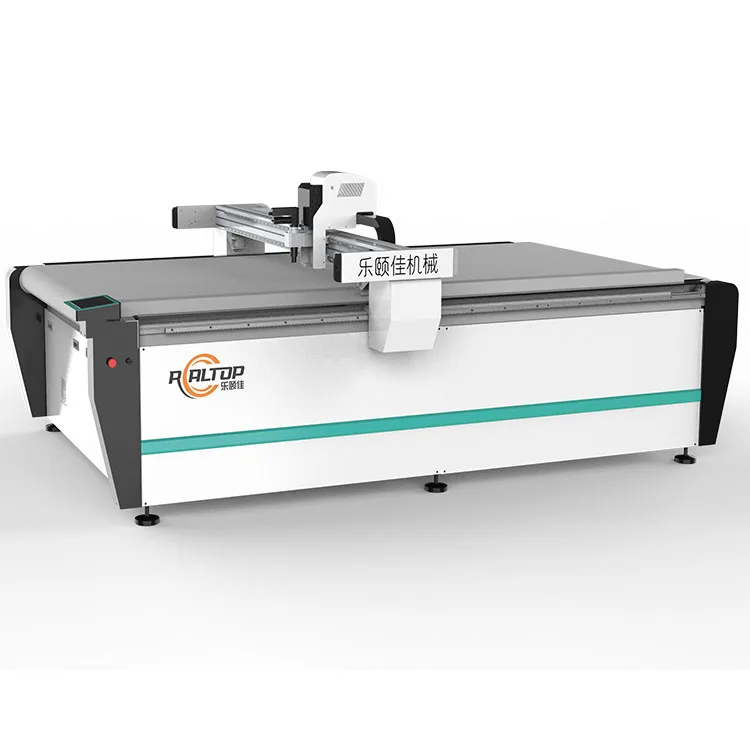
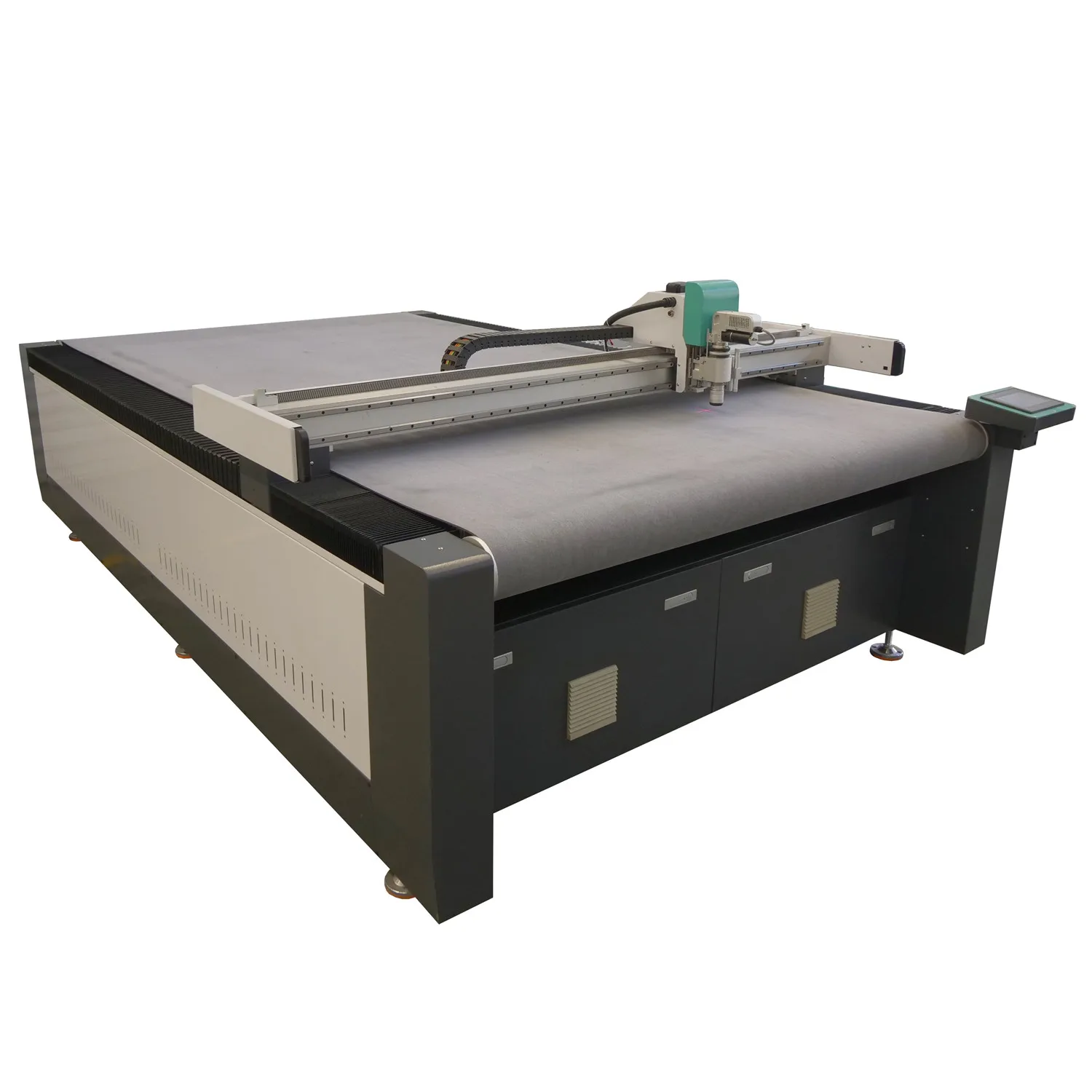
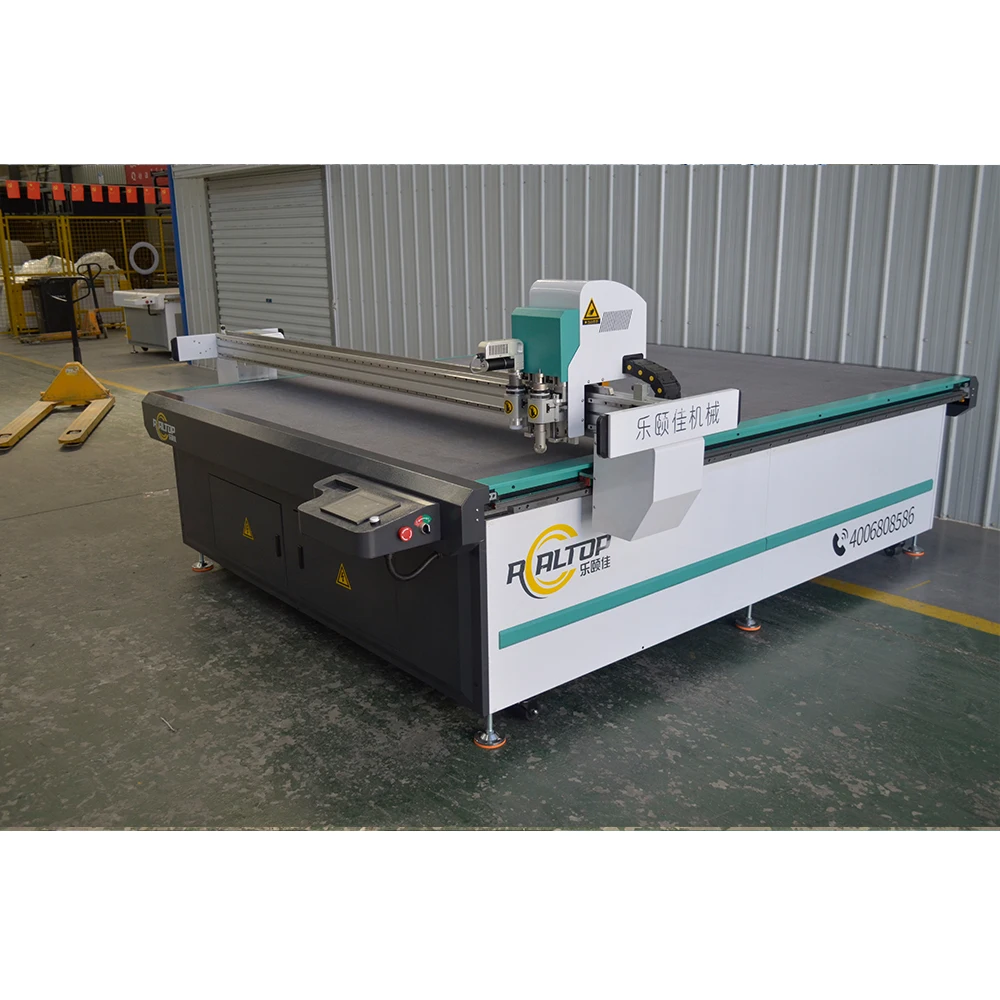

Workflow-Matched Configuration — every tool head, vacuum zone and software output verified against your actual fabric roll width and nesting files before the machine ships.
Technical Specifications
| Parameter | Value |
|---|---|
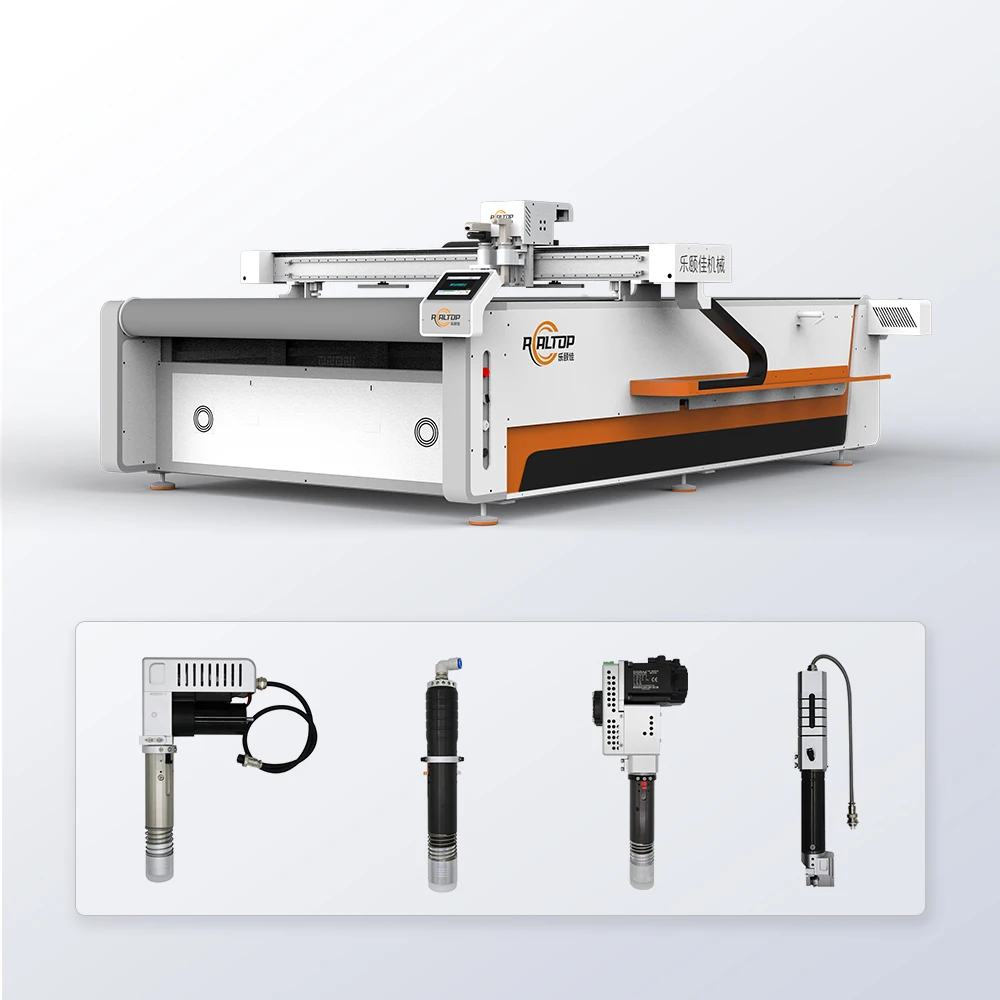
| Product Type | CNC Oscillating Knife Cutting Machine |
| Model | RT-D2516/RT-S2516 |
| Working Area | 1600 × 2500 mm |
| Overall Dimensions (L × W × H) | 3450 × 2300 × 1250 mm |
| Rated Power | 9 kW |
| Voltage | 380V ± 10% |
| Table Type | Flat working table with conveyor |
| Multifunctional Head | Swiss imported knife (vibration full cutting, vibration half cutting, cursor location) |
| Safety Device | Infrared sensors |
| Translational Velocity | 800 – 2000 mm/s |
| Cutting Speed | 200 – 800 mm/s (basis to be confirmed by material and ply count) |
| Repeated Accuracy | ≤ 0.1 mm |
| Transmission System | Digital servo motor, linear guide, synchronous belt, ball screw |
| Servo Motor Brand | Delta (Panasonic optional) |
| Rail | Taiwan Hiwin |
| Instruction System | HP-GL compatible format |
| Vacuum Pump | 7.5 kW |
| Vacuum Table | Magnesium-aluminum alloy with fluorocarbon PVDF powder spraying |
| Conveyor Belt | Germany imported |
| Language Options | English, Russian, Italian, Chinese (customizable) |
| Assembly State | Fully assembled |
Application Suitability
| Application | Material or Output |
|---|---|
| Garment panel cutting | Multi-layer woven and knitted fabric, non-woven textile |
| Automotive interior trimming | Non-woven fabric, sponge composite leather, PU sheets |
| Soft home furnishing production | Carpets, floor mats, upholstery foam and textile |
| Footwear component cutting | Leather, synthetic leather, EVA and sponge composites |
| Outdoor and sports goods | XPE, PE, PP composite panels and coated fabrics |
Why File Format Compatibility Decides the Real Cloth CNC Cutting Machine Production Line Throughput
The nesting software must accept your existing pattern files before the machine earns its place on the floor.
I have watched factories spend weeks converting DXF outputs into a format their cutting table could read, burning more operator hours on file wrangling than on actual cutting. A cloth CNC cutting machine production line only delivers throughput when the HP-GL instruction system speaks the same language as your CAD and nesting software. If your pattern department works in a specific nesting suite, confirming import compatibility at the inquiry stage avoids a silent bottleneck that no spec sheet will ever disclose [NEED_CITE: common CAD and nesting file format standards in garment and textile manufacturing].
Conveyor-Fed Workflow for Continuous Fabric Runs
The Germany-imported conveyor belt pairs with the 1600 × 2500 mm working area to accept standard fabric roll widths and advance them through successive nesting layouts without manual repositioning. Operators load the leading edge once, and the system feeds material through the cutting zone in a continuous sequence suited to high-volume garment and non-woven production.
Vacuum Zoning That Actually Holds Small Garment Pieces
The 7.5 kW vacuum pump pulls through a magnesium-aluminum alloy table finished with PVDF powder spraying. For small pattern pieces such as collars, cuffs and pocket flaps, selective vacuum zoning keeps the fabric pinned during the oscillating knife stroke, preventing the lift that otherwise produces ragged edges and forces a re-cut. This cloth CNC cutting machine production line approach reduces scrap at the panel level where yield matters most [NEED_CITE: vacuum table zoning practices for small-part fabric cutting].
Reading the Specs That Shape Daily Output
The Delta digital servo motor (Panasonic optional) drives the cutting head at translational velocities between 800 and 2000 mm/s, yet the usable cutting speed drops to 200 – 800 mm/s once blade engagement and ply height enter the equation. Repeated accuracy of ≤ 0.1 mm keeps contour edges within pattern tolerance across multi-layer stacks, so downstream sewing lines receive consistent pieces without re-trimming. Taiwan Hiwin linear rails maintain that tolerance over long production runs by resisting deflection under the lateral load of dense composite materials. The Swiss imported oscillating knife handles full-depth and half-depth strokes, letting a single head switch between clean ply separation and kiss-cut scoring without a tool change. HP-GL compatibility means the instruction system integrates with the nesting software already licensed on your network, avoiding a second software purchase.
What Happens When the Tool Head Does Not Match the Fabric
Choosing a drag knife where an oscillating knife is needed leaves compressed foam layers with crushed edges that fail downstream lamination. On multi-ply non-woven stacks, a blade angle that is too steep pulls the top ply sideways while the bottom ply stays put, producing a staircase effect across the cut face. I have seen entire batches of automotive headliner panels scrapped because the wrong tool head was specified from a generic catalogue rather than tested on the buyer’s actual roll goods [NEED_CITE: material-specific tool head selection for oscillating knife cutting].
What This Purchase Actually Includes
In-house design covers both knife and laser cutting, so the recommendation starts from your material rather than from a single machine family. Tool head and vacuum table configuration are specified per fabric type and daily volume, not quoted from a default sheet. Sample cutting on your own roll goods provides a physical report before commitment. Voltage, control language and software licence details are confirmed in writing before the build slot is reserved. Every machine ships with a factory test record run on a material sample that matches your order specification.
Documentation & Verification
- Machine specification sheet listing the exact tool head and vacuum zone map for your fabric type
- Electrical schematic confirming 380V ± 10% wiring and servo motor brand selection
- Sample cutting report produced on your own non-woven or woven roll goods
- Software licence and HP-GL file format compatibility note signed before production
- Factory test record and packing photographs taken before the crate closes
Installation, Commissioning & Support
- Floor space planning around the 3450 × 2300 mm footprint with conveyor infeed clearance
- Dedicated 380V circuit sized for 9 kW rated power plus 7.5 kW vacuum pump start-up load
- Fully assembled delivery; positioning and leveling only, no field frame assembly required
- First-run parameter tuning on your fabric roll to establish cutting speed and vacuum zone settings
- Operator training covering tool head changeover, nesting import and daily blade inspection
- Spare blade and conveyor belt wear-part list matched to your weekly production hours
Preparing Your Inquiry
Send the fabric type, ply count and roll width you run most often, along with your daily panel volume target and the nesting software brand already on your network. If your workshop voltage or frequency differs from 380V / 50 Hz, state the local supply so the electrical package is built accordingly.
Frequently Asked Questions
Q: How does the nesting software integrate with our existing CAD pattern workflow?
A: The HP-GL compatible instruction system accepts output from most mainstream nesting suites. Before the order is finalised, we request a sample nesting file from your CAD department and run it through the machine controller to confirm import, tool path generation and cut sequence without manual conversion.
Q: What daily throughput can we expect on multi-layer fabric at our standard panel size?
A: Throughput depends on ply count, fabric density and the nesting layout you provide. Cutting speed ranges between 200 and 800 mm/s depending on material resistance, so we ask for your typical panel drawing and ply height to calculate a realistic cycle time on your own goods.
Q: How is vacuum table zoning configured for small garment pieces to prevent material lift?
A: The flat working table divides into selectable vacuum zones controlled independently. For small pieces like collars or cuffs, only the active zone under the cutting head is opened, concentrating the 7.5 kW pump suction on the area that matters and keeping fabric pinned during the knife stroke.
Q: What file formats and nesting outputs does the system accept?
A: The controller reads HP-GL compatible formats generated by most nesting and CAD platforms. If your workflow uses a proprietary output, send a sample file at the inquiry stage so compatibility is verified on the actual machine controller before production begins.



商品评价
Clear filtersThere are no reviews yet.