




Custom Vacuum Zoning — we re-map the adsorption platform to match your specific part geometry so small fabric pieces stay flat under the knife.
Technical Specifications
| Parameter | Value |
|---|---|
| Model | RT-D2516/RT-S2516 |
| Product Type | CNC Fabric Slitting Cutter |
| Working Area | 1600 × 2500 mm |
| Machine Size | 3450 × 2300 × 1250 mm |
| Rated Power | 9 kW |
| Vacuum Pump | 7.5 kW |
| Cutting Speed | 200–800 mm/s (basis not stated in source — confirm block format / material / thickness) |
| Cutting Thickness | ≤100 mm (varies with the material) (source value — verify against manufacturer catalog) |
| Repeated Accuracy | ≤0.1 mm |
| Translational Velocity | 800–2000 mm/s |
| Transmission System | Digital servo motor, linear guide, synchronous belt, ball screw |
| Servo Motor | Delta or Panasonic (optional) |
| Guide Rail | Taiwan Hiwin |
| Conveyor Belt | Germany imported |
| Control Panel | Touch screen, multiple languages |
| Software | Auto typesetting; supports PLT, DXF, AI formats |
| Voltage | 380V ± 10% |
| Safety Device | Infrared sensors |
| Fixed Model | Flat working table or auto feeding table |
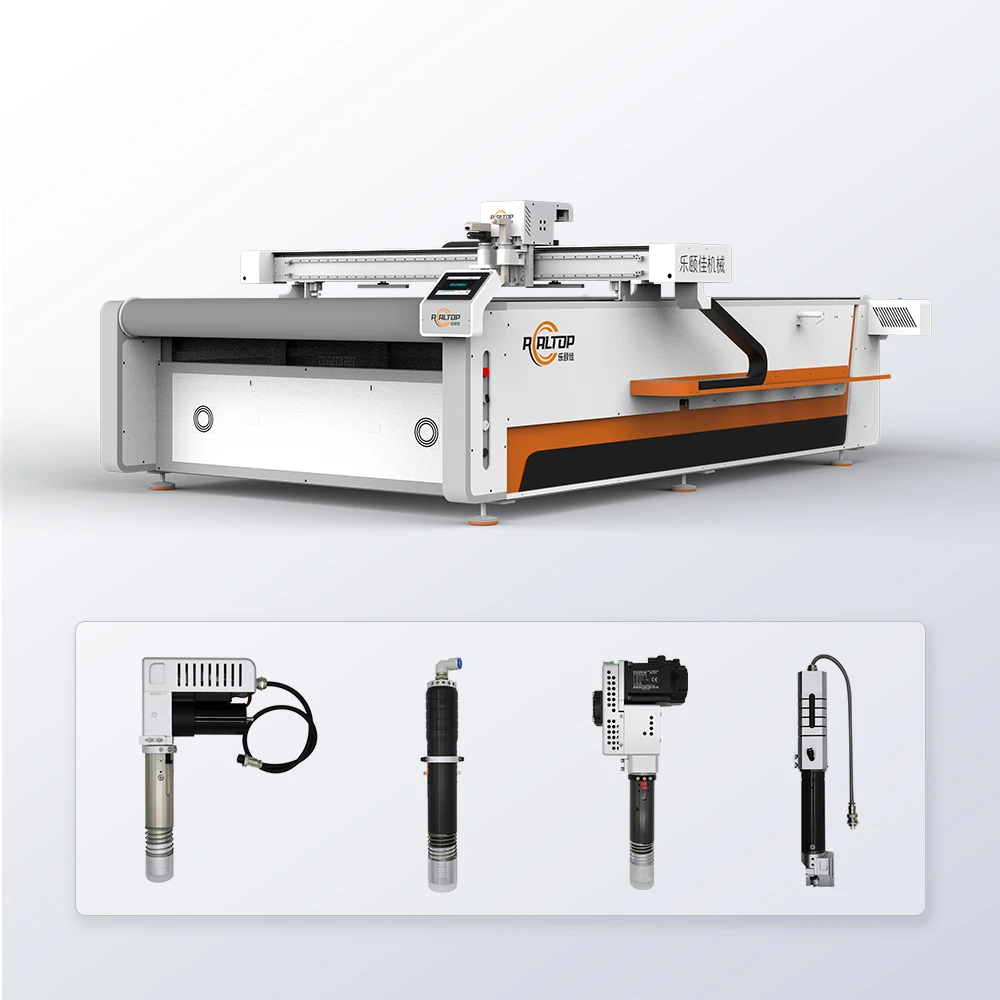
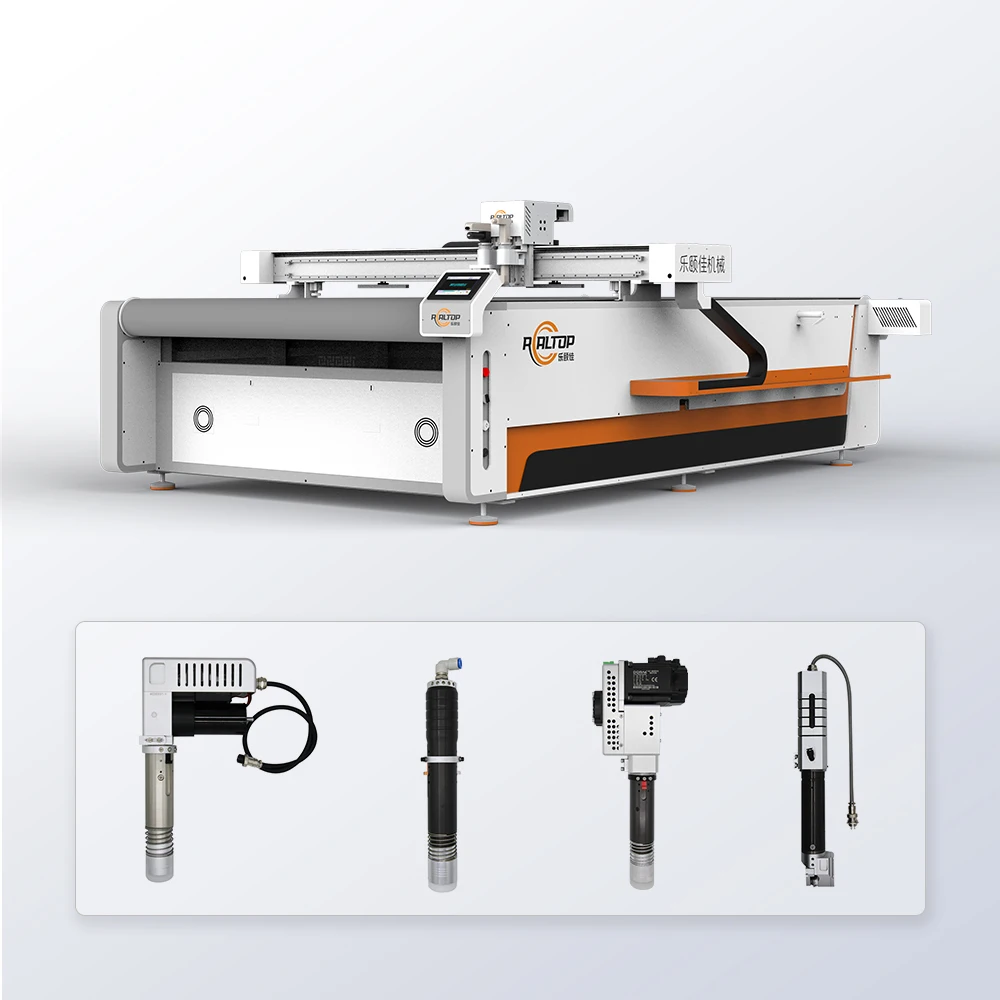
| Multifunctional Head | Swiss imported knife: vibration full cutting, half cutting, cursor location |
Application Suitability
| Application | Material or Output |
|---|---|
| Garment and footwear production | Multi-layer clothing cloth, shoe material, non-woven fabric |
| Automotive interior trim | Fabric, leather, sponge composite, EVA, XPE for seats and door panels |
| Soft home furnishings | Carpet, curtain textile, upholstery fabric, floor mats |
| Bags and luggage | Luggage material, PU, PVC, composite sheets |
| Graphic advertising and printing | Sticker, film, corrugated cardboard for printed contour cutting |
| Sealing and gasket fabrication | PTFE, ETFE, rubber, gasket material |
Why "Just Tell Me the Working Area" Is the Wrong Starting Point for a CNC Fabric Slitting Cutter Manufacturer
A cutting table specified only by its 1600 × 2500 mm footprint will disappoint you the moment small parts start lifting off the bed.
I spent years on the assembly floor in Jinan before moving into technical sales, and the most common failure pattern I see with fabric cutting machines is a buyer who focused entirely on working area dimensions while ignoring how the vacuum table actually holds the material. When an automotive interior plant ordered a cloth cutting system for small foot pad pieces, the vacuum adsorption zones were not segmented for those dimensions. The knife head pulled the fabric upward on every pass, and an entire batch of edge trim was scrapped before anyone diagnosed the problem. With a CNC fabric slitting cutter, the relationship between your part geometry and the vacuum zoning determines whether you get clean edges or a pile of wasted material [NEED_CITE: vacuum hold-down requirements for flexible material cutting].
How the Cutting Head Meets Different Fabric Behaviors
The Swiss imported knife assembly on this CNC fabric slitting cutter provides vibration full cutting, vibration half cutting, and cursor location in a single multifunctional head. Vibration full cutting handles dense composites like sponge-backed leather and thick EVA foam where a static drag knife would drag and distort the layers. Half cutting scores the surface for fold lines on packaging inserts or gasket outlines without penetrating through to the conveyor belt underneath.
The 800–2000 mm/s translational velocity means the head repositions quickly between cut paths, keeping cycle times reasonable even on nesting layouts with dozens of distinct part geometries. For garment manufacturers running multi-layer lays, the high-frequency oscillation prevents the blade from catching and pulling the top ply out of alignment with those beneath it.
Vacuum Platform Configuration That Actually Matches Your Parts
The aluminum air box platform on this machine supports both integrated box adsorption and split box zoning. Split box zoning is the detail that separates a working installation from a frustrating one. When the vacuum table is divided into independently controlled zones, the operator activates only the zones directly beneath the current cutting path. This concentrates suction on the area that matters, holding small pattern pieces — collar panels, shoe uppers, gasket outlines — firmly in place even when surrounding material has already been cut away.
Without split zoning, vacuum pressure spreads across the entire 1600 × 2500 mm surface, and small parts near cut edges lose grip. I have reconfigured zone layouts on machines after installation because the original setup was optimized for large panels while the customer was actually producing dozens of small pieces per nest [NEED_CITE: best practices for vacuum zoning in textile cutting operations]. The Germany-imported conveyor belt on the auto feeding version works with the platform to advance roll goods through successive cutting zones without manual repositioning.
Reading the Specs That Matter Beyond the Brochure Numbers
The ≤0.1 mm repeated accuracy figure reflects the combined contribution of Taiwan Hiwin guide rails, ball screw drive, and a Delta or Panasonic digital servo motor. In practice, this tolerance means that when your nesting software places identical pattern pieces across the full working area, each one cuts to the same dimension regardless of where it sits on the table — critical for automotive seat covers where left and right panels must mirror precisely. The 9 kW rated power covers the spindle motor, vacuum pump draws a separate 7.5 kW, and the 380V ± 10% supply requirement means you need to confirm your facility voltage before the machine ships. The touch screen control panel supports English, Russian, Italian, Chinese, and can be configured for additional languages, which matters on production floors where operators work in a language different from the purchasing department.
What Happens When the Tool Head Does Not Match the Material
Choosing the wrong cutting method for your fabric type shows up immediately as ragged edges, frayed layers, or crushed foam cores. A static drag knife on multi-layer woven fabric pulls threads and leaves tails that require secondary trimming. Attempting to cut sponge composite leather without oscillation compresses the foam rather than slicing through it, producing beveled edges that do not match the pattern dimensions. These are not adjustments the operator can fix at the control panel — they are specification errors that require a different tool head altogether, which means production downtime while waiting for the correct component [NEED_CITE: tool head selection criteria for flexible materials].
What This Purchase Actually Includes Beyond the Machine
In-house design and production across both knife and laser technologies means the cutting method is matched to your fabric type rather than forced into whatever the supplier happens to build. Every tool head and table configuration is specified against your actual material thickness and daily production volume before the order is finalized. CCD camera positioning and panoramic recognition are confirmed as functional on your printed material before shipment. Software compatibility with your existing PLT, DXF, or AI workflow files is verified during the quotation stage, not discovered to be incompatible after installation. Sample cutting on your own fabric stock runs before you commit, so edge quality and cutting behavior are demonstrated on the material you will actually process [NEED_CITE: sample testing protocols in CNC cutting equipment procurement].
Documentation & Verification
- Machine specification sheet listing confirmed tool head and vacuum zone configuration for your material
- Electrical schematic with 380V circuit layout and dedicated breaker sizing requirements
- Sample cutting report on your fabric showing edge quality at specified cutting speed
- Factory test record documenting repeated accuracy across the full 1600 × 2500 mm working area
- Software licence and file format compatibility note for PLT, DXF, and AI imports
- Packing photographs showing crate bracing and component securing before container loading
Installation, Commissioning & Support
- 3450 × 2300 × 1250 mm machine footprint requires level concrete floor with anchor bolt provisions
- 9 kW cutting system plus 7.5 kW vacuum pump need separate dedicated circuits at 380V ± 10%
- Auto feeding table variant arrives with conveyor belt pre-tensioned; alignment verified during commissioning
- Touch screen control panel language set to operator preference during first power-on session
- Swiss imported knife head oscillation frequency calibrated to your specific fabric thickness range
- Hiwin guide rail lubrication schedule and ball screw inspection intervals documented in maintenance manual
What to Prepare Before Requesting a Quotation
Send your fabric type, layer count per cut, and the maximum single-piece dimensions you plan to nest. Specify whether your production flow requires the flat working table for sheet-fed operation or the auto feeding table for roll-to-roll processing. Confirm your facility voltage and frequency, the control language your operators need, and which file formats your current nesting software exports.
Frequently Asked Questions
Q: What fabric thickness can the machine cut and what cutting speed applies to different materials?
A: The cutting thickness capacity is up to 100 mm, though this varies with material density and composition — a dense rubber gasket and a multi-layer fabric lay behave very differently under the knife. Cutting speed ranges from 200 to 800 mm/s depending on the material being processed. We confirm both values against your actual sample material before finalizing the configuration.
Q: How does CCD camera positioning work for printed fabric contour cutting?
A: The CCD camera reads printed registration marks on your fabric and adjusts the cutting path to align with the actual printed position, compensating for any stretch or distortion introduced during printing or material handling. This is essential for graphic advertising applications where the cut must follow a printed outline precisely rather than relying on theoretical dimensions.
Q: What tool head options are available for different fabric types?
A: The multifunctional head includes vibration full cutting for dense composites, vibration half cutting for score lines, and cursor location for mark placement. The Swiss imported knife assembly handles the range from delicate woven textiles to thick sponge composite leather. Tool head selection is confirmed during sample cutting on your specific material.
Q: How is vacuum table zoning configured to prevent small parts from lifting?
A: The aluminum air box platform supports split box zoning, where the vacuum surface is divided into independently controlled sections. Only the zone beneath the current cutting area is activated, concentrating suction exactly where the knife is working. Zone layout is customized based on the typical part dimensions in your nesting patterns.
Q: What after-sales support and spare parts are provided for international customers?
A: Every machine ships with an operation and maintenance manual, a spare parts list, and software licence documentation. The control panel supports multiple languages including English, Russian, and Italian, with custom languages available. Servo motors are specified as Delta or Panasonic — brands with global service networks — and the guide rails and conveyor belt are sourced from established suppliers with readily available replacements.




商品评价
Clear filtersThere are no reviews yet.