




Material-Tested Configuration — every tool head, creasing wheel and vacuum zone layout is validated on the buyer’s actual board stock before the machine leaves the factory.
Technical Specifications
| Parameter | Value |
|---|---|
| Model | RT-D2516/RT-S2516 |
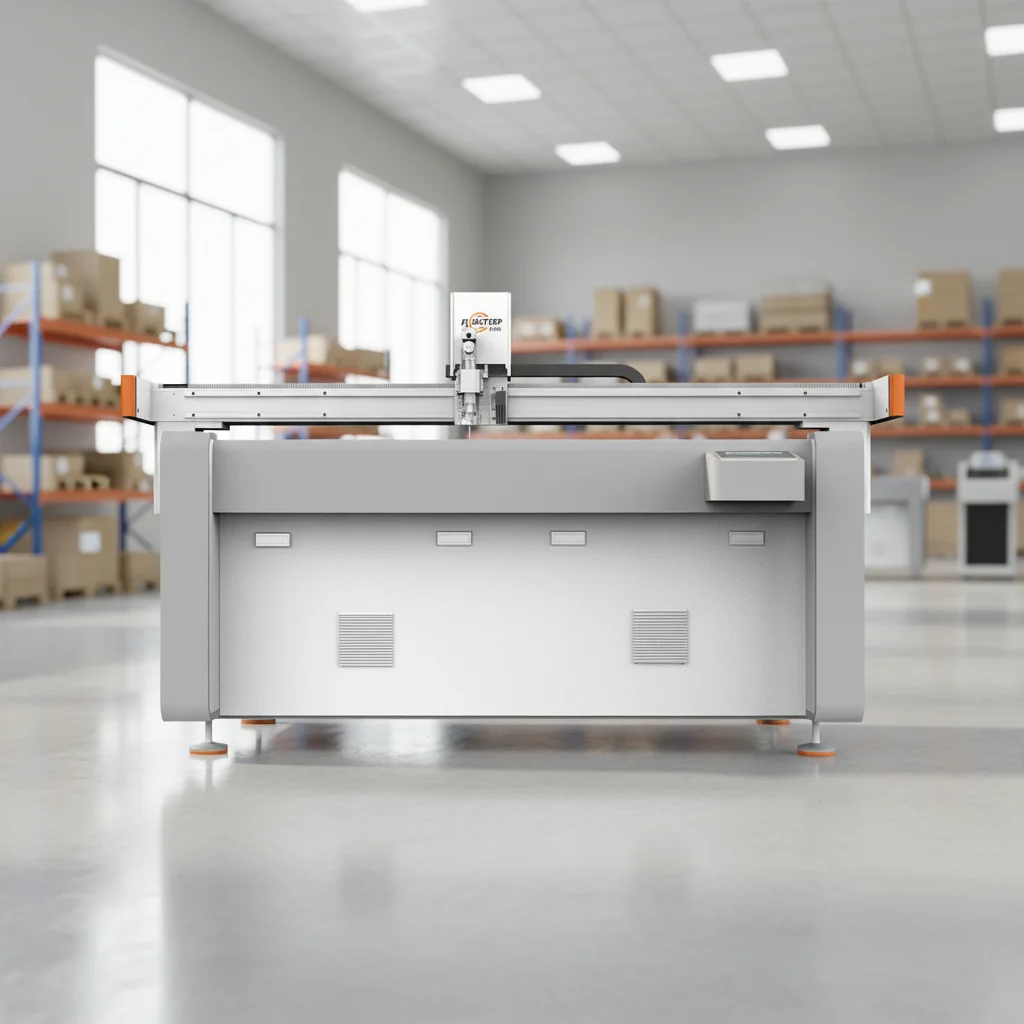
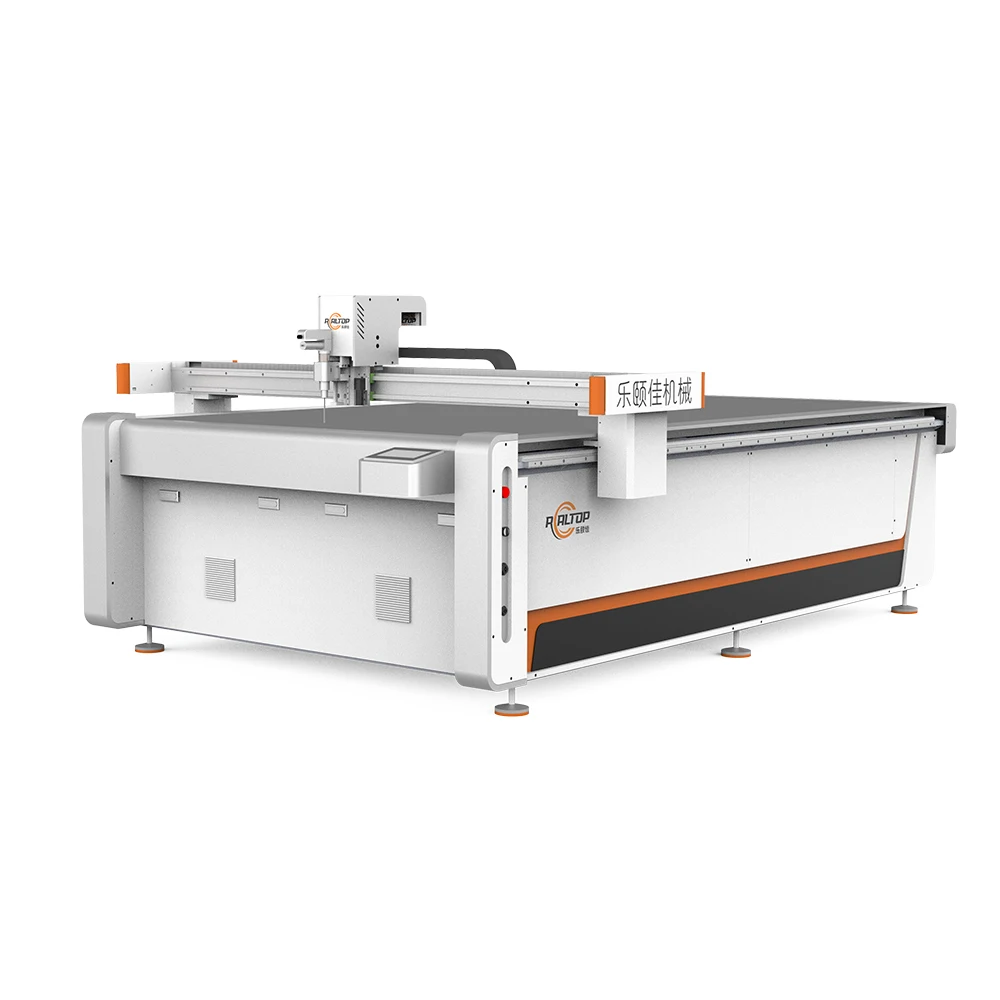
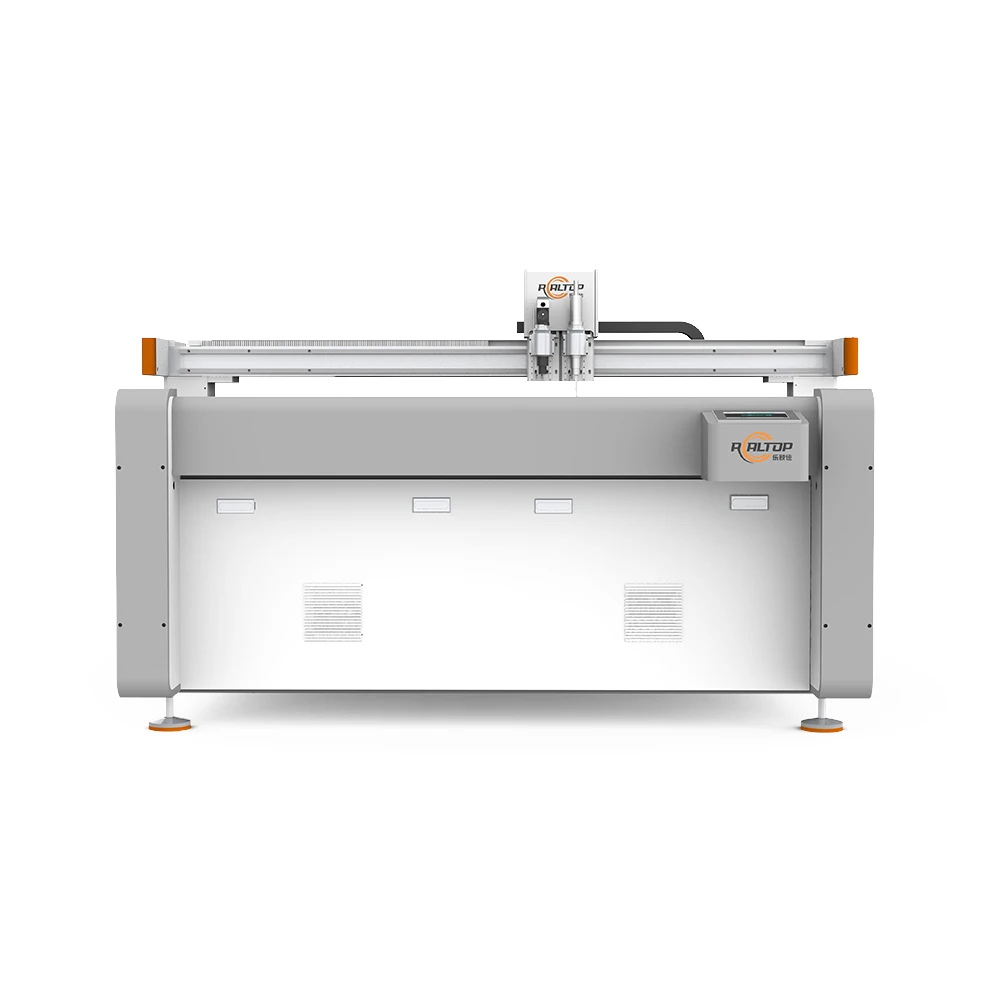
| Product Type | Digital Cutting and Creasing Machine |
| Working Area | 1600 × 2500 mm |
| Overall Dimensions (L × W × H) | 3450 × 2300 × 1250 mm |
| Rated Power | 9 kW |
| Voltage | 380V ±10% |
| Vacuum Pump | 7.5 kW |
| Table Type | Flat working table with auto feeding and conveyor belt |
| Multifunctional Tool Head | Swiss imported knife with vibration full cutting, half cutting and cursor location; additional creasing wheel and pneumatic tool (up to 70 mm) |
| Translational Velocity | 800 – 1200 mm/s |
| Cutting Speed | 200 – 800 mm/s (basis not stated in source — depends on board grade and flute profile) |
| Repeated Accuracy | ≤0.1 mm |
| Transmission System | Digital servo motor, linear guide, synchronous belt, ball screw |
| Servo Motor | Japanese Yaskawa |
| Linear Guide | Taiwan Hiwin rail |
| Conveyor Belt | Germany imported |
| Instruction System | HP-GL compatible format |
| Safety Device | Infrared sensors |
| Functions | Cutting, creasing, marking |
| Assembly State | Fully assembled |
Application Suitability
| Application | Material or Output |
|---|---|
| Folding carton and corrugated packaging sample making | Single-wall, double-wall corrugated board, E-flute and B-flute profiles |
| Grey board prototyping and short-run box production | Grey board and chipboard up to several millimetres thick |
| Sticker and label contour cutting | Self-adhesive vinyl, coated paper and label stock |
| Gift box and specialty packaging | Composite board, coated stock and decorative board |
| Flexible material cutting | Leather, clothing fabric, sponge composite leather, PVC, soft glass, silicone, rubber |
Why Working Area Alone Cannot Specify a Packaging Digital Cutting and Creasing Machine for Cardboard Packaging
A 1600 × 2500 mm bed tells you nothing about whether the crease will hold on a double-wall flute or whether small carton blanks will stay flat under the knife at full speed.
I spent years on the assembly floor before moving into technical specification, and the most expensive mistakes I have seen happened when a buyer ordered a table based purely on sheet size. The machine arrived, the operator loaded a batch of high-hardness corrugated board, and the creasing wheel simply skated across the surface — no fold line, just compression damage. The entire sample run was scrapped. Board hardness, flute direction, moisture content and coating all change how a creasing wheel behaves, and none of those variables show up in a working area figure [NEED_CITE: relationship between board grade and creasing wheel pressure in packaging sample making]. A Digital Cutting and Creasing Machine for packaging sample making must be configured around the specific board stack the buyer actually runs, with the creasing wheel diameter and oscillating knife frequency matched to flute profile and thickness before the order is confirmed.
Tool Head Selection Dictates Edge Quality on Every Board Grade
The RT-D2516/RT-S2516 carries a multifunctional tool head fitted with a Swiss imported oscillating knife that handles both full-depth and half-depth cuts in the same pass. For corrugated board, the vibration frequency must be set against the flute pitch so the knife separates fibres rather than crushing them. When the same head switches to grey board or coated chipboard, the oscillation amplitude changes to prevent delamination on the surface layer. The creasing wheel mounts alongside the knife, so a carton blank can be cut and creased in a single setup without re-registering the sheet — a critical detail when sample geometry includes tight-radius folds and interlocking tab slots.
Vacuum Zoning and Conveyor Feeding for Continuous Sample Runs
A 7.5 kW vacuum pump paired with zoned hold-down areas keeps flat sheets stable across the full 1600 × 2500 mm bed, but zoning matters most when the job involves small offcuts and narrow blank segments. Without adequate zone segmentation, lightweight carton components lift under high-speed oscillation, producing ragged edges and forcing the operator to tape down individual pieces. The conveyor belt auto-feeds successive sheets into position, allowing back-to-back sample runs without manual repositioning between boards. This workflow shortens turnaround between design iterations in a sample-making department where a single carton structure may go through five or six revisions in one afternoon [NEED_CITE: typical sample iteration cycles in folding carton development].
Reading the Specifications Against Real Production Needs
The Yaskawa servo and Hiwin linear guide combination holds repeated positioning accuracy within 0.1 mm, which matters most when a carton design calls for glue tabs and locking slots that must align within a fraction of a millimetre after folding. The 9 kW rated power covers simultaneous knife oscillation, vacuum hold-down and conveyor drive without overloading a single-phase circuit — confirming a dedicated 380V three-phase supply is necessary before installation. The HP-GL compatible instruction system allows nesting files generated in standard packaging CAD environments to import without format conversion, preserving kerf compensation and tab geometry from the designer’s original layout. Cutting speed ranges from 200 to 800 mm/s, though the practical throughput on any given day depends entirely on the board grade and flute type being processed; a single-wall E-flute cuts faster than a double-wall B/C combination, and the quoted range should always be verified on the buyer’s own stock.
The Hidden Cost of Wrong Creasing Wheel and Vacuum Configuration
When a creasing wheel is specified for standard single-wall board but the production floor regularly runs high-density grey board, the result is incomplete fold lines that crack the outer liner during folding. Small carton blanks cut at high speed on an unzoned vacuum table tend to drift or lift, producing dimensional errors that only become visible after the sample is folded and assembled. These issues do not show up during a factory demo on the supplier’s chosen material [NEED_CITE: material-specific tooling requirements in CNC digital cutting for packaging]. Operators compensate by slowing the machine down, which erodes the throughput advantage the buyer expected when the order was placed.
Why Procurement Conversations Start with Material Testing
In-house design and production covering both knife and laser cutting methods means the cutting technology is matched to the material rather than forced into a single method. Tool head and table configurations are specified per board grade and production volume, not quoted from a fixed catalogue page. CCD camera positioning is available for printed contour work when the sample requires alignment to pre-printed graphics. Software compatibility is confirmed against the buyer’s existing CAD and nesting workflow before the order is finalised. Sample cutting on the buyer’s own board stock — including edge quality, crease depth and fold integrity — is completed and documented before any commitment is made.
Documentation & Verification
- Factory test record measuring cutting speed and accuracy on your specified board grade and thickness before dispatch
- Tool head and creasing wheel configuration list matched to your exact flute profile and board stack
- Sample cutting report on your corrugated and grey board stock showing cut edge, crease line and fold result
- HP-GL file format compatibility note confirming integration with your packaging CAD nesting system
- Electrical schematic with voltage and plug standard confirmed for your facility before production
Installation, Commissioning & Support
- Requires a dedicated 380V three-phase circuit with adequate capacity for the 9 kW rated load and 7.5 kW vacuum pump
- Machine ships fully assembled at 3450 × 2300 × 1250 mm; confirm workshop door clearance and floor loading before delivery
- First-run commissioning includes creasing wheel pressure calibration on your board stock and vacuum zone adjustment for your blank sizes
- Operator training covers knife and creasing wheel changeover, HP-GL file import and nesting parameter setup
- Spare parts list includes oscillating knife blades, creasing wheel inserts and conveyor belt segments for routine replacement
Preparing Your Inquiry for an Accurate Configuration
To recommend the correct tool head, creasing wheel diameter and vacuum zone layout, the conversation needs to start with your board types, flute profiles and the thickness range you run most often. Share your typical daily sample volume and the CAD software you currently use so that file compatibility and nesting workflow can be confirmed before the quotation is issued. Voltage, control language and plug standard should also be defined early to avoid rework during production.
Frequently Asked Questions
Q: How is cutting speed verified on my specific board grade and flute profile?
A: We run sample cuts on the board stock you send us, measuring edge quality, dimensional accuracy and practical throughput at different speed settings. The test report documents which speed range produces clean cuts on your material, so the quoted performance reflects your actual production conditions rather than a generic benchmark.
Q: Which creasing wheel and knife combination is specified for my carton stock?
A: The creasing wheel diameter and oscillating knife frequency are selected based on your flute profile and board thickness. We test both single-wall corrugated and grey board samples to confirm that crease lines fold cleanly without cracking the liner, and the configuration list documents every tool specified for your order.
Q: Does the vacuum table hold small carton blank segments without lift?
A: The 7.5 kW vacuum system is divided into selectable zones so that small blanks and narrow offcuts remain flat during high-speed cutting. During the sample test we run your actual nesting layout to verify that the smallest pieces in your design stay secured without manual taping or repositioning.
Q: Is my existing packaging CAD file format confirmed compatible before order?
A: The HP-GL compatible instruction system imports nesting files from standard packaging CAD platforms. Before the order is finalised we test your actual design files to confirm that kerf compensation, tab geometry and crease line data transfer correctly into the machine’s cutting and creasing workflow.
Q: What voltage, control language and plug standard will be shipped?
A: The standard configuration runs on 380V ±10% three-phase power. Voltage, plug type and control interface language are confirmed and documented in the electrical schematic before production begins, so the machine arrives ready for connection without on-site electrical modification or adapter sourcing.



商品评价
Clear filtersThere are no reviews yet.