



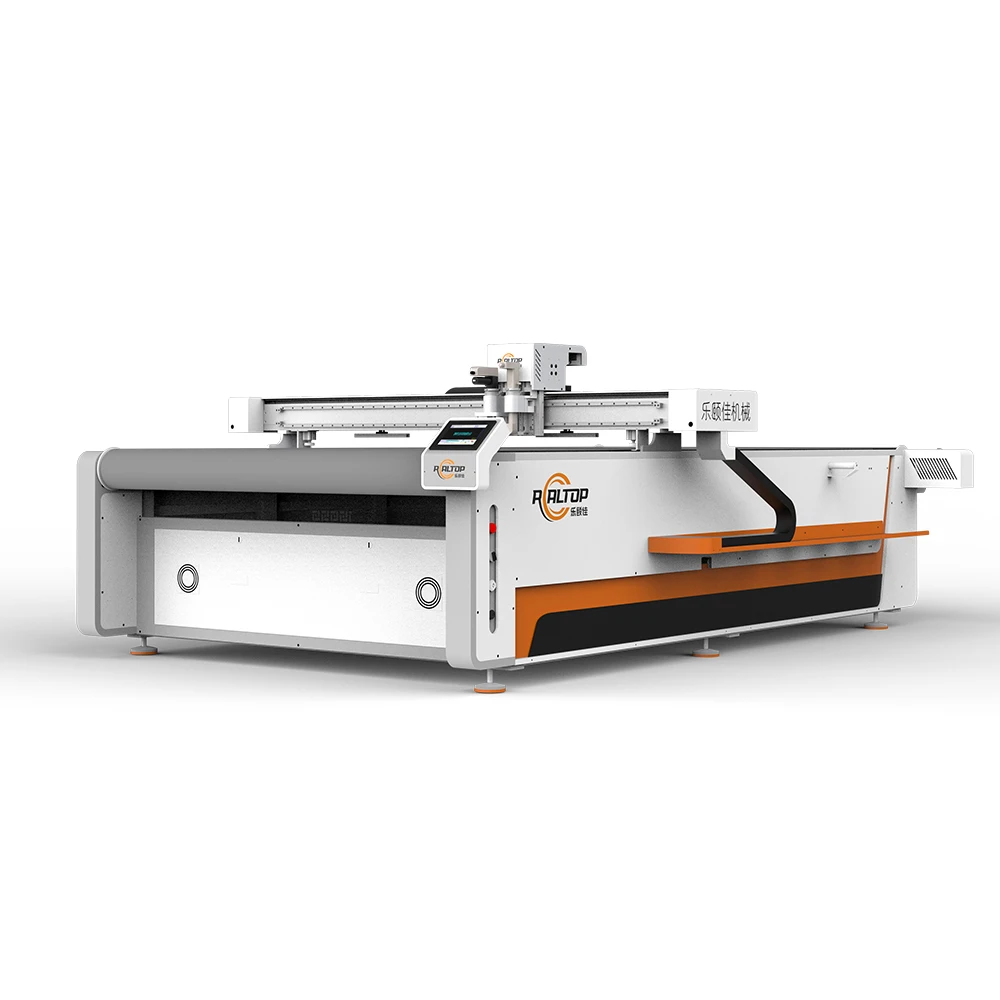
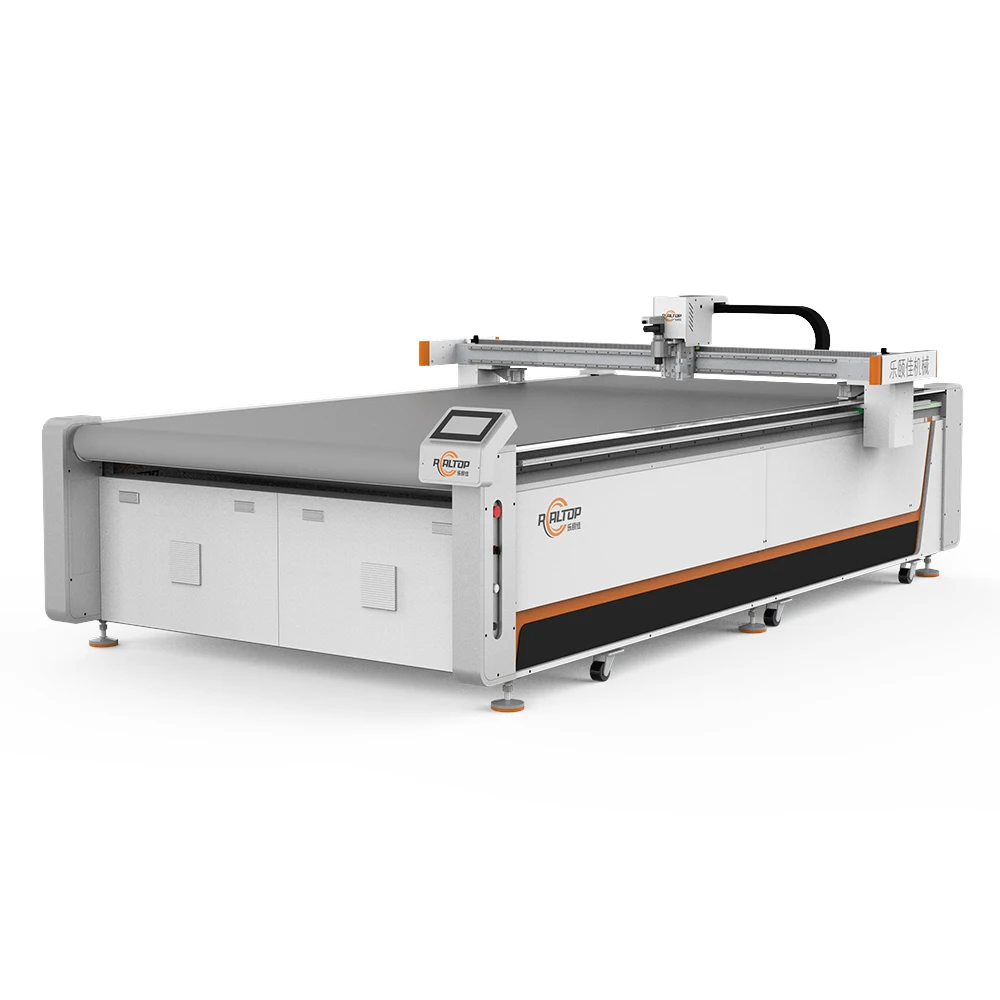
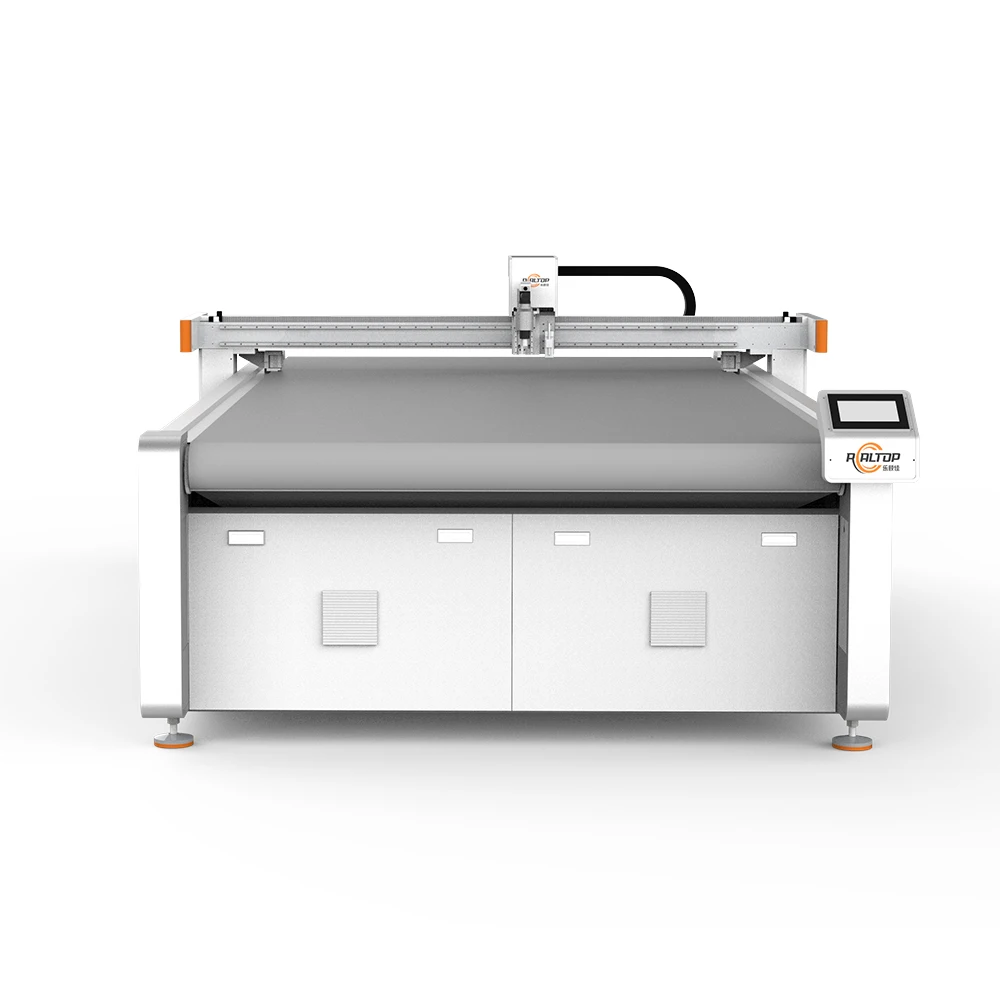
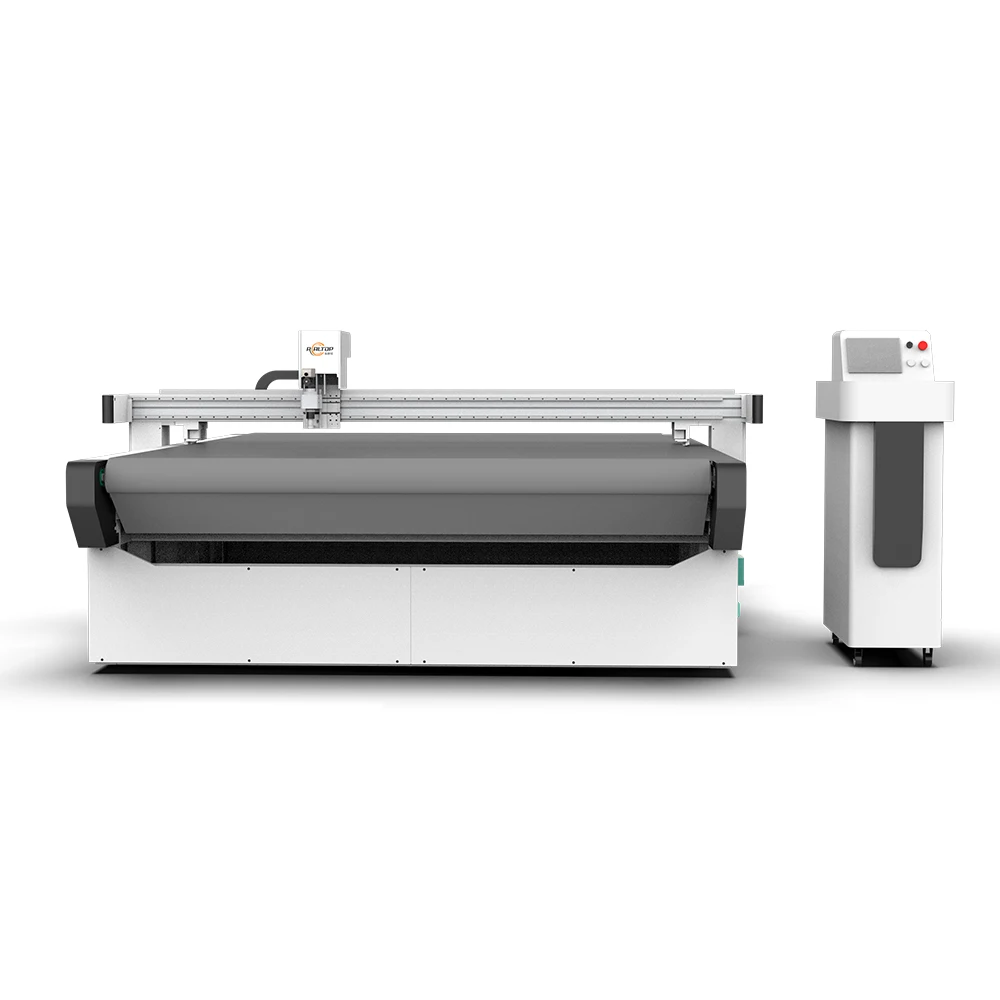
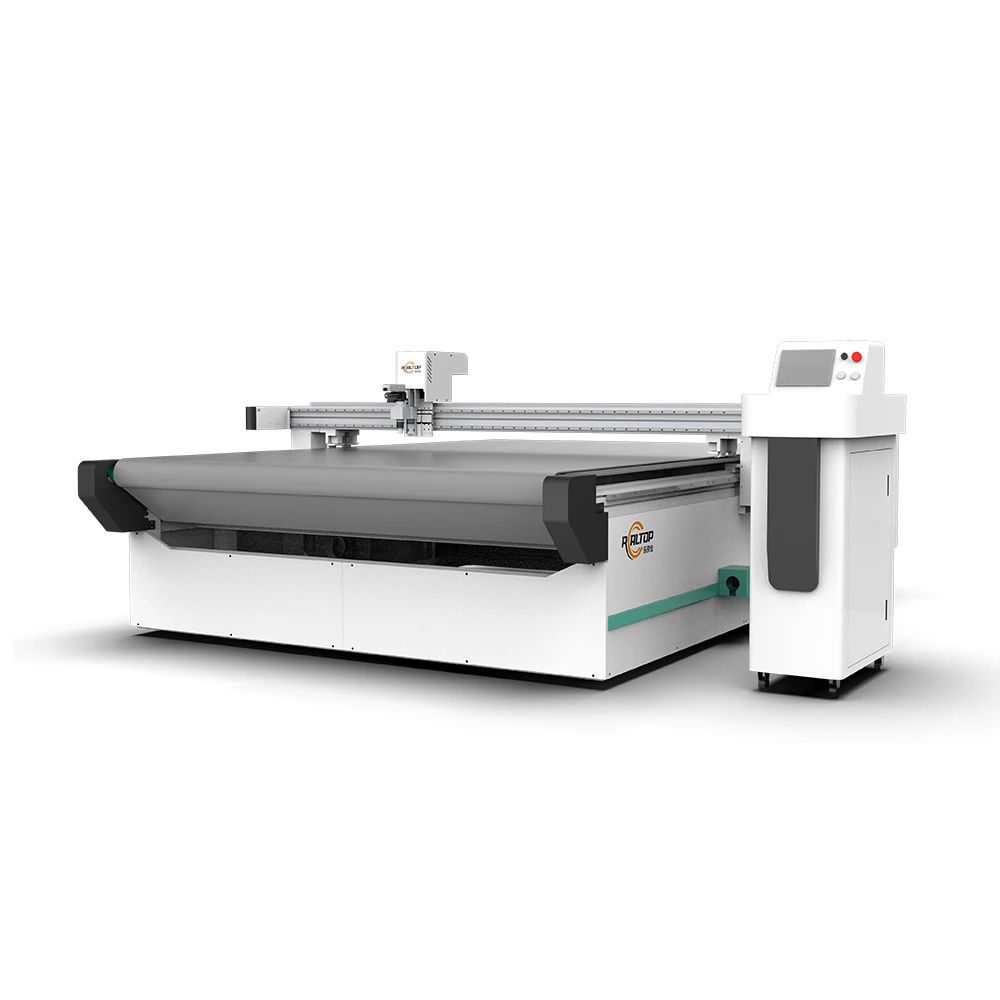


Material-Specific Configuration — Tool head selection and vacuum table zoning confirmed against your actual fabric weight and layer count before the machine ships, preventing edge fraying or material lift on flexible textiles.
Technical Specifications
| Parameter | Value |
|---|---|
| Model | 1625 |
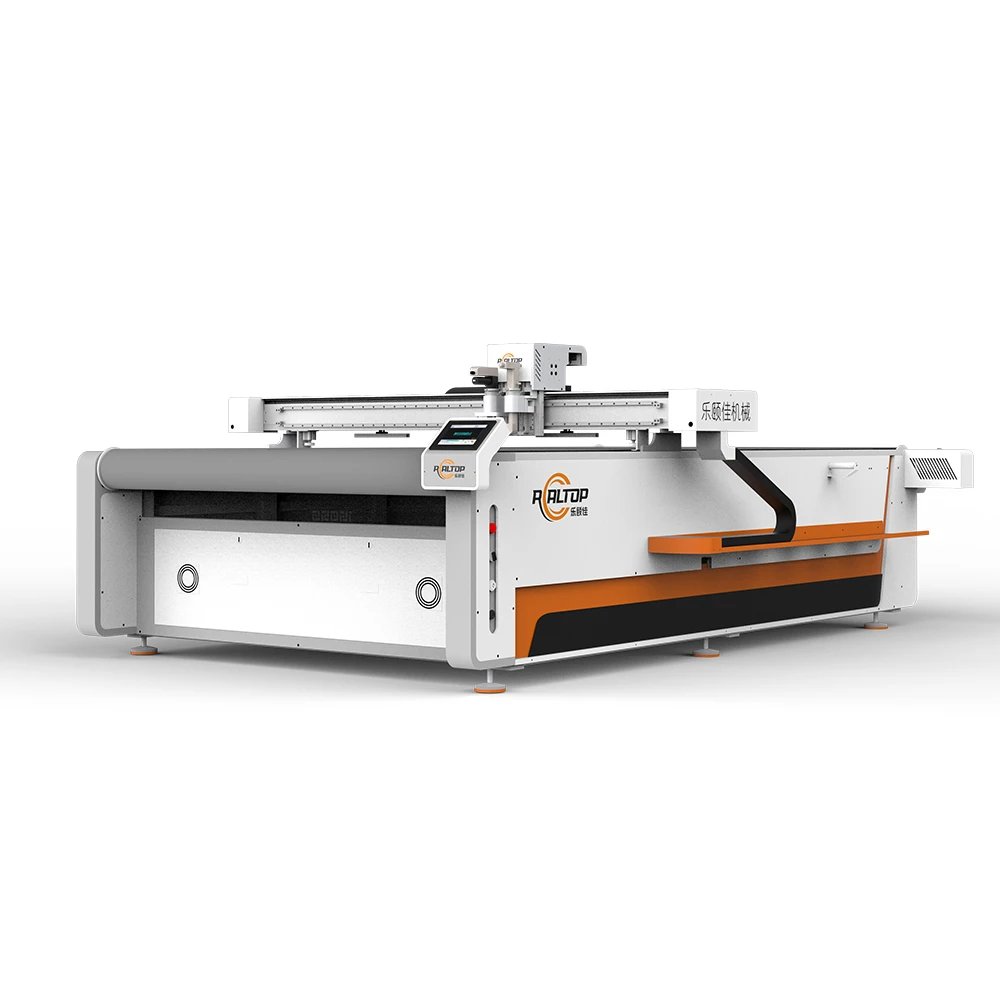
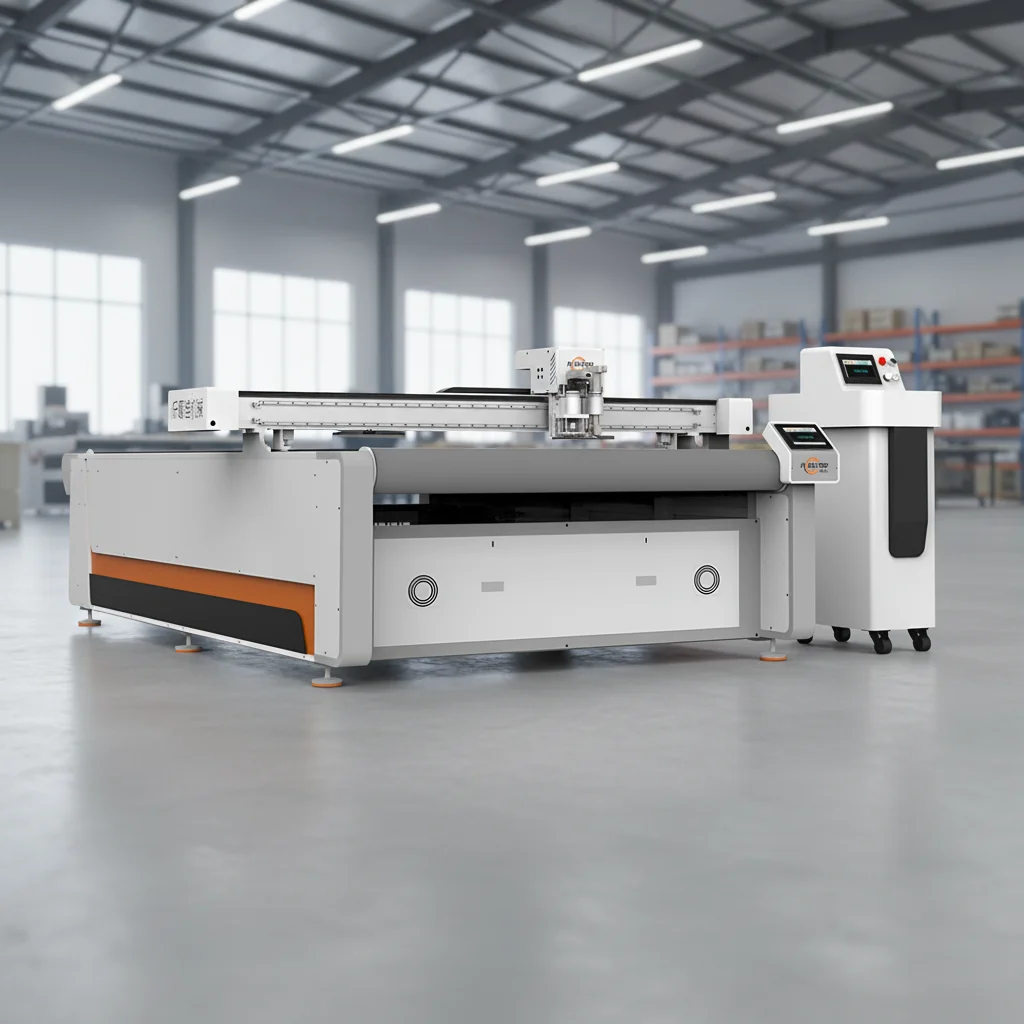
| Product Type | CNC Oscillating Knife Cutting Machine |
| Working Area | 1600 × 2500 mm |
| Cutting Speed | 0–2000 mm/s |
| Cutting Thickness | ≤ 30 mm (basis to be confirmed with material type and density) |
| Cutting Accuracy | ±0.1 mm |
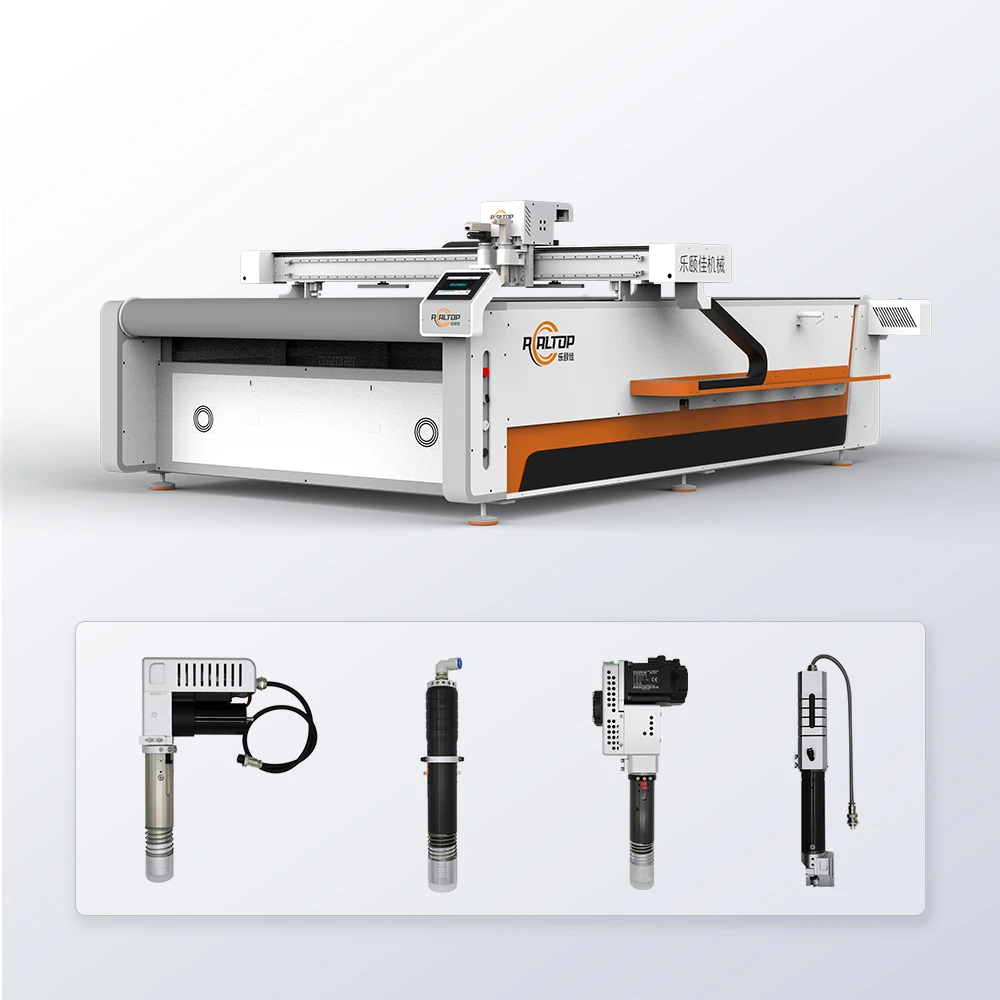
| Tool Head Options | Oscillating knife, Driven rotary knife, Creasing wheel, Kiss cutting tool, Pneumatic knife, Milling tool, V groove knife |
| Vacuum Pump | 9 kW |
| Vacuum Table | Aluminum bellows vacuum table |
| Servo Drive Options | Panasonic, Delta, or Dorna |
| Voltage Options | 110V, 220V, 380V (frequency to be confirmed) |
| Control System | PLC control panel with optional display languages |
| Software & File Formats | PLT, DXF, AI, PDF; dedicated packaging box structure design software included |
| Safety Device | Infrared sensor and emergency stop |
| Machine Size | 3300 × 2100 × 1350 mm |
| Machine Frame | Heavy-duty frame with precision-ground surface |
| Multi-layer Cutting | Supports single-pass cutting up to 30–50 mm thickness (basis to be confirmed with material type and layer count) |
| Nesting | Intelligent nesting with automatic defect avoidance and layout optimization |
| Language Options | English, Russian, Italian, Chinese; special languages customizable |
| Certification | CE (referenced) |
Application Suitability
| Application | Material or Output |
|---|---|
| Garment and footwear production | Suits, knitwear, lace, complex woven and knitted fabrics with pattern-matching layouts |
| Home textile batch cutting | Sofa fabrics, curtains, rugs, multi-layer cutting with vacuum hold-down |
| Automotive interior trimming | Seat fabrics, carpets, PVC mats requiring burr-free cold cutting |
| Composite material processing | Carbon fiber prepreg, aramid, specialty materials with damage-free edge requirements |
When the Spec Sheet Ignores Your Actual Cloth CNC Cutting Machine Production Line Workflow
A cutting table chosen only by working area dimensions often fails the moment flexible fabric meets the vacuum surface.
I have watched fabric converters receive a machine that ran beautifully during factory acceptance on cotton twill, only to discover their daily production involves slippery silk blends or stretchy knits that shift under the knife head. The edges come out frayed, the vacuum zones cannot hold small pattern pieces, and the entire line stalls while operators manually pin material down. The cloth CNC cutting machine production line workflow depends on matching the tool head, vacuum zoning, and feed method to the exact textile you run, not just the sheet size you quoted. [NEED_CITE: fabric hold-down requirements for vacuum cutting tables on flexible materials]
Tool Head Selection Across Fabric Weights and Weaves
Different fabrics demand fundamentally different cutting actions. The oscillating knife handles most woven and knitted textiles in single or multi-layer stacks, while the driven rotary knife suits continuous straight-line runs on lighter materials. The pneumatic knife addresses dense, compressed layers where blade penetration force matters, and the kiss cutting tool is reserved for single-layer contour work where the backing material must remain intact. Getting this choice wrong on a cloth CNC cutting machine production line workflow means either ragged edges that reject at quality inspection or blade wear that forces unplanned downtime.
Vacuum Table Behavior on Flexible and Small-Part Cutting
The aluminum bellows vacuum table on the 1625 provides a flat, rigid surface for full-sheet adsorption. The 9 kW vacuum pump generates the suction necessary to hold multi-layer fabric stacks during high-speed traversal. However, when cutting small garment pattern pieces, the zoning configuration becomes critical — a single undivided zone may allow edge lift on pieces narrower than the suction grid spacing. Confirming vacuum zone layout against your typical piece dimensions avoids the problem of material shifting mid-cut. [NEED_CITE: vacuum zone sizing principles for small-part textile cutting]
Reading the Specs That Matter for Production Reality
The ±0.1 mm cutting accuracy figure reflects the motion system’s repeatability on the precision-ground frame, which directly affects pattern matching when cutting striped or checked fabrics where alignment across layers is essential. The 1600 × 2500 mm working area accommodates standard fabric roll widths while leaving margin for operator handling. The PLC control system accepts PLT, DXF, AI, and PDF files, meaning most existing CAD and nesting software outputs import without format conversion. The intelligent nesting function with automatic defect avoidance scans fabric for flaws and repositions pattern pieces around them, directly influencing material yield on expensive textiles. Servo drive selection among Panasonic, Delta, and Dorna allows buyers to specify the motion control brand their local service technicians already support.
The Hidden Cost of Skipping Material Trials
When a buyer specifies a cloth CNC cutting machine based on catalog data alone, the gap between test conditions and daily production surfaces after installation. A pneumatic knife that slices cleanly through denim may crush delicate lace; a vacuum zone sized for full hides leaves automotive carpet offcuts drifting during the final passes. These mismatches do not appear in the quotation stage — they appear on the factory floor, where operators spend hours adjusting blade depth and vacuum pressure instead of meeting their daily cut count. The rework and rejected panels cost more than a pre-shipment sample trial on the buyer’s own material would have prevented. [NEED_CITE: cost of cutting machine misconfiguration in textile production environments]
Why Sourcing This Machine from Jinan Makes Sense
The factory produces both knife and laser cutting equipment under one roof, so a buyer processing mixed materials — say, fabric by knife and acrylic templates by laser — can source from a single production facility with shared quality standards. The tool head and vacuum table configuration is specified per material and production volume rather than sold as a fixed package. Sample cutting runs on the buyer’s actual fabric happen before the order is finalized, generating a documented report on edge quality and cutting speed. Software compatibility is verified against the buyer’s existing PLT or DXF files so nesting workflows transfer without manual re-drawing. Voltage, plug type, and control panel language are confirmed in writing before production begins, matching the electrical standards of the destination market. [NEED_CITE: export equipment voltage and plug standard verification practices]
Documentation & Verification
- Machine specification sheet listing confirmed tool head and vacuum table zoning for your material
- Electrical schematic with voltage and frequency matched to your facility supply
- Sample cutting report produced on your actual fabric before order confirmation
- Software licence and file format compatibility note for PLT, DXF, AI, and PDF workflows
- Factory test record documenting cutting accuracy and speed on your specified material type
- Operation and maintenance manual with language matched to your operator team
Installation, Commissioning & Support
- Foundation must support 3300 × 2100 mm footprint on level concrete with anchor provisions
- Dedicated electrical circuit matching confirmed voltage and frequency with correct plug standard
- Machine arrives as a single frame assembly requiring on-site leveling and vacuum table calibration
- First-run commissioning includes blade depth and oscillation frequency adjustment to your fabric
- Operator training covers tool head changeover, nesting software, and emergency stop procedures
- Spare parts list covers oscillating blades, vacuum seals, and servo drive consumables
What to Share Before You Request a Quote
To configure the 1625 for your cloth CNC cutting machine production line workflow, send us the fabric types you cut daily, including weight per square meter and whether you run single-layer or stacked. Include your typical pattern piece dimensions so we can size the vacuum zones, and confirm your facility voltage, frequency, and preferred control panel language. If you use a specific nesting or CAD platform, share a sample file so we verify import compatibility before build.
Frequently Asked Questions
Q: How do I choose between the oscillating knife and the pneumatic knife for my fabric range?
A: The oscillating knife suits most woven, knitted, and non-woven textiles in single or multi-layer configurations up to the stated thickness. The pneumatic knife is specified when cutting dense, compressed, or highly resistant material stacks where additional downward blade force prevents deflection. We run sample cuts on your actual fabric with both tool heads to document edge quality and cutting speed before you commit to a configuration.
Q: What vacuum zoning do I need for small garment pieces versus full-sheet home textiles?
A: Full-sheet cutting of sofa fabric or curtain panels typically works with standard zone spacing. When cutting small garment components like collars or pocket pieces, narrower vacuum zones prevent edge lift between suction points. The aluminum bellows table can be configured with zone segmentation matched to your smallest common piece dimension, which we confirm during the pre-order sample cutting phase.
Q: How does CCD camera contour recognition perform on printed fabric marks at line speed?
A: The CCD camera tracks printed registration marks to align cut paths with pre-printed patterns, which is essential for striped, checked, or sublimation-printed textiles. Performance depends on mark contrast, size, and spacing relative to your production cutting speed. We test recognition reliability on your printed material during the sample phase to confirm the camera tracks accurately without pauses or misalignment.
Q: Which file formats does the nesting software accept, and how do I verify compatibility?
A: The system imports PLT, DXF, AI, and PDF files directly. Before production, we request a sample file from your existing design or nesting software and run it through our control system to confirm geometry transfers correctly, nesting parameters apply, and no manual re-drawing is required. This compatibility check is documented in the software licence and file format note included with your machine documentation.
Q: What voltage and frequency options are available for different export markets?
A: The 1625 supports 110V, 220V, and 380V configurations. Frequency must be confirmed separately to match your local grid standard, typically 50 Hz or 60 Hz. Plug type and control panel display language are specified during the quotation stage so the machine arrives ready to connect without on-site electrical modification or translation delay.



商品评价
Clear filtersThere are no reviews yet.