


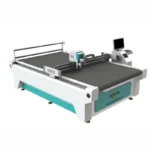
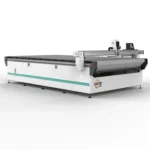
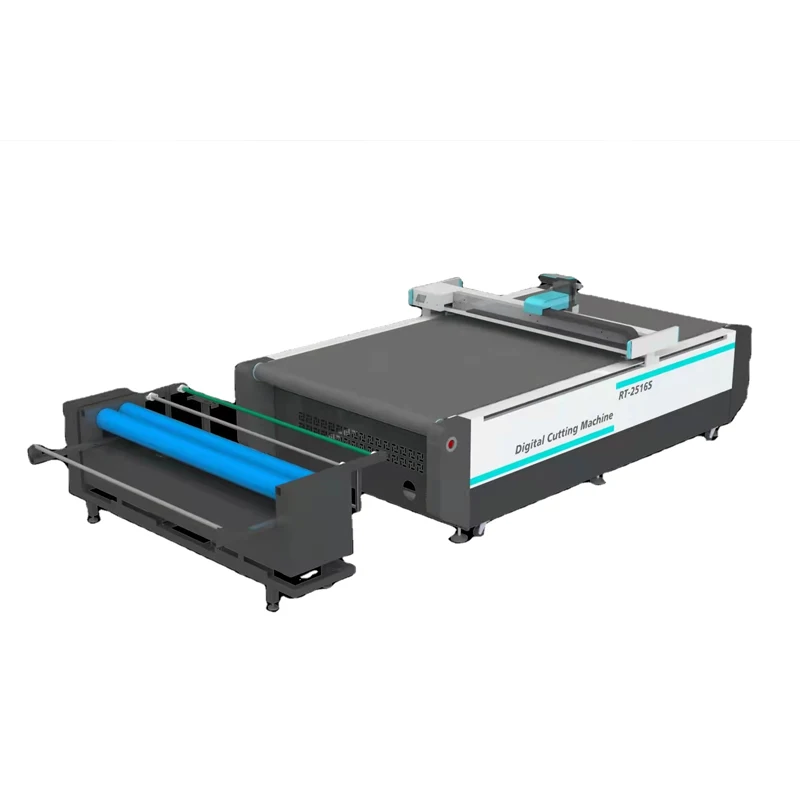
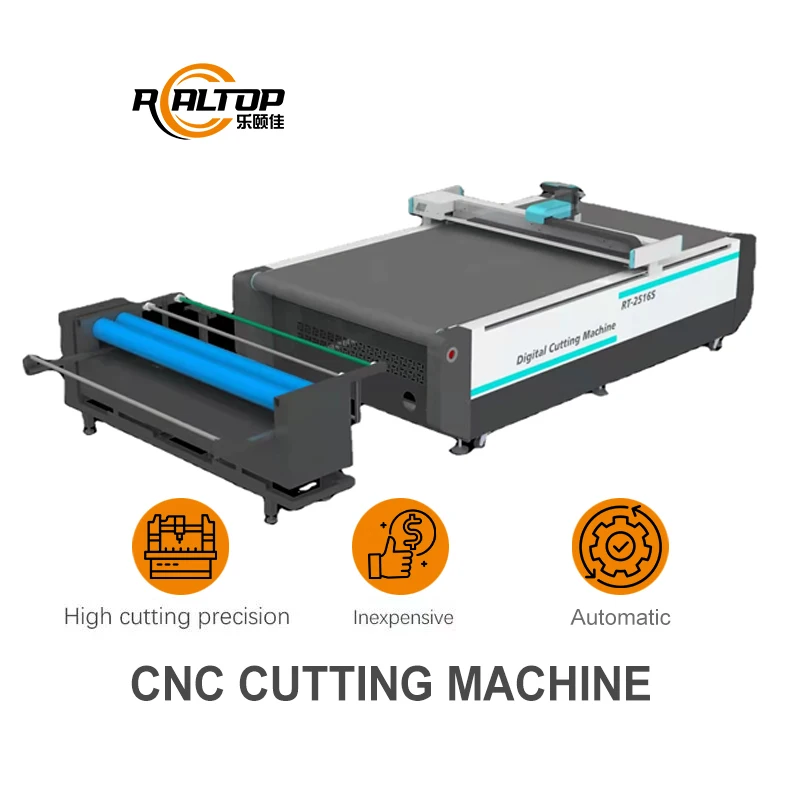
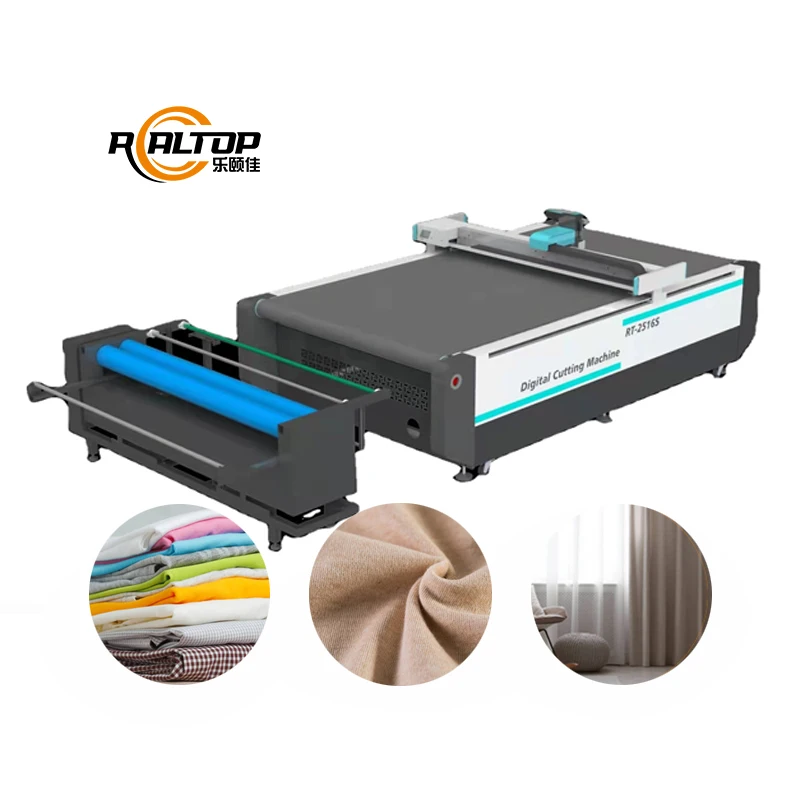
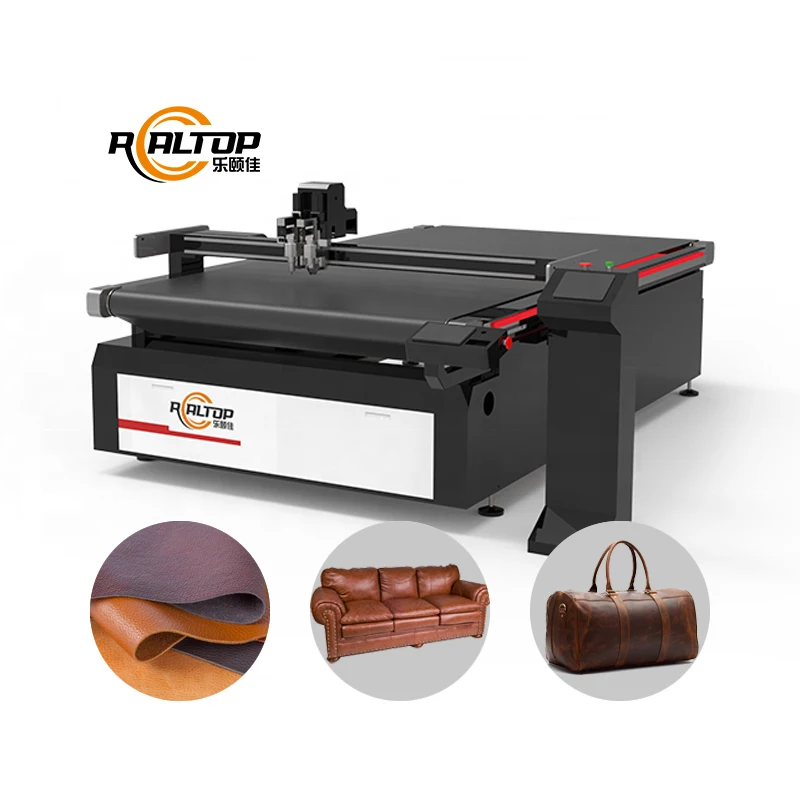
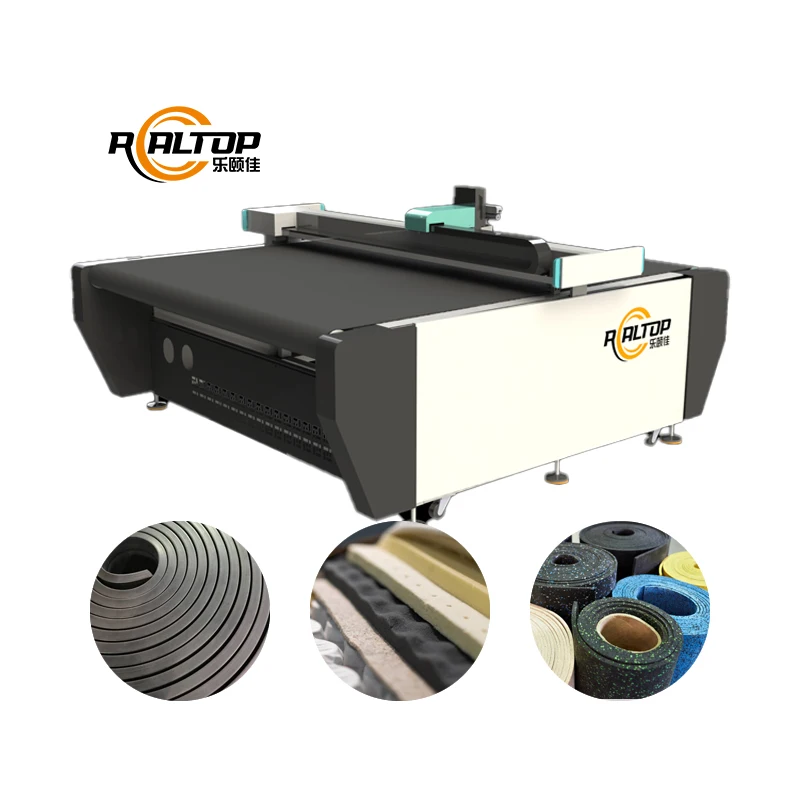
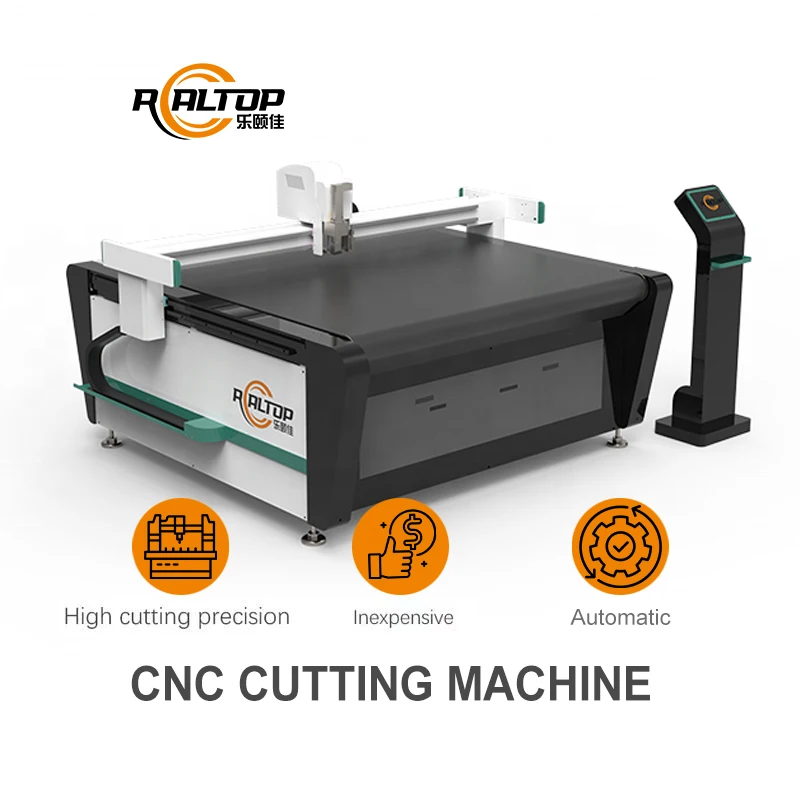

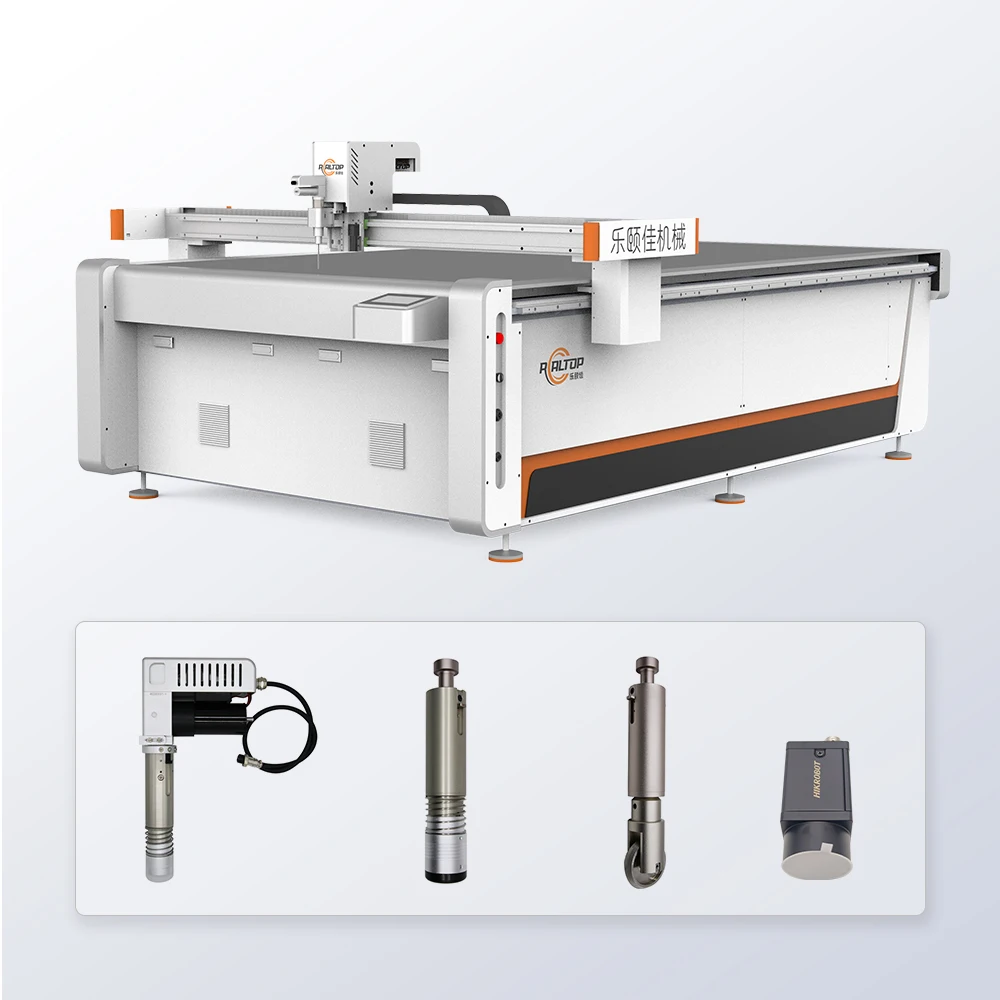
Tool Head Matched to Material Stack — Every RT-D2516/RT-S2516 leaves the Jinan factory with the oscillating knife, drag knife, or circular tool head specified against the buyer’s actual fabric weight, leather thickness, or composite layup rather than a default setup.
Technical Specifications
| Parameter | Value |
|---|---|
| Model | RT-D2516/RT-S2516 |
| Product Type | CNC Oscillating Knife Cutting Machine with Auto Feeding |
| Working Area | 1600 × 2500 mm |
| Machine Size (L × W × H) | 3450 × 2300 × 1250 mm |
| Rated Power | 9 kW |
| Voltage | 380V ± 10% |
| Table Type | Magnesium-aluminum alloy vacuum adsorption, PVDF powder sprayed, anodic and hard oxidation treated |
| Vacuum Pump | 7.5 kW integrated aviation aluminum shell with built-in silencer sponge |
| Multifunctional Head | Swiss imported knife — vibration full cutting, vibration half cutting, cursor location |
| Tool Head Options | Oscillating knife, pneumatic knife, high-power vibrating knife, circular knife, V-cutting knife, drag knife, creasing wheel, dotted line knife, punching, brush |
| Visual Positioning Options | Small CCD camera mark point positioning, panoramic camera recognition positioning, projection positioning |
| Translational Velocity | 800 – 1200 mm/s |
| Cutting Speed | 200 – 800 mm/s (varies with material type and thickness) |
| Cutting Thickness | ≤ 100 mm (varies with material) |
| Repeated Accuracy | ≤ 0.1 mm |
| Transmission System | Digital servo motor (Delta, optional Panasonic), Taiwan Hiwin linear guide, synchronous belt, ball screw |
| Control System / Instruction Format | HP-GL compatible format |
| Feeding System | Auto feeding with Germany imported conveyor belt |
| Safety Devices | Infrared induction blocking, anti-collision sensors on both sides of beam, emergency stop button |
| Software Language Options | English, Russian, Italian, Chinese (special languages customizable) |
| Assembly State | Fully assembled |
| Certification | CE declaration where applicable (source mentions CE but not confirmed in this listing — verify against manufacturer catalog) |
Application Suitability
| Application | Material or Output |
|---|---|
| Garment and footwear production | Woven fabric, knit textile, shoe material, luggage cloth, multi-layer apparel stacks |
| Automotive interior and gasket fabrication | Leather, sponge composite leather, sealing pads, shaped interior panels |
| Packaging and carton sample making | Cardboard, corrugated board, plastic box material |
| Advertising and signage | Sticker, vinyl film, graphic printing materials |
| Soft home furnishings | Carpet, floor mat, non-woven fabric, upholstery textile |
| Composite and foam fabrication | PU, EVA, XPE, PVC, PP, PE, PTFE, ETFE, foam board, sponge, rubber, fiberglass, silicon |
What "Cutting Speed 200–800 mm/s" Actually Depends On
The headline speed only holds when the tool head, vacuum zoning, and material clamp are all matched to the stock being fed.
I once spent four days re-tuning a multi-layer leather line because the buyer’s material had a different coating chemistry than the sample we ran at the factory. The oscillating knife that sliced cleanly through our standard hide left ragged, frayed edges on theirs. That gap between the brochure number and the shop floor is where most CNC fabric cutting machine production line workflow problems start. The RT-D2516/RT-S2516 lists 200–800 mm/s, but where your material falls inside that band depends on thickness, fiber density, coating composition, and whether the vacuum table is zoned tightly enough to hold small pattern pieces flat. [NEED_CITE: material-specific cutting speed verification practices in CNC knife cutting]
Matching the Knife to the Cloth
An oscillating knife handles thick woven stacks and dense composites by vibrating through the material at high frequency, reducing drag and preventing layer shift. A drag knife, by contrast, follows contours on thinner single-ply vinyl or sticker film where a vibrating blade would tear the substrate. The RT-D2516/RT-S2516 supports both, along with a circular knife for continuous long cuts on roll-fed fabric and a V-cutting knife for beveled edges on foam and sponge. Selecting the right head before the order is placed eliminates the trial-and-error period that stalls a CNC fabric cutting machine production line workflow for weeks after delivery.
Holding Small Pattern Pieces Without Lift
Garment cutting generates dozens of small pieces — collar stays, pocket flaps, belt loops — that sit on the table after the surrounding waste is stripped. If the vacuum zone under those pieces is too broad, suction disperses and the part lifts during the final pass, producing a miscut that wastes the entire lay. The magnesium-aluminum alloy table on this machine is divided into addressable zones with PVDF and hard oxidation treatment to maintain flat suction distribution. Properly configured zoning is the difference between a clean CNC fabric cutting machine production line workflow and one where operators tape down small parts by hand. [NEED_CITE: vacuum table zoning best practices for small garment pattern pieces]
Reading the Specs That Matter on the Floor
The 7.5 kW vacuum pump with an integrated aviation aluminum shell and silencer sponge addresses two problems at once: sufficient negative pressure for dense multi-layer fabric layups and noise reduction in enclosed cutting rooms. The Delta digital servo motor (Panasonic optional) paired with Taiwan Hiwin linear guides keeps repeated accuracy at ≤ 0.1 mm, which is what keeps nested pattern pieces aligned across a 1600 × 2500 mm working area when the conveyor advances the next roll section. The auto-feeding system uses a Germany-imported conveyor belt rated for continuous roll-to-sheet advance, so the operator loads a fabric roll and the machine indexes it forward between cuts without manual repositioning. For printed textiles, the CCD camera mark point positioning and panoramic camera recognition options track registration marks at translational velocities up to 1200 mm/s, closing the loop between print distortion and cut contour.
The Hidden Cost of a Default Configuration
When a buyer orders a cutting table by working area alone and accepts whatever tool head the seller defaults to, the first week of production usually reveals the mismatch. Foam that should shear cleanly gets crushed by an oscillating knife set to the wrong stroke frequency. Leather with a soft polyurethane coating gums up a drag knife that was specified for dry vinyl. Small collar pieces drift because the vacuum zones were set for full-sheet signage stock, not nested garment patterns. Each of these problems is fixable, but each one costs production time, material waste, and operator frustration that could have been avoided with a pre-shipment sample cut on the actual stock. [NEED_CITE: common CNC knife cutting defects caused by tool head and material mismatch]
Why Source This Machine From the Build Side
In-house design covers both knife and laser cutting technologies under one roof, so the recommendation is based on the material rather than limited to whatever technology a single-product seller stocks. The tool head and table configuration are specified per material type, thickness, and daily volume rather than pulled from a default bill of materials. CCD camera positioning for printed contour work is confirmed against the buyer’s actual printed textile before the machine ships. Software compatibility — HP-GL format import and nesting workflow — is verified during the sampling stage, not discovered after installation. Sample cutting on the buyer’s own material is a required step in the sales process, generating a report on edge quality, cutting depth, and throughput before the order is confirmed.
Documentation & Verification
- Machine specification sheet listing the exact tool head and table zone configuration matched to your fabric or composite
- Electrical schematic and 380V ± 10% voltage confirmation for your facility’s supply
- Sample cutting report on your own material with edge quality and throughput data
- Software licence and HP-GL file format compatibility note for your nesting workflow
- Factory test record with repeated accuracy measurement on your specified working area
- Packing photographs showing table surface condition and tool head mounting before crating
Installation, Commissioning & Support
- Fully assembled 3450 × 2300 × 1250 mm frame requires level concrete floor with clearance for conveyor infeed and outfeed
- Dedicated 380V ± 10% circuit rated for 9 kW continuous draw plus 7.5 kW vacuum pump startup surge
- First-run parameter tuning on your fabric type, thickness, and nesting layout during on-site commissioning
- Operator training covering tool head changeover between oscillating, drag, and circular knives
- Spare parts list covering Swiss imported knife blades, conveyor belt segments, and vacuum zone seals
- Daily maintenance checklist for linear guide lubrication and vacuum pump silencer sponge inspection
What We Need to Quote the Right Configuration
Send the material type, thickness range, and maximum sheet or roll width you plan to run. Include your daily cutting volume and the nesting software you currently use so we can confirm file format compatibility. If your facility runs a voltage or frequency outside the 380V ± 10% range, let us know early so the transformer and control panel labeling are set before assembly begins. We will run a sample cut on your actual stock and share the edge quality report before you commit.
Frequently Asked Questions
Q: How is cutting speed verified for my specific fabric or composite material and thickness?
A: We run a sample cut on the exact material you ship to our factory, testing the 200–800 mm/s range at different stroke frequencies and feed rates. The resulting report documents edge quality, layer adhesion, and achievable speed for your specific stock, so the quoted throughput reflects your material rather than a generic benchmark.
Q: Which tool head is recommended for my material stack — oscillating knife vs. drag knife vs. circular knife?
A: Oscillating knives suit thick multi-layer fabric and dense composites where vibration prevents drag. Drag knives follow tight contours on thin single-ply film and vinyl. Circular knives handle long continuous cuts on roll-fed textile. We recommend based on a sample cut of your actual material, not a general material category.
Q: Does the CCD camera reliably track printed contour marks at full production speed on my textile?
A: The small CCD and panoramic camera options are tested against your printed fabric during the sampling stage. We verify mark detection accuracy at the translational velocity your production volume requires, confirming that print stretch or dye variation does not cause contour drift before the machine is released for shipment.
Q: What vacuum table zoning is configured for small garment pattern pieces to prevent material lift?
A: The magnesium-aluminum alloy table is divided into addressable zones. We configure the zone layout around your typical nesting pattern — tighter zones under small pieces like collars and pockets, broader zones under large panels — and verify hold-down on your material during the factory sample cut.
Q: Can the software import my existing DXF/PLT nesting files and integrate with my current workflow?
A: The control system accepts HP-GL compatible formats. Before order confirmation, we test file import using samples from your current nesting software, confirm that kerf compensation and tool path sequencing carry over correctly, and document compatibility in the software licence note shipped with the machine.




商品评价
Clear filtersThere are no reviews yet.