




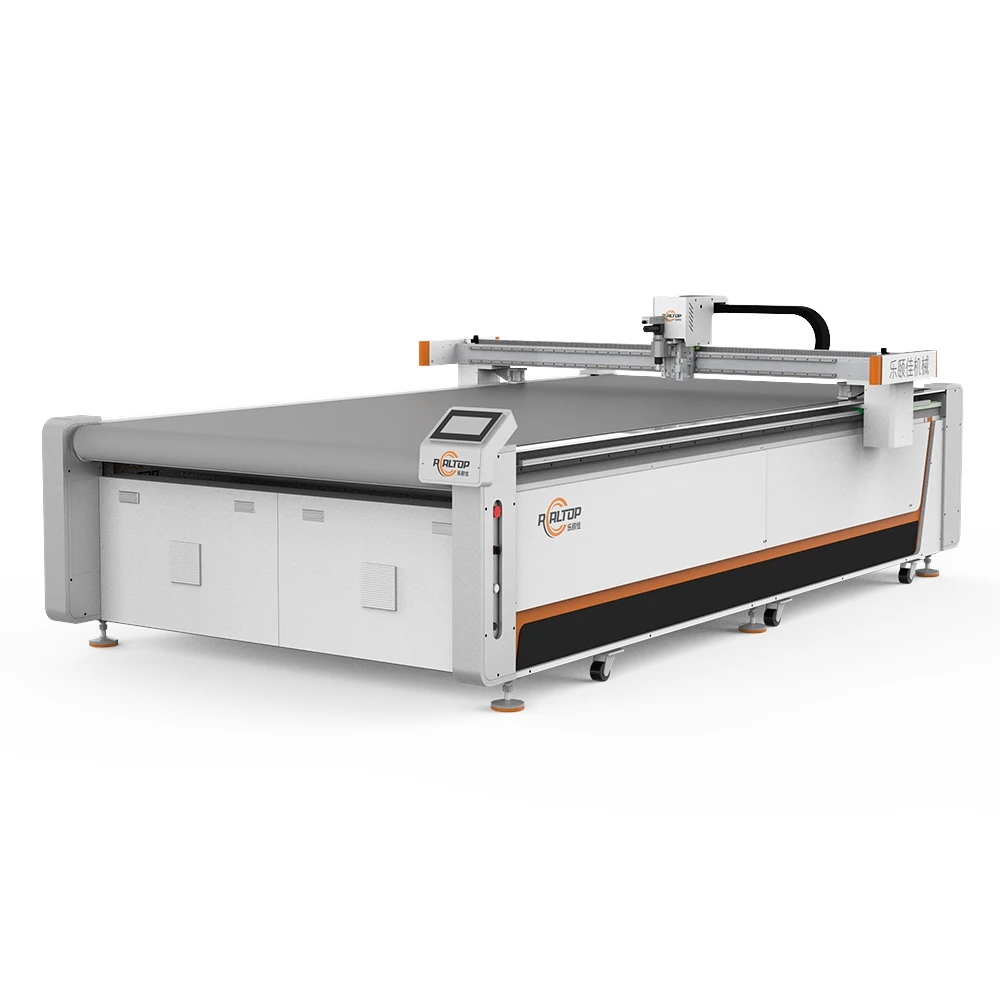
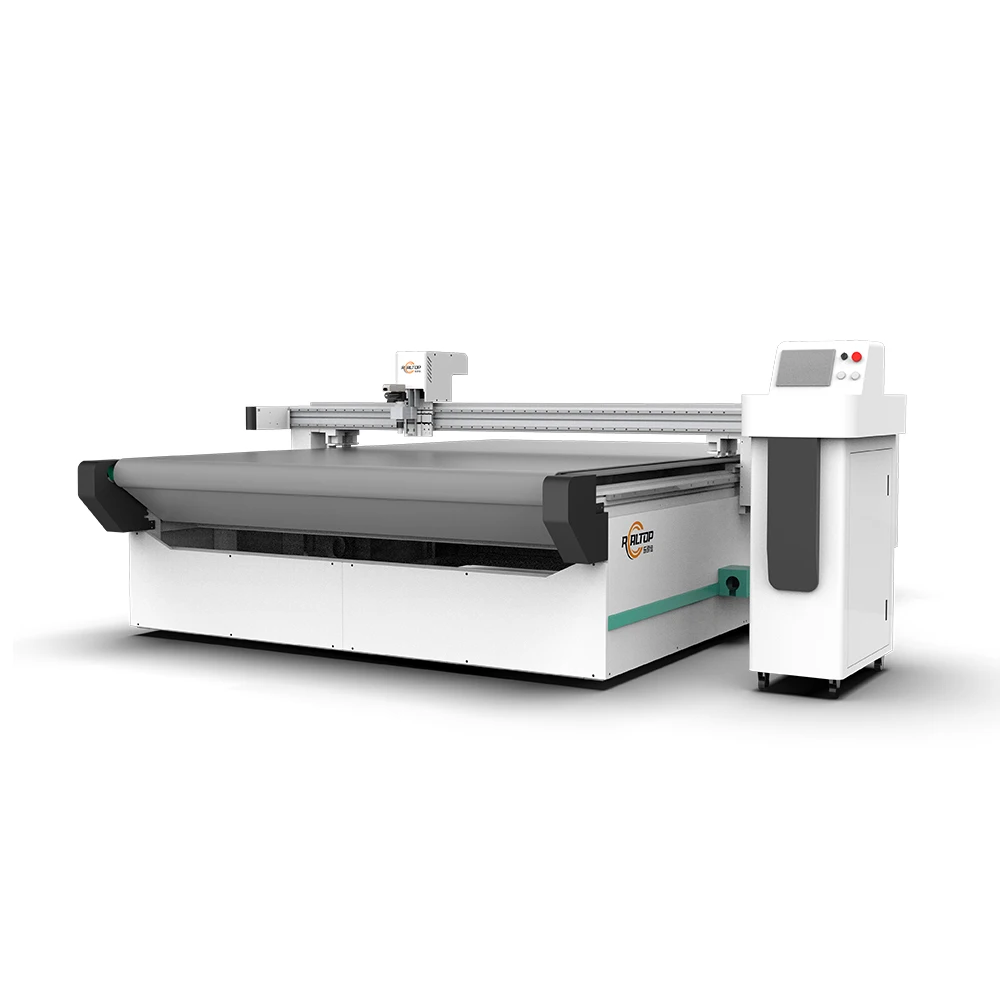
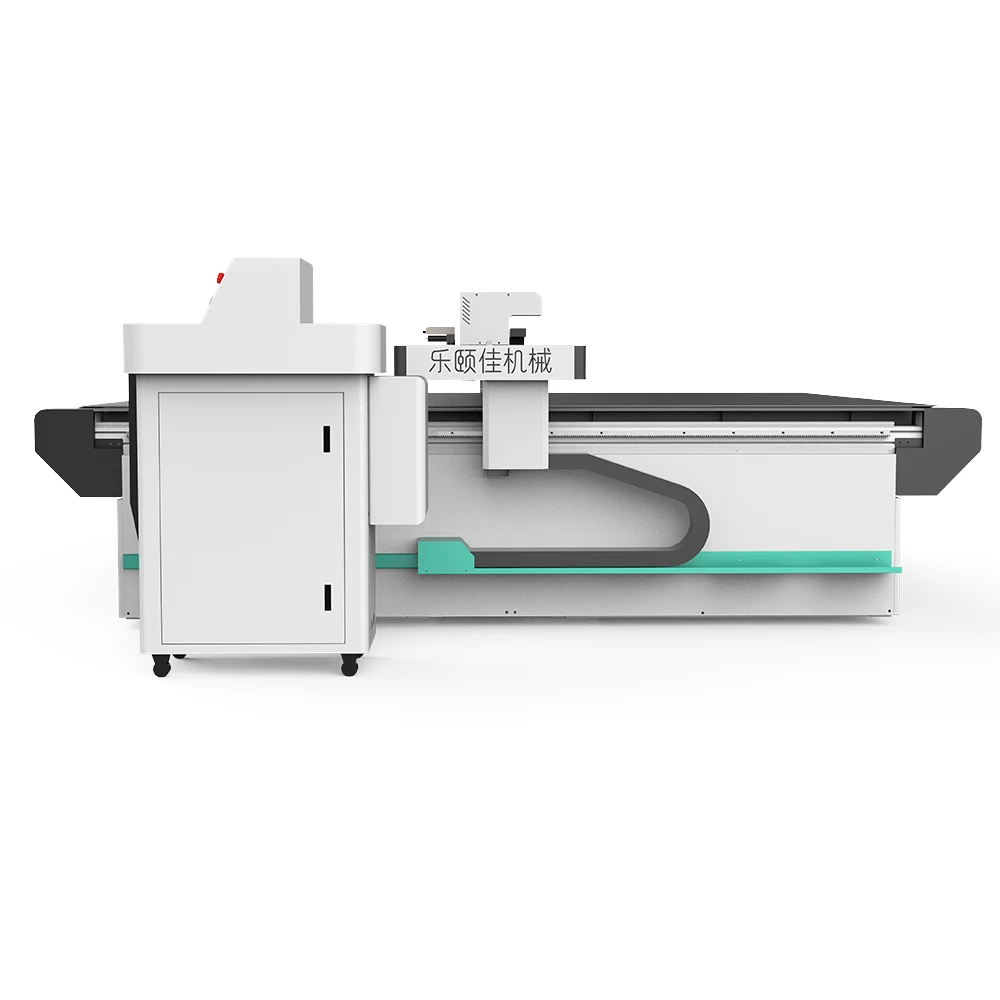


Cutting Method Matched to Fabric — In-house design covering both knife and laser technologies lets this 1625 cloth CNC cutting machine production line align tool head, vacuum zoning, and nesting software to your specific textile ply and daily volume rather than forcing a single method across every material.
Technical Specifications
| Parameter | Value |
|---|---|
| Model | 1625 |
| Product Type | CNC Oscillating Knife Cutting Machine |
| Working Area | 1600 × 2500 mm |
| Tool Head Options | Oscillating knife, Driven rotary knife, Creasing wheel, Kiss cutting tool, Pneumatic knife, Milling tool, V groove knife |
| Applicable Materials | Fabric, Cardboard, Carton, Mats, PVC, EVA, Leather, Acrylic, Foam, PTFE, Rubber |
| Cutting Speed | 0–2000 mm/s |
| Cutting Thickness | Up to 30 mm (basis not stated in source — confirm block format / material / thickness) |
| Cutting Accuracy | ±0.1 mm |
| Vacuum Pump Power | 9 kW |
| Voltage Options | 110V, 220V, 380V (frequency to be confirmed) |
| Control System | PLC control panel |
| Servo Motor Brands | Panasonic, Delta, Dorna |
| Vacuum Table | Aluminum bellows vacuum table |
| Safety Devices | Infrared sensor, Emergency stop |
| Machine Dimensions | 3300 × 2100 × 1350 mm |
| Software File Formats | PLT, DXF, AI, PDF |
| Software Languages | English, Russian, Italian, Chinese (custom languages available) |
| Multi-layer Capability | Up to 30–50 mm thickness (basis not stated in source — confirm block format / material / thickness) |
| Packaging Box Software | Dedicated packaging box structure design software included |
| Certification | CE |
Application Suitability
| Application | Material or Output |
|---|---|
| Apparel manufacturing | Suits, knitwear, lace, and complex woven fabrics with pattern-matching nesting |
| Automotive interiors | Seat fabrics, carpets, and PVC floor mats requiring burr-free edge finishing |
| Home textiles | Sofa upholstery fabrics, curtains, and area rugs in multi-layer layups |
| Composite material processing | Carbon fiber prepreg, aramid weaves, and specialty technical textiles |
What a "1600 × 2500 Working Area" Label Does Not Tell You About Fabric Cutting
A cloth CNC cutting machine production line specified only by table size will fail the moment fabric thickness, ply count, and tool head selection diverge from the vendor’s default assumption.
I once shipped a unit to South America after trial cuts on standard cotton poplin went perfectly. The buyer’s actual production involved six-layer laminated waterproof fabric for outdoor gear. The oscillating knife pressure that sliced cotton cleanly could not penetrate the composite stack, and pushing the feed speed higher caused delamination and fiber pull at every edge. I spent two weeks on-site re-tuning parameters and swapping to a driven rotary knife head. [NEED_CITE: material thickness and ply configuration impact on cutting edge quality] A cloth CNC cutting machine production line must be configured around the real material, not the brochure sample.
Tool Head Selection Determines Edge Quality on Every Fabric Type
Different textiles demand fundamentally different cutting actions. Woven suit fabrics and delicate lace respond well to an oscillating knife that vibrates at high frequency, producing a clean shear without fraying. Heavier materials like automotive carpet or multi-layer sofa upholstery need the continuous slicing action of a driven rotary knife to avoid ragged edges and crushed fibers. A pneumatic knife serves thick foam-backed textiles where blade drag would distort the layup. The 1625 system supports interchangeable heads — oscillating knife, driven rotary knife, pneumatic knife, and kiss cutting tool among others — so the cloth CNC cutting machine production line can be matched to whichever fabric dominates your daily run.
Vacuum Zoning and Multi-Layer Hold-Down for Garment Pattern Pieces
Garment patterns produce many small pieces per nest, and a vacuum table with only broad zoning will lose suction on parts smaller than the zone diameter. The aluminum bellows vacuum table on this model provides full-surface adsorption across the 1600 × 2500 mm bed, holding fabric plies flat even when cutting numerous small collar or cuff pieces simultaneously. [NEED_CITE: vacuum table zoning requirements for small garment pattern parts] For multi-layer cutting of sofa fabrics, curtains, and rugs, consistent hold-down prevents ply shift that would otherwise push cutting accuracy beyond the ±0.1 mm tolerance. The 9 kW vacuum pump maintains suction across the bed during continuous operation.
Reading the Specifications That Actually Matter in Textile Cutting
Cutting speed is rated at 0–2000 mm/s, but the usable speed on any given cloth CNC cutting machine production line depends on the interplay between fabric density, ply height, and tool head choice. A single layer of lightweight knitwear can run near the upper speed range with an oscillating knife, while six layers of bonded waterproof fabric may require a slower pass with a driven rotary knife to maintain edge integrity. The ±0.1 mm cutting accuracy is achievable when the vacuum table holds all plies firmly and the servo motors — available from Panasonic, Delta, or Dorna — maintain positional repeatability. Software accepts PLT, DXF, AI, and PDF files, meaning most garment CAD workflows import directly into the nesting engine. The dedicated packaging box structure design software is included as well, useful for producers who also cut carton samples in-house.
The Hidden Cost of Skipping Material-Specific Configuration
When a buyer selects a cutting table based on working area and price alone, the mismatches surface after installation. A wrong tool head on laminated fabric produces frayed edges that require manual trimming on every piece, adding labor that erases any throughput gain. Insufficient vacuum zoning on small pattern pieces allows fabric to lift into the knife path, creating miscuts that waste material and halt the line for re-nesting. [NEED_CITE: consequences of incorrect tool head and vacuum configuration on fabric cutting yield] Without a pre-shipment sample cut on the buyer’s actual fabric at production ply height, these issues remain invisible until the first week of live production.
Why Source This Cloth CNC Cutting Machine Production Line Here
In-house design covers both knife and laser cutting technologies, so the cutting method is chosen to suit the material rather than forcing one technology across every application. Tool head and table configurations are specified per fabric type and production volume before the order is finalized. CCD camera positioning is available for printed contour work on textiles with registered marks. Software compatibility with the buyer’s existing nesting workflow is verified during the specification stage. Voltage, plug type, and control panel language are confirmed before shipment, eliminating on-site electrical rework. Sample cutting on the buyer’s own material at specified ply height and speed is completed before any commitment is made.
Documentation & Verification
- Machine specification sheet listing all confirmed tool head and vacuum table options
- Electrical schematic with voltage and frequency matched to destination country
- Sample cutting report on buyer’s fabric at target ply height and speed
- Factory test record documenting positional accuracy and edge quality before dispatch
- Software licence and file format compatibility note for buyer’s existing CAD system
- Spare parts list with recommended consumables for first-year operation
Installation, Commissioning & Support
- Floor space planning around the 3300 × 2100 × 1350 mm machine footprint with access clearance
- Dedicated electrical circuit sized to the confirmed voltage option and 9 kW vacuum pump load
- Assembly and leveling of the aluminum bellows vacuum table on-site after delivery
- First-run parameter tuning on buyer’s actual fabric with tool head pressure and speed calibration
- Operator training covering software nesting workflow, tool head changeover, and daily maintenance routines
- Spare oscillating and rotary knife blades stocked per the included consumables list
Before You Request a Quote
Send a representative sample of the fabric or composite material you cut most frequently, along with the typical ply height and daily piece count. Specify your workshop voltage and frequency, the control language your operators need, and the CAD file format your current nesting software exports. If printed contour recognition is part of your workflow, include a printed sample so CCD camera tracking can be evaluated during the sample cutting trial.
Frequently Asked Questions
Q: How do I choose the right tool head for my fabric type and ply thickness?
A: The tool head depends on fabric weave, thickness, and edge quality requirement. Oscillating knives suit woven and knit fabrics where a vibrating shear action prevents fraying. Driven rotary knives handle heavier materials like carpet and multi-layer upholstery. Pneumatic knives work on thick foam-backed textiles. A sample cut on your actual material at production ply height confirms the selection before the cloth CNC cutting machine production line ships.
Q: Will the vacuum table hold small garment pieces firmly during multi-layer cutting?
A: The aluminum bellows vacuum table provides full-surface adsorption across the 1600 × 2500 mm bed, rather than relying on broad zones that lose grip on small parts. The 9 kW pump maintains consistent suction so collar, cuff, and pocket pieces stay flat even when nested densely. Zoning adequacy is verified during the pre-shipment sample cutting trial on your specific pattern layout.
Q: Is the nesting software compatible with my existing CAD workflow?
A: The system imports PLT, DXF, AI, and PDF files directly. Before the order is confirmed, you send a sample file from your current CAD software and the engineering team verifies import, nesting behavior, and output. A software licence and file format compatibility note is included in the documentation package. Custom control panel languages are available beyond the standard English, Russian, Italian, and Chinese options.
Q: How are voltage, plug type, and control language confirmed before shipment?
A: During the specification stage, the buyer provides the destination workshop voltage, frequency, and plug standard. The electrical schematic is drawn to match, and the PLC control panel language is set accordingly. This confirmation is documented in the machine specification sheet and verified during the factory test before packing, preventing on-site electrical rework.
Q: What does the sample cutting trial on my material cover?
A: You send a roll or swatch of the actual fabric at production ply height. The engineering team runs it on the configured tool head at target speed, then documents cutting accuracy, edge quality, and hold-down performance in a sample cutting report. This report lets you evaluate real results on your material before committing to the cloth CNC cutting machine production line order.


商品评价
Clear filtersThere are no reviews yet.