



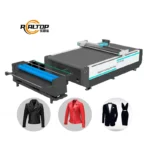
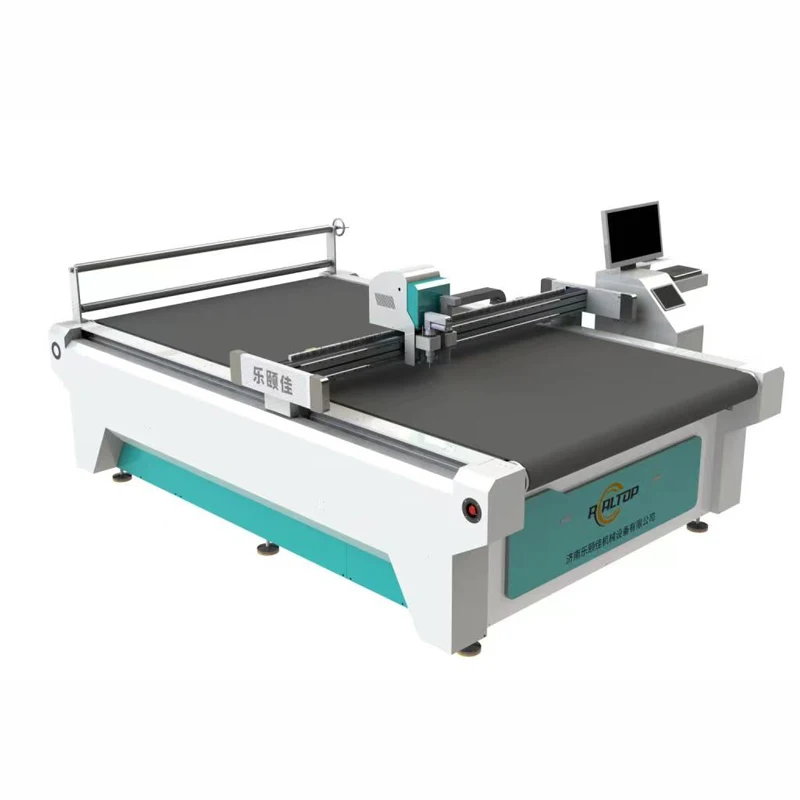
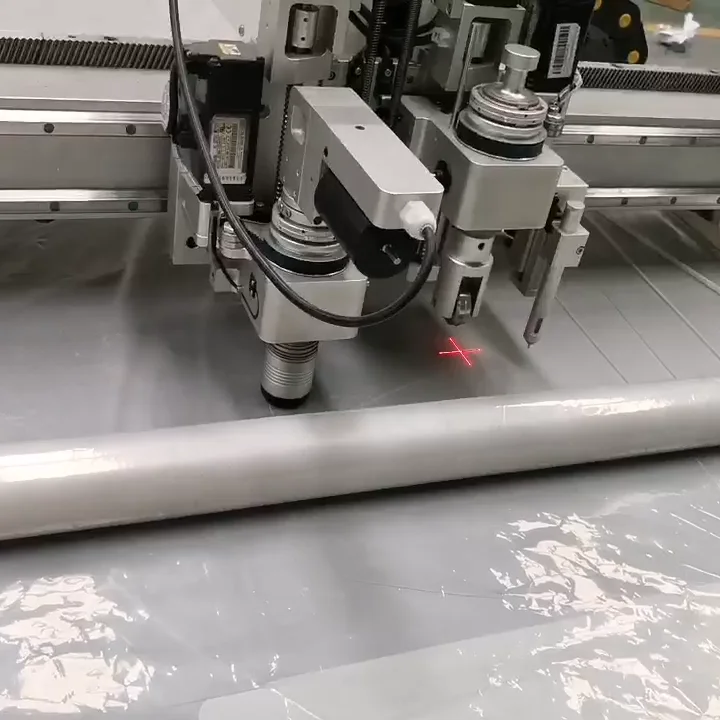
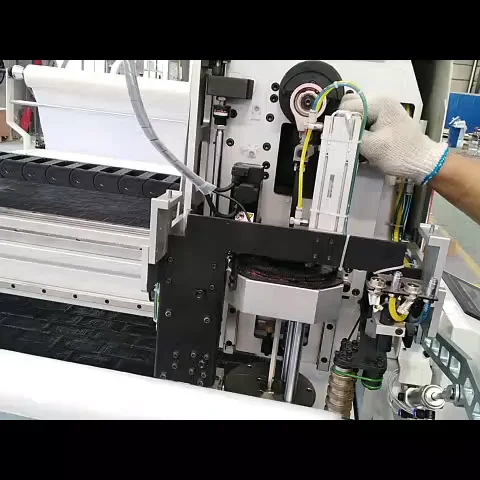
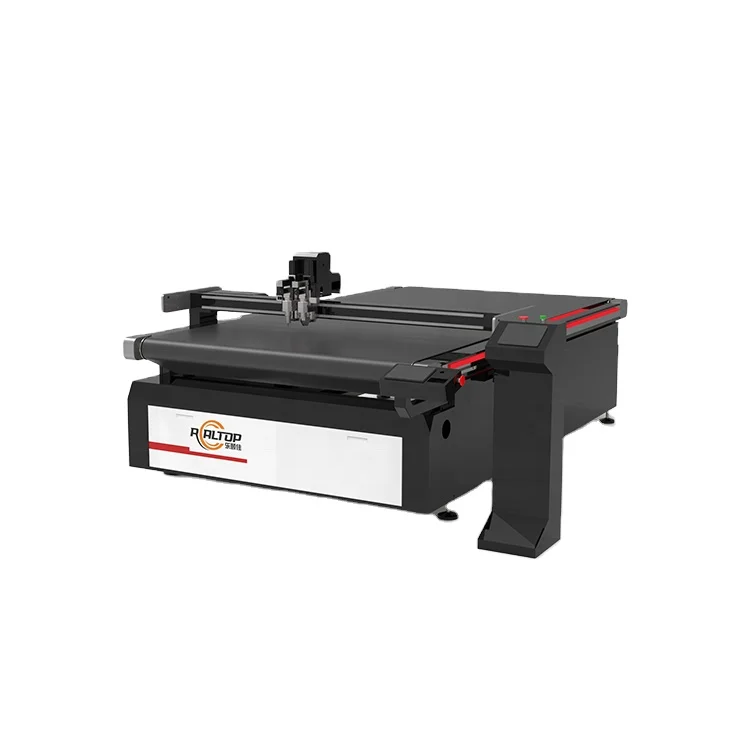
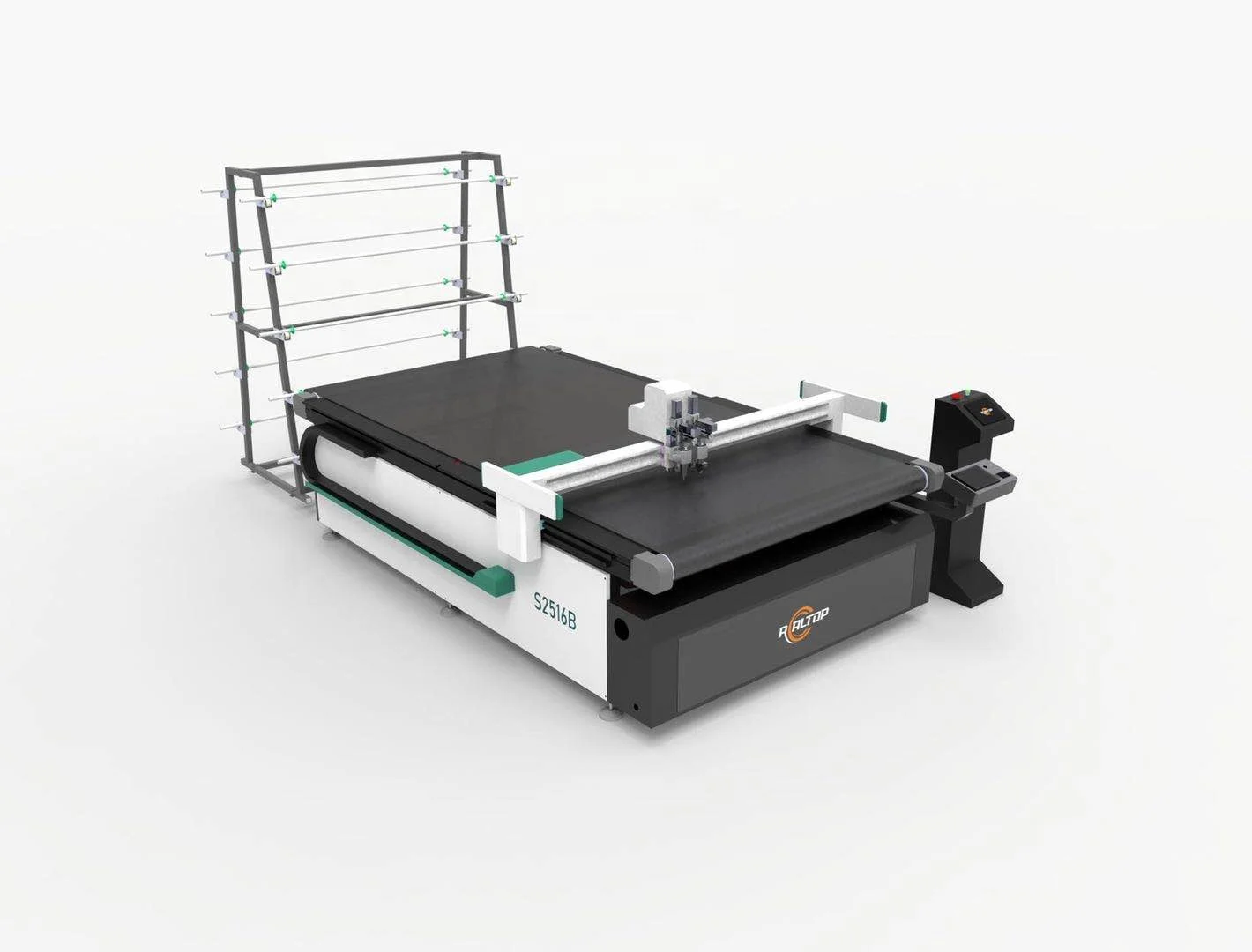
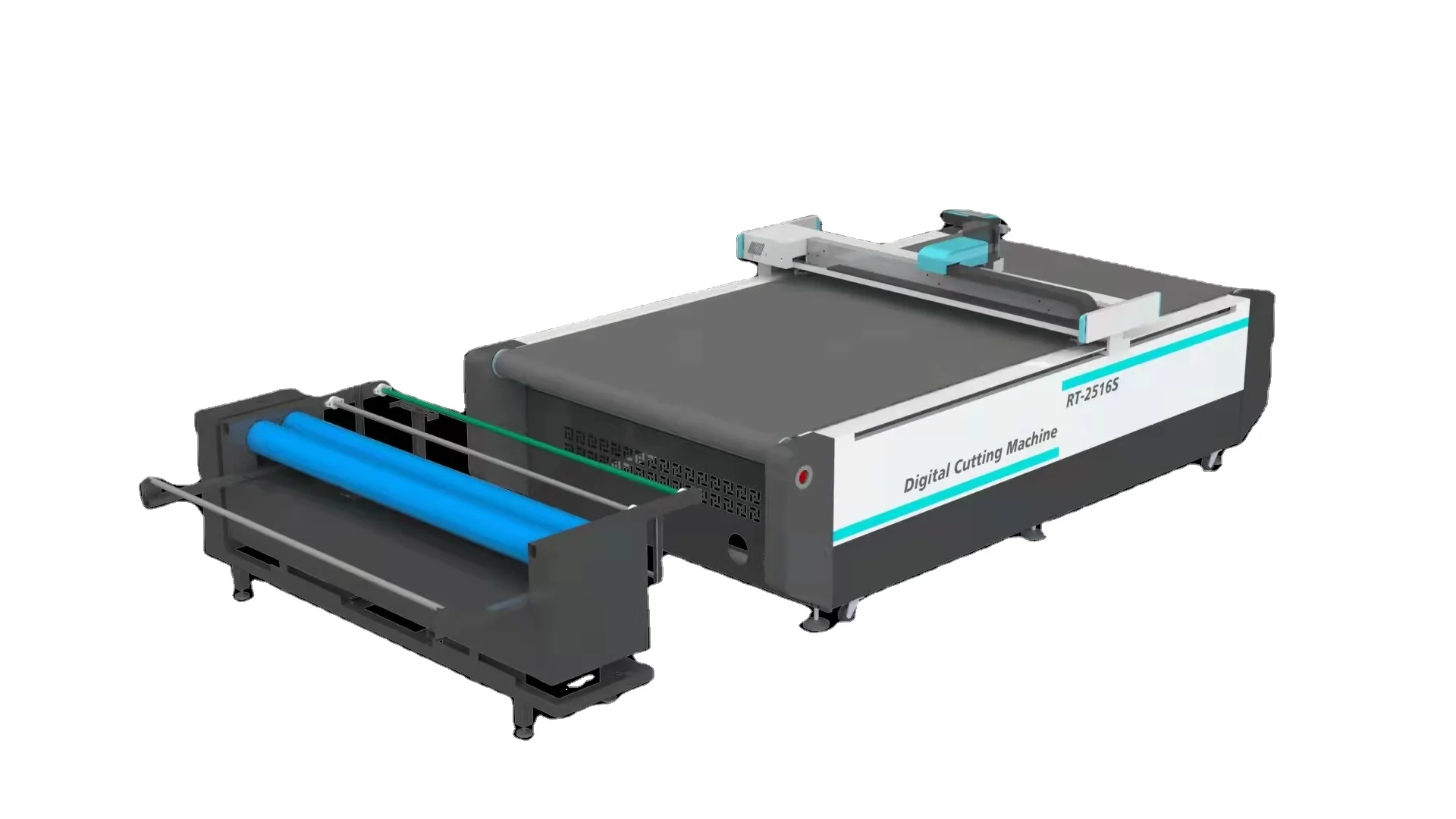

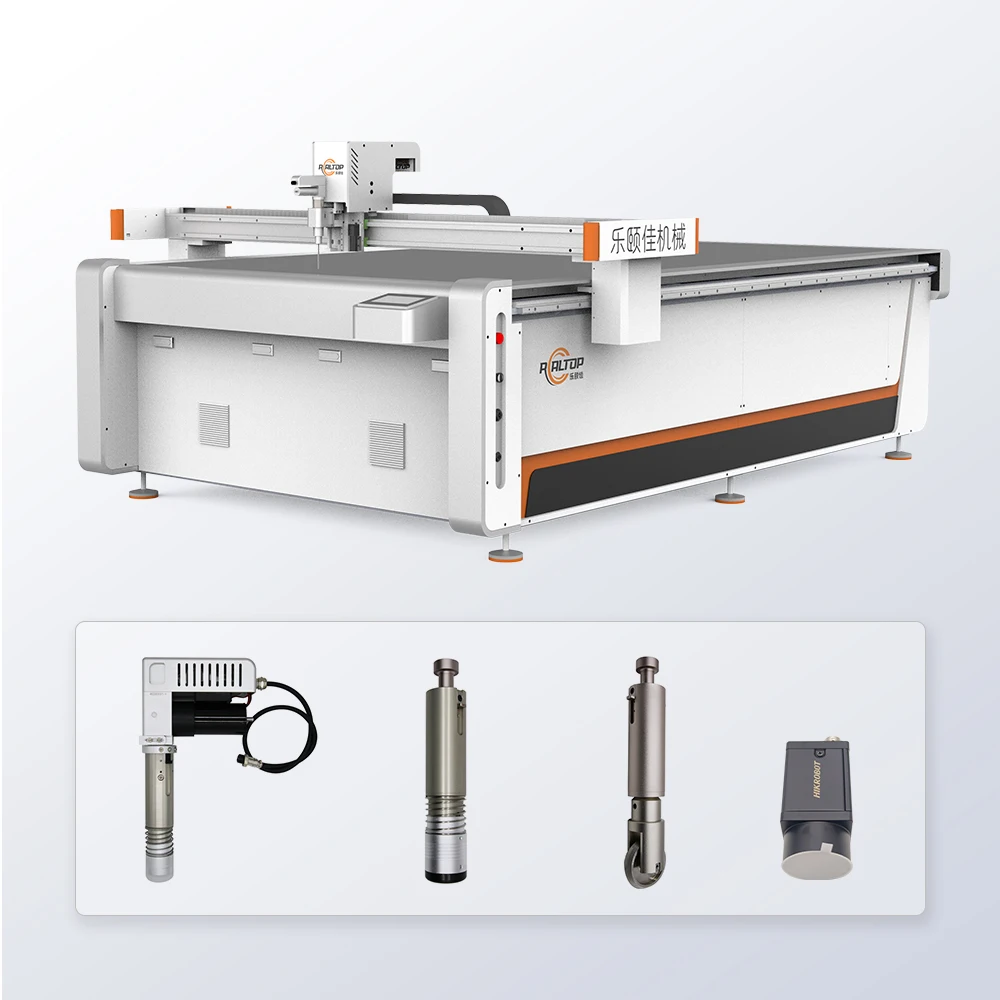
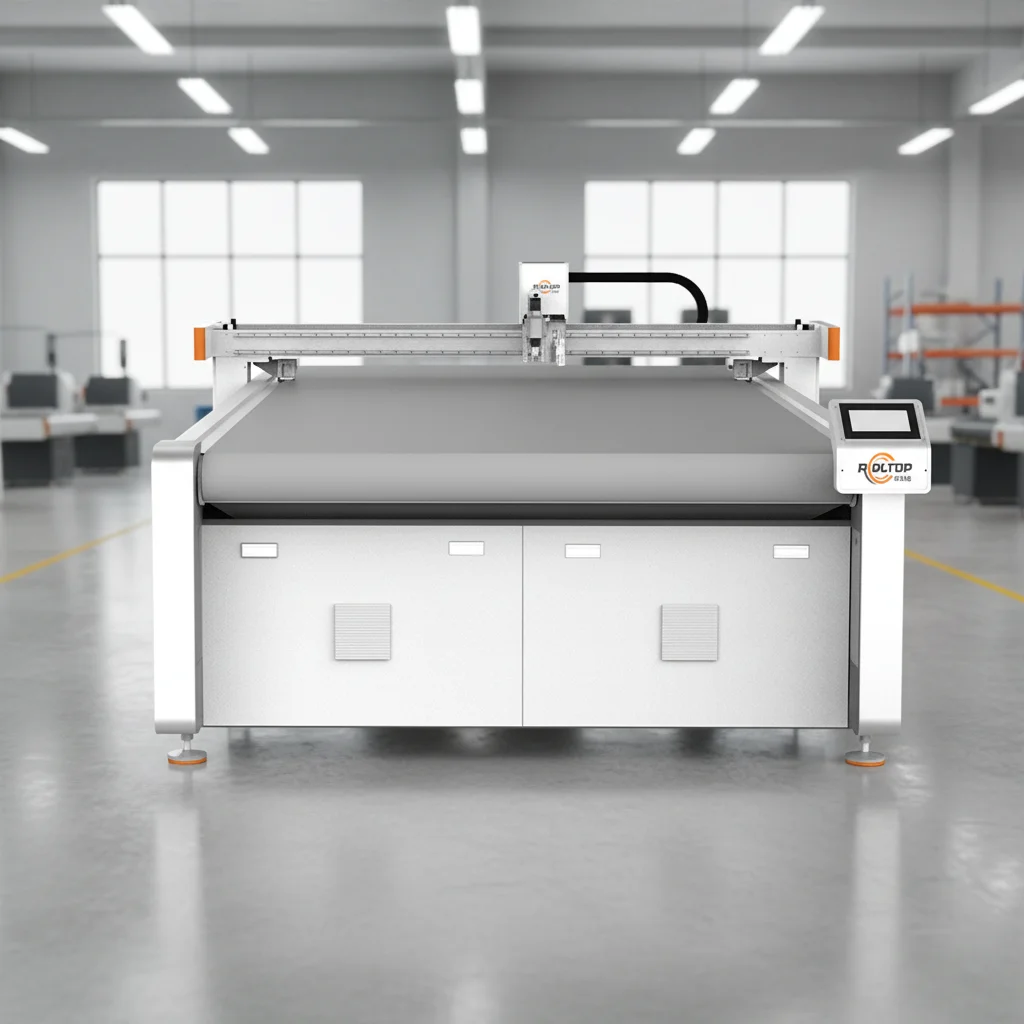
Material-Matched Configuration — Each conveyor-fed cutting table is configured around the buyer’s specific fabric weight, ply count and part geometry rather than a generic working area.
Technical Specifications
| Parameter | Value |
|---|---|
| Product Type | CNC Oscillating Knife Cutting Machine with Conveyor & Auto Feeding |
| Model | RT-D2516/RT-S2516 |
| Working Area | 1600 × 2500 mm |
| Machine Size | 3450 × 2300 × 1250 mm |
| Rated Power | 9 kW |
| Translational Velocity | 800–1200 mm/s |
| Cutting Speed | 200–800 mm/s (varies with material type and thickness) |
| Repeated Accuracy | ≤0.1 mm |
| Max Cutting Thickness | Up to 100 mm (basis not stated in source — depends on material density) |
| Table Type | Flat working table with conveyor belt and auto feeding |
| Vacuum Pump | 7.5 kW |
| Vacuum Table Material | Magnesium-aluminum alloy with fluorocarbon PVDF powder spraying, anodic oxidation |
| Frame Construction | Thick-walled seamless steel structure, high-temperature tempering, CNC machining center finished |
| Transmission System | Digital servo motor (Delta), Taiwan Hiwin linear guide, synchronous belt, ball screw |
| Conveyor Belt | Germany imported |
| Safety Device | Infrared sensors with anti-collision and emergency stop |
| Voltage | 380V ± 10% |
| Instruction System | HP-GL compatible format |
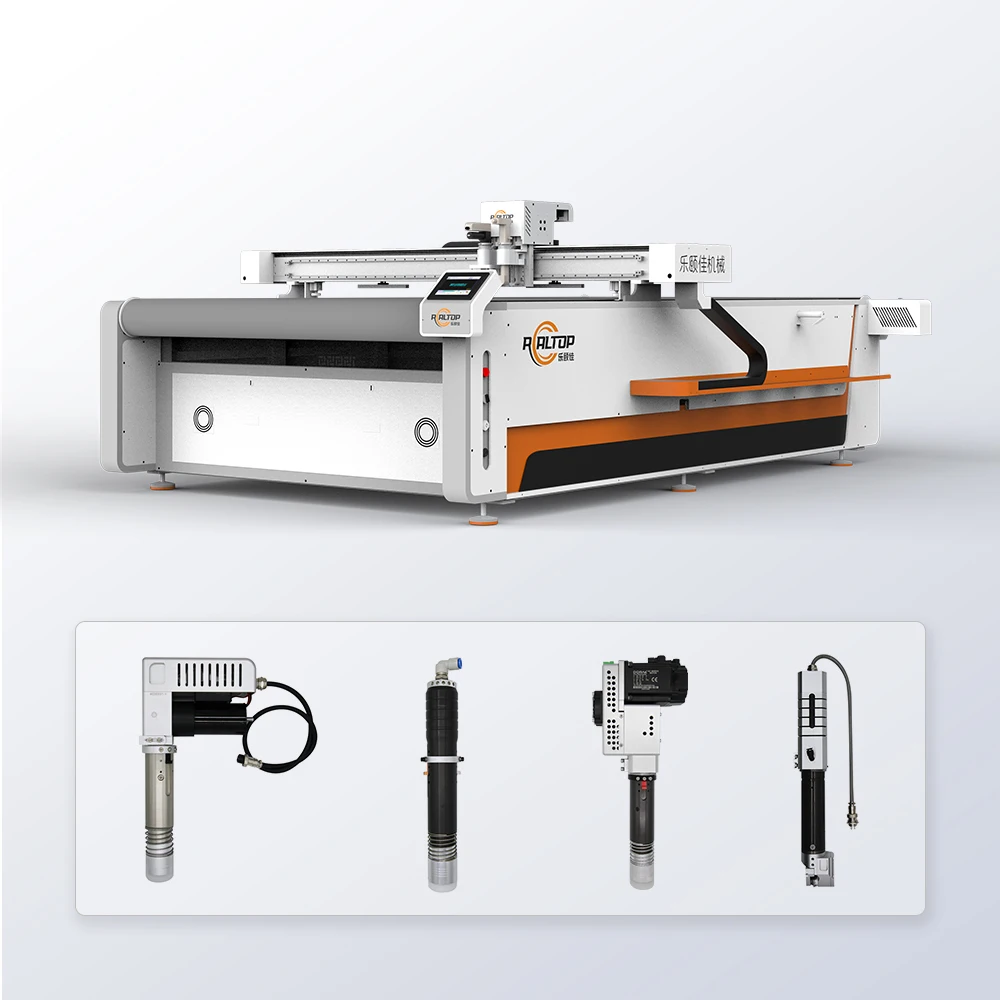
| Tool Head Options | Oscillating knife, pneumatic knife, high-power vibrating knife, circular knife, V-cutting knife, drag knife, creasing wheel, dotted line knife, punching, brush |
| Visual Positioning | Small CCD camera mark point positioning, panoramic camera recognition, projection positioning |
| Software Language Options | English, Russian, Italian, Chinese, special languages customizable |
| Certification | CE |
Application Suitability
| Application | Material or Output |
|---|---|
| Garment production cutting | Multi-ply woven and knitted fabric, technical textiles |
| Footwear and luggage manufacturing | Leather, PU, synthetic composites, shoe lining materials |
| Soft furnishing and carpet cutting | Large-format textile rolls, upholstery fabric, floor covering |
| Automotive interior trimming | Fabric, foam composite, headliner material |
| Sports and outdoor gear | Laminated fabric, neoprene, coated technical material |
| Packaging sample making | Corrugated board, card stock, flexible packaging material |
Why Printed Contour Accuracy Breaks Down at Full Line Speed
The camera must see the mark, process the offset, and adjust the cut path before the knife reaches the next corner — at production speed, that window shrinks to milliseconds.
Production managers who have run printed fabric through a CNC knife cutting machine for fabric production know the frustration: contour recognition works perfectly during the sample demonstration, then drifts once the conveyor runs at full throughput. Small registration marks on stretchy or reflective material compound the problem. The result is mis-cut panels that fail downstream quality checks, forcing operators to slow the line and lose the throughput they purchased the machine to achieve [NEED_CITE: CCD contour recognition validation at production speed].
Conveyor Workflow and Roll-to-Sheet Continuity
A conveyor-fed table changes the production rhythm entirely. Instead of an operator manually laying each fabric ply onto a static table, the auto-feeding system draws material from a roll, advances it through the cutting zone, and discharges finished parts continuously. For garment factories running long production runs of the same pattern, this CNC knife cutting machine for fabric production eliminates the stop-start cycle that limits daily output on flat tables without material handling.
Vacuum Zoning for Small Pattern Pieces
Flexible fabric shifts the moment the knife changes direction unless the vacuum holds it firmly across the entire cutting zone. The magnesium-aluminum alloy table on this unit is paired with a 7.5 kW vacuum pump, and zoned suction keeps even small pattern pieces — collars, cuffs, pocket flaps — flat during high-speed oscillating cuts. Without adequate zoning, small parts lift at the trailing edge and produce ragged or incomplete cuts that the nesting software never predicted [NEED_CITE: vacuum table zoning for flexible material cutting].
How Tool Head Selection Determines Edge Quality
The available tool head range — oscillating knife, circular knife, drag knife, pneumatic knife, V-cutting knife, and creasing wheel — exists because no single blade geometry cuts every fabric cleanly. A Swiss imported oscillating knife delivers a clean perpendicular edge on multi-ply woven fabric, while a circular knife suits single-ply high-speed slitting. Selecting the wrong head for a given material produces frayed edges on knits or crushed layers on foam composites. The multifunctional head accepts quick-change tooling so the same table handles leather shoe uppers in the morning and garment panels in the afternoon.
Specs That Matter on the Shop Floor
The Delta digital servo motors paired with Taiwan Hiwin linear guides deliver a repeated positioning accuracy of ≤0.1 mm, which directly affects how well nested patterns align when cutting multi-ply layups where a fraction of a millimeter accumulates across a 2500 mm stroke. The 9 kW rated power covers the servo drives, oscillating head motor, and vacuum pump together — buyers should verify their workshop supply can sustain 380V ± 10% under load before installation. The thick-walled seamless steel frame, finished on a CNC machining center after high-temperature tempering, resists the vibration that lighter frames transmit into the cutting head at 800–1200 mm/s traverse speeds, keeping edge quality consistent across long shifts.
What Happens When the Configuration Misses the Material
Buyers who specify a cutting table on working area alone, without matching the tool head, vacuum zoning, and feed system to their actual fabric, discover the gap during the first production week. A machine set up for heavy canvas will crush delicate knit material with the wrong oscillation frequency. Conveyor tension calibrated for rigid board stock will stretch elastic fabric before the knife even touches it. These mismatches do not show up in the brochure — they appear as scrap on the factory floor [NEED_CITE: tool head and material mismatch in flexible cutting operations].
Why Production Managers Source From This Line
In-house design and production covering both knife and laser technologies means the cutting method is matched to the material rather than forced into a single platform. Every tool head and table configuration is specified per material type and production volume, not pulled from a default catalog page. CCD camera positioning is validated on the buyer’s own printed marks before the machine ships, not assumed from a generic demonstration. Software compatibility — file formats, nesting workflows, language — is confirmed at order stage so the machine integrates with existing production systems on day one. Sample cutting on the buyer’s own fabric, leather, or composite material provides a physical report before any commitment is made [NEED_CITE: pre-shipment sample cutting validation on buyer material].
Documentation & Verification
- Machine specification sheet matched to selected tool head and conveyor configuration
- Electrical schematic and voltage confirmation for buyer’s local power supply
- Sample cutting report on buyer’s own fabric, leather, or composite material
- Factory test record documenting cutting accuracy and vacuum performance before dispatch
- Software licence and file format compatibility note confirming nesting workflow support
- Spare parts list with part numbers for knives, blades, and conveyor belt segments
Installation, Commissioning & Support
- Floor space planning for 3450 × 2300 mm footprint with conveyor infeed and discharge clearance
- Dedicated 380V circuit sized for 9 kW total rated load plus startup surge margin
- Machine arrives with conveyor belt and vacuum pump pre-mounted, requiring leveling and power connection
- First-run parameter setting for cutting speed, oscillation frequency, and vacuum zone mapping to buyer’s fabric
- Operator training on tool head changeover, CCD camera calibration, and nesting software workflow
- Wear parts inventory covering oscillating knife blades, drag knife tips, and conveyor belt segments
Preparing Your Inquiry
Send the fabric type, weight per square meter, and maximum ply count you intend to cut. Include your target daily output, the roll width you receive from suppliers, and the nesting software you currently use. Specify your workshop voltage and frequency, the control language your operators need, and whether you want a sample cut on your own material before the order is confirmed.
Frequently Asked Questions
Q: How is vacuum table zoning configured to prevent small fabric parts from lifting during cutting?
A: The magnesium-aluminum alloy table is divided into independently controlled suction zones. Zones under the active cutting area are opened while outer zones close, concentrating the 7.5 kW pump’s hold-down force where the knife is working. This keeps small pieces like collars and cuffs flat without requiring full-table vacuum that wastes energy.
Q: What CCD camera options are available and how are they validated on printed registration marks?
A: Three vision options are offered: small CCD camera for mark point positioning, panoramic camera for full-contour recognition, and projection positioning. Each is tested on the buyer’s actual printed fabric at target production speed before shipment, with a verification report confirming mark detection accuracy across the full 1600 × 2500 mm working area.
Q: Which tool head is selected for a given fabric type and thickness?
A: Tool head selection is based on the buyer’s material sample. Swiss imported oscillating knives suit multi-ply woven fabric, circular knives handle single-ply high-speed slitting, and pneumatic knives manage thicker composites. A sample cutting report on the buyer’s own material confirms the choice before the machine is configured for shipment.
Q: How is the conveyor and auto-feeding system matched to roll width and daily production volume?
A: The Germany-imported conveyor belt is tensioned to the buyer’s fabric weight and elasticity. Auto-feeding advance distance is set to the nesting pattern length so cut parts discharge continuously. For high-volume garment runs, this eliminates manual lay-up cycles and keeps the cutting zone fed without operator intervention between rolls.
Q: What software file formats and nesting workflows are supported and how is compatibility confirmed?
A: The system accepts HP-GL compatible formats and integrates with common nesting software packages. File format compatibility is verified at order stage against the buyer’s existing design output. Software language is configurable across English, Russian, Italian, Chinese, and special languages, with the final selection confirmed before the control system is loaded.




商品评价
Clear filtersThere are no reviews yet.