




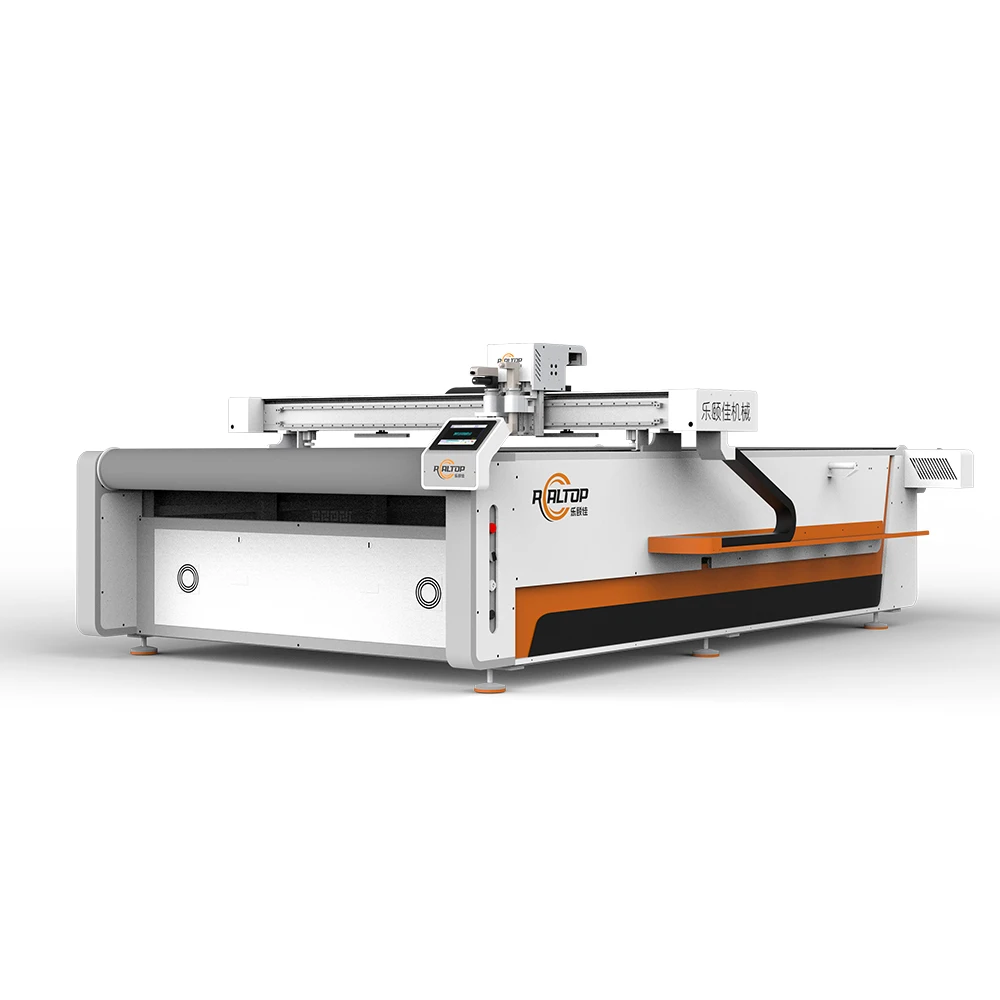


Integrated Tooling and Vacuum Zoning — The RT-D2516/RT-S2516 table is built around a zoned magnesium-alloy vacuum bed and swappable heads, specified per material and ply count so the cell fits an existing line instead of becoming a bottleneck.
Technical Specifications
| Parameter | Value |
|---|---|
| Product Type | CNC Oscillating Knife Cutting Machine |
| Model | RT-D2516 / RT-S2516 |
| Working Area | 1600 × 2500 mm |
| Machine Size | 3450 × 2300 × 1250 mm |
| Rated Power | 9 kW |
| Vacuum Pump | 7.5 kW |
| Table Type | Flat working table / Auto-feeding conveyor table |
| Vacuum Platform | Magnesium-aluminum alloy, PVDF powder spraying, hard anodic oxidation |
| Translational Velocity | 800–2000 mm/s |
| Cutting Speed | 200–800 mm/s (varies by material density and layer count) |
| Cutting Thickness | Up to 100 mm (depends on material density — confirm before order) |
| Repeated Accuracy | ≤0.1 mm |
| Drive System | Digital servo (Delta or Panasonic options), Hiwin linear rail, synchronous belt, imported ball screw |
| Safety | Infrared sensors, anti-collision, emergency stop |
| Vision System | Small CCD mark-point, panoramic camera recognition, projection positioning options |
| Tool Head Options | Oscillating, pneumatic, high-power vibrating, circular, V-cutting, drag, creasing wheel, dotted-line, punching, brush |
| Software | Auto-typesetting / nesting; accepts PLT, DXF, AI files |
| Control | Touch screen panel; English, Russian, Italian, Chinese (custom languages available) |
| Voltage | 380V ±10% |
| Conveyor Belt | Germany-imported belt (feeding model) |
| Frame | Thick-walled seamless steel, high-temperature tempered, CNC-machined |
| Standards | CE declaration where applicable |
Application Suitability
| Application | Material or Output |
|---|---|
| Garment and footwear production | Multi-layer fabric lay-ups, fur, sofa textiles, clothing cloth, non-wovens |
| Automotive interior and gasket making | Leather, PU, EVA, XPE, PVC, composite interior panels, sealing pads |
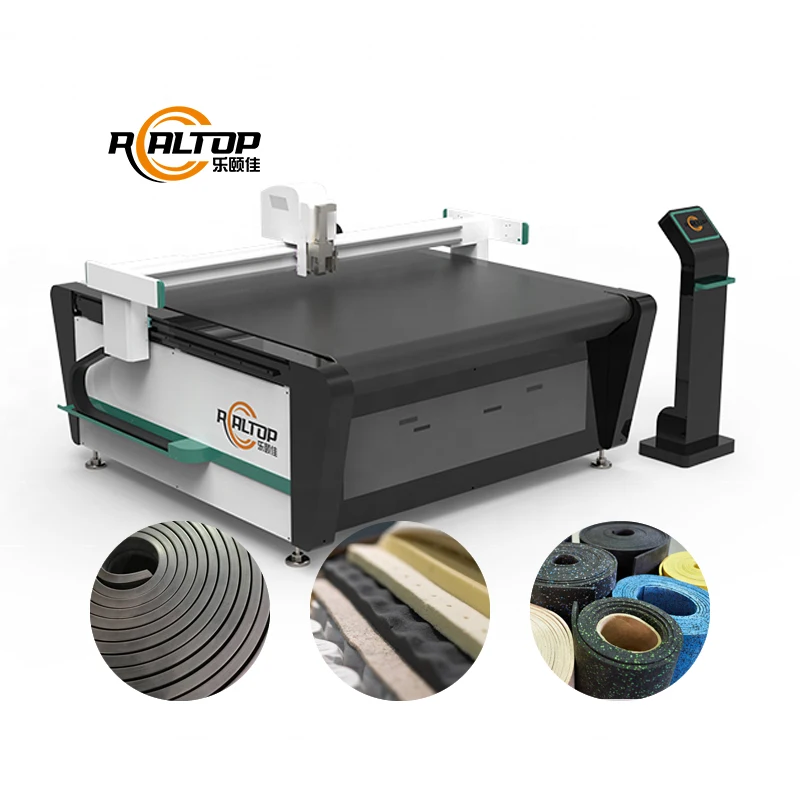
| Carpet and soft furnishing processing | Large-format carpet rolls, floor mats, sponge, foam layers |
| Packaging and sample making | Corrugated cardboard, flat cardboard, plastic box stock |
| Advertising and graphic printing | Sticker film, vinyl, printed contour material tracked via CCD |
| Composite and industrial fabricators | Fiberglass, PTFE, ETFE, PP, PE, rubber sheets |
Why Specifying on Working Area Alone Derails a Cutting Line
A 1600 × 2500 mm bed tells you what fits on the table, not what the knife can actually pull through at line speed.
I have watched a multi-layer lay-up of PVC-coated automotive mat material stall an entire downstream sewing cell because the cutting speed had to be dialed back far below the published range to keep edge quality acceptable. The buyer had specified the machine on footprint and travel, then discovered mid-commissioning that the material density demanded a different tool head and vacuum zoning layout than what was quoted. That kind of mismatch rarely shows up on a spec sheet, which is why we run sample cuts on the buyer’s actual stock before freezing the configuration of any CNC Oscillating Knife Cutting Machine production line. [NEED_CITE: material-specific cutting speed validation before order confirmation]
Head Selection Dictates What the Table Can Actually Cut
The tool head is where the CNC Oscillating Knife Cutting Machine production line either earns its keep or becomes the constraint. A high-frequency oscillating knife handles dense foam and multi-layer fabric cleanly, while a drag knife suits single-ply vinyl or sticker film where edge sealing is irrelevant. Pneumatic and high-power vibrating variants exist for thicker, more abrasive composites. Choosing the head after seeing the machine’s price rather than the material’s cross-section is the most common root cause of ragged edges and crushed foam in installed lines.
Vacuum Zoning and the Small-Part Problem
Small cut parts lift off the bed the moment the knife exits the material if the vacuum zone is too large to hold them flat. The magnesium-aluminum alloy table on this unit is divided into suction zones that can be isolated so only the active cutting area pulls vacuum. This matters on gasket and shoe-material jobs where dozens of small shapes come from a single sheet. Without proper zoning, operators end up taping material down or re-running sheets, both of which kill the throughput the line was planned around. [NEED_CITE: vacuum zoning practices for small-part stability on flatbed cutters]
How the Drive and Frame Keep Repeatability Under 0.1 mm
Repeated accuracy of ≤0.1 mm depends on the frame staying rigid across a 1600 × 2500 mm travel. The thick-walled seamless steel structure is high-temperature tempered and finished on a CNC machining center, which removes the residual stress that otherwise warps the bed over months of vibration. Taiwan Hiwin linear rails and imported ball screws handle the gantry motion, while the servo choice — Delta or Panasonic — lets the buyer align the drive with the maintenance ecosystem already in their factory. This combination is what keeps the twentieth sheet of the shift cutting to the same tolerance as the first.
Reading the Speed and Thickness Numbers Correctly
The 200–800 mm/s cutting speed range is material-dependent; a single-ply textile might sit at the upper end while a 40 mm stack of EVA foam forces the head down to the lower bound. Similarly, the ≤100 mm cutting thickness ceiling only applies to low-density materials — dense rubber or layered composites will need a confirmed test at the actual ply count. The 9 kW rated power covers the oscillating head and drive; the 7.5 kW vacuum pump is a separate load, so the electrical panel and upstream breaker must be sized for both running simultaneously, plus the conveyor motor on auto-feeding variants.
What Happens When the Software Does Not Speak Your Line
A nesting package that cannot import the buyer’s existing PLT, DXF or AI files forces a manual redraw at the prepress stage, adding labor the line plan never budgeted for. The auto-typesetting software here accepts those formats directly, and the CCD vision options — small mark-point, panoramic, or projection positioning — let the system register printed contours without operator intervention. If the downstream workflow relies on a proprietary nesting engine, the software license and file-format compatibility note must confirm that integration path before the order is signed. [NEED_CITE: pre-order file format and nesting workflow verification]
The Cost of a Mismatched Configuration
When the tool head is wrong for the material, the first sign is ragged edges on fabric or crushed cells in foam — defects that only show up once the cut parts reach the sewing or assembly station. When the vacuum zoning is undersized for the part geometry, small gaskets and shoe uppers drift mid-cut, producing scrap that the nesting software cannot recover. And when voltage, plug type, or control language are left unconfirmed until the crate is opened, commissioning delays of several days are routine. These are all configuration errors, not machine failures, and they are entirely preventable.
Why This Source for a CNC Oscillating Knife Cutting Machine Production Line
REALTOP’s in-house design team covers both knife and laser cutting, so the cutting method is matched to the material rather than forced into whichever technology happens to be on the showroom floor. Every head and table combination is specified against the buyer’s material sample, thickness, and daily volume rather than quoted from a standard catalogue. CCD contour positioning is validated at production speed before shipment, not promised in a brochure. Voltage, plug, and control language are locked down during the electrical schematic confirmation stage. And sample cutting on the buyer’s actual stock is the gate the order must pass through before production starts.
Documentation & Verification
- Machine specification sheet listing confirmed tool head and table configuration per material
- Electrical schematic and voltage confirmation matched to destination market
- Sample cutting report produced on buyer’s own material at intended layer thickness
- Software license and file-format compatibility note for nesting workflow
- Factory test record covering repeated accuracy and vacuum zoning function
- Spare parts list with consumable knife blades and belt sections itemized
Installation, Commissioning & Support
- 3450 × 2300 mm footprint requires a level concrete floor clear of overhead obstructions
- 380V ±10% three-phase supply with dedicated breaker sized for combined 9 kW plus 7.5 kW vacuum load
- Machine ships partially assembled; gantry and table re-joined on site with alignment check
- First-run commissioning includes vacuum zone balancing for buyer’s confirmed part geometry
- Operator training covers tool head changeover and CCD mark-point calibration on the touch panel
- Consumable blade and imported belt spare-kit recommended for the first production year
What to Share When You Request a Quotation
Send the material type, ply count or total stack thickness, and the largest single sheet dimension you plan to cut. Include the daily volume target and the voltage and frequency at your facility so the servo and vacuum pump can be matched before the electrical schematic is drawn. If your prepress department runs a specific nesting workflow, share a sample file so format compatibility can be confirmed before the order is locked.
Frequently Asked Questions
Q: How do I verify the cutting throughput before committing?
A: Throughput depends on material density and layer count, not the machine’s travel speed alone. We run sample cuts on your actual stock at your intended lay-up thickness and record the real cutting speed, edge quality, and cycle time in a cutting report. That report becomes the baseline your line plan is built around, not a catalogue number.
Q: How do I choose between the oscillating, pneumatic, and drag knife heads?
A: The choice follows the material, not the machine. Oscillating heads handle multi-layer fabric and foam, pneumatic variants suit dense leather and composites, and drag knives are for thin single-ply vinyl or sticker film. We confirm the head on your sample material before the tool head list is finalized.
Q: Will the software work with our existing nesting files?
A: The auto-typesetting system accepts PLT, DXF, and AI formats natively. If your shop runs a third-party nesting engine, send us a sample file during the inquiry stage. We verify import, nesting behavior, and output compatibility and document the result before order confirmation.
Q: What are the installation requirements for the auto-feeding variant?
A: The auto-feeding model needs clear floor space beyond the 3450 mm machine length for the conveyor infeed and outfeed. The 380V supply must cover the 9 kW machine plus the 7.5 kW vacuum pump on a dedicated circuit. Our team checks floor level and utility positions during the pre-shipment layout review.
Q: Can the voltage and control language be customized?
A: The standard is 380V ±10% with English, Russian, Italian, or Chinese on the touch panel. Other voltages and special languages are configured during the electrical schematic confirmation stage, and the final setting is recorded in the shipped documentation so local electricians have the reference they need.



商品评价
Clear filtersThere are no reviews yet.