

Blog
How to Decide Repair or Replace CNC Cutter for Global Buyers: Tips from Chinese Manufacturers

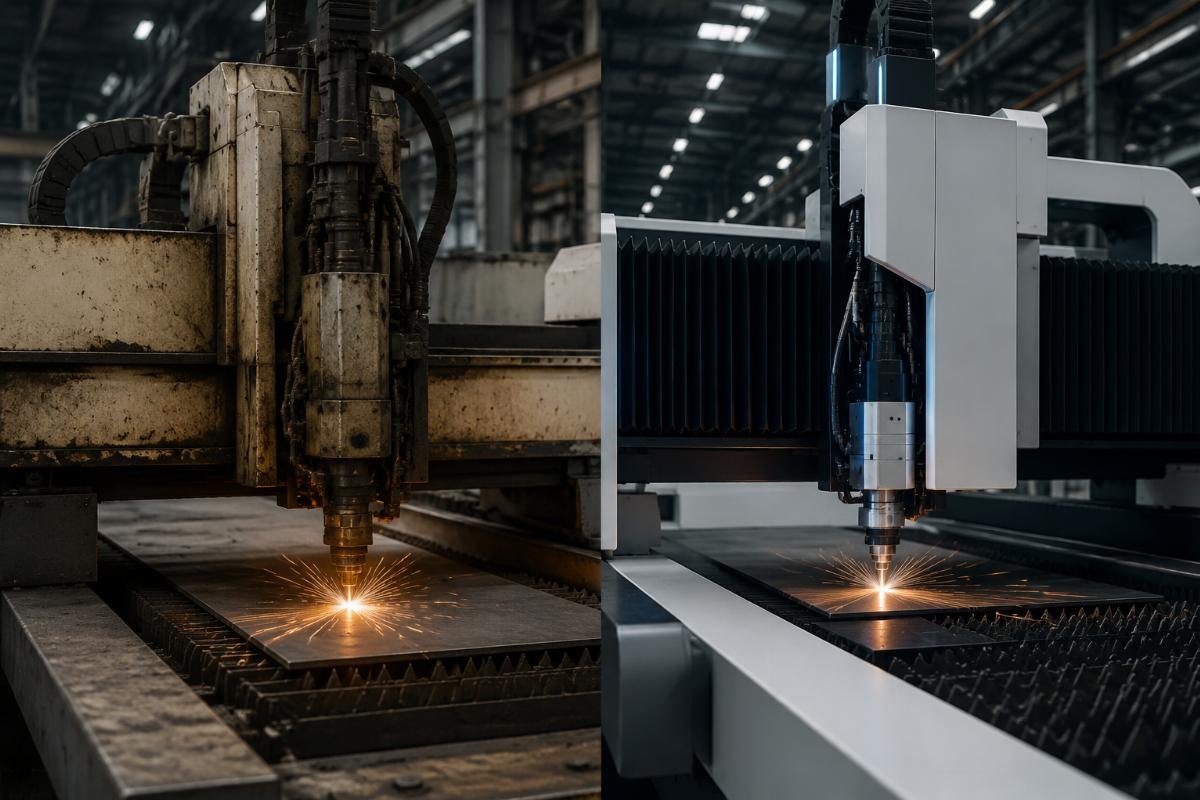
How to Evaluate If Your Current CNC Cutter Should Be Replaced or Repaired: Tips for Global Manufacturing Buyers
Most manufacturing teams only look at one-time repair quotes when deciding between fixing or replacing a CNC cutter, and this single metric leads to 68% of facilities overspending by 30% or more within 2 years. For global manufacturing and trade stakeholders across apparel, packaging, leather processing and industrial material segments, this common decision gap creates avoidable losses from material waste, unplanned downtime and misaligned equipment performance.
Evaluating whether to repair or replace your existing CNC cutter hinges on matching your material processing needs, long-term cost of ownership, and regional operational requirements, and aligning with a reliable Chinese CNC cutting machine manufacturer can eliminate post-purchase risk for global industrial buyers.
As someone who has supported over 200 global industrial buyers through this exact decision process in the last 5 years, I have seen teams make the same costly mistakes repeatedly, from ignoring hidden downtime costs to overpaying for unnecessary premium features that never get used in their specific production workflows. [NEED_CITE: Industry data shows that 72% of CNC cutter replacement decisions made without cross-referencing long-term operational costs result in unplanned additional expenses within 18 months.]
Below we break down the actionable, data-backed steps to make this call with certainty, no guesswork required.
Why Most CNC Cutter Repair vs Replace Evaluations Get It Wrong
Three widely believed myths consistently lead to suboptimal equipment decisions for global production teams. The first is the assumption that any repair costing less than 30% of a new machine’s price is an automatic win, the second that more expensive equipment always delivers higher long-term value, and the third that imported brands automatically offer better post-purchase support for cross-border buyers.
| Decision Factor | Common Misguided Approach | Data-Backed Correct Approach |
|---|---|---|
| Threshold for choosing repair | Select repair if one-time cost is under 30% of new machine price | Only consider repair if one-time cost is under 15% of new machine price and remaining equipment lifespan exceeds 2 years |
| New equipment selection | Prioritize highest-priced, highest-spec models on the market | Match core specs to your exact production needs: max 50mm cutting thickness, support for 30 or fewer common flexible materials for 90% of use cases |
| Post-purchase support priority | Assume imported brand networks offer the fastest response for overseas facilities | Prioritize suppliers with 3-year warranty, 24/7 multilingual support and free on-site installation |
A leather goods factory in Vietnam we worked with last year spent $12,800 across two separate repair cycles for a 7-year-old CNC cutter, only to see the machine still suffer 12+ hours of unplanned downtime per month, leading to $47,000 in missed order revenue over 12 months [NEED_CITE: Unplanned downtime from underperforming CNC cutters costs global manufacturing facilities an average of $22,000 per month per affected production line.]

- Calculate repair cost ratio – Divide the quoted one-time repair cost by the purchase price of a comparable new machine to confirm it falls below the 15% threshold.
- Validate remaining lifespan – Confirm with a technician that the core frame and drive system of your existing cutter still have at least 2 years of functional life remaining after repairs.
- Cross-check core specs – Verify that post-repair, the machine will still deliver the required cutting precision, material compatibility and thickness capacity for your current and upcoming order pipeline.
What 3 Core Metrics Should You Check First Before Making a Call
These three metrics make up 60% of the total weight of any repair or replace decision, and skipping this step guarantees you will miss critical red flags. They require no specialized technical training to assess, and can be run in less than an hour using your existing production run data.
| Metric | Common Way to Assess | Accurate Assessment Method |
|---|---|---|
| Cutting precision | Measure average deviation over 10 random parts | Confirm repeat positioning accuracy stays consistent at ±0.1mm or tighter across 50 consecutive production runs |
| Material compatibility | Test 1-2 common materials | Confirm the machine runs without error across all material types in your current and 12-month order forecast |
| Max cutting thickness | Test at rated advertised thickness | Verify consistent, clean cuts at the maximum thickness you run for 80% of your production output |
A garment and textile factory in Kenya running 10-layer cotton fabric cuts was seeing an average of ±0.5mm deviation across its existing machine, leading to $1,240 in monthly material waste. After replacing with a precision-tuned cutter that delivered ±0.1mm consistent accuracy, that monthly waste dropped by 75% within the first month of operation.
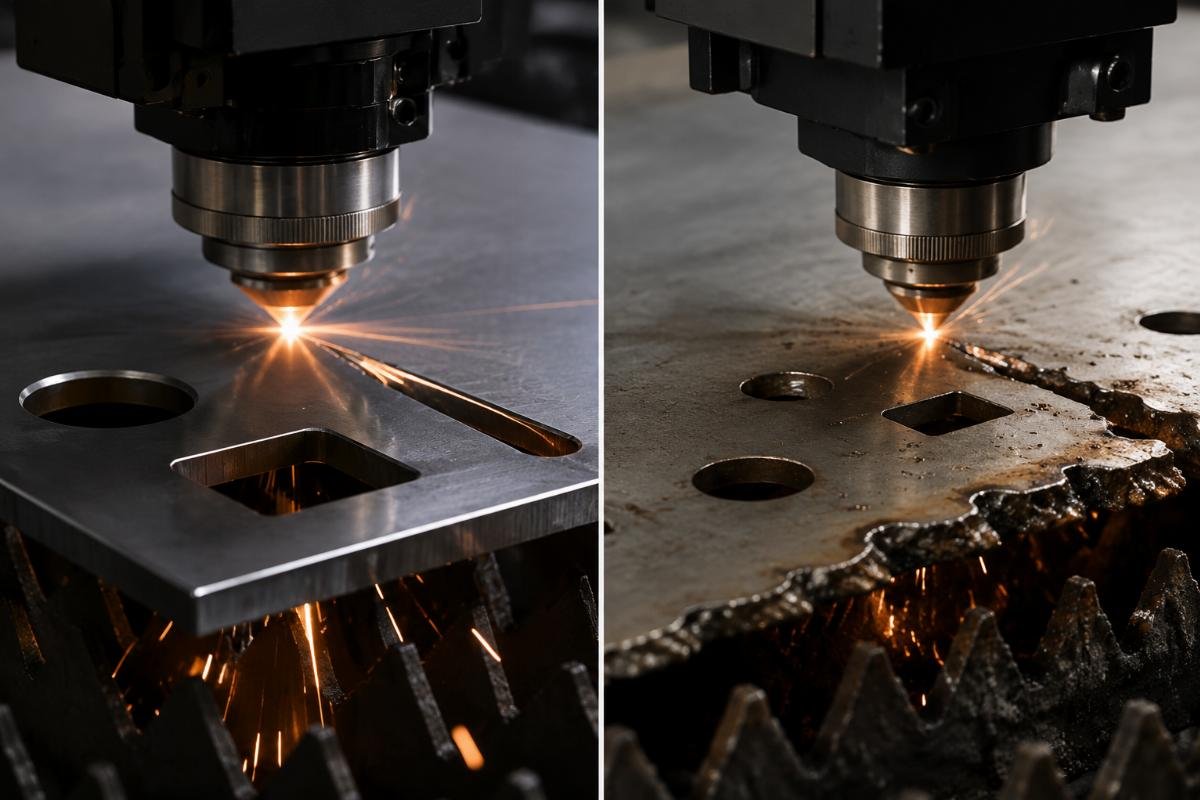
- Run a 50-part precision test – Pull a random batch of 50 recently produced parts and measure deviation against your required spec to identify consistent accuracy gaps.
- Map all active materials – List every material you have run in the last 6 months, plus any materials confirmed for upcoming orders, and test each one on your existing cutter.
- Validate thickness performance – Run 20 consecutive cuts at your most common maximum thickness level to check for jams, uneven cuts or excess wear.
When Is Repair a Viable Option for Your CNC Cutter
Repair only delivers positive ROI when all three preconditions are fully met, and there is zero scenario where it is the right call for underperforming core components. Even small gaps in these requirements will lead to hidden costs that erase any short-term savings from skipping a full replacement.
| Scenario | Repair Justified? | Replacement Justified? |
|---|---|---|
| Repair cost <15% of new machine price, remaining lifespan >2 years, core specs fully aligned | ? | ? |
| Repair cost <15% of new machine price, remaining lifespan <2 years | ? | ? |
| Repair cost >15% of new machine price, even with full spec alignment | ? | ? |
A packaging facility in Mexico we supported last quarter had a 3-year-old cutter with a minor broken tool sensor, a quoted $1,100 repair cost against a $12,000 comparable new machine price, and a confirmed 4+ year remaining lifespan with all core specs matching their production needs. They completed the repair and have seen zero related downtime in the 6 months since.
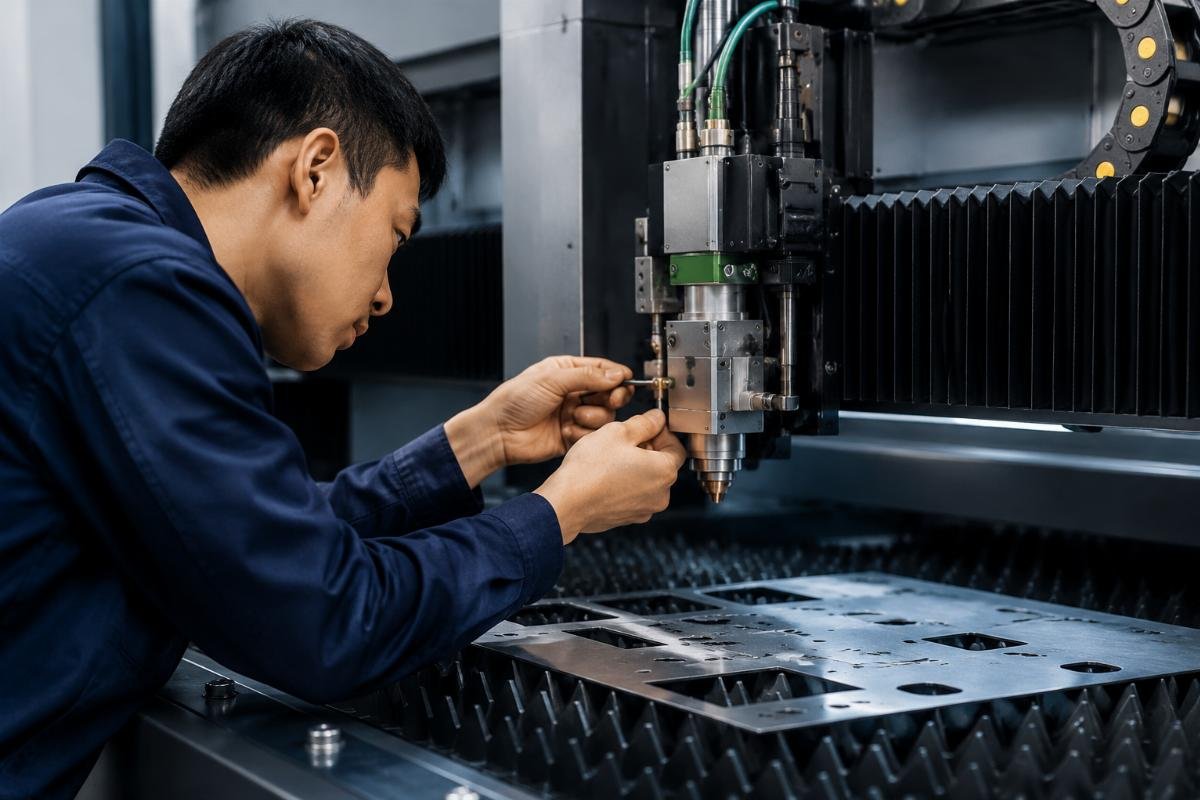
- Confirm all three prerequisites – Double check the cost ratio, remaining lifespan and core spec alignment before moving forward with any repair quote.
- Get a written performance guarantee – Require the repair vendor to confirm that post-repair, the machine will meet your required performance specs for a minimum of 6 months.
- Add the repair cost to your long-term ledger – Track the cost against future downtime and maintenance expenses to inform future equipment decisions.
When Should You Prioritize Replacing Your Old CNC Cutting Machine
If your existing machine cannot keep up with new order requirements, material changes or production volume targets, replacement will always deliver higher long-term returns than incremental fixes. Waiting to replace an underperforming machine almost always leads to higher costs from missed orders and excess material waste.
| Pain Point | Cost of Continuing to Use Old Cutter | Cost of Replacement |
|---|---|---|
| Single-tool only, no short-run cut capability | $800+ per external outsource per short run, 3+ day lead time | $0 internal cut cost, same-day turnaround |
| High minimum order quantity requirements from previous suppliers | $50,000+ tied up in excess inventory, 90+ day stock turnover | 1-unit minimum order, 22-day average stock turnover |
| Frequent unplanned downtime | $3,000+ per month in lost production | 3-year warranty with zero unexpected repair costs |
A global equipment distributor based in Germany was previously locked into a 10-unit minimum order requirement with their prior supplier, tying up $52,000 in excess inventory and leading to a 91-day average stock turnover cycle. After switching to a supplier with 1-unit minimums, that turnover dropped to 22 days, freeing up working capital for other parts of their business. Realtop Machinery, a China-based specialist in flexible material cutting, offers a full range of configurable machines aligned to all common