


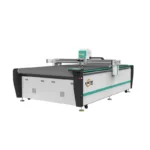
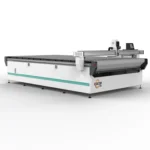
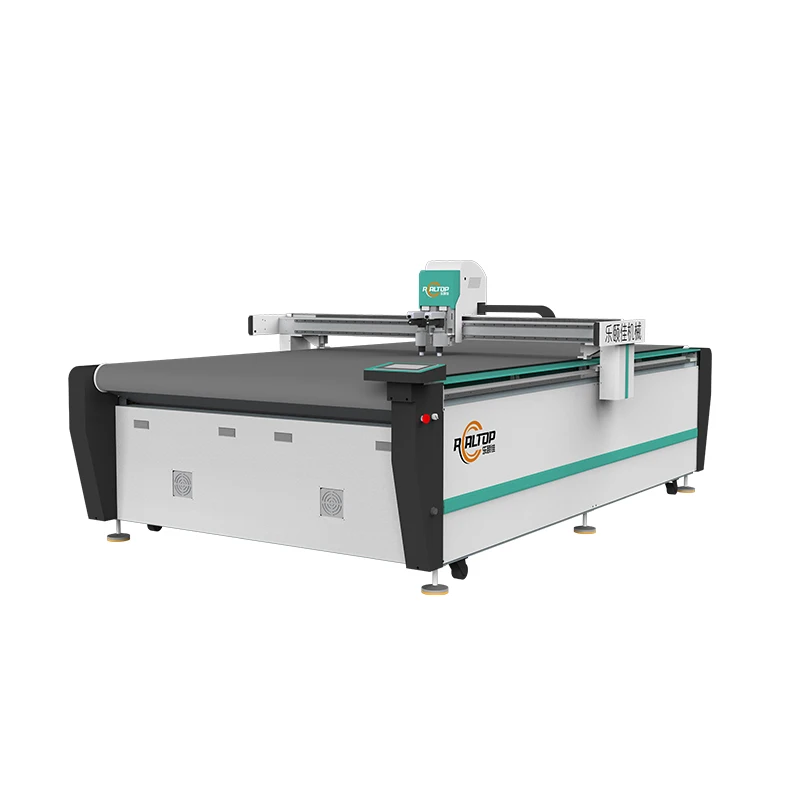
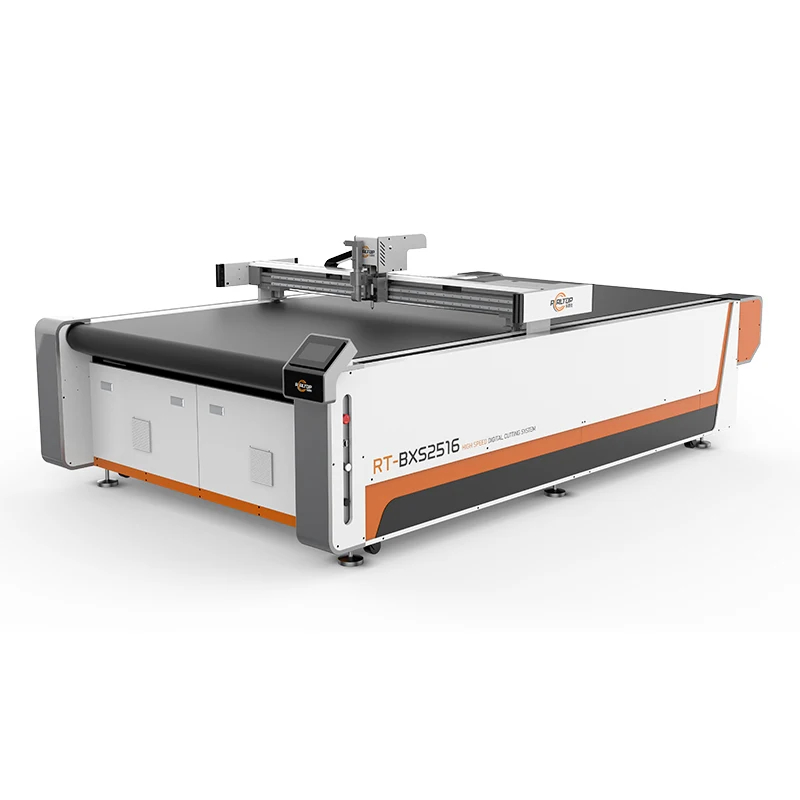
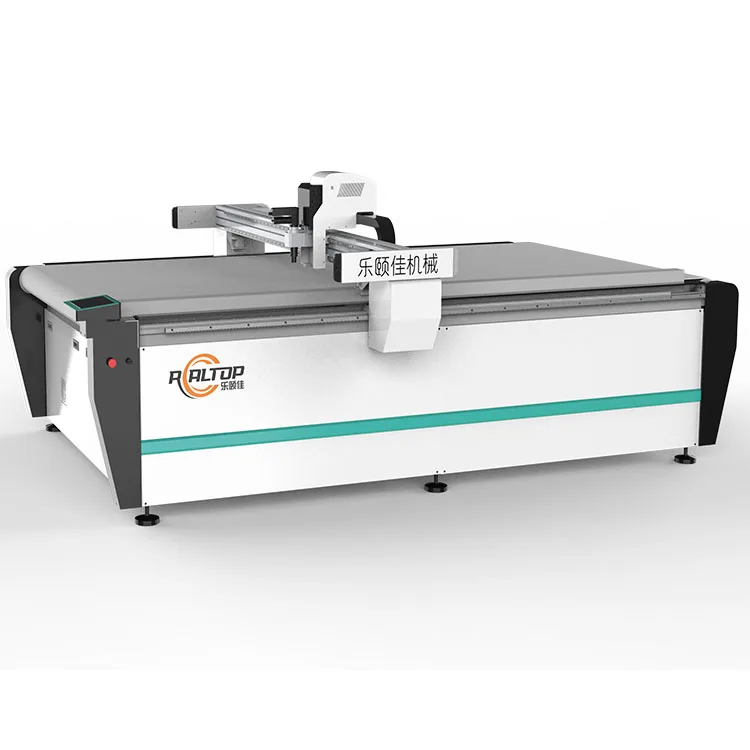
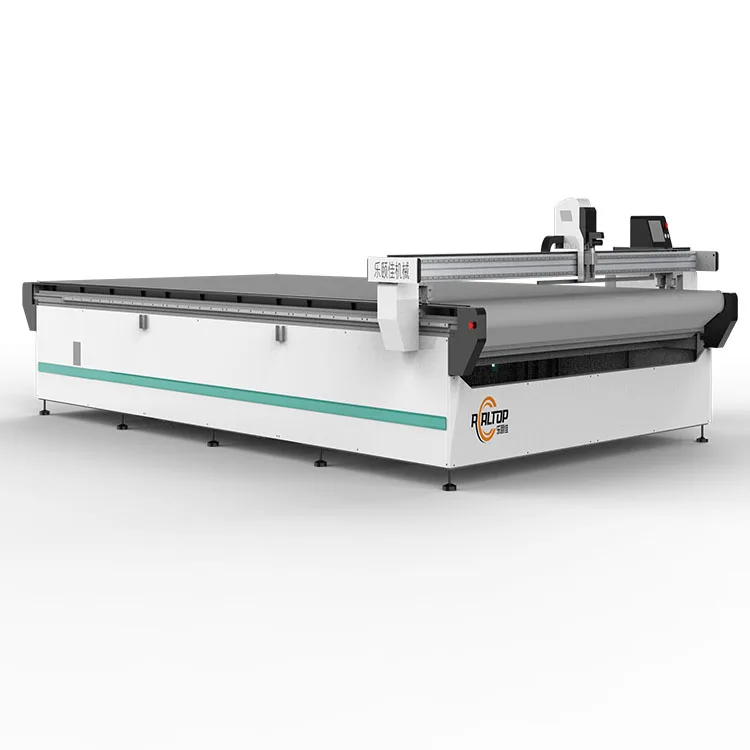
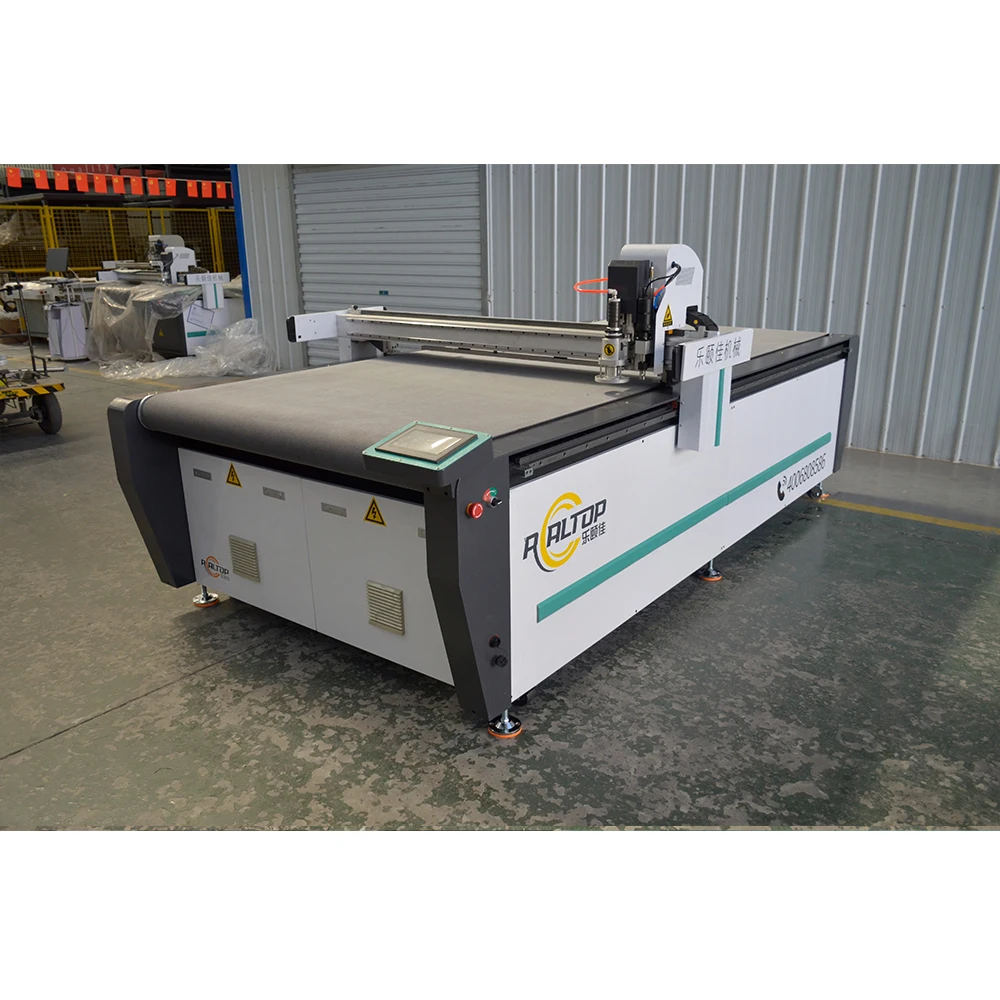
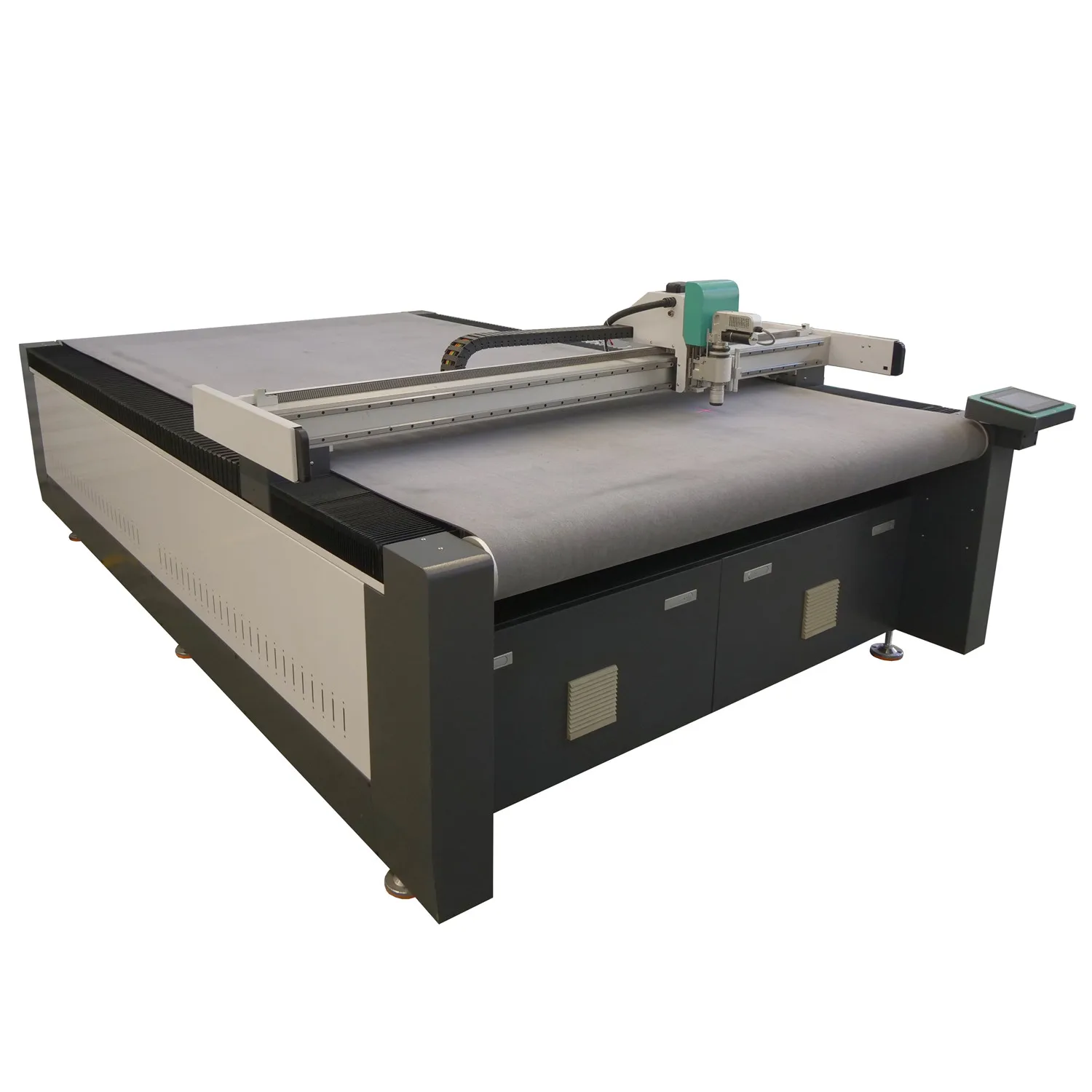

Blade-to-Material Matching — We configure oscillating knife, vacuum zoning and CCD positioning together based on your actual fabric stack, rather than quoting a standard table and hoping it fits your production floor.
Technical Specifications
| Parameter | Value |
|---|---|
| Model | RT-D2516/RT-S2516 |
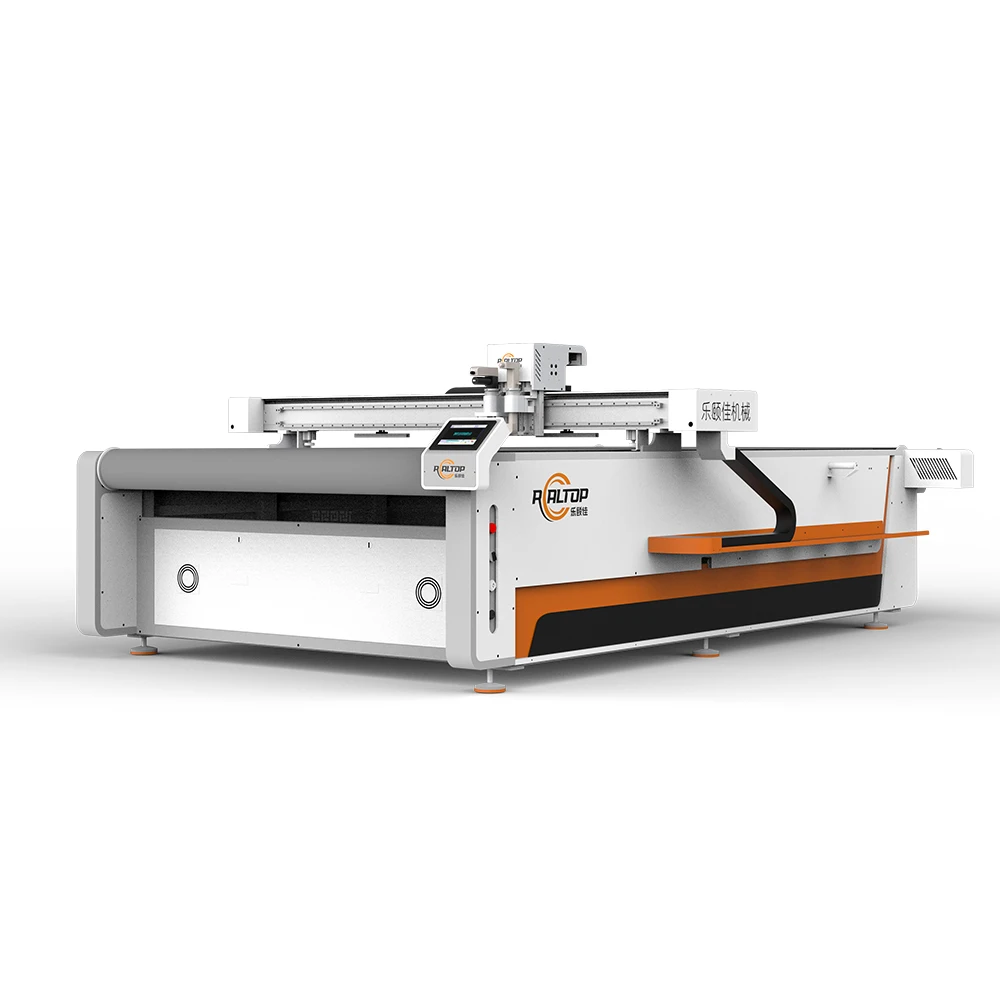
| Product Type | CNC Oscillating Knife Cutting Machine |
| Working Area | 1600 × 2500 mm |
| Machine Dimensions | 3450 × 2300 × 1250 mm |
| Rated Power | 9 kW |
| Table Options | Flat working table or auto-feeding conveyor table |
| Cutting Thickness | Up to 100 mm (varies with material density and layer count) |
| Translational Velocity | 800–2000 mm/s |
| Cutting Speed | 200–800 mm/s (depends on material type and thickness) |
| Repeated Accuracy | ≤ 0.1 mm |
| Tool Head Options | Swiss-imported vibrating knife (full/half cut), pneumatic knife, high-power vibrating knife, circular knife, V-cutting knife, drag knife, creasing wheel, dotted-line knife, punch tool, brush |
| Transmission System | Digital servo motor, linear guide, synchronous belt, ball screw |
| Servo Motor | Delta (Japan Panasonic optional) |
| Guide Rail | Taiwan Hiwin |
| Conveyor Belt | Germany-imported belt (on auto-feeding models) |
| Vacuum Table | Magnesium-aluminum alloy, PVDF coating, anodic and hard oxidation finish |
| Vacuum Pump | 7.5 kW, aviation aluminum housing with built-in silencer sponge |
| Visual Positioning | Small CCD mark-point positioning, panoramic camera recognition, projection positioning |
| Control Panel | Touch screen, multi-language (English, Russian, Italian, Chinese; others customizable) |
| Instruction Format | HP-GL compatible |
| Software File Formats | PLT, DXF, AI |
| Voltage | 380 V ± 10 % |
| Frame | Thick-walled seamless steel, high-temperature tempering, CNC-machined |
| Safety Devices | Infrared sensors, anti-collision system, emergency stop |
| Standards | CE declaration where applicable |
Application Suitability
| Application | Material or Output |
|---|---|
| Garment & footwear production | Single and multi-layer woven fabric, knitted textile, denim, lining cloth, shoe upper material, luggage fabric |
| Automotive interior trimming | Sponge composite leather, PU and EVA foam sheets, carpet, headliner fabric, sound-deadening felt |
| Soft home furnishings | Sofa upholstery fabric, curtain cloth, carpet, sponge padding, mattress ticking |
| Bags & leather goods | Genuine leather, synthetic PU/PVC leather, microfiber leather, canvas |
| Sealing gaskets | PTFE, ETFE, rubber sheet, non-asbestos fiber composite |
| Composite material cutting | Carbon fiber prepreg, fiberglass cloth, XPE foam, PP and PE sheet |
| Sports & outdoor goods | Wetsuit neoprene, tent fabric, backpack nylon, athletic padding foam |
Why "Working Area" Alone Cannot Guarantee Clean Edges on Layered Fabric
Cutting quality on multi-layer cloth depends on tool head selection, vacuum zoning and blade frequency — not just table size.
I have watched production managers sign off on a 1600 × 2500 mm table because the working area matched their marker length, only to discover during mass production that the vacuum zones were too coarse to hold small sleeve panels flat, or that a standard oscillating knife shredded elastane-blend knits at the bottom of a twelve-layer lay [NEED_CITE: vacuum hold-down requirements for small garment pattern pieces]. The CNC oscillating knife cutting machine production line you evaluate must be specified against your real fabric composition, lay height and smallest pattern piece — otherwise the machine runs, but the edges do not pass quality control. Every parameter from blade amplitude to vacuum zone count has to be locked in before the frame goes to machining, not adjusted after delivery.
Matching Blade Type and Frequency to Fabric Composition
Different textiles demand different cutting mechanics. Woven denim and canvas respond well to a high-frequency vibrating knife with a standard pointed blade, while open-weave knits and elastane blends require a lower oscillation amplitude and sometimes a circular knife to avoid pulling fibers from the weave. For sponge-composite leather used in automotive interiors, a high-power vibrating knife combined with a sharper blade angle prevents the foam core from tearing beneath the skin layer. The Swiss-imported knife head on the RT-D2516/RT-S2516 supports full-cut, half-cut and cursor-location modes, allowing one head to handle both through-cutting and kiss-cutting on appliqué work without a tool change mid-job.
Vacuum Zoning and Its Role in Small-Piece Hold-Down
The magnesium-aluminum alloy table is divided into independently valved suction zones. On a full garment marker, large bodice panels may cover three zones at once, but collar pieces and belt loops might sit entirely within one small zone. If that zone cannot generate enough localized suction, the piece lifts during the return stroke of the oscillating blade, producing a frayed edge or a shifted cut that ruins the entire ply. The PVDF hard-oxidation coating on the table surface resists abrasion from repeated loading of heavy canvas rolls and prevents the vacuum holes from clogging with fiber dust — a detail that matters once the machine runs multiple shifts [NEED_CITE: table surface wear on continuous textile cutting lines].
Reading the Specs That Actually Affect Daily Output
The 9 kW rated power covers both the cutting head drive and the 7.5 kW vacuum pump simultaneously, meaning the servo-driven oscillating knife does not starve for current when suction is at maximum. Repeated accuracy of ≤ 0.1 mm is measured at the blade tip across the full 2500 mm travel, not at the gantry center — critical when nesting collar pieces beside trouser legs on the same marker. Translational speed of up to 2000 mm/s governs non-cutting moves between pattern pieces, while actual cutting speed of 200–800 mm/s depends on material density; a four-layer neoprene lay cuts slower than a twelve-layer cotton poplin lay, and the control system adjusts feed rate accordingly. The Taiwan Hiwin linear guides maintain this positioning tolerance over years of two-shift operation, provided the automatic lubrication interval is respected.
The Hidden Cost of Skipping a Material-Based Configuration Check
When a buyer specifies a machine solely by working area and price, the tool head defaults to a general-purpose oscillating knife that may handle mid-weight woven fabric but fails on coated technical textiles or carbon fiber prepreg. Ragged edges on foam-backed laminates force downstream operators to hand-trim every piece, erasing any throughput gain the CNC table was supposed to deliver [NEED_CITE: downstream rework cost from incorrect cutting tool selection]. Insufficient vacuum zoning on small automotive interior pieces causes lift marks that show up after the cover is stretched over the seat frame, triggering a rejection at final assembly. These failures are not machine defects — they are specification gaps that surface only after the production line is committed.
What Building Both Knife and Laser Lines Under One Roof Changes for You
Because the design team engineers oscillating-knife tables and CO₂ laser cutters in the same facility, they can advise whether a particular fabric edge is better sealed by a laser pass or mechanically cut by a vibrating knife — removing the guesswork when your product mixes woven panels with synthetic trims. Every tool head and vacuum zone layout is documented in a configuration list tied to your material stack before the frame enters CNC machining. The CCD camera, panoramic recognition and projection positioning options are tested on your printed marker material at line speed, not demonstrated on a showroom sample. Voltage, plug type and control-panel language are confirmed in the electrical schematic before production begins, so the machine arrives ready to connect rather than waiting for a transformer or a translator.
Documentation & Verification
- Sample cutting report on your exact fabric type, layer count and lay height
- Tool head and vacuum zone configuration list matched to your material stack
- Electrical schematic confirming voltage, plug type and control language
- Software license with confirmed PLT, DXF and AI file format compatibility
- Factory test record showing repeated accuracy across full 2500 mm travel
- Packing photographs documenting machine condition before crate closure
Installation, Commissioning & Support
- Foundation must support 3450 × 2300 mm footprint with level tolerance for the vacuum table
- Dedicated 380 V ± 10 % circuit rated for 9 kW continuous draw with proper grounding
- Machine ships with gantry lowered; reassembly limited to control arm and safety sensor brackets
- First-run calibration includes blade depth, vacuum zone mapping and CCD mark-point alignment
- Operator training covers nesting software import, tool change and daily guide-rail lubrication
- Spare-parts list includes Swiss knife blades, conveyor belt segments and vacuum pump silencer sponge
What We Need to Quote Accurately
Send us your fabric composition, weight per square meter, maximum lay height and the smallest pattern piece in your marker. If your workflow already uses a specific CAD system, share a sample PLT, DXF or AI file so we can verify nesting compatibility before quotation. Let us know your workshop voltage and frequency, plus the control-panel language your operators prefer, so the electrical package and HMI are configured correctly from day one.
Frequently Asked Questions
Q: How do you select the right tool head for my specific fabric and layer count?
A: We ask for your fabric composition, weight and maximum lay height, then run sample cuts using the oscillating knife, circular knife or high-power vibrating knife as appropriate. Edge quality, ply separation and cutting speed are recorded in a sample report before we lock the tool head configuration into your order.
Q: Will the vacuum table hold small garment pieces without lifting during high-speed cutting?
A: The magnesium-aluminum alloy table is divided into independently valved zones. We map your smallest pattern piece against the zone layout and adjust suction distribution so that collar tabs and belt loops stay flat even at maximum oscillation frequency.
Q: Can the CCD camera track printed marks reliably at full production speed?
A: Yes — both the small CCD mark-point camera and the panoramic recognition camera are tested on your actual printed marker material. We verify tracking accuracy at the cutting speed your material requires, not at a reduced demonstration speed.
Q: Is the nesting software compatible with my existing garment CAD workflow?
A: The control system imports PLT, DXF and AI files directly. Before order confirmation, we run your sample file through the nesting module to confirm marker layout, grain-line rules and output format match your current production workflow.
Q: How do I verify cutting capacity on my layered fabric before committing?
A: Send us your actual material — fabric type, thickness, lay height and daily volume target. We produce a sample cutting report documenting edge quality, achievable speed and tool head selection, so you evaluate real results rather than catalog promises [NEED_CITE: pre-order sample testing practice in CNC cutting equipment procurement].




商品评价
Clear filtersThere are no reviews yet.