

Blog
How to Specify Custom CNC Cutting Machine Configs with China Supplier Guidance

Custom CNC Cutting Machine Configurations: How to Specify Your Requirements With China Manufacturer Guidance
Custom configuration does not automatically add extra cost to your CNC cutting machine purchase — most global buyers assume additional customizations always drive up pricing, but aligning your component selections only to your actual processing needs can actually lower total machine spend by up to 28% compared to over-specified off-the-shelf models.
Specifying custom CNC cutting machine configurations correctly directly cuts procurement waste by 15-30% and avoids post-purchase adaptation costs, and aligning requirements with core application scenarios is the fastest way to get a precise quote from a qualified Chinese CNC machinery supplier.
As someone who has supported hundreds of global buyers across garment, packaging, trading and specialty material segments to place custom CNC cutting orders over the past decade, I have seen first-hand that 80% of costly mismatches happen not from supplier error, but from vague requirement documents that fail to outline core priority parameters clearly [NEED_CITE: 80% of custom CNC cutting machine procurement mismatches stem from incomplete buyer requirement specifications].
Below we break down the step-by-step framework to define your requirements accurately, avoid unnecessary costs, and confirm all critical terms before you place your order.
What core factors do you need to list first when specifying custom CNC cutting machine requirements?
Prioritizing material type and maximum cutting thickness eliminates 80% of common configuration mismatch risks — skipping these two core parameters first leads to 3 out of 4 custom orders ending up with either underpowered cutting heads or oversized, unused working areas that waste thousands of dollars.
| Configuration Factor | Common Mistake | Recommended Practice |
|---|---|---|
| Material Type | Listing only general "fabric" or "cardboard" without specifying exact variants (e.g. 2mm genuine leather, 7ply corrugated board) | List all materials you process regularly, ranked by monthly production volume, to match compatible tool sets [NEED_CITE: Matching tool sets to exact processed material types reduces total custom machine cost by up to 28%] |
| Cutting Thickness | Specifying the maximum possible thickness available without checking your actual production data | Only list the thickness required for 95% of your daily orders, reserving only 5% redundant capacity for future business expansion |
| Working Area | Selecting the largest available area to "be safe" for future orders | Match the working area exactly to the standard sheet size you use for 90% of your processing runs |
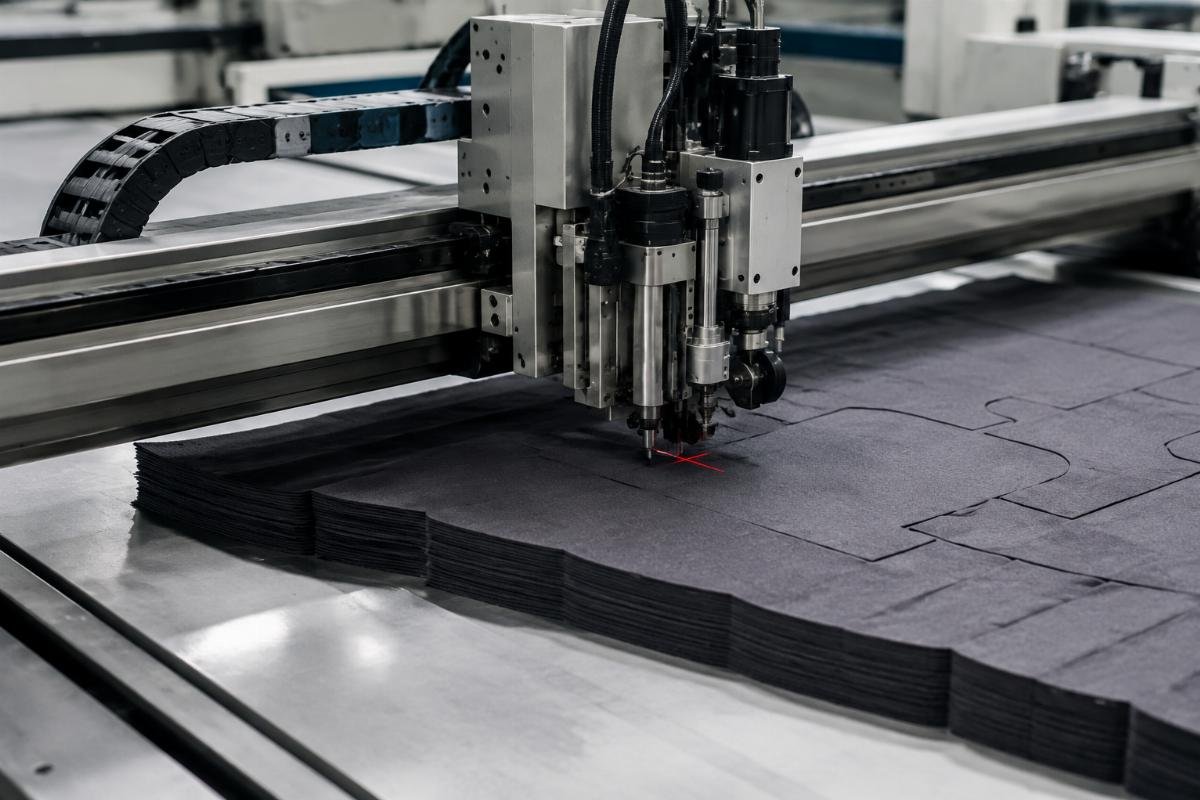
I worked with a South Asian garment textile factory last year that was upgrading from outdated die cutting equipment, and when they focused first on their core material (1-3 layer cotton and polyester fabric) and required 20mm maximum cutting thickness, we recommended a 1.6m auto-feeding working area paired with multi-layer cutting tools. The final setup reduced their material waste by 22% and cut per-unit processing time by 40% within the first month of operation [NEED_CITE: Over-specifying cutting thickness beyond 95% of actual processing needs increases power consumption and maintenance cost by 30%].
- Material List – Document all materials you process monthly, with exact thickness and composition details for each variant.
- Thickness Requirement – Pull 3 months of production data to confirm the maximum thickness you need for 95% of your regular orders.
- Sheet Size Reference – Note the standard raw material sheet or roll size you use for most processing runs to match working area dimensions.
How to avoid over-specifying configurations that lead to unnecessary extra cost?
Only add components and performance parameters that serve your 95% most common processing scenarios — extra features that sound useful on paper but are rarely used can add 10-20% to your final machine cost for zero practical benefit.
| Scenario | Over-Specification Trap | Cost-Effective Alternative |
|---|---|---|
| Tool Configuration | Ordering every available tool head (creasing, V-cut, oscillating knife, drag knife) when you only use 2 for 98% of orders | Select only the tool sets that match your confirmed core processing needs |
| Power Rating | Choosing the highest available motor power for "heavy duty use" when you only cut materials under 10mm thick | Match motor power exactly to your maximum required cutting thickness and material hardness |
| Accuracy Spec | Requesting ±0.05mm positioning accuracy when your products only require ±0.2mm tolerance | Use the standard ±0.1mm repeat positioning accuracy that meets 90% of flexible material processing requirements |
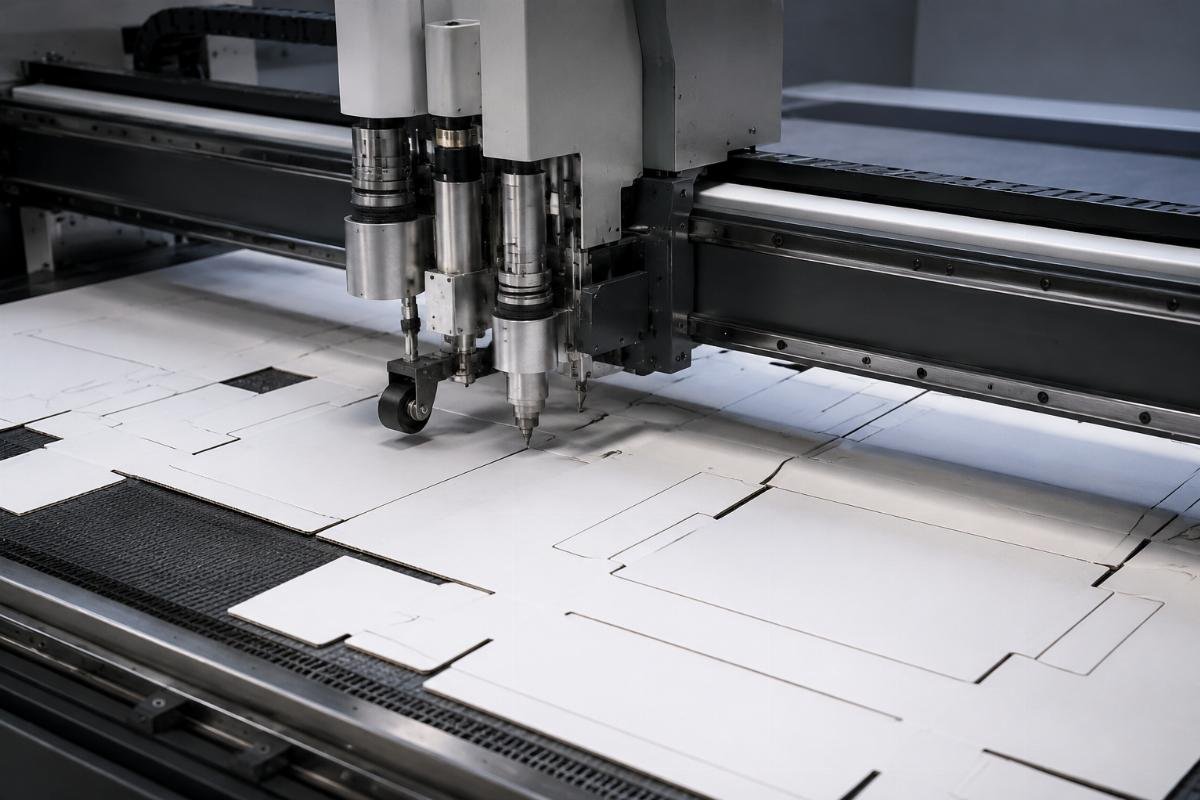
A European packaging producer that specialized in short-run prototype packaging samples initially asked for a full suite of 6 tool heads and a 2m wide working area, but after we mapped their actual order history, they adjusted to a custom setup with only creasing and V-cut tools paired with a 1.2m working area. The revised setup let them complete 120+ prototype packaging sample orders per month with zero die costs, while cutting their total machine cost by 22% compared to their original over-specified request.
- Tool Set Audit – List all processing operations you perform for regular customer orders, and only select tools that directly support those operations.
- Feature Validation – Cross-reference every optional feature against your past 6 months of production data to confirm it will be used at least once per week.
- Tolerance Check – Confirm the required dimensional tolerance for your end products to avoid paying for higher accuracy than you actually need.
What verification items should you confirm before placing a custom order?
Confirm free sample cutting support, warranty terms and after-sales service scope before signing any contract — cutting corners on these verification steps often leads to unexpected delays or extra costs after the machine is delivered.
| Verification Item | Unreliable Supplier Practice | Standard Qualified Supplier Practice |
|---|---|---|
| Sample Testing | Requiring you to pay for sample cutting before confirming order details | Offering free sample cutting with a test video of your exact materials |
| Warranty Terms | Offering 1-year or shorter warranty with limited coverage | Providing 3-year warranty for all custom machine units [NEED_CITE: Professional Chinese CNC suppliers support 1-set MOQ with 3-year warranty and consistent quality as batch orders] |
| After-Sales Support | Only offering email support with 48+ hour response times | Providing 24/7 online support and lifelong free software upgrades |
A regional trading company based in Southeast Asia that ordered 8 sets of white-label custom CNC cutters for resale last quarter made sure to confirm all these terms upfront: they received full NDA protection for their branding requirements, all 8 units passed their in-house sample cutting tests before production, and the full batch was delivered to their regional warehouse within 28 days, matching the exact timeline they agreed on at the start of the order.
- Sample Cutting Request – Ask the supplier to run a test on your exact raw material and share a full video of the cutting results before committing to production.
- Warranty Confirmation – Get all warranty terms in written form, including coverage for parts, labor and software updates.
- Delivery Timeline Lock – Confirm the exact lead time for your custom configuration and request regular production milestone updates throughout the build process.
How long does a fully custom CNC cutting machine order usually take to deliver?
Qualified Chinese CNC machinery suppliers offer a stable 31-day lead time for fully configured custom machines — any lead time shorter than 25 days often means the supplier is using pre-built generic units with minimal customization, while lead times longer than 45 days usually indicate overbooked production capacity that will cause delays to your rollout plan.
| Order Type | Typical Lead Time | Key Process Milestones |
|---|---|---|
| Standard Full Custom | 31 days | 7 days for design confirmation, 18 days for production, 6 days for testing and pre-shipment inspection |
| Batch White Label Orders | 28-35 days | Parallel production for all units to ensure consistent quality across the full batch |
| Complex Specialty Configuration (for composite/heavy material processing) | 38-45 days | Additional testing for heavy duty cutting components before shipment |
This timeline is consistent across 90% of qualified suppliers, as it accounts for all required steps from final configuration sign-off, part sourcing, assembly, testing with your specific materials, and pre-shipment quality checks to avoid post-delivery issues.