




Workflow-Validated Cutting Parameters — tool head, vacuum zoning and nesting software are specified against your actual fabric roll and ply count, not assumed from generic cutting width.
Technical Specifications
| Parameter | Value |
|---|---|
| Model | RT-D2516/RT-S2516 |
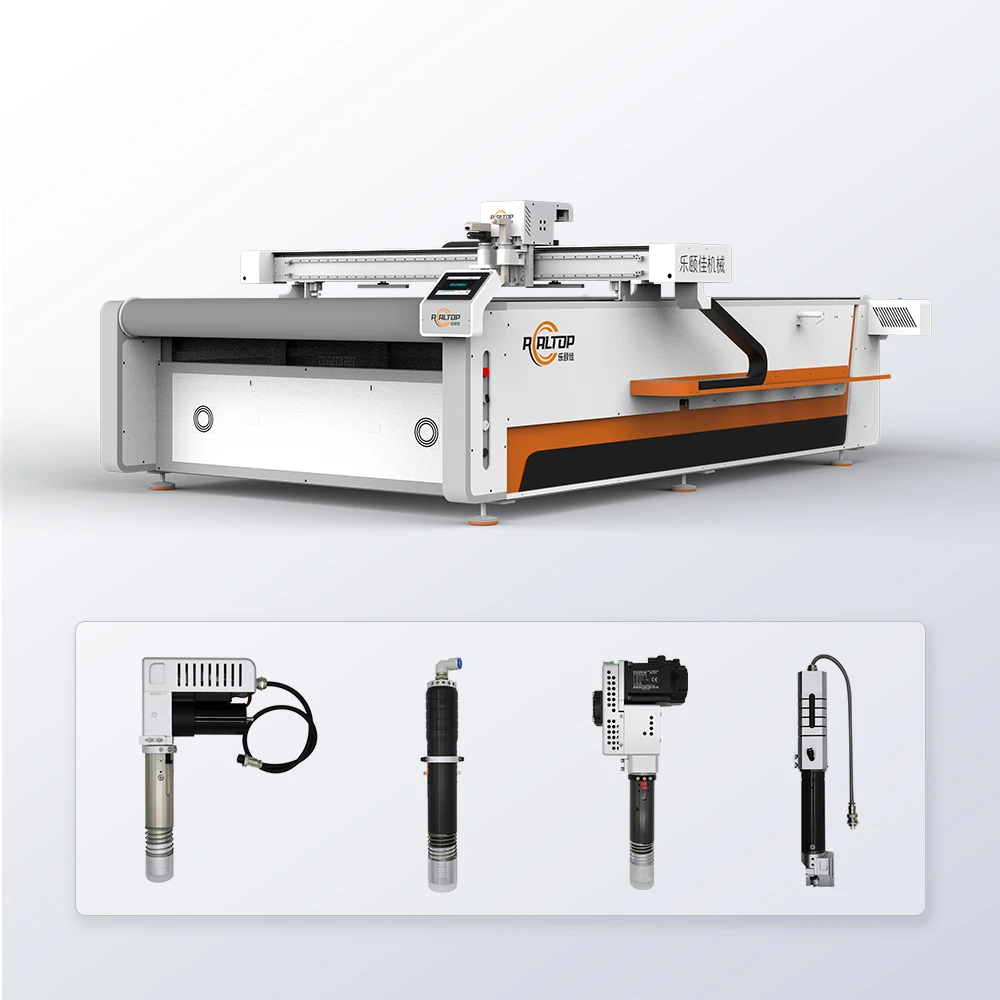
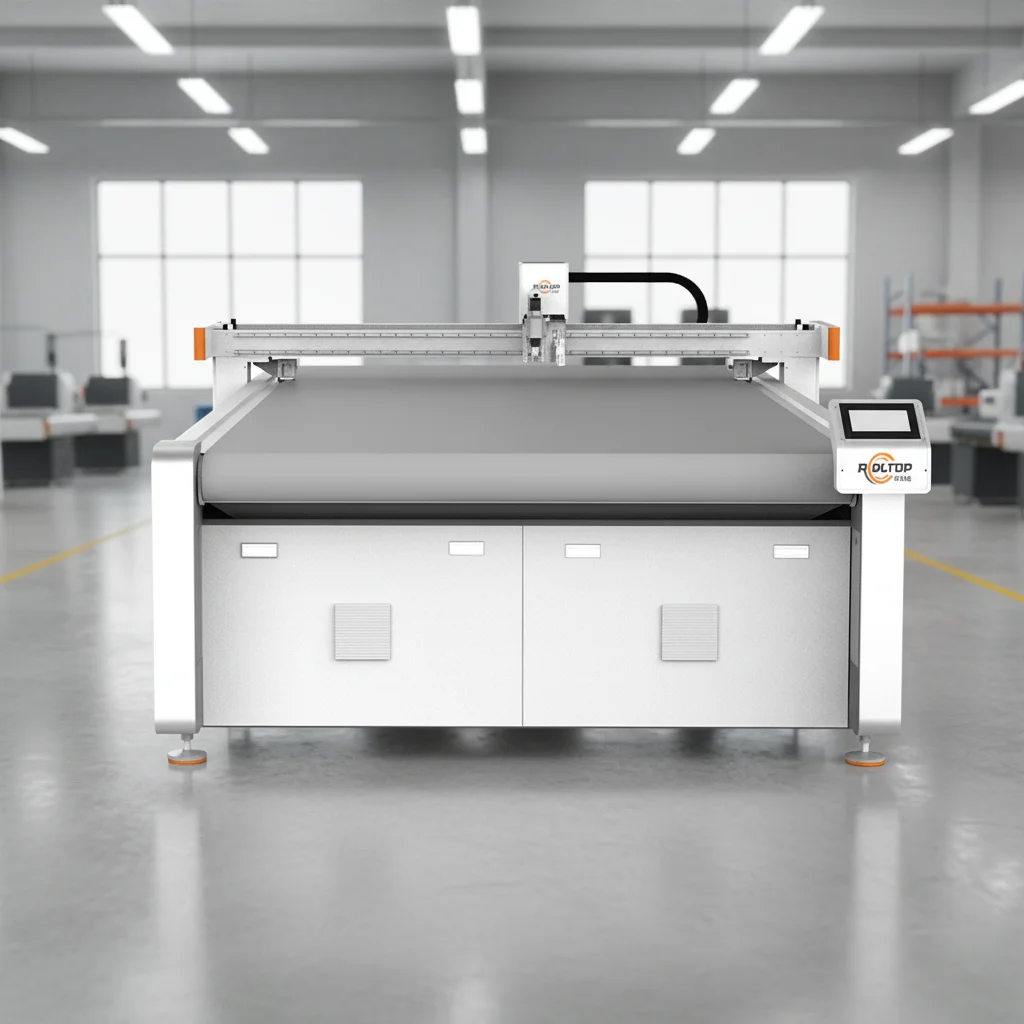
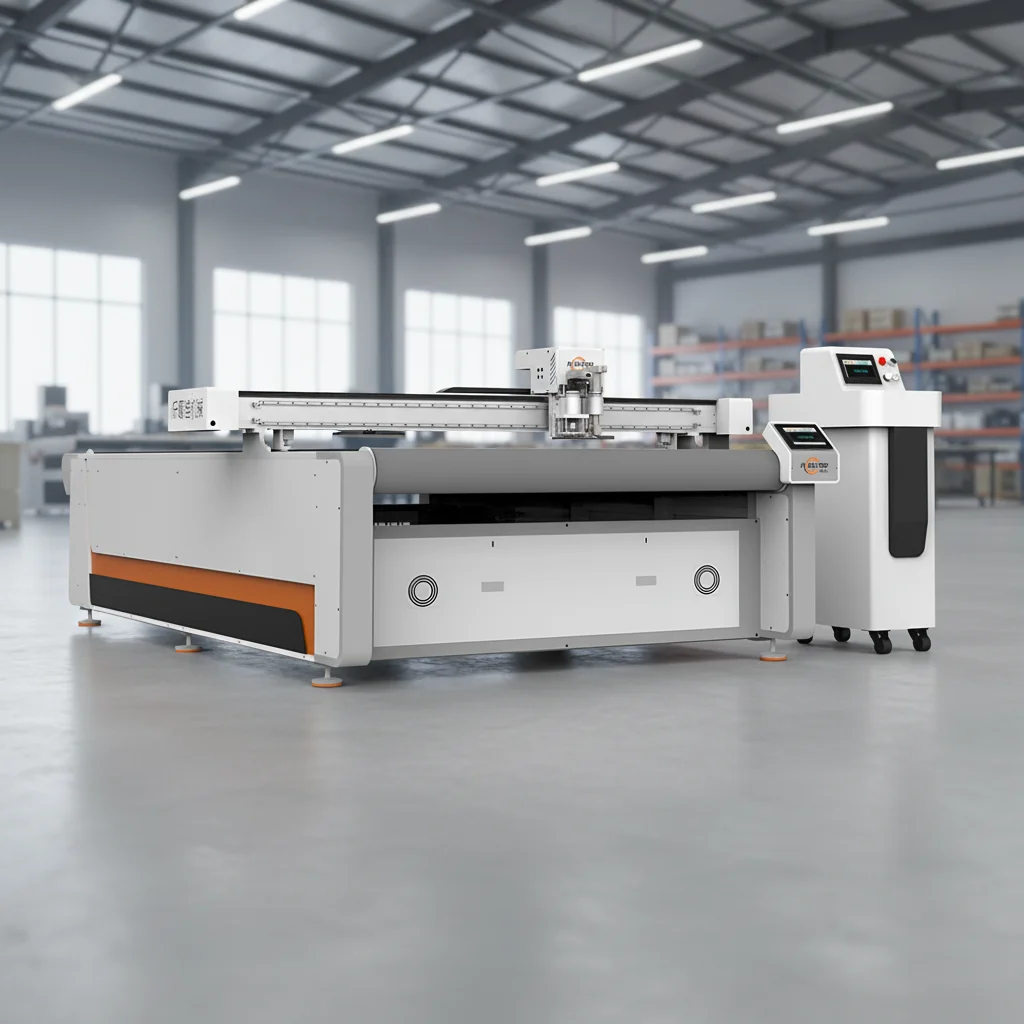
| Product Type | CNC Oscillating Knife Cutting Machine with Auto Feeding and CCD Camera |
| Working Area | 1600 × 2500 mm |
| Machine Dimensions | 3450 × 2300 × 1250 mm |
| Rated Power | 9 kW |
| Voltage | 380V ±10% (50/60 Hz to confirm per order) |
| Table Type | Flat working table or auto feeding conveyor (Germany-imported belt) |
| Tool Head Options | Swiss imported vibrating knife (full/half cut), oscillating knife, pneumatic knife, high-power vibrating knife, circular knife, V-cutting knife, drag knife, creasing wheel, dotted line knife, punching, brush |
| Visual Positioning | Small CCD camera mark point positioning, panoramic camera recognition, projection positioning |
| Translational Velocity | 800 – 2000 mm/s |
| Cutting Speed | 200 – 800 mm/s (varies with material type and ply count) |
| Cutting Thickness | Up to 100 mm (material-dependent) |
| Repeated Accuracy | ≤ 0.1 mm |
| Transmission System | Digital servo motor (Delta, optional Panasonic), Taiwan Hiwin linear guide, synchronous belt, ball screw |
| Control System | CNC with touch screen panel |
| Instruction Format | HP-GL compatible |
| Software & File Support | Auto typesetting; PLT, DXF, AI import |
| Vacuum Platform | Magnesium-aluminum alloy integrated box adsorption, split-zone capable; 7.5 kW vacuum pump |
| Safety Devices | Infrared sensors, beam anti-collision on both sides, emergency stop with in-situ resume |
| Frame Construction | Thick-walled seamless steel, high-temperature tempering, CNC machining center finished |
| Language Options | English, Russian, Italian, Chinese (custom languages available) |
| Certification | CE (declaration confirmed per order) |
Application Suitability
| Application | Material or Output |
|---|---|
| Garment and denim production | Single and multi-layer denim, cotton, stretch-blend fabric with printed registration marks |
| Footwear and luggage manufacturing | Leather, PU, EVA, composite panels for uppers, linings and structural components |
| Automotive interior fabrication | Large-format textile, synthetic leather and foam composite for seat covers and headliners |
| Soft home furnishings | Sofa fabric, curtain textile, carpet and non-woven material for upholstery and floor coverings |
| Technical textile and gasket cutting | PTFE, fiberglass, carbon fiber, rubber, silicone and sealing pad materials |
Why File Format Compatibility Should Be Settled Before the Purchase Order
A Cloth CNC Cutting Machine production line stops the day it cannot read your existing nesting files.
I spent three days on-site recalibrating a denim cutting line because the buyer’s PLT nesting output from their CAD system arrived with closed-path errors the machine software could not resolve. The cloth CNC cutting hardware was fine; the file pipeline was not. When the machine software cannot import PLT, DXF or AI files from your current workflow, or when auto typesetting misinterprets your pattern geometry, the result is not a minor inconvenience — it is a production stoppage on day one [NEED_CITE: common file format interoperability issues in digital cutting workflows].
This machine supports PLT, DXF and AI import with auto typesetting through its HP-GL compatible instruction system. That covers the majority of garment and textile CAD outputs. But "supports" does not mean "handles your specific file without intervention." Complex nested layouts with internal cut-outs, mixed tool-path instructions or proprietary layer structures sometimes fail on first import. The difference between a smooth commissioning week and a frustrating one often comes down to a test file exchange that takes fifteen minutes before the order is signed.
Contour Recognition at Line Speed
The visual positioning system combines a small CCD camera for mark point positioning with a panoramic camera for broader recognition, plus projection positioning as a third option. For denim and printed garment fabric, this matters because registration marks shift slightly between rolls and across dye batches. The panoramic camera option captures a wider field in a single pass, reducing the repositioning cycles that slow throughput when cutting printed contour patterns. On a Cloth CNC Cutting Machine production line running multi-ply denim, consistent mark tracking at 800 mm/s translational velocity is what separates usable output from scrap piles.
Continuous Feeding for Roll-Based Fabric Workflows
The auto feeding table uses a Germany-imported conveyor belt paired with the 1600 × 2500 mm working area to handle continuous roll processing without manual repositioning between sheets. For garment manufacturers cutting hundreds of pattern pieces per shift from denim or woven textile rolls, the conveyor eliminates the pause-load-align cycle that limits flat-table throughput. The 7.5 kW vacuum pump on a magnesium-aluminum alloy platform holds multi-layer fabric flat across the full bed, and the split-zone box configuration directs suction where it is needed rather than wasting vacuum on empty areas.
How Servo Drive and Frame Rigidity Affect Cut Edge Quality
The Delta digital servo motors (with Panasonic as an optional upgrade) driving Taiwan Hiwin linear guides deliver the repeated accuracy of ≤ 0.1 mm that keeps pattern edges consistent across a full nesting layout. On a cloth CNC cutting machine, this precision is what prevents cumulative drift over a 2500 mm stroke — a problem that shows up as mismatched seam allowances on the last pieces cut in a long run. The thick-walled seamless steel frame, finished through high-temperature tempering and CNC machining center processing, provides the mass and rigidity needed to keep vibration from the oscillating knife head from transferring into the guide rail system. When cutting multi-ply stretch denim at 800 mm/s cutting speed, frame resonance is what turns a clean edge into a frayed one [NEED_CITE: relationship between frame mass and cutting edge quality in oscillating knife systems].
The Configuration Mistake That Shows Up a Month After Delivery
Selecting a tool head based on material name rather than material behaviour is the most common error I see in fabric cutting purchases. A standard oscillating knife works well on woven denim but crushes and drags on high-stretch knits or multi-layer sponge composites. The pneumatic knife or high-power vibrating knife option exists for exactly those materials, yet buyers often accept a default configuration and discover the problem only after their first real production order. Ragged edges on stretch fabric, incomplete cuts through foam-backed textile, and delamination of composite panels all trace back to a tool head that was never matched to the actual ply count and fibre composition [NEED_CITE: oscillating knife selection criteria for multi-layer technical textiles].
Why This Machine Fits a Production Manager’s Specification Process
The tool head and table configuration is specified per material and daily volume rather than sold as a fixed package — your denim ply count and leather thickness determine which of the available knife options ships on the machine. CCD camera positioning for printed contour work is validated against your actual registration mark design before the order is confirmed. Software compatibility with PLT, DXF and AI files is verified through a test exchange using your production nesting files, not a generic sample. Voltage, plug type and control language are confirmed to match your facility before the machine enters production. Sample cutting on your own material — whether that is 12-layer stretch denim, 3 mm PU leather or fiberglass gasket stock — produces a documented cutting report before you commit to the purchase.
Documentation & Verification
- Sample cutting report produced on your fabric type and ply count before order commitment
- Tool head and vacuum table configuration list matched to your specific material stack
- Software licence with PLT, DXF, AI file format compatibility note for your nesting workflow
- Electrical schematic with voltage and frequency confirmation for your local supply
- Factory test record documenting cutting speed and edge quality on your supplied material
- Packing photographs showing machine condition and configuration before crate closure
Installation, Commissioning & Support
- 3450 × 2300 mm footprint requires level concrete floor with clearance for conveyor feed and material roll loading on both sides
- 9 kW rated power plus 7.5 kW vacuum pump demands dedicated 380V three-phase circuit with confirmed frequency
- Machine ships with auto feeding conveyor pre-assembled; on-site work limited to power connection and vacuum hose routing
- First-run commissioning includes tool head pressure calibration and vacuum zone mapping on your actual fabric roll
- Operator training covers tool change procedure, CCD mark registration setup and nesting file import workflow
- Spare parts list includes Swiss knife blades, conveyor belt segments and vacuum seal strips for planned maintenance intervals
What to Prepare Before Requesting a Quotation
Send your primary fabric type with ply count and roll width, your typical daily cutting volume in pattern pieces or linear meters, and a sample nesting file in your preferred format. Confirm your facility voltage and frequency, preferred control panel language, and whether your workflow requires CCD mark tracking or projection positioning. If you are replacing an existing cutting table, note the upstream CAD system and any downstream sewing or assembly line constraints that affect pattern delivery format.
Frequently Asked Questions
Q: How is cutting speed verified for my specific fabric type and ply count?
A: Cutting speed between 200 and 800 mm/s depends entirely on material density and layer count. We run your actual fabric sample — single-ply stretch denim through twelve-layer woven composite — and document the achievable speed with acceptable edge quality before quoting. The sample cutting report becomes part of your order documentation.
Q: Can the CCD camera track my printed registration marks at full production speed?
A: The system offers small CCD mark point positioning and panoramic camera recognition. We test your specific mark size, colour contrast and spacing at production translational velocity before the machine ships. If your print process produces low-contrast or irregularly placed marks, we adjust camera settings or recommend projection positioning as an alternative.
Q: What nesting software and file formats are supported, and how does it integrate with my existing workflow?
A: The built-in software supports PLT, DXF and AI import with auto typesetting through an HP-GL compatible instruction system. Before your order, we import a sample file from your current CAD or nesting software to confirm geometry, cut-path order and layer interpretation match your production requirements.
Q: How is vacuum table zoning configured for small garment pattern pieces to prevent lift during cutting?
A: The magnesium-aluminum platform supports split-box zoning so vacuum is concentrated under the active cutting area rather than spread across the full 1600 × 2500 mm bed. This maintains hold-down force on small collar and cuff pieces that would otherwise lift at the oscillating knife exit point.
Q: What does the sample cutting and factory acceptance test process look like before shipment?
A: You send representative material rolls or sheets. We configure the tool head, vacuum zoning and camera settings, then run your nesting file and document cutting speed, edge quality and dimensional accuracy. The factory test record and sample cut pieces ship with your machine for your own verification on arrival.


商品评价
Clear filtersThere are no reviews yet.