




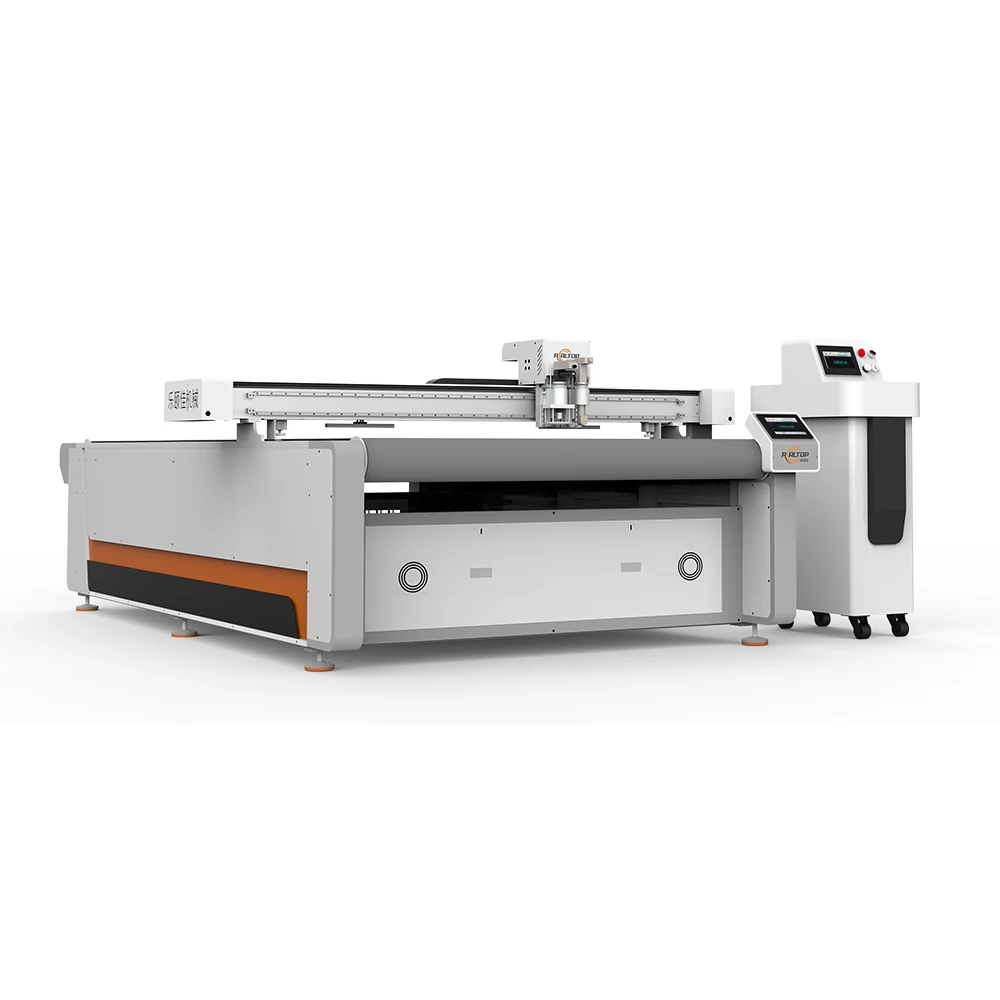
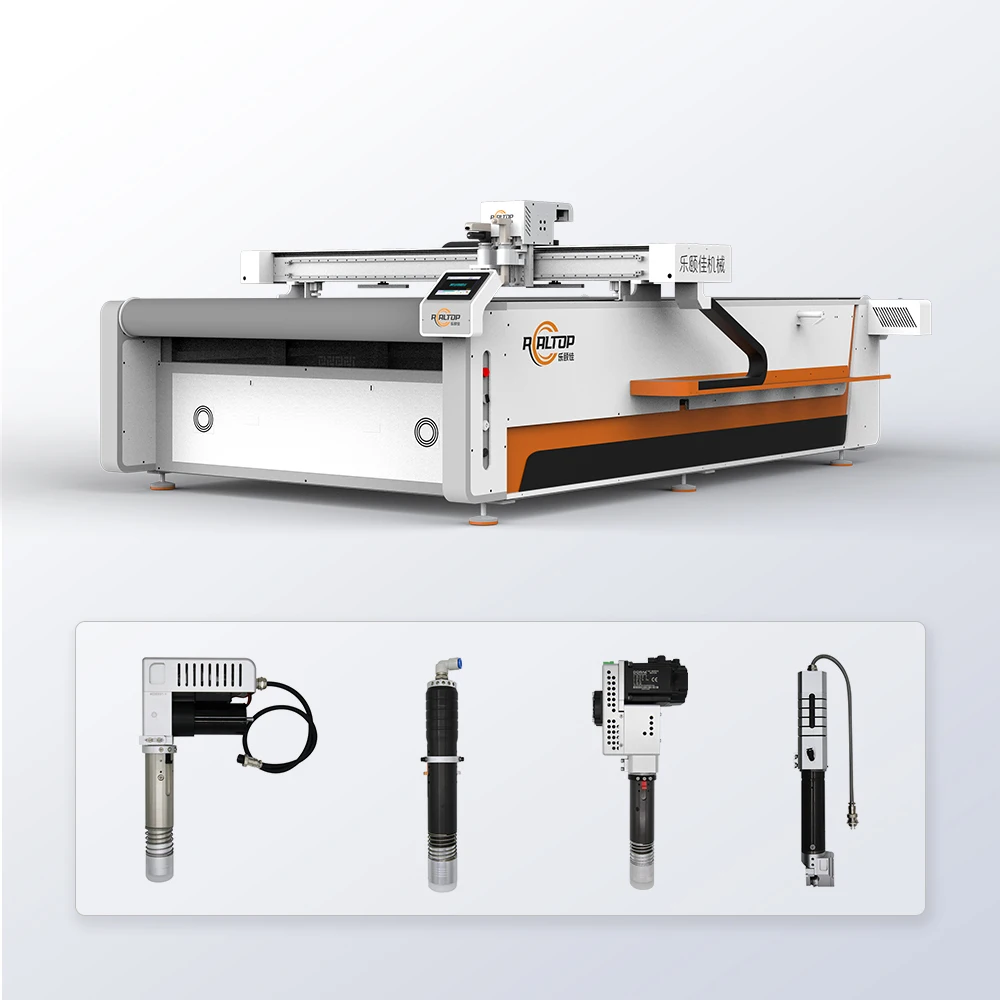



Tool Head Matched to Material — Every oscillating knife, driven rotary knife, and pneumatic tool configuration is specified against your actual fabric sample, confirmed before the machine leaves our workshop.
Technical Specifications
| Parameter | Value |
|---|---|
| Product Type | CNC Oscillating Knife Cutting Machine |
| Working Area | 1600 × 2500 mm |
| Tool Head Options | Oscillating knife, Driven rotary knife, Creasing wheel, Kiss cutting tool, Pneumatic knife, Milling tool, V groove knife |
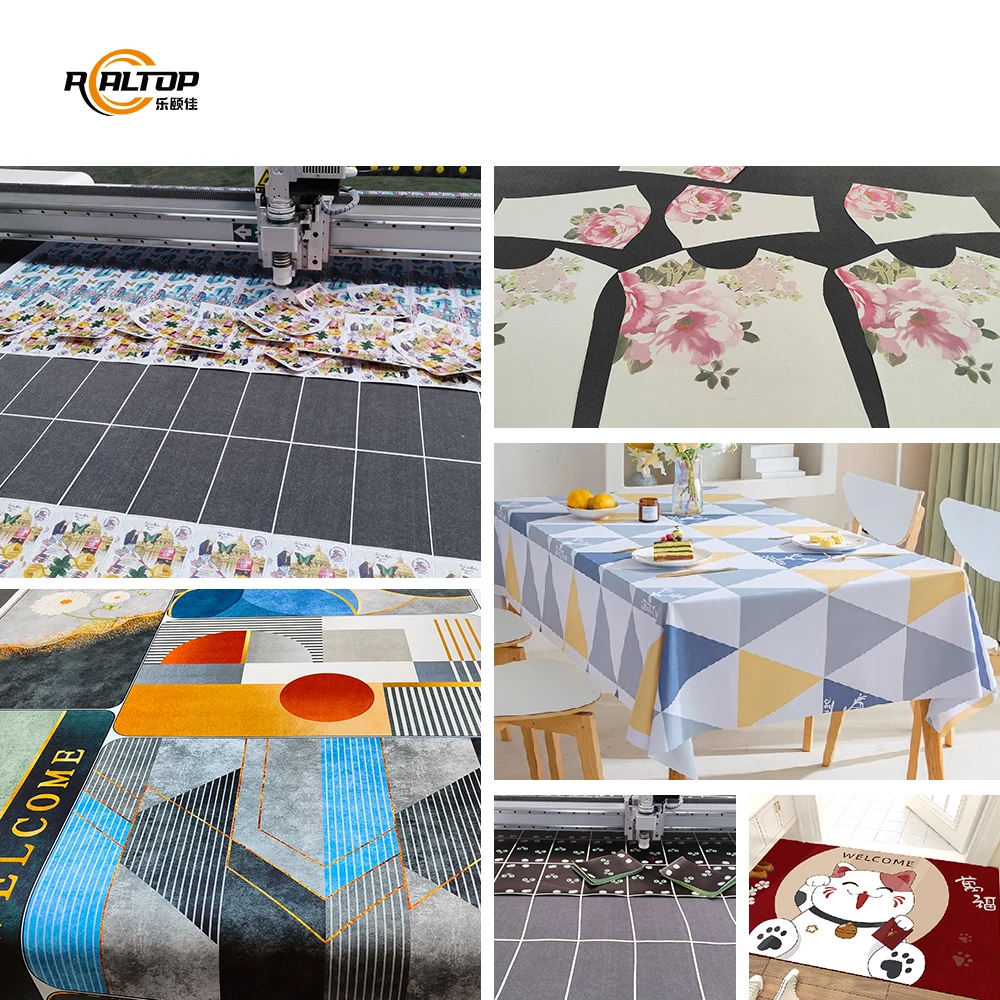
| Applicable Materials | Fabric, Cardboard, Carton, Mats, PVC, EVA, Leather, Acrylic, Foam, PTFE, Rubber |
| Cutting Speed | 0–2000 mm/s |
| Textile Cutting Speed | 1200–2000 mm/s (basis not stated in source — confirm fabric type, layer count, thickness) |
| Maximum Cutting Thickness | ≤ 30 mm (single layer); 30–50 mm multi-layer (basis not stated in source — confirm fabric type and layer count) |
| Cutting Accuracy | ±0.1 mm |
| Repeat Positioning Accuracy | ±0.1 mm |
| Vacuum Pump | 9 kW |
| Vacuum Table | Aluminum bellows vacuum table |
| Control System | PLC control panel |
| Servo Motor Options | Panasonic, Delta, Dorna (source value — verify against manufacturer catalog) |
| Voltage | 110V / 220V / 380V configurable |
| Profile Format | PLT, DXF, AI, PDF |
| Software | Intelligent nesting system, dedicated packaging box structure design software |
| Safety Device | Infrared sensor and emergency stop |
| Machine Dimensions | 3300 × 2100 × 1350 mm |
| Language Options | English, Russian, Italian, Chinese (special languages customizable) |
| Certification | CE (verify certificate before shipment) |
Application Suitability
| Application | Material or Output |
|---|---|
| Apparel manufacturing | Suits, knitwear, lace, and complex woven or blended fabrics in single or multi-layer lay-ups |
| Automotive interiors | Seat fabrics, carpeting, PVC floor mats cut to contour with sealed edges |
| Home textiles | Sofa upholstery fabrics, curtains, and area rugs in multi-layer stack cutting |
| Composite material processing | Carbon fiber prepreg, aramid, and specialty laminates without delamination or thermal distortion |
| Footwear and leather goods | Natural and synthetic leather uppers, linings, and insole board |
| Carton and packaging sample making | Corrugated board, folding carton stock, and grayboard for prototyping and short runs |
Why the Wrong Oscillating Knife Frequency Ruins Stretch Fabric Runs
A cutting speed that works on standard polyester will tear elastane-blended cloth apart.
I have seen this happen on the production floor more times than I care to count. A buyer approves the machine after a successful test on rigid woven fabric, then loads a four-way stretch material for the real order. The knife frequency stays the same, the feed rate stays the same, and suddenly the edges are frayed, the cut pieces drift out of tolerance, and the entire lay-up is scrap. The problem is not the machine itself — it is that the cutting parameters were never re-mapped for the actual production textile [NEED_CITE: oscillating knife frequency and stroke length selection by fabric composition]. When sourcing a CNC oscillating knife cutting machine production line for mixed-fabric garment work, the test must run on your exact material, at your intended layer count, before configuration is locked in.
How Tool Head Selection Defines Edge Quality on Textiles
The oscillating knife handles most woven and knitted fabrics cleanly, but it is not a universal answer. Driven rotary knives perform better on loosely woven or highly elastic materials where a reciprocating blade can pull fibers rather than sever them. Pneumatic knives take over when the lay-up includes dense foam or gasket stock layered beneath the textile. Configuring the correct tool head for each material in your production mix is the single largest factor in whether the CNC oscillating knife cutting machine production line delivers acceptable edges or generates rework.
Vacuum Hold-Down and Small-Piece Stability
The aluminum bellows vacuum table paired with the 9 kW pump generates the suction needed to immobilize fabric across the full 1600 × 2500 mm bed. However, when cutting small pattern pieces — collar stays, pocket flaps, or narrow trim — the zoning of vacuum sectors becomes critical. If the vacuum zones are too broad, the localized hold-down force drops once the surrounding material is cut away, and lightweight pieces lift into the blade path. Proper zone segmentation, matched to your nesting layout, prevents this drift [NEED_CITE: vacuum table zoning principles for flatbed digital cutting].
Reading the Specs That Actually Matter
Cutting speed is listed at 0–2000 mm/s, but the achievable speed on textile depends on the number of layers, the fabric composition, and the complexity of the contour. A straight cut through a single layer of cotton canvas will run near the upper end of the range, while a multi-layer stack of blended knit with tight curves demands a slower feed to maintain the ±0.1 mm accuracy. The intelligent nesting system addresses material yield by arranging pattern pieces to minimize off-cut waste, which directly affects fabric cost per garment. Voltage configurability across 110V, 220V, and 380V means the electrical supply at your facility must be confirmed before the control cabinet is wired — rewiring after build adds lead time and cost. The PLC control panel supports multiple interface languages, and the software accepts PLT, DXF, AI, and PDF files, so your existing pattern workflow does not need to be rebuilt from scratch.
The Hidden Cost of Skipping a Material-Specific Test Cut
When a buyer approves a configuration based on a generic demo and ships the machine directly to production, the first real lay-up often reveals problems that are expensive to fix remotely. Wrong oscillation frequency produces frayed selvedge that fails quality inspection. Insufficient vacuum on small nested pieces causes dimension drift across the cutting bed. And if the tool head was specified for rigid board rather than stretch fabric, the blade drags instead of cutting, shortening tool life and damaging the material surface [NEED_CITE: fabric cutting defect analysis in automated flatbed systems]. These issues are not hardware failures — they are specification mismatches that a pre-shipment sample cut on the buyer’s own material would have caught.
Why Sourcing This Equipment Through an Integrated Manufacturer Matters
In-house design and production of both knife and laser cutting platforms means the cutting method is matched to your material rather than forcing fabric onto a machine built for something else. Every tool head and table configuration is specified per your material type and daily volume, not pulled from a generic catalog row. CCD camera positioning is available for printed contour work where registration marks must be tracked at production speed. Software compatibility — file format, nesting algorithm, language — is confirmed before the order is placed, not discovered during commissioning. Sample cutting on your own fabric, at your specified layer count and target speed, is completed in our workshop before any commitment to ship.
Documentation & Verification
- Machine specification sheet covering working area, tool head options, and voltage configuration
- Electrical schematic and voltage confirmation matched to your facility supply
- Tool head and vacuum table configuration list per material and production volume
- Sample cutting report on your fabric at specified layer count and speed
- Factory test record documenting accuracy, edge quality, and vacuum performance before dispatch
- Software licence and file format compatibility note for PLT, DXF, AI, and PDF workflows
Installation, Commissioning & Support
- Floor space allocation based on the 3300 × 2100 × 1350 mm machine footprint plus material handling clearance
- Dedicated power circuit matching confirmed voltage (110V / 220V / 380V) with correct frequency and plug type
- Assembled and leveled on-site with aluminum bellows vacuum table calibrated for full-bed suction uniformity
- First-run parameter setting: oscillation frequency, feed rate, and vacuum zoning tuned to your production fabric
- Operator training on PLC control panel in confirmed language, including nesting software workflow
- Spare parts list covering oscillating knife blades, rotary knife discs, and vacuum seals for scheduled maintenance
Before You Request a Quote
To give you a configuration that actually fits your production floor, we need to know the fabric types you cut most frequently, the maximum layer count per lay-up, and the daily volume you need to sustain. Tell us the voltage and frequency available at your facility, the control language your operators require, and whether your current pattern files are in DXF, PLT, AI, or PDF format. If your textile mix includes stretch blends or coated technical fabrics, send us a roll sample so we can run a cutting test before finalizing the tool head and vacuum specification.
Frequently Asked Questions
Q: How do I know which tool head is right for my fabric mix?
A: Tool head selection depends on fabric composition, weight, and whether the material stretches. Oscillating knives suit most woven and knitted textiles, driven rotary knives handle elastic blends better, and pneumatic knives manage dense foam layers. We run a cutting test on your actual material to confirm the correct tool before building the machine configuration.
Q: What cutting speed can I realistically expect on multi-layer fabric?
A: The 1200–2000 mm/s range is achievable depending on fabric type, layer count, and contour complexity. A single layer of rigid woven material runs faster than a multi-layer stack of stretch knit with tight curves. We verify the realistic speed during the sample cutting test on your own lay-up.
Q: Will my existing pattern files work with the nesting software?
A: The system accepts PLT, DXF, AI, and PDF formats. Before the order is confirmed, we test your actual file imports and nesting workflow to ensure compatibility. If your pattern software exports in a different format, we address the conversion during the pre-order technical review.
Q: How is voltage and language handled for my country?
A: Voltage is configurable at 110V, 220V, or 380V, and must be confirmed before the electrical cabinet is built. The PLC interface supports English, Russian, Italian, and Chinese by default, with other languages available on request. Both are locked in during the specification confirmation stage.
Q: What happens if the machine does not cut my material correctly on arrival?
A: That risk is addressed before shipment. We run your material on the machine in our workshop, document the cutting results, and share the sample report. Configuration is only finalized after your approval of the test cut, so the machine arrives with proven parameters already loaded.



商品评价
Clear filtersThere are no reviews yet.