

Blog
Does Your Supplier’s Anti-Static Coating for Leather Cutting Heads Actually Work?

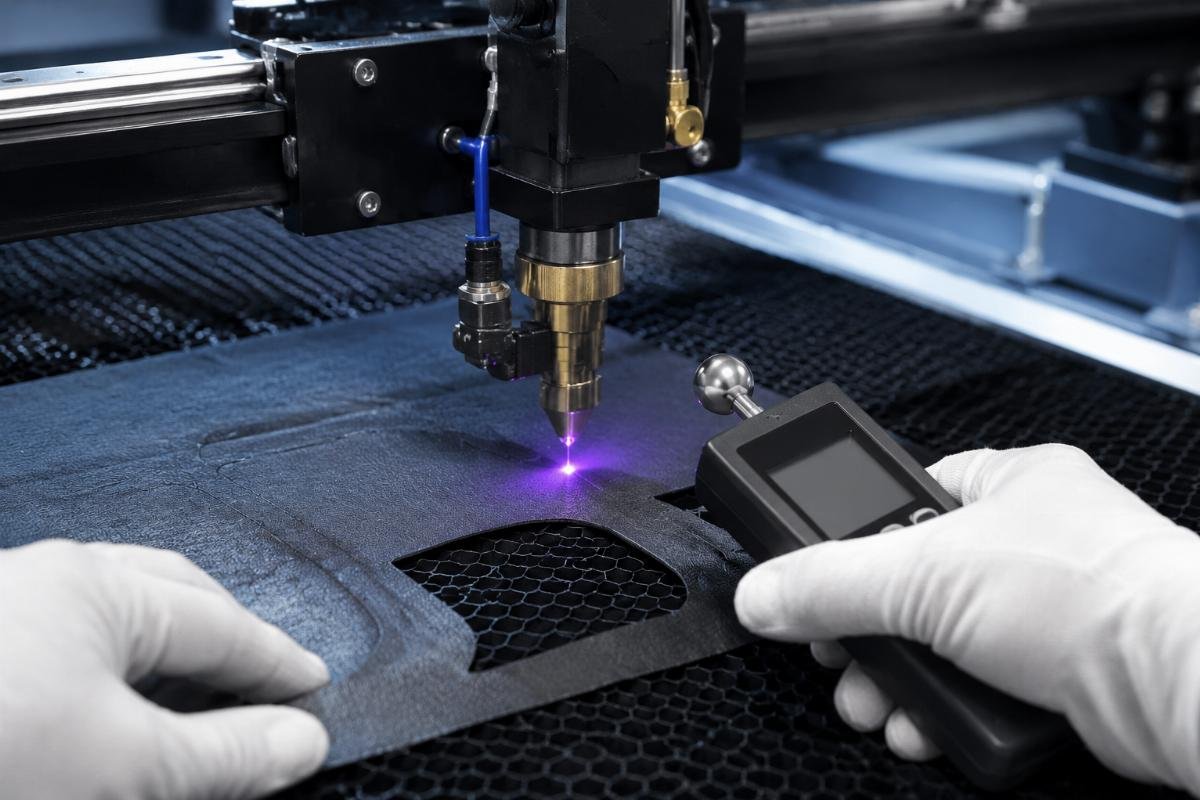
Does Your Supplier's Anti-Static Coating for Leather Cutting Heads Actually Work?
Many buyers assume anti-static protection comes standard with leather cutting equipment, but we've learned through customer complaints that this assumption often leads to unexpected downtime and hidden maintenance costs after installation.
Anti-static coating on leather cutting heads is not a guaranteed feature but a supplier quality commitment that requires verification before purchase. Without documented maintenance intervals and proven durability evidence, buyers unknowingly accept operational risks that surface only after production begins.
This reality became clear when we started receiving calls from buyers asking if we could add anti-static coating to their existing equipment, revealing that their original suppliers either skipped this feature or failed to disclose its limitations.
What Makes Anti-Static Coating Claims Unreliable Between Suppliers?
Buyers contact us after experiencing static-related problems1, expecting a simple upgrade, but we've found that coating quality varies dramatically across the supply chain.
Coating reliability depends on three supplier-controlled factors: surface preparation methods2, coating material selection, and post-application curing processes3. Suppliers who cannot document these steps typically deliver coatings that fail within months rather than years.
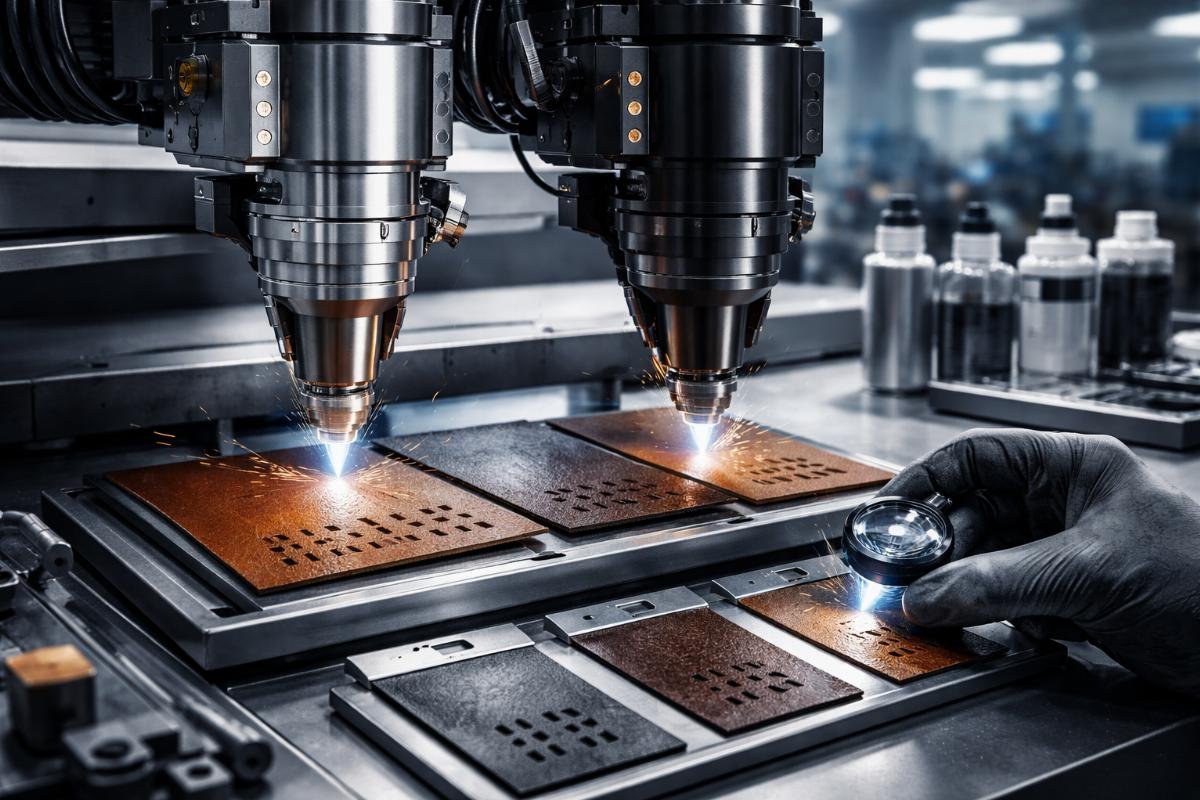
Why Standard Product Descriptions Hide Coating Performance Differences
We validate suppliers by requesting specific documentation that most cannot provide. The gap between product claims and actual performance becomes visible when you ask for maintenance schedules.
Some suppliers list "anti-static coating" in specifications without explaining what this means for daily operations. Others provide detailed recoating intervals and offer maintenance services. This difference matters because coating degradation happens gradually4—material starts sticking to the cutting head, dust accumulation increases5, and cleaning frequency rises before buyers recognize the pattern as coating failure rather than normal wear.
We've compared cutting heads from three different suppliers processing the same leather type. Results showed striking variation:
| Supplier Documentation Level | Observed Performance Pattern | Maintenance Cost Visibility |
|---|---|---|
| No maintenance guidance provided | Dust buildup within 3-4 months, buyers assume normal | Hidden in cleaning labor costs |
| General "periodic inspection" mentioned | Inconsistent material adhesion, troubleshooting delays production | Emerges during problem-solving |
| Specific recoating intervals with service options | Stable cutting quality with scheduled maintenance | Known operational expense |
The verification challenge is that coating looks identical when equipment arrives. Performance differences only emerge during production, when replacement costs and downtime multiply the initial purchasing decision's impact.
Buyers ask us if coating can be added after purchase because their current suppliers didn't establish this as a decision point during equipment selection. This reactive approach costs more than verifying coating quality before signing contracts, but many buyers only learn this distinction after experiencing the consequences.
How Do You Identify Suppliers Who Actually Stand Behind Their Coating?
We've developed verification questions through experience with customers who needed to replace poorly coated cutting heads earlier than expected.
Reliable suppliers provide four types of documentation that unreliable ones avoid: coating material specifications, surface preparation protocols, expected performance duration under defined conditions, and maintenance or recoating service availability.
What Documentation Should Buyers Request Before Purchase?
Ask suppliers to specify coating maintenance intervals for your specific material type. Vague responses like "depends on usage" or "very durable" signal that the supplier hasn't tracked actual performance data from customers processing similar materials.
Request information about recoating services. Suppliers confident in their coating quality offer maintenance programs because they know when intervention becomes necessary. Suppliers who avoid this discussion either don't monitor coating lifespan or prefer selling replacement parts rather than providing maintenance support.
Compare what different suppliers say about the same question. We send identical inquiries to potential suppliers and evaluate response specificity:
| Verification Question | Warning Sign Response | Confidence-Building Response |
|---|---|---|
| "How long does coating last processing automotive leather6?" | "Very long-lasting" or "No maintenance needed" | "Approximately 18-24 months with daily 8-hour shifts7, recommend inspection at 15 months" |
| "Do you offer recoating services?" | "You can purchase new cutting heads" or silence | "Yes, recoating service available at [specific cost] with [turnaround time]" |
| "What coating material do you use?" | "Professional anti-static coating" or "Trade secret" | Specific coating type or willingness to provide technical datasheet |
| "What preparation happens before coating application?" | No response or "Standard process" | Description of cleaning, surface treatment, and quality checks |
The pattern we've noticed is that suppliers comfortable discussing coating limitations and maintenance requirements typically deliver more consistent performance than suppliers who present coating as a permanent, maintenance-free feature.
Why Coating Verification Matters More Than Initial Price Comparison
We've helped buyers calculate the real cost difference between suppliers after accounting for coating-related maintenance. The calculation changes purchasing decisions when buyers see the numbers.
A cutting head with poorly documented coating might cost less initially, but factor in these hidden expenses: increased cleaning labor when dust accumulation accelerates, production delays when material adhesion causes cutting errors, troubleshooting time when problems emerge without clear cause, and earlier replacement when coating degrades faster than expected.
Buyers sometimes choose lower-priced equipment without verifying coating quality, then contact us asking if coating can be added to their existing machines. This retrofit request usually indicates the original supplier either didn't apply coating or applied coating that degraded quickly. The retrofit cost plus lost production time during the upgrade typically exceeds the price difference between the original low-cost option and a supplier who documented coating maintenance from the beginning.
What Questions Reveal Whether Suppliers Actually Test Their Coating?
We distinguish between suppliers who apply coating as a manufacturing step and suppliers who validate coating performance through customer feedback monitoring.
Testing evidence appears in how suppliers describe typical failure patterns, whether they've documented common problems with specific leather types, and if they can explain what happens when coating starts degrading versus when it performs correctly.
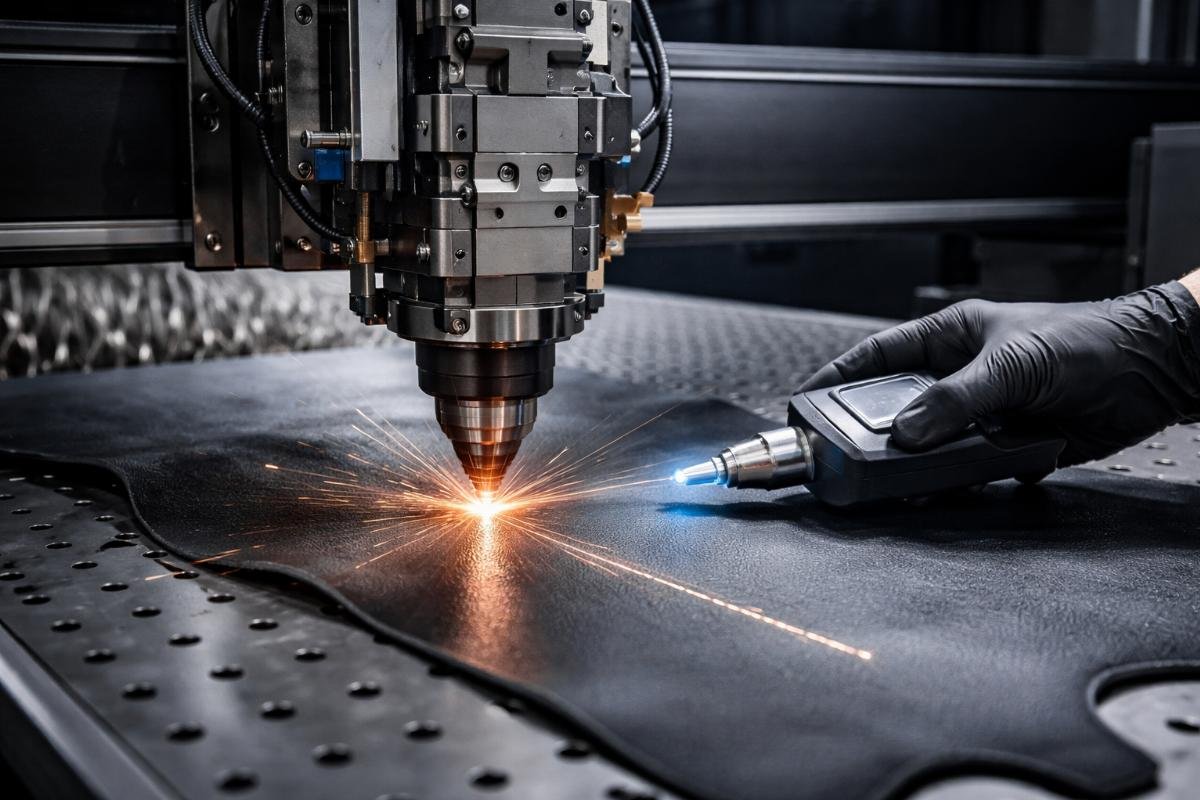
How Experienced Suppliers Discuss Coating Limitations
Suppliers who monitor coating performance in real production environments talk differently than suppliers who only apply coating during manufacturing.
Ask what problems buyers might experience if coating quality degrades. Suppliers with field experience describe specific symptoms: material edges stick to the cutting head requiring more frequent cleaning, dust particles accumulate in consistent patterns, or certain leather types show adhesion while others cut cleanly. Suppliers without this knowledge give generic answers about static electricity or material quality.
We've validated this pattern by comparing supplier responses with actual customer reports. Suppliers who accurately predicted failure symptoms had usually established feedback systems with existing customers, while suppliers surprised by problem descriptions typically hadn't maintained contact after equipment delivery.
The verification value is that suppliers who understand failure patterns have usually addressed those patterns in their coating process. They know what problems to prevent because they've either experienced those problems with earlier customers or actively collect performance data from current customers.
Why Maintenance Service Availability Signals Coating Confidence
Suppliers who offer recoating services reveal their confidence in cost-effective maintenance versus replacement.
We ask potential suppliers if they provide recoating and compare responses. Suppliers who refuse this service or only offer new cutting head sales typically haven't developed maintenance procedures, suggesting they don't expect their coating to justify maintenance investment. Suppliers with established recoating programs show they've calculated maintenance costs and determined that servicing existing cutting heads delivers value for both the supplier and the buyer.
This distinction matters because coating degradation is gradual rather than sudden. Buyers with access to maintenance services can schedule intervention before performance problems disrupt production. Buyers dependent on replacement-only suppliers face the choice between tolerating degrading performance or accepting production downtime while waiting for new parts.
Does Anti-Static Coating Eliminate All Static Problems in Leather Cutting?
We tell buyers that coating is one component of static control, not a complete solution, because this realistic expectation prevents disappointment when environmental factors still require attention.
Coating reduces static buildup on the cutting head surface, but effective static control also requires proper grounding, humidity management, and material handling procedures. Suppliers who present coating as eliminating all static issues typically haven't observed equipment performance across different production environments.
What Other Factors Work Together With Coating?
We've seen coated cutting heads perform differently in facilities with varying environmental controls, demonstrating that coating effectiveness depends on surrounding conditions.
Grounding systems matter because coating dissipates static charge8, but the charge needs a path to ground9. Cutting heads with quality coating but inadequate grounding still accumulate charge, though less rapidly than uncoated heads. Humidity levels affect static generation rates10. Coating on cutting heads operating in low-humidity environments11 faces higher static loads than identical coating in humidity-controlled spaces.
Material handling procedures also influence coating demands. Leather that passes through multiple friction points12 before reaching the cutting head arrives with higher static charges, increasing the workload on cutting head coating compared to leather with minimal handling.
Suppliers who discuss these factors during equipment specification demonstrate broader understanding of how coating performs in actual production settings. Suppliers who focus exclusively on coating properties without mentioning complementary static control measures may lack field experience with integrated solutions.
Why Buyers Should Question Suppliers Who Guarantee Problem-Free Performance
We avoid promising that coating eliminates all static issues because we've observed too many variables that affect real-world results.
Suppliers who guarantee problem-free performance either haven't tracked customer outcomes closely or define success differently than buyers expect. We prefer explaining what coating addresses and what remains the buyer's responsibility through facility environmental controls.
This honest approach helps buyers make realistic decisions. Buyers who understand coating limitations can plan appropriate facility preparations and recognize when problems stem from factors outside coating performance. Buyers expecting coating to solve all static problems face frustration when they discover additional environmental controls remain necessary.
Conclusion
Anti-static coating quality varies significantly between suppliers, making verification essential before purchase. Buyers protect themselves by requesting maintenance documentation, comparing supplier responses about coating limitations, and choosing suppliers who offer recoating services demonstrating long-term performance confidence.
"Five production problems almost always caused by static (and how ...", https://simco-ion.eu/resources/articles/five-production-problems-almost-always-caused-by-static-and-how-to-recognize-them. Static electricity in manufacturing environments causes material adhesion to cutting surfaces, attracts airborne particles, and can interfere with precision positioning systems, particularly in low-humidity conditions where charge dissipation is reduced. Evidence role: mechanism; source type: research. Supports: Static electricity causes material adhesion, dust attraction, and cutting precision issues in manufacturing environments. Scope note: General industrial static electricity research may not specifically address leather cutting applications ↩
"Effect of Substrate Bias on the Microstructure and Properties ... - PMC", https://pmc.ncbi.nlm.nih.gov/articles/PMC12943587/. Surface preparation prior to coating application—including cleaning, degreasing, and mechanical or chemical treatment—directly influences coating adhesion strength and long-term durability, with inadequate preparation identified as a primary cause of premature coating failure in industrial applications. Evidence role: mechanism; source type: research. Supports: Surface preparation significantly affects coating adhesion, durability, and performance characteristics. ↩
"[PDF] Thermophysical and Thermomechanical Properties of Thermal ...", https://ntrs.nasa.gov/api/citations/20000083966/downloads/20000083966.pdf. Post-application curing—through thermal, UV, or chemical processes—enables cross-linking reactions that determine final coating properties including mechanical strength, chemical resistance, and adhesion durability, with insufficient curing resulting in coatings that exhibit premature wear and reduced performance. Evidence role: mechanism; source type: research. Supports: Curing processes determine final coating properties including hardness, adhesion, and chemical resistance. ↩
"[PDF] Mechanisms controlling the durability of thermal barrier coatings", http://web-static-aws.seas.harvard.edu/hutchinson/papers/evans_mech_tbc.pdf. Surface coatings applied to industrial equipment degrade through multiple mechanisms including mechanical abrasion, chemical interaction with processed materials, UV exposure, and thermal cycling, with degradation rates varying significantly based on coating composition and operating conditions. Evidence role: mechanism; source type: paper. Supports: Anti-static and conductive coatings degrade through mechanical wear, chemical exposure, and environmental factors. Scope note: Research on coating degradation may focus on different applications than leather cutting equipment ↩
"Electrostatic precipitator - Wikipedia", https://en.wikipedia.org/wiki/Electrostatic_precipitator. Surfaces with electrostatic charge accumulation attract airborne particles through coulombic attraction, with particle retention increasing proportionally to surface charge density, a phenomenon commonly observed in manufacturing environments with inadequate static dissipation. Evidence role: mechanism; source type: research. Supports: Electrostatically charged surfaces attract and retain airborne particles through coulombic forces. ↩
"Automotive Leather Manufacturer Guide", https://www.eco-leather.com/automotive-leather/. Automotive leather represents a specialized category of leather processed to meet automotive industry requirements for durability, UV resistance, flame retardancy, and consistent appearance, typically subjected to additional treatments compared to furniture or garment leather. Evidence role: definition; source type: other. Supports: Automotive leather is a specialized leather category with specific performance requirements. Scope note: Industry sources may provide more detailed specifications than academic research ↩
"[PDF] Methodologies for predicting the service lives of coating systems", https://www.govinfo.gov/content/pkg/GOVPUB-C13-ac74538f548fb9d18ed11694263c618b/pdf/GOVPUB-C13-ac74538f548fb9d18ed11694263c618b.pdf. Industrial coating service life estimation incorporates operating hours, environmental conditions, mechanical stress, and material interactions, with manufacturers typically providing expected lifespan ranges based on accelerated testing and field data, though actual performance varies with specific application conditions. Evidence role: general_support; source type: research. Supports: Industrial coating lifespan can be estimated based on operating hours and environmental conditions. Scope note: General coating research may not specifically validate the 18-24 month timeframe cited for leather cutting applications ↩
"Antistatic agent - Wikipedia", https://en.wikipedia.org/wiki/Antistatic_agent. Anti-static coatings function by providing controlled electrical conductivity that allows accumulated electrostatic charge to dissipate gradually to ground, typically through incorporation of conductive particles, hygroscopic materials, or intrinsically conductive polymers that create charge dissipation pathways while maintaining surface resistivity within the static-dissipative range (10^6 to 10^11 ohms/square). Evidence role: mechanism; source type: research. Supports: Anti-static coatings dissipate charge through controlled electrical conductivity. ↩
"[PDF] AC 25.899-1 - Electrical Bonding - Federal Aviation Administration", https://www.faa.gov/documentLibrary/media/Advisory_Circular/AC_25_899-1.pdf. Effective electrostatic charge dissipation requires a continuous conductive pathway from the charged surface through dissipative or conductive materials to an electrical ground reference point, as charge cannot dissipate without a complete circuit for electron flow, a fundamental principle in electrostatic discharge (ESD) control systems. Evidence role: mechanism; source type: research. Supports: Electrostatic charge dissipation requires a continuous conductive path to an electrical ground reference. ↩
"The influence of water on electrostatic charge retention ... - PubMed", https://pubmed.ncbi.nlm.nih.gov/8956342/. Relative humidity significantly influences electrostatic charge generation and dissipation, with higher humidity increasing surface conductivity through adsorbed water molecules that facilitate charge dissipation, while low humidity (below 30-40% RH) substantially increases charge accumulation and retention on material surfaces. Evidence role: mechanism; source type: research. Supports: Relative humidity affects static electricity generation and dissipation through surface conductivity changes. ↩
"[PDF] Electrostatic Discharge Control in GSE - NASA", https://extapps.ksc.nasa.gov/reliability/Documents/Preferred_Practices/3008ksc.pdf. Industrial electrostatic discharge control standards typically identify relative humidity below 30-40% as conditions requiring enhanced static control measures, as reduced atmospheric moisture decreases surface conductivity and charge dissipation rates, substantially increasing electrostatic charge accumulation and discharge risks. Evidence role: expert_consensus; source type: research. Supports: Relative humidity below 30-40% significantly increases electrostatic charging and discharge risks. ↩
"Triboelectric effect", https://en.wikipedia.org/wiki/Triboelectric_effect. Friction between dissimilar materials generates static electricity through the triboelectric effect, where contact and separation cause electron transfer between surfaces, with charge magnitude depending on material properties, contact pressure, separation speed, and surface area, a phenomenon particularly pronounced in low-humidity environments. Evidence role: mechanism; source type: encyclopedia. Supports: Friction between materials generates static electricity through triboelectric charging. ↩