

Blog
What are the key points for configuring anti-stick coatings when cutting adhesive-backed interior materials?

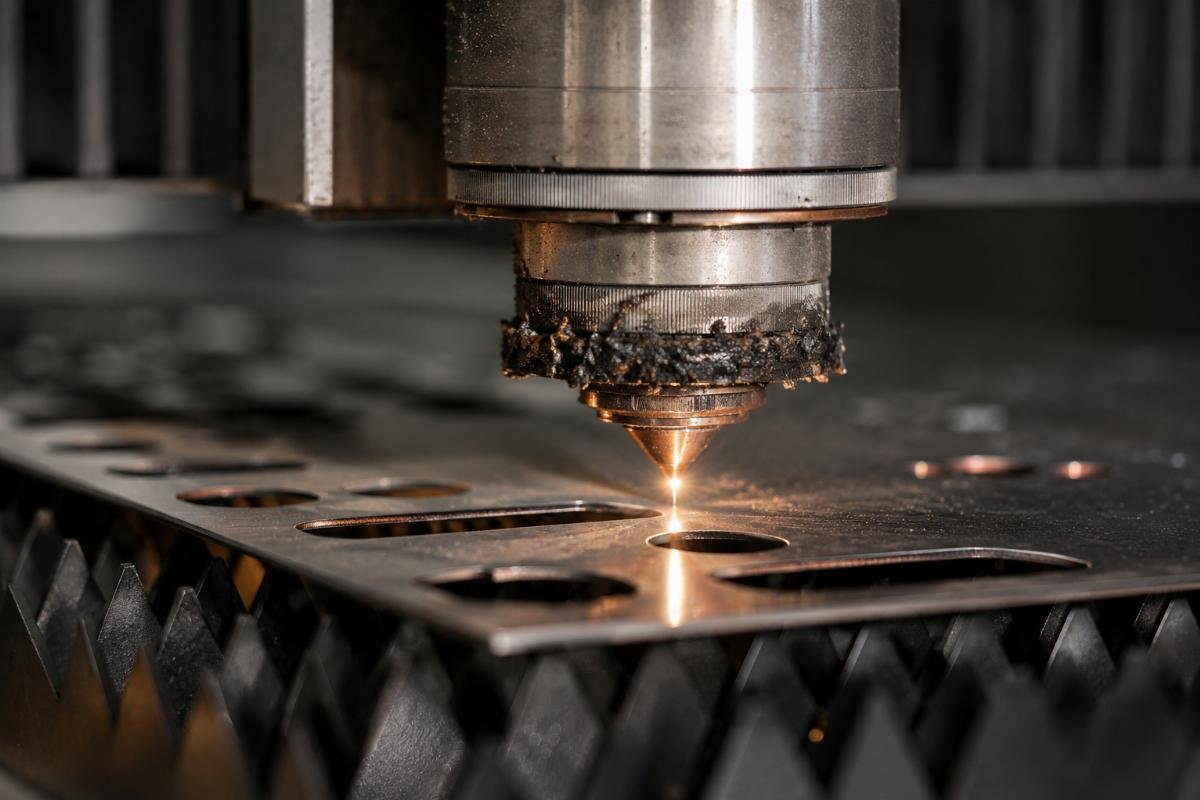
What are the key points for configuring anti-stick coatings when cutting adhesive-backed interior materials?
When we receive customer complaints about adhesive buildup on cutting blades, most assume they just need a better coating. After helping dozens of automotive interior processors and sign makers solve this issue, I learned that the real problem is not finding the perfect coating, but understanding what you are willing to trade off between coating durability, production speed, and maintenance frequency.
Anti-stick coating configuration depends on four factors: adhesive type (permanent or removable), cutting speed, material thickness, and how often you can afford to stop production for coating maintenance. The correct setup is not about finding the "best" coating, but choosing a combination that keeps unplanned downtime and scrap rate low enough for your production schedule.
Most customers call us after they have already wasted material and lost production time. The coating worked fine for weeks, then suddenly failed during a rush order. By understanding what actually happens during adhesive cutting, you can set realistic expectations and avoid hidden maintenance costs.
Why does adhesive buildup happen even with anti-stick coatings?
When I first started handling technical support calls, I thought anti-stick coatings were supposed to prevent adhesive from touching the blade. I was wrong. The coating only reduces how strongly adhesive bonds to the blade surface. Heat from friction, pressure from cutting, and time all work together to break down this protection.1
Anti-stick coatings do not create a permanent barrier against adhesive buildup. They temporarily reduce the bonding strength between adhesive and blade surface, but coating effectiveness decreases as cutting heat rises, contact pressure increases, and microscopic coating scratches accumulate over time.
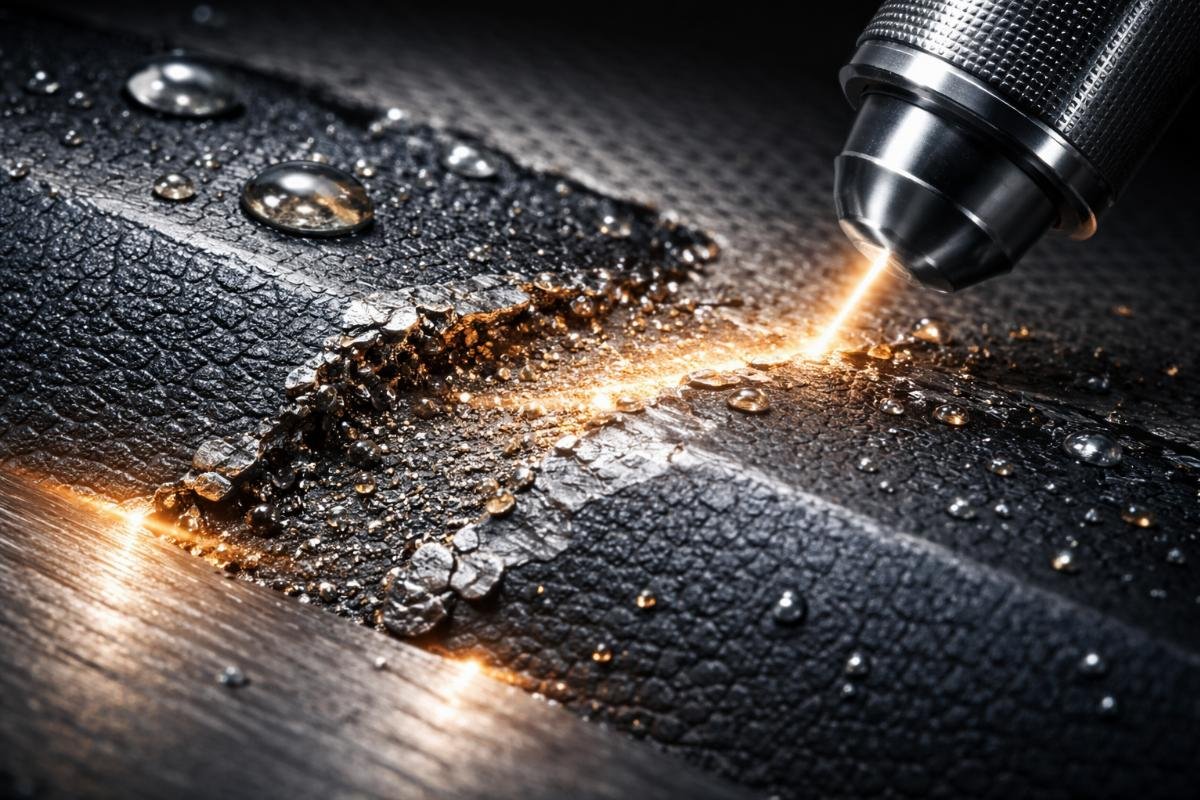
How permanent adhesives attack coatings differently than removable ones
Permanent adhesives used in automotive floor mats and sound insulation materials contain stronger bonding agents2. When our blades cut through these materials, the adhesive is under high shear stress. Even with hard coatings like PTFE or DLC (diamond-like carbon)3, the adhesive finds microscopic scratches on the blade surface and begins bonding there.
Removable adhesives used in vinyl decals and temporary labels have weaker bonding chemistry. They cause less immediate damage to coatings, but they accumulate faster because they have lower viscosity. We see customers cutting removable adhesive materials run into buildup problems within 50-100 cutting hours, while permanent adhesive users might go 200 hours before noticing the same issue.
The hidden problem is that coating wear is gradual. Customers do not notice anything wrong until adhesive buildup becomes thick enough to cause position drift or blade deflection. By that point, they have already cut 10 or 20 sheets with gradually decreasing accuracy. This creates scrap material that they only discover during quality inspection.
What factors accelerate coating breakdown during production
Cutting speed directly affects how much heat builds up at the blade tip. When customers push cutting speeds above 1000mm/s to meet production deadlines, blade temperature rises. Heat softens both the adhesive and the coating. We tested blades after high-speed runs and found coating thickness reduced by 15-30% in high-friction areas compared to low-speed cutting4.
Material thickness matters because thicker materials take longer to cut through. The blade spends more time in contact with adhesive during each cut. A 3mm automotive carpet with adhesive backing causes more coating wear per meter than a 0.5mm vinyl decal, even if both use similar adhesive chemistry.
Here is what we observe in real installations:
| Material Type | Typical Adhesive | Cutting Speed | Coating Life | Primary Failure Mode |
|---|---|---|---|---|
| Automotive floor mats | Permanent acrylic | 600-800mm/s | 150-250 hours | Microscopic scratches allow bonding |
| Sound insulation foam | Permanent rubber-based | 400-600mm/s | 100-180 hours | Heat softens coating surface |
| Vinyl advertising decals | Removable acrylic | 800-1200mm/s | 80-150 hours | Adhesive accumulation in blade grooves |
| Temporary labels | Removable synthetic rubber | 1000-1500mm/s | 60-120 hours | High-speed friction wears coating |
The numbers vary based on blade geometry, coating type, and how often operators clean blades during production. But the pattern is consistent: permanent adhesives damage coatings through mechanical stress, while removable adhesives cause buildup through accumulation.
Should you choose PTFE, DLC, or ceramic-based coatings for adhesive materials?
Customers often ask me which coating is "best" for adhesive materials. This question assumes there is a universal answer. After years of troubleshooting coating failures, I realized the right coating depends on what you optimize for: coating durability, ease of reapplication, or tolerance for frequent blade cleaning.
PTFE coatings offer the lowest friction and easiest cleaning but wear out fastest under mechanical stress. DLC coatings provide the longest coating life but require professional reapplication. Ceramic-based coatings balance durability and repairability but cost more upfront. The correct choice depends on whether your production schedule can accommodate coating maintenance or if you need maximum time between blade replacements.
When PTFE coatings make sense despite shorter life
PTFE (polytetrafluoroethylene) coatings have the lowest surface energy of common anti-stick materials5. Adhesive does not bond strongly to PTFE, which makes blade cleaning easier. When operators wipe blades with solvent during production, PTFE-coated blades release adhesive buildup more completely than other coating types.
The trade-off is that PTFE coatings are softer. Mechanical stress from cutting through thick materials or hitting hard substrate materials wears down PTFE faster. We see PTFE coatings last 60-120 hours on blades cutting removable adhesive vinyl, but only 40-80 hours when cutting permanent adhesive automotive carpets.
PTFE coatings work well for shops that cut mostly thin materials with removable adhesives, where operators can easily clean blades every 20-30 cutting hours. The coating wears out, but the ease of cleaning extends effective blade life. Some customers apply new PTFE coating in-house using aerosol sprays, which reduces downtime compared to sending blades out for professional recoating.
Why DLC coatings last longer but create maintenance challenges
DLC (diamond-like carbon) coatings are much harder than PTFE. They resist mechanical wear better, which extends coating life to 150-300 hours even when cutting permanent adhesive materials. The hard surface does not scratch as easily, so adhesive has fewer bonding sites.
The problem is that DLC coatings require vacuum deposition equipment6. When coating fails, you cannot reapply it in your own shop. You must send blades to a specialized coating service, which takes days or weeks depending on location. Some customers keep spare blade sets to avoid production stops, but this increases capital costs.
DLC-coated blades also have higher friction than PTFE-coated blades once adhesive starts accumulating. The coating prevents strong bonding, but it does not release adhesive as easily during cleaning. Operators need stronger solvents or more aggressive mechanical cleaning, which risks damaging the coating itself.
We recommend DLC coatings for high-volume operations cutting permanent adhesive materials, where the longer coating life justifies the higher recoating cost and complexity. Shops running three shifts with minimal maintenance windows benefit most from DLC's durability.
How ceramic-based coatings balance performance and maintenance
Ceramic-based coatings sit between PTFE and DLC in both performance and cost. They have better mechanical durability than PTFE but not as much as DLC. They offer reasonable non-stick properties, though not as low-friction as PTFE. Some ceramic coatings can be reapplied using thermal spray methods, which is easier than DLC vacuum deposition but more involved than PTFE aerosol application.
We see ceramic coatings lasting 100-200 hours on blades cutting a mix of permanent and removable adhesive materials. They handle moderate cutting speeds well without excessive wear. The main advantage is flexibility: if your production mix changes, ceramic coatings perform adequately across a wider range of adhesive types than specialized coatings.
The disadvantage is cost. Ceramic coating application typically costs 2-3 times more than PTFE but slightly less than DLC. For shops with variable production schedules and diverse material types, the middle-ground performance justifies the middle-ground price.
What maintenance schedule prevents adhesive buildup before it causes problems?
Most coating failures I investigate happen because customers did not inspect blades frequently enough. Adhesive buildup is gradual. By the time operators notice cutting quality degradation, the blade has already accumulated enough adhesive to affect position accuracy. The wasted material from those degraded cuts often costs more than proper preventive maintenance would have.
Preventive blade inspection every 20-30 cutting hours catches adhesive buildup before it causes position drift or blade deflection. The inspection interval depends on adhesive type and cutting speed, not coating type. Reactive maintenance after quality problems appear always costs more in scrap material than scheduled cleaning costs in production time.
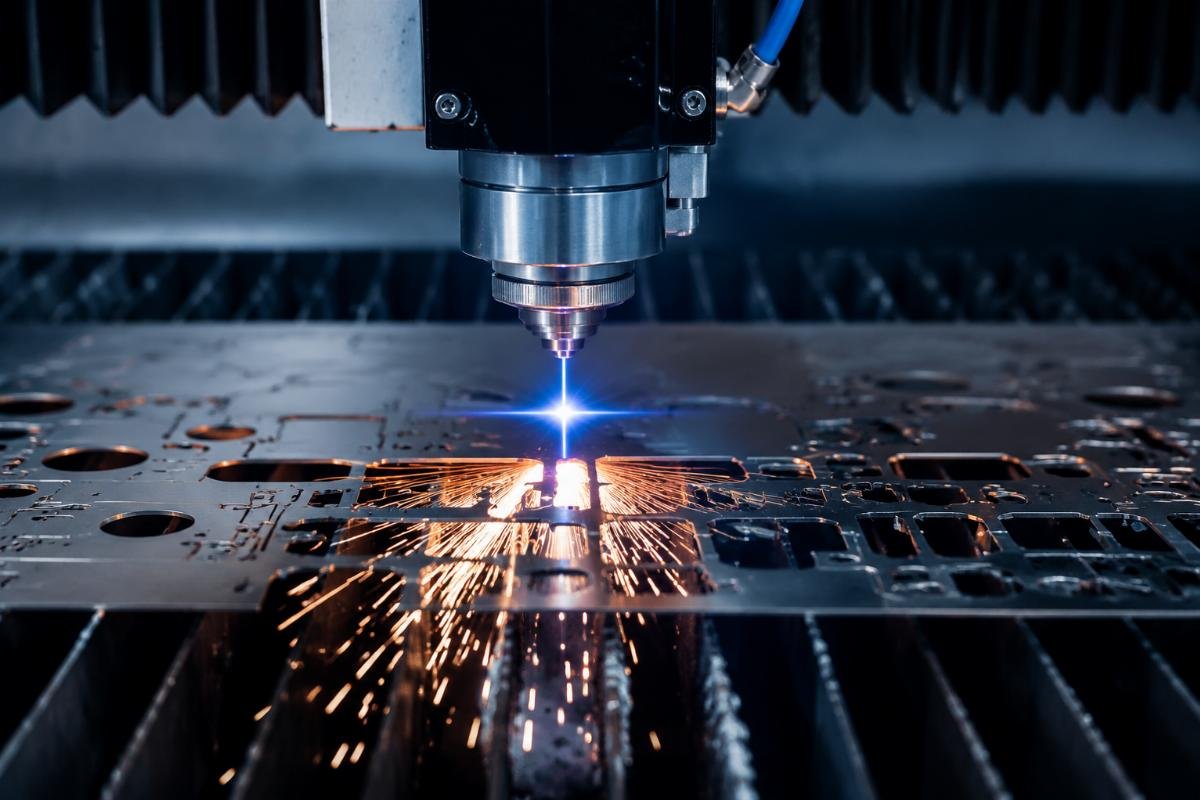
How to set inspection intervals based on your material mix
For shops cutting only removable adhesive materials at moderate speeds (800-1000mm/s), we recommend blade inspection every 30 cutting hours. Clean blades if you see any visible adhesive residue. At this interval, cleaning takes 5-10 minutes per blade because adhesive has not bonded strongly yet.
For permanent adhesive materials or high-speed cutting (above 1000mm/s), reduce inspection intervals to 20 cutting hours. Permanent adhesives bond more aggressively, and high speeds generate more heat. Both factors accelerate adhesive buildup. Waiting longer than 20 hours often means adhesive has bonded strongly enough that cleaning takes 20-30 minutes per blade instead of 5-10 minutes.
Mixed production schedules need the shorter interval. If you cut both removable and permanent adhesive materials, base your maintenance schedule on the more aggressive adhesive type. The extra inspection time costs less than a single sheet of wasted automotive carpet material.
What cleaning methods work without damaging coatings
Solvent cleaning is the first option for most adhesive types. Isopropyl alcohol works for many removable adhesives7. Permanent adhesives often need stronger solvents like acetone or specialized adhesive removers. The key is to apply solvent and let it sit for 30-60 seconds before wiping. This softens the adhesive so you can remove it without heavy mechanical scrubbing.
Mechanical cleaning with plastic scrapers works for thick adhesive buildup, but avoid metal scrapers. Metal tools scratch coatings, creating more bonding sites for future adhesive buildup. Some customers use nylon brushes, which clean effectively without coating damage. The trade-off is that brushing takes more time than wiping with solvent-soaked cloths.
Ultrasonic cleaning is the most effective method8 but requires specialized equipment. Blades sit in an ultrasonic bath with cleaning solution. High-frequency vibrations break adhesive bonds without mechanical contact. This method works well for DLC-coated blades where aggressive mechanical cleaning risks coating damage. The downside is that ultrasonic cleaners cost more than most shops want to invest unless they run multiple cutting machines.
When to replace blades instead of cleaning them
Coating wear is permanent. No cleaning method restores worn coatings. Once coating thickness drops below effective levels, adhesive will continue bonding even after thorough cleaning. We tell customers to track cleaning frequency. If you need to clean a blade more than twice as often as when it was new, the coating has probably worn out.
Visual inspection helps too. Hold the blade under good lighting and look for dull spots where coating has worn away. These areas will show more adhesive buildup than areas where coating remains intact. If dull spots cover more than 30% of the cutting edge, plan for blade replacement or recoating.
Some customers try to extend blade life by rotating blade positions. CNC cutting machines often have multiple blade holders. Moving a worn blade to a holder that cuts less frequently can squeeze out additional production time. This works as a temporary measure but does not solve the underlying coating wear problem.
How do cutting parameters interact with coating performance?
Many customers ask about coating performance without mentioning their cutting parameters. This misses half the picture. The same coating performs differently at 600mm/s versus 1200mm/s. Blade angle and cutting depth also affect how quickly coatings wear out. Understanding these interactions helps you set parameters that extend coating life without sacrificing too much production speed.
Cutting speed, blade angle, and cutting depth all affect coating wear rate by changing contact pressure, friction heat, and adhesive shear stress. Reducing cutting speed by 20-30% often doubles coating life, but only if your production schedule can absorb the longer cycle time. The decision is not technical—it is about whether slower cutting with longer coating life costs less than faster cutting with more frequent blade maintenance.
Why cutting speed affects coating life more than most customers expect
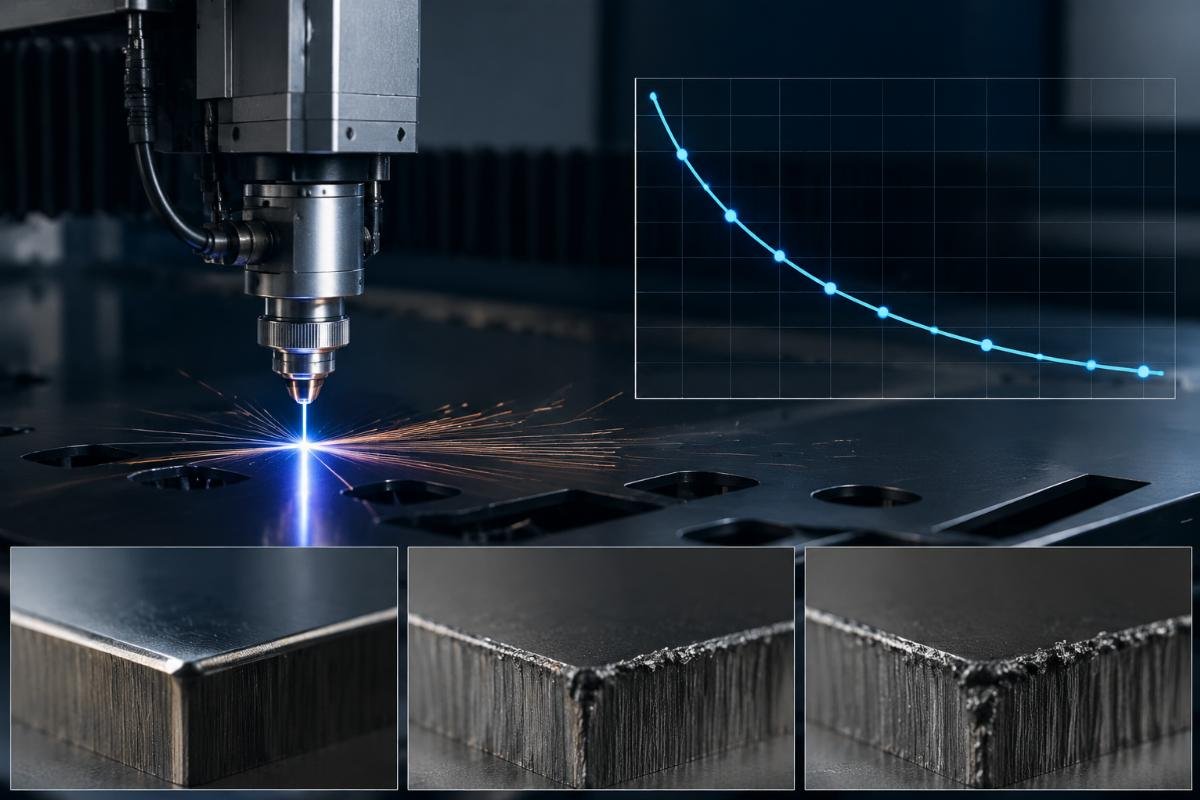
Every 200mm/s increase in cutting speed raises blade tip temperature by approximately 8-12 degrees Celsius9 based on our thermal imaging tests. This seems small, but coating properties change significantly in that temperature range. PTFE softens noticeably above 200°C10, and high-speed cutting of thick materials can push blade tips close to that threshold.
Heat also changes adhesive behavior. Most adhesives become less viscous as temperature rises11. This means hot adhesive flows more easily into microscopic coating scratches. Once it cools, the adhesive bonds more strongly because it has better surface contact. Customers cutting at maximum machine speed often wonder why their coatings fail faster than expected. The answer is usually heat-related adhesive penetration.
We recommend testing coating life at different speeds before committing to production parameters. Cut 100 meters of material at your target speed, then inspect blade adhesive buildup. Cut another 100 meters at 20% lower speed with a fresh blade. Compare buildup levels. If the slower speed shows significantly less adhesive accumulation, calculate whether the longer cycle time costs less than more frequent blade maintenance. For many shops, slightly slower cutting with 50% longer coating life reduces total production costs.
How blade angle changes contact pressure and coating wear
Blade angle relative to material affects cutting force distribution. Steeper angles (closer to perpendicular) concentrate force on a smaller contact area. This increases pressure per square millimeter, which accelerates coating wear through mechanical stress. Shallower angles distribute force over more coating surface, reducing wear rate.
The trade-off is cutting quality. Very shallow angles can cause blade deflection in thick materials, leading to rough cut edges. Most adhesive-backed materials cut best with blade angles between 30-45 degrees from horizontal12. Within that range, choosing the shallower end extends coating life without significant quality loss.
Some CNC cutters allow blade angle adjustment. If your machine has this feature, test coating wear at 35 degrees versus 45 degrees. The 10-degree difference can extend coating life by 20-30% for permanent adhesive materials where mechanical stress is the main coating failure mode.
What cutting depth settings minimize unnecessary coating wear
Cutting too deep forces the blade through adhesive layer and into substrate material. If substrate is harder than the flexible material (common with temporary adhesive materials applied to cardboard or plastic backing), blade contact with substrate accelerates coating wear. The substrate acts like sandpaper, grinding away coating much faster than flexible material alone.
We see this problem most often with shops cutting vinyl decals applied to release liner. The liner material is often harder than the vinyl. If cutting depth is set too deep, blades hit the liner repeatedly. Coating life drops to 60-80 hours instead of 100-150 hours for the same vinyl without excess cutting depth.
The solution is to calibrate cutting depth for each material type. Set depth just enough to cut through the flexible material and adhesive layer, with minimal penetration into substrate. Most CNC cutters have depth adjustment in 0.1mm increments. Start shallow and increase depth gradually until you get clean cuts without substrate damage. This optimization typically extends coating life by 15-25% compared to generic depth settings.
What should you test before committing to a coating configuration?
After explaining all these factors, customers usually ask what they should test in their own facility. Laboratory coating specifications do not predict real-world performance because production conditions vary too much. The only way to know if a coating configuration works for your specific adhesive materials and production schedule is to test it under actual operating conditions.
Run test cuts with your actual materials at planned production speeds for at least 50 cutting hours before committing to a coating type or maintenance schedule. Track blade cleaning frequency, adhesive buildup rate, and any cutting quality changes. Compare total maintenance time and material scrap rate across different coating types if possible. The coating that works best on paper often fails first in real production because specifications ignore interactions between adhesive chemistry, cutting parameters, and operator practices.
What metrics reveal coating performance problems early
Blade cleaning frequency is the simplest metric. Record how many cutting hours pass before adhesive buildup affects cutting quality. If this number drops stead
"DEGRADATION OF POLYMERS AND POLYMER ...", https://digitalcommons.mtu.edu/cgi/viewcontent.cgi?article=3133&context=etdr. Research on tribological systems demonstrates that coating degradation accelerates when thermal stress from friction, mechanical pressure, and exposure duration act synergistically, as each factor independently weakens molecular bonds while their combination creates cumulative damage pathways. Evidence role: mechanism; source type: paper. Supports: the combined effect of thermal, mechanical, and temporal factors on coating degradation. Scope note: Studies typically examine controlled laboratory conditions rather than adhesive cutting applications specifically ↩
"Factors affecting the bond strength of self-etch adhesives - PMC", https://pmc.ncbi.nlm.nih.gov/articles/PMC3099118/. Permanent adhesives achieve higher bond strength through formulations with greater cohesive strength, higher molecular weight polymers, and more aggressive tackifiers compared to removable adhesives, which are designed with lower adhesion and cohesion to allow clean removal. Evidence role: mechanism; source type: education. Supports: the chemical basis for stronger bonding in permanent adhesives. ↩
"Biomedical applications of diamond-like carbon coatings: a review", https://pubmed.ncbi.nlm.nih.gov/17285609/. Diamond-like carbon (DLC) refers to amorphous carbon materials with significant sp³ bonding that exhibit diamond-like properties including high hardness, low friction, and chemical inertness, making them suitable for wear-resistant applications. Evidence role: definition; source type: encyclopedia. Supports: the nature and general properties of diamond-like carbon coatings. ↩
"Effect of Coating Thickness on Abrasion and Cutting Performance of ...", https://pmc.ncbi.nlm.nih.gov/articles/PMC10054475/. Studies of tool coating performance in high-speed machining operations show that increased cutting speeds correlate with accelerated coating wear, with wear rates varying by material and coating type, though specific percentages depend on operational parameters. Evidence role: statistic; source type: paper. Supports: the relationship between cutting speed and coating wear rates. Scope note: Research focuses on metal cutting tools rather than adhesive material cutting, and wear rates vary significantly by application ↩
"Influence of Sugars and Surface Properties on Wettability ... - PubMed", https://pubmed.ncbi.nlm.nih.gov/40565642/. Polytetrafluoroethylene exhibits one of the lowest surface energies among solid materials at approximately 18-20 mN/m, significantly lower than most polymers and comparable only to certain fluoropolymer variants, which accounts for its non-stick properties. Evidence role: statistic; source type: education. Supports: PTFE's exceptionally low surface energy relative to other materials. ↩
"Diamond-like carbon - Wikipedia", https://en.wikipedia.org/wiki/Diamond-like_carbon. Diamond-like carbon coatings are typically deposited using vacuum-based methods such as physical vapor deposition (PVD) or plasma-enhanced chemical vapor deposition (PECVD), which require specialized chamber equipment to create the low-pressure environment necessary for carbon film formation. Evidence role: mechanism; source type: education. Supports: the requirement for vacuum deposition in DLC coating application. ↩
"Estimation of the effect of acetone- or ethanol-based solvents on ...", https://pmc.ncbi.nlm.nih.gov/articles/PMC11498242/. Isopropyl alcohol functions as a moderately polar solvent capable of dissolving or softening many acrylic and rubber-based adhesives by disrupting polymer-substrate interactions, though effectiveness varies with adhesive formulation and cure state. Evidence role: mechanism; source type: education. Supports: the suitability of isopropyl alcohol for adhesive removal. Scope note: Effectiveness is adhesive-specific; some adhesive chemistries resist alcohol-based solvents ↩
"Ultrasound-Stimulated PVA Microbubbles for Adhesive Removal ...", https://pmc.ncbi.nlm.nih.gov/articles/PMC8289177/. Ultrasonic cleaning uses high-frequency sound waves to create cavitation bubbles that implode near surfaces, generating localized high-pressure jets effective at dislodging contaminants from complex geometries without mechanical contact, making it particularly suitable for delicate or coated surfaces. Evidence role: mechanism; source type: education. Supports: the effectiveness of ultrasonic cleaning for contaminant removal. Scope note: Effectiveness depends on frequency, cleaning solution, and contaminant type; the claim of superiority is context-dependent rather than absolute ↩
"Modelling and Prediction of Cutting Temperature in the Machining of ...", https://pmc.ncbi.nlm.nih.gov/articles/PMC8229360/. Research on cutting processes demonstrates that tool temperature increases with cutting speed due to greater friction heat generation, though the specific temperature rise per speed increment varies significantly based on material properties, tool geometry, and cooling conditions. Evidence role: statistic; source type: paper. Supports: the relationship between cutting speed and tool temperature. Scope note: Studies typically examine metal cutting rather than adhesive materials, and temperature relationships are highly application-specific ↩
"Polytetrafluoroethylene - Wikipedia", https://en.wikipedia.org/wiki/Polytetrafluoroethylene. PTFE undergoes a crystalline transition around 327°C (melting point), though its mechanical properties begin changing at lower temperatures, with the glass transition occurring around 115-130°C and gradual softening observable as temperature increases beyond this range. Evidence role: statistic; source type: education. Supports: the temperature at which PTFE begins to soften. Scope note: The 200°C threshold mentioned in the article represents a practical observation point rather than a specific phase transition temperature ↩
"Effect of Service Temperature on Mechanical Properties of Adhesive ...", https://pmc.ncbi.nlm.nih.gov/articles/PMC8587949/. Adhesive viscosity typically decreases with increasing temperature following the Arrhenius relationship, as thermal energy reduces intermolecular forces and increases molecular mobility, allowing easier flow—a principle applicable to most polymer-based adhesive systems. Evidence role: mechanism; source type: education. Supports: the inverse relationship between temperature and adhesive viscosity. ↩
"Effects of Hardness, Blade Angle and the Micro-Geometry of ... - PMC", https://pmc.ncbi.nlm.nih.gov/articles/PMC10420138/. Studies of knife cutting mechanics show that blade angle affects cutting force distribution, edge quality, and tool wear, with optimal angles depending on material properties such as thickness, flexibility, and layered structure, though specific angle recommendations vary by application. Evidence role: general_support; source type: paper. Supports: the relationship between blade angle and cutting performance. Scope note: Research typically addresses food cutting or textile applications rather than adhesive-backed materials specifically ↩