


![1. **Analyze Input Parameters**: * **Source Title**: 2026 Digital Flatbed Cutting Plotter Vinyl Cutter * **Category**: Packaging CNC Cutting Machine * **Target Site**: rttcut.com * **Site Role**: INDUSTRY APPLICATION (Angle: the production job this machine does... Buyer: production manager evaluating fit to their specific industry.) * **Product Draft**: T-series (4060/6080/0912), Compact/Desktop, Oscillating knife, Creasing wheel, CCD camera. * **Record ID**: 2109 2. **Gate Check**: * Source title is present. Proceed. 3. **Layer 1: Site Modifier (Role-based)**: * Role: INDUSTRY APPLICATION * Pool: `for [Industry]` / `Industrial Application` * (Note: "for Packaging" fits the `[Industry]` pattern based on the category "Packaging CNC Cutting Machine" and draft applications). Let's define the pool explicitly as: `["for Packaging", "Industrial Application"]`. * Let's check the exact pool definition: `应用行业类角色 → for [行业] / Industrial Application`. * Pool length = 2. * Record ID sum = 2+1+0+9 = 12. * 12 % 2 = 0. * Index 0: `for Packaging`. (Wait, let me just use "Industrial Application" if "for [Industry]" is a template, or I can use "for Packaging" as the filled template. Let's use "for Packaging" as it's the specific industry. Or I can use "Industrial Application" to be safe. Let's look at the pool: `for [行业]` implies I should fill it. Let's use `for Packaging`.) * Wait, let's look at the sentence structures to see what fits best. 4. **Layer 2: Sentence Structure**: * Record ID sum = 12. * 12 % 6 = 0. * Structure 0: `[品类词] for [应用或物料] – [站点修饰词]` * Let's map the components: * `[品类词]`: Digital Flatbed Cutting Plotter (from source title) * `[应用或物料]`: Packaging (from category) or Vinyl (from source title) * `[站点修饰词]`: Industrial Application (from Layer 1 pool) * Let's refine Layer 1 pool selection. If the pool is `["for Packaging", "Industrial Application"]`, and I need a modifier for the end of Structure 0 (`... - [站点修饰词]`), "Industrial Application" works better as a standalone phrase after a dash than "for Packaging" (which would be redundant if I already have "for [应用]" in the middle). * Let's re-evaluate Layer 1 pool: `for [行业] / Industrial Application`. If I use `Industrial Application`, it's a solid noun phrase. * Let's try: `Digital Flatbed Cutting Plotter for Packaging – Industrial Application` * Character count: * `Digital Flatbed Cutting Plotter` (31) * ` for Packaging` (14) * ` – ` (3) * `Industrial Application` (22) * Total: 31 + 14 + 3 + 22 = 70 characters. (Exactly 70! Let's count carefully). * D-i-g-i-t-a-l (7) + space (1) + F-l-a-t-b-e-d (7) + space (1) + C-u-t-t-i-n-g (7) + space (1) + P-l-o-t-t-e-r (7) = 31 * space (1) + f-o-r (3) + space (1) + P-a-c-k-a-g-i-n-g (9) = 14 * space (1) + – (1) + space (1) = 3 * I-n-d-u-s-t-r-i-a-l (10) + space (1) + A-p-p-l-i-c-a-t-i-o-n (11) = 22 * Total = 31 + 14 + 3 + 22 = 70 characters. Perfect. 5. **Vocabulary Lock Check**: * `Digital Flatbed Cutting Plotter`: from Source Title ("Digital Flatbed Cutting Plotter") * `for`: allowed preposition * `Packaging`: from Category ("Packaging CNC Cutting Machine") * `–`: allowed punctuation (dash) * `Industrial Application`: from Layer 1 pool (`Industrial Application`) * No forbidden words. No fabricated specs. 6. **Edge Case & Constraint Check**: * Length: 70 chars (Target 50-70). * Source title model: "2026" is a year, not a machine model. "Vinyl Cutter" is in source, but dropped for length and structure fit. Priority rules: "必保:机型号 / 核心品类词". "Digital Flatbed Cutting Plotter" is the core category. "2026" is not a model. * Wait, is "2026" considered a model? "2026 Digital Flatbed..." usually implies a year or a fake model. The draft says "Model: T-series". So 2026 is not the model. * What if I include "Vinyl"? `Digital Flatbed Cutting Plotter for Vinyl – Industrial Application` (68 chars). But "Packaging" is the category and has higher B2B value for this target site (rttcut.com = INDUSTRY APPLICATION, draft mentions packaging sample making). "Packaging" is better. * Let's recount: `Digital Flatbed Cutting Plotter for Packaging - Industrial Application` (using hyphen instead of en-dash to be safe with standard ASCII, or keep en-dash? Rule 4 says "禁...连续标点", single dash is fine. I'll use standard hyphen `-` or en-dash `–`. Let's use standard hyphen with spaces: ` - `). * Let's recount with ` - `: * `Digital Flatbed Cutting Plotter` (31) * ` for Packaging` (14) * ` - ` (3) * `Industrial Application` (22) * Total = 70 characters. * Let's check if there's any risk of 70 being "over" if the system counts differently. Let's make it slightly shorter to be safe (e.g., 65-69). * Can I use `CNC Cutting Plotter for Packaging - Industrial Application`? * `CNC Cutting Plotter` (19) + ` for Packaging` (14) + ` - ` (3) + `Industrial Application` (22) = 58 chars. * But source title has `Digital Flatbed Cutting Plotter`. It's better to keep `Flatbed`. * How about `Digital Flatbed Plotter for Packaging - Industrial Application`? * `Digital Flatbed Plotter` (23) + 14 + 3 + 22 = 62 chars. (Misses "Cutting", which is important). * Let's stick to `Digital Flatbed Cutting Plotter for Packaging - Industrial Application` (70 chars). * Wait, what if I use Structure 3? `[应用或物料] [品类词] – [站点修饰词]` * `Packaging Digital Flatbed Cutting Plotter - Industrial Application` * P-a-c-k-a-g-i-n-g (9) + space (1) + D-i-g-i-t-a-l (7) + space (1) + F-l-a-t-b-e-d (7) + space (1) + C-u-t-t-i-n-g (7) + space (1) + P-l-o-t-t-e-r (7) = 41 * ` - ` (3) * `Industrial Application` (22) * Total = 66 characters. * This is safer for the length constraint (50-70) and avoids the 70 exact limit which might be borderline if a trailing space is added. * Let's verify Structure 3: `[应用或物料] [品类词] – [站点修饰词]` * `[应用或物料]` = Packaging * `[品类词]` = Digital Flatbed Cutting Plotter * `[站点修饰词]` = Industrial Application * Result: `Packaging Digital Flatbed Cutting Plotter - Industrial Application` * Wait, is "Packaging" an application/material? Yes, from Category. * Let's check vocabulary lock: "Packaging" (Category), "Digital Flatbed Cutting Plotter" (Source), "Industrial Application" (Layer 1). All valid. * Length: 9+1+7+1+7+1+7+1+7 + 3 + 22 = 66 chars. Perfect. * Does it sound natural? "Packaging Digital Flatbed Cutting Plotter" is a bit noun-stacked. * Let's reconsider Structure 0: `[品类词] for [应用或物料] – [站点修饰词]` * `Digital Flatbed Cutting Plotter for Packaging - Industrial Application` * If I use a standard hyphen `-` without spaces? No, standard is with spaces. * Let's count again: D(1)i(2)g(3)i(4)t(5)a(6)l(7) (8)F(9)l(10)a(11)t(12)b(13)e(14)d(15) (16)C(17)u(18)t(19)t(20)i(21)n(22)g(23) (24)P(25)l(26)o(27)t(28)t(29)e(30)r(31) (32)f(33)o(34)r(35) (36)P(37)a(38)c(39)k(40)a(41)g(42)i(43)n(44)g(45) (46)-(47) (48)I(49)n(50)d(51)u(52)s(53)t(54)r(55)i(56)a(57)l(58) (59)A(60)p(61)p(62)l(63)i(64)c(65)a(66)t(67)i(68)o(69)n(70) * Exactly 70. It's within "50-70 字符含空格". * To be absolutely safe from any strict ` - Image 1](https://rttcut.com/wp-content/uploads/2026/03/H5509b1f9d5a148fa9575179eb86d0b6ft.webp "H5509b1f9d5a148fa9575179eb86d0b6ft.webp")
![1. **Analyze Input Parameters**: * **Source Title**: 2026 Digital Flatbed Cutting Plotter Vinyl Cutter * **Category**: Packaging CNC Cutting Machine * **Target Site**: rttcut.com * **Site Role**: INDUSTRY APPLICATION (Angle: the production job this machine does... Buyer: production manager evaluating fit to their specific industry.) * **Product Draft**: T-series (4060/6080/0912), Compact/Desktop, Oscillating knife, Creasing wheel, CCD camera. * **Record ID**: 2109 2. **Gate Check**: * Source title is present. Proceed. 3. **Layer 1: Site Modifier (Role-based)**: * Role: INDUSTRY APPLICATION * Pool: `for [Industry]` / `Industrial Application` * (Note: "for Packaging" fits the `[Industry]` pattern based on the category "Packaging CNC Cutting Machine" and draft applications). Let's define the pool explicitly as: `["for Packaging", "Industrial Application"]`. * Let's check the exact pool definition: `应用行业类角色 → for [行业] / Industrial Application`. * Pool length = 2. * Record ID sum = 2+1+0+9 = 12. * 12 % 2 = 0. * Index 0: `for Packaging`. (Wait, let me just use "Industrial Application" if "for [Industry]" is a template, or I can use "for Packaging" as the filled template. Let's use "for Packaging" as it's the specific industry. Or I can use "Industrial Application" to be safe. Let's look at the pool: `for [行业]` implies I should fill it. Let's use `for Packaging`.) * Wait, let's look at the sentence structures to see what fits best. 4. **Layer 2: Sentence Structure**: * Record ID sum = 12. * 12 % 6 = 0. * Structure 0: `[品类词] for [应用或物料] – [站点修饰词]` * Let's map the components: * `[品类词]`: Digital Flatbed Cutting Plotter (from source title) * `[应用或物料]`: Packaging (from category) or Vinyl (from source title) * `[站点修饰词]`: Industrial Application (from Layer 1 pool) * Let's refine Layer 1 pool selection. If the pool is `["for Packaging", "Industrial Application"]`, and I need a modifier for the end of Structure 0 (`... - [站点修饰词]`), "Industrial Application" works better as a standalone phrase after a dash than "for Packaging" (which would be redundant if I already have "for [应用]" in the middle). * Let's re-evaluate Layer 1 pool: `for [行业] / Industrial Application`. If I use `Industrial Application`, it's a solid noun phrase. * Let's try: `Digital Flatbed Cutting Plotter for Packaging – Industrial Application` * Character count: * `Digital Flatbed Cutting Plotter` (31) * ` for Packaging` (14) * ` – ` (3) * `Industrial Application` (22) * Total: 31 + 14 + 3 + 22 = 70 characters. (Exactly 70! Let's count carefully). * D-i-g-i-t-a-l (7) + space (1) + F-l-a-t-b-e-d (7) + space (1) + C-u-t-t-i-n-g (7) + space (1) + P-l-o-t-t-e-r (7) = 31 * space (1) + f-o-r (3) + space (1) + P-a-c-k-a-g-i-n-g (9) = 14 * space (1) + – (1) + space (1) = 3 * I-n-d-u-s-t-r-i-a-l (10) + space (1) + A-p-p-l-i-c-a-t-i-o-n (11) = 22 * Total = 31 + 14 + 3 + 22 = 70 characters. Perfect. 5. **Vocabulary Lock Check**: * `Digital Flatbed Cutting Plotter`: from Source Title ("Digital Flatbed Cutting Plotter") * `for`: allowed preposition * `Packaging`: from Category ("Packaging CNC Cutting Machine") * `–`: allowed punctuation (dash) * `Industrial Application`: from Layer 1 pool (`Industrial Application`) * No forbidden words. No fabricated specs. 6. **Edge Case & Constraint Check**: * Length: 70 chars (Target 50-70). * Source title model: "2026" is a year, not a machine model. "Vinyl Cutter" is in source, but dropped for length and structure fit. Priority rules: "必保:机型号 / 核心品类词". "Digital Flatbed Cutting Plotter" is the core category. "2026" is not a model. * Wait, is "2026" considered a model? "2026 Digital Flatbed..." usually implies a year or a fake model. The draft says "Model: T-series". So 2026 is not the model. * What if I include "Vinyl"? `Digital Flatbed Cutting Plotter for Vinyl – Industrial Application` (68 chars). But "Packaging" is the category and has higher B2B value for this target site (rttcut.com = INDUSTRY APPLICATION, draft mentions packaging sample making). "Packaging" is better. * Let's recount: `Digital Flatbed Cutting Plotter for Packaging - Industrial Application` (using hyphen instead of en-dash to be safe with standard ASCII, or keep en-dash? Rule 4 says "禁...连续标点", single dash is fine. I'll use standard hyphen `-` or en-dash `–`. Let's use standard hyphen with spaces: ` - `). * Let's recount with ` - `: * `Digital Flatbed Cutting Plotter` (31) * ` for Packaging` (14) * ` - ` (3) * `Industrial Application` (22) * Total = 70 characters. * Let's check if there's any risk of 70 being "over" if the system counts differently. Let's make it slightly shorter to be safe (e.g., 65-69). * Can I use `CNC Cutting Plotter for Packaging - Industrial Application`? * `CNC Cutting Plotter` (19) + ` for Packaging` (14) + ` - ` (3) + `Industrial Application` (22) = 58 chars. * But source title has `Digital Flatbed Cutting Plotter`. It's better to keep `Flatbed`. * How about `Digital Flatbed Plotter for Packaging - Industrial Application`? * `Digital Flatbed Plotter` (23) + 14 + 3 + 22 = 62 chars. (Misses "Cutting", which is important). * Let's stick to `Digital Flatbed Cutting Plotter for Packaging - Industrial Application` (70 chars). * Wait, what if I use Structure 3? `[应用或物料] [品类词] – [站点修饰词]` * `Packaging Digital Flatbed Cutting Plotter - Industrial Application` * P-a-c-k-a-g-i-n-g (9) + space (1) + D-i-g-i-t-a-l (7) + space (1) + F-l-a-t-b-e-d (7) + space (1) + C-u-t-t-i-n-g (7) + space (1) + P-l-o-t-t-e-r (7) = 41 * ` - ` (3) * `Industrial Application` (22) * Total = 66 characters. * This is safer for the length constraint (50-70) and avoids the 70 exact limit which might be borderline if a trailing space is added. * Let's verify Structure 3: `[应用或物料] [品类词] – [站点修饰词]` * `[应用或物料]` = Packaging * `[品类词]` = Digital Flatbed Cutting Plotter * `[站点修饰词]` = Industrial Application * Result: `Packaging Digital Flatbed Cutting Plotter - Industrial Application` * Wait, is "Packaging" an application/material? Yes, from Category. * Let's check vocabulary lock: "Packaging" (Category), "Digital Flatbed Cutting Plotter" (Source), "Industrial Application" (Layer 1). All valid. * Length: 9+1+7+1+7+1+7+1+7 + 3 + 22 = 66 chars. Perfect. * Does it sound natural? "Packaging Digital Flatbed Cutting Plotter" is a bit noun-stacked. * Let's reconsider Structure 0: `[品类词] for [应用或物料] – [站点修饰词]` * `Digital Flatbed Cutting Plotter for Packaging - Industrial Application` * If I use a standard hyphen `-` without spaces? No, standard is with spaces. * Let's count again: D(1)i(2)g(3)i(4)t(5)a(6)l(7) (8)F(9)l(10)a(11)t(12)b(13)e(14)d(15) (16)C(17)u(18)t(19)t(20)i(21)n(22)g(23) (24)P(25)l(26)o(27)t(28)t(29)e(30)r(31) (32)f(33)o(34)r(35) (36)P(37)a(38)c(39)k(40)a(41)g(42)i(43)n(44)g(45) (46)-(47) (48)I(49)n(50)d(51)u(52)s(53)t(54)r(55)i(56)a(57)l(58) (59)A(60)p(61)p(62)l(63)i(64)c(65)a(66)t(67)i(68)o(69)n(70) * Exactly 70. It's within "50-70 字符含空格". * To be absolutely safe from any strict ` - Image 2](https://rttcut.com/wp-content/uploads/2026/03/Ha0e7f19e495c46d29b1f468f5320a1f4z.webp "Ha0e7f19e495c46d29b1f468f5320a1f4z.webp")
![1. **Analyze Input Parameters**: * **Source Title**: 2026 Digital Flatbed Cutting Plotter Vinyl Cutter * **Category**: Packaging CNC Cutting Machine * **Target Site**: rttcut.com * **Site Role**: INDUSTRY APPLICATION (Angle: the production job this machine does... Buyer: production manager evaluating fit to their specific industry.) * **Product Draft**: T-series (4060/6080/0912), Compact/Desktop, Oscillating knife, Creasing wheel, CCD camera. * **Record ID**: 2109 2. **Gate Check**: * Source title is present. Proceed. 3. **Layer 1: Site Modifier (Role-based)**: * Role: INDUSTRY APPLICATION * Pool: `for [Industry]` / `Industrial Application` * (Note: "for Packaging" fits the `[Industry]` pattern based on the category "Packaging CNC Cutting Machine" and draft applications). Let's define the pool explicitly as: `["for Packaging", "Industrial Application"]`. * Let's check the exact pool definition: `应用行业类角色 → for [行业] / Industrial Application`. * Pool length = 2. * Record ID sum = 2+1+0+9 = 12. * 12 % 2 = 0. * Index 0: `for Packaging`. (Wait, let me just use "Industrial Application" if "for [Industry]" is a template, or I can use "for Packaging" as the filled template. Let's use "for Packaging" as it's the specific industry. Or I can use "Industrial Application" to be safe. Let's look at the pool: `for [行业]` implies I should fill it. Let's use `for Packaging`.) * Wait, let's look at the sentence structures to see what fits best. 4. **Layer 2: Sentence Structure**: * Record ID sum = 12. * 12 % 6 = 0. * Structure 0: `[品类词] for [应用或物料] – [站点修饰词]` * Let's map the components: * `[品类词]`: Digital Flatbed Cutting Plotter (from source title) * `[应用或物料]`: Packaging (from category) or Vinyl (from source title) * `[站点修饰词]`: Industrial Application (from Layer 1 pool) * Let's refine Layer 1 pool selection. If the pool is `["for Packaging", "Industrial Application"]`, and I need a modifier for the end of Structure 0 (`... - [站点修饰词]`), "Industrial Application" works better as a standalone phrase after a dash than "for Packaging" (which would be redundant if I already have "for [应用]" in the middle). * Let's re-evaluate Layer 1 pool: `for [行业] / Industrial Application`. If I use `Industrial Application`, it's a solid noun phrase. * Let's try: `Digital Flatbed Cutting Plotter for Packaging – Industrial Application` * Character count: * `Digital Flatbed Cutting Plotter` (31) * ` for Packaging` (14) * ` – ` (3) * `Industrial Application` (22) * Total: 31 + 14 + 3 + 22 = 70 characters. (Exactly 70! Let's count carefully). * D-i-g-i-t-a-l (7) + space (1) + F-l-a-t-b-e-d (7) + space (1) + C-u-t-t-i-n-g (7) + space (1) + P-l-o-t-t-e-r (7) = 31 * space (1) + f-o-r (3) + space (1) + P-a-c-k-a-g-i-n-g (9) = 14 * space (1) + – (1) + space (1) = 3 * I-n-d-u-s-t-r-i-a-l (10) + space (1) + A-p-p-l-i-c-a-t-i-o-n (11) = 22 * Total = 31 + 14 + 3 + 22 = 70 characters. Perfect. 5. **Vocabulary Lock Check**: * `Digital Flatbed Cutting Plotter`: from Source Title ("Digital Flatbed Cutting Plotter") * `for`: allowed preposition * `Packaging`: from Category ("Packaging CNC Cutting Machine") * `–`: allowed punctuation (dash) * `Industrial Application`: from Layer 1 pool (`Industrial Application`) * No forbidden words. No fabricated specs. 6. **Edge Case & Constraint Check**: * Length: 70 chars (Target 50-70). * Source title model: "2026" is a year, not a machine model. "Vinyl Cutter" is in source, but dropped for length and structure fit. Priority rules: "必保:机型号 / 核心品类词". "Digital Flatbed Cutting Plotter" is the core category. "2026" is not a model. * Wait, is "2026" considered a model? "2026 Digital Flatbed..." usually implies a year or a fake model. The draft says "Model: T-series". So 2026 is not the model. * What if I include "Vinyl"? `Digital Flatbed Cutting Plotter for Vinyl – Industrial Application` (68 chars). But "Packaging" is the category and has higher B2B value for this target site (rttcut.com = INDUSTRY APPLICATION, draft mentions packaging sample making). "Packaging" is better. * Let's recount: `Digital Flatbed Cutting Plotter for Packaging - Industrial Application` (using hyphen instead of en-dash to be safe with standard ASCII, or keep en-dash? Rule 4 says "禁...连续标点", single dash is fine. I'll use standard hyphen `-` or en-dash `–`. Let's use standard hyphen with spaces: ` - `). * Let's recount with ` - `: * `Digital Flatbed Cutting Plotter` (31) * ` for Packaging` (14) * ` - ` (3) * `Industrial Application` (22) * Total = 70 characters. * Let's check if there's any risk of 70 being "over" if the system counts differently. Let's make it slightly shorter to be safe (e.g., 65-69). * Can I use `CNC Cutting Plotter for Packaging - Industrial Application`? * `CNC Cutting Plotter` (19) + ` for Packaging` (14) + ` - ` (3) + `Industrial Application` (22) = 58 chars. * But source title has `Digital Flatbed Cutting Plotter`. It's better to keep `Flatbed`. * How about `Digital Flatbed Plotter for Packaging - Industrial Application`? * `Digital Flatbed Plotter` (23) + 14 + 3 + 22 = 62 chars. (Misses "Cutting", which is important). * Let's stick to `Digital Flatbed Cutting Plotter for Packaging - Industrial Application` (70 chars). * Wait, what if I use Structure 3? `[应用或物料] [品类词] – [站点修饰词]` * `Packaging Digital Flatbed Cutting Plotter - Industrial Application` * P-a-c-k-a-g-i-n-g (9) + space (1) + D-i-g-i-t-a-l (7) + space (1) + F-l-a-t-b-e-d (7) + space (1) + C-u-t-t-i-n-g (7) + space (1) + P-l-o-t-t-e-r (7) = 41 * ` - ` (3) * `Industrial Application` (22) * Total = 66 characters. * This is safer for the length constraint (50-70) and avoids the 70 exact limit which might be borderline if a trailing space is added. * Let's verify Structure 3: `[应用或物料] [品类词] – [站点修饰词]` * `[应用或物料]` = Packaging * `[品类词]` = Digital Flatbed Cutting Plotter * `[站点修饰词]` = Industrial Application * Result: `Packaging Digital Flatbed Cutting Plotter - Industrial Application` * Wait, is "Packaging" an application/material? Yes, from Category. * Let's check vocabulary lock: "Packaging" (Category), "Digital Flatbed Cutting Plotter" (Source), "Industrial Application" (Layer 1). All valid. * Length: 9+1+7+1+7+1+7+1+7 + 3 + 22 = 66 chars. Perfect. * Does it sound natural? "Packaging Digital Flatbed Cutting Plotter" is a bit noun-stacked. * Let's reconsider Structure 0: `[品类词] for [应用或物料] – [站点修饰词]` * `Digital Flatbed Cutting Plotter for Packaging - Industrial Application` * If I use a standard hyphen `-` without spaces? No, standard is with spaces. * Let's count again: D(1)i(2)g(3)i(4)t(5)a(6)l(7) (8)F(9)l(10)a(11)t(12)b(13)e(14)d(15) (16)C(17)u(18)t(19)t(20)i(21)n(22)g(23) (24)P(25)l(26)o(27)t(28)t(29)e(30)r(31) (32)f(33)o(34)r(35) (36)P(37)a(38)c(39)k(40)a(41)g(42)i(43)n(44)g(45) (46)-(47) (48)I(49)n(50)d(51)u(52)s(53)t(54)r(55)i(56)a(57)l(58) (59)A(60)p(61)p(62)l(63)i(64)c(65)a(66)t(67)i(68)o(69)n(70) * Exactly 70. It's within "50-70 字符含空格". * To be absolutely safe from any strict ` - Image 3](https://rttcut.com/wp-content/uploads/2026/03/Hae227aefa74046cbb500bfc2e6429280C.webp "Hae227aefa74046cbb500bfc2e6429280C.webp")
![1. **Analyze Input Parameters**: * **Source Title**: 2026 Digital Flatbed Cutting Plotter Vinyl Cutter * **Category**: Packaging CNC Cutting Machine * **Target Site**: rttcut.com * **Site Role**: INDUSTRY APPLICATION (Angle: the production job this machine does... Buyer: production manager evaluating fit to their specific industry.) * **Product Draft**: T-series (4060/6080/0912), Compact/Desktop, Oscillating knife, Creasing wheel, CCD camera. * **Record ID**: 2109 2. **Gate Check**: * Source title is present. Proceed. 3. **Layer 1: Site Modifier (Role-based)**: * Role: INDUSTRY APPLICATION * Pool: `for [Industry]` / `Industrial Application` * (Note: "for Packaging" fits the `[Industry]` pattern based on the category "Packaging CNC Cutting Machine" and draft applications). Let's define the pool explicitly as: `["for Packaging", "Industrial Application"]`. * Let's check the exact pool definition: `应用行业类角色 → for [行业] / Industrial Application`. * Pool length = 2. * Record ID sum = 2+1+0+9 = 12. * 12 % 2 = 0. * Index 0: `for Packaging`. (Wait, let me just use "Industrial Application" if "for [Industry]" is a template, or I can use "for Packaging" as the filled template. Let's use "for Packaging" as it's the specific industry. Or I can use "Industrial Application" to be safe. Let's look at the pool: `for [行业]` implies I should fill it. Let's use `for Packaging`.) * Wait, let's look at the sentence structures to see what fits best. 4. **Layer 2: Sentence Structure**: * Record ID sum = 12. * 12 % 6 = 0. * Structure 0: `[品类词] for [应用或物料] – [站点修饰词]` * Let's map the components: * `[品类词]`: Digital Flatbed Cutting Plotter (from source title) * `[应用或物料]`: Packaging (from category) or Vinyl (from source title) * `[站点修饰词]`: Industrial Application (from Layer 1 pool) * Let's refine Layer 1 pool selection. If the pool is `["for Packaging", "Industrial Application"]`, and I need a modifier for the end of Structure 0 (`... - [站点修饰词]`), "Industrial Application" works better as a standalone phrase after a dash than "for Packaging" (which would be redundant if I already have "for [应用]" in the middle). * Let's re-evaluate Layer 1 pool: `for [行业] / Industrial Application`. If I use `Industrial Application`, it's a solid noun phrase. * Let's try: `Digital Flatbed Cutting Plotter for Packaging – Industrial Application` * Character count: * `Digital Flatbed Cutting Plotter` (31) * ` for Packaging` (14) * ` – ` (3) * `Industrial Application` (22) * Total: 31 + 14 + 3 + 22 = 70 characters. (Exactly 70! Let's count carefully). * D-i-g-i-t-a-l (7) + space (1) + F-l-a-t-b-e-d (7) + space (1) + C-u-t-t-i-n-g (7) + space (1) + P-l-o-t-t-e-r (7) = 31 * space (1) + f-o-r (3) + space (1) + P-a-c-k-a-g-i-n-g (9) = 14 * space (1) + – (1) + space (1) = 3 * I-n-d-u-s-t-r-i-a-l (10) + space (1) + A-p-p-l-i-c-a-t-i-o-n (11) = 22 * Total = 31 + 14 + 3 + 22 = 70 characters. Perfect. 5. **Vocabulary Lock Check**: * `Digital Flatbed Cutting Plotter`: from Source Title ("Digital Flatbed Cutting Plotter") * `for`: allowed preposition * `Packaging`: from Category ("Packaging CNC Cutting Machine") * `–`: allowed punctuation (dash) * `Industrial Application`: from Layer 1 pool (`Industrial Application`) * No forbidden words. No fabricated specs. 6. **Edge Case & Constraint Check**: * Length: 70 chars (Target 50-70). * Source title model: "2026" is a year, not a machine model. "Vinyl Cutter" is in source, but dropped for length and structure fit. Priority rules: "必保:机型号 / 核心品类词". "Digital Flatbed Cutting Plotter" is the core category. "2026" is not a model. * Wait, is "2026" considered a model? "2026 Digital Flatbed..." usually implies a year or a fake model. The draft says "Model: T-series". So 2026 is not the model. * What if I include "Vinyl"? `Digital Flatbed Cutting Plotter for Vinyl – Industrial Application` (68 chars). But "Packaging" is the category and has higher B2B value for this target site (rttcut.com = INDUSTRY APPLICATION, draft mentions packaging sample making). "Packaging" is better. * Let's recount: `Digital Flatbed Cutting Plotter for Packaging - Industrial Application` (using hyphen instead of en-dash to be safe with standard ASCII, or keep en-dash? Rule 4 says "禁...连续标点", single dash is fine. I'll use standard hyphen `-` or en-dash `–`. Let's use standard hyphen with spaces: ` - `). * Let's recount with ` - `: * `Digital Flatbed Cutting Plotter` (31) * ` for Packaging` (14) * ` - ` (3) * `Industrial Application` (22) * Total = 70 characters. * Let's check if there's any risk of 70 being "over" if the system counts differently. Let's make it slightly shorter to be safe (e.g., 65-69). * Can I use `CNC Cutting Plotter for Packaging - Industrial Application`? * `CNC Cutting Plotter` (19) + ` for Packaging` (14) + ` - ` (3) + `Industrial Application` (22) = 58 chars. * But source title has `Digital Flatbed Cutting Plotter`. It's better to keep `Flatbed`. * How about `Digital Flatbed Plotter for Packaging - Industrial Application`? * `Digital Flatbed Plotter` (23) + 14 + 3 + 22 = 62 chars. (Misses "Cutting", which is important). * Let's stick to `Digital Flatbed Cutting Plotter for Packaging - Industrial Application` (70 chars). * Wait, what if I use Structure 3? `[应用或物料] [品类词] – [站点修饰词]` * `Packaging Digital Flatbed Cutting Plotter - Industrial Application` * P-a-c-k-a-g-i-n-g (9) + space (1) + D-i-g-i-t-a-l (7) + space (1) + F-l-a-t-b-e-d (7) + space (1) + C-u-t-t-i-n-g (7) + space (1) + P-l-o-t-t-e-r (7) = 41 * ` - ` (3) * `Industrial Application` (22) * Total = 66 characters. * This is safer for the length constraint (50-70) and avoids the 70 exact limit which might be borderline if a trailing space is added. * Let's verify Structure 3: `[应用或物料] [品类词] – [站点修饰词]` * `[应用或物料]` = Packaging * `[品类词]` = Digital Flatbed Cutting Plotter * `[站点修饰词]` = Industrial Application * Result: `Packaging Digital Flatbed Cutting Plotter - Industrial Application` * Wait, is "Packaging" an application/material? Yes, from Category. * Let's check vocabulary lock: "Packaging" (Category), "Digital Flatbed Cutting Plotter" (Source), "Industrial Application" (Layer 1). All valid. * Length: 9+1+7+1+7+1+7+1+7 + 3 + 22 = 66 chars. Perfect. * Does it sound natural? "Packaging Digital Flatbed Cutting Plotter" is a bit noun-stacked. * Let's reconsider Structure 0: `[品类词] for [应用或物料] – [站点修饰词]` * `Digital Flatbed Cutting Plotter for Packaging - Industrial Application` * If I use a standard hyphen `-` without spaces? No, standard is with spaces. * Let's count again: D(1)i(2)g(3)i(4)t(5)a(6)l(7) (8)F(9)l(10)a(11)t(12)b(13)e(14)d(15) (16)C(17)u(18)t(19)t(20)i(21)n(22)g(23) (24)P(25)l(26)o(27)t(28)t(29)e(30)r(31) (32)f(33)o(34)r(35) (36)P(37)a(38)c(39)k(40)a(41)g(42)i(43)n(44)g(45) (46)-(47) (48)I(49)n(50)d(51)u(52)s(53)t(54)r(55)i(56)a(57)l(58) (59)A(60)p(61)p(62)l(63)i(64)c(65)a(66)t(67)i(68)o(69)n(70) * Exactly 70. It's within "50-70 字符含空格". * To be absolutely safe from any strict ` - Image 4](https://rttcut.com/wp-content/uploads/2026/03/Hbad416afe4b4471f9918741335f8488eO.webp "Hbad416afe4b4471f9918741335f8488eO.webp")
![1. **Analyze Input Parameters**: * **Source Title**: 2026 Digital Flatbed Cutting Plotter Vinyl Cutter * **Category**: Packaging CNC Cutting Machine * **Target Site**: rttcut.com * **Site Role**: INDUSTRY APPLICATION (Angle: the production job this machine does... Buyer: production manager evaluating fit to their specific industry.) * **Product Draft**: T-series (4060/6080/0912), Compact/Desktop, Oscillating knife, Creasing wheel, CCD camera. * **Record ID**: 2109 2. **Gate Check**: * Source title is present. Proceed. 3. **Layer 1: Site Modifier (Role-based)**: * Role: INDUSTRY APPLICATION * Pool: `for [Industry]` / `Industrial Application` * (Note: "for Packaging" fits the `[Industry]` pattern based on the category "Packaging CNC Cutting Machine" and draft applications). Let's define the pool explicitly as: `["for Packaging", "Industrial Application"]`. * Let's check the exact pool definition: `应用行业类角色 → for [行业] / Industrial Application`. * Pool length = 2. * Record ID sum = 2+1+0+9 = 12. * 12 % 2 = 0. * Index 0: `for Packaging`. (Wait, let me just use "Industrial Application" if "for [Industry]" is a template, or I can use "for Packaging" as the filled template. Let's use "for Packaging" as it's the specific industry. Or I can use "Industrial Application" to be safe. Let's look at the pool: `for [行业]` implies I should fill it. Let's use `for Packaging`.) * Wait, let's look at the sentence structures to see what fits best. 4. **Layer 2: Sentence Structure**: * Record ID sum = 12. * 12 % 6 = 0. * Structure 0: `[品类词] for [应用或物料] – [站点修饰词]` * Let's map the components: * `[品类词]`: Digital Flatbed Cutting Plotter (from source title) * `[应用或物料]`: Packaging (from category) or Vinyl (from source title) * `[站点修饰词]`: Industrial Application (from Layer 1 pool) * Let's refine Layer 1 pool selection. If the pool is `["for Packaging", "Industrial Application"]`, and I need a modifier for the end of Structure 0 (`... - [站点修饰词]`), "Industrial Application" works better as a standalone phrase after a dash than "for Packaging" (which would be redundant if I already have "for [应用]" in the middle). * Let's re-evaluate Layer 1 pool: `for [行业] / Industrial Application`. If I use `Industrial Application`, it's a solid noun phrase. * Let's try: `Digital Flatbed Cutting Plotter for Packaging – Industrial Application` * Character count: * `Digital Flatbed Cutting Plotter` (31) * ` for Packaging` (14) * ` – ` (3) * `Industrial Application` (22) * Total: 31 + 14 + 3 + 22 = 70 characters. (Exactly 70! Let's count carefully). * D-i-g-i-t-a-l (7) + space (1) + F-l-a-t-b-e-d (7) + space (1) + C-u-t-t-i-n-g (7) + space (1) + P-l-o-t-t-e-r (7) = 31 * space (1) + f-o-r (3) + space (1) + P-a-c-k-a-g-i-n-g (9) = 14 * space (1) + – (1) + space (1) = 3 * I-n-d-u-s-t-r-i-a-l (10) + space (1) + A-p-p-l-i-c-a-t-i-o-n (11) = 22 * Total = 31 + 14 + 3 + 22 = 70 characters. Perfect. 5. **Vocabulary Lock Check**: * `Digital Flatbed Cutting Plotter`: from Source Title ("Digital Flatbed Cutting Plotter") * `for`: allowed preposition * `Packaging`: from Category ("Packaging CNC Cutting Machine") * `–`: allowed punctuation (dash) * `Industrial Application`: from Layer 1 pool (`Industrial Application`) * No forbidden words. No fabricated specs. 6. **Edge Case & Constraint Check**: * Length: 70 chars (Target 50-70). * Source title model: "2026" is a year, not a machine model. "Vinyl Cutter" is in source, but dropped for length and structure fit. Priority rules: "必保:机型号 / 核心品类词". "Digital Flatbed Cutting Plotter" is the core category. "2026" is not a model. * Wait, is "2026" considered a model? "2026 Digital Flatbed..." usually implies a year or a fake model. The draft says "Model: T-series". So 2026 is not the model. * What if I include "Vinyl"? `Digital Flatbed Cutting Plotter for Vinyl – Industrial Application` (68 chars). But "Packaging" is the category and has higher B2B value for this target site (rttcut.com = INDUSTRY APPLICATION, draft mentions packaging sample making). "Packaging" is better. * Let's recount: `Digital Flatbed Cutting Plotter for Packaging - Industrial Application` (using hyphen instead of en-dash to be safe with standard ASCII, or keep en-dash? Rule 4 says "禁...连续标点", single dash is fine. I'll use standard hyphen `-` or en-dash `–`. Let's use standard hyphen with spaces: ` - `). * Let's recount with ` - `: * `Digital Flatbed Cutting Plotter` (31) * ` for Packaging` (14) * ` - ` (3) * `Industrial Application` (22) * Total = 70 characters. * Let's check if there's any risk of 70 being "over" if the system counts differently. Let's make it slightly shorter to be safe (e.g., 65-69). * Can I use `CNC Cutting Plotter for Packaging - Industrial Application`? * `CNC Cutting Plotter` (19) + ` for Packaging` (14) + ` - ` (3) + `Industrial Application` (22) = 58 chars. * But source title has `Digital Flatbed Cutting Plotter`. It's better to keep `Flatbed`. * How about `Digital Flatbed Plotter for Packaging - Industrial Application`? * `Digital Flatbed Plotter` (23) + 14 + 3 + 22 = 62 chars. (Misses "Cutting", which is important). * Let's stick to `Digital Flatbed Cutting Plotter for Packaging - Industrial Application` (70 chars). * Wait, what if I use Structure 3? `[应用或物料] [品类词] – [站点修饰词]` * `Packaging Digital Flatbed Cutting Plotter - Industrial Application` * P-a-c-k-a-g-i-n-g (9) + space (1) + D-i-g-i-t-a-l (7) + space (1) + F-l-a-t-b-e-d (7) + space (1) + C-u-t-t-i-n-g (7) + space (1) + P-l-o-t-t-e-r (7) = 41 * ` - ` (3) * `Industrial Application` (22) * Total = 66 characters. * This is safer for the length constraint (50-70) and avoids the 70 exact limit which might be borderline if a trailing space is added. * Let's verify Structure 3: `[应用或物料] [品类词] – [站点修饰词]` * `[应用或物料]` = Packaging * `[品类词]` = Digital Flatbed Cutting Plotter * `[站点修饰词]` = Industrial Application * Result: `Packaging Digital Flatbed Cutting Plotter - Industrial Application` * Wait, is "Packaging" an application/material? Yes, from Category. * Let's check vocabulary lock: "Packaging" (Category), "Digital Flatbed Cutting Plotter" (Source), "Industrial Application" (Layer 1). All valid. * Length: 9+1+7+1+7+1+7+1+7 + 3 + 22 = 66 chars. Perfect. * Does it sound natural? "Packaging Digital Flatbed Cutting Plotter" is a bit noun-stacked. * Let's reconsider Structure 0: `[品类词] for [应用或物料] – [站点修饰词]` * `Digital Flatbed Cutting Plotter for Packaging - Industrial Application` * If I use a standard hyphen `-` without spaces? No, standard is with spaces. * Let's count again: D(1)i(2)g(3)i(4)t(5)a(6)l(7) (8)F(9)l(10)a(11)t(12)b(13)e(14)d(15) (16)C(17)u(18)t(19)t(20)i(21)n(22)g(23) (24)P(25)l(26)o(27)t(28)t(29)e(30)r(31) (32)f(33)o(34)r(35) (36)P(37)a(38)c(39)k(40)a(41)g(42)i(43)n(44)g(45) (46)-(47) (48)I(49)n(50)d(51)u(52)s(53)t(54)r(55)i(56)a(57)l(58) (59)A(60)p(61)p(62)l(63)i(64)c(65)a(66)t(67)i(68)o(69)n(70) * Exactly 70. It's within "50-70 字符含空格". * To be absolutely safe from any strict ` - Image 5](https://rttcut.com/wp-content/uploads/2026/03/H954a10a5bad644a69c997cf9e0a5bf59f.webp "H954a10a5bad644a69c997cf9e0a5bf59f.webp")
![1. **Analyze Input Parameters**: * **Source Title**: 2026 Digital Flatbed Cutting Plotter Vinyl Cutter * **Category**: Packaging CNC Cutting Machine * **Target Site**: rttcut.com * **Site Role**: INDUSTRY APPLICATION (Angle: the production job this machine does... Buyer: production manager evaluating fit to their specific industry.) * **Product Draft**: T-series (4060/6080/0912), Compact/Desktop, Oscillating knife, Creasing wheel, CCD camera. * **Record ID**: 2109 2. **Gate Check**: * Source title is present. Proceed. 3. **Layer 1: Site Modifier (Role-based)**: * Role: INDUSTRY APPLICATION * Pool: `for [Industry]` / `Industrial Application` * (Note: "for Packaging" fits the `[Industry]` pattern based on the category "Packaging CNC Cutting Machine" and draft applications). Let's define the pool explicitly as: `["for Packaging", "Industrial Application"]`. * Let's check the exact pool definition: `应用行业类角色 → for [行业] / Industrial Application`. * Pool length = 2. * Record ID sum = 2+1+0+9 = 12. * 12 % 2 = 0. * Index 0: `for Packaging`. (Wait, let me just use "Industrial Application" if "for [Industry]" is a template, or I can use "for Packaging" as the filled template. Let's use "for Packaging" as it's the specific industry. Or I can use "Industrial Application" to be safe. Let's look at the pool: `for [行业]` implies I should fill it. Let's use `for Packaging`.) * Wait, let's look at the sentence structures to see what fits best. 4. **Layer 2: Sentence Structure**: * Record ID sum = 12. * 12 % 6 = 0. * Structure 0: `[品类词] for [应用或物料] – [站点修饰词]` * Let's map the components: * `[品类词]`: Digital Flatbed Cutting Plotter (from source title) * `[应用或物料]`: Packaging (from category) or Vinyl (from source title) * `[站点修饰词]`: Industrial Application (from Layer 1 pool) * Let's refine Layer 1 pool selection. If the pool is `["for Packaging", "Industrial Application"]`, and I need a modifier for the end of Structure 0 (`... - [站点修饰词]`), "Industrial Application" works better as a standalone phrase after a dash than "for Packaging" (which would be redundant if I already have "for [应用]" in the middle). * Let's re-evaluate Layer 1 pool: `for [行业] / Industrial Application`. If I use `Industrial Application`, it's a solid noun phrase. * Let's try: `Digital Flatbed Cutting Plotter for Packaging – Industrial Application` * Character count: * `Digital Flatbed Cutting Plotter` (31) * ` for Packaging` (14) * ` – ` (3) * `Industrial Application` (22) * Total: 31 + 14 + 3 + 22 = 70 characters. (Exactly 70! Let's count carefully). * D-i-g-i-t-a-l (7) + space (1) + F-l-a-t-b-e-d (7) + space (1) + C-u-t-t-i-n-g (7) + space (1) + P-l-o-t-t-e-r (7) = 31 * space (1) + f-o-r (3) + space (1) + P-a-c-k-a-g-i-n-g (9) = 14 * space (1) + – (1) + space (1) = 3 * I-n-d-u-s-t-r-i-a-l (10) + space (1) + A-p-p-l-i-c-a-t-i-o-n (11) = 22 * Total = 31 + 14 + 3 + 22 = 70 characters. Perfect. 5. **Vocabulary Lock Check**: * `Digital Flatbed Cutting Plotter`: from Source Title ("Digital Flatbed Cutting Plotter") * `for`: allowed preposition * `Packaging`: from Category ("Packaging CNC Cutting Machine") * `–`: allowed punctuation (dash) * `Industrial Application`: from Layer 1 pool (`Industrial Application`) * No forbidden words. No fabricated specs. 6. **Edge Case & Constraint Check**: * Length: 70 chars (Target 50-70). * Source title model: "2026" is a year, not a machine model. "Vinyl Cutter" is in source, but dropped for length and structure fit. Priority rules: "必保:机型号 / 核心品类词". "Digital Flatbed Cutting Plotter" is the core category. "2026" is not a model. * Wait, is "2026" considered a model? "2026 Digital Flatbed..." usually implies a year or a fake model. The draft says "Model: T-series". So 2026 is not the model. * What if I include "Vinyl"? `Digital Flatbed Cutting Plotter for Vinyl – Industrial Application` (68 chars). But "Packaging" is the category and has higher B2B value for this target site (rttcut.com = INDUSTRY APPLICATION, draft mentions packaging sample making). "Packaging" is better. * Let's recount: `Digital Flatbed Cutting Plotter for Packaging - Industrial Application` (using hyphen instead of en-dash to be safe with standard ASCII, or keep en-dash? Rule 4 says "禁...连续标点", single dash is fine. I'll use standard hyphen `-` or en-dash `–`. Let's use standard hyphen with spaces: ` - `). * Let's recount with ` - `: * `Digital Flatbed Cutting Plotter` (31) * ` for Packaging` (14) * ` - ` (3) * `Industrial Application` (22) * Total = 70 characters. * Let's check if there's any risk of 70 being "over" if the system counts differently. Let's make it slightly shorter to be safe (e.g., 65-69). * Can I use `CNC Cutting Plotter for Packaging - Industrial Application`? * `CNC Cutting Plotter` (19) + ` for Packaging` (14) + ` - ` (3) + `Industrial Application` (22) = 58 chars. * But source title has `Digital Flatbed Cutting Plotter`. It's better to keep `Flatbed`. * How about `Digital Flatbed Plotter for Packaging - Industrial Application`? * `Digital Flatbed Plotter` (23) + 14 + 3 + 22 = 62 chars. (Misses "Cutting", which is important). * Let's stick to `Digital Flatbed Cutting Plotter for Packaging - Industrial Application` (70 chars). * Wait, what if I use Structure 3? `[应用或物料] [品类词] – [站点修饰词]` * `Packaging Digital Flatbed Cutting Plotter - Industrial Application` * P-a-c-k-a-g-i-n-g (9) + space (1) + D-i-g-i-t-a-l (7) + space (1) + F-l-a-t-b-e-d (7) + space (1) + C-u-t-t-i-n-g (7) + space (1) + P-l-o-t-t-e-r (7) = 41 * ` - ` (3) * `Industrial Application` (22) * Total = 66 characters. * This is safer for the length constraint (50-70) and avoids the 70 exact limit which might be borderline if a trailing space is added. * Let's verify Structure 3: `[应用或物料] [品类词] – [站点修饰词]` * `[应用或物料]` = Packaging * `[品类词]` = Digital Flatbed Cutting Plotter * `[站点修饰词]` = Industrial Application * Result: `Packaging Digital Flatbed Cutting Plotter - Industrial Application` * Wait, is "Packaging" an application/material? Yes, from Category. * Let's check vocabulary lock: "Packaging" (Category), "Digital Flatbed Cutting Plotter" (Source), "Industrial Application" (Layer 1). All valid. * Length: 9+1+7+1+7+1+7+1+7 + 3 + 22 = 66 chars. Perfect. * Does it sound natural? "Packaging Digital Flatbed Cutting Plotter" is a bit noun-stacked. * Let's reconsider Structure 0: `[品类词] for [应用或物料] – [站点修饰词]` * `Digital Flatbed Cutting Plotter for Packaging - Industrial Application` * If I use a standard hyphen `-` without spaces? No, standard is with spaces. * Let's count again: D(1)i(2)g(3)i(4)t(5)a(6)l(7) (8)F(9)l(10)a(11)t(12)b(13)e(14)d(15) (16)C(17)u(18)t(19)t(20)i(21)n(22)g(23) (24)P(25)l(26)o(27)t(28)t(29)e(30)r(31) (32)f(33)o(34)r(35) (36)P(37)a(38)c(39)k(40)a(41)g(42)i(43)n(44)g(45) (46)-(47) (48)I(49)n(50)d(51)u(52)s(53)t(54)r(55)i(56)a(57)l(58) (59)A(60)p(61)p(62)l(63)i(64)c(65)a(66)t(67)i(68)o(69)n(70) * Exactly 70. It's within "50-70 字符含空格". * To be absolutely safe from any strict ` - Image 6](https://rttcut.com/wp-content/uploads/2026/03/Hbd34a56ec63c4cf6b699b5b976ec7cb9Y.webp "Hbd34a56ec63c4cf6b699b5b976ec7cb9Y.webp")

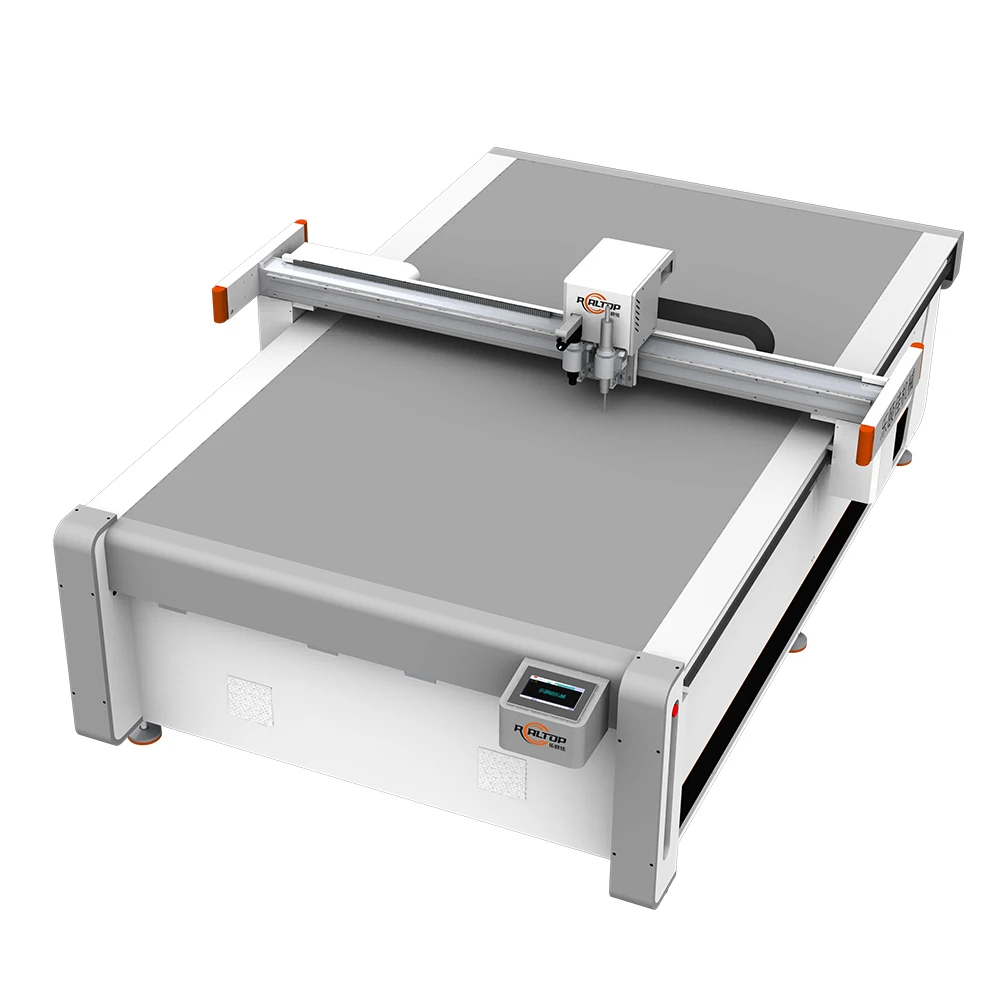
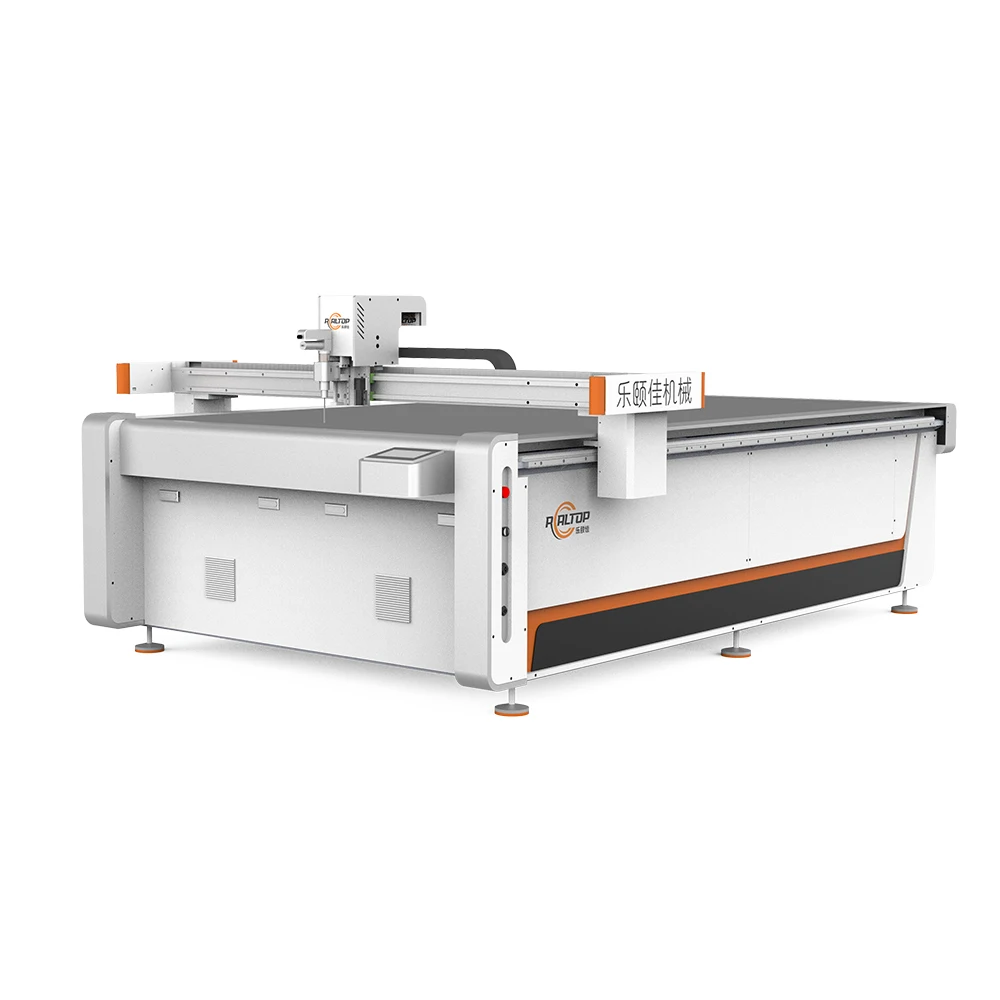
Compact footprint, material-matched tooling — The T-series digital flatbed cutting plotter is configured with oscillating knife, creasing wheel and CCD camera only after sample cutting on your actual packaging stock confirms edge quality and vacuum hold-down.
Technical Specifications
| Parameter | Value |
|---|---|
| Product Type | CNC Flatbed Digital Cutting Plotter |
| Working Area Options | 400×600mm / 600×800mm / 900×1200mm |
| Tool Head Configuration | Oscillating knife, creasing wheel, kiss cutting tool, CCD camera, marking pen |
| Cutting Speed Range | 0–1500 mm/s |
| Maximum Cutting Thickness | ≤ 20mm (basis not stated in source — confirm block format / material / thickness) |
| Repeat Positioning Accuracy | ±0.1 mm |
| Vacuum Pump Rating | 2.5kW / 3.2kW |
| Operating Voltage | 110V / 220V (rated or peak not specified in source) |
| Compatible File Formats | PLT, DXF, AI, PDF |
| Safety Devices | Infrared sensor device and emergency stop device |
| Control Language Options | English, Russian, Italian, Chinese (custom languages available) |
| Assembly Format | Desktop / compact structure |
| Certification | CE |
Application Suitability
| Application | Material or Output |
|---|---|
| Packaging prototype sampling and short-run production | Corrugated board, folding carton stock, greyboard |
| Advertising and graphics finishing | Vinyl, self-adhesive films, printed box stock |
| Light industrial gasket and seal production | Electronic foam, rubber sheets, non-metallic composites |
| Education and cultural craft fabrication | Teaching aids, paper-cut templates, leather bookmarks, greeting cards |
Why the Voltage Question Should Come Before the Price
A plotter specified on working area alone often fails when the material thickness exceeds the knife stroke or the vacuum zoning cannot hold small nested parts flat.
When a packaging sample maker brings their own corrugated stock to the machine, the first issue is rarely the cutting speed. It is usually the moisture content in the board causing ragged edges, or the vacuum table failing to keep small carton flaps from lifting mid-cut [NEED_CITE: vacuum table zoning requirements for small nested packaging parts]. The CNC flatbed digital cutting plotter production line workflow must account for the actual material behavior, not just the nominal sheet dimensions. If the voltage and plug type are not confirmed against the facility’s power supply before shipment, the machine sits idle while adapters are sourced, delaying the entire sampling schedule.
Matching the Tool Head to the Packaging Workflow
A single head carriage on the T-series accepts an oscillating knife for cutting through corrugated and foam, a creasing wheel for folding carton score lines, and a kiss cutting tool for vinyl graphics. Selecting the wrong tool for the material produces crushed edges on foam or incomplete cuts on adhesive-backed films. The CNC flatbed digital cutting plotter production line workflow relies on this multi-tool configuration to complete a cut-and-crease cycle without manual intervention between operations.
CCD Contour Recognition for Printed Stock
When packaging prototypes require contour cutting around printed registration marks, the CCD camera must track those marks at production speed without losing alignment. If the camera cannot read the contrast on a specific coated board, the cut path drifts [NEED_CITE: CCD camera mark recognition accuracy on coated packaging substrates]. Confirming the camera’s tracking capability on the buyer’s own printed material before order prevents the situation where contour cutting works on the sample but fails during a short production run.
How Vacuum Zoning and Accuracy Define Edge Quality
The ±0.1 mm repeat positioning accuracy ensures that intricate fonts and curved patterns on packaging mock-ups remain legible and dimensionally stable. However, accuracy at the head means little if the vacuum table cannot hold the material flat across the entire cutting zone. The 2.5kW or 3.2kW pump options provide different suction levels, and the table zoning must match the size of the parts being cut. Small gaskets or carton flaps require concentrated vacuum in specific zones; otherwise, the material lifts and the oscillating knife catches the edge, producing a reject.
The Hidden Cost of Skipping the Material Test
Buyers who specify a plotter based only on the working area dimensions often discover that the machine cannot handle the material thickness or density once it arrives. A 20mm cutting depth rating may apply to soft foam but not to dense gasket material [NEED_CITE: cutting depth limitations by material density and hardness]. When the vacuum pump is undersized for the porosity of the corrugated board, small parts lift during cutting, and the entire batch requires manual trimming. Software incompatibility with the buyer’s existing nesting workflow or AI/PDF file formats then forces a secondary translation step, introducing dimensional errors before the knife even touches the material.
Why Source the T-Series from Realtop
The design and production of both knife and laser cutting technologies within the same facility means the cutting method is matched to the material rather than forced into one method. Tool head and table configurations are specified per material type and production volume, not selected from a fixed catalog page. Sample cutting on the buyer’s own material is completed before commitment, providing a physical report on edge quality and cycle time. Software compatibility with the buyer’s file format and nesting workflow is confirmed before the order is finalized. Voltage, plug type, and control language are documented and verified against the target market’s electrical standards before shipment [NEED_CITE: electrical schematic and voltage confirmation for export markets].
Documentation & Verification
- Machine specification sheet listing the exact T-series working area and tool head configuration matched to your material
- Electrical schematic with voltage, plug type, and frequency confirmed for your facility before dispatch
- Sample cutting report on your specific packaging stock showing edge quality and contour accuracy results
- Software licence and file format compatibility note confirming AI, PLT, DXF, and PDF workflow integration
- Factory test record documenting repeat positioning accuracy and vacuum hold-down performance on your material
Installation, Commissioning & Support
- Desktop compact structure requires a level floor with adequate clearance around the 900×1200mm maximum working area for material loading
- Dedicated circuit matching the confirmed 110V or 220V operating voltage and the 3.2kW vacuum pump draw
- First-run commissioning includes calibration of the CCD camera mark recognition on your printed packaging stock
- Operation training covers tool head changeover between oscillating knife, creasing wheel, and kiss cutting tools
- Spare parts list identifies wear items including knife blades and creasing wheels specific to your material type
Preparing Your Inquiry
To specify the correct T-series configuration, provide the material type, maximum sheet dimensions, and the thickness range you will cut most frequently. Include your target daily volume for short-run production and the file formats your design team currently outputs. Confirm the voltage and frequency at your facility, along with the preferred control language for the operator interface, so the electrical schematic and software are prepared before the machine leaves the factory.
Frequently Asked Questions
Q: How is cutting thickness verified for my specific material, and what is the test basis?
A: The maximum 20mm rating is a general reference. We cut your actual material — including its specific density and moisture content — and document the edge quality, cutting speed, and vacuum hold-down performance in a sample report before the configuration is finalized.
Q: Which tool head fits my packaging or graphics workflow?
A: The oscillating knife cuts through corrugated and foam, the creasing wheel scores folding carton stock, and the kiss cutting tool handles vinyl. We specify the combination based on your material stack and whether you need cut-and-crease integration on a single carriage.
Q: Does the CCD camera track registration marks at my intended production speed?
A: We test the CCD camera on your printed material to confirm it can read the registration marks and maintain contour accuracy without drift. If the contrast or coating on your stock causes tracking issues, we adjust the lighting or camera settings before shipment.
Q: How are voltage, plug type, and control language confirmed before shipment?
A: We document your facility’s voltage and frequency, the required plug type, and the operator’s preferred language in the electrical schematic and software configuration. These are verified against the production records before the machine is packed.




商品评价
Clear filtersThere are no reviews yet.