



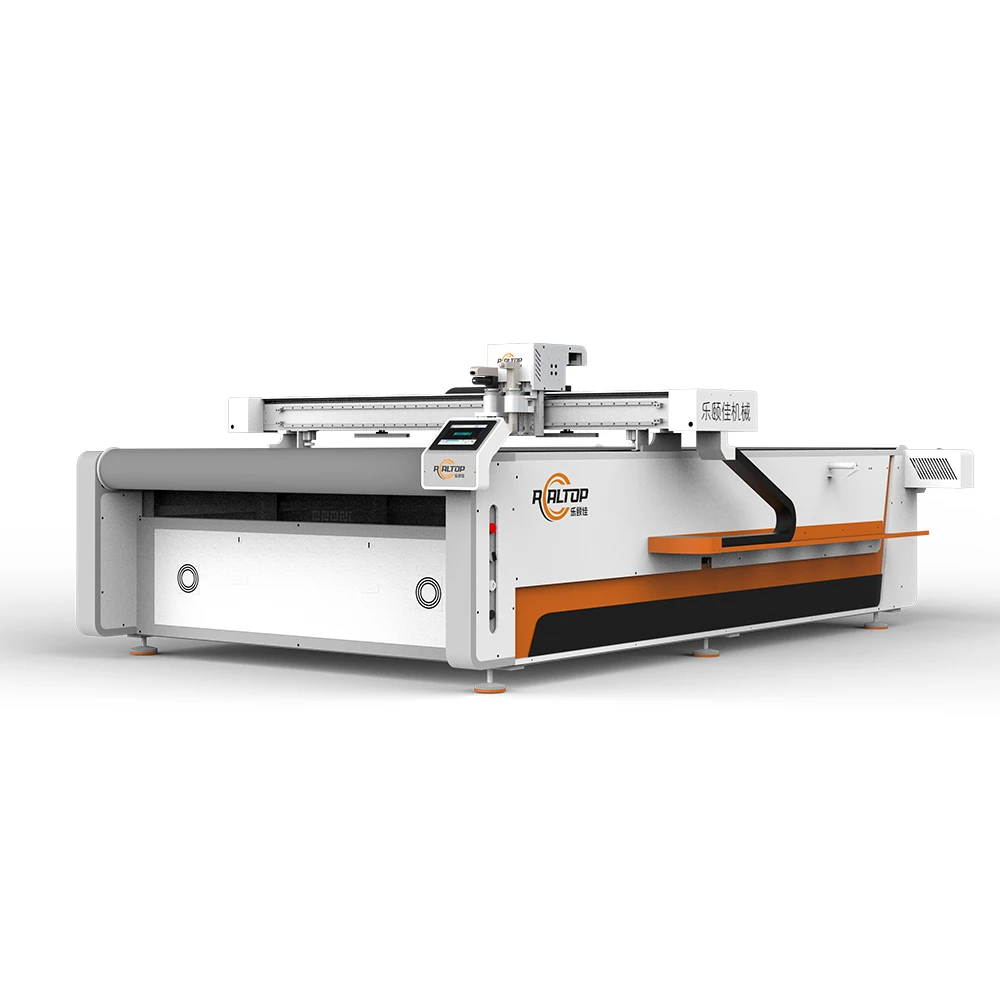
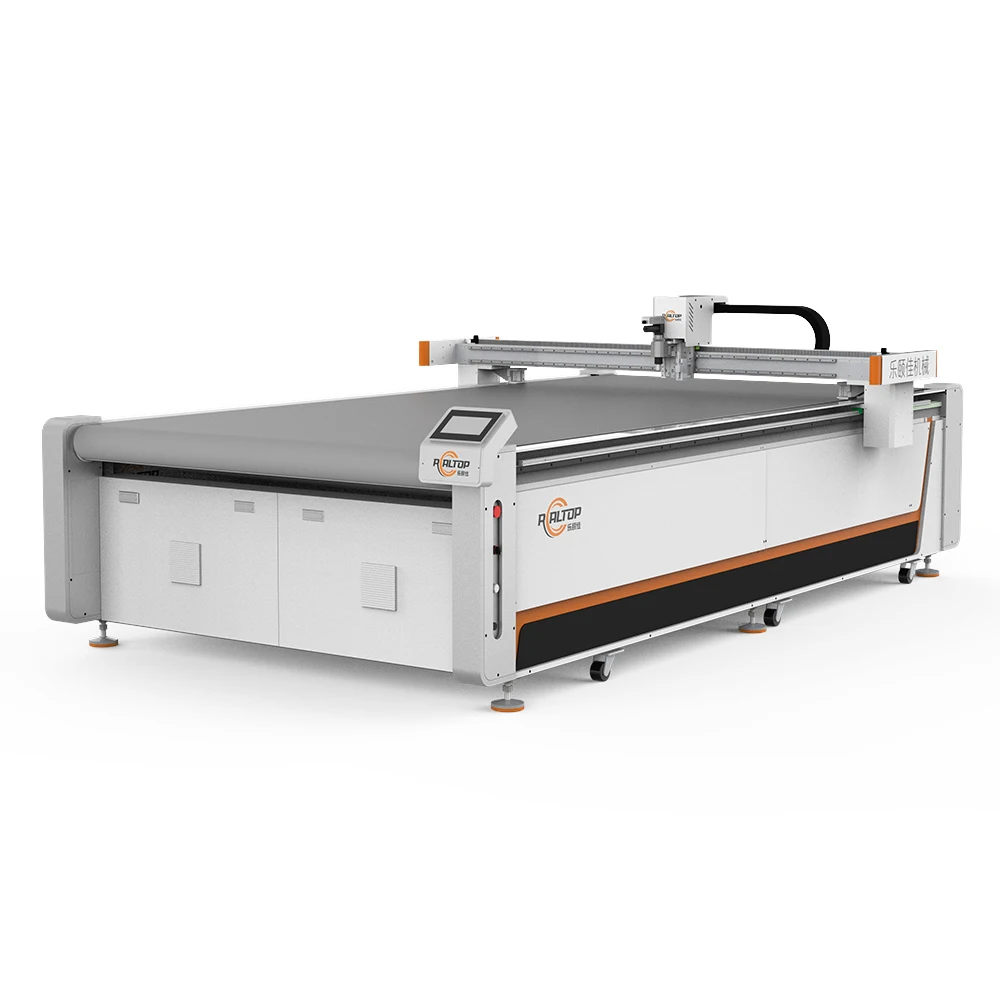
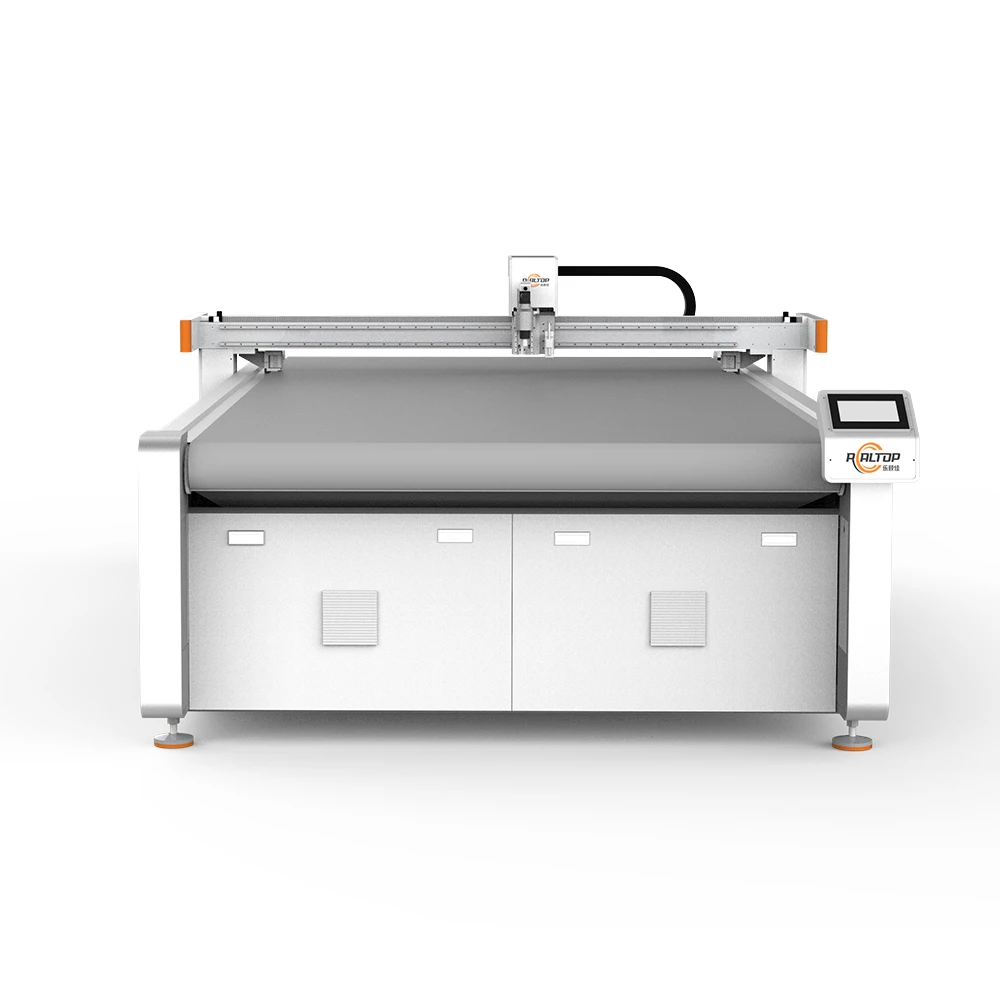
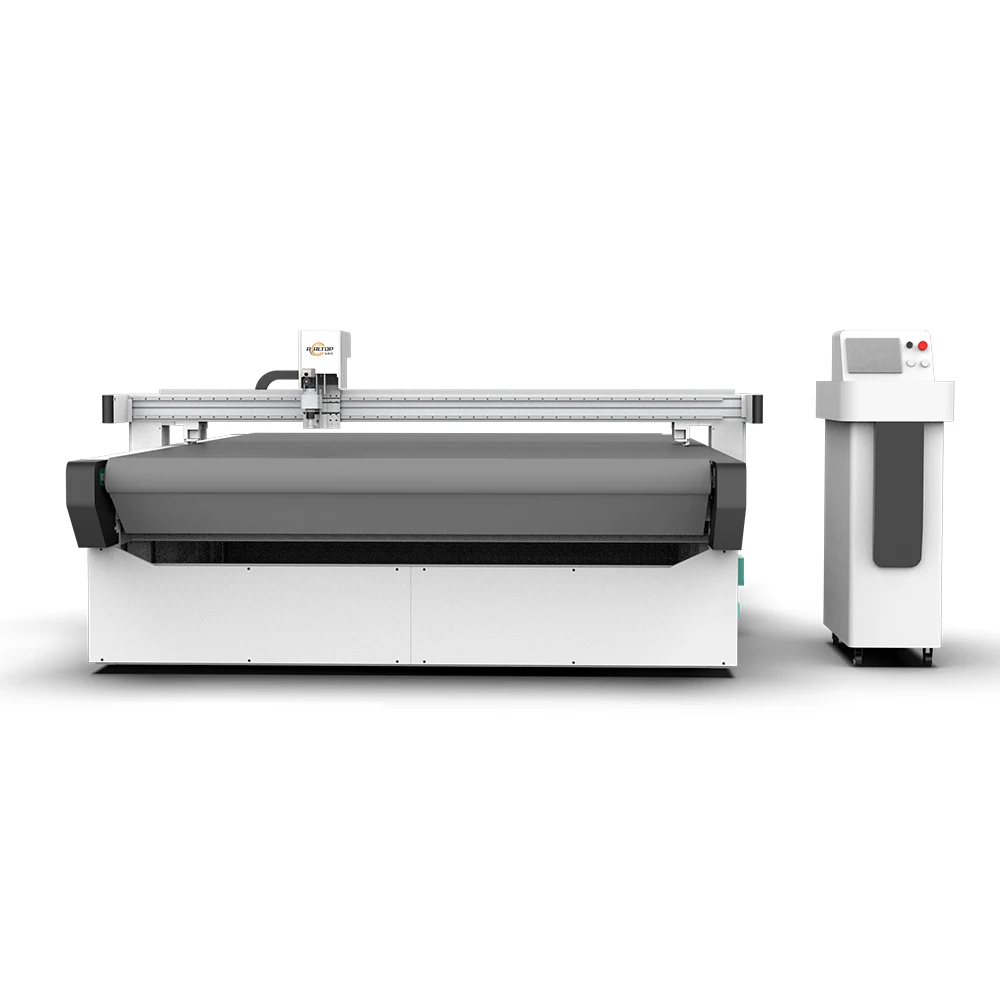
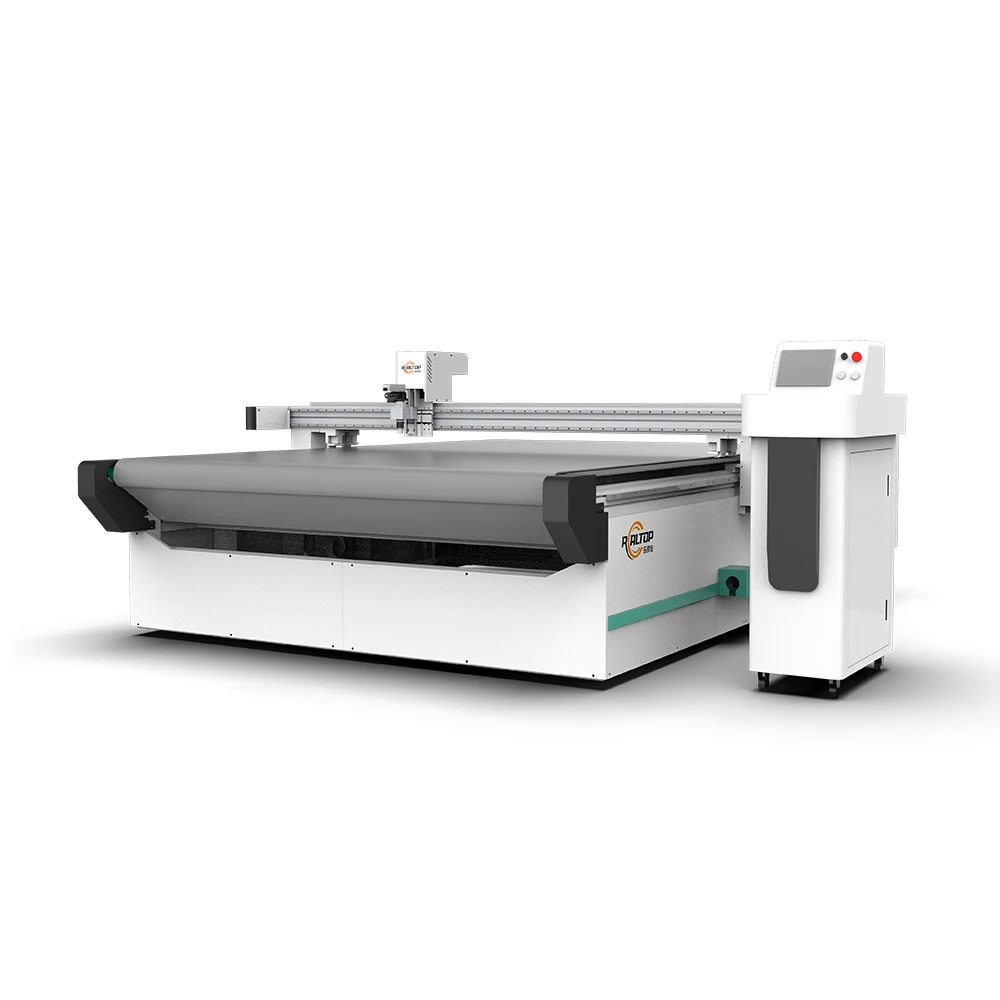


Production-Proven Cutting Method — we match oscillating, rotary and creasing tool heads to the actual fabric or composite being processed, eliminating ragged edges and crushed layers that occur when one method is forced across all materials.
Technical Specifications
| Parameter | Value |
|---|---|
| Model | 1625 |
| Product Type | CNC Oscillating Knife Cutting Machine |
| Working Area | 1600 × 2500 mm |
| Available Tool Heads | Oscillating knife, Driven rotary knife, Creasing wheel, Kiss cutting tool, Pneumatic knife, Milling tool, V groove knife |
| Cutting Speed | 0–2000 mm/s (basis to be confirmed by material and thickness) |
| Maximum Cutting Thickness | ≤ 30 mm (varies by fabric density and layer count) |
| Cutting Accuracy | ±0.1 mm |
| Repeat Positioning Accuracy | ±0.1 mm |
| Vacuum Pump | 9 kW |
| Vacuum Table | Aluminum bellows vacuum table |
| Machine Frame | Heavy-duty frame with precision-ground surface |
| Servo Drive Options | Panasonic, Delta, or Dorna |
| Control System | PLC control panel with multi-language display |
| Language Options | English, Russian, Italian, Chinese (special languages configurable) |
| Voltage Options | 110 V / 220 V / 380 V |
| Compatible File Formats | PLT, DXF, AI, PDF |
| Safety Devices | Infrared sensor and emergency stop |
| Machine Dimensions | 3300 × 2100 × 1350 mm |
| Nesting System | Intelligent nesting with automatic defect avoidance |
| Standards | CE |
Application Suitability
| Application | Material or Output |
|---|---|
| Garment and apparel manufacturing | Suits, knitwear, lace, multi-layer woven and complex patterned fabrics |
| Automotive interior production | Seat fabrics, carpets, PVC floor mats, headliner textiles |
| Home textile fabrication | Sofa upholstery fabrics, heavy curtains, area rugs |
| Footwear component cutting | Leather, synthetic leather, multi-layer composite uppers |
| Composite material processing | Carbon fiber prepreg, aramid fabric, specialty technical textiles |
| Carton and packaging sample making | Corrugated board, cardboard, folding carton stock |
What "Cutting Speed up to 2000 mm/s" Leaves Out for Cloth CNC Cutting Machine Buyers
A speed rating means nothing unless verified on the exact fabric weight, coating, and layer count you will actually run in production.
Buyers often see a headline cutting speed and assume it applies universally across every material in their workshop. In reality, an oscillating knife running through single-layer cotton poplin behaves completely differently than when it encounters a coated automotive seat fabric or a multi-layer stack of dense upholstery textile. Edge quality degrades, layers shift, and blade wear accelerates once the material variables change. I once watched a buyer commit to a machine based on a brochure speed figure, only to discover during commissioning that their PVC-coated polyester required a completely different tool head and a slower feed rate to achieve clean edges. The production claim of 1200–2000 mm/s in the specification sheet carries a basis not stated in source — meaning it must be validated on your specific fabric before you can rely on it [NEED_CITE: material-specific cutting speed validation for industrial textile processing].
Matching the Tool Head to the Textile
A Cloth CNC Cutting Machine for garment and textile production line work lives or dies by its tooling selection. The 1625 platform carries seven interchangeable heads: the oscillating knife handles woven and knitted fabrics at medium to high ply counts, the driven rotary knife excels on single-layer and delicate materials where drag would distort the weave, and the creasing wheel scores fold lines on packaging stock without penetrating the surface. Pneumatic and kiss cutting tools address adhesive-backed vinyl and laminated composites where blade depth must be held within fractions of a millimeter. Selecting the wrong head produces frayed edges on knits or incomplete cuts on coated fabrics, forcing operators into secondary trimming that erodes the throughput advantage of CNC automation entirely.
Holding the Material Flat Across a 1600 × 2500 mm Bed
Vacuum hold-down is where many cloth cutting tables fail at production speed. The 1625 uses a 9 kW pump feeding an aluminum bellows vacuum table that maintains suction across the entire working surface, preventing small pattern pieces from lifting as the knife changes direction. Without adequate zoning, intricate collar or cuff shapes detach mid-cut and jam the head — a problem that multiplies when cutting slippery synthetics or lightweight linings. The heavy-duty frame and precision-ground surface keep the table flat over years of daily use, ensuring that the ±0.1 mm repeat positioning accuracy holds regardless of which zone of the bed the fabric occupies [NEED_CITE: vacuum table zoning requirements for small-part textile cutting].
Reading the Specs Through a Textile Producer’s Lens
The 30 mm maximum cutting thickness figure depends heavily on fabric density and compressibility: thirty millimeters of loose-weave knit compresses far more than the same thickness of dense felt or rubber-backed carpet, so the usable ply count must be tested on your own material roll. The ±0.1 mm cutting and repeat accuracy ensures pattern pieces for tailored garments or automotive seat covers align at the sewing stage without manual adjustment. Seven available servo drive options — Panasonic, Delta, and Dorna — let buyers balance cost against the responsiveness needed for tight-corner contour work. File format compatibility across PLT, DXF, AI, and PDF means the machine integrates with existing pattern-making and nesting software rather than forcing a workflow migration.
The Hidden Cost of Skipping Material-Specific Configuration
When a cloth CNC cutting machine is specified on working area alone, the consequences surface weeks after installation. A buyer cutting multi-layer automotive carpet may find the default oscillating knife leaves compressed, uneven edges that fail quality inspection, while a rotary knife would have produced a clean shear cut. Insufficient vacuum zoning causes small gusset pieces to shift during high-speed contouring, generating scrap that compounds across a full shift. Control panel language mismatches slow down operator training and increase the likelihood of parameter entry errors during shift changes. These issues are not warranty claims — they are specification failures that trace back to the initial inquiry stage [NEED_CITE: common CNC cutting machine specification mismatches in textile manufacturing].
Why Source This Cloth CNC Cutting Machine Here
The design and production team covers both knife and laser cutting technologies under one roof, so the cutting method is matched to the material rather than forced into a single technology. Tool head and vacuum table configurations are specified individually based on the buyer’s fabric type, ply count, and daily volume, not pulled from a default bill of materials. Sample cutting runs on the buyer’s actual material are conducted before any order commitment, producing a documented report on edge quality, cutting speed, and blade life. Voltage, plug type, and control language are confirmed in writing before the machine enters production, preventing the costly rewiring and reprogramming that delays commissioning. Software licenses and file format compatibility are verified against the buyer’s existing nesting workflow to ensure a clean data path from pattern design to cutting bed.
Documentation & Verification
- Machine specification sheet listing confirmed tool heads and vacuum table zoning for your fabric
- Electrical schematic with voltage and frequency matching your facility’s supply
- Sample cutting report produced on your actual material with edge quality photographs
- Tool head and table configuration list tied to your stated production volume
- Software license and file format compatibility note for your nesting platform
- Factory test record captured before dispatch covering positioning accuracy verification
Installation, Commissioning & Support
- Foundation must be level to support the 3300 × 2100 mm footprint and 9 kW vacuum pump load
- Dedicated electrical circuit matching confirmed voltage option (110 V, 220 V, or 380 V) with correct frequency
- Machine ships partially assembled; frame and gantry require on-site alignment and belt tensioning
- First-run calibration includes vacuum zone mapping and servo tuning on the selected drive brand
- Operator training covers tool head changeover, nesting import, and PLC language navigation
- Spare oscillating blades, rotary knife discs, and vacuum seals included in the initial parts kit
What to Prepare Before Requesting a Quote
To size the configuration correctly, we need the specific fabric types you cut — including coatings, laminations, and layer counts — along with your typical sheet dimensions and daily piece volume. Share your local voltage and frequency, preferred control language, and the nesting software you currently use so we can confirm file format compatibility. If your production includes printed contour work, let us know so we can address camera positioning requirements in the initial recommendation.
Frequently Asked Questions
Q: How do I choose the right tool head for my fabric type?
A: The selection depends on fabric construction, thickness, and whether the material has a coating or lamination. Woven and knitted fabrics at higher ply counts typically use the oscillating knife, while single-layer delicate materials suit the driven rotary knife. We run a sample cut on your actual material to confirm edge quality before finalizing the tool head list.
Q: How is cutting capacity verified before I place an order?
A: We cut your own fabric samples at the thickness and layer count you intend to run in production. The test records edge quality, achievable speed, and blade wear over a representative run length. This report accompanies the quotation so you can evaluate real performance rather than rely on generic specification figures.
Q: Will the machine work with my existing nesting software?
A: The control system accepts PLT, DXF, AI, and PDF file formats. Before order confirmation, we verify compatibility with your specific nesting platform and workflow, including any defect avoidance or pattern-matching requirements you use in daily production.
Q: What voltage and language options are confirmed before shipment?
A: We confirm your facility voltage, frequency, plug type, and preferred control panel language in writing before production begins. Available options include 110 V, 220 V, and 380 V configurations, with display languages in English, Russian, Italian, Chinese, or a custom language on request.
Q: How does the vacuum table handle small pattern pieces?
A: The aluminum bellows vacuum table with a 9 kW pump is designed to maintain hold-down force across the full 1600 × 2500 mm surface. Zoning can be configured to concentrate suction in areas where small pieces such as collars, cuffs, or gussets are nested, preventing material lift during high-speed contouring.


商品评价
Clear filtersThere are no reviews yet.