


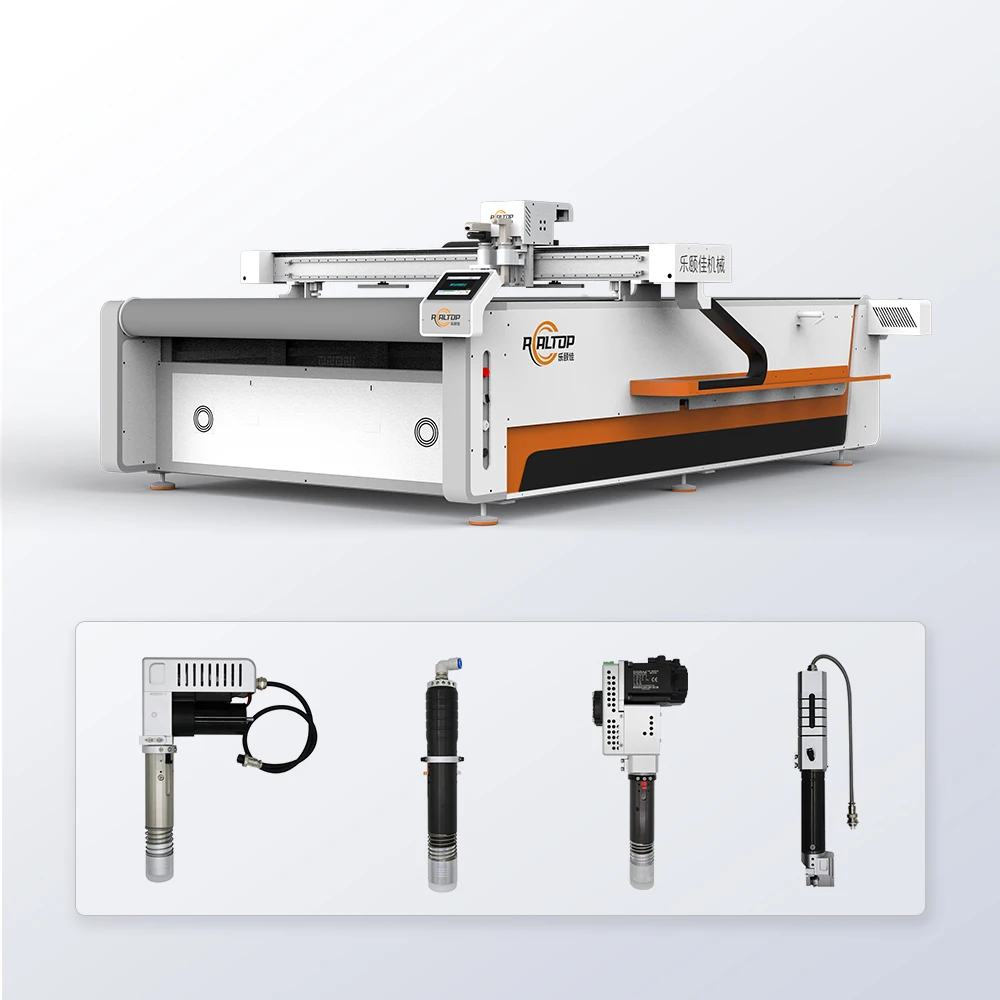

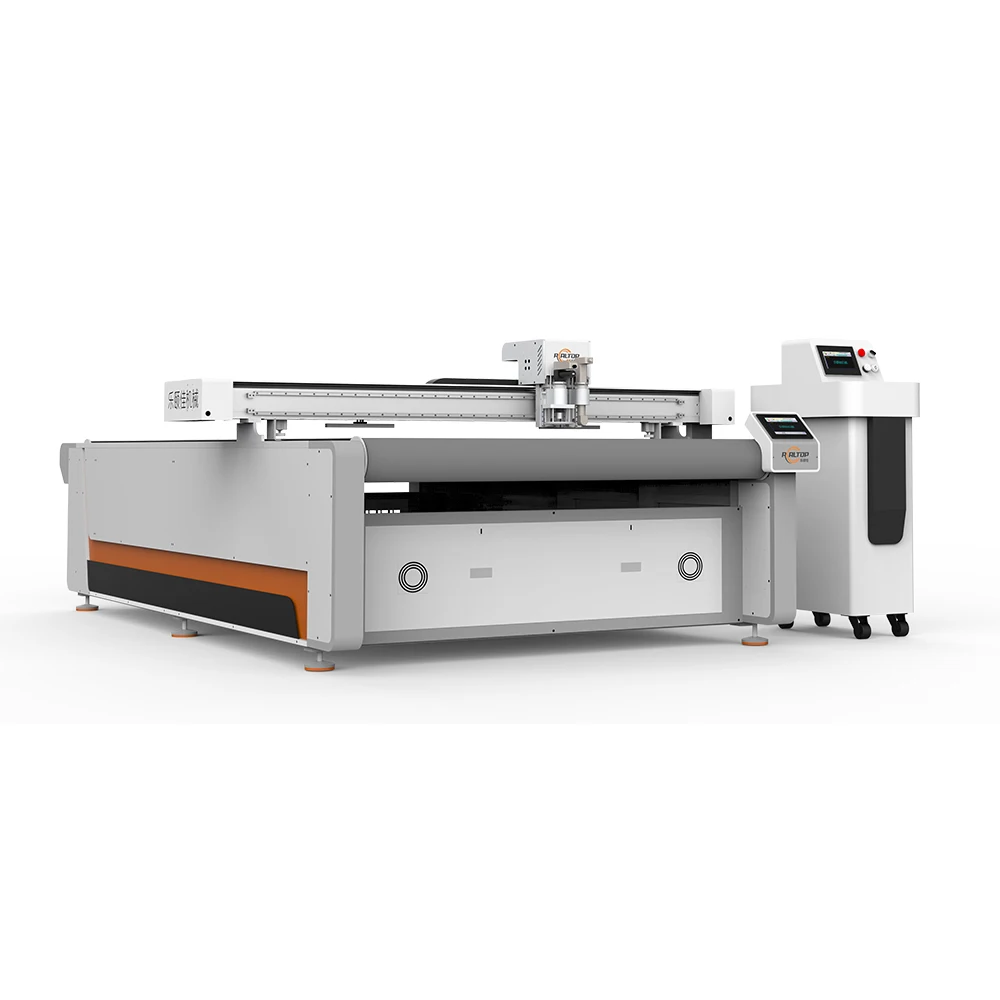

Custom-Configured Cutting Workflow — A production-grade CNC oscillating knife cutting machine production line configured for your specific fabric type, layer count and daily output, with sample validation on your own material before commitment.
Technical Specifications
| Parameter | Value |
|---|---|
| Model | 1625 |
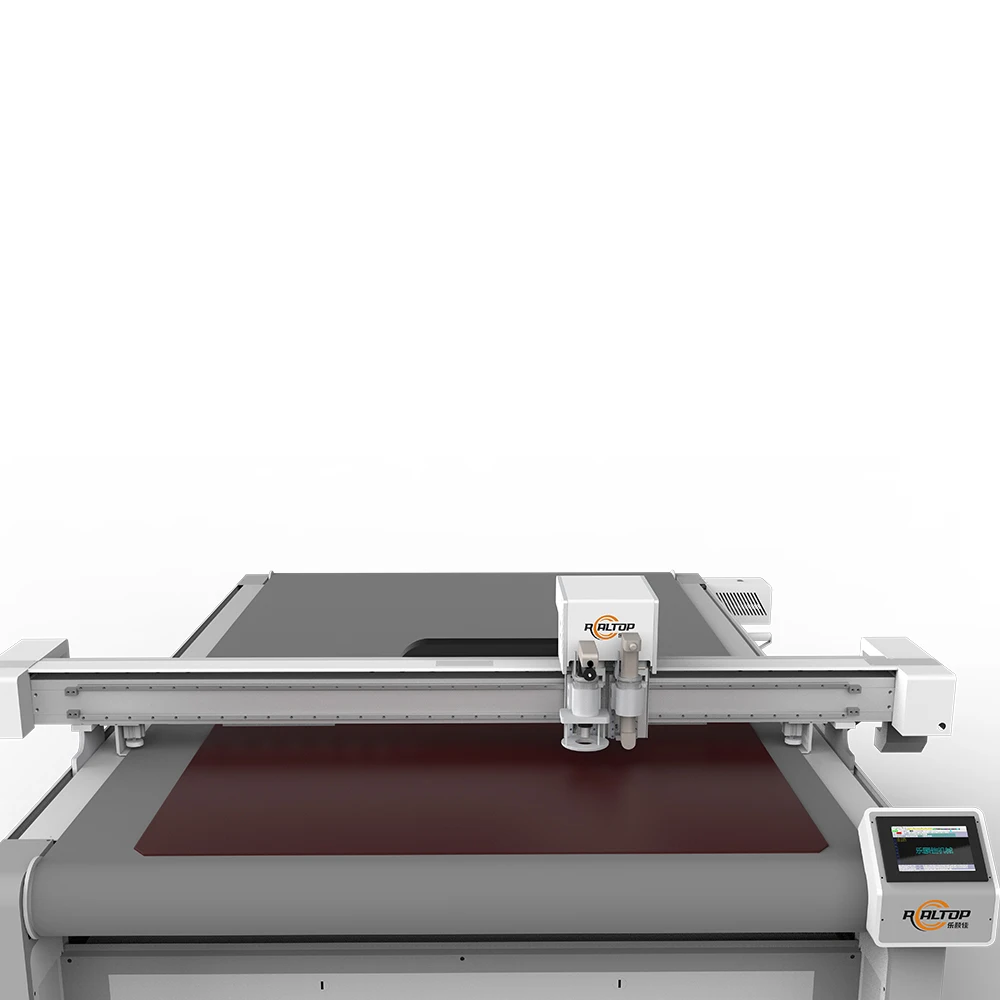
| Product Type | CNC Oscillating Knife Cutting Machine |
| Working Area | 1600 × 2500 mm |
| Tool Head Options | Oscillating knife, Driven rotary knife, Creasing wheel, Kiss cutting tool, Pneumatic knife, Milling tool, V-groove knife |
| Cutting Speed | 0–2000 mm/s (basis not stated in source — confirm material, thickness and tool head) |
| Cutting Thickness | ≤ 30 mm (basis not stated in source — confirm material type and density) |
| Cutting Accuracy | ±0.1 mm |
| Vacuum Pump Power | 9 kW |
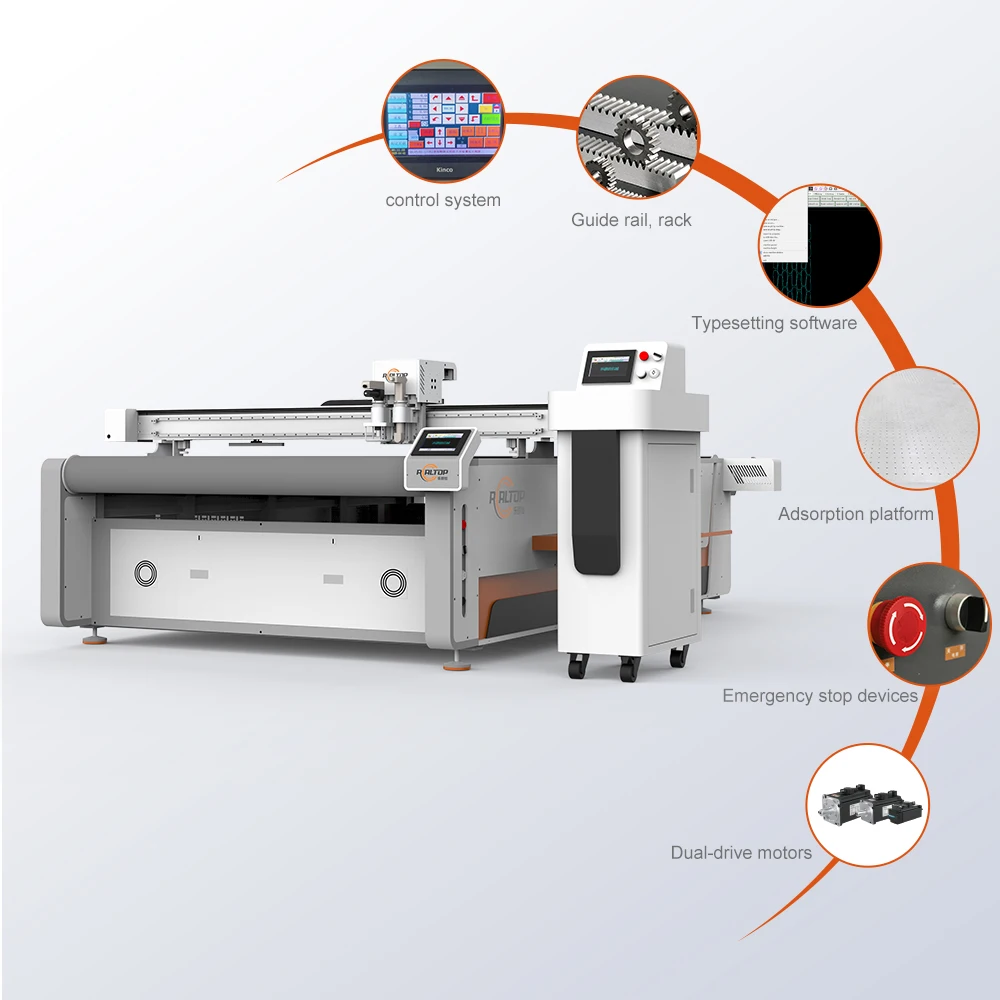
| Vacuum Table | Aluminum bellows vacuum table |
| Control System | PLC control panel |
| Servo Motor Options | Panasonic, Delta, Dorna |
| File Formats | PLT, DXF, AI, PDF |
| Voltage Options | 110V, 220V, 380V (frequency to be confirmed) |
| Display Language Options | English, Russian, Italian, Chinese (customizable) |
| Safety Devices | Infrared sensor, Emergency stop |
| Machine Size | 3300 × 2100 × 1350 mm |
| Standards | CE |
Application Suitability
| Application | Material or Output |
|---|---|
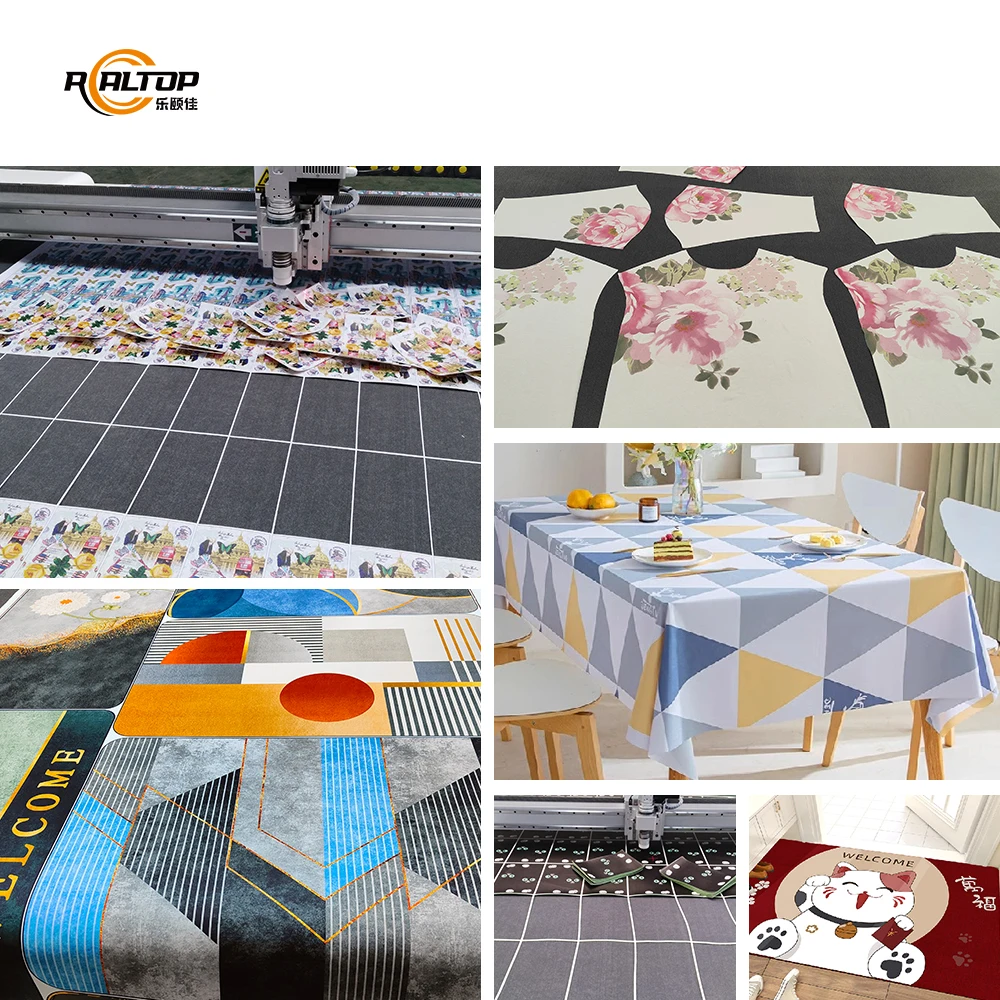
| Apparel manufacturing | Suits, knitwear, lace, complex woven and knitted fabrics with pattern-matching layouts |
| Automotive interiors | Seat fabrics, carpets, PVC mats requiring burr-free edges |
| Home textiles | Sofa fabrics, curtains, rugs in multi-layer cutting runs |
| Composite material processing | Carbon fiber prepreg, aramid, specialty technical textiles |
| Footwear production | Leather, synthetic uppers and lining materials |
What "Cutting Speed 0–2000 mm/s" Means on Your Actual Fabric
Head speed alone does not define real throughput; material behavior under the blade determines your true output.
Every fabric buyer I work with in Shandong asks the same question: how fast can this CNC oscillating knife cutting machine production line run my material? The spec sheet reads 0–2000 mm/s, but that figure is the mechanical travel speed of the tool head across an empty table. Once you lay down five layers of coated automotive headliner fabric, the blade meets resistance that changes everything. The oscillation frequency must match the density of the stack, the vacuum hold-down must keep the bottom layer from shifting, and the cutting direction changes at corners create deceleration that no single speed number captures. I have seen buyers compare two machines purely on max travel speed, then wonder why the slower-rated unit finishes a nesting job first on their actual lay [NEED_CITE: factors affecting real cutting throughput on layered flexible materials].
Matching Tool Heads to the Fabric You Actually Run
A 1625 CNC oscillating knife cutting machine production line ships with interchangeable tool heads because no single blade geometry handles every textile. The oscillating knife slices through woven and knitted stacks with clean edges, while the driven rotary knife is suited for single-ply or lighter materials where continuous rolling contact prevents fraying. The pneumatic knife engages thicker, denser stacks such as automotive carpets, and the V-groove knife scores folding lines on packaging inserts used in garment shipping. Choosing the wrong tool head for your material produces ragged edges that require secondary trimming downstream, or worse, crushed fibers that ruin the panel entirely.
Vacuum Zoning and Why Small Parts Lift During Cutting
The aluminum bellows vacuum table on this machine is divided into zones, and the configuration of those zones matters far more than total suction power. When cutting small pattern pieces such as collar stays or pocket flaps, a full-table vacuum spreads the hold-down force too thin, and the knife drag lifts the fabric at the end of each cut path. By activating only the zones directly beneath the nested layout, the 9 kW pump concentrates adsorption where it counts. On multi-layer runs of knitwear, uneven hold-down causes the top ply to shift relative to the bottom, producing a stack where only the top layer matches the pattern [NEED_CITE: vacuum table zoning impact on multi-layer cutting accuracy].
Reading the Spec Sheet Beyond the Numbers
The ±0.1 mm cutting accuracy is measured under controlled conditions on a single layer of standard material. In a real apparel production environment, accuracy depends on how well the vacuum holds the stack, how sharp the blade is at the thousandth cut, and whether the nesting software accounts for fabric grain direction. The PLC control panel manages tool path execution, but the file format compatibility list — PLT, DXF, AI, PDF — determines whether your existing design department can send files directly or must convert them through an intermediate step that introduces geometry errors. Servo motor selection across Panasonic, Delta and Dorna affects acceleration response, which in turn influences corner quality on intricate pattern pieces where the head decelerates and re-accelerates repeatedly.
The Cost of Skipping the Sample Test
Buyers who skip sample cutting on their own material often discover problems only after the machine arrives and the first production run begins. A woven polyester that cuts cleanly at sample stage may behave differently when the factory switches to a coated variant for automotive headliners. The blade frequency that works on plain weave tears through the coating, the vacuum that holds four layers cannot grip eight, and the entire roll walks across the table during long cut paths. One buyer I worked with lost three full rolls of coated fabric in a single day before we reconfigured the tool head and adjusted the zone map [NEED_CITE: common causes of material lift and edge damage in oscillating knife cutting].
Why Sourcing This Machine Here Makes Sense
Our in-house design team covers both knife and laser cutting technologies, so we match the cutting method to your material rather than forcing one approach. Every 1625 table leaves the factory with a tool head and vacuum zone configuration specified for your fabric type and production volume. CCD camera positioning for printed contour work is integrated where your workflow requires it, and software compatibility is confirmed against your existing nesting system before the order is placed. Voltage, plug type and control language are locked in during the specification stage, not discovered at uncrating. We run your material on the factory floor and document the results in a sample cutting report before you commit.
Documentation & Verification
- Machine specification sheet with tool head and vacuum zone configuration matched to your fabric
- Electrical schematic with voltage and frequency confirmed for your local supply
- Sample cutting report documenting blade type, layer count and edge quality on your material
- Software license and file format compatibility note for PLT, DXF, AI and PDF workflows
- Factory test record with cutting samples and packing photographs before dispatch
- CE declaration with operation and maintenance manual in your chosen display language
Installation, Commissioning & Support
- Foundation must support 3300 × 2100 × 1350 mm footprint with level tolerance across the aluminum vacuum table
- Dedicated electrical circuit sized for 9 kW vacuum pump plus servo and PLC load at confirmed voltage
- Machine ships in single crate; table leveling and vacuum zone calibration completed on-site
- First-run parameter setting covers blade frequency, vacuum zone map and cutting speed for your material
- Operator training includes tool head changeover, nesting import and PLC panel navigation in your language
- Spare parts list covers blades, knife holders and vacuum seals with recommended reorder intervals
Before You Request a Quote
Send us your actual fabric type, typical layer count and maximum sheet dimensions so we can recommend the correct tool head and vacuum zone layout. Tell us your local voltage and frequency, preferred control language, and the file formats your design team currently uses. If you have an existing nesting workflow, share a sample file so we can verify software compatibility before building your 1625 CNC oscillating knife cutting machine production line. You are welcome to send a roll of your production material for a documented sample cutting test.
Frequently Asked Questions
Q: How is cutting capacity verified against my fabric type, thickness and layer count?
A: We run a sample cutting test on your actual material using the recommended tool head and vacuum zone configuration. The test documents blade type, oscillation frequency, layer count and edge quality. You receive a written sample cutting report so you can evaluate results before placing the order, and we adjust the configuration if the first test does not meet your standard.
Q: Which tool head is recommended for my material and what edge quality can I expect?
A: Tool head selection depends on your fabric weight, weave type and layer count. The oscillating knife handles most woven and knitted stacks, the driven rotary knife suits single-ply light materials, and the pneumatic knife manages thicker carpets and PVC mats. Edge quality is validated during the sample test at production-relevant speeds, not at empty-table travel rates.
Q: How is vacuum table zoning configured for my part sizes to prevent material lift?
A: The aluminum bellows table zones are mapped to your nesting layout so suction concentrates beneath the active cut area. Small parts like collar stays or pocket flaps receive focused hold-down instead of diluted full-table vacuum. Zone configuration is set during commissioning based on your most common pattern layouts and layer counts.
Q: What voltage, plug type and control language are confirmed before shipment?
A: Voltage options include 110V, 220V and 380V, and frequency is confirmed for your local grid during the specification stage. Plug type matches your market standard. The PLC control panel display language — English, Russian, Italian or Chinese — is set before dispatch, and the operation manual is provided in the same language.
Q: Can I send my own material for a sample cutting test before placing the order?
A: Yes. Send a representative sample of your production fabric, and we run it on the 1625 table with the tool head and vacuum settings we recommend for your application. The sample cutting report documents every parameter and the resulting edge quality, giving you a clear basis for your purchasing decision before any commitment is made.



商品评价
Clear filtersThere are no reviews yet.