


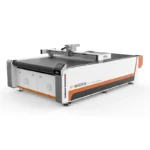
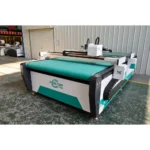
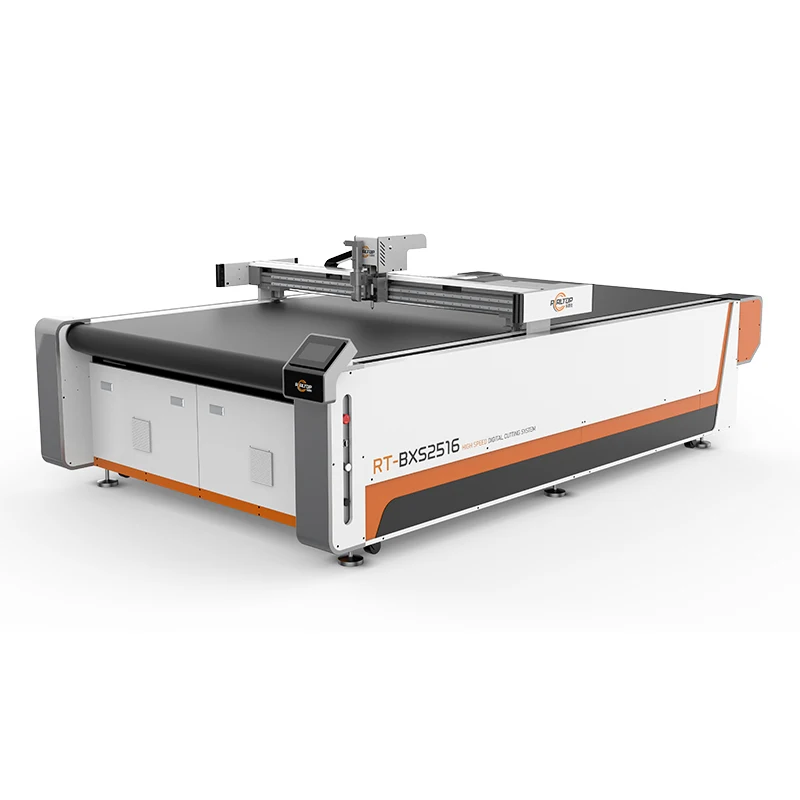
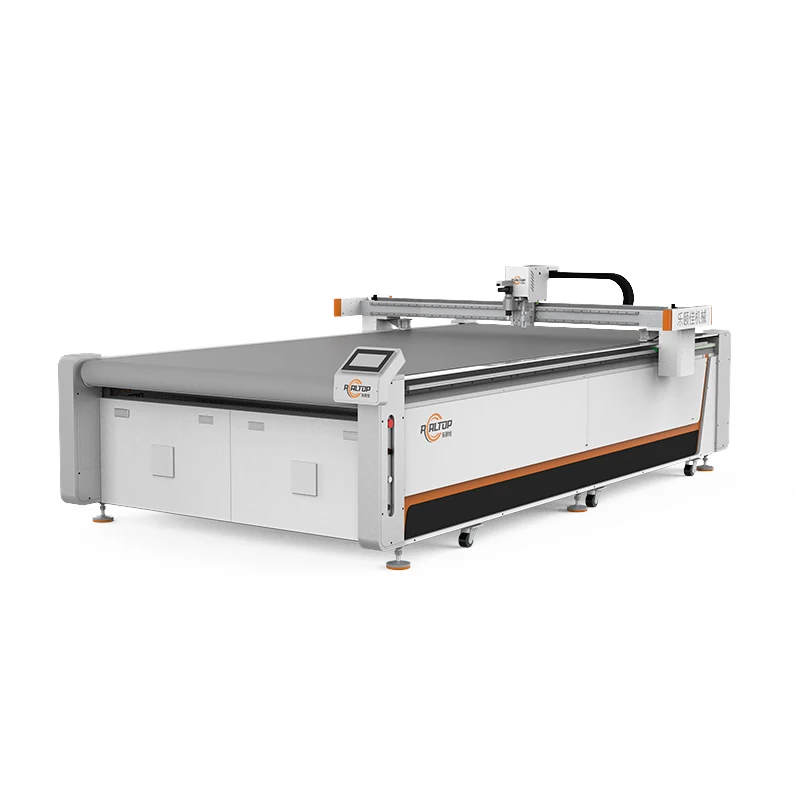
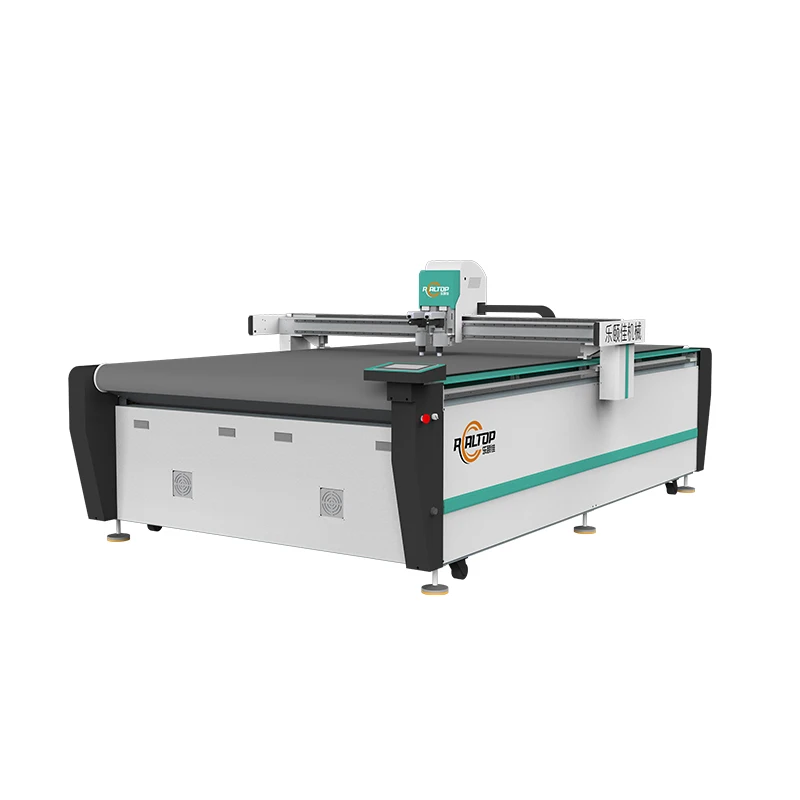
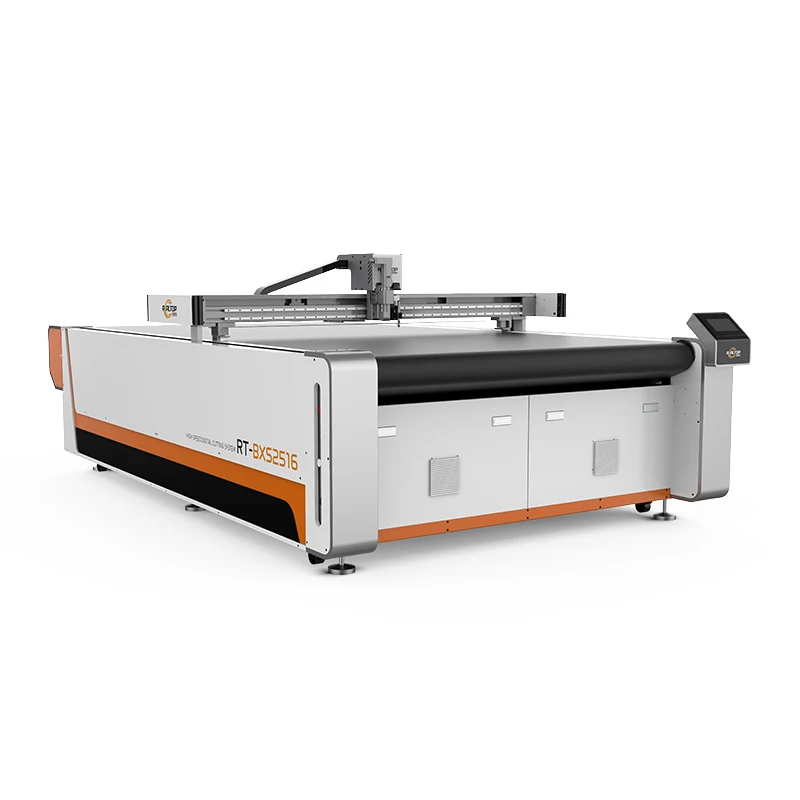
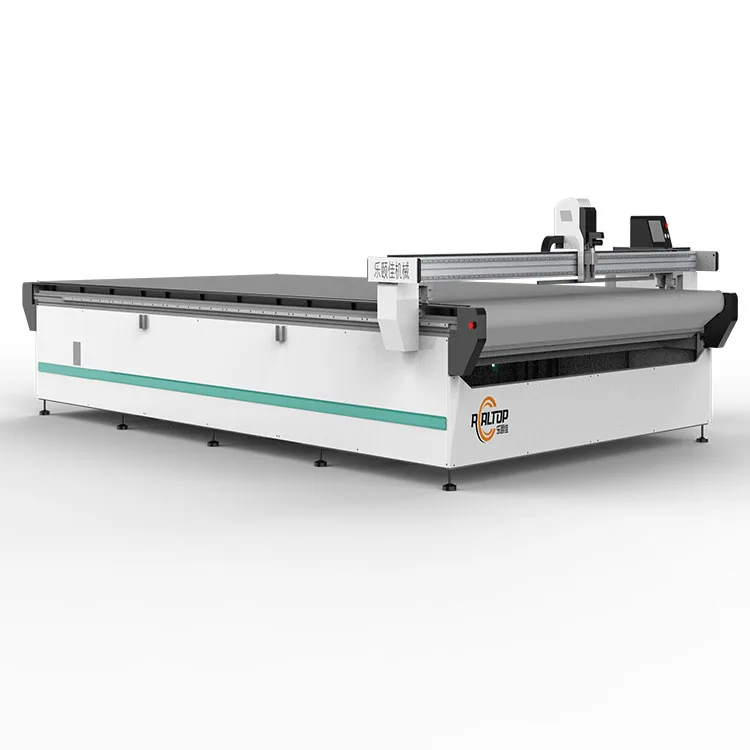
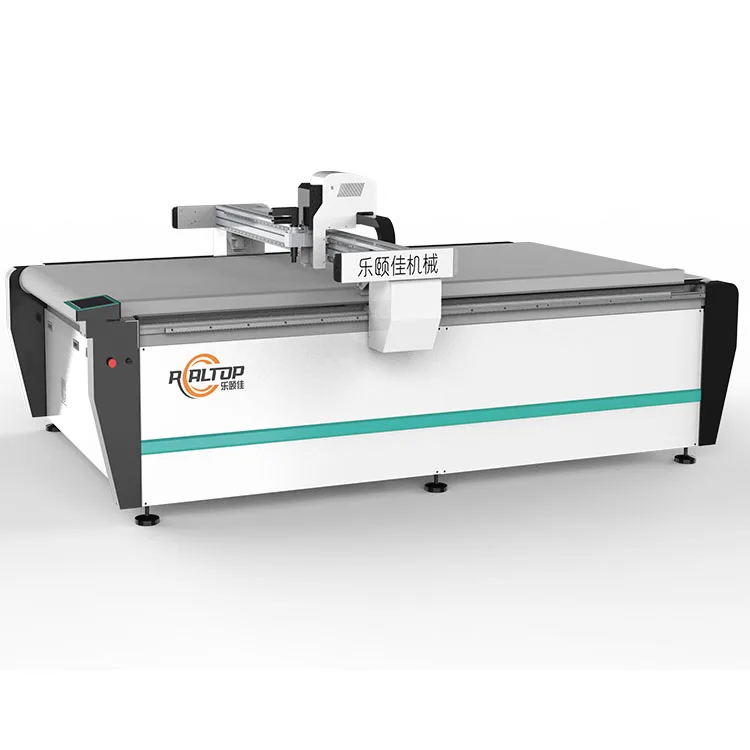

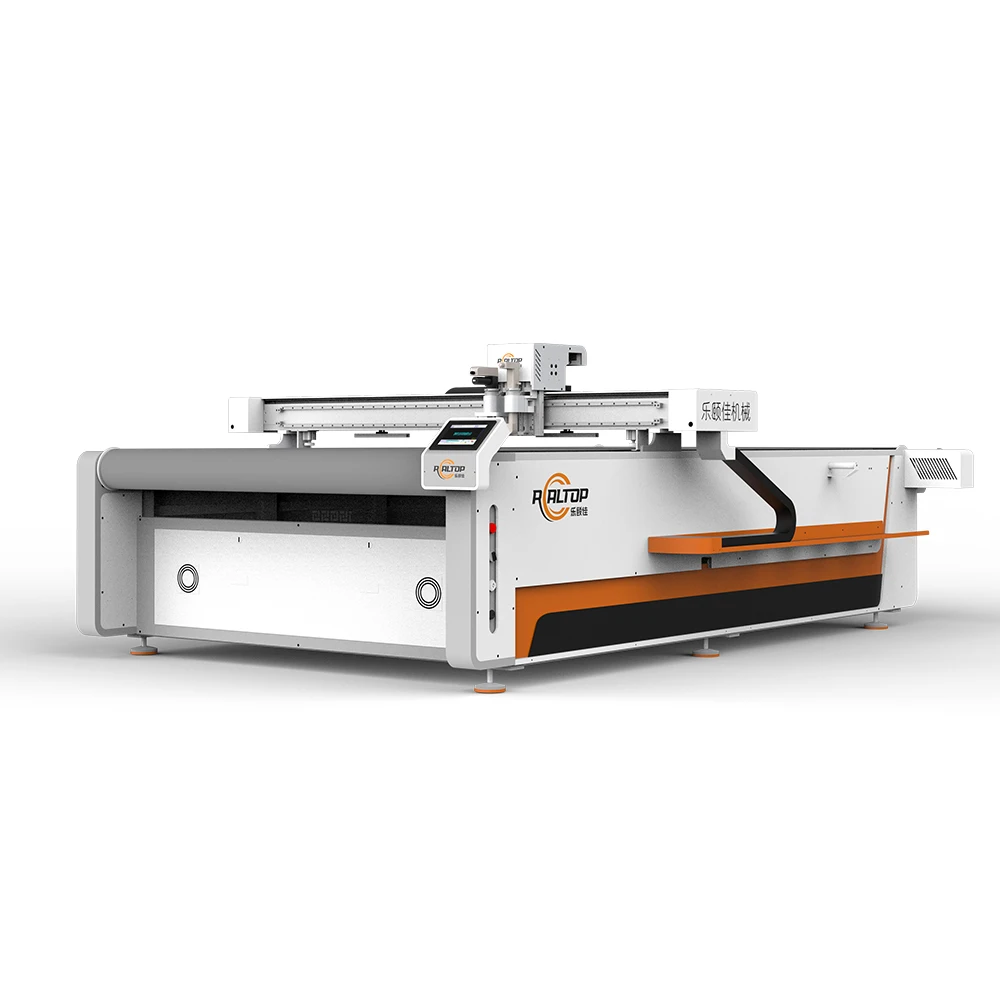
Production-proven cutting integration — Every RT-D2516/RT-S2516 unit ships only after sample cutting validates the buyer’s actual fabric stack, vacuum zoning, and CCD tracking speed at production feed rates.
Technical Specifications
| Parameter | Value |
|---|---|
| Model | RT-D2516/RT-S2516 |
| Product Type | CNC Oscillating Knife Cutting Machine for Textile and Apparel |
| Working Area | 1600×2500mm |
| Machine Size (Overall Dimensions) | 3450×2300×1250mm |
| Rated Power | 9kW |
| Table Configuration | Flat working table or auto feeding table (conveyor) |
| Multifunctional Tool Head | Swiss imported knife (vibration full cutting, vibration half cutting, cursor location) |
| Safety Device | Infrared sensors, anti-collision beam stops, emergency stop button (resume cutting in situ) |
| Translational Velocity | 800-2000mm/s |
| Cutting Speed | 200-800mm/s (according to different cutting materials) |
| Cutting Thickness | ≤100mm (varies with material) |
| Repeated Accuracy | ≤0.1mm |
| Transmission System | Imported digital servo motor, linear guide, synchronous belt, ball screw |
| Instruction System / File Compatibility | HP-GL compatible format; software supports PLT, DXF, AI |
| Voltage | 380V±10% |
| Servo Motor Options | Delta (China) or Panasonic (Japan) |
| Vacuum Table Material | Magnesium-aluminum alloy with fluorocarbon PVDF powder spraying, anodic oxidation, hard oxidation |
| Vacuum Pump | 7.5kW integrated aviation aluminum shell with built-in silencer sponge |
| Visual Positioning Options | Small CCD camera mark point positioning, panoramic camera recognition positioning, projection positioning |
| Control Panel | Touch screen, multiple languages supported |
| Software | Auto typesetting / nesting software |
| Language Options | English, Russian, Italian, Chinese (special languages customizable) |
| Assembly State | Fully assembled (split box platform supported for transport) |
| Warranty | 1 year (parts provided free; buyer covers shipping; on-site engineer available with buyer covering travel) |
Application Suitability
| Application | Material or Output |
|---|---|
| Garment and apparel production | Single-layer and multi-layer cutting of woven, knit and technical fabrics for sample rooms and bulk runs |
| Footwear and luggage manufacturing | Contour and half-cut processing of leather, PU, EVA and composite shoe uppers |
| Soft furnishing fabrication | Nested cutting of sofa fabric, carpet and non-woven materials for upholstery and home textiles |
| Automotive interior production | Multi-layer stack cutting of composite materials and gasket components for seating and trim |
| Technical textile conversion | Precision cutting of PTFE, ETFE, fiberglass and carbon fiber sheets for industrial applications |
What Your Fabric Stack Thickness Has to Do With Machine Selection
A CNC oscillating knife cutting machine for garment and apparel production chosen on bed size alone often fails when the material stack, vacuum hold-down, or feed rate has not been confirmed before the order is placed. The cutting method must match the fabric and daily volume, not just the sheet dimensions.
I have seen textile producers lose entire batches because the oscillating knife amplitude was specified for single-layer sample work, then applied to a six-layer composite layup without revalidation. The result is crushed edges on the bottom plies and fraying that requires manual rework across every cut piece [NEED_CITE: common causes of textile cutting defects in multi-layer production]. This kind of mismatch is not visible during a standard factory demonstration on light cotton, which is why sample cutting on the buyer’s actual material remains the only reliable verification step before commitment.
Matching the Tool Head to Your Fabric Type
The RT-D2516/RT-S2516 is equipped with a Swiss imported oscillating knife that delivers clean edges on both woven and knit textiles without fraying or fiber pull-out. The vibration full-cut mode handles single-layer contour work for sample making, while the half-cut mode scores adhesive-backed materials and laminated composites without penetrating the carrier layer.
This tool head selection is not a universal default. For heavier technical fabrics and multi-layer stacks approaching the 100mm cutting thickness limit, the oscillation frequency and stroke must be validated against the specific layup to ensure the blade reaches the bottom ply cleanly. The CNC oscillating knife cutting machine for garment and apparel production becomes effective only when this validation is completed on the buyer’s actual production material before shipment.
Vacuum Zoning and Conveyor Feeding for Continuous Runs
The magnesium-aluminum alloy vacuum table features zoned adsorption that holds small nested pattern pieces in place during high-speed cutting, preventing lift that would otherwise shift pieces and ruin the nesting layout. The 7.5kW vacuum pump with its integrated aviation aluminum shell and built-in silencer sponge maintains consistent suction across the full 1600×2500mm bed.
For roll-fed textile operations, the optional auto feeding table with conveyor belt enables continuous processing: the fabric advances automatically after each cutting cycle, and the system feeds the next section without manual repositioning [NEED_CITE: conveyor feeding requirements for continuous textile cutting workflows]. This configuration is essential for producers running long roll goods in sublimated or digitally printed fabrics where the CCD camera tracks registration marks across multiple sequential cuts.
Reading the Specifications Against Your Production Reality
The rated power of 9kW and the 7.5kW vacuum pump together define the machine’s electrical demand; destination facilities must verify that local 380V±10% supply and dedicated circuit capacity can sustain both loads simultaneously. The repeated accuracy of ≤0.1mm, achieved through imported digital servo motors and linear guides, matters most when cutting tightly nested pattern pieces where even minor drift accumulates across a long production run.
The cutting speed range of 200-800mm/s varies with material density and stack height — lighter single-layer woven fabrics allow the upper range, while dense multi-layer composites require slower feeds to maintain edge quality. The HP-GL compatible instruction system and PLT, DXF, AI file support must be verified against the buyer’s existing CAD output before the order is confirmed, since format mismatches discovered after delivery disrupt production scheduling and require software workarounds.
The Hidden Cost of Skipping Material Validation
Producers who specify a CNC oscillating knife cutting machine for garment and apparel production without sample testing on their own fabric stacks frequently discover problems only after installation. Small nested pieces lift off the vacuum table at production cutting speeds because the zone layout was not designed for their specific pattern geometry.
CCD camera tracking that performs well during factory demonstration on simple printed samples may fail to hold registration on densely printed sublimated textiles at full feed rate [NEED_CITE: CCD tracking limitations at production speed on printed textiles]. Software that cannot import the buyer’s native file format forces manual re-drawing of every pattern, eliminating the time savings the machine was purchased to deliver. Each of these failures traces back to a specification that was assumed rather than confirmed.
Why This Machine Fits a Production Floor
In-house design and production covering knife cutting technology means the tool head and table configuration are specified per material and production volume rather than forced from a standard catalog. The CCD camera positioning options — small mark-point, panoramic recognition, or projection — are selected based on the buyer’s specific printed textile workflow, not applied as a generic upgrade.
Software compatibility is confirmed before order placement, with file format testing on the buyer’s actual PLT, DXF or AI exports to verify that the nesting workflow integrates with existing CAD systems. Voltage, language and specification customization — including the choice between Delta or Panasonic servo motors — is documented on the electrical schematic and control language setting before the machine enters production. Sample cutting on the buyer’s own material, with a report covering stack thickness, cutting speed, edge quality and CCD tracking accuracy, is completed before any commitment is required [NEED_CITE: sample cutting validation standards for textile cutting equipment procurement].
Documentation & Verification
- Machine specification sheet listing confirmed tool head and table configuration for your fabric type
- Electrical schematic with voltage, frequency and plug type documented for your destination market
- Sample cutting report on your own material covering stack thickness and edge quality achieved
- Software licence and file format compatibility note confirming PLT, DXF and AI import validation
- Factory test record demonstrating repeated accuracy and vacuum zoning performance before dispatch
- CE declaration and operation manual in your selected control language
Installation, Commissioning & Support
- The 3450×2300×1250mm overall dimensions require verified floor space and level foundation before delivery
- 380V±10% supply with dedicated circuit capacity for the combined 9kW machine and 7.5kW vacuum pump loads
- Split box platform transport option allows the fully assembled unit to fit standard container dimensions
- First-run parameter setting validated against your fabric stack thickness and nesting layout on site
- Touch screen control panel configured in your selected language with operator training on nesting software
- One-year warranty with free parts and optional on-site engineer support available after delivery
What to Prepare Before Requesting a Quotation
Send the specific fabric types you cut, including stack thickness for multi-layer production runs and the maximum sheet dimensions you process. Provide your daily volume target and whether you run roll-fed or sheet-fed material, so the table configuration — flat working table or auto feeding conveyor — can be matched to your workflow.
Specify your facility voltage, frequency and plug type, along with the control panel language you require, so these are documented on the electrical schematic before production begins. If you use sublimated or digitally printed textiles, include sample prints for CCD camera tracking validation at production feed rate.
Frequently Asked Questions
Q: How do I match the cutting method and tool head to my fabric type and daily volume?
A: The Swiss imported oscillating knife on the RT-D2516/RT-S2516 handles woven, knit and technical fabrics, but the amplitude and stroke must be validated against your specific stack thickness. We run sample cuts on your actual material, testing both full-cut and half-cut modes, and provide a report documenting edge quality and achievable cutting speed before confirming the configuration.
Q: Can the CCD positioning track printed registration marks at full production speed?
A: The available options — small CCD mark-point, panoramic camera recognition, and projection positioning — perform differently on dense sublimated prints versus simple registration marks. We test your actual printed textile at production feed rate during the sample cutting phase and confirm which positioning system maintains tracking accuracy before the order proceeds.
Q: What vacuum table zoning is configured for my nested pattern layout?
A: The magnesium-aluminum alloy table supports zoned adsorption, but the zone layout must match your specific nesting geometry to prevent small pieces from lifting during high-speed cutting. We review your pattern files and configure the vacuum zones accordingly, then validate hold-down performance during the factory test before dispatch.
Q: Does the software import my existing PLT, DXF and AI files?
A: The HP-GL compatible instruction system supports PLT, DXF and AI formats, but integration with your specific CAD output must be verified before order confirmation. We test your actual files through the nesting software to confirm that the auto typesetting workflow handles your pattern geometry without manual re-drawing or format conversion.
Q: How are voltage, control language and plug type confirmed before shipment?
A: These are documented on the electrical schematic and control panel configuration before the machine enters production. The 380V±10% system can be adapted to your market requirements, and the touch screen language — from English, Russian, Italian, Chinese or a customized option — is set and verified during the factory test so the machine arrives ready to operate.




商品评价
Clear filtersThere are no reviews yet.