


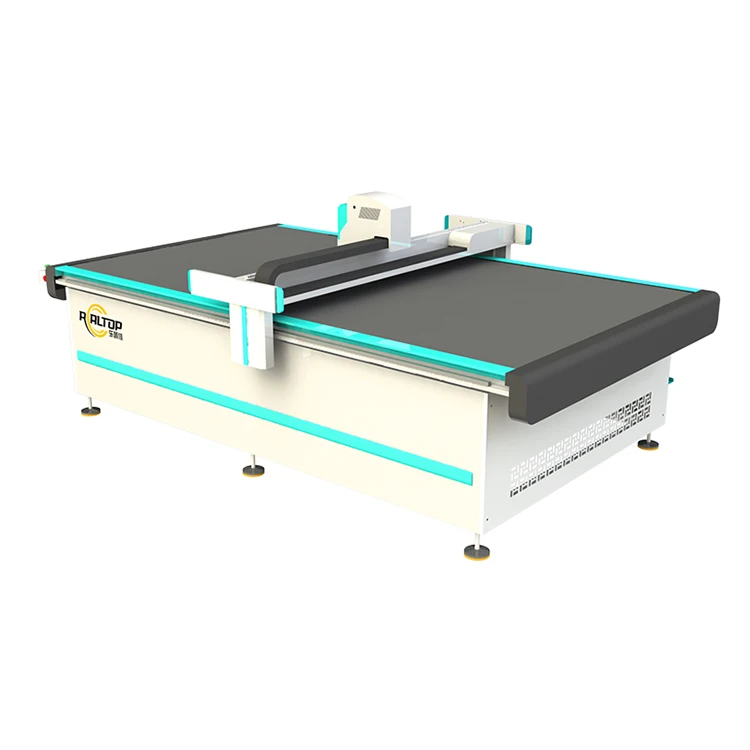
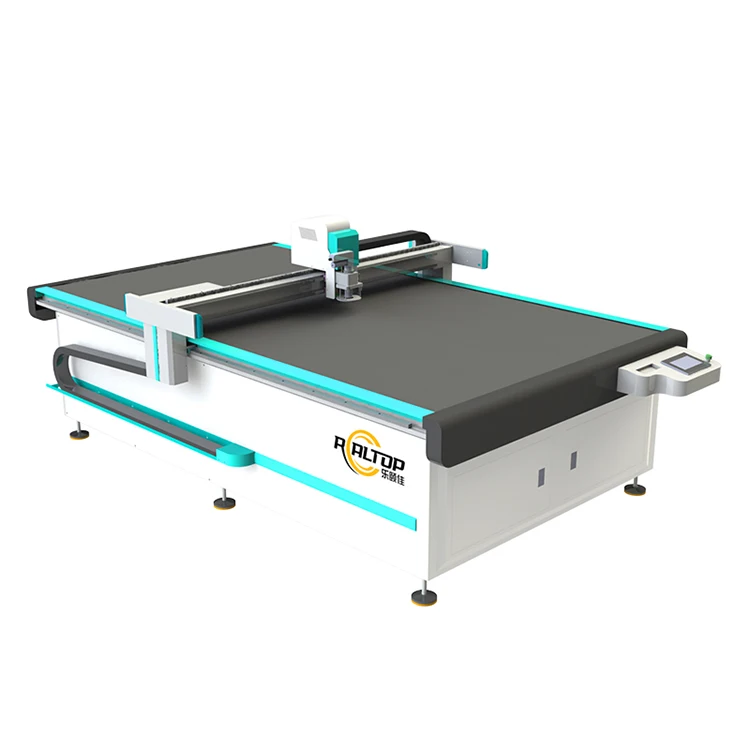
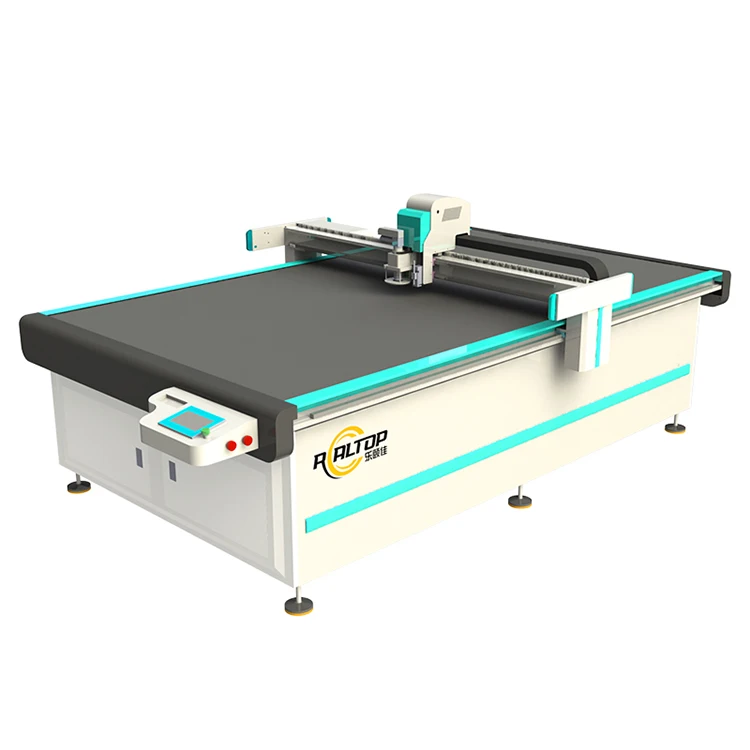
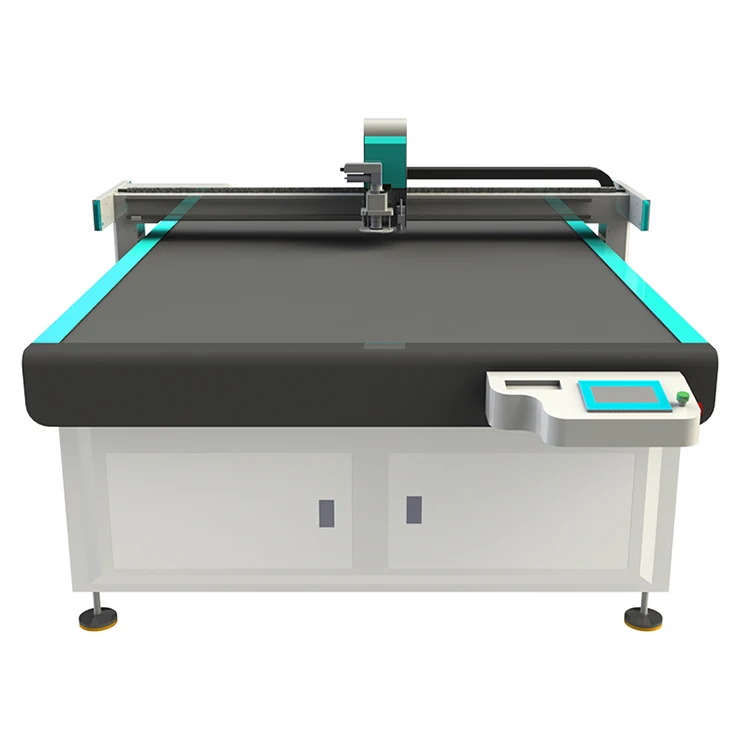
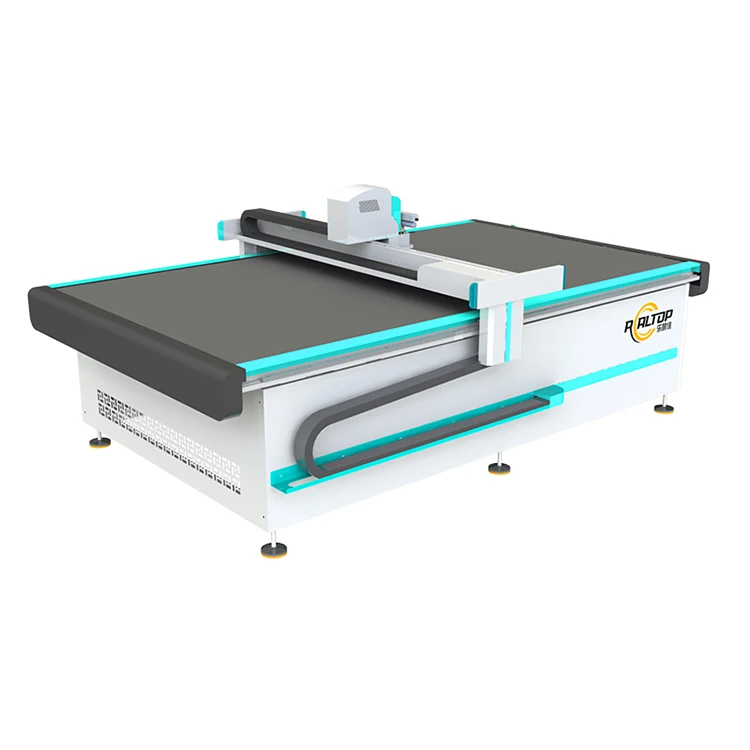
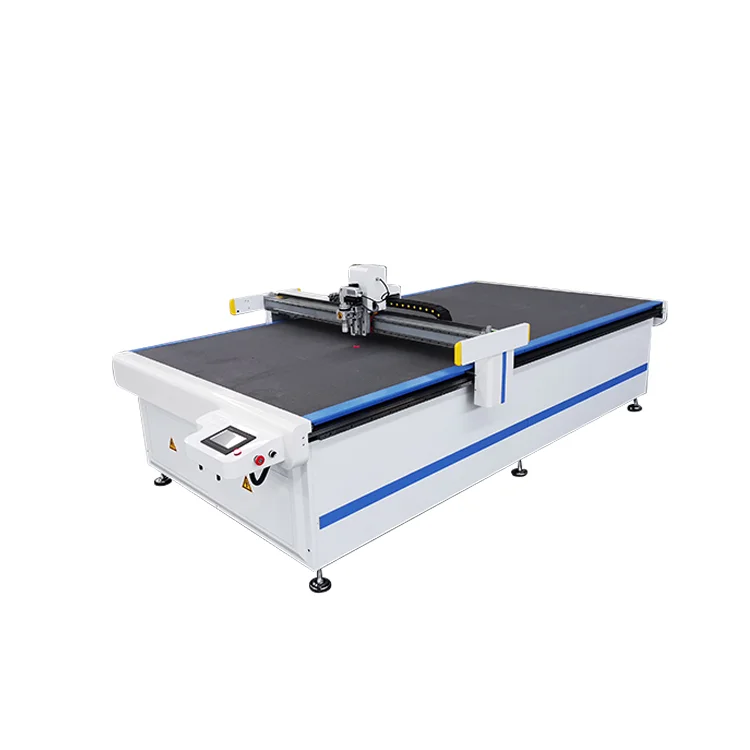

Production-matched cutting workflow — The RT-D2516/RT-S2516 CNC oscillating knife cutting machine for industry application is specified against your material composition and daily volume, not just working area.
Technical Specifications
| Parameter | Value |
|---|---|
| Model | RT-D2516/RT-S2516 |
| Product Type | CNC Oscillating Knife Cutting Machine |
| Working Area | 1600×2500mm |
| Machine Size | 3450×2300×1250mm |
| Rated Power | 9kW |
| Table Type | Flat working table |
| Tool Head | Multifunctional head with Swiss imported knife (vibration full cutting, vibration half cutting, cursor location) |
| Safety Device | Infrared sensors |
| Translational Velocity | 800–1200mm/s |
| Cutting Speed | 200–800mm/s (basis to be confirmed) |
| Repeated Accuracy | ≤0.1mm |
| Transmission System | Digital servo motor, linear guide, synchronous belt, ball screw (imported) |
| Servo Motor | Japanese Yaskawa |
| Guide Rail | Taiwan Hiwin |
| Conveyor Belt | Germany imported |
| Auto Feeding | Yes |
| Vacuum Pump | 7.5kW |
| Voltage | 380V±10% |
| Instruction System | HP-GL compatible format |
| Warranty | 12 months for whole machine |
Application Suitability
| Application | Material or Output |
|---|---|
| Garment and footwear batch cutting | Fabric, lining, leather uppers, sponge composite leather |
| Automotive interior and gasket production | PVC sheets, rubber, silicone, soft glass |
| Flexible composite material processing | Sponge composite leather, layered textiles, coated fabrics |
| Signage and sticker contour cutting | Flexible vinyl, adhesive-backed films, soft materials |
Why the Material Question Must Come Before the Machine
Specifying a cutter on working area alone is the most common route to a production-floor failure.
Buyers routinely ask for a 1600×2500mm bed and assume the machine will handle whatever they lay on it. In our Jinan workshop we once shipped a unit to a curtain manufacturer who quoted their order based on sample-room throughput. The production fabric carried a PVC coating that the sample didn’t have — the knife dragged, edges fused and stuck together, and actual output dropped sharply. No amount of bed size or servo speed can compensate when the tool head doesn’t match the material chemistry. The CNC oscillating knife cutting machine for industry application you choose has to be configured from the material outward, not the footprint inward [NEED_CITE: industrial knife cutting material compatibility standards].
Mapping Tool Head to Material, Not the Other Way Around
The multifunctional cutting head on this system carries a Swiss imported oscillating knife that handles full cutting, half cutting, and cursor location in a single setup. That matters because fabric producers frequently switch between through-cuts for pattern pieces and kiss-cuts for perforations or scoring lines within the same nest. Changing tool heads mid-run is downtime you don’t get back, so a head that covers both operations keeps the CNC oscillating knife cutting machine for industry application running through a complete lay without manual intervention.
Vacuum Zoning and the Small-Part Problem
A 7.5kW vacuum pump on a flat working table sounds adequate until you’re cutting gaskets or shoe uppers where individual pieces are small and light. If the vacuum zones aren’t segmented to match your nesting layout, airflow pulls through gaps between parts and small pieces lift at high cutting speed. The result is ragged edges on the very parts where precision matters most. Zone configuration needs to reflect your actual part mix, not the largest sheet the bed can hold [NEED_CITE: vacuum table zoning best practices in digital flatbed cutting].
Reading the Specs That Actually Move the Needle
The Yaskawa servo motor paired with Taiwan Hiwin linear guides delivers ≤0.1mm repeated accuracy — critical when cutting nested garment patterns where a fraction of a millimeter compounds across hundreds of pieces per shift. The translational velocity of 800–1200mm/s determines how fast the head repositions between cuts, while the 200–800mm/s cutting speed range is where your material dictates the real number. Coated PVC demands a slower pass than uncoated cotton; rubber requires a different oscillation frequency than soft glass. The auto-feeding system with Germany-imported conveyor belt lets you load rolls continuously, eliminating the pause between sheets that erodes throughput on manual-load tables. Voltage at 380V±10% needs confirmation against your facility supply before the machine ships, not after it arrives.
What Happens When Configuration Goes Wrong
We’ve seen buyers receive machines where the vacuum hold-down was rated for the full table area but couldn’t maintain suction on small nested parts. Pieces shifted during high-speed passes, producing scrap and forcing re-runs that consumed more time than the original cut. Others found their existing nesting software couldn’t export to the machine’s instruction format, adding a manual conversion step that introduced geometry errors. In both cases the machine itself was mechanically sound — the mismatch was in how the configuration was specified against the buyer’s actual workflow [NEED_CITE: CNC cutting software compatibility and workflow integration].
Why Buyers Work With This Build Approach
Our design team and core factory sit under one roof in Jinan, meaning the tool head and table configuration is adjusted per order rather than pulled from a standard SKU list. We run sample cutting on your own material before commitment — not a generic demo fabric, but the actual PVC-coated textile or sponge composite you’ll run in production. The CCD camera positioning option is verified against your printed marks at production speed, not at sample speed. Voltage, plug type and control panel language are confirmed against your site requirements before the machine enters final assembly. HP-GL format compatibility is checked against your existing file workflow so there’s no surprise on day one.
Documentation & Verification
- Machine specification sheet matched to your confirmed tool head and table layout
- Electrical schematic with voltage and frequency confirmed for your facility
- Sample cutting report on your actual material with edge quality photographs
- Software licence and HP-GL file format compatibility confirmation note
- Spare parts list covering knife blades, vacuum seals and conveyor belt sections
Installation, Commissioning & Support
- 9kW rated power requires dedicated circuit with stable 380V±10% supply
- 3450×2300mm footprint needs level floor with clearance for roll loading
- Machine ships fully assembled — verify doorway and crane access before delivery
- First-run commissioning includes vacuum zone calibration against your part layout
- Operator training covers tool head changes and oscillation frequency adjustment
- Wear parts inventory: replacement Swiss knives, vacuum seals, conveyor belt segments
What We Need to Specify Your Configuration
Send us the material composition including any coatings or laminations, the thickness range you cut most often, and your target daily volume. Let us know your facility voltage and frequency, and whether your nesting workflow currently runs through HP-GL or another format. If you have upstream printing or downstream sorting in the line, tell us the integration points so we can confirm compatibility before quoting.
Frequently Asked Questions
Q: How is cutting speed verified against my specific material?
A: We run sample cuts on your actual material — including any coatings or laminations — and record the cutting speed, edge quality and achievable thickness. The 200–800mm/s range is a starting point; the real speed for your PVC-coated fabric versus your uncoated lining will differ. You receive the sample report before committing.
Q: Which tool head fits my material — oscillating or drag knife?
A: Oscillating knives handle thicker, denser materials like sponge composite leather and rubber. Drag knives suit thinner vinyl and films. The multifunctional head on this system supports both, and we confirm the right configuration against your sample material before the machine ships.
Q: Will the vacuum table hold my small nested parts?
A: That depends on zone configuration. The 7.5kW pump covers the full 1600×2500mm table, but small gaskets or shoe upper pieces need segmented zoning to prevent airflow loss through gaps. We configure zones to match your nesting layout during specification.
Q: Does the software work with my existing nesting files?
A: The system accepts HP-GL compatible format. If your workflow uses a different nesting output, we verify compatibility before order confirmation — not after delivery. File format is one of the items on the pre-shipment checklist.
Q: How does the auto-feeder integrate with my roll stock?
A: The Germany-imported conveyor belt handles roll-to-sheet feeding for continuous flexible materials. We confirm roll diameter, core size and material weight during specification to ensure the feeder tension and advance rate match your stock without stretching or skewing.



商品评价
Clear filtersThere are no reviews yet.