




[Material-to-Tool Matching] — Each RT-D2516/RT-S2516 is configured around the buyer’s exact fabric type and thickness, with oscillating, pneumatic, drag and circular knife heads available to prevent ragged edges or crushed layers before a single part is cut.
Technical Specifications
| Parameter | Value |
|---|---|
| Model | RT-D2516/RT-S2516 |
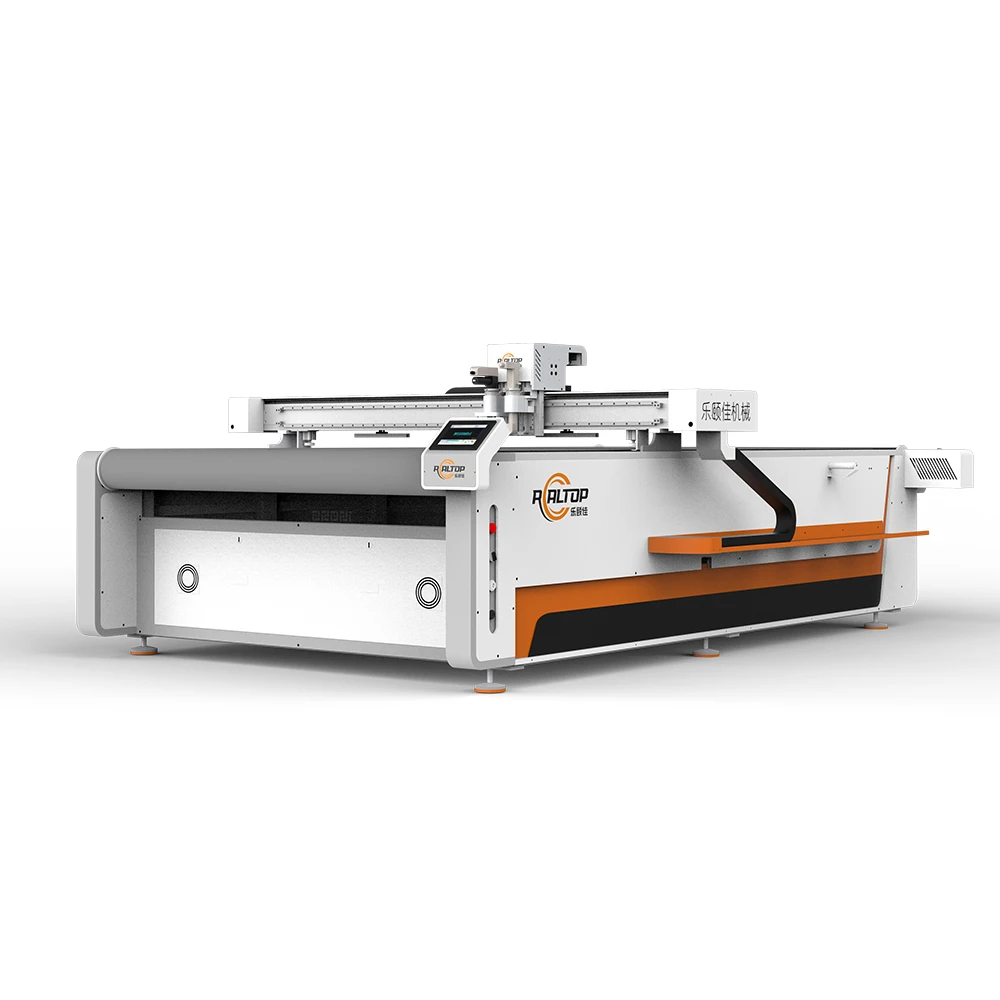
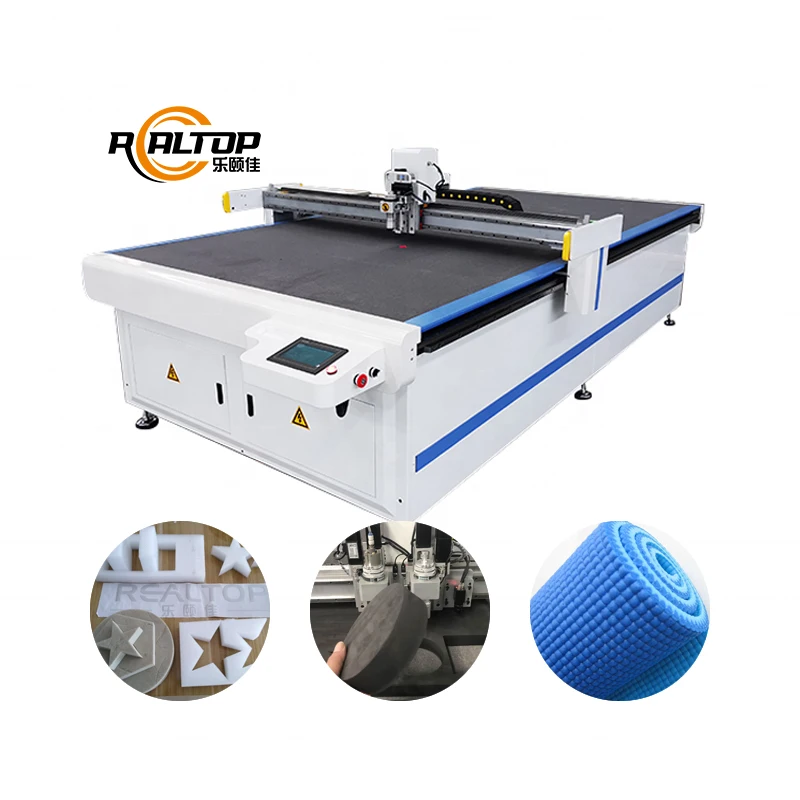
| Product Type | CNC Oscillating Knife Cutting Machine |
| Working Area | 1600×2500 mm |
| Machine Size | 3450×2300×1250 mm |
| Rated Power | 9 kW |
| Voltage | 380V ±10% |
| Working Table | Flat magnesium-aluminum alloy with fluorocarbon PVDF coating, anodic and hard oxidation |
| Cutting Thickness | 20–80 mm (varies by material) |
| Translational Velocity | 800–1200 mm/s |
| Repeated Accuracy | ≤0.1 mm |
| Tool Head | Swiss imported knife with full cutting, half cutting and cursor location; additional heads available |
| Transmission | Digital servo motor (Delta, Panasonic optional), Taiwan Hiwin linear guide, synchronous belt, imported ball screw |
| Vacuum Pump | 7.5 kW, aviation aluminum shell with built-in silencer sponge |
| Conveyor Belt | Germany imported |
| Frame | Thick-walled seamless steel, high-temperature tempering, CNC-machined finish |
| Instruction Format | HP-GL compatible |
| Safety | Infrared sensors |
| Auto Feeding | Equipped |
| Language Options | English, Russian, Italian, Chinese; special languages customizable |
| Standards | CE declared |
Application Suitability
| Application | Material or Output |
|---|---|
| Garment and footwear cutting | Multi-ply woven, knit and non-woven fabric, PU and PVC synthetic leather |
| Automotive interior trimming | Composite sponge, PU foam, EVA, textile laminates, carpet |
| Bag and luggage production | Thick synthetic leather, layered composite panels, nylon reinforcement |
| Soft home furnishings | Upholstery fabric, foam-backed textile, curtain and cushion materials |
| Gasket and sealing pads | Rubber, PTFE, ETFE, silicone, soft glass, fiberglass |
| Advertising and signage | Vinyl, sticker film, corrugated cardboard, foam board |
What "Working Area Alone" Fails to Tell a Fabric Buyer
Specifying a CNC knife cutting machine for garment and fabric production by table size without matching the tool head to your material is the fastest route to ragged edges and crushed foam on the shop floor.
In Southeast Asian garment workshops I have watched operators run spandex-blend rolls through machines that were set up for plain cotton. The blade oscillation frequency was too aggressive, the presser foot too heavy, and the entire cutting bed jammed within the first ply. Two nights of downtime followed while we re-tuned knife stroke and vacuum zone pressure. A machine listed as "1600×2500 mm" tells you nothing about whether its default tool head can handle a 4 mm sponge composite without delaminating it. The only reliable check is a sample cut on your own roll stock before the purchase order is signed. [NEED_CITE: oscillating knife frequency and presser foot pressure adjustment for elastomeric textiles]
Oscillating Knife Versus Drag Knife Versus Pneumatic — Why the Choice Matters on the Cutting Bed
The Swiss imported knife head on this CNC knife cutting machine for garment and fabric production delivers full cutting, half cutting and cursor location in a single tool station. For tightly woven cotton or canvas, the high-frequency oscillating stroke separates plies cleanly without pulling fibers. When the job switches to thick sponge-backed PU leather used in automotive door panels, a pneumatic knife with a longer stroke and adjustable downward force produces a smoother edge because it pushes through the compressible core rather than tearing it. Drag knives remain the practical choice for single-ply vinyl and sticker film where contour accuracy and speed outweigh cutting force. Selecting the wrong head does not simply reduce quality — it forces operators to slow the feed rate until the edge becomes acceptable, which erodes the throughput advantage of automated cutting.
Vacuum Zoning and Small-Part Lift on Flexible Materials
The magnesium-aluminum alloy table uses fluorocarbon PVDF powder spraying with anodic and hard oxidation to maintain flatness across its 1600×2500 mm surface, but flatness alone does not hold fabric down. When cutting small garment pattern pieces — collars, cuffs, pocket flaps — the suction area per zone must be small enough to grip narrow off-cuts that a single large vacuum region would leave floating. The 7.5 kW vacuum pump with aviation aluminum shell delivers the negative pressure, yet without proper zoning, thin non-woven interlining lifts at the trailing edge as the blade exits. [NEED_CITE: vacuum table zone sizing for flexible material holding]
Reading the Specs That Actually Drive Cutting Performance
Repeated accuracy of ≤0.1 mm is governed by the Taiwan Hiwin linear guides and imported ball screws; this tolerance keeps nested pattern pieces within registration so that downstream sewing operators do not fight mis-matched panels. The Delta servo motors (Panasonic optional) control translational velocity between 800 and 1200 mm/s — a range that lets the operator slow down for intricate curves on delicate silk while opening up on straight runs through heavy canvas. Cutting thickness of 20–80 mm is material-dependent; a 60 mm EVA foam block may cut cleanly at single-pass, whereas the same depth in densely layered denim requires a two-pass strategy to avoid blade deflection. The thick-walled seamless steel frame, finished by high-temperature tempering and CNC machining center, resists the cyclical vibration loads from the oscillating head over multi-shift operation without losing flatness. Auto feeding with the Germany-imported conveyor belt keeps continuous roll stock advancing between nests, eliminating the manual pull-and-align step that introduces skew.
The Hidden Cost of Skipping the Sample Cut
Buyers who approve a quotation based on a generic material list often discover at commissioning that their specific roll — perhaps a 3 mm neoprene laminate with a nylon backing — feeds differently from the standard test sample the factory used. The blade dulls faster, the vacuum struggles with the air-permeable backing, and the CCD camera cannot track the printed registration marks at full speed. Re-configuring the tool head, adjusting vacuum zones and re-programming feed rates on-site adds days of non-productive time. Every one of these variables can be locked in before shipment if the buyer sends actual roll stock for a documented sample cutting report. [NEED_CITE: material variability impact on knife cutting configuration]
Why Source This CNC Knife Cutting Machine Here
In-house design covers both oscillating knife and laser cutting technologies, so buyers can compare edge sealing on synthetics versus clean mechanical separation on natural fibers and choose the method that fits their material. Tool head and table configuration is specified per material and production volume rather than left to a default build. CCD camera positioning is offered for printed contour work, confirmed against the buyer’s artwork file before the machine leaves the factory. Software compatibility — including HP-GL import and nesting workflow — is verified in advance, not discovered during installation. Voltage, plug type and control language are confirmed before shipment, eliminating on-site transformer rentals or rewiring delays.
Documentation & Verification
- Machine specification sheet listing selected knife head, vacuum zone layout and servo brand
- Electrical schematic confirming 380V ±10% supply, breaker rating and plug type
- Sample cutting report on buyer-supplied fabric or leather before order commitment
- Tool head and table configuration list matched to material thickness and part size
- Software licence and file format compatibility note for HP-GL and nesting integration
- Factory test record documenting repeated accuracy and cutting edge quality at rated speed
Installation, Commissioning & Support
- 9 kW rated power requires a dedicated 380V circuit with appropriate breaker sizing before delivery
- Machine footprint of 3450×2300 mm must allow rear and side clearance for maintenance access
- Thick-walled steel frame arrives assembled; vacuum table and conveyor belt are leveled on-site
- First-run commissioning includes knife stroke, vacuum zone pressure and feed rate tuning on buyer material
- Operator training covers tool head changeover, HP-GL file import and nesting workflow in chosen language
- Spare blade and consumable list supplied with recommended replacement intervals by material type
Prepare Your Material Data Before Quoting
To match the correct tool head, vacuum zone and feeding configuration, share your fabric or composite type, typical ply count or thickness, maximum sheet width and daily cutting volume. Specify your factory voltage and frequency, preferred control language, and whether your current workflow uses HP-GL or another nesting format. If your material contains elastomers, laminates or printed registration marks, request a sample cutting run on your own roll stock before finalizing the build.
Frequently Asked Questions
Q: How do I select the right knife type and vacuum zone layout for my fabric?
A: Send a sample of your actual roll stock along with typical ply count and part dimensions. We run test cuts with oscillating, drag and pneumatic heads, measure edge quality, and recommend the tool head and vacuum zone size that holds your smallest pieces without lift. The configuration list is documented before order.
Q: Can I send my own material for sample cutting before placing the order?
A: Yes. Provide enough roll or sheet stock for a full nesting pattern. We return a sample cutting report showing edge finish, achievable cutting thickness and recommended feed speed, so you can evaluate results before committing to the machine build.
Q: Does the software support my existing nesting files and HP-GL workflow?
A: The control system imports HP-GL compatible format and we verify file compatibility before shipment. If your nesting software exports in a proprietary format, share sample files during the quotation stage so we can confirm import and toolpath generation.
Q: Is the 380V supply compatible with my factory, and can voltage be customized?
A: Standard configuration is 380V ±10%. If your facility runs on a different voltage or frequency, we confirm the motor winding, transformer and plug specification during the order stage and note the final values on the electrical schematic.
Q: What blades and consumables need regular replacement, and how are spares supplied?
A: Oscillating and drag knife blades, presser foot pads and vacuum table seal strips are the primary consumables. A spare parts list with recommended replacement intervals by material type is included with the machine, and replacement blades are available for reorder directly from the factory.




商品评价
Clear filtersThere are no reviews yet.