




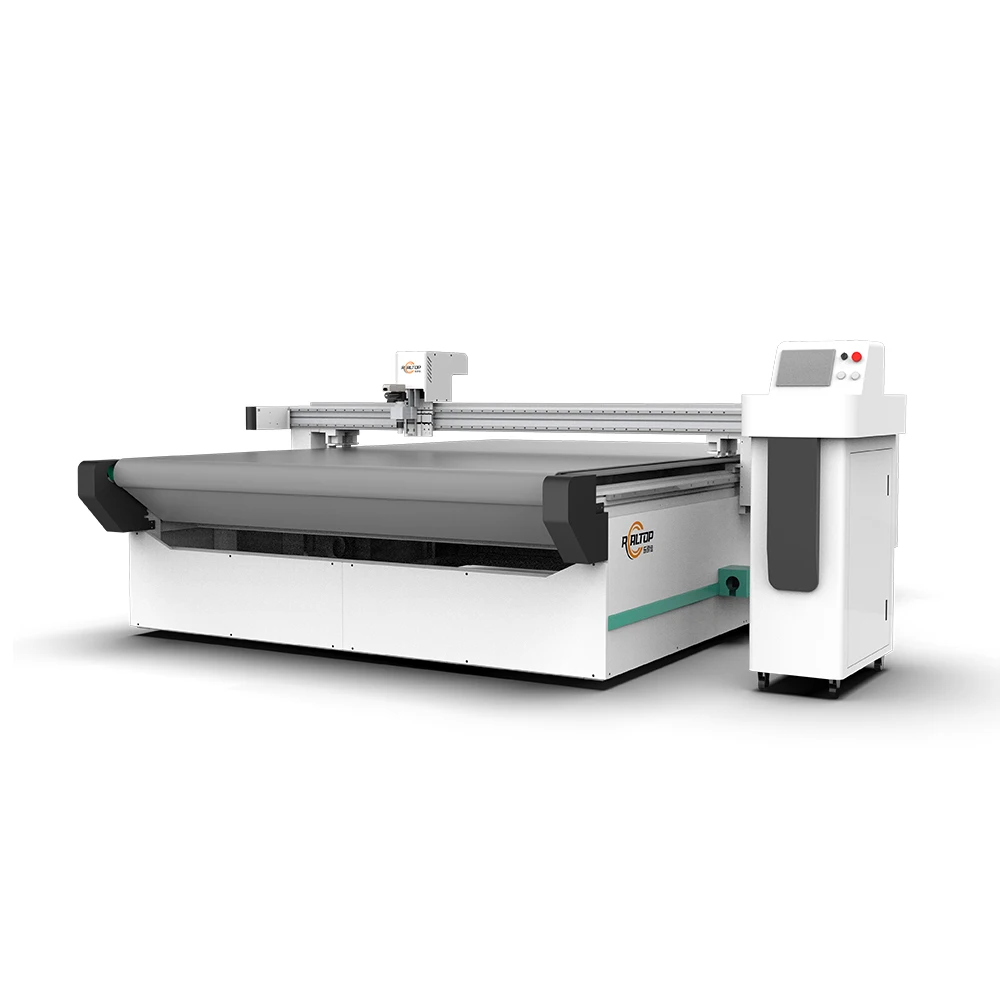
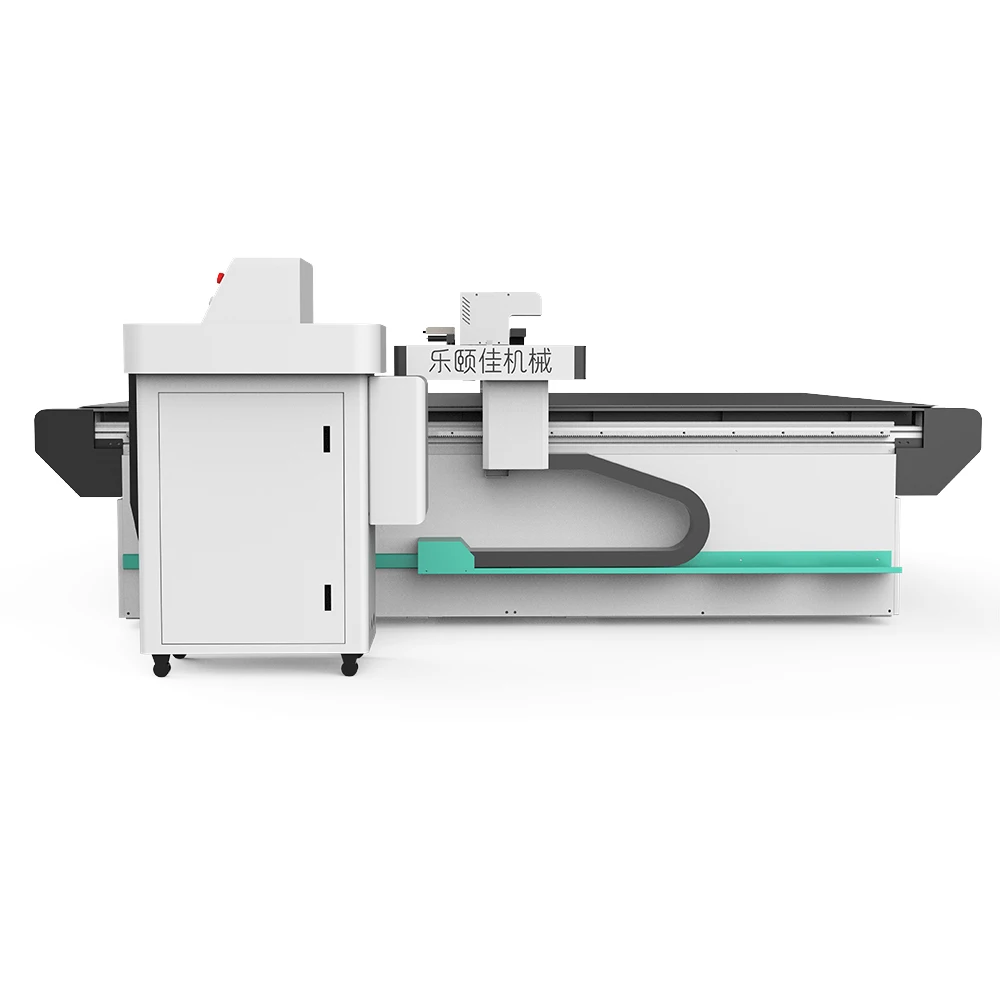
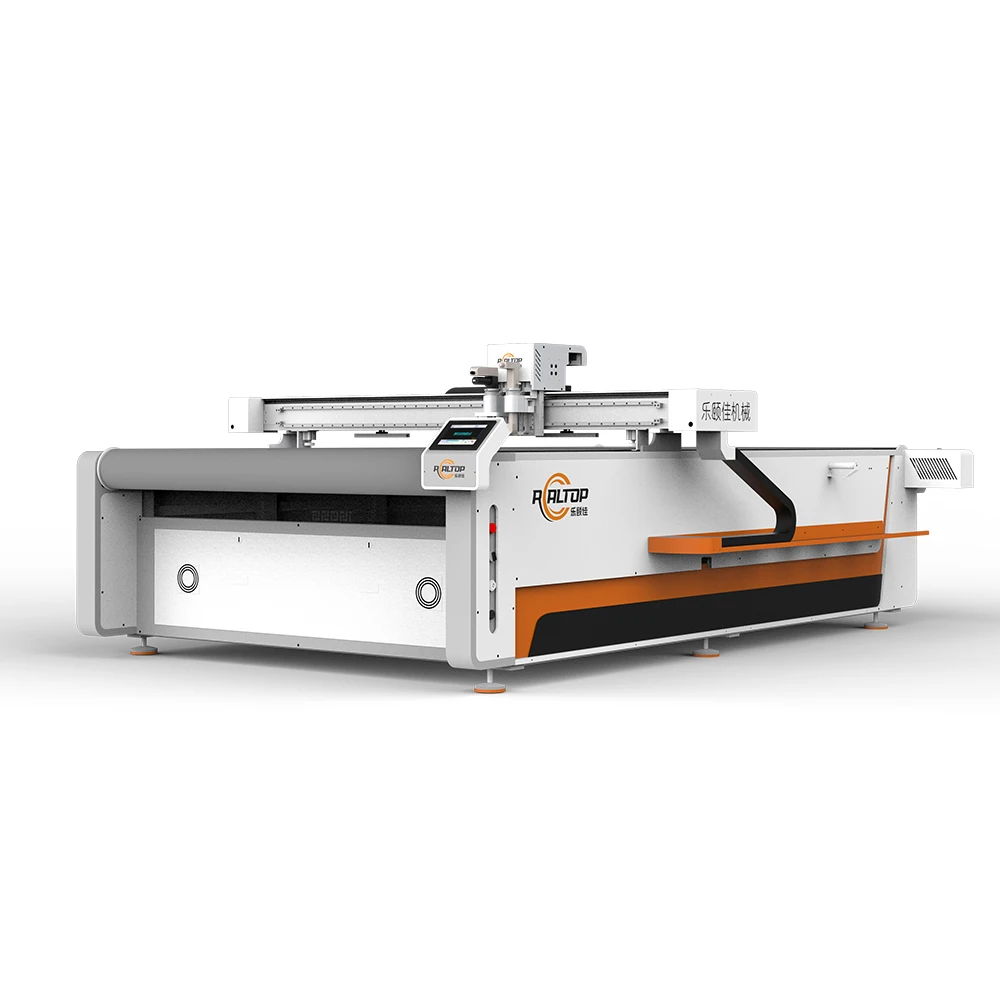
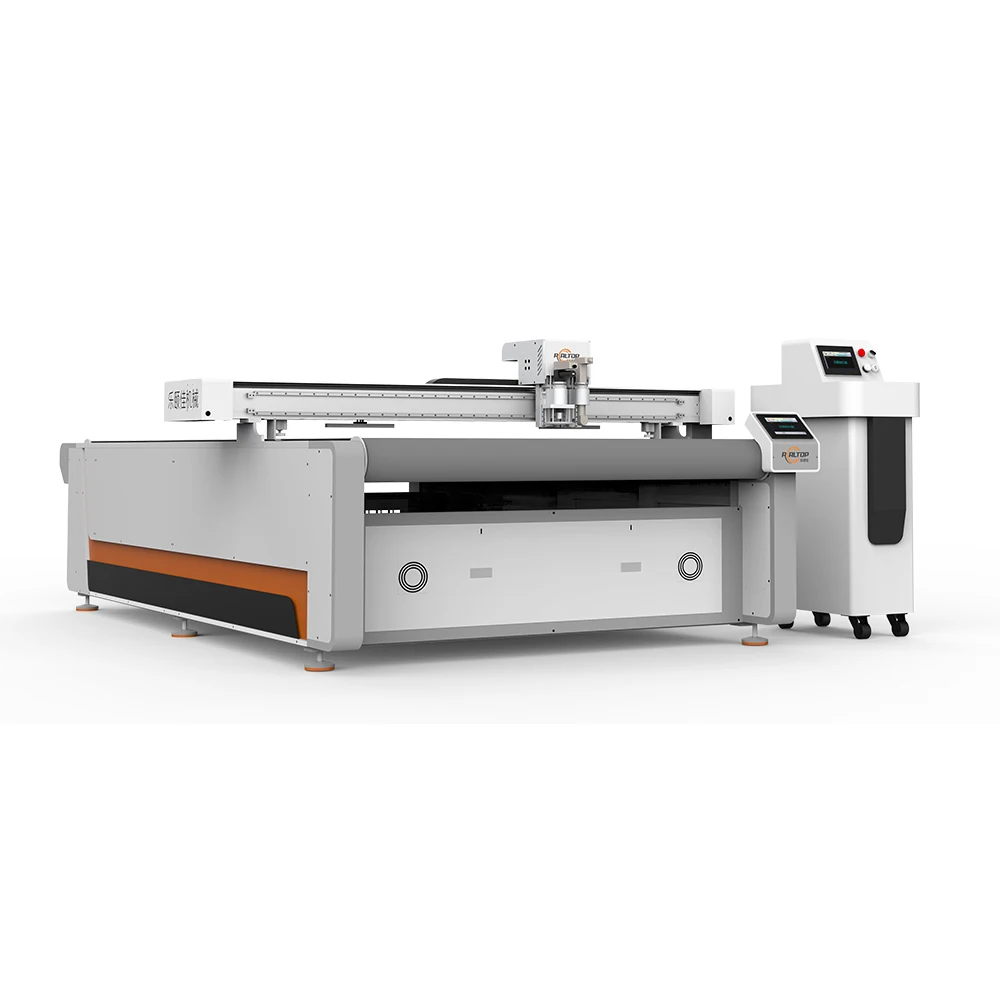
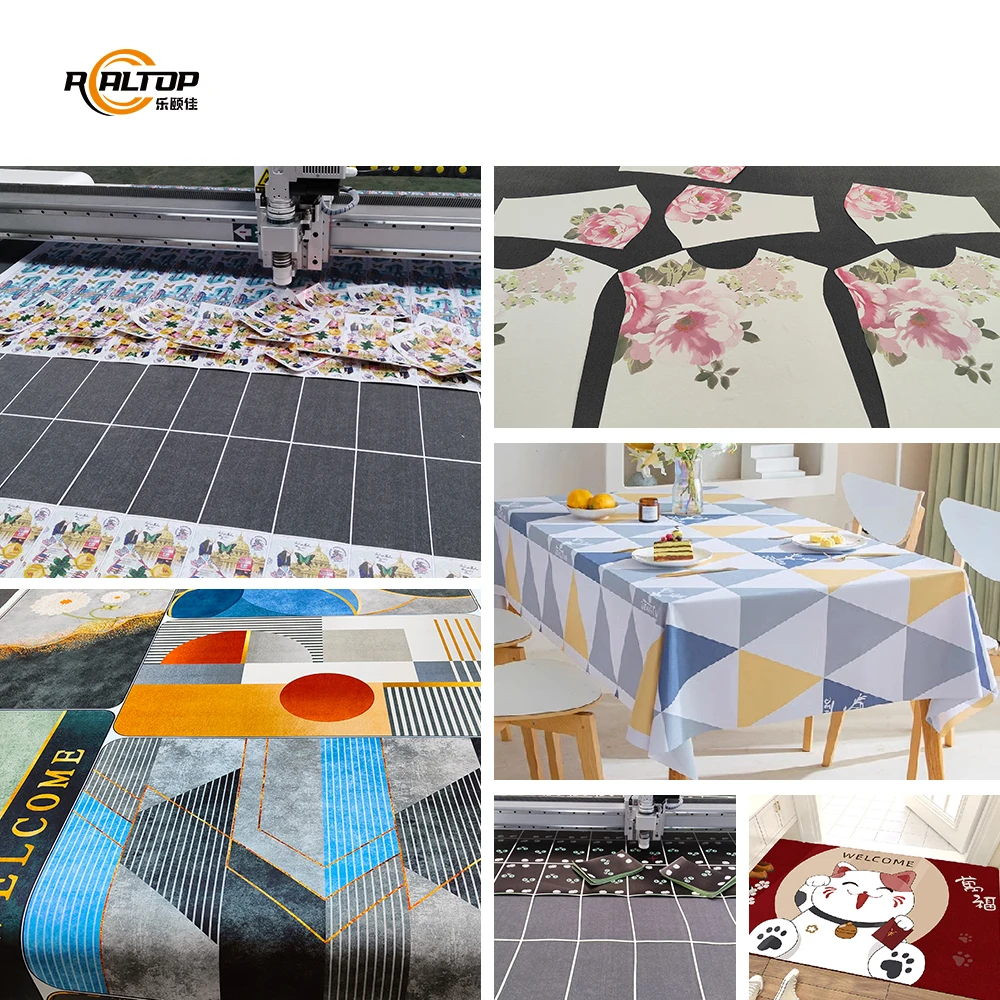

Configuration matched to your textile line — tool head and vacuum zoning specified per fabric type and ply count, validated on your material before order.
Technical Specifications
| Parameter | Value |
|---|---|
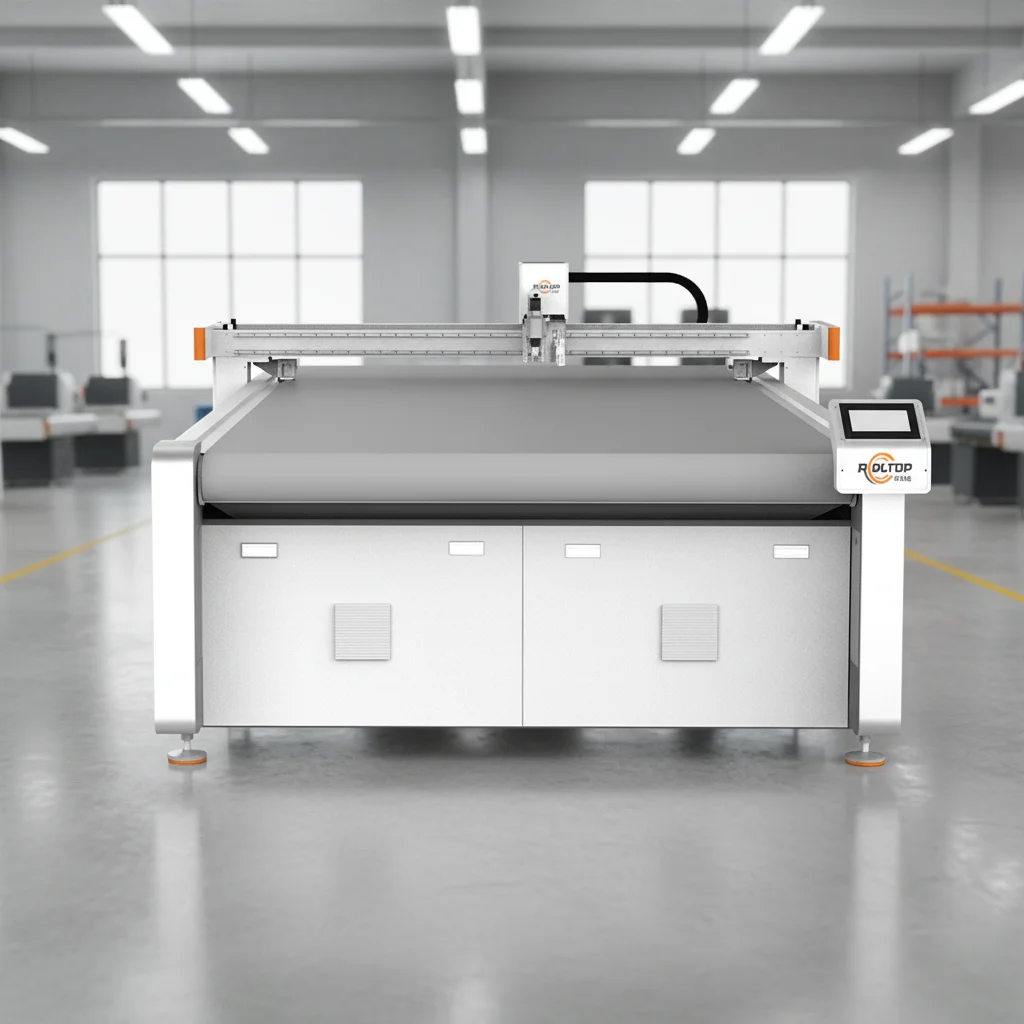
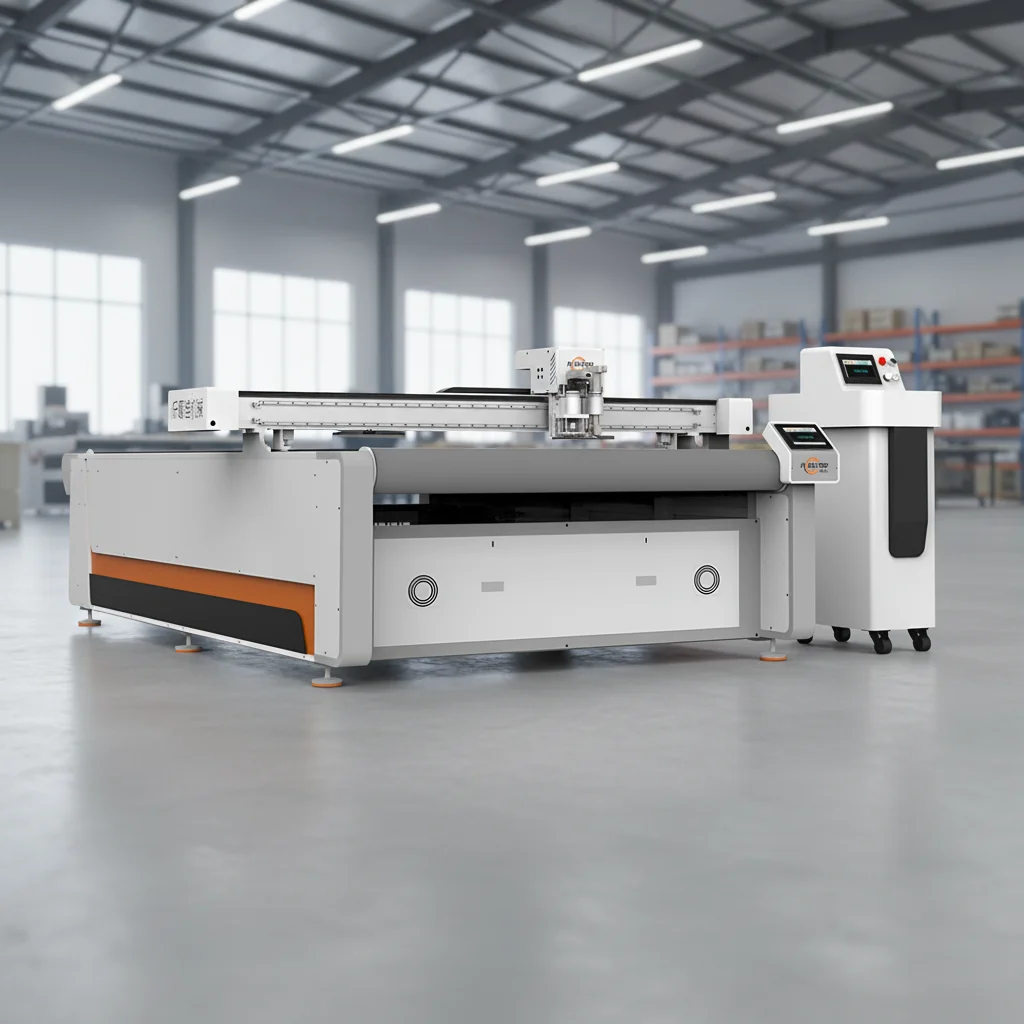
| Product Type | CNC Flatbed Oscillating Knife Cutting Machine |
| Working Area | 1600 x 2500 mm |
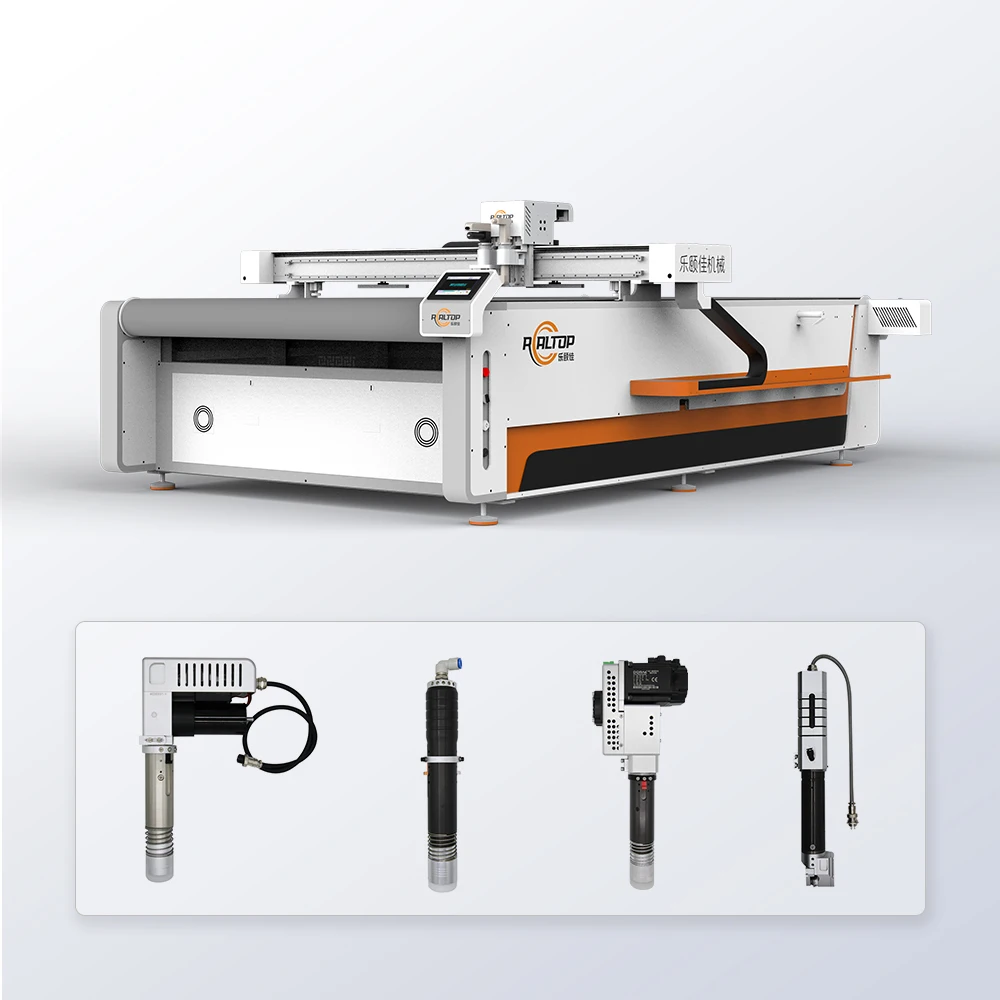
| Tool Head Options | Oscillating knife, Driven rotary knife, Creasing wheel, Kiss cutting tool, Pneumatic knife, Milling tool, V groove knife |
| Cutting Speed | 0–2000 mm/s |
| Cutting Thickness | ≤ 30 mm (basis not stated in source — confirm block format / material / thickness) |
| Cutting Accuracy | ±0.1 mm |
| Vacuum Pump Power | 9 kW |
| Vacuum Table Type | Aluminum bellows vacuum table |
| Drive System | Multiple servo options (Panasonic, Delta, Dorna) |
| Control System | PLC control panel |
| Voltage Options | 110V, 220V, 380V |
| Supported File Formats | PLT, DXF, AI, PDF |
| Safety Devices | Infrared sensor device and emergency stop device |
| Machine Dimensions | 3300 x 2100 x 1350 mm |
| Software Language Support | English, Russian, Italian, Chinese (customizable) |
| Standards | CE declaration |
Application Suitability
| Application | Material or Output |
|---|---|
| Garment and footwear cutting | Natural and synthetic fabrics, leather, composite layers for shoe uppers and apparel panels |
| Automotive interior trim | Seat cover fabrics, floor mats, soft trim components, sound insulation composites |
| Home furnishing production | Sofa upholstery fabrics, lampshade textiles, curtain panels, roller blind materials |
| Advertising and soft signage | PVC banner, vehicle wrap vinyl, adhesive-backed films, printed fabric displays |
| Packaging and gasket sampling | Corrugated carton, foam boards, rubber gaskets, EVA and PTFE sheets |
What "Cutting Speed 2000 mm/s" Leaves Out for Your Textile Line
Actual cutting throughput depends on tool head selection, fabric ply count, and vacuum hold-down — not the max traverse rate on the spec sheet.
I’ve watched production managers celebrate a fast head speed only to find their multi-ply upholstery fabric bunching under the blade at half that rate. The oscillating stroke frequency and the drag knife’s physical limits define what your textile actually tolerates before edges fray or delaminate. A CNC oscillating knife cutting machine for textile production must be evaluated against your specific stack height and weave density, not a catalog maximum. [NEED_CITE: textile cutting speed limitations by fabric weave and ply count]
Tool Head Selection Dictates Edge Quality on Coated Fabrics
Each fabric type demands a different cutting action. Roller blind manufacturers working with PVC-coated blackout material need an oscillating knife with adjustable stroke and angle, because a standard drag knife will crack the coating and leave shredded edges. We saw this firsthand when a Dubai roller blind factory sent polyester swatches for sampling, but their actual production stock was PVC-coated blackout — the first batch came off with damaged edges until we re-dialed pressure, blade angle, and vacuum zones from scratch.
Vacuum Zoning and Part Size Determine Lift-Free Cutting
The aluminum bellows vacuum table on this CNC oscillating knife cutting machine for textile production provides full-surface adsorption, but zoning matters when you’re cutting small collar pieces or shoe upper components. Without proper zone configuration, lightweight fabrics lift during high-speed passes, shifting registration and ruining the nest. Zoning must be planned around your smallest part dimension, not just your largest sheet. [NEED_CITE: vacuum table zoning requirements for small-part textile cutting]
Specification Details That Affect Daily Output
The ±0.1 mm cutting accuracy holds significance when you’re nesting dozens of garment panels where cumulative drift misaligns sewing notches. The 9 kW vacuum pump sustains hold-down across the 1600 x 2500 mm bed, though actual suction depends on table porosity and fabric permeability — a tightly woven synthetic holds vacuum differently than an open-mesh textile. Servo options from Panasonic, Delta, or Dorna affect acceleration smoothness, which in turn influences whether delicate single-ply silks pucker under rapid direction changes. File format support for PLT, DXF, AI, and PDF means most pattern files transfer without intermediate conversion, reducing a step where nesting errors typically enter.
The Cost of Wrong Configuration Choices
A buyer who selects an oscillating knife head for woven upholstery fabric but skips the rotary knife option will find frayed edges on curved contours that a rotary head would seal cleanly. Specifying the table with insufficient vacuum zones for small parts means operators spend time taping down fabric instead of cutting. Choosing a control language that doesn’t match the shop floor team creates reliance on a single bilingual supervisor. [NEED_CITE: industrial cutting machine configuration errors in textile operations]
Why Production Managers Source This Equipment Here
In-house design covers both knife and laser cutting technologies, so the cutting method matches your material rather than forcing a single process across incompatible textiles. Tool head and table configuration are specified per fabric type and production volume before the order is placed. CCD camera positioning is verified on your printed fabric for contour recognition accuracy. Software compatibility with your existing nesting files and workflow is confirmed in writing. Voltage, language, and machine specification customization are documented and signed off before shipment, not discovered at uncrating.
Documentation & Verification
- Machine specification sheet listing your selected tool heads and vacuum zoning plan
- Electrical schematic with your confirmed voltage and frequency annotated
- Tool head and table configuration list matched to your fabric types
- Sample cutting report on your actual textile material with edge quality photographs
- Software licence note with your confirmed file format and nesting workflow compatibility
- Spare parts list covering blades, springs, and vacuum seals for your configuration
Installation, Commissioning & Support
- Floor space of approximately 3300 x 2100 mm required with clearance for material loading on all sides
- Dedicated electrical circuit matching your confirmed voltage option of 110V, 220V, or 380V with proper grounding
- Machine arrives partially disassembled with table and frame bolted on site for bed flatness alignment
- First-run calibration includes vacuum pressure testing on your fabric and tool head stroke adjustment
- Operator training covers PLC control panel navigation in your confirmed software language
- Blade and vacuum seal replacement schedule provided based on your fabric abrasiveness
Preparing Your Inquiry
To receive an accurate configuration, share your textile material type, ply count, and maximum sheet dimensions along with your daily cutting volume targets. Confirm your facility voltage and frequency, the control language your operators need, and whether your existing nesting files use DXF, PLT, AI, or PDF formats. If your material is a coated or composite textile, send a physical sample for test cutting before we finalize the tool head selection.
Frequently Asked Questions
Q: How is cutting thickness capacity verified for my specific textile material and ply count?
A: Cutting thickness is verified through physical sample cutting on your actual textile, at your production ply count. We test the selected tool head on your material and document edge quality, delamination risk, and achievable speed. The 30 mm maximum rating is a general figure — real capacity depends on fabric density, coating presence, and stack compressibility under vacuum.
Q: Can the CCD camera track my printed registration marks at my production line speed?
A: CCD camera positioning is tested on your printed fabric before order commitment, running at the speed your production volume requires. We verify mark detection reliability, contour following accuracy, and how the system handles contrast variations across your print design. Results are documented in the sample cutting report you receive before signing off.
Q: What vacuum table zoning is configured for small textile parts to prevent lift?
A: Vacuum zoning is planned around your smallest part dimension in the nest layout. The aluminum bellows table is configured with zone valves matched to your part sizes so lightweight fabrics remain flat during cutting. We confirm the zoning plan using your actual nest files before the table is built, preventing the lift and registration drift that generic zoning causes.
Q: How do I confirm software imports my existing nesting files without workflow disruption?
A: We request your current nesting files in their native format — DXF, PLT, AI, or PDF — and run them through our software before order confirmation. You receive a compatibility report showing import results, any geometry adjustments needed, and nesting yield on your standard sheet size. This prevents discovering format conflicts after the machine arrives at your facility.
Q: What voltage and control language options are confirmed before shipment to my facility?
A: Voltage is confirmed from available options of 110V, 220V, or 380V based on your facility supply, documented in the electrical schematic you approve before production. Control panel language is set to your selection from English, Russian, Italian, Chinese, or a customizable option. Both specifications are listed on the packing documentation and verified at factory test.



商品评价
Clear filtersThere are no reviews yet.