




Material-First Configuration — Every tool head and vacuum zone on this cutting table is selected after test cuts on the buyer’s actual production rolls, not based on catalogue assumptions.
Technical Specifications
| Parameter | Value |
|---|---|
| Product Type | CNC Oscillating Knife Cutting Machine |
| Working Area | 1600 × 2500 mm |
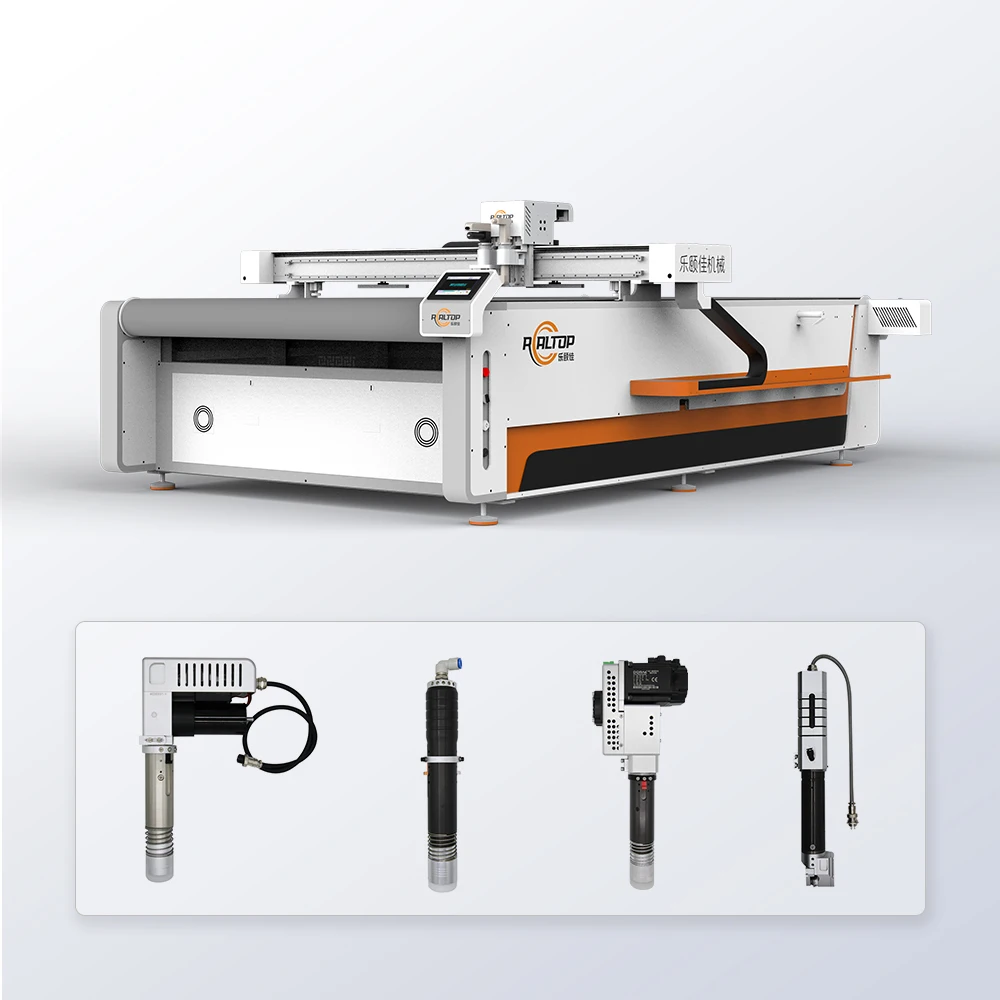
| Tool Head Options | Oscillating knife, Driven rotary knife, Creasing wheel, Kiss cutting tool, Pneumatic knife, Milling tool, V groove knife |
| Cutting Speed Range | 0 – 2000 mm/s |
| Maximum Cutting Thickness | ≤ 30 mm (basis not stated in source — confirm block format, material and ply count) |
| Cutting Accuracy | ±0.1 mm |
| Vacuum Pump | 9 kW |
| Vacuum Table | Aluminum bellows vacuum table |
| Control System | PLC control panel with intuitive interface |
| Servo Motor Options | Panasonic, Delta, Dorna |
| Voltage Options | 110V, 220V, 380V (configurable per market) |
| Display Languages | English, Russian, Italian, Chinese (custom languages available) |
| Compatible File Formats | PLT, DXF, AI, PDF |
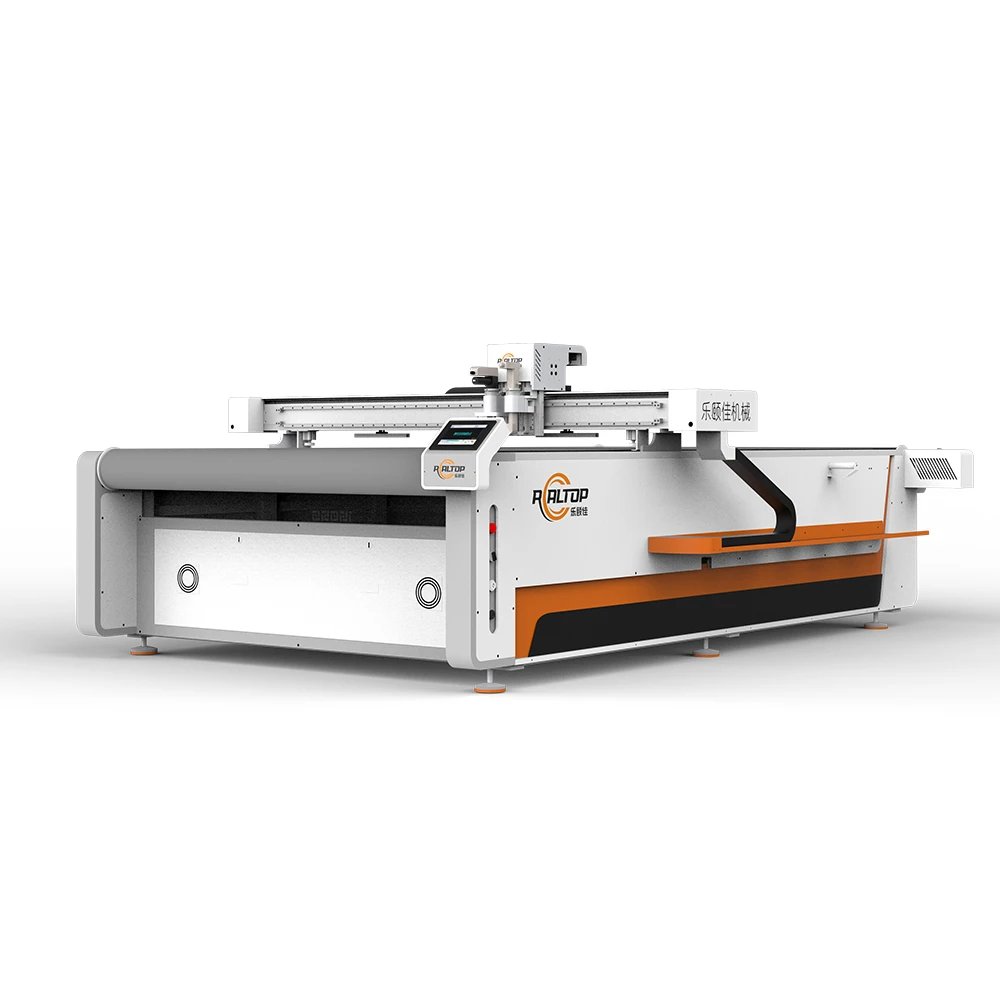
| Overall Dimensions | 3300 × 2100 × 1350 mm |
| Safety Features | Infrared sensor device, emergency stop device |
| Included Software | Packaging box structure design software |
| Certification Reference | CE |
Application Suitability
| Application | Material or Output |
|---|---|
| Apparel production lines | Multi-layer knitwear, lace, suits and pattern-matched fabrics |
| Automotive interior manufacturing | Seat fabrics, carpets, PVC mats |
| Home textile fabrication | Sofa fabrics, curtains, rugs, multi-layer layups |
| Composite material processing | Carbon fiber prepreg, aramid, specialty reinforcements |
| General flexible material cutting | Cardboard, carton, EVA, leather, acrylic, foam, PTFE, rubber |
What a 2000 mm/s Speed Claim Actually Means on the Shop Floor
Cutting speed ratings are only meaningful when tied to the specific ply count, material coating and edge quality your production requires.
I have watched lines stall because the spec sheet said the machine could run at high speed, but nobody tested it against a coated polyester that frayed above a certain feed rate. Once that coated fabric hits the table at volume, the oscillating knife cutting machine either holds the edge or it does not — there is no adjustment mid-run that recovers lost time. Production managers discover the gap between rated speed and usable speed only after the first roll is loaded [NEED_CITE: material-specific cutting speed validation protocols]. The real question before purchase is not how fast the head moves, but how fast it moves while still producing a clean edge on your exact material stack.
Matching the Tool Head to Your Material Stack
The 1625 platform offers seven tool head options, and choosing correctly determines whether you get a sealed edge on synthetic fabric or a crushed foam core. Oscillating knife handles most woven and non-woven textiles, while driven rotary knife suits continuous curves on thinner plies. For automotive carpet and dense PVC mats, the pneumatic knife provides the downward force needed to shear through without fraying. This is where a CNC oscillating knife cutting machine either fits the production job or forces the operator into compromises.
Vacuum Hold-Down and Small Part Behavior
Flexible materials lift off the table the moment the blade exits a cut, especially on small pattern pieces like collar stays or gasket inserts. The aluminum bellows vacuum table paired with the 9 kW pump is designed to maintain suction across the cutting bed, but zoning matters. If the vacuum zones are not matched to your typical piece size, air bleeds through open areas and smaller parts shift during the final pass. This causes dimensional drift that only shows up during sewing or assembly downstream [NEED_CITE: vacuum table zoning standards for flexible material cutting].
Reading the Specifications Beyond Working Area
The 1600 × 2500 mm working area accommodates standard fabric roll widths, but cutting accuracy at ±0.1 mm depends on the servo system holding position through direction changes. Panasonic, Delta and Dorna servo options are available, and the choice affects how the machine handles tight corners on pattern pieces. The PLC control panel imports DXF, PLT, AI and PDF files directly, which eliminates the need for intermediate file conversion that often introduces path errors. Software compatibility with the buyer’s existing nesting workflow should be confirmed before the order is placed, not after delivery.
The Cost of Skipping Material-Specific Testing
A sportswear factory I worked with in Southeast Asia specified their line based on sample swatches, but their bulk production rolls carried a different surface coating. Half the cuts frayed on the first run. They lost two days re-tuning blade frequency, vacuum pressure and feed rate before meeting their shipment deadline. That downtime cost more than any sample testing would have [NEED_CITE: production loss from untested material-machine mismatch]. The lesson repeats across industries — coated fabric, laminated composite and technical textiles all behave differently at volume than they do on a sample card.
Why Production Teams Source This Configuration
In-house design covers both knife and laser cutting technologies, so the recommendation is based on what the material actually needs rather than pushing one method. Tool head and table configuration is specified per material type and production volume, documented before the order goes to the shop floor. Sample cutting on the buyer’s own material produces a report that confirms edge quality and achievable depth before commitment. Voltage, plug type and control language are verified against the destination market’s requirements. The CCD camera positioning option supports printed contour work for brands that require pattern-matched cuts on registered graphics [NEED_CITE: CCD contour recognition requirements in garment production].
Documentation & Verification
- Machine specification sheet listing configured tool heads and vacuum table zoning plan
- Electrical schematic with confirmed voltage, frequency and plug type for destination market
- Sample cutting report produced on buyer’s own fabric rolls before shipment authorization
- Factory test record documenting cutting accuracy and path deviation across full working area
- Software licence documentation with confirmed file format compatibility for buyer’s nesting system
- Spare parts list identifying wear items specific to the configured tool head selection
Installation, Commissioning & Support
- Requires level concrete floor capable of supporting 3300 × 2100 mm footprint plus operator clearance
- Dedicated electrical circuit matching confirmed voltage option of 110V, 220V or 380V with correct frequency
- 9 kW vacuum pump requires separate power feed and exhaust routing to maintain shop floor air quality
- First-run parameter tuning performed on buyer’s material to set blade frequency and vacuum zone mapping
- Operator training covers PLC interface navigation in confirmed display language and file import workflow
- Wear parts kit includes oscillating knife blades and vacuum seals matched to configured tool heads
Preparing Your Specification Request
To get a configuration that works on day one, share your primary material types with actual thickness measurements and typical ply counts from your cutting room. Specify your target market voltage and frequency so the electrical system is built correctly from the start. If your design team works in a particular file format or nesting software, provide sample files so compatibility is verified before the machine leaves the factory.
Frequently Asked Questions
Q: How do I select the right tool head for my fabric type and thickness?
A: The selection depends on material composition, ply count and edge quality requirements. Oscillating knife suits most woven and non-woven textiles, driven rotary handles thin plies on continuous curves, and pneumatic knife provides extra downward force for dense carpet and PVC. A sample cutting test on your actual material confirms which tool head produces acceptable edges at production speed.
Q: Will small pattern pieces stay in place during high-speed cutting?
A: Hold-down depends on vacuum table zoning relative to piece size. The aluminum bellows table with the 9 kW pump maintains suction across the bed, but if your typical parts are small, the vacuum zones must be configured so air does not bleed through open areas. This configuration should be validated during sample testing with your actual pattern layout.
Q: What file formats does the software accept from my existing design system?
A: The system imports PLT, DXF, AI and PDF files through the PLC control panel. If your design team uses a specific nesting software or proprietary format, compatibility must be confirmed before order placement. Sample file exchange during the inquiry stage ensures the path generation works correctly with your workflow.
Q: How do I verify throughput claims against my actual production material?
A: Rated cutting speed of 0–2000 mm/s varies significantly depending on material coating, ply count and edge quality requirements. The only reliable verification is a sample cutting report run on your own bulk material at the ply count you actually use in production. This test establishes realistic cycle times before the machine ships.
Q: What electrical and language configuration do I need to specify for my market?
A: Voltage options include 110V, 220V and 380V, configurable with the correct plug type and frequency for your destination market. Display languages available include English, Russian, Italian and Chinese, with custom language options. These specifications should be confirmed during the quotation stage to avoid rework before shipment.





商品评价
Clear filtersThere are no reviews yet.