



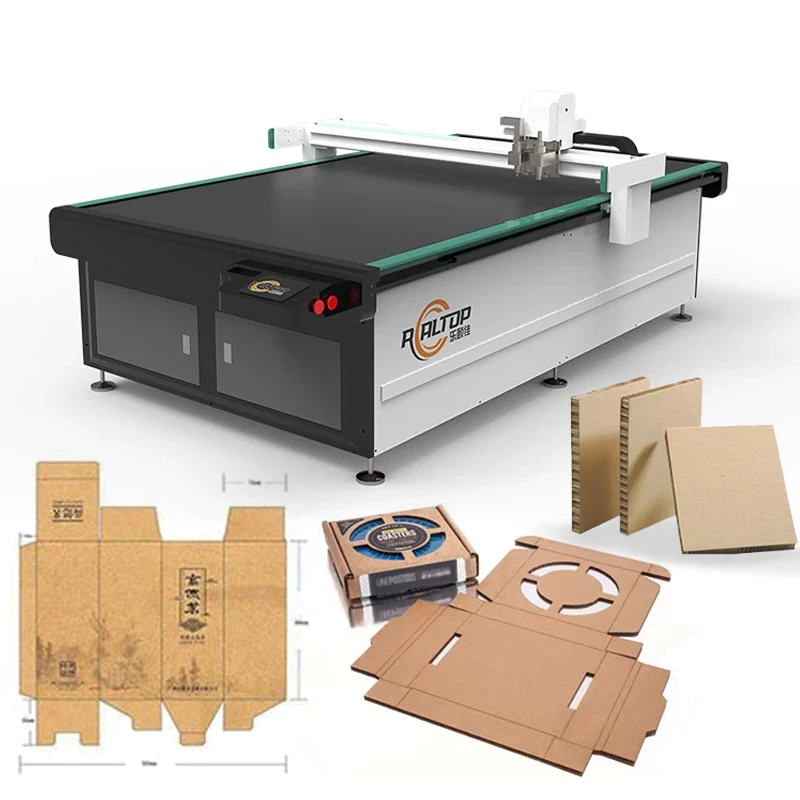
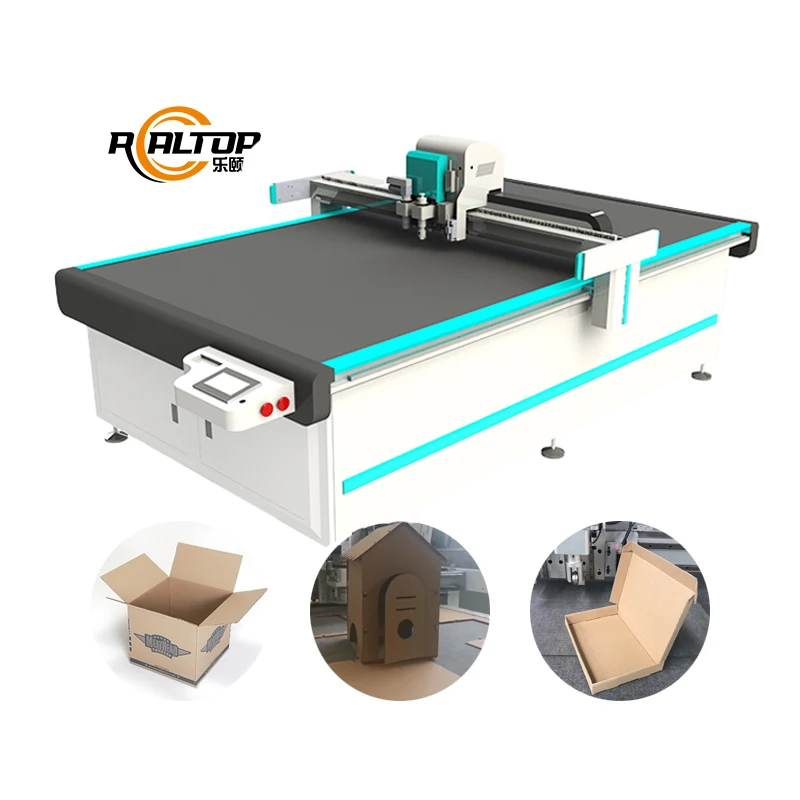
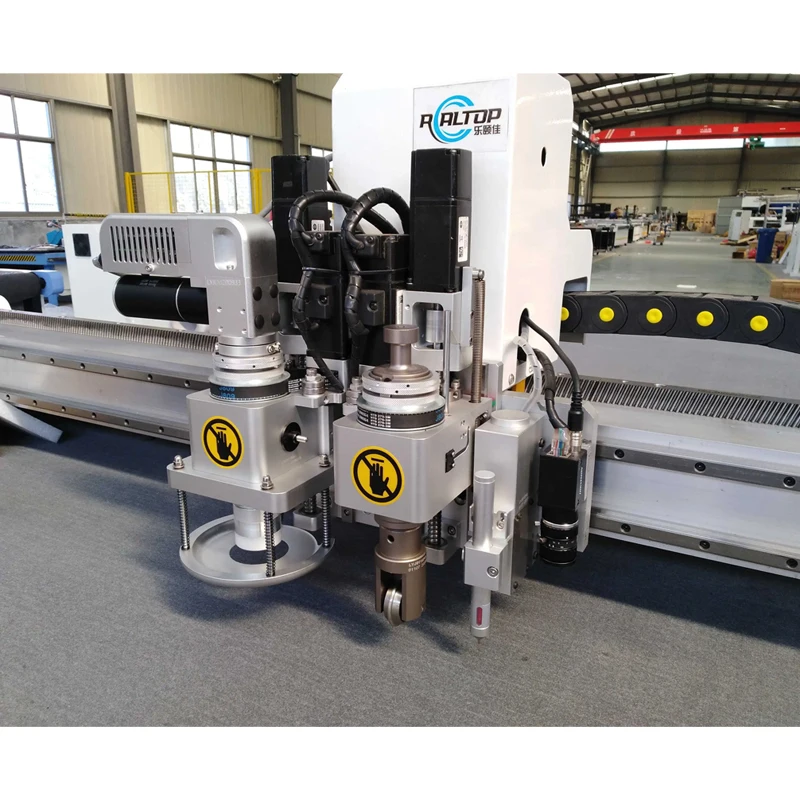

Workflow Matched to Substrate — tool head selection and vacuum zoning specified after sample cutting on your actual cardboard flute, sticker laminate and daily run length.
Technical Specifications
| Parameter | Value |
|---|---|
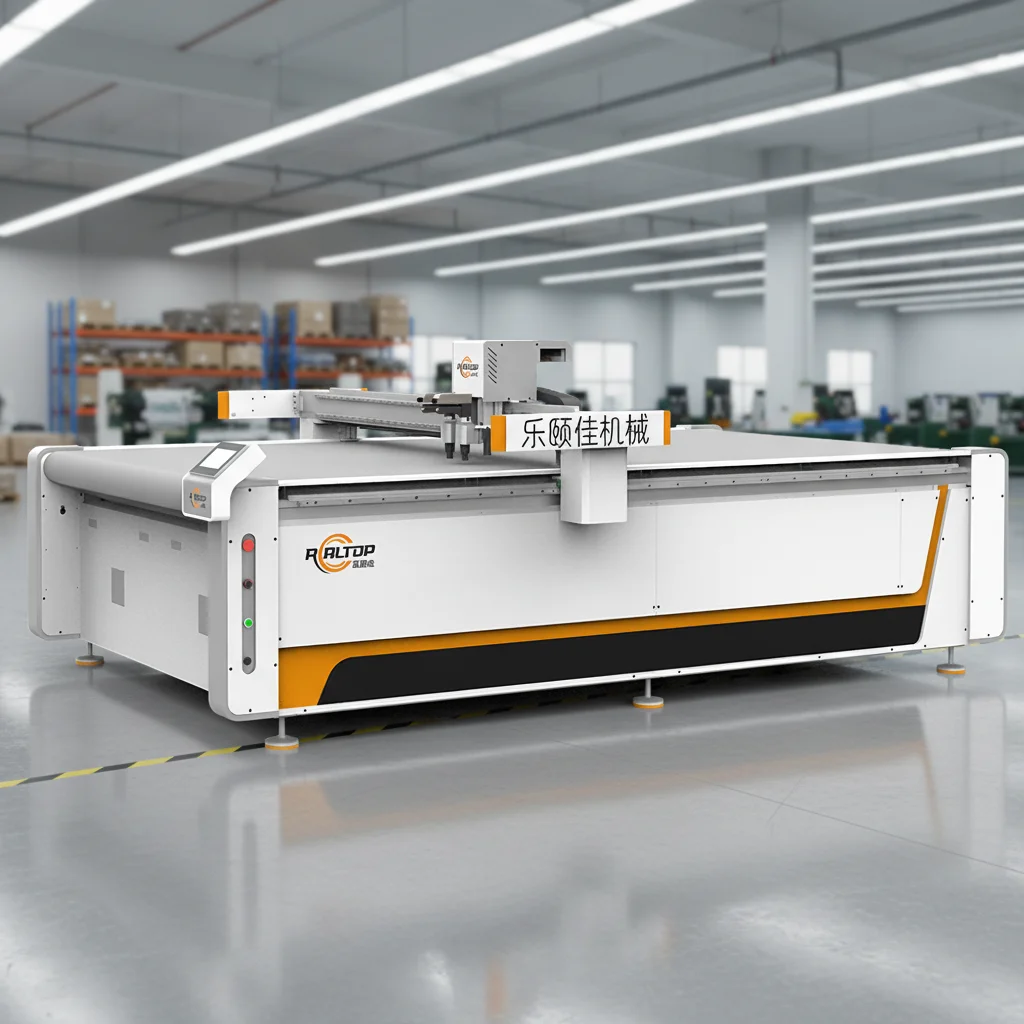
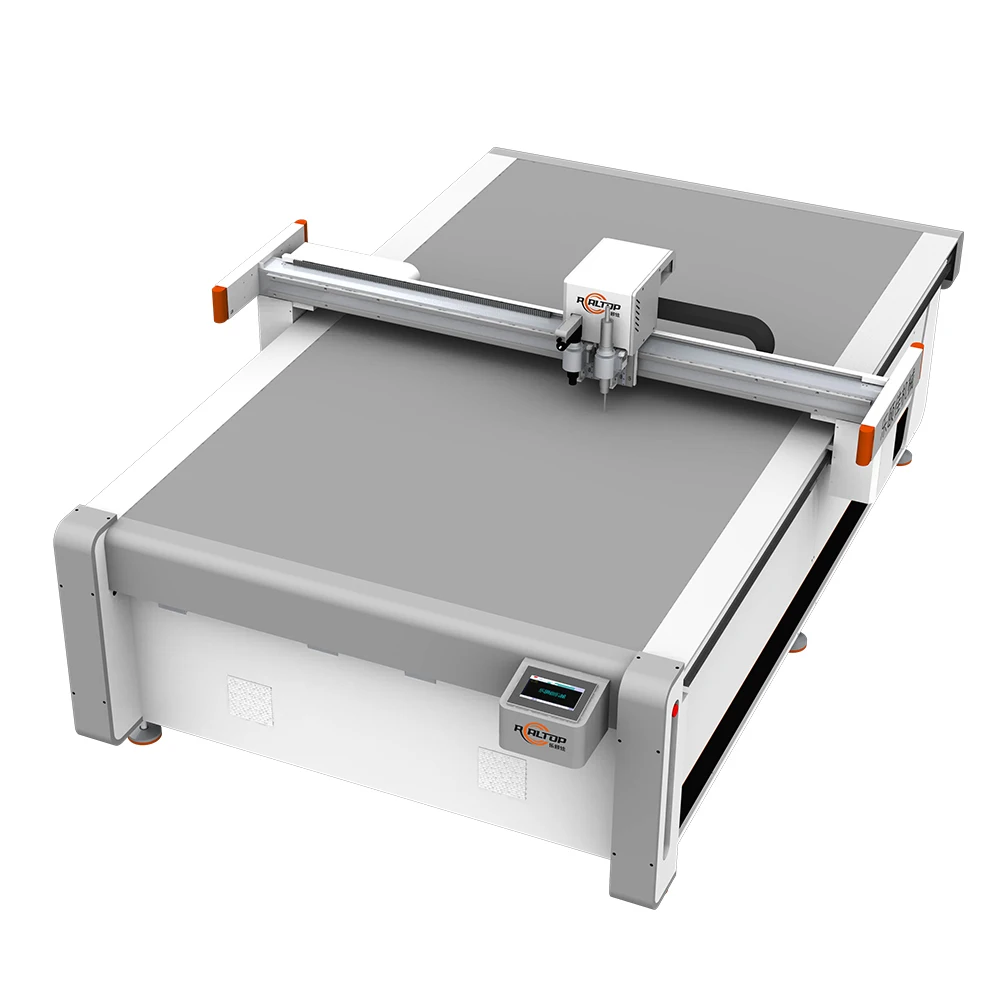
| Product Type | CNC Oscillating Knife Cutting Machine for Packaging & Stickers |
| Model | RT–R2513 / RT-D2516 / RT-S2516 |
| Working Area | 2500×1300 mm (RT–R2513) / 1600×2500 mm (RT-D2516 / RT-S2516) |
| Machine Size | 3550×1910×1400 mm (RT–R2513) / 3450×2300×1250 mm (RT-D2516 / RT-S2516) |
| Rated Power | 9 kW |
| Voltage | 380V (frequency to be confirmed with local supply) |
| Cutting Tools | Oscillating knife, creasing tool, kiss-cut knife, round punch |
| Cutting Thickness | ≤18 mm (basis not stated in source — confirm material type and density) |
| Cutting Materials | Leather, labels, cardboard boxes, paper, stickers, PP paper |
| Repeated Accuracy | <0.05 mm |
| Fixing Method | Vacuum system with aluminum alloy honeycomb platform, automatic zone follow |
| Servo Motor | Dongling servo (Delta servo available as alternative configuration) |
| Guide Rail | Taiwan Hiwin rail |
| Profile Format | DXF, OLT, PDF, AI |
| Safety Device | Infrared sensors, emergency stop |
| Vacuum Pump | 7.5 kW |
| Auto Feeding | Available as optional configuration |
| Conveyor Belt | Germany imported belt (optional configuration) |
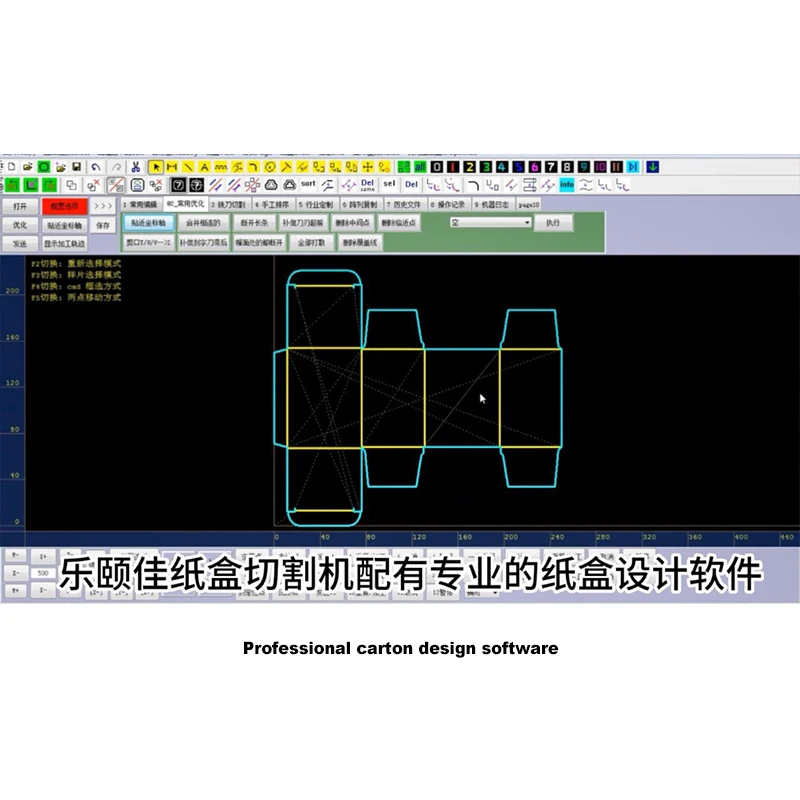
| Software | Professional carton nesting software, multiple format import, customized language support |
| Frame | Welded thick square seamless steel structure, high temperature treated |
| Warranty | 1 year (excludes felt and knife blades) |
| Delivery Time | <30 working days |
Application Suitability
| Application | Material or Output |
|---|---|
| Short-run corrugated carton prototyping | Single, double and triple-wall flute profiles without die tooling |
| Folding carton sample making | Coated and uncoated cardboard stock, greyboard up to specified thickness |
| Die-cut sticker and label contour cutting | Printed vinyl, PP paper and laminated sticker sheets with CCD registration |
| High-end gift box and display packaging | Creasing and kiss-cut combination on specialty board and foam insert materials |
| Business card and tag production | Small-format card stock requiring multi-zone vacuum hold-down |
| Express paper box and snack food packaging | Medium-volume runs of corrugated and solid fibre board |
Why Vacuum Zoning Decides Whether Small Labels Stay Flat
Small die-cut stickers lift off the table the moment the knife exits the cut path, and no amount of software nesting fixes a material handling problem.
This is the failure mode I see most often when packaging converters move from manual die cutting to a CNC oscillating knife cutting machine for packaging production line work. The table is one big vacuum zone, so small parts lose hold-down as soon as the surrounding waste matrix is removed. The RT–R2513 and RT-D2516 address this with an aluminum honeycomb platform divided into independently controlled zones that follow the active cutting area. [NEED_CITE: vacuum zone sizing and minimum part retention for oscillating knife tables]
When I set up a sample cutting for a label converter running 80×50 mm stickers on laminated vinyl, we had to verify that at least two vacuum zones remained active under the part footprint throughout the entire cut path. Without that confirmation, the job looked fine on screen and failed on the table.
Creasing, Cutting and Punching in One Table Pass
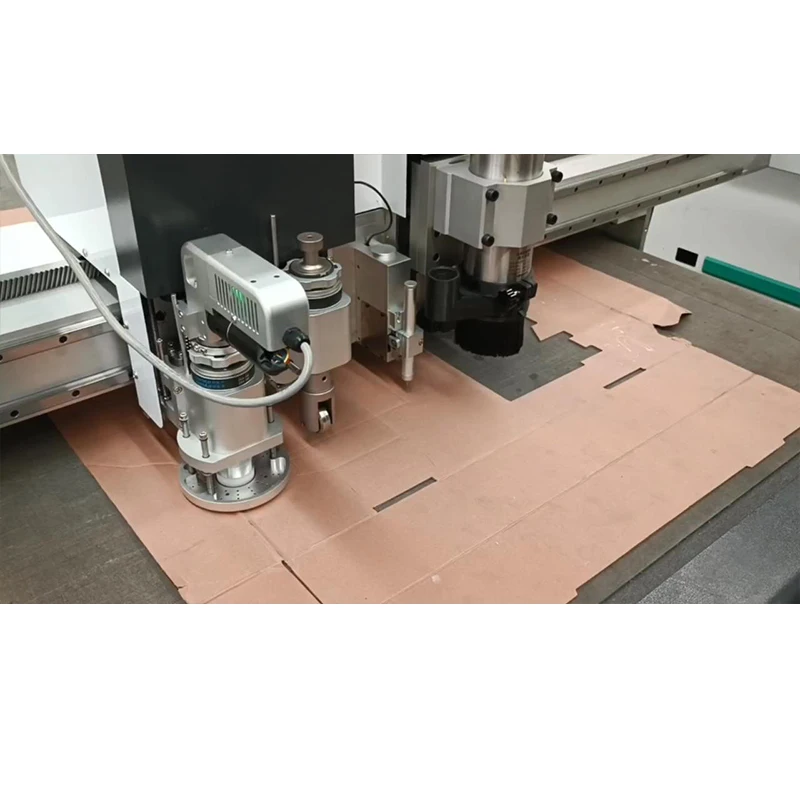
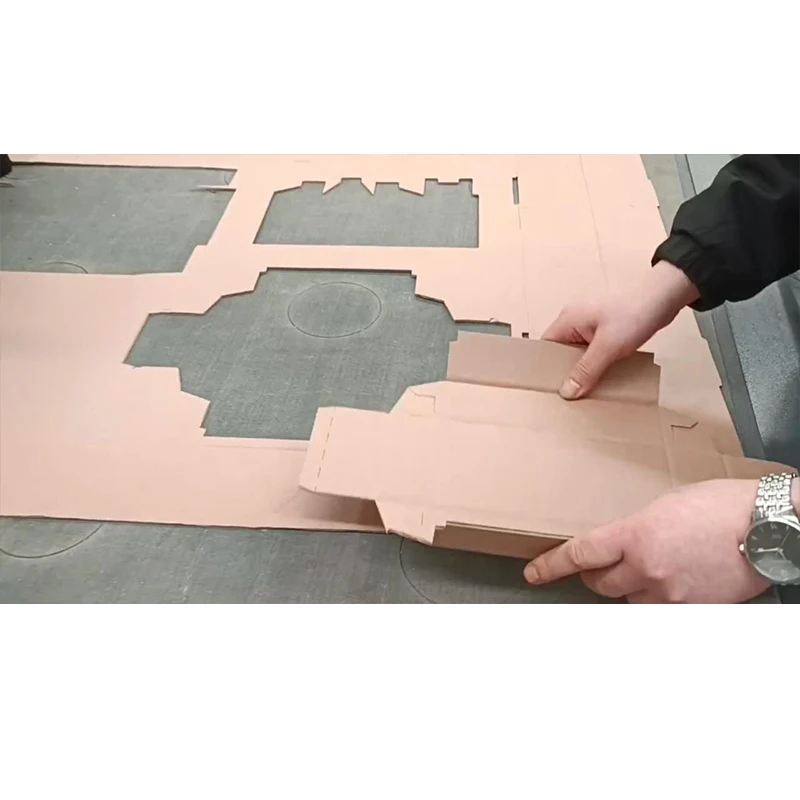
Carton sample making demands three distinct operations on the same sheet: through-cut for the blank outline, crease for the fold lines, and round punch for ventilation or hang holes. Switching tools manually between passes kills throughput on short runs. The tool head carriage on this CNC oscillating knife cutting machine for packaging production line carries the oscillating knife, creasing wheel, kiss-cut knife and round punch simultaneously. The control software assigns each vector in your DXF or AI file to the correct tool, so a single job file produces a finished, folded carton blank without operator intervention between operations.
Contour Accuracy on Printed Sticker Stock
Printed decals and contour-cut labels require the knife to follow the printed graphic edge, not the sheet edge. Repeatability under <0.05 mm with Hiwin linear guides and rack transmission means the knife path stays aligned with the CCD-registered print boundary across the full 2500×1300 mm or 1600×2500 mm working area. [NEED_CITE: CCD registration tolerance standards for digital finishing equipment] When kiss-cutting laminated stickers, the depth control has to cut through the face stock and adhesive without scoring the release liner — a setting that must be verified on your actual laminate construction before production starts.
Reading the Specs That Actually Matter for Your Substrate
Cutting thickness is listed at ≤18 mm, but that figure means nothing without knowing the flute profile or board density. A B-flute corrugated at 3 mm cuts cleanly with a standard oscillating blade, while a 2 mm high-density laminated greyboard may demand more downforce and a different blade geometry. The 9 kW rated power and 7.5 kW vacuum pump together determine whether the machine can hold a full sheet of heavy stock flat while cutting at production speed. Dongling servo drives handle the acceleration and deceleration around tight sticker contours, and the Ethernet-based transmission avoids the latency issues that older USB-connected controllers introduce on complex paths with thousands of vector nodes. The carton nesting software calculates material yield from your DXF or AI files, so you can evaluate sheet utilization before committing to a run.
The Cost of Specifying a Machine on Working Area Alone
Buyers often start with table size and assume everything else follows. I have watched a 1600×2500 mm table get delivered to a carton plant that primarily runs 600×400 mm sticker sheets — the vacuum zones were too large for the small parts, and the operator had to manually mask off areas of the table with scrap material just to keep labels from lifting. [NEED_CITE: common causes of material lift in oscillating knife cutting of small-format labels] The other frequent miss is the creasing tool: if your carton work involves short-run sample folding, a machine configured only with the oscillating knife forces you to hand-score fold lines or outsource the creasing step, adding a day to every sample turnaround.
Why Procurement Here Follows a Different Sequence
The sales process starts with your material type, thickness, sheet size and daily volume before any machine is recommended, not after. Sample cutting runs on your actual board stock and sticker laminate, producing a report that documents edge quality, crease depth and kiss-cut release liner integrity before you commit. Voltage and frequency are confirmed against your facility supply at order stage, with 380V as standard and other configurations available. The in-house design team handles both knife and laser cutting technologies, so if your product mix includes acrylic display stands alongside carton samples, the cutting method matches the material rather than forcing one technology across both. File format compatibility — DXF, OLT, PDF, AI — is verified against your existing CAD workflow before production begins. Language options for the control interface include English, Russian, Italian and Chinese, with custom language configurations available.
Documentation & Verification
- Sample cutting report on your specific cardboard weight and sticker laminate construction
- Electrical schematic confirming 380V supply and frequency match for your facility
- Tool head and vacuum zone configuration list matched to your material thickness range
- Software licence and file format compatibility note for DXF, OLT, PDF and AI import
- CE declaration documentation where applicable to your import market
- Operation manual with customized language for your production floor operators
Installation, Commissioning & Support
- Confirm floor space for 3550×1910 mm or 3450×2300 mm footprint plus operator clearance
- Dedicated 380V circuit rated for 9 kW machine load plus 7.5 kW vacuum pump draw
- Machine ships assembled; verify doorway and overhead clearance for delivery path
- First-run parameter tuning on your actual board and sticker stock during commissioning
- Operator training on nesting software, tool head changes and vacuum zone mapping
- Ten oscillating blades included; establish reorder schedule based on your material abrasiveness
What We Need Before Quoting Your Line
Send us the specific board grades and flute profiles you run, along with your typical sticker laminate construction and adhesive type. Tell us your daily sheet volume and the largest and smallest part dimensions in your current job mix. Confirm your facility voltage, frequency and the control interface language your operators need. If you have an existing CAD system, share a sample file so we can verify nesting and tool path assignment before any hardware is built.
Frequently Asked Questions
Q: How do I match tool head selection to my cardboard flute profile and sticker laminate?
A: The oscillating knife handles through-cuts on corrugated and solid board, while the creasing wheel scores fold lines without fracturing the liner. For sticker work, the kiss-cut knife must slice through the face stock and adhesive without scoring the release liner. Tool selection depends on your specific flute height, board density and laminate thickness, which is why we run sample cuts on your actual material before finalizing the configuration.
Q: How does vacuum zone sizing affect small label cutting?
A: The aluminum honeycomb platform uses automatic zone follow, activating only the vacuum zones beneath the current cutting area. This prevents small parts from losing hold-down when surrounding waste is removed. The minimum stable part size depends on how many zones span your part footprint and the porosity of your sticker backing material.
Q: Can the CCD camera track printed registration marks at full production speed?
A: CCD positioning reads printed marks to align the knife path with the graphic contour. Tracking accuracy at speed depends on mark contrast, print quality and the spacing between registration points on your sheet layout. We verify registration reliability during sample cutting using your actual printed stock and typical job file.
Q: Does the nesting software integrate with my existing packaging CAD workflow?
A: The carton nesting software imports DXF, OLT, PDF and AI formats directly. We confirm compatibility by importing your sample files and checking that cut lines, crease lines and punch points map correctly to the assigned tool heads. Yield calculations are generated from your file so you can evaluate material utilization before ordering.
Q: Are voltage, plug type and control language confirmed before shipment?
A: Standard configuration is 380V with frequency to match your local supply. Plug type, control interface language and software labels are specified at order stage. Options include English, Russian, Italian and Chinese, with other languages configurable. We document the electrical specification in the schematic before production begins.





商品评价
Clear filtersThere are no reviews yet.