



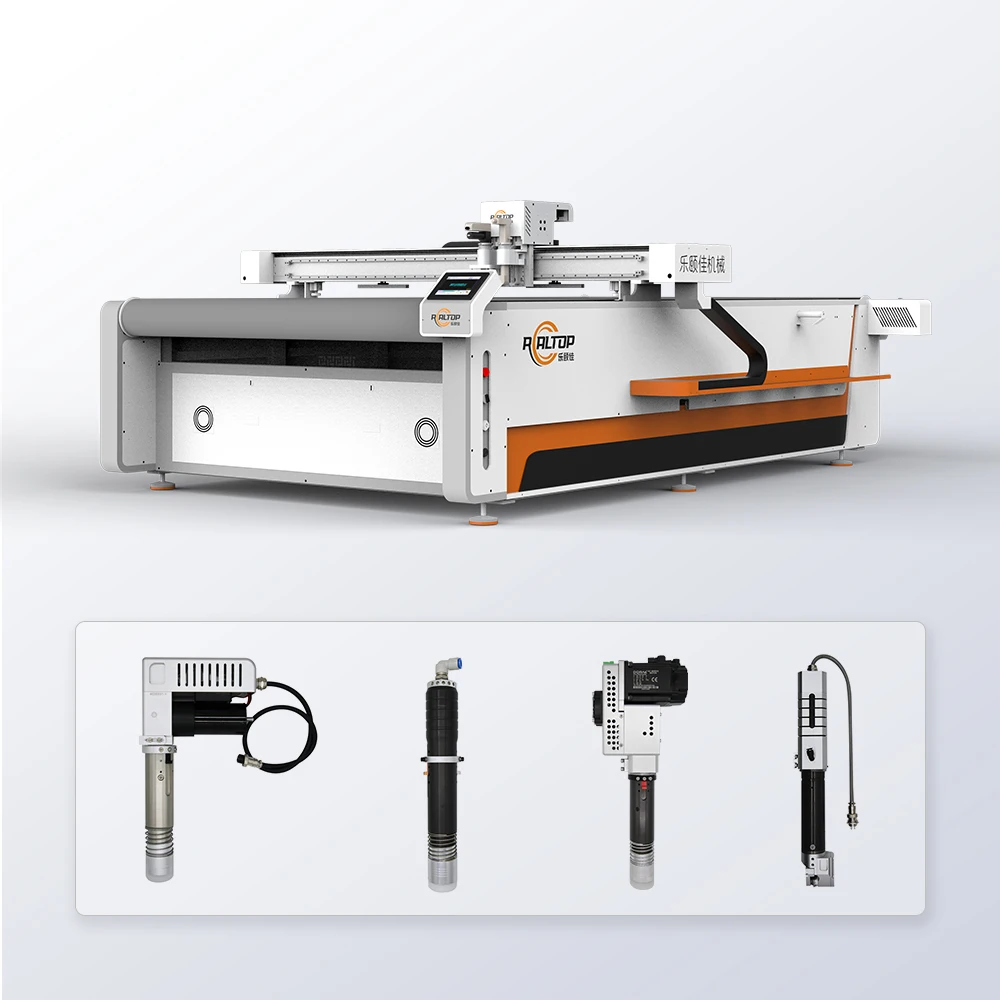
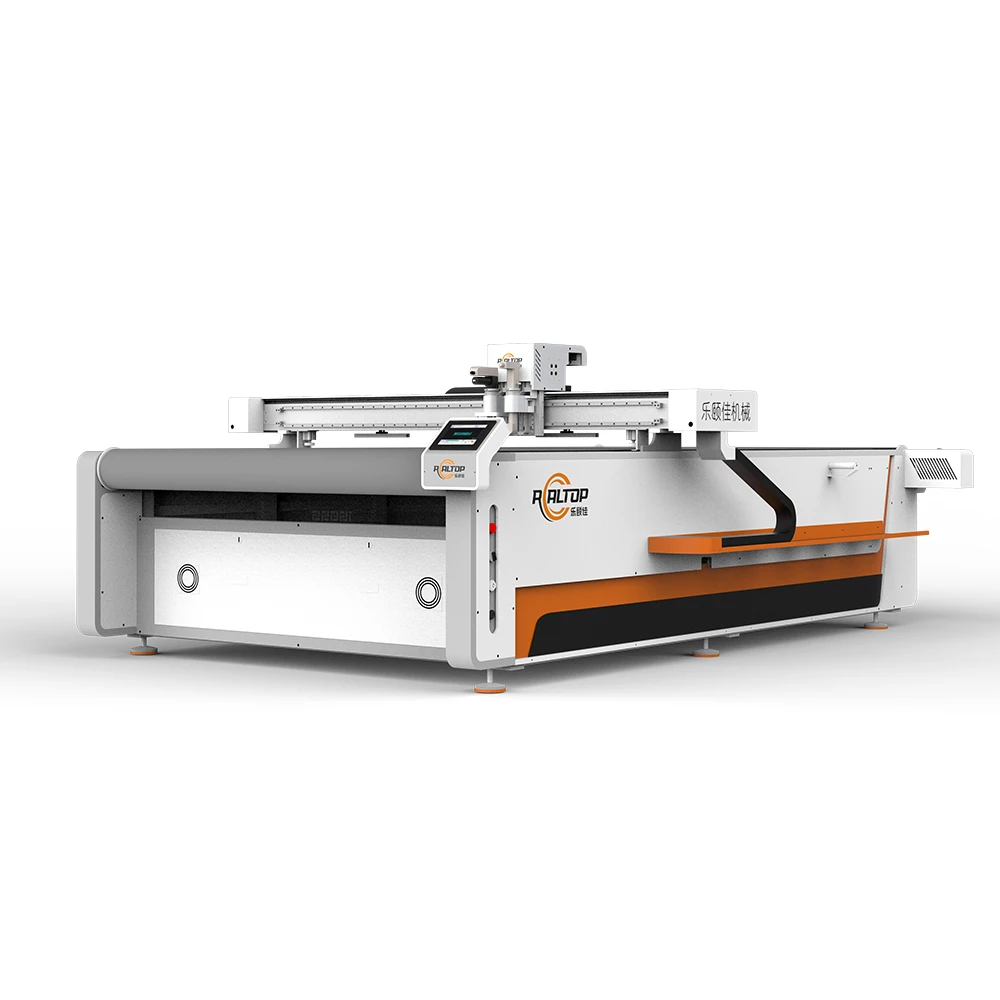
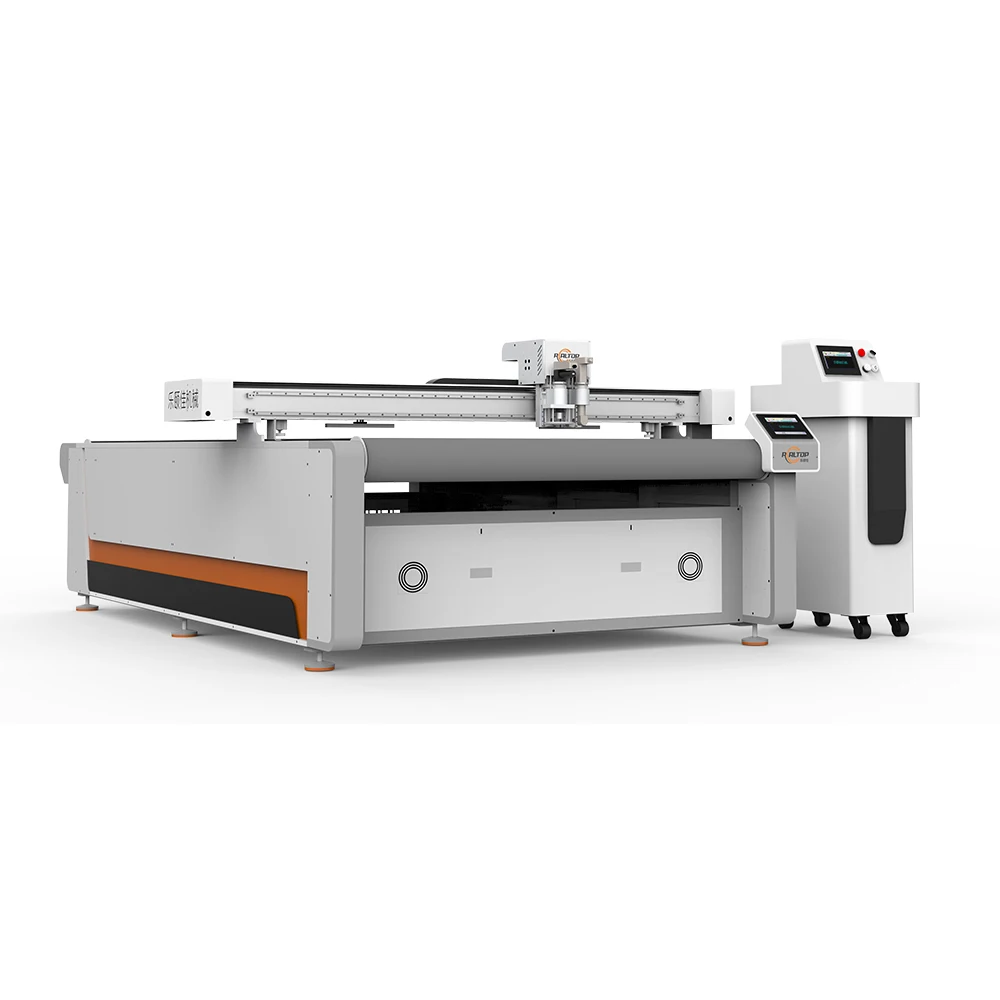


Material-first configuration — Every tool head, vacuum zone and file format is verified against your actual fabric roll before the quotation stage, not guessed from a brochure working area.
Technical Specifications
| Parameter | Value |
|---|---|
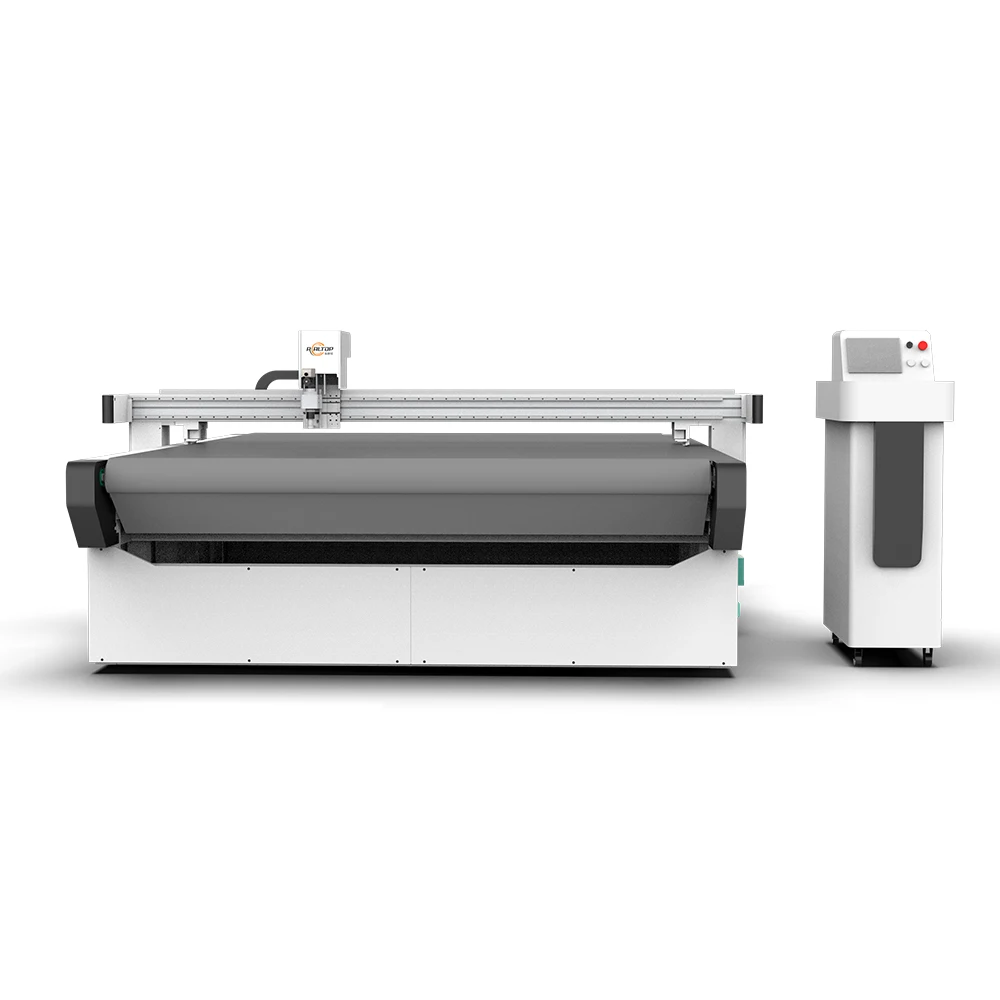
| Product Type | CNC Oscillating Knife Cutting Machine for Textile and Fabric |
| Working Area | 1600 × 2500 mm |
| Tool Options | Oscillating knife, driven rotary knife, creasing wheel, kiss cutting tool, pneumatic knife, milling tool, V-groove knife |
| Applicable Materials | Fabric, cardboard, carton, mats, PVC, EVA, leather, acrylic, foam, PTFE, rubber |
| Cutting Speed | 0–2000 mm/s |
| Cutting Thickness | ≤ 30 mm (basis not stated in source — confirm block format, material and thickness) |
| Multi-layer Capacity | Up to 30–50 mm (basis not stated in source — confirm stack format and fabric weight) |
| Cutting Accuracy | ±0.1 mm |
| Vacuum Pump Power | 9 kW |
| Vacuum Table | Aluminum bellows vacuum table |
| Machine Frame | Heavy-duty frame with precision-ground surface |
| Servo Drive Options | Panasonic, Delta or Dorna (configure at order) |
| Control System | PLC control panel with intuitive interface |
| Voltage Options | 110V / 220V / 380V (frequency to confirm at order) |
| Profile Formats | PLT, DXF, AI, PDF |
| Safety | Infrared sensor device and emergency stop |
| Machine Dimensions | 3300 × 2100 × 1350 mm |
| Standard | CE declaration applicable |
Application Suitability
| Application | Material or Output |
|---|---|
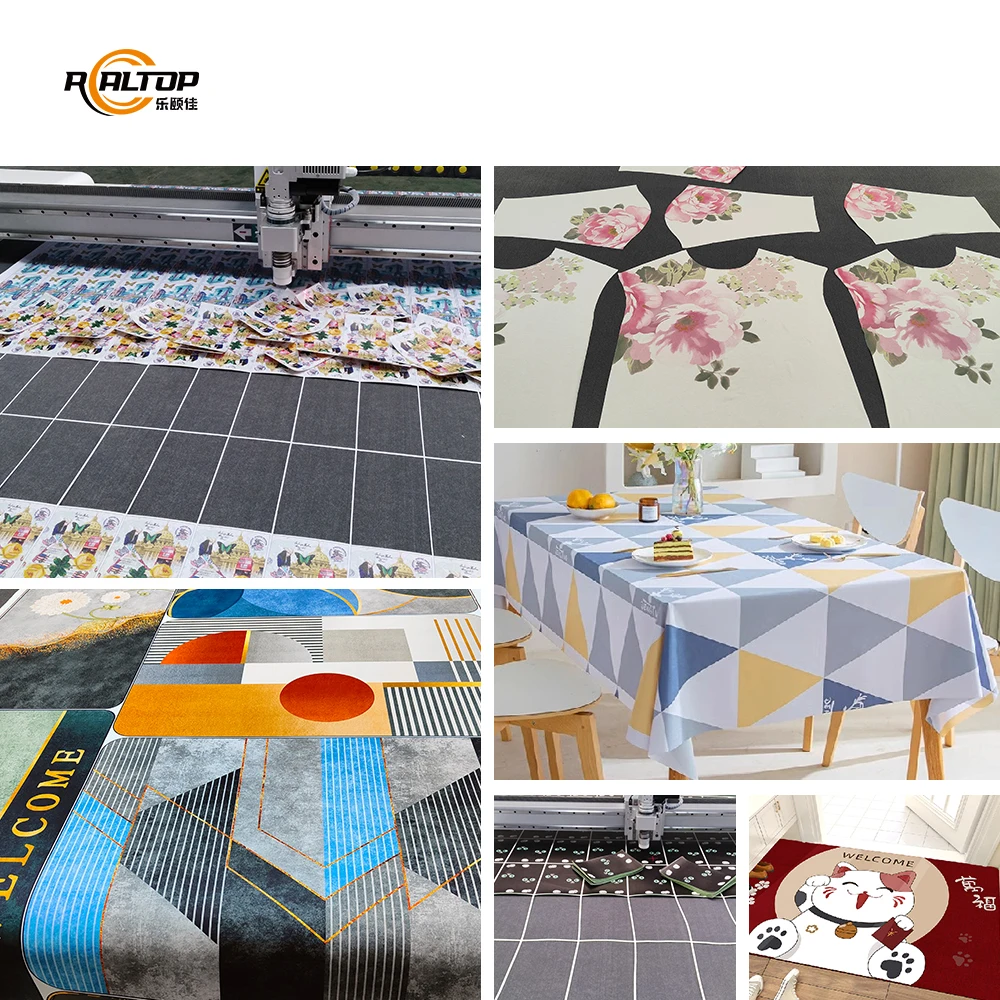
| Apparel manufacturing | Suits, knitwear, lace and complex pattern-matching fabric layouts |
| Home textile production | Sofa fabrics, curtains, rugs and multi-layer textile stacks |
| Automotive interior supply | Seat fabrics, floor carpets and PVC mat blanks |
| Composite material processing | Carbon fiber prepreg, aramid and specialty technical textiles |
When a "Standard Fabric Test" Hides the Real Problem
A CNC oscillating knife fabric cutting machine for apparel and textile production only proves itself on the silk, lace or multi-layer knit you actually run, not on the supplier’s demo cotton.
I have stood in Shandong workshops where a machine cut perfectly through the standard woven polyester during the factory visit, yet the same setup shredded silk scarves the moment production started. The oscillating frequency was too aggressive for the delicate weave, pulling threads along the cut line and ruining entire batches before the operator noticed. Another common failure is the vacuum table: large zones hold a full hide down, but once the nesting software lays out dozens of small collar or cuff pieces, the suction between zones cannot stop those edges from lifting into the knife path [NEED_CITE: vacuum table zoning requirements for small garment pattern pieces]. That is why the silk scarf cutting workflow demands a different conversation from the one you have about canvas or denim.
How Tool Head Selection Changes Between Silk and Knitwear
A driven rotary knife glides through single-layer silk at high speed without dragging the weft, keeping the printed edge intact where an oscillating blade would vibrate the filament loose. For a fifty-layer knitwear stack, the oscillating knife delivers the vertical stroke force needed to part dense loops without fusing the fibers together from friction heat. The choice is never "one head for all fabrics" — it is a configuration built around your daily mix.
Vacuum Zoning and Small Pattern Piece Behavior
The aluminum bellows table on this system divides suction into selectable zones. When a nesting layout contains many small pieces — think bra cups, pocket flaps or cuff inserts — only the zones directly under the material stay active, concentrating hold-down force where it matters. Without that zoning, operators resort to taping edges or slowing the feed rate, both of which erode the throughput the machine was supposed to deliver [NEED_CITE: aluminum bellows vacuum table zoning behavior on textile cutting beds].
What the Specs Actually Mean on the Shop Floor
The ±0.1 mm cutting accuracy matters most when pattern-matching plaids or aligning a printed motif across front and back panels; any drift compounds through grading sizes. A 9 kW vacuum pump paired with the aluminum bellows table generates enough negative pressure to restrain slippery synthetics without leaving suction marks on the face side. The 1600 × 2500 mm working area accommodates a full spread from a standard fabric roll while leaving room at the leading edge for CCD contour recognition if your workflow relies on printed registration marks. Multiple servo drive options — Panasonic, Delta or Dorna — let you match motion smoothness and spare-part availability to your maintenance team’s existing inventory. Profile format support across PLT, DXF, AI and PDF means the nesting file your pattern maker already exports can drive the machine directly, avoiding a software conversion step that often distorts curve geometry on lace outlines.
The Cost of Skipping the Material Trial
When a buyer skips the sample cutting and goes straight to purchase on working area alone, the first production week often reveals ragged edges on coated technical textiles or crushed foam in automotive seat blanks. The tool head is then swapped, the vacuum table re-zoned and the nesting file rebuilt — all on the buyer’s clock, not the builder’s. I have watched garment factories lose an entire dye lot of silk before the root cause was traced back to an oscillation frequency that was one setting too high. That single missed trial costs more in ruined fabric than the shipping of a sample roll would have [NEED_CITE: fabric waste cost in garment cutting before tool head validation].
Why Source This Line Here
In-house design covers both knife and laser cutting technologies, so the cutting method is matched to the fabric rather than forced into whichever machine the supplier happens to stock. Tool head and table configuration is specified per your material thickness and daily volume, not quoted as a generic package. CCD camera positioning is available and validated on your printed textile before order, ensuring contour recognition tracks at production speed. Software compatibility — file format, nesting workflow and control language — is confirmed in writing before the build starts. Sample cutting on your own silk, woven or knit material produces a documented edge quality report you can hold next to your current manual cut.
Documentation & Verification
- Machine specification sheet listing the exact tool heads and vacuum zones configured for your fabric type.
- Electrical schematic confirming voltage and frequency matched to your factory supply before production begins.
- Sample cutting report on your silk, knit or technical textile showing edge quality at rated speed.
- Factory test record documenting cut accuracy across the full 1600 × 2500 mm bed before crate closure.
- Software licence and file format compatibility note confirming your existing DXF or PLT nesting files open correctly.
Installation, Commissioning & Support
- Floor space planning around the 3300 × 2100 mm footprint plus roll-feed clearance and operator walkway.
- Dedicated circuit sized for the 9 kW vacuum pump and servo drives at your confirmed voltage and frequency.
- First-power commissioning verifying each tool head on your fabric roll before operator training begins.
- PLC control language set to your team’s preference during installation, with on-site parameter tuning.
- Spare parts list matched to your chosen oscillating or rotary knife configuration for first-year maintenance.
What We Need From Your Side to Move Forward
Tell us the exact fabric types you run — silk, woven, knit, technical textile or a daily mix — along with single-layer versus multi-layer requirements and your target piece count per shift. Share a sample roll or hide so we can run a documented cutting trial before any commitment. Confirm your workshop voltage, frequency and the control language your operators need, and we will return a configuration proposal built around your production reality.
Frequently Asked Questions
Q: How do you verify cutting thickness for my specific fabric stack?
A: We run a trial on your actual material stack at the thickness you intend to cut daily, document edge quality and tool wear, and lock the tool head and stroke settings into your build specification before production starts.
Q: Which tool head do you recommend for silk versus multi-layer knitwear?
A: Single-layer silk typically uses a driven rotary knife to prevent thread pull, while multi-layer knitwear up to 30–50 mm benefits from an oscillating knife for clean vertical separation. The final choice is confirmed during your material trial.
Q: Can the vacuum table handle small pattern pieces without lift?
A: The aluminum bellows table divides into selectable zones, concentrating suction directly under small pieces like collar inserts or pocket flaps so they stay flat even at the upper range of the 0–2000 mm/s cutting speed.
Q: Will the software accept my existing DXF and PLT grading files?
A: The system imports PLT, DXF, AI and PDF profiles. We test your actual nesting files on the control software before shipment to confirm curve geometry and grading data transfer without manual rework.
Q: What voltage and control language options are confirmed before shipment?
A: Voltage is configurable across 110V, 220V and 380V with frequency confirmed at order. The PLC control panel language is set to your preference and verified during the factory test before crating.



商品评价
Clear filtersThere are no reviews yet.